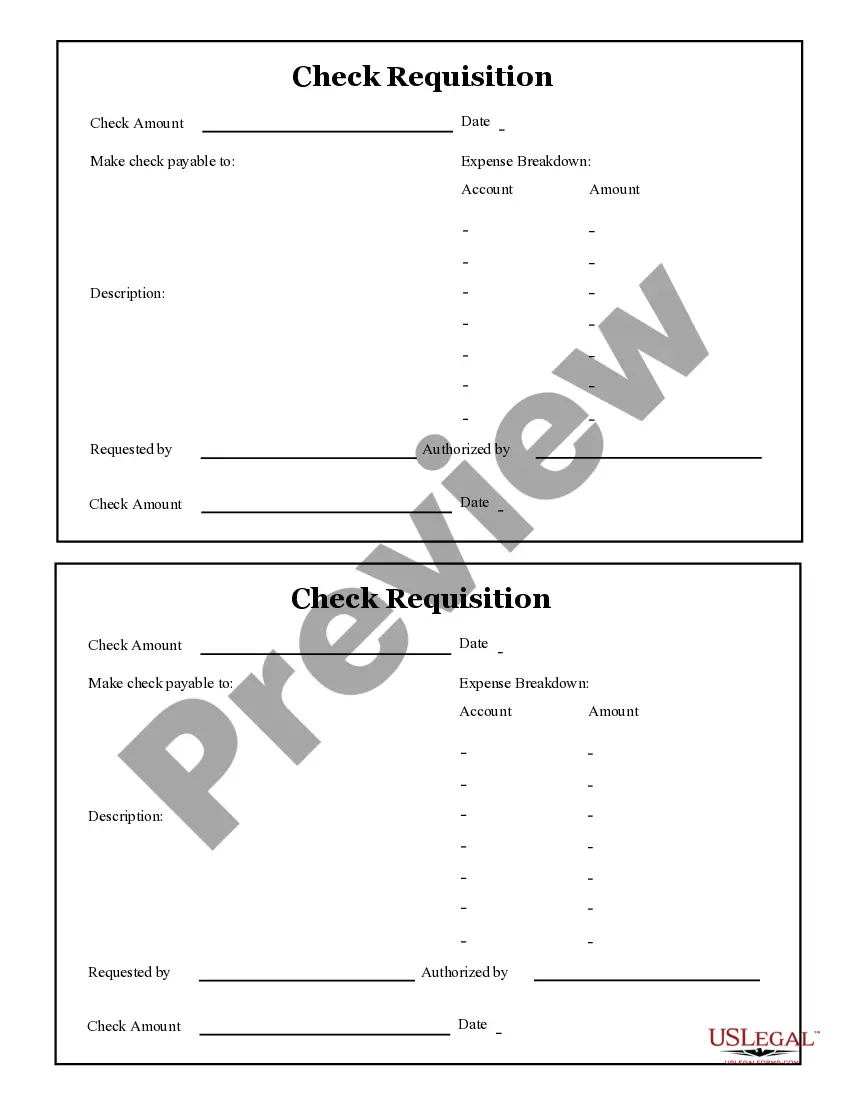
New Jersey Solar Installation Agreement
Description
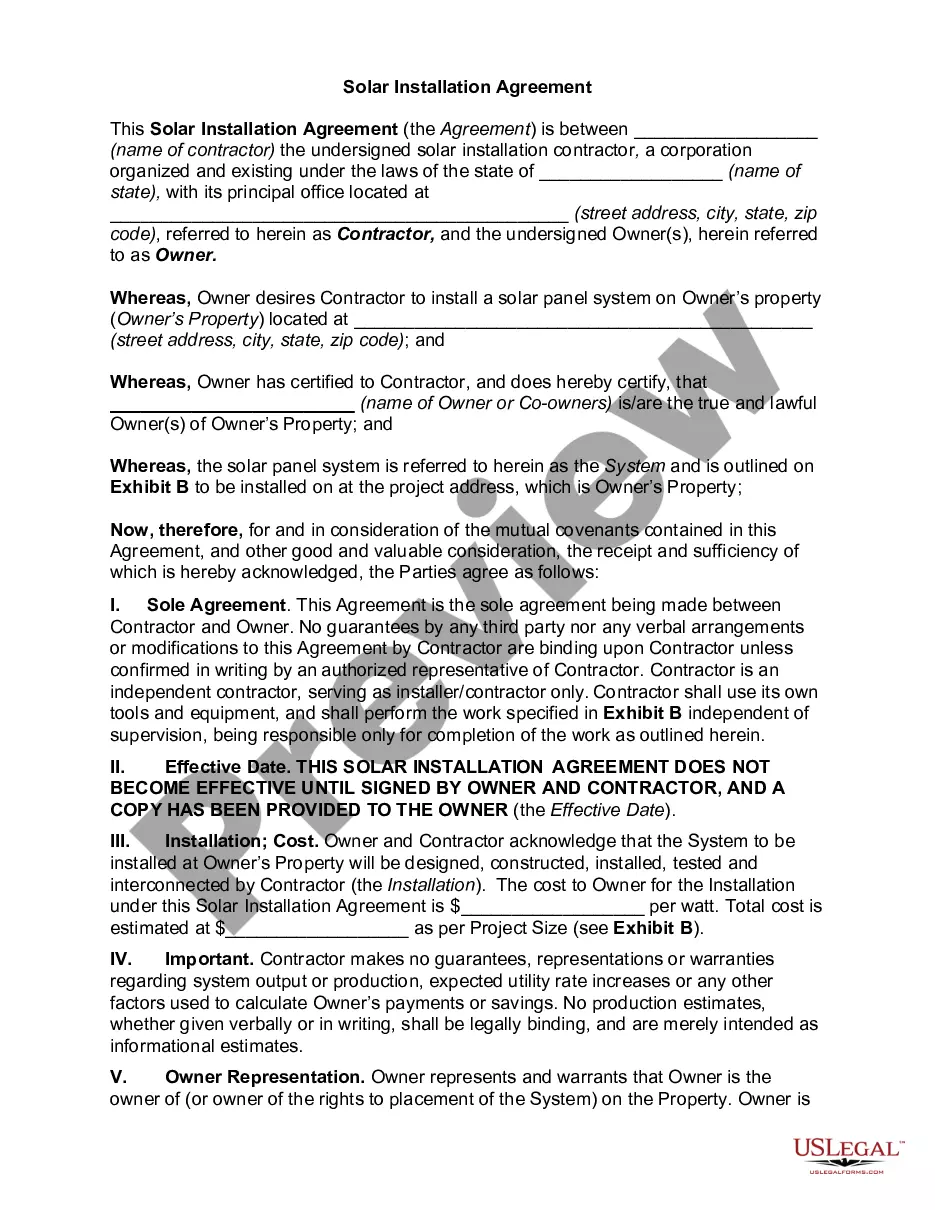
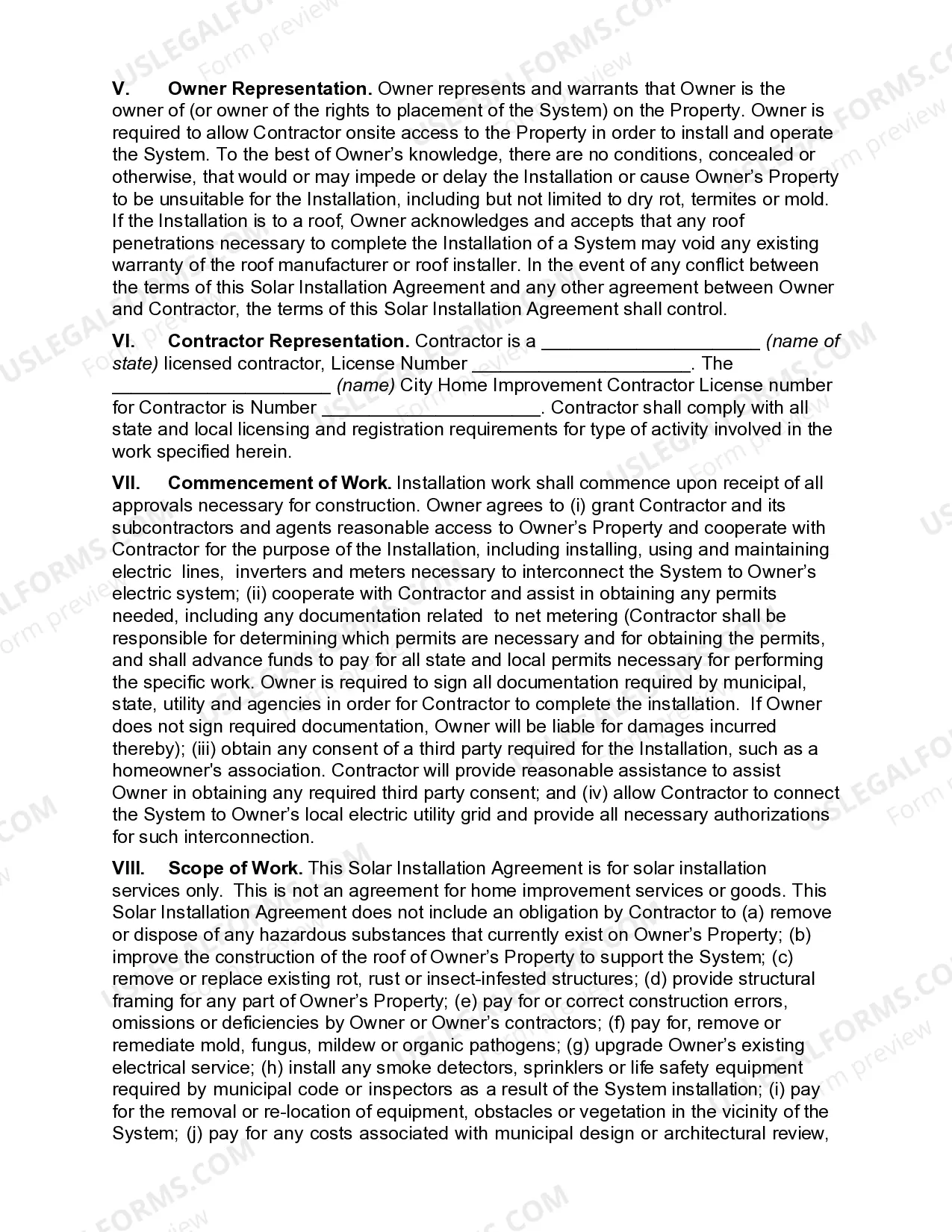
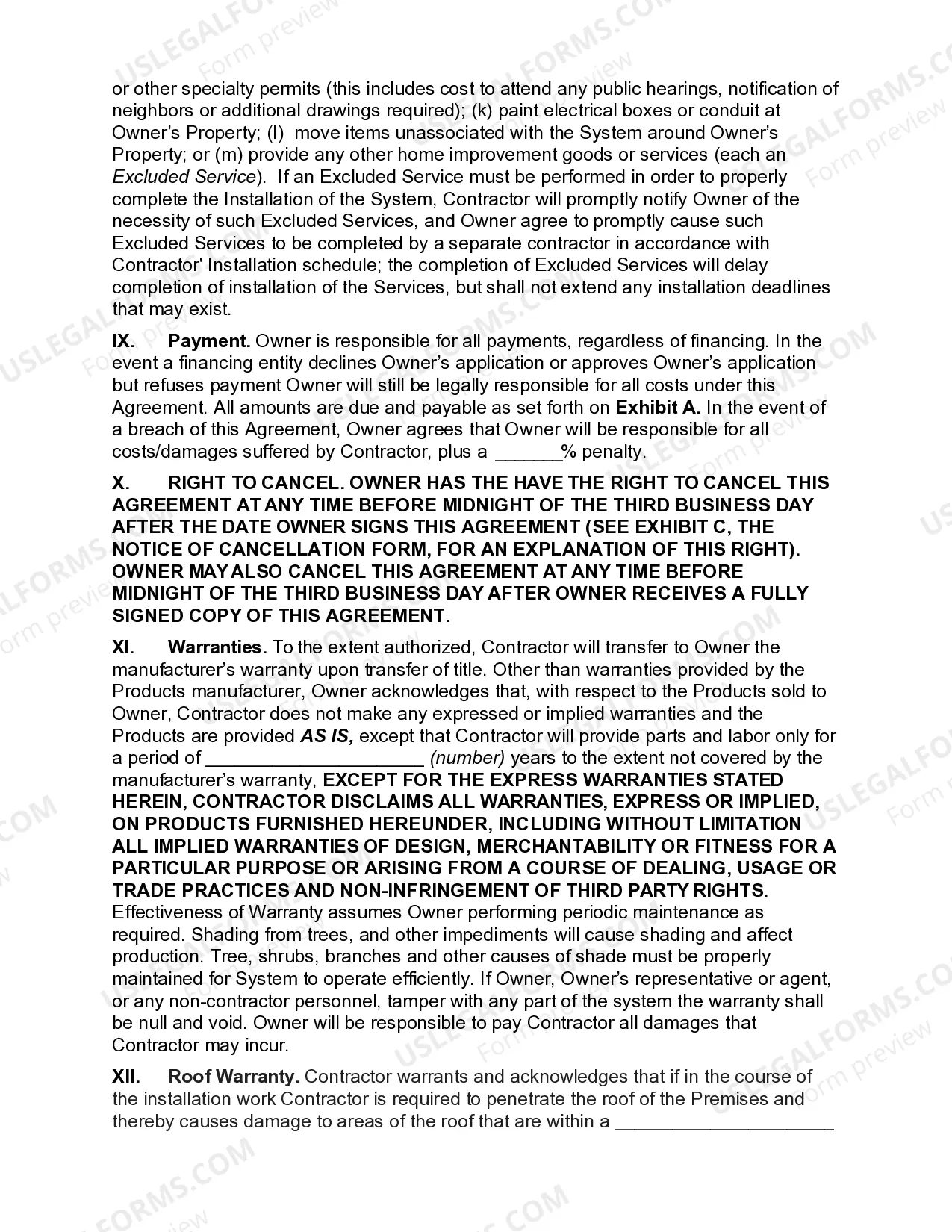
How to fill out Solar Installation Agreement?
You can spend countless hours online trying to locate the authentic document template that meets your state and federal requirements. US Legal Forms offers thousands of legal templates that can be reviewed by experts.
You have the option to obtain or create the New Jersey Solar Installation Agreement through this service.
If you already have an account with US Legal Forms, you may Log In and click the Download button. After that, you can complete, modify, print, or sign the New Jersey Solar Installation Agreement. Every legal document template you acquire is yours permanently. To obtain another copy of a purchased form, visit the My documents section and click the corresponding button.
Choose the format of your document and download it to your device. You can modify your document where applicable. You can complete, edit, sign, and print the New Jersey Solar Installation Agreement. Access and print thousands of document templates using the US Legal Forms website, which provides the largest collection of legal forms. Utilize professional and state-specific templates to address your business or personal requirements.
- If you are using the US Legal Forms website for the first time, follow these simple instructions.
- First, confirm that you have selected the correct document template for the state/city of your choice. Review the form description to ensure you have picked the right one.
- If available, utilize the Review feature to check the document template as well.
- If you wish to find another version of the form, use the Search box to locate the template that meets your needs and specifications.
- Once you have found the template you would like, click Purchase now to proceed.
- Select the pricing option you prefer, enter your details, and create a free account on US Legal Forms.
- Complete the transaction. You can use your credit card or PayPal account to purchase the legal form.
Form popularity
FAQ
While you can technically install solar panels yourself in New Jersey, it is highly advisable to hire a licensed contractor. Professional installation ensures compliance with safety regulations and local codes. If you choose to go this route, be sure to address your installation responsibilities within a formal New Jersey Solar Installation Agreement to avoid future complications.
Yes, you typically need a permit to install solar panels in New Jersey. This process includes submitting plans for approval and ensuring compliance with state and local building codes. Your New Jersey Solar Installation Agreement should outline the permitting process, helping you navigate the regulatory landscape efficiently.
Every solar installation, irrespective of whether it's a rooftop installation or a ground-mount installation, requires a construction permit from your local municipality building department. The permit includes both building and electrical applications.
When you choose DIY solar, you're taking control of your solar project. While a DIY solar system involves some extra effort, you can act as your own project manager and save thousands when setting up your solar panels. You can build it yourself, hire local laborers to help, or do a mix of both.
A solar power purchase agreement (PPA) is a financial agreement where a developer arranges for the design, permitting, financing and installation of a solar energy system on a customer's property at little to no cost.
Yes, you sell power back to the grid in NJ. New Jersey has one of the best net metering programs in the U.S., where you get full credit for solar electricity that gets exported to the grid. Unused credit can be rolled over to the next month, and you get paid for accumulated credit once per year.
A solar power purchase agreement (SPPA) is a financial arrangement in which a third-party developer owns, operates, and maintains the photovoltaic (PV) system, and a host customer agrees to site the system on its property and purchases the system's electric output from the solar services provider for a predetermined
You need only apply for full planning permission (flats) or householder planning permission (houses) to install a solar panel when any of the following apply: it would protrude more than 20cm from the external surface of the wall or roof slope, when measured perpendicularly.
Every solar installation, irrespective of whether it's a rooftop installation or a ground-mount installation, requires a construction permit from your local municipality building department. The permit includes both building and electrical applications.
A PPA is a great option for households who cannot afford to buy solar panels outright. However for those homeowners who do have the spare cash required to purchase solar panels outright, the return on investment will be much greater by buying instead of leasing or entering a Power Purchase Agreement.