New Jersey Employee Evaluation Form for Psychologist
Description
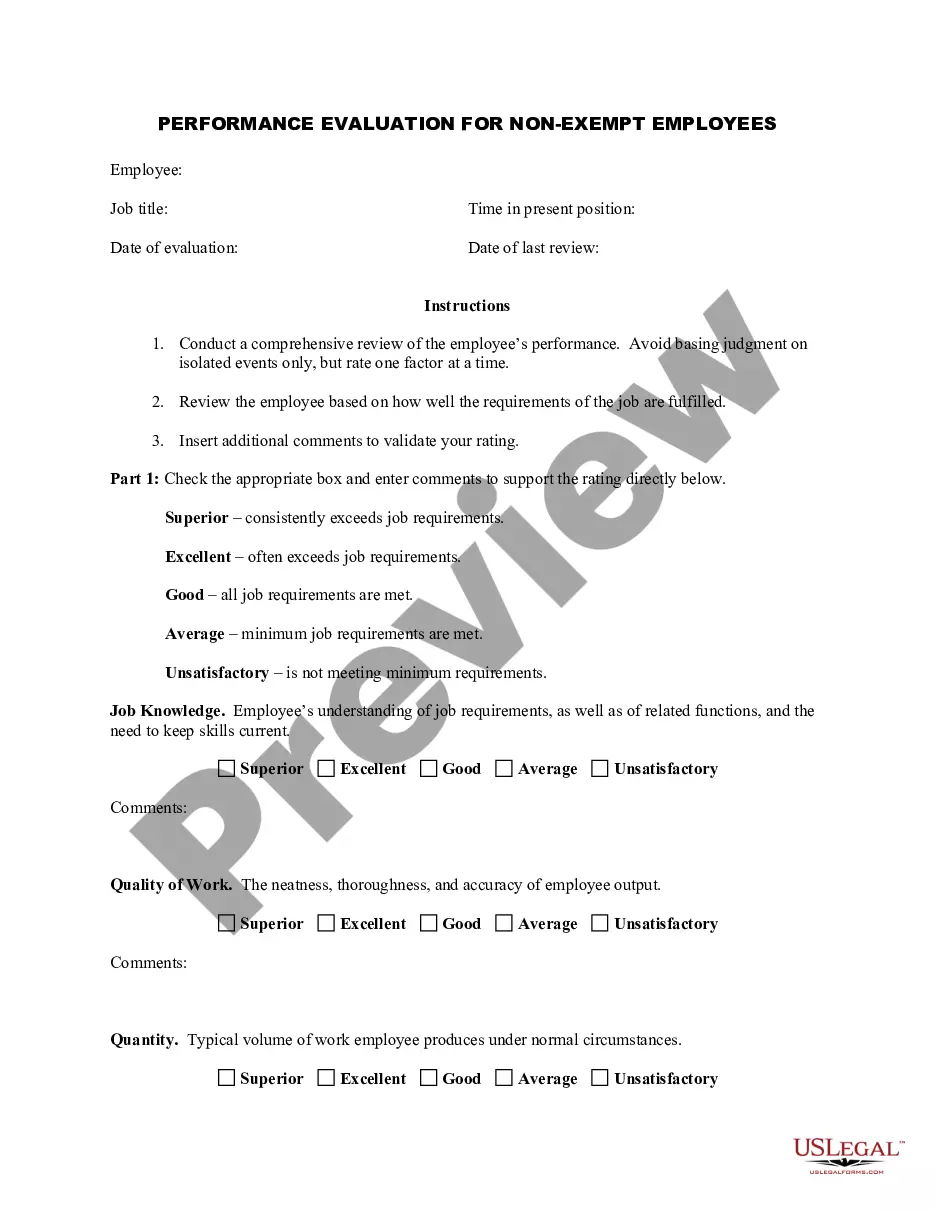
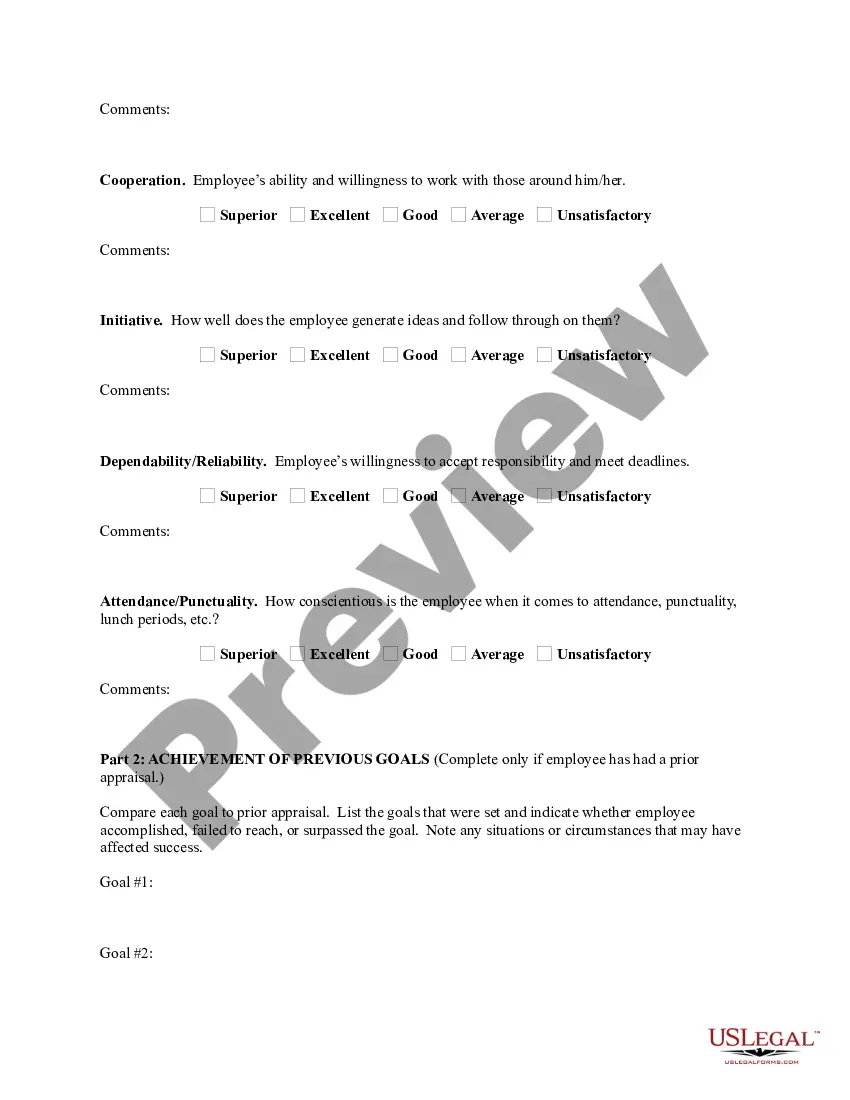
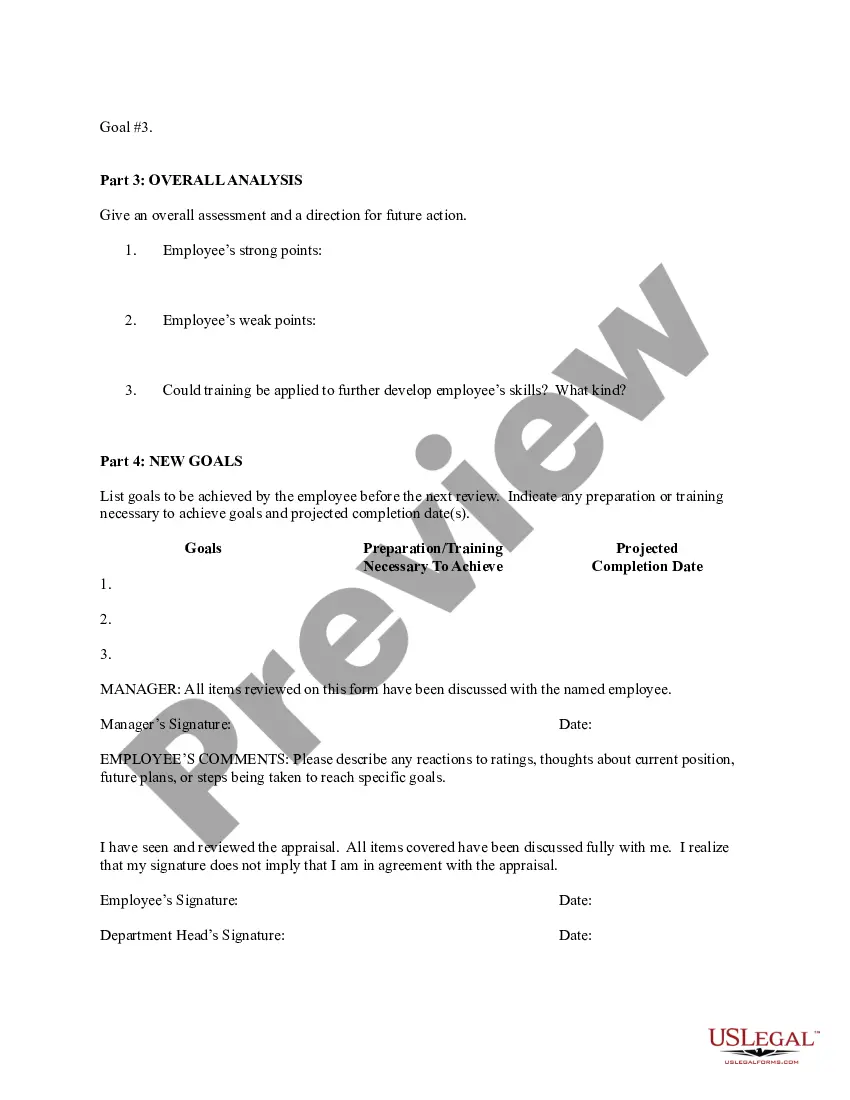
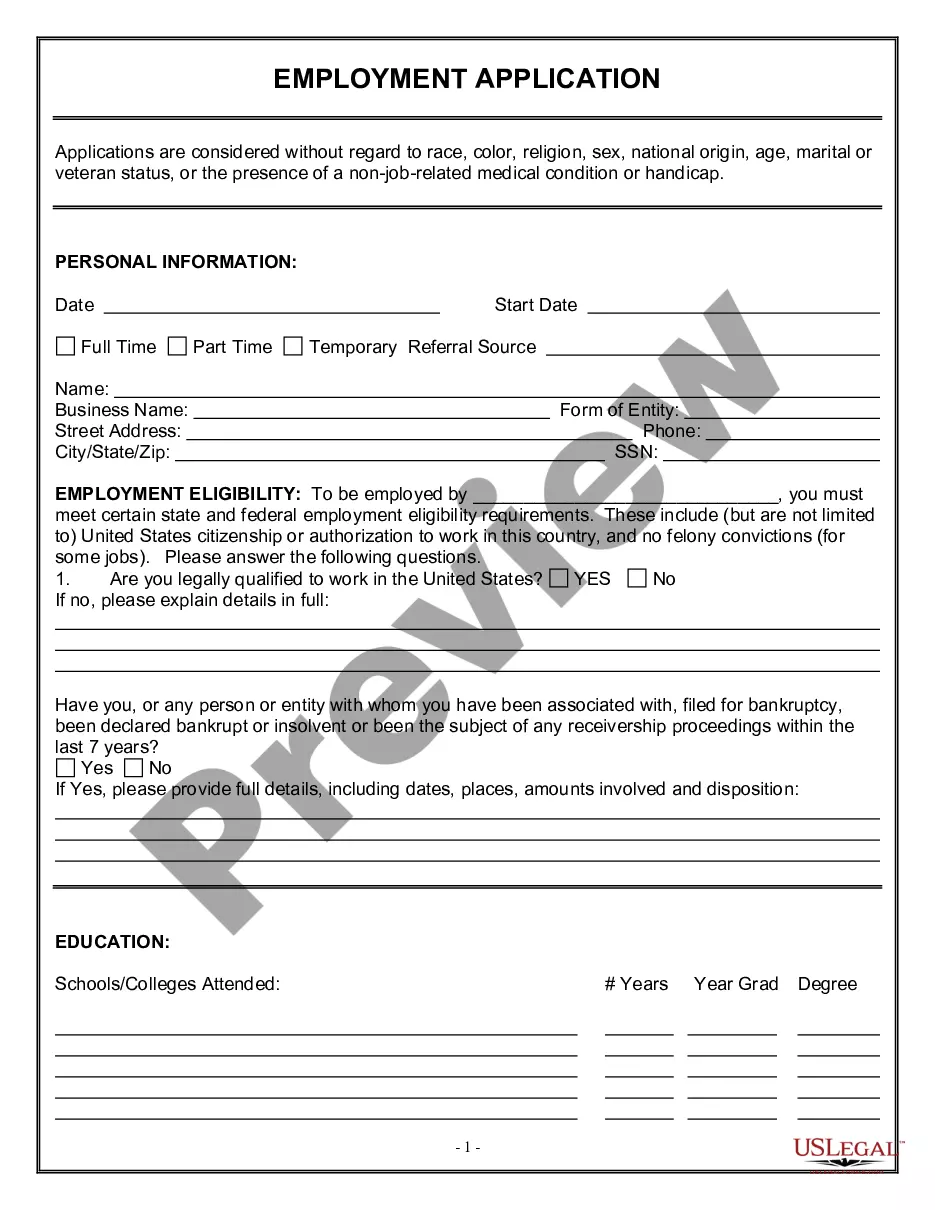
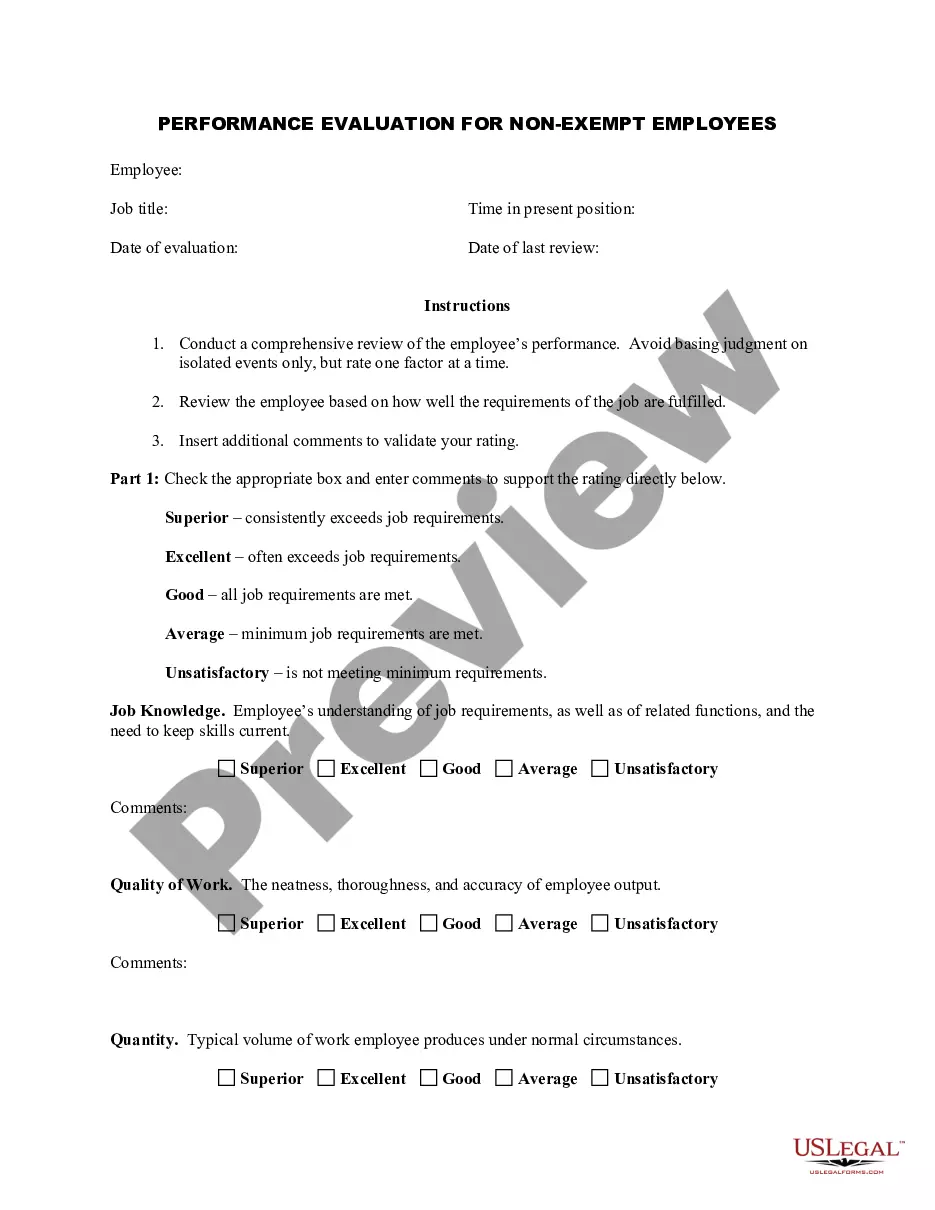
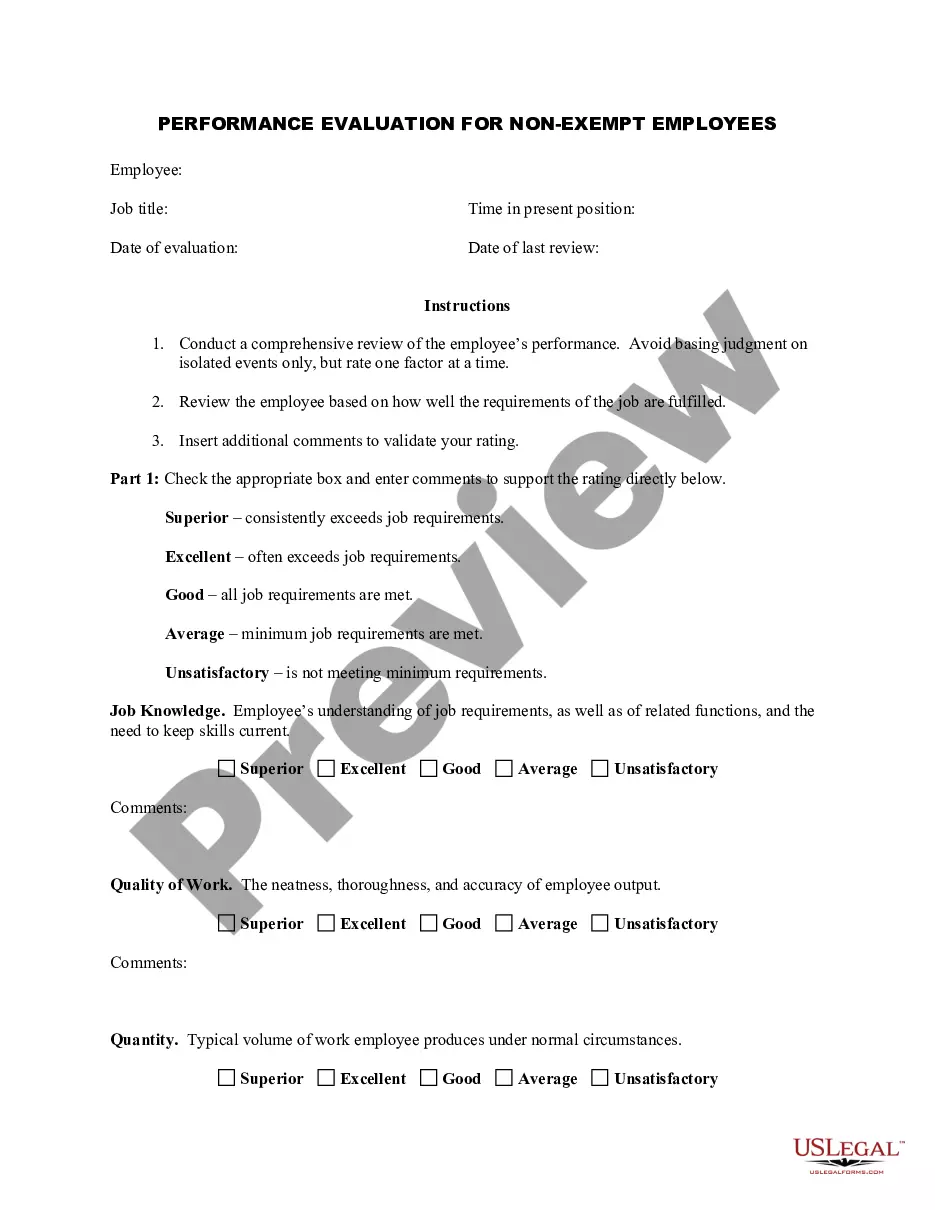
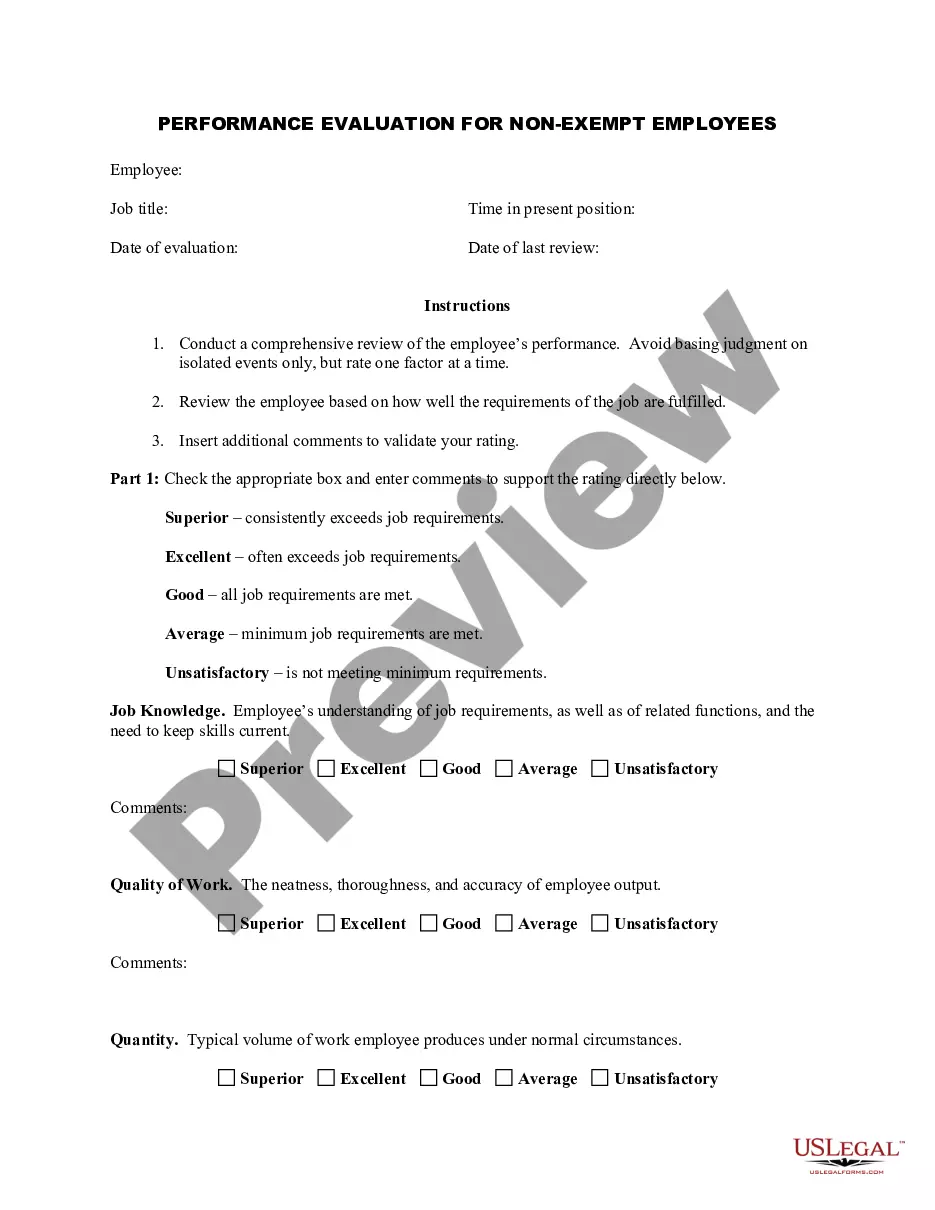
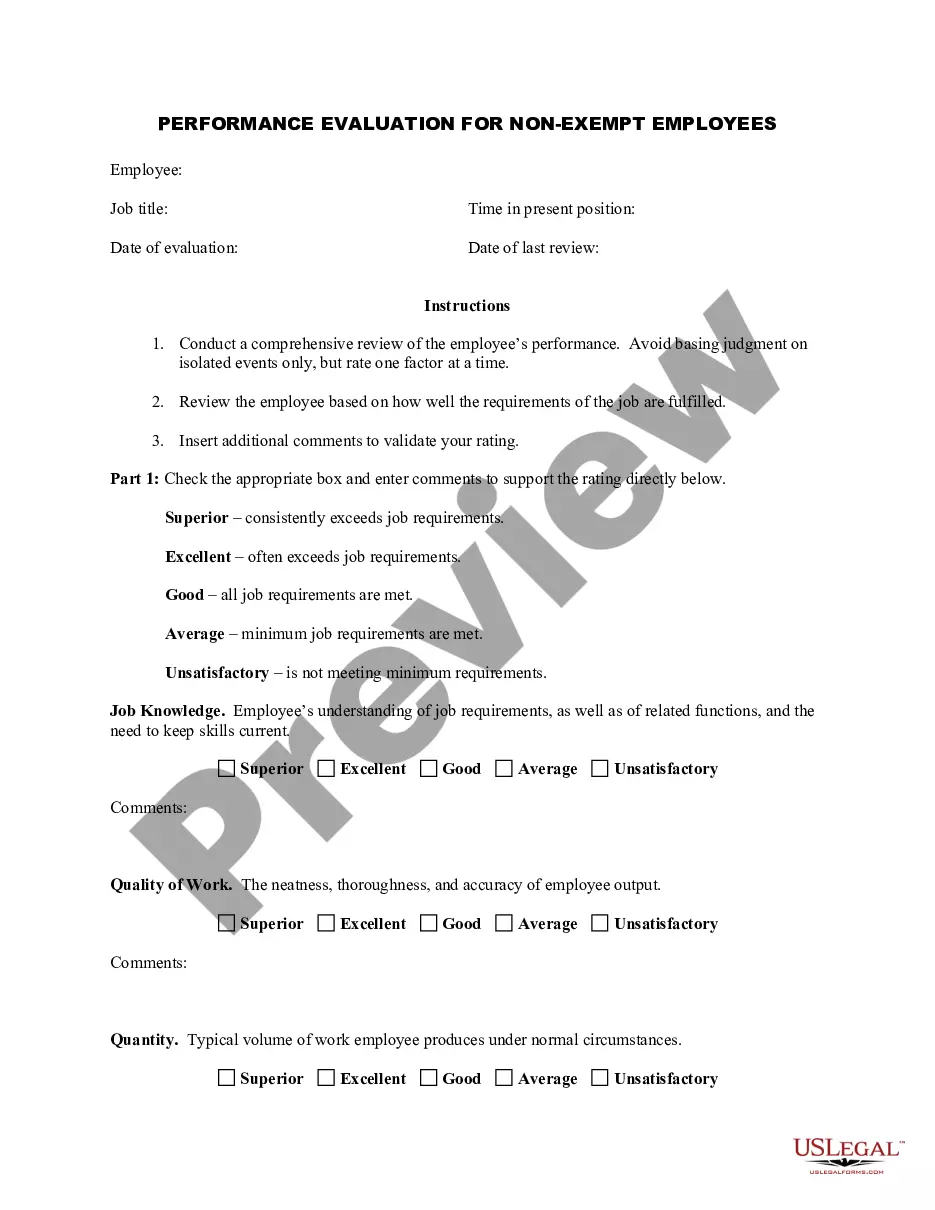

How to fill out Employee Evaluation Form For Psychologist?
Locating the appropriate authorized document template can be a challenge.
Of course, there is a multitude of templates accessible online, but how do you identify the specific legal document you require.
Utilize the US Legal Forms website. This service offers thousands of templates, including the New Jersey Employee Evaluation Form for Psychologist, suitable for both professional and personal purposes.
You can view the document using the Preview button and review the form outline to make sure it is suitable for you.
- All the templates are reviewed by experts and meet federal and state standards.
- If you are already registered, sign in to your account and click the Acquire button to download the New Jersey Employee Evaluation Form for Psychologist.
- Use your account to browse the legal forms you have previously purchased.
- Go to the My documents section of your account and download another copy of the document you need.
- If you're a new user of US Legal Forms, here are simple steps for you to follow.
- First, ensure you have chosen the correct form for your county/state.
Form popularity
FAQ
Since the field of psychology is diverse and multifaceted, rising professionals are open to pursue a number of different career options. They might become clinical psychologists working in private practice, school psychologists helping students or research professionals working in academia or government.
The majority (81%) of school psychologists work in public school settings. Other primary places of employment are private schools, community agencies, hospitals and clinics, and universities.
The most common work setting for clinical psychologists is private practice.
1 Psychologists can prescribe in five states: Louisiana, New Mexico, Illinois, Iowa, and Idaho. In such cases, psychologists are required to receive proper training and are permitted to prescribe certain medicines used in the treatment of mental disorders.
Psychologists can only prescribe in collaboration with the patient's physician. If the patient does not have a physician, the psychologist cannot prescribe.
Currently in New Jersey, only psychiatrists medical doctors are licensed to do that. There's a lot of confusion. People who come into my office regularly and say Can I get medication from you? Not at this point, said NJ Psychological Association President Jeffrey Singer.
A psychological assessment can include numerous components such as norm-referenced psychological tests, informal tests and surveys, interview information, school or medical records, medical evaluation and observational data. A psychologist determines what information to use based on the specific questions being asked.
Common employment settings for psychologists include: Mental health clinics. Hospitals and physician offices. Private clinics.
The CPQ is a means by which a doctoral level licensed psychologist can easily demonstrate to a psychology board that he or she has met ASPPB recommended standards for licensure which include specific requirements relative to his or her educational background, supervised experience, and performance on the EPPP.
Some psychologists work alone, with patients and clients coming to the psychologist's office. Others are involved in health care teams and typically work in hospitals, medical schools, outpatient clinics, nursing homes, pain clinics, rehabilitation facilities, and community health and mental health centers.