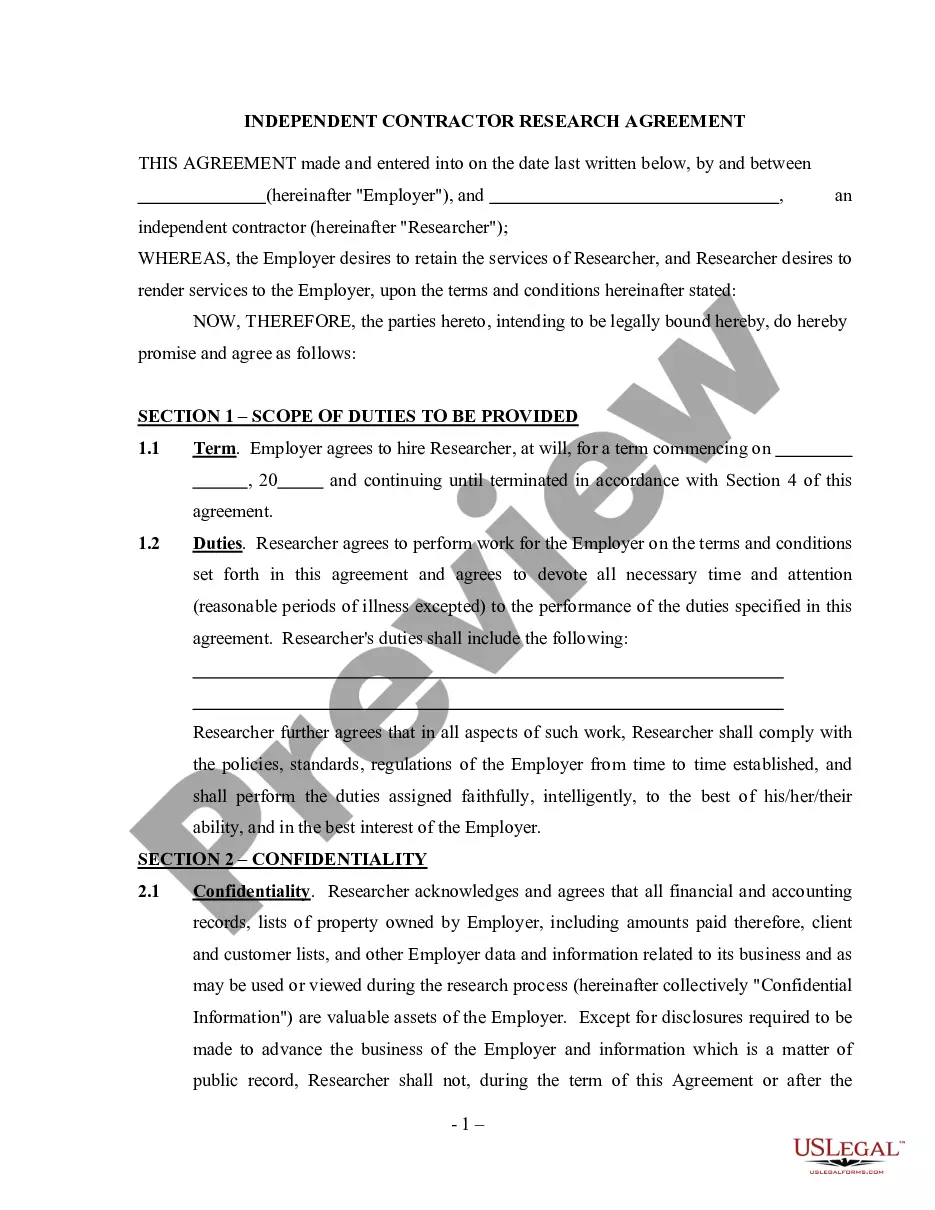
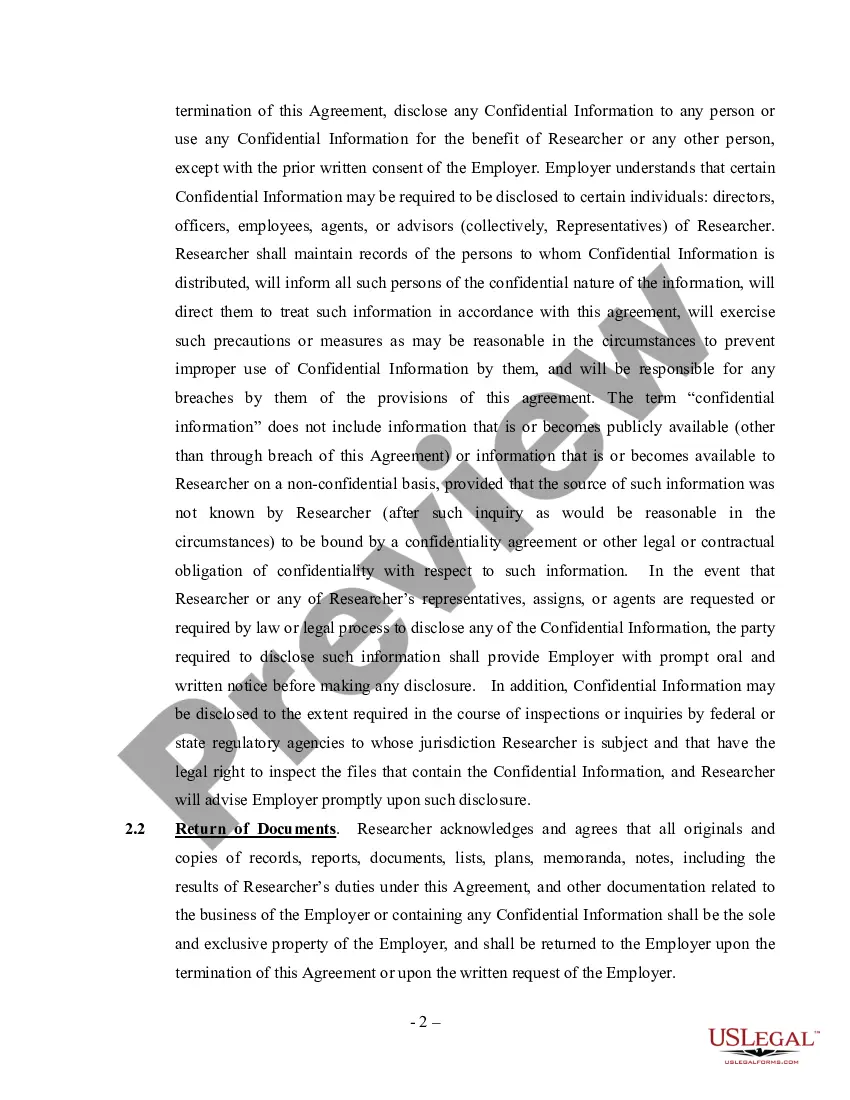
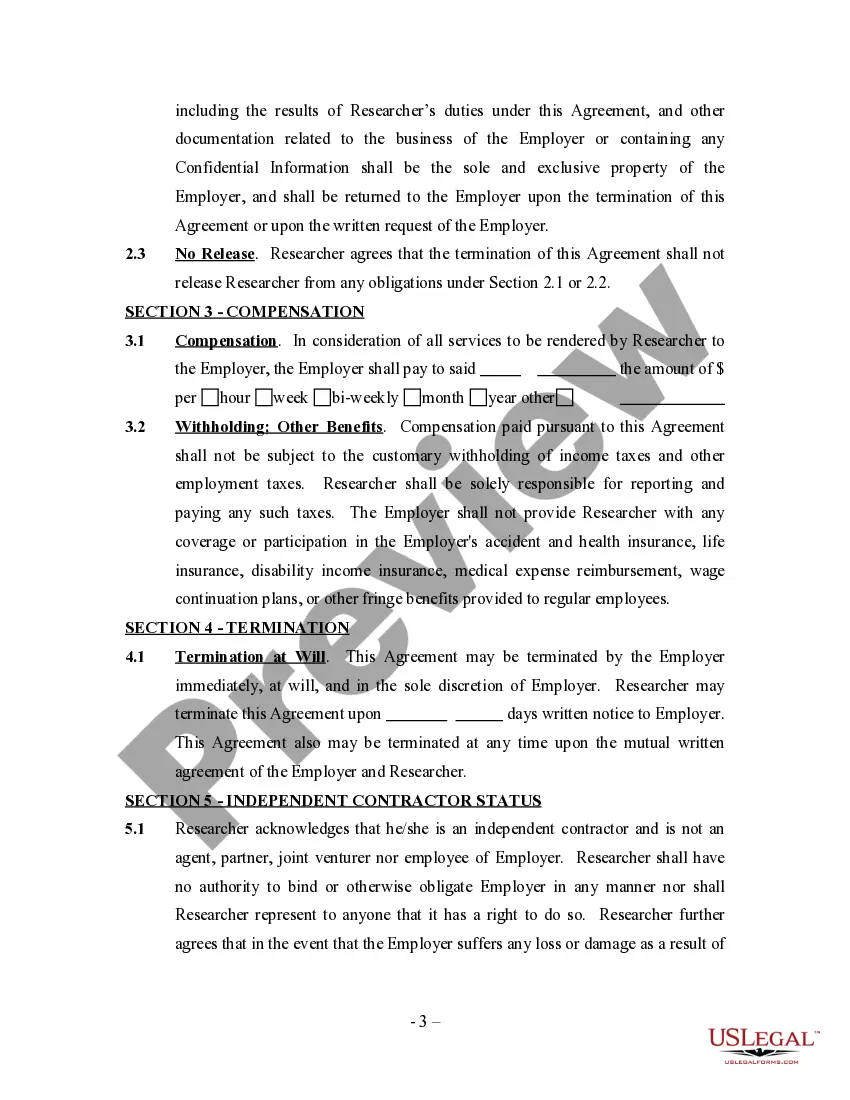
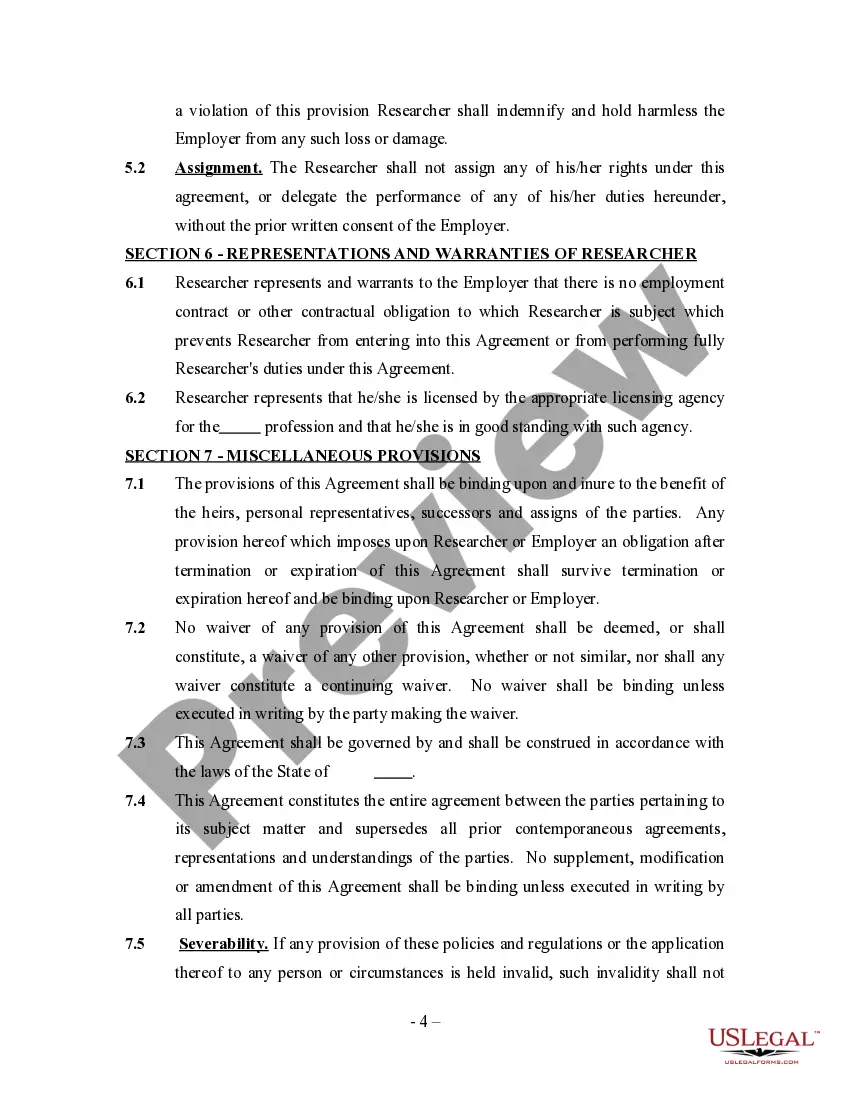
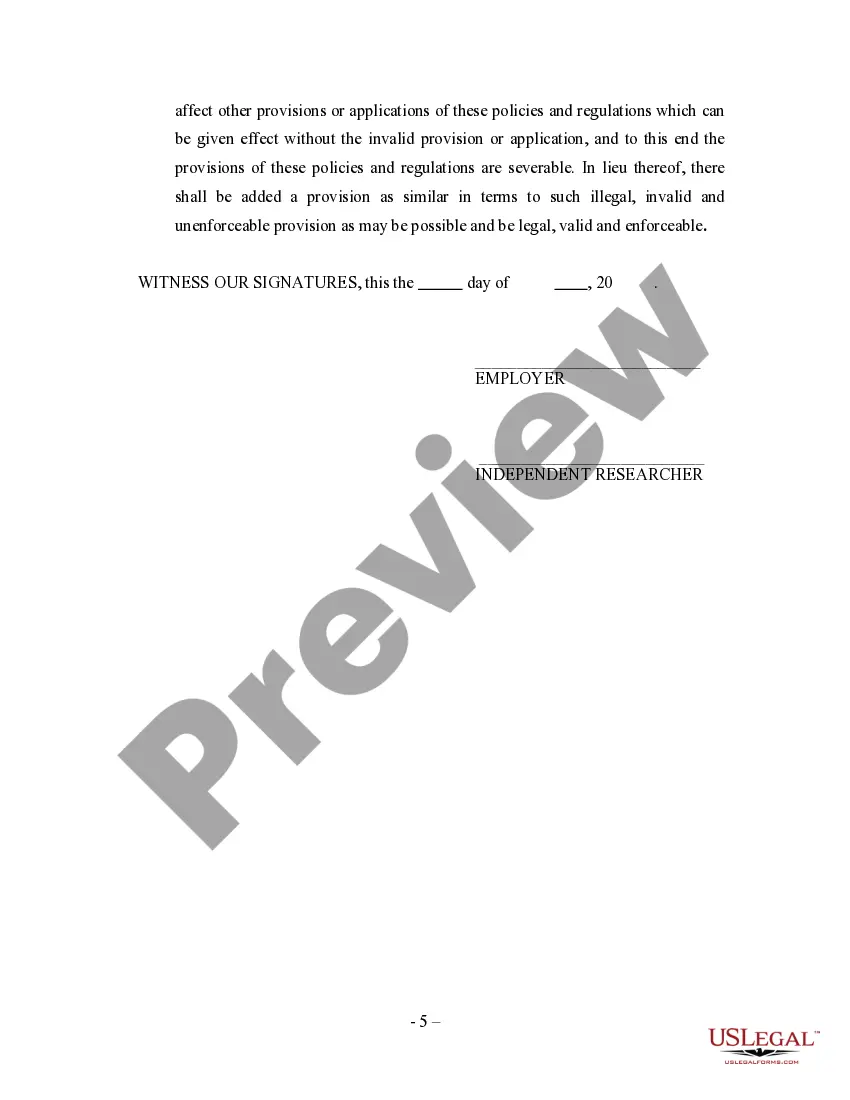
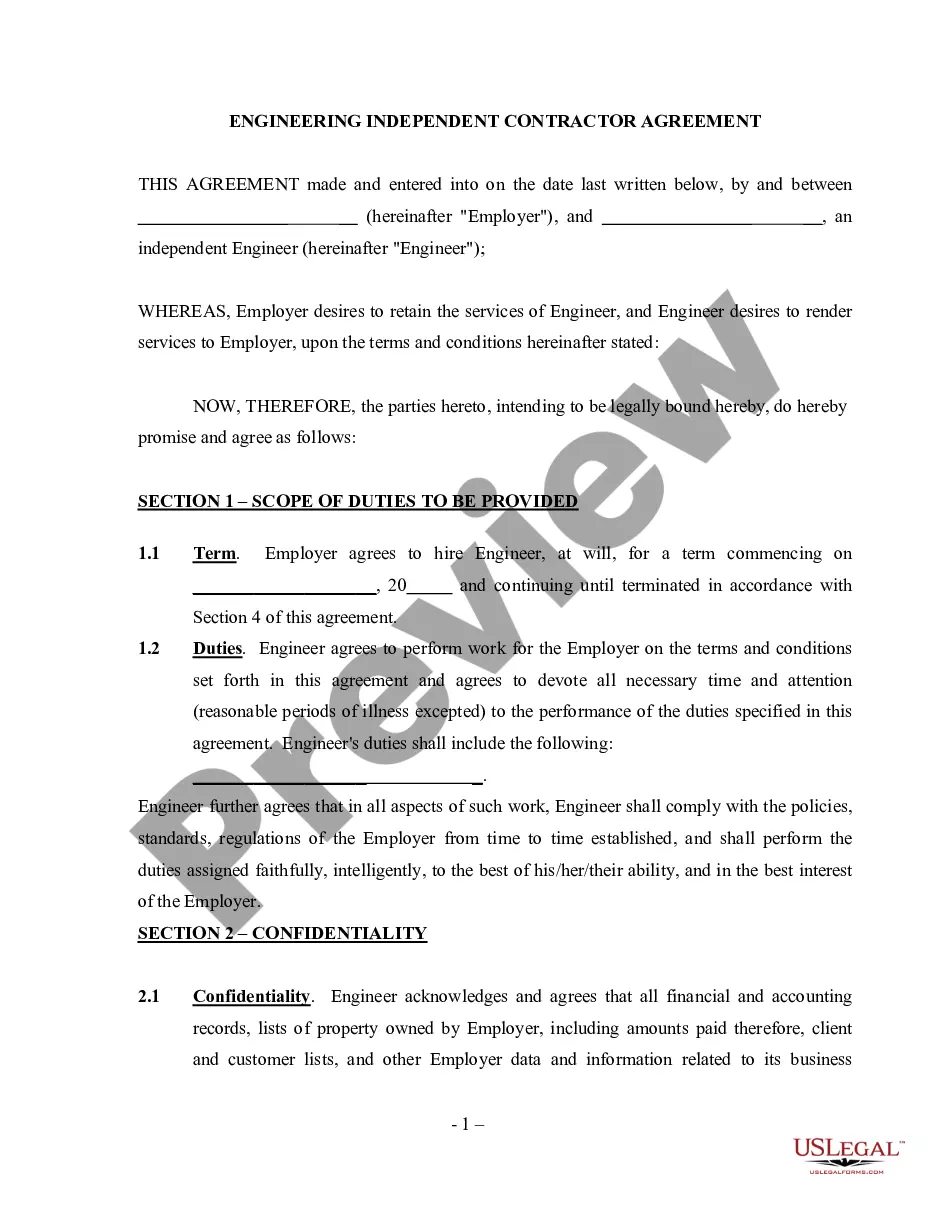
This is a contract between an employer and a researcher whereby researcher is hired as an independent contractor to provide research or research related activities for the employer.
New Jersey Research Agreement - Self-Employed Independent Contractor
State:
Multi-State
Control #:
US-INDC-35
Format:
Word;
Rich Text
Instant download
Description
Free preview
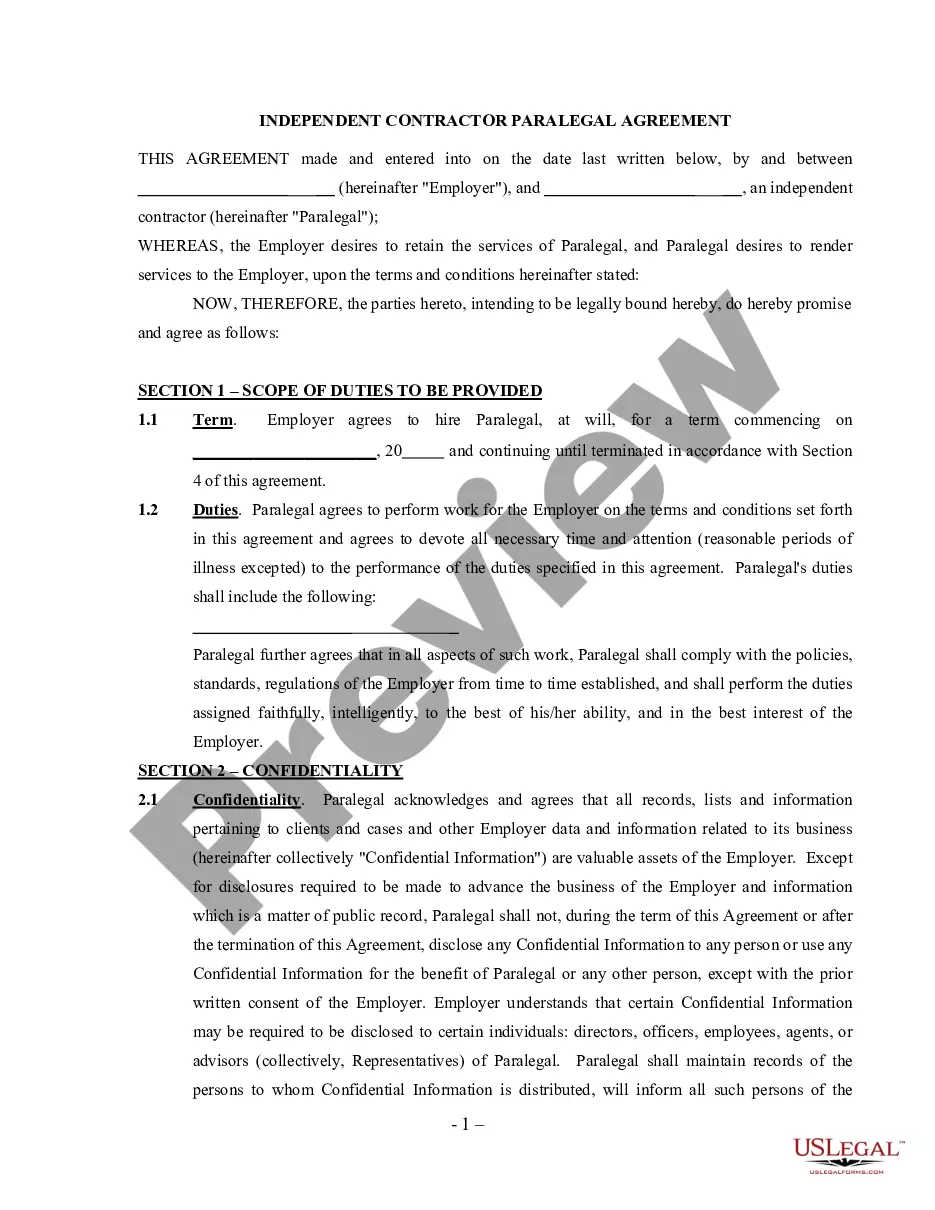
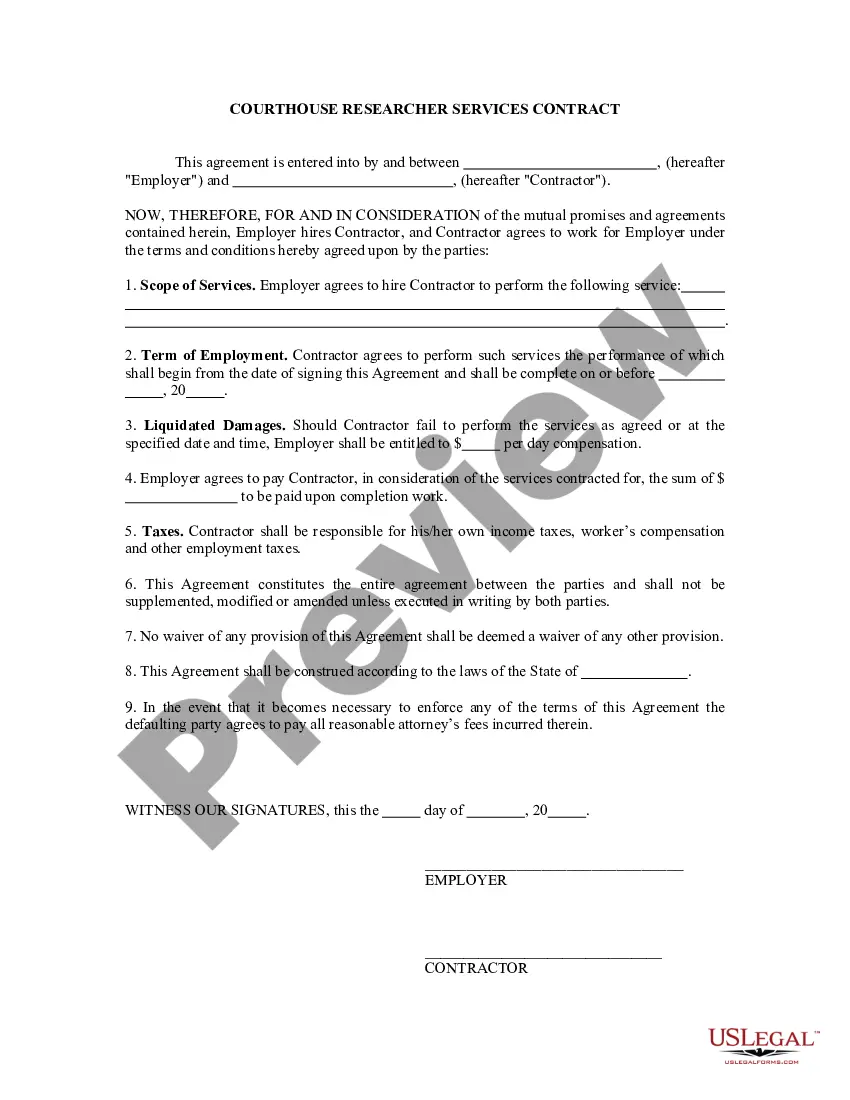
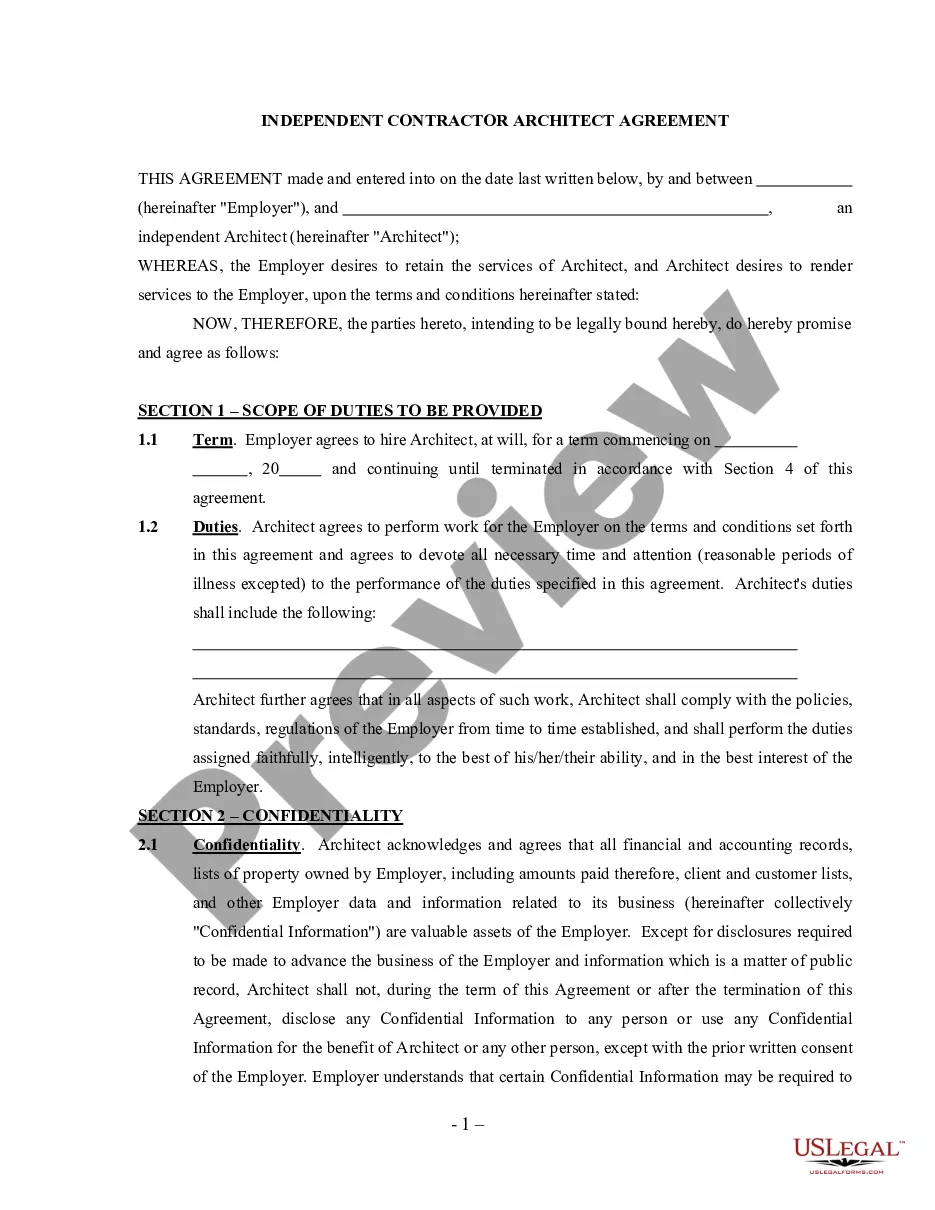
How to fill out Research Agreement - Self-Employed Independent Contractor?
Are you in a situation where you frequently require documents for either business or personal purposes? There are numerous legal document templates available online, but finding reliable forms is not straightforward. US Legal Forms provides thousands of template options, including the New Jersey Research Agreement - Self-Employed Independent Contractor, which can be customized to comply with both state and federal regulations.
If you are already acquainted with the US Legal Forms website and possess an account, simply Log In. After that, you can download the New Jersey Research Agreement - Self-Employed Independent Contractor template.
If you do not have an account and wish to start using US Legal Forms, follow these steps.
Access all the document templates you have purchased in the My documents menu. You can obtain an additional copy of the New Jersey Research Agreement - Self-Employed Independent Contractor anytime, if required. Simply select the necessary form to download or print the document template.
Utilize US Legal Forms, which offers one of the largest selections of legal documents, to save time and minimize errors. The service provides properly crafted legal document templates that can be used for a variety of purposes. Create your account on US Legal Forms and start simplifying your life.
- Identify the form you need and ensure it is for your correct city/region.
- Utilize the Preview button to examine the form.
- Check the description to confirm that you have selected the correct form.
- If the form isn’t what you are looking for, use the Search area to find the form that fits your needs and requirements.
- Once you identify the correct form, click Purchase now.
- Choose the payment plan you prefer, enter the required details to create your account, and complete the purchase using your PayPal or Visa or Mastercard.
- Select a convenient file format and download your copy.
Form popularity
FAQ
The individual is customarily engaged in an independently established trade, occupation, profession or business.
Simply put, being an independent contractor is one way to be self-employed. Being self-employed means that you earn money but don't work as an employee for someone else.
A 1099 employee is a US self-employed worker that reports their income to the IRS on a 1099 tax form. Freelancers, gig workers, and independent contractors are all considered 1099 employees.
If you are classified as an "independent contractor," you may be paid with a 1099 with no deductions made for taxes, unemployment, or other contributions that an employee pays.
A 1099 employee is a US self-employed worker that reports their income to the IRS on a 1099 tax form. Freelancers, gig workers, and independent contractors are all considered 1099 employees.
Cons of Independent Contracting Employers like contractors because they can avoid paying for taxes and benefits, and that means those costs fall entirely on independent contractors. Contractors must withhold their own federal, state, and local taxes. They may also have to submit quarterly estimated taxes to the IRS.
The contract should state who pays which expenses. The contractor is usually responsible for all expenses including mileage, vehicle maintenance, and other business travel costs; work supplies and tools; licenses, fees, and permits; phone and internet expenses; and payments to employees or subcontractors.
The general rule is that an individual is an independent contractor if the payer has the right to control or direct only the result of the work and not what will be done and how it will be done. If you are an independent contractor, then you are self-employed.
Becoming an independent contractor is one of the many ways to be classified as self-employed. By definition, an independent contractor provides work or services on a contractual basis, whereas, self-employment is simply the act of earning money without operating within an employee-employer relationship.