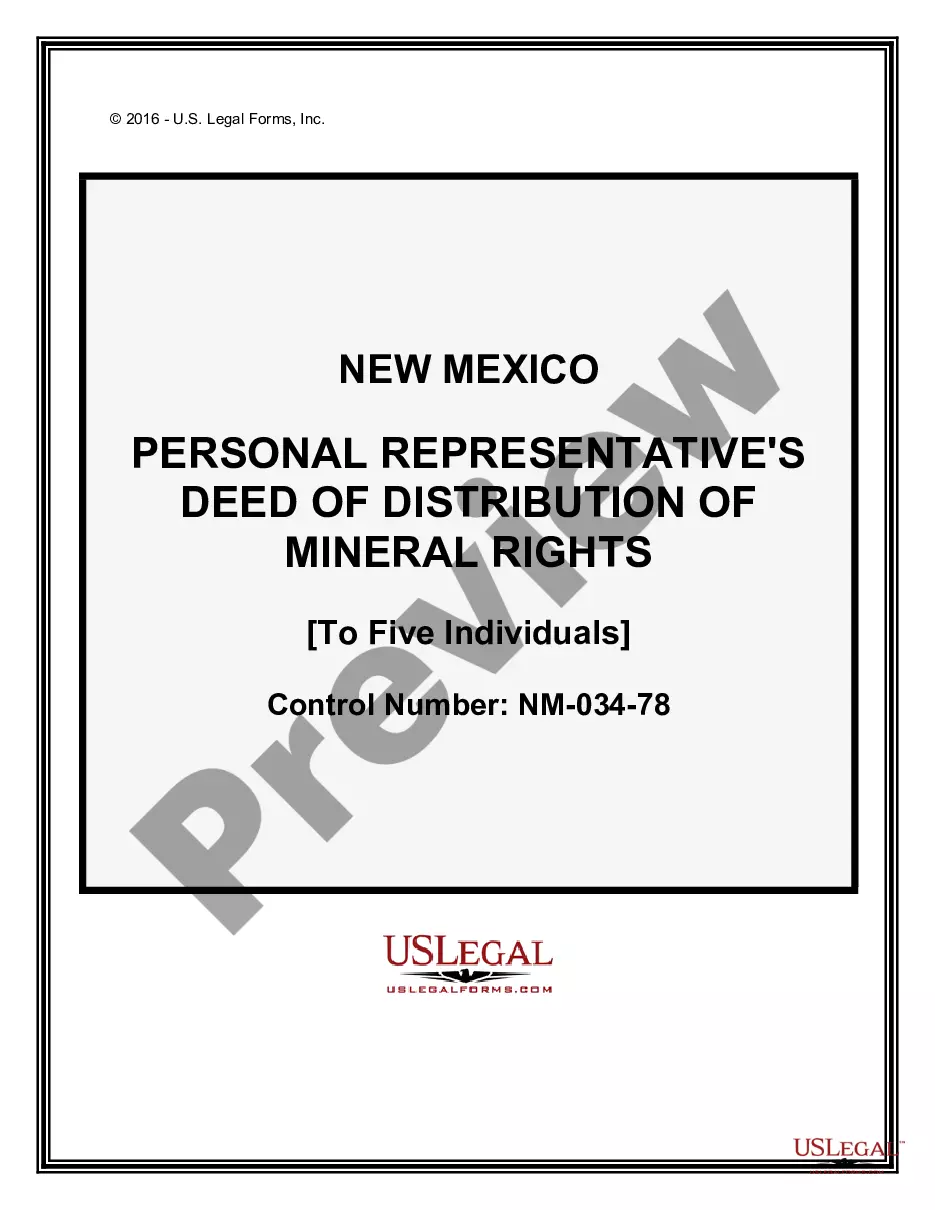
New Mexico Personal Representative's Deed of Distribution of Mineral Rights
What is this form?
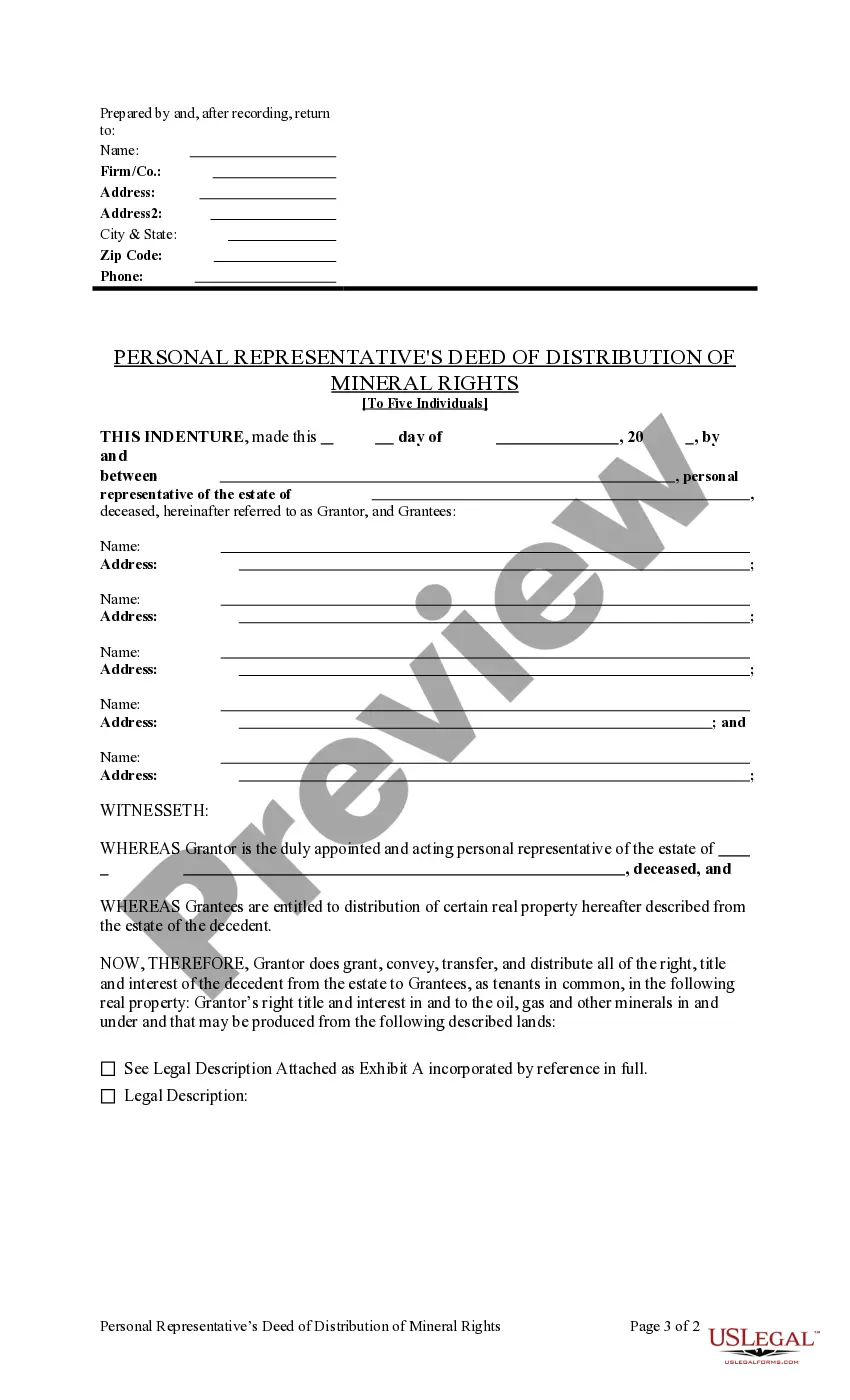
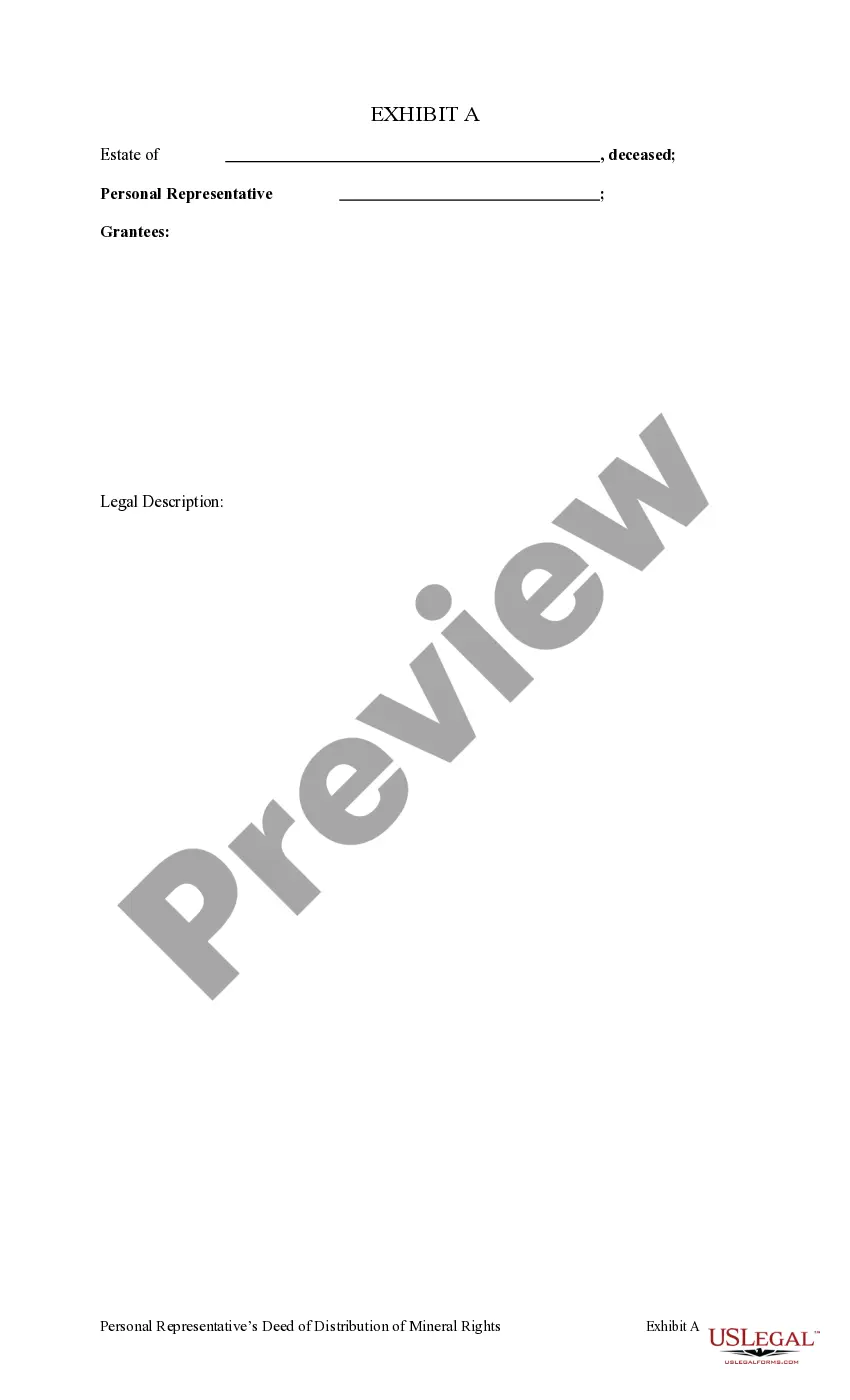
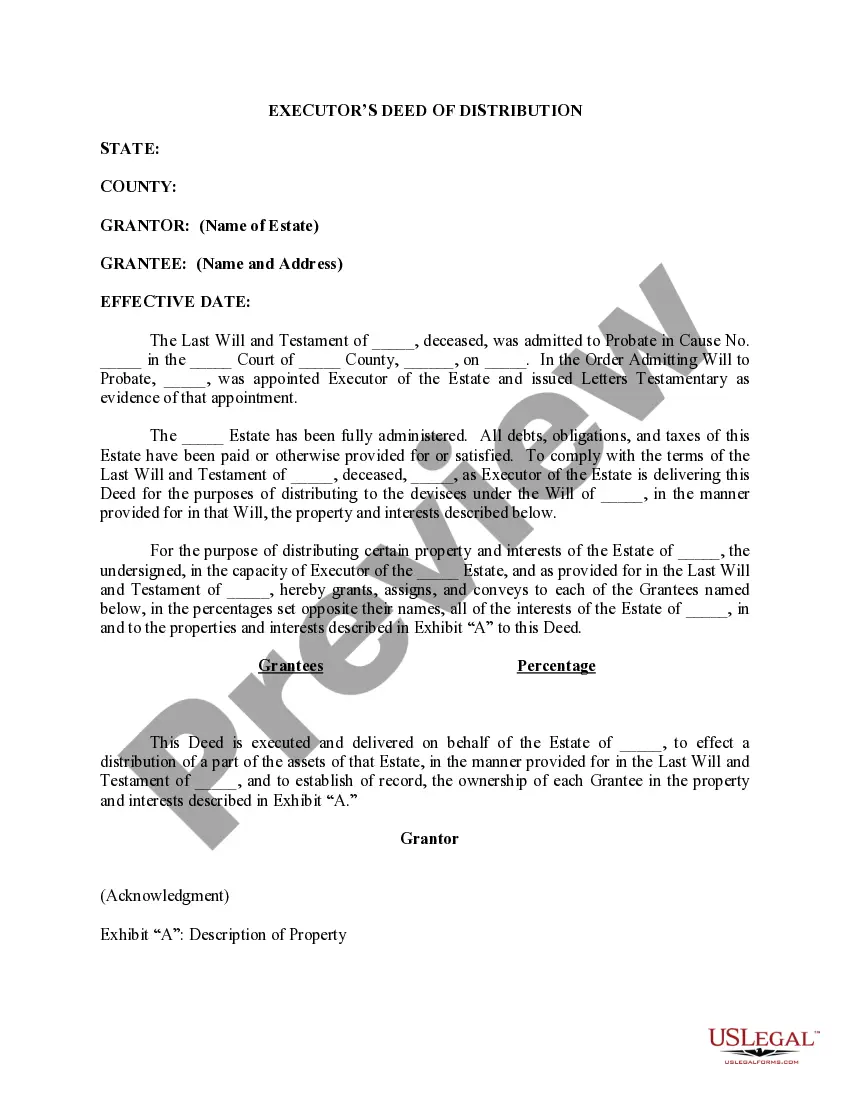
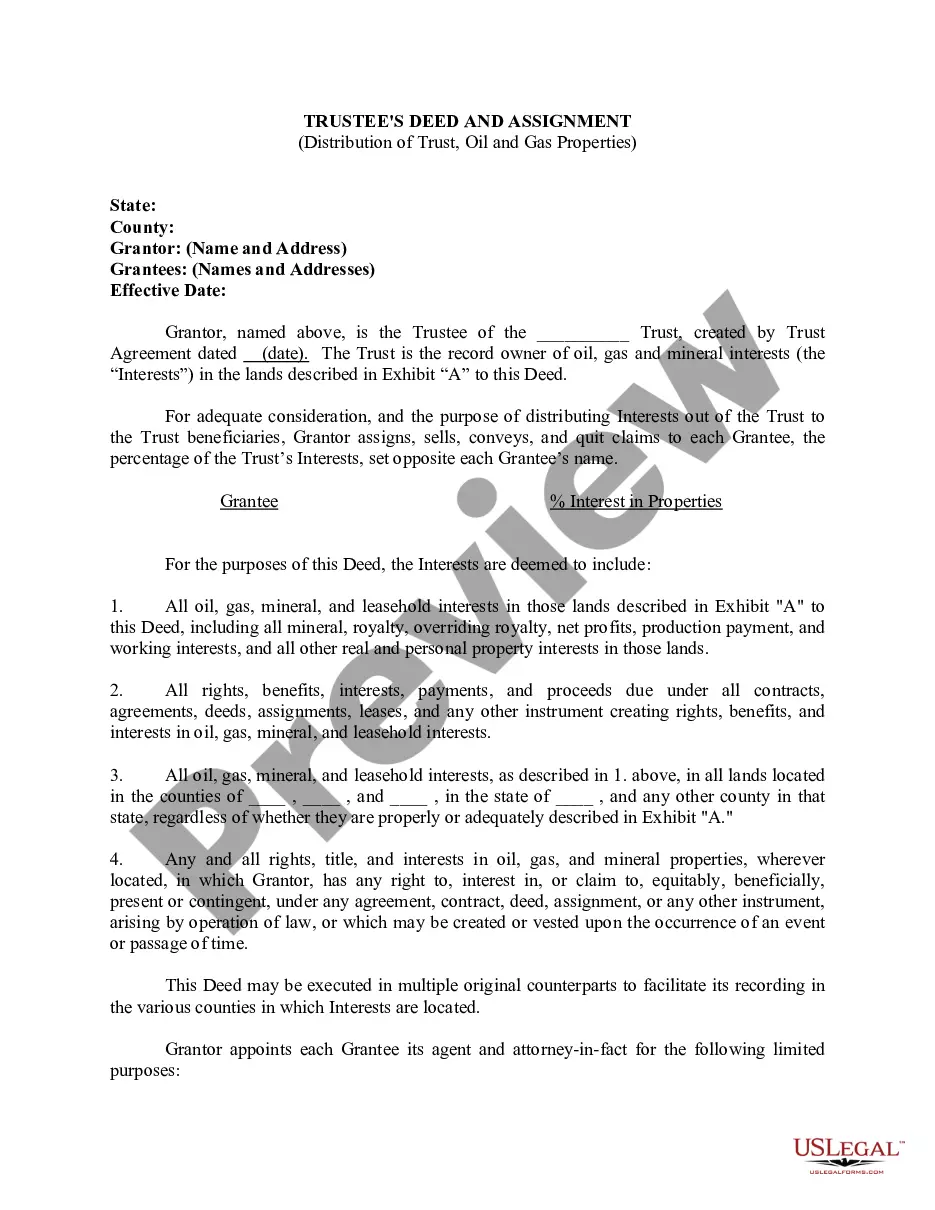
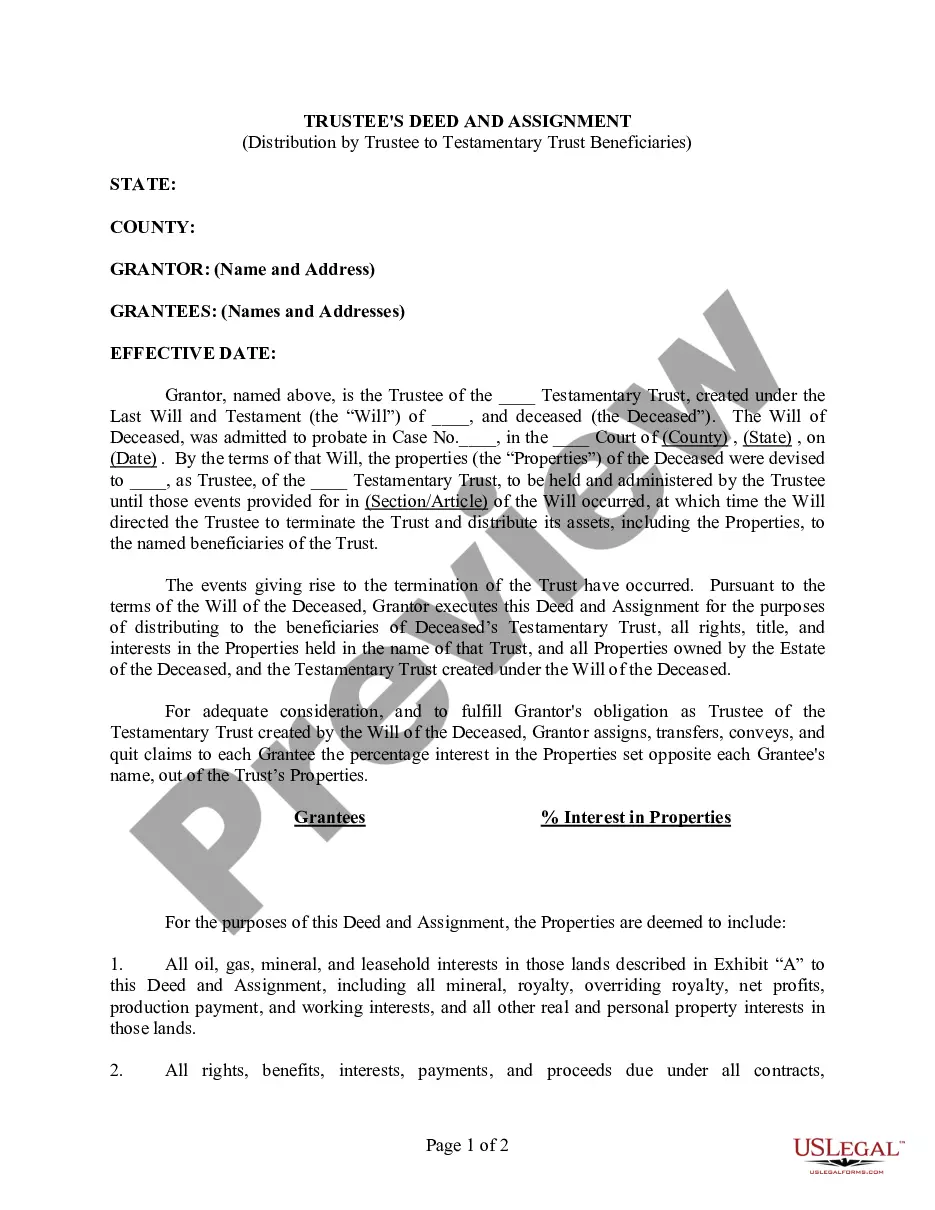
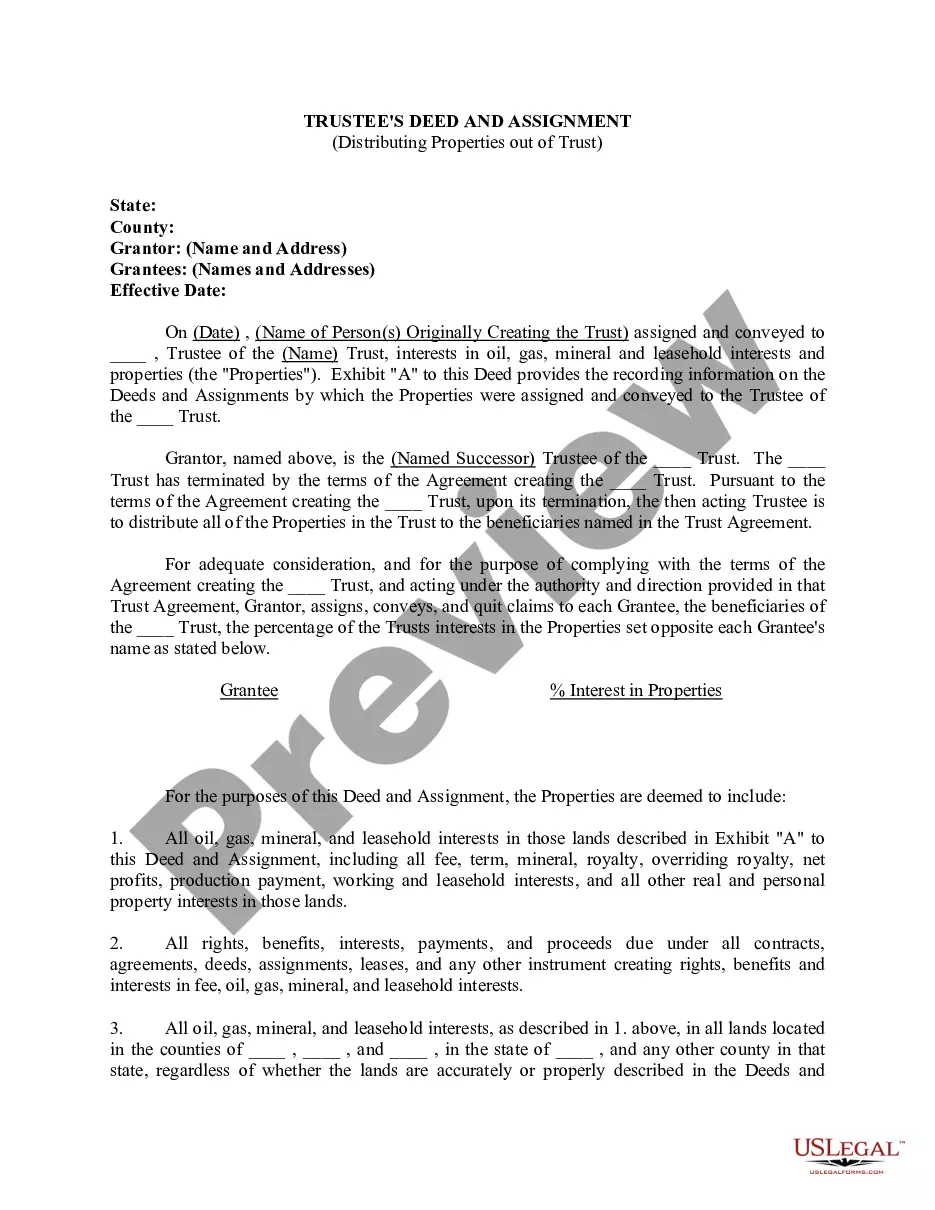
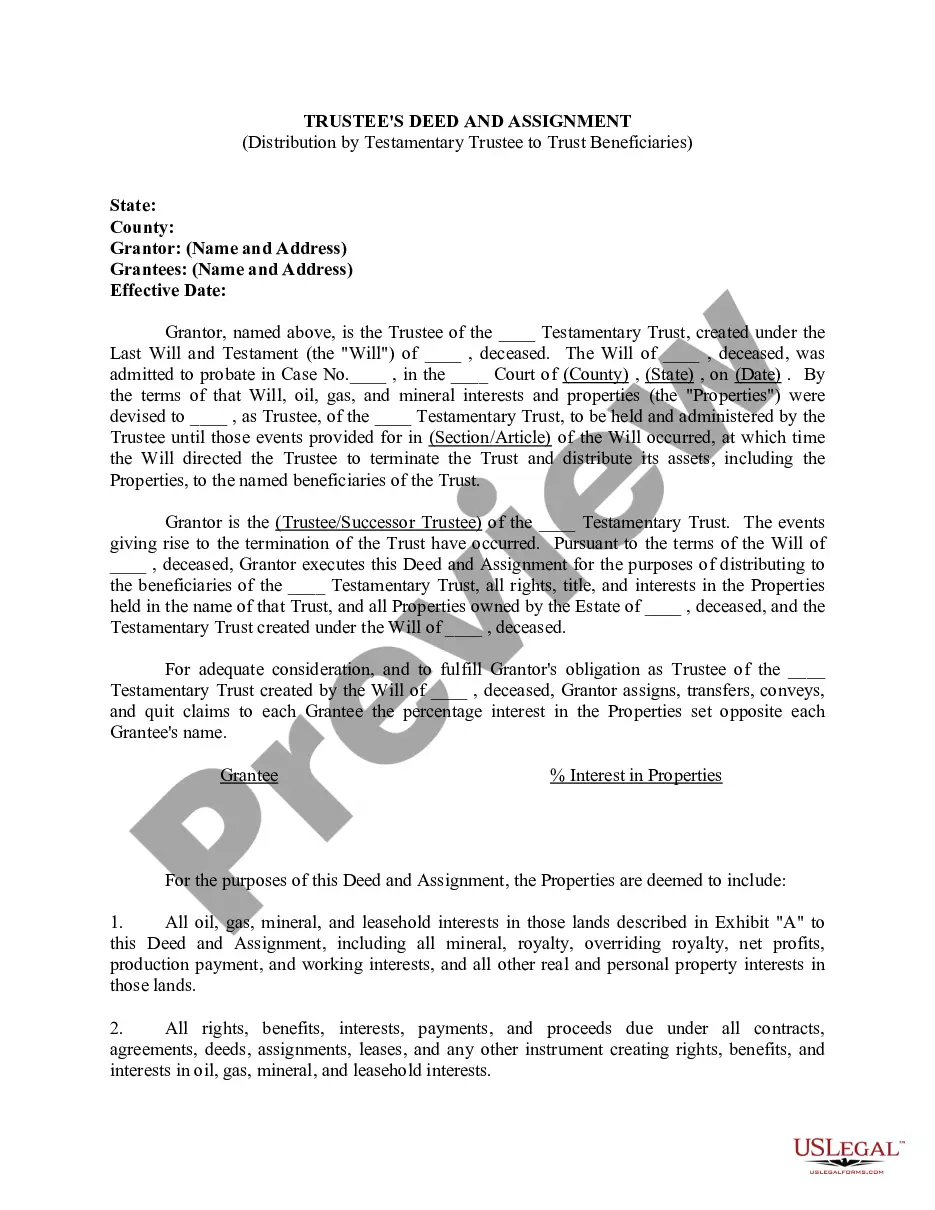
The Personal Representative's Deed of Distribution of Mineral Rights is a legal document used to transfer mineral rights owned by a deceased person to the beneficiaries of their estate. This deed allows the personal representative or executor of the estate (the Grantor) to convey all rights, title, and interest in the specified mineral properties to the designated beneficiaries (the Grantees). Unlike other property transfer documents, this form specifically addresses the distribution of mineral interests and complies with state laws, ensuring the transfer is legally recognized.
What’s included in this form
- Identification of the Grantor (personal representative) and the Grantees (beneficiaries).
- Detailed description of the mineral rights being transferred.
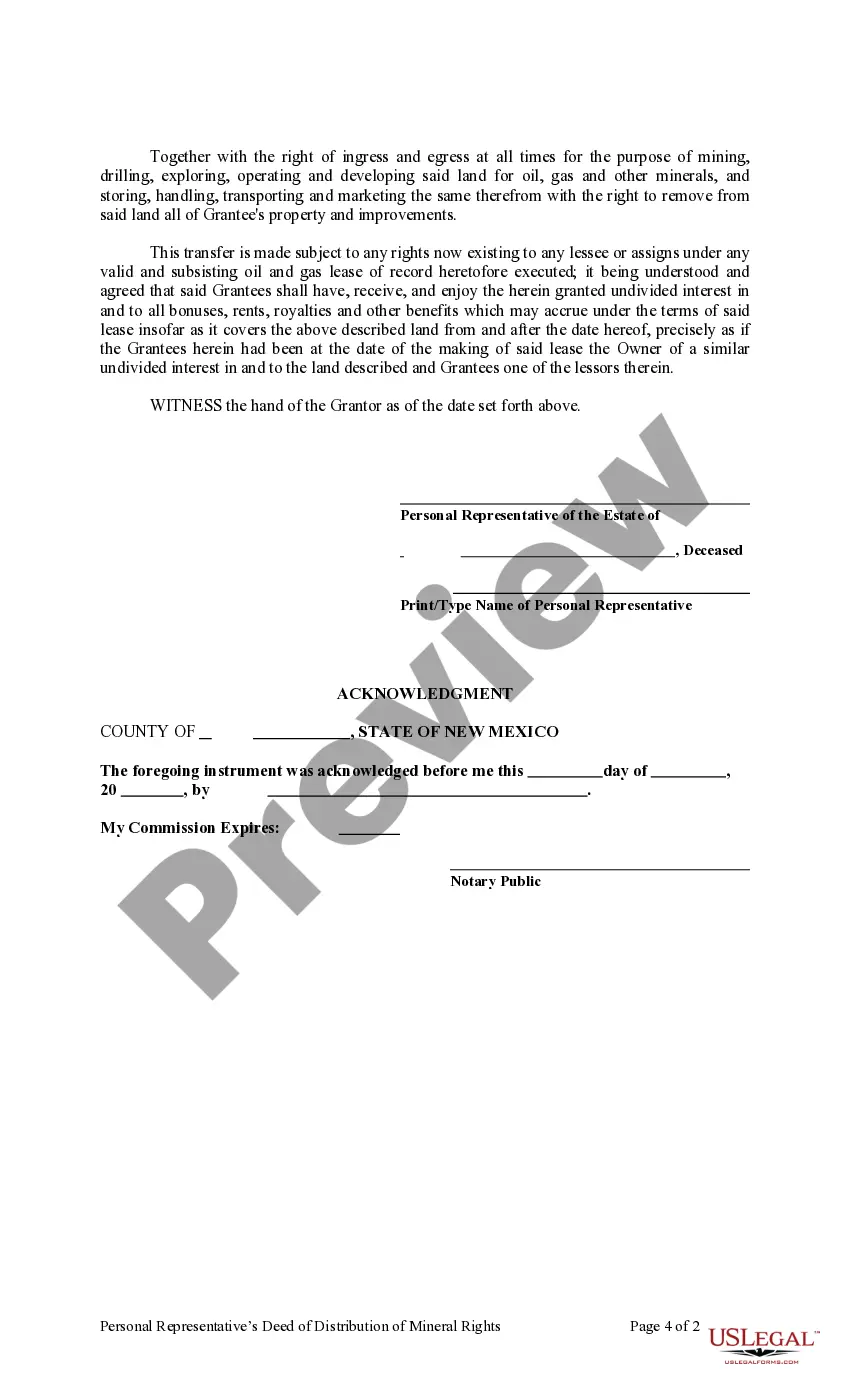
- Legal language affirming the transfer of rights in accordance with state statutes.
- Signature space for the Grantor, witness, and notary (if applicable).
When this form is needed
This form is needed when a personal representative is required to distribute mineral rights of a deceased individual's estate to the beneficiaries as outlined in the will or estate plan. It's commonly used in scenarios involving real estate transactions where mineral rights are a significant aspect of the property interests being transferred.
Who needs this form
- Personal representatives or executors of an estate managing the distribution of assets.
- Beneficiaries of an estate receiving rights to minerals such as oil, gas, or other extracts.
- Estate administrators handling the legal distribution of property interests, particularly after a personâs death.
Completing this form step by step
- Identify the parties involved, including the Grantor and the Grantees.
- Specify the property and mineral rights being distributed.
- Enter the date of distribution and any relevant information regarding the deceased's estate.
- Obtain necessary signatures from the Grantor and witnesses, potentially including a notary.
- Ensure copies of the completed deed are provided to all parties involved.
Notarization guidance
This form does not typically require notarization unless specified by local law. However, having it notarized can enhance its legal standing, and US Legal Forms provides integrated online notarization services for added convenience.
Get your form ready online
Our built-in tools help you complete, sign, share, and store your documents in one place.
Make edits, fill in missing information, and update formatting in US Legal Forms—just like you would in MS Word.
Download a copy, print it, send it by email, or mail it via USPS—whatever works best for your next step.
Sign and collect signatures with our SignNow integration. Send to multiple recipients, set reminders, and more. Go Premium to unlock E-Sign.
If this form requires notarization, complete it online through a secure video call—no need to meet a notary in person or wait for an appointment.
We protect your documents and personal data by following strict security and privacy standards.

Make edits, fill in missing information, and update formatting in US Legal Forms—just like you would in MS Word.

Download a copy, print it, send it by email, or mail it via USPS—whatever works best for your next step.

Sign and collect signatures with our SignNow integration. Send to multiple recipients, set reminders, and more. Go Premium to unlock E-Sign.

If this form requires notarization, complete it online through a secure video call—no need to meet a notary in person or wait for an appointment.

We protect your documents and personal data by following strict security and privacy standards.
Common mistakes to avoid
- Failing to properly identify all parties involved in the transaction.
- Not including a clear description of the mineral rights being transferred.
- Neglecting to sign the document or have required witnesses present.
Benefits of completing this form online
- Convenience of completing the form at your own pace and from any location.
- Editable fields that allow for easy entry of necessary information.
- Access to attorney-drafted templates ensuring legal compliance.
Looking for another form?
Form popularity
FAQ
Identify the donee or recipient. Discuss terms and conditions with that person. Complete a change of ownership form. Change the title on the deed. Hire a real estate attorney to prepare the deed. Notarize and file the deed.
Retrieve your original deed. Get the appropriate deed form. Draft the deed. Sign the deed before a notary. Record the deed with the county recorder. Obtain the new original deed.
In order to transfer a property into one person's name, you will need to complete a 'Transfer of Whole of Registered Title' form and send it to HM Land Registry, along with the correct fee and identity verification forms. In some cases, there may also be Stamp Duty Land Tax to pay.
In order to provide finality to the termination of a trust or the closing of an estate, the form of deed given by a personal representative or a trustee simply calls for the seller to convey as opposed to convey and warrant the property.Again, all the buyer gets is whatever the trust or estate owned.
It usually takes four to six weeks to complete the legal processes involved in the transfer of title.
A personal representative deed and warranty deed are the same only in that they both convey ownership of land. The types of title assurance that the different deeds provide to the new owner are very different.
New Mexico has a simplified probate process for small estates. To use it, an executor files a written request with the local probate court asking to use the simplified procedure. The court may authorize the executor to distribute the assets without having to jump through the hoops of regular probate.
Personal representative's distributive deeds are used to transfer ownership of real property from a testate estate.Each situation is unique, however, so contact an attorney with specific questions or for complex cases.
To transfer ownership of a property a new deed must be filed with the County Clerk's Office before the name and address are changed in the Assessor's records. Once the Assessor's records are updated the Treasurer's Office will get the update in the new billing cycle.