New Mexico Default Judgment for Foreclosure and Order of Sale
Overview of this form
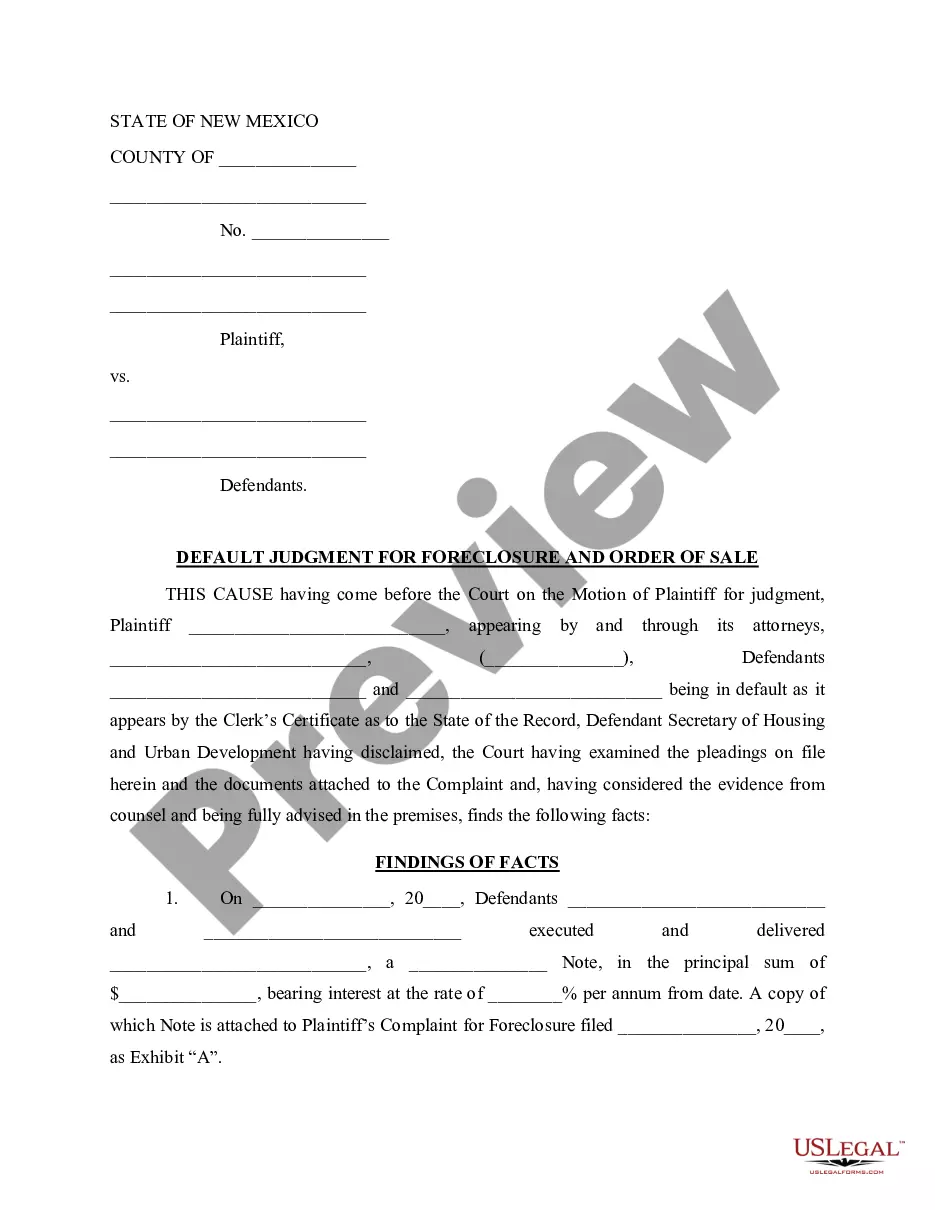
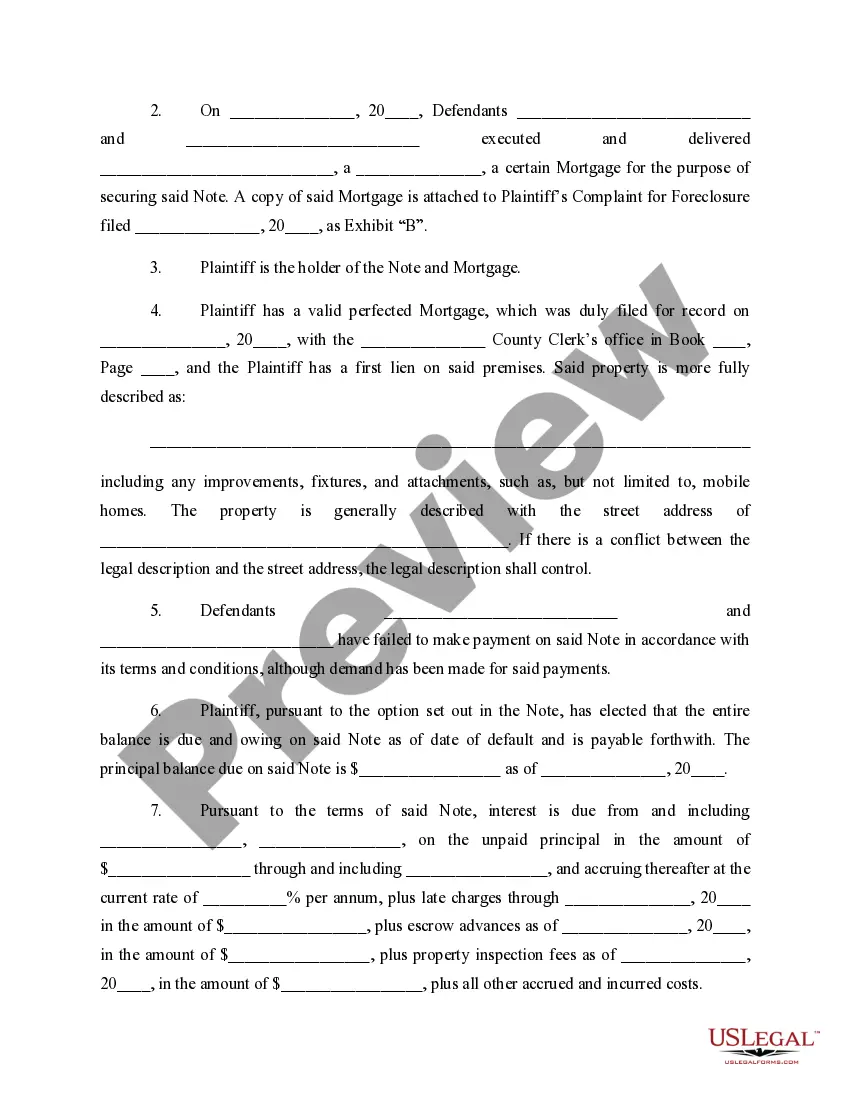
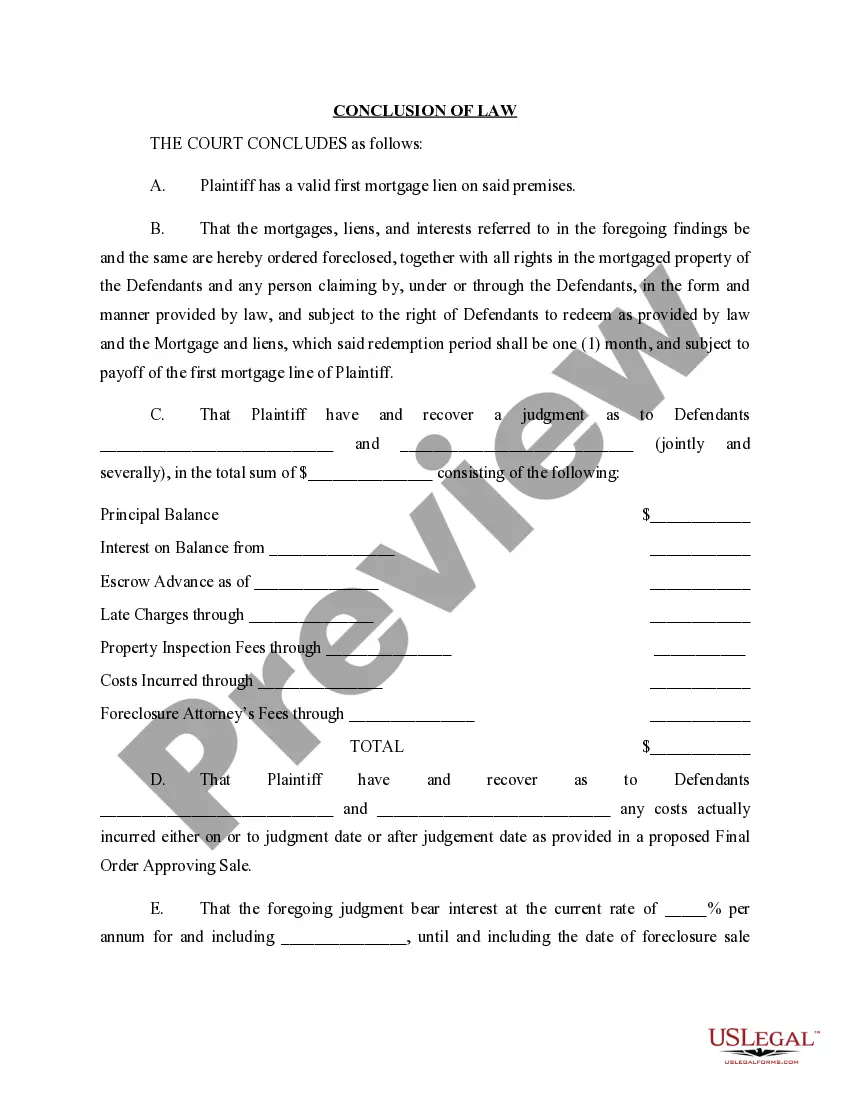
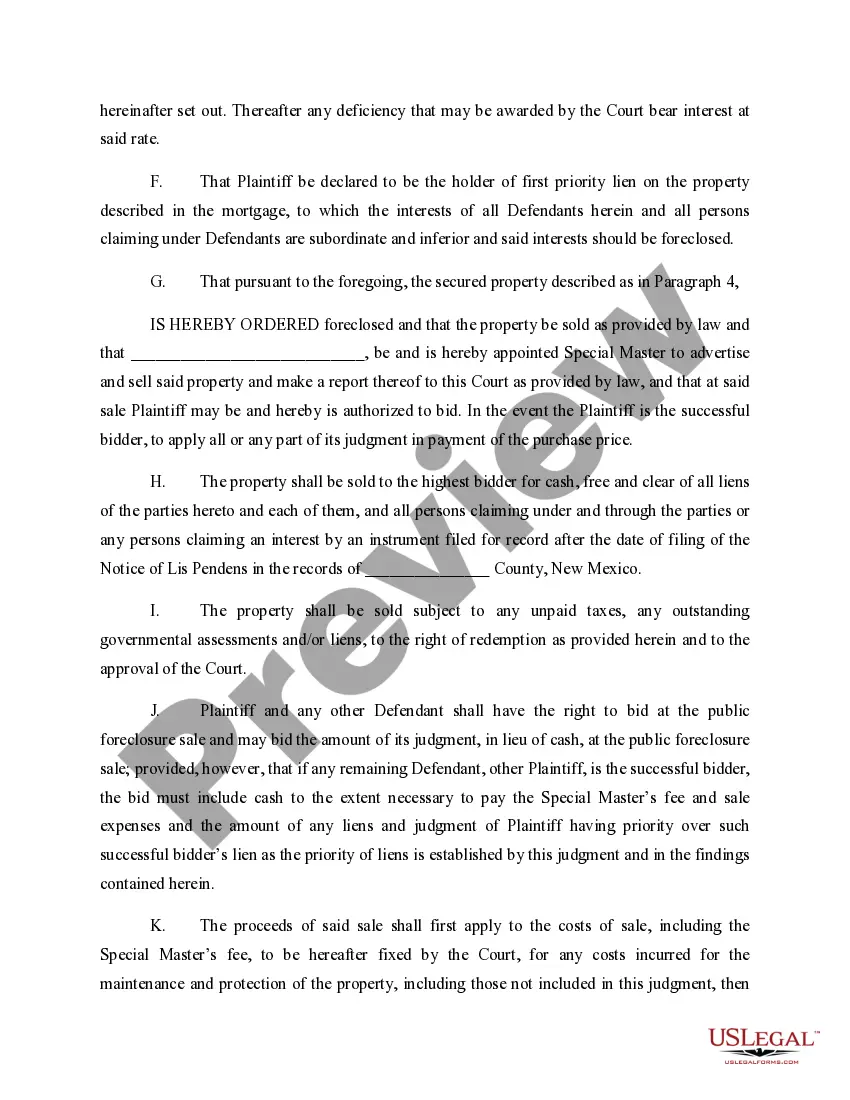
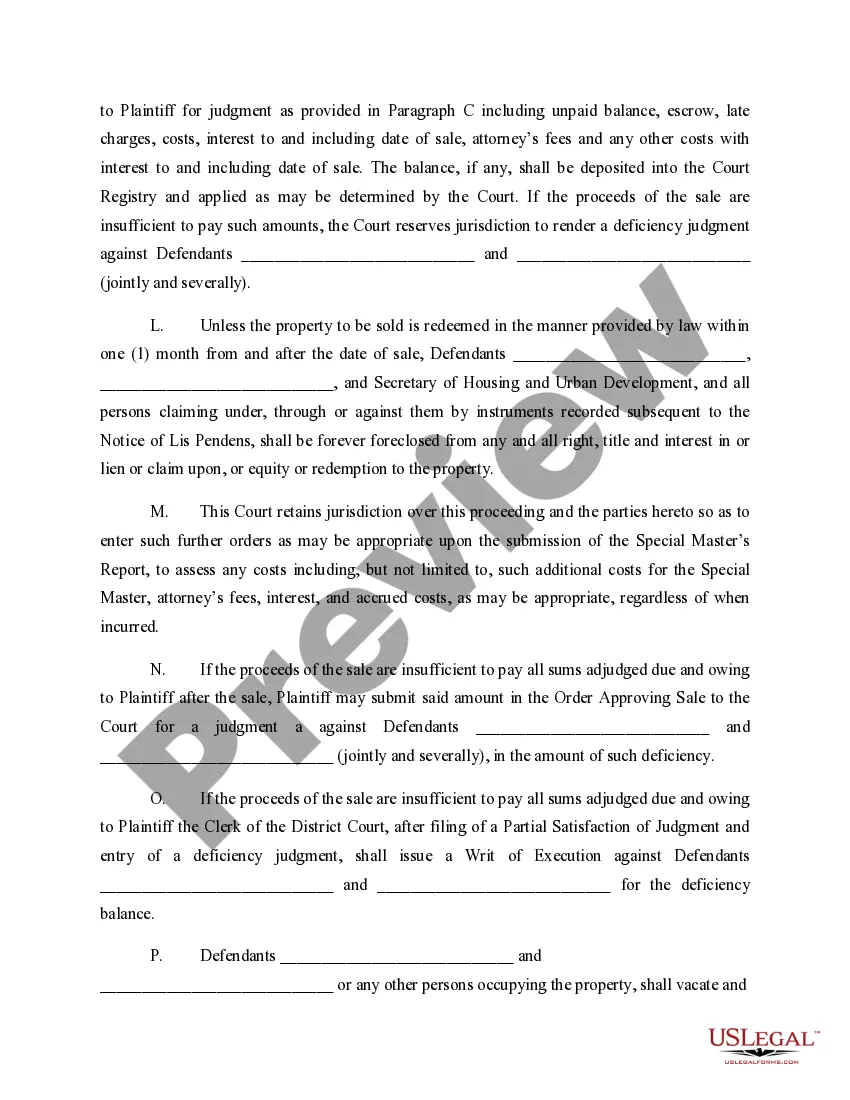
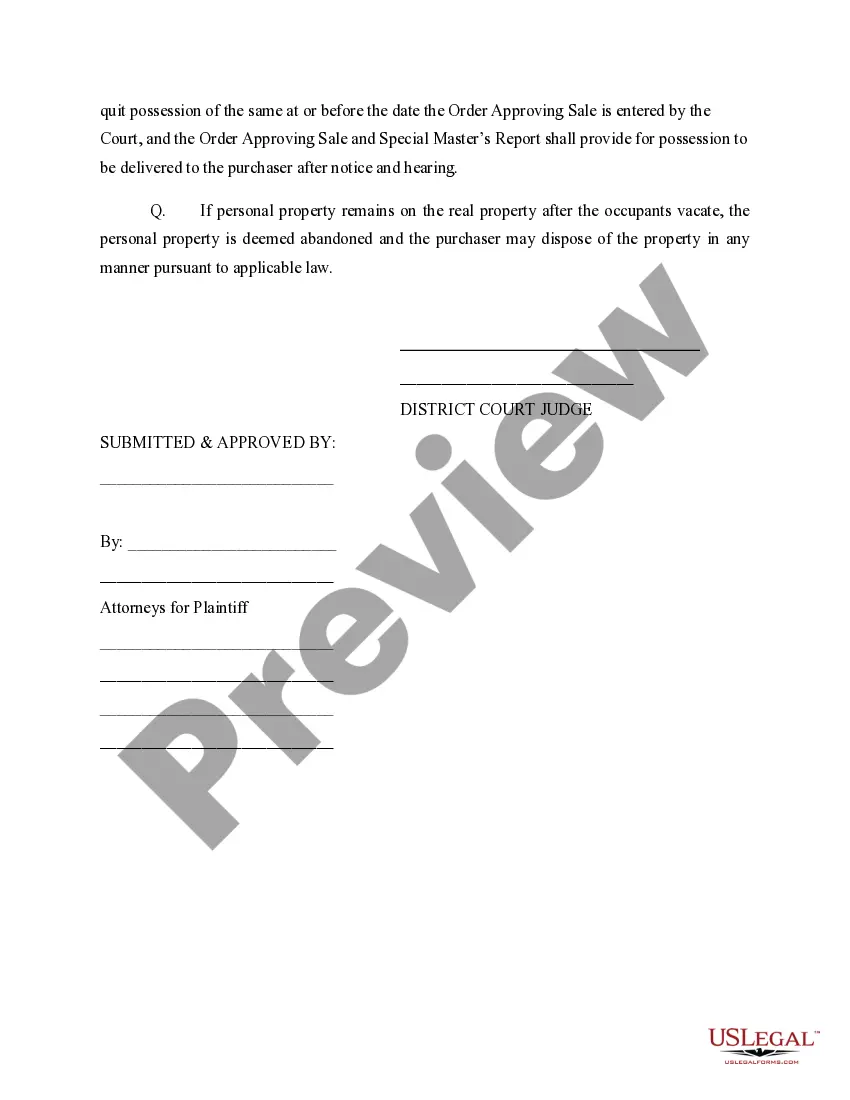
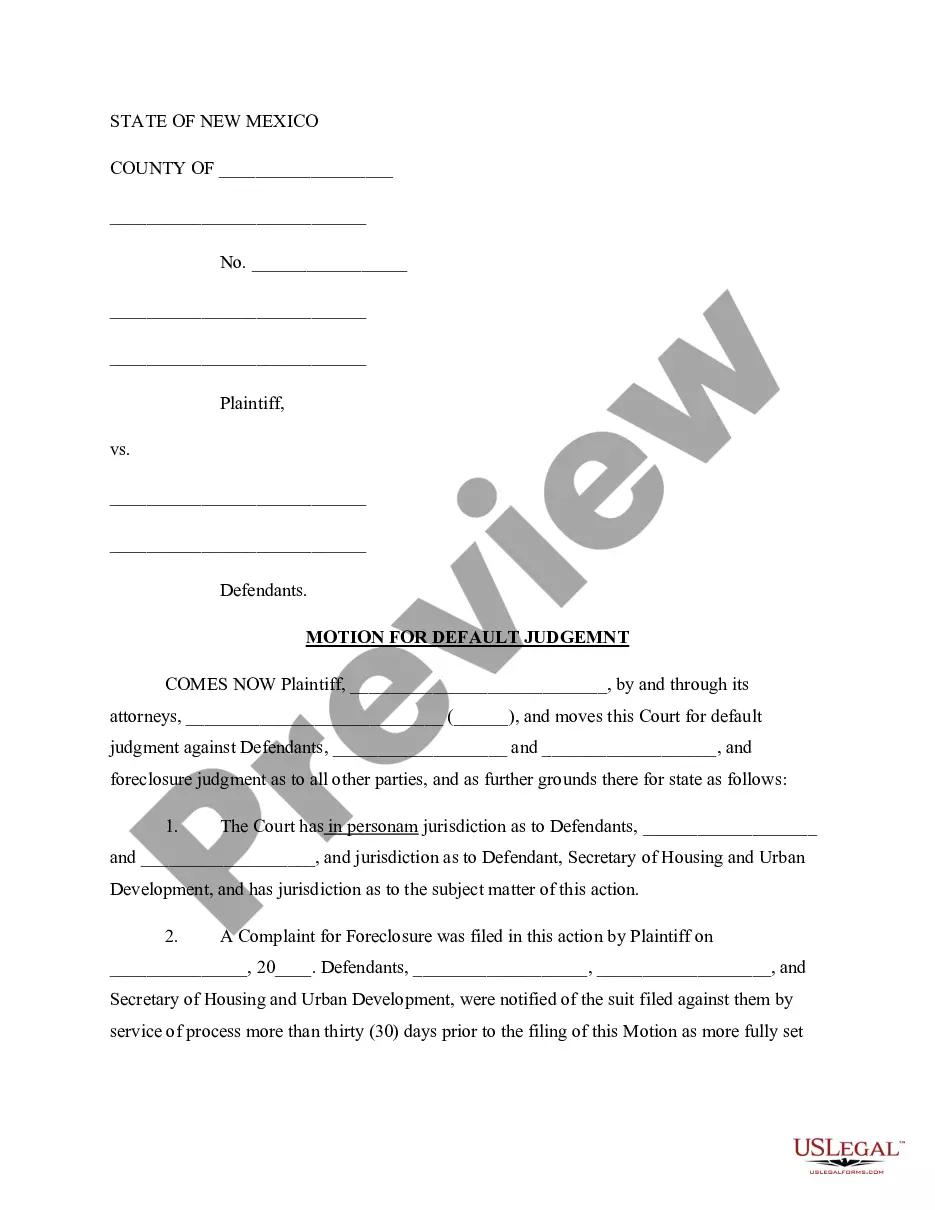
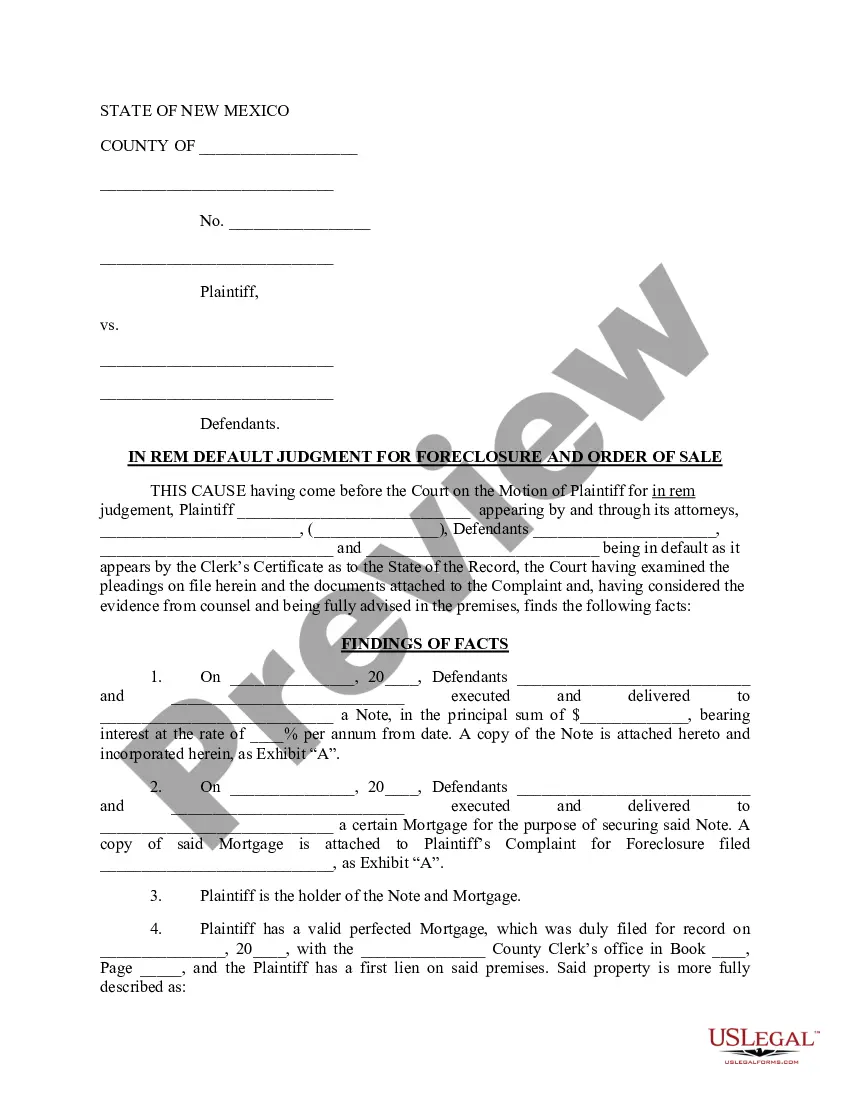
The Default Judgment for Foreclosure and Order of Sale is a legal document used in foreclosure proceedings. It grants a judgment in favor of a mortgagee (the lender) when the defendant fails to respond or defend against the foreclosure action. This form outlines the specifics of the mortgage, the amount owed, and orders the sale of the property to satisfy the debt. Unlike other foreclosure forms, this document is specifically designed for cases where the defendant has not made timely payments and does not contest the action.
Main sections of this form
- Identifying details of the parties involved, including the mortgagee and defendants.
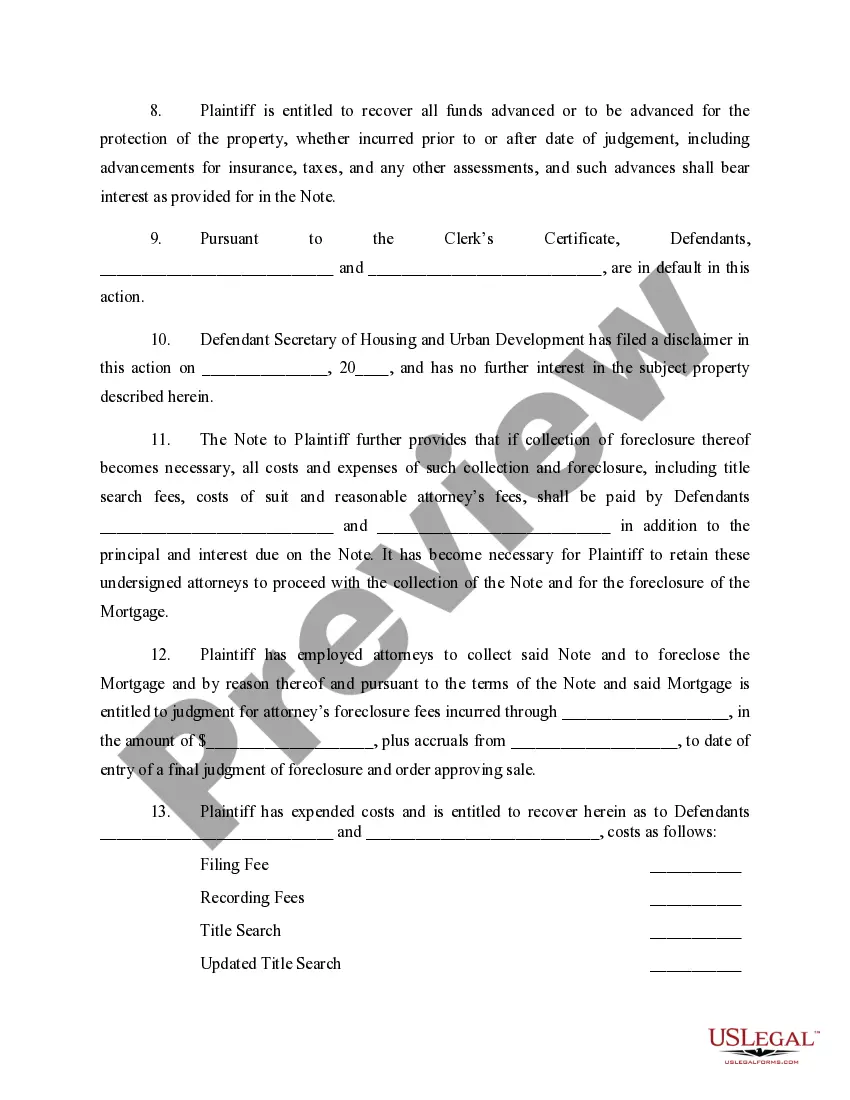
- Findings of fact outlining the mortgage terms, payment history, and defaults.
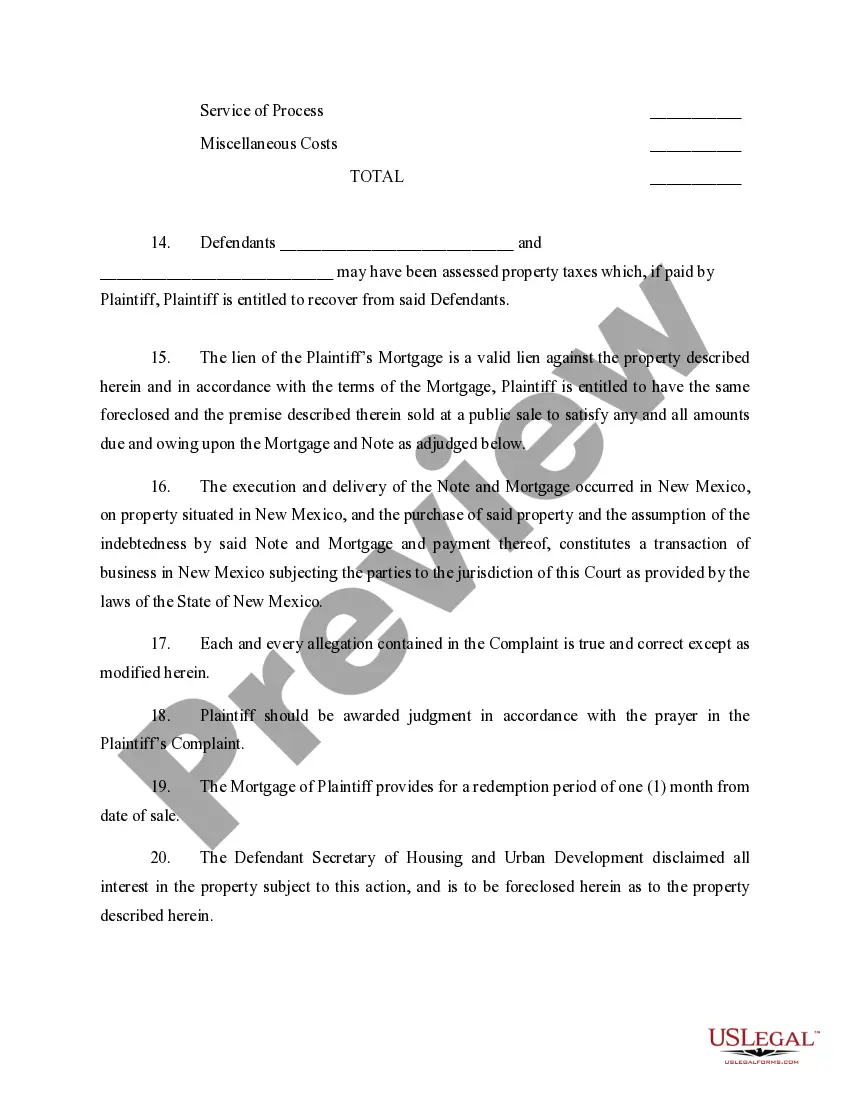
- Conclusion of law establishing the validity of the mortgage lien.
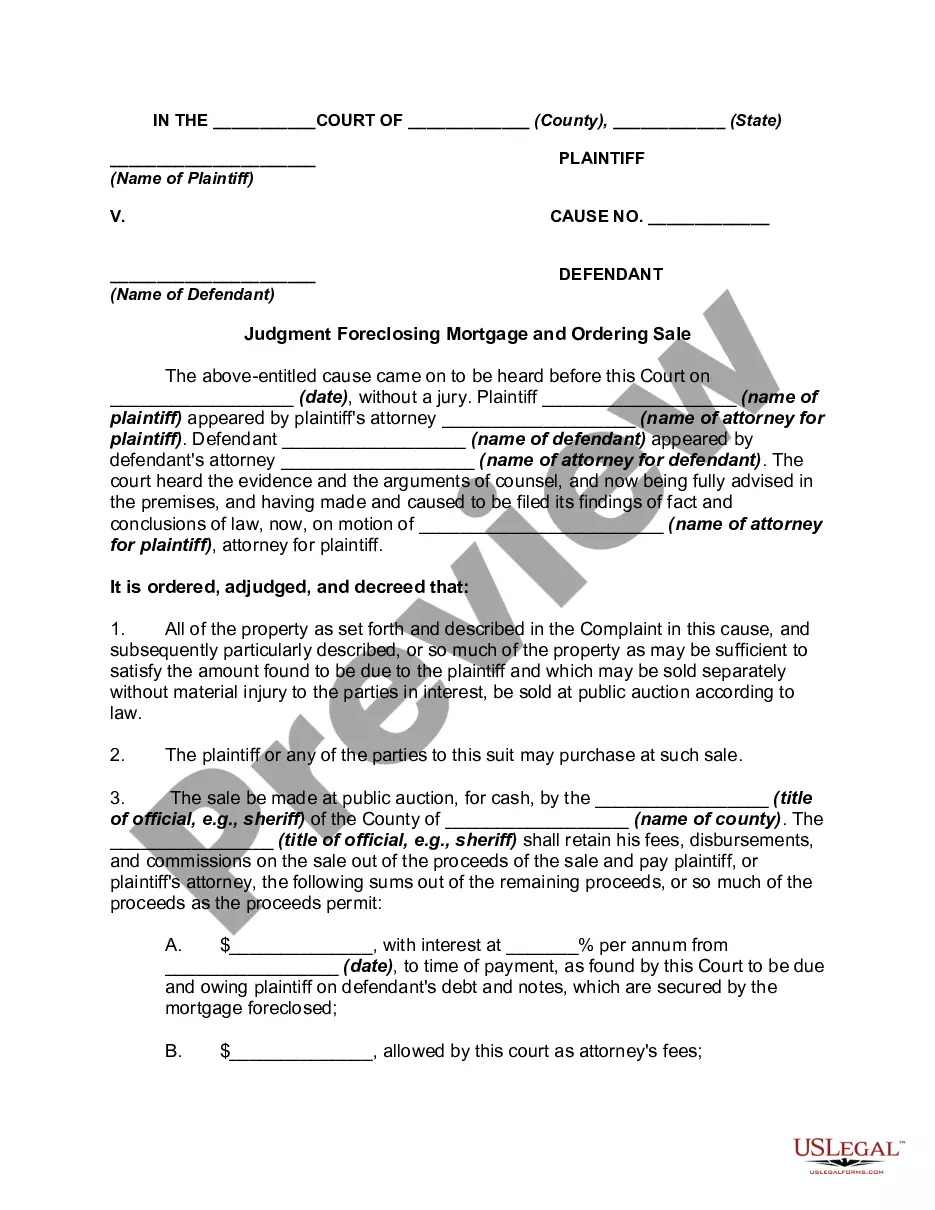
- Order of sale directing the sale of the property to satisfy the debt.
- Details regarding the costs incurred by the plaintiff, including attorney fees and property inspection costs.
When to use this document
This form should be used when you are the holder of a mortgage and have initiated foreclosure proceedings against a borrower who has failed to make payments. It is applicable in scenarios where the defendant does not respond to the foreclosure complaint or contest the action, allowing the lender to obtain a default judgment and proceed with selling the property to recover the owed amount.
Who this form is for
- Lenders or mortgage companies seeking to initiate foreclosure on a property.
- Attorneys representing clients in foreclosure actions.
- Mortgage holders who have not received payments and wish to recover the owed funds through the sale of the mortgaged property.
How to prepare this document
- Identify and fill in the details of the plaintiff (mortgagee) and the defendants.
- Provide factual information regarding the mortgage, including the sum borrowed and terms of the agreement.
- Specify the amounts due, including principal, interest, late charges, and costs incurred.
- Detail the property being foreclosed, including legal description and physical address.
- Sign and date the document in accordance with the requirements for official filings.
Notarization guidance
This form does not typically require notarization unless specified by local law. However, for certain legal proceedings, having a notarized copy may provide added authenticity and safeguard against disputes.
Get your form ready online
Our built-in tools help you complete, sign, share, and store your documents in one place.
Make edits, fill in missing information, and update formatting in US Legal Forms—just like you would in MS Word.
Download a copy, print it, send it by email, or mail it via USPS—whatever works best for your next step.
Sign and collect signatures with our SignNow integration. Send to multiple recipients, set reminders, and more. Go Premium to unlock E-Sign.
If this form requires notarization, complete it online through a secure video call—no need to meet a notary in person or wait for an appointment.
We protect your documents and personal data by following strict security and privacy standards.

Make edits, fill in missing information, and update formatting in US Legal Forms—just like you would in MS Word.

Download a copy, print it, send it by email, or mail it via USPS—whatever works best for your next step.

Sign and collect signatures with our SignNow integration. Send to multiple recipients, set reminders, and more. Go Premium to unlock E-Sign.

If this form requires notarization, complete it online through a secure video call—no need to meet a notary in person or wait for an appointment.

We protect your documents and personal data by following strict security and privacy standards.
Typical mistakes to avoid
- Failing to provide complete and accurate details about the mortgage agreement.
- Omitting relevant dates, such as the default date or payment due dates.
- Not specifying all costs incurred, which may affect the judgment amount.
- Neglecting to check for compliance with state-specific foreclosure laws.
Benefits of completing this form online
- Easy to complete with step-by-step guidance.
- Instant access to downloadable templates drafted by legal professionals.
- Ability to edit and customize the form according to specific needs.
- Availability of legal resources to assist in understanding the content.
Legal use & context
- The form is used to establish a legal claim for foreclosure on a property where the mortgage has not been satisfied.
- It serves as an official court judgment that allows the lender to proceed with selling the property legally.
- Understanding this form is crucial for lenders as it outlines their rights and the procedures for recovering debts.
Key takeaways
- The Default Judgment for Foreclosure and Order of Sale is a critical document for lenders in foreclosure proceedings.
- Proper completion of this form ensures legal compliance and enables quick recovery of owed amounts through property sale.
- Users should be aware of state-specific requirements that govern the foreclosure process in New Mexico.
Key terms explained
- Mortgagee: The lender or financial institution that holds the mortgage.
- Defendant: The party who is being sued or against whom the foreclosure action is filed.
- Default Judgment: A ruling by the court in favor of one party due to the other party's failure to respond or defend.
- Foreclosure: The legal process by which a lender takes possession of a property due to the borrower's failure to pay the mortgage.
Looking for another form?
Form popularity
FAQ
Foreclosures are usually nonjudicial in the following states: Alabama, Alaska, Arizona, Arkansas, California, Colorado, District of Columbia (sometimes), Georgia, Idaho, Maryland, Massachusetts, Michigan, Minnesota, Mississippi, Missouri, Montana, Nebraska, Nevada, New Hampshire, New Mexico (sometimes), North Carolina,
New Mexico is known primarily as a lien theory state where the property acts as security for the underlying loan. The document that places the lien on the property is called a mortgage.
File for Bankruptcy Protection to Avoid ForeclosureIf your foreclosure sale is scheduled to take place in a matter of days, you can stop the foreclosure in its tracks by filing for bankruptcy. Upon your filing, something called an automatic stay goes into place.
A few potential ways to stop a foreclosure include reinstating the loan, redeeming the property before the sale, or filing for bankruptcy. (Of course, if you're able to work out a loss mitigation option, like a loan modification, that will also stop a foreclosure.)
If a foreclosure sale is scheduled to occur in the next day or so, the best way to stop the sale immediately is by filing for bankruptcy. The automatic stay will stop the foreclosure in its tracks. Once you file for bankruptcy, something called an "automatic stay" immediately goes into effect.
Foreclosures are generally judicial in the following states: Connecticut, Delaware, District of Columbia (sometimes), Florida, Hawaii, Illinois, Indiana, Iowa, Kansas, Kentucky, Louisiana (executory proceeding), Maine, Nebraska (sometimes), New Jersey, New Mexico, New York, North Dakota, Ohio, Oklahoma (if the
Essentially, a judicial foreclosure means that the lender goes to court to get a judgment to foreclose on your home, while a non-judicial foreclosure means that the lender does not need to go to court.
What Is the Foreclosure Process in New Mexico? If you default on your mortgage payments for your home in New Mexico, the foreclosure will most likely be judicial. (A nonjudicial foreclosure is allowed in New Mexico if the loan contract is a deed of trust.
First, the costs and expenses of conducting the foreclosure sale are paid. Second, the lien that was foreclosed on is paid off. Third, if there is any money remaining after the foreclosed lien is paid, then any liens junior to the foreclosed lien are paid in their order of priority.