New Mexico Complaint for Breach of Contract and Suit on Open Account
What is this form?
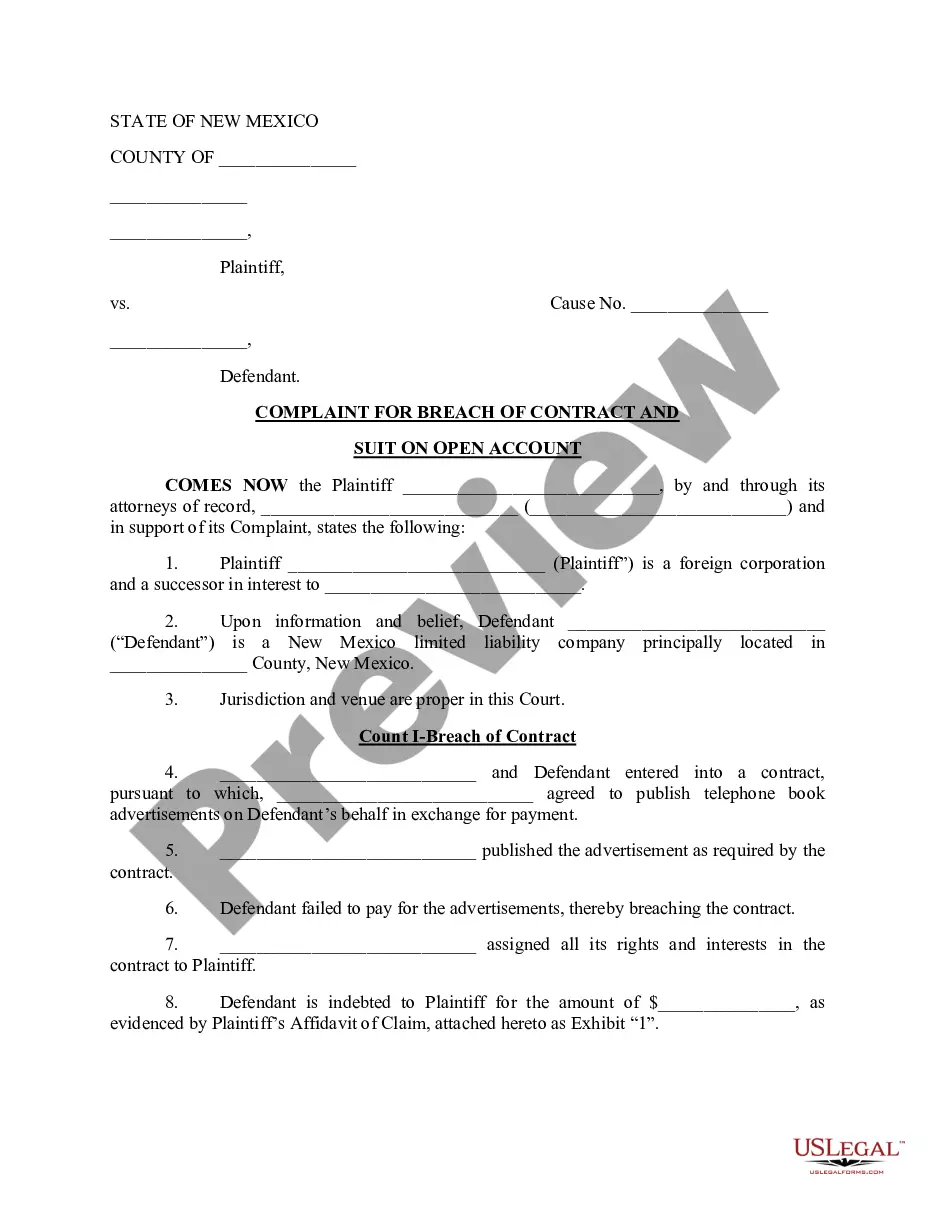
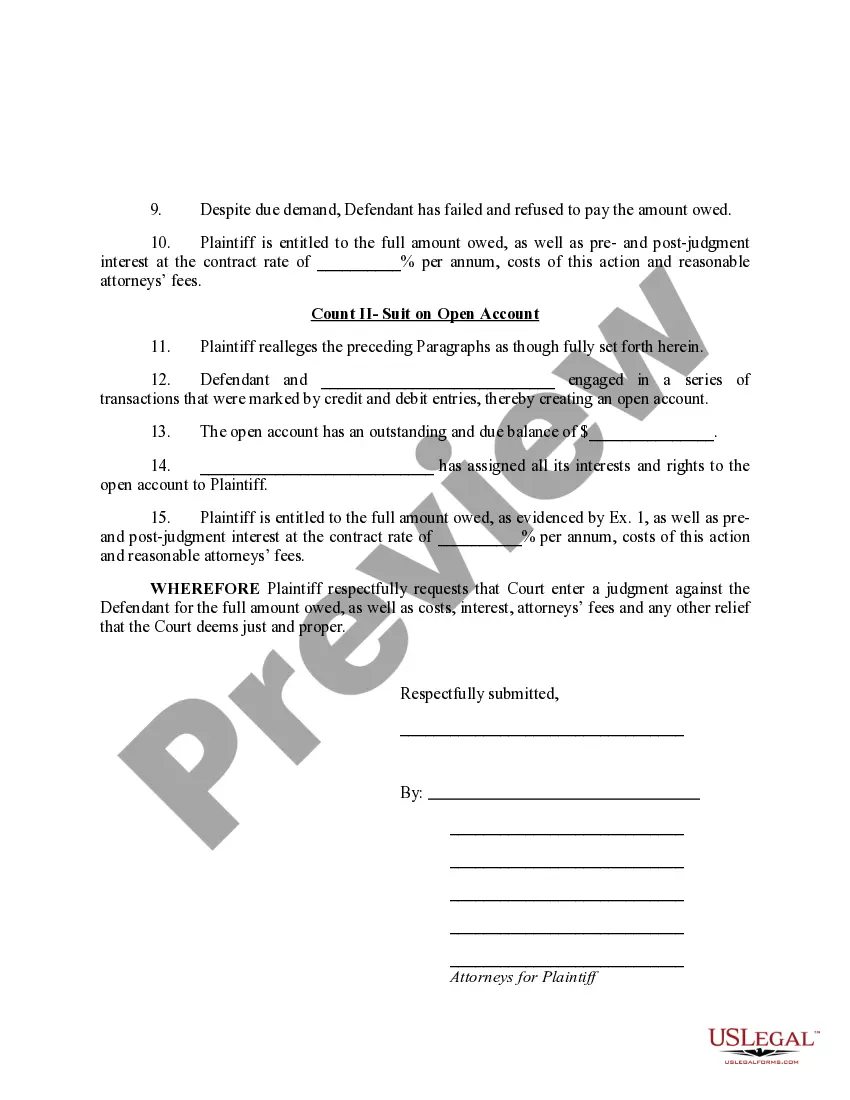
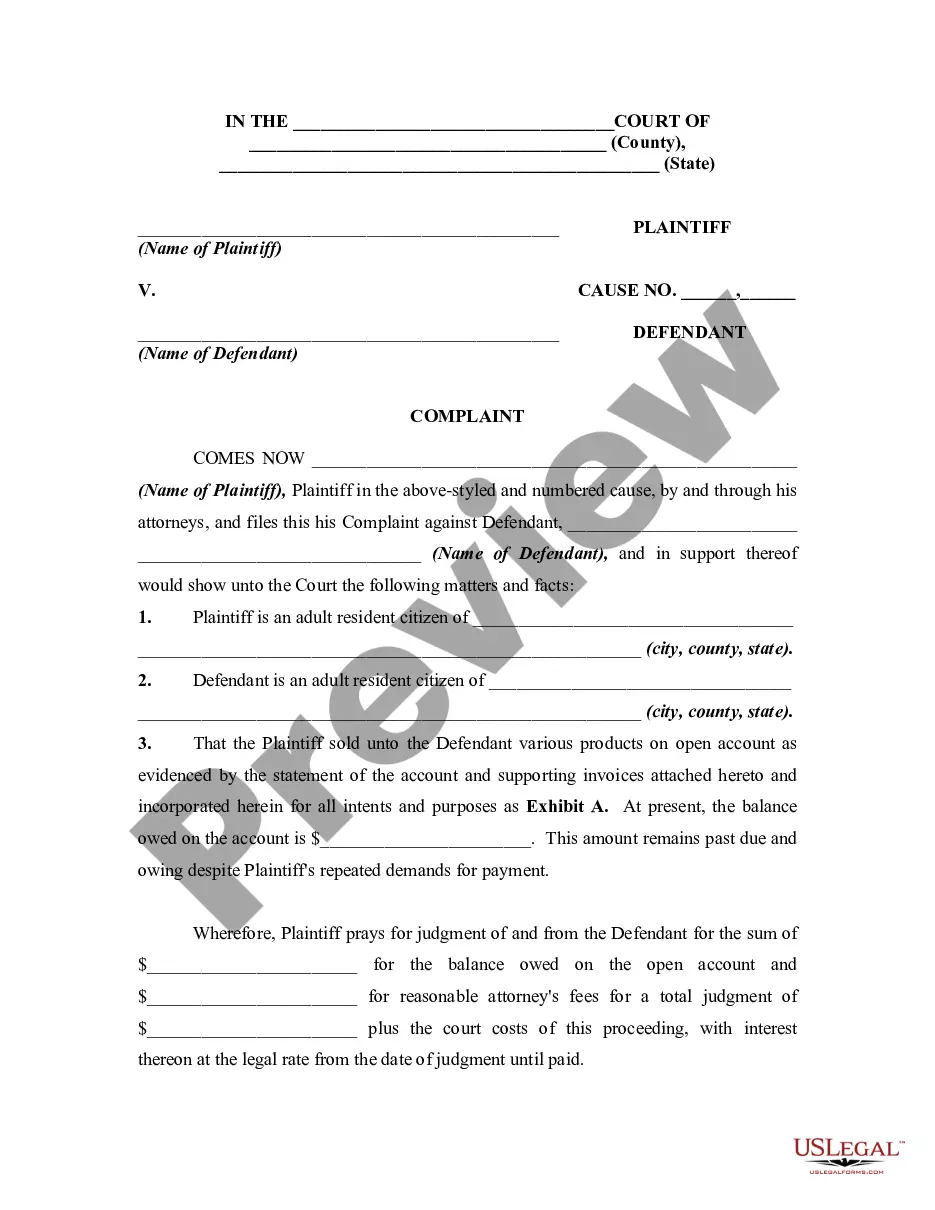
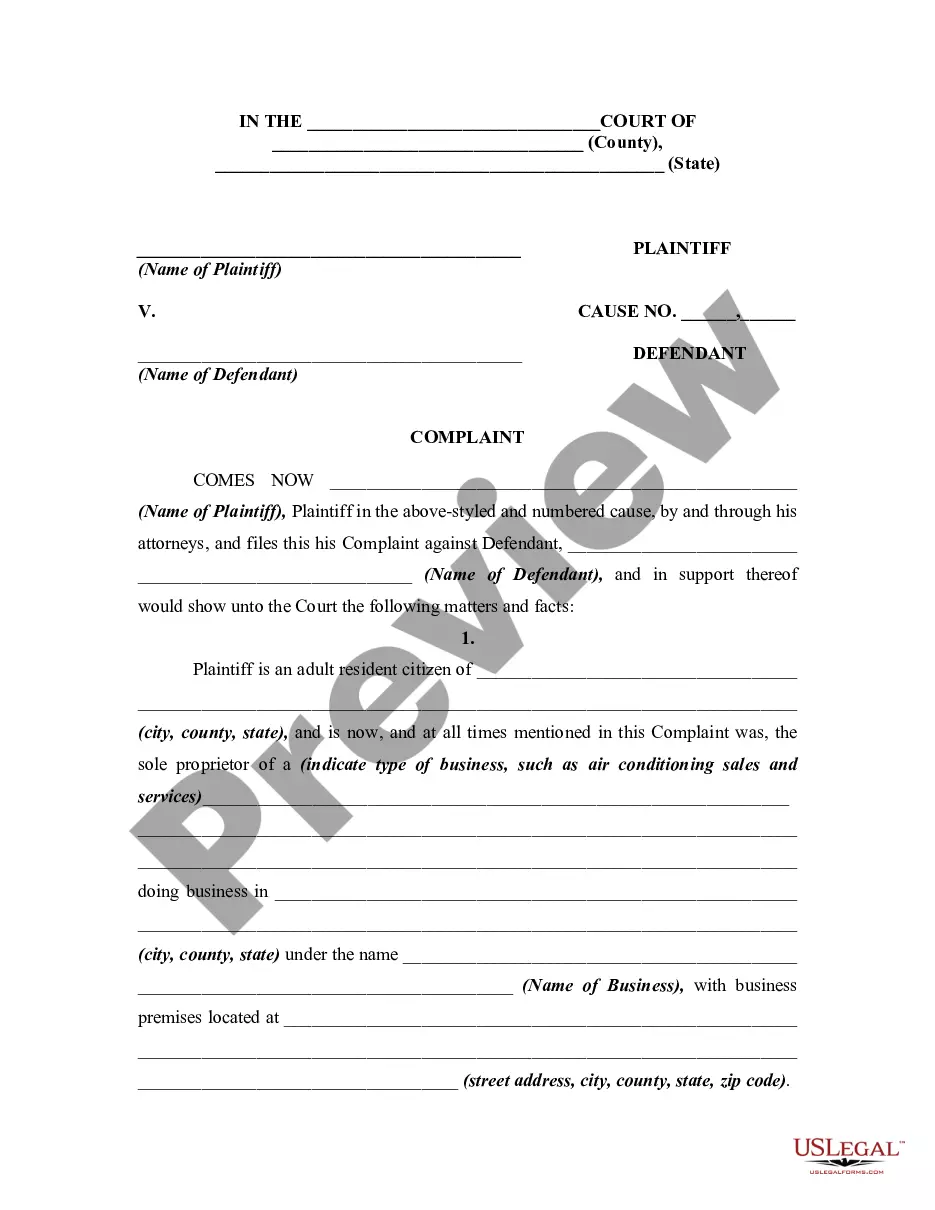
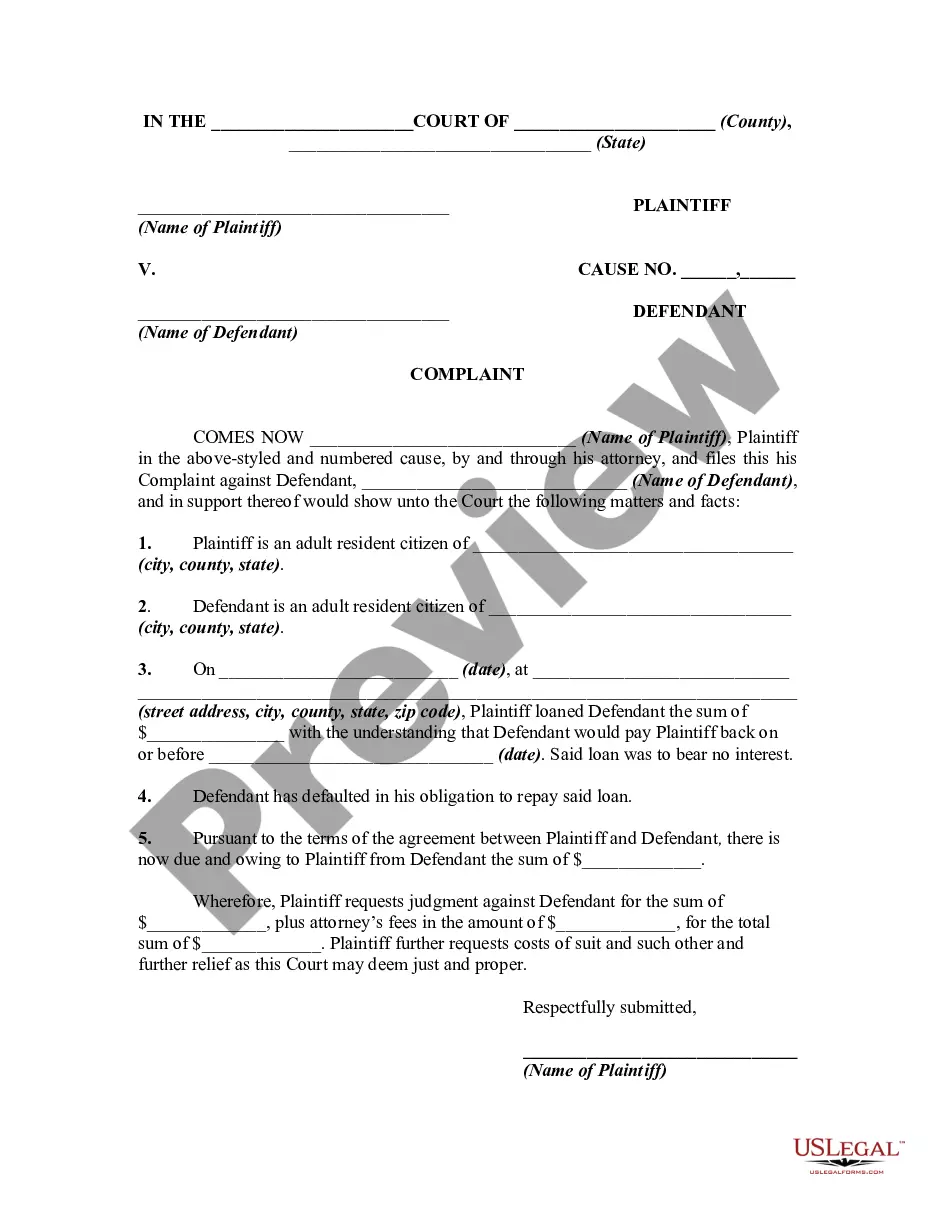
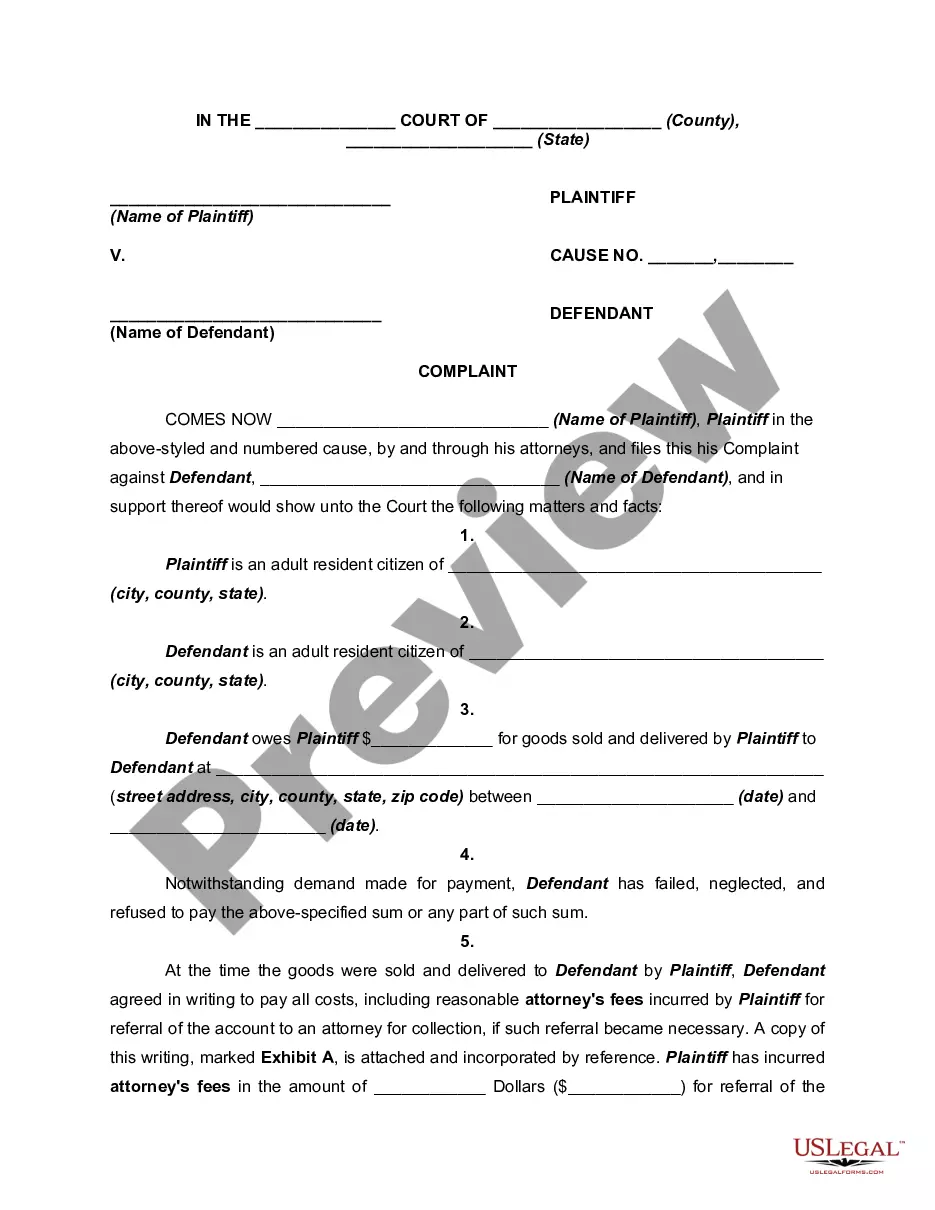
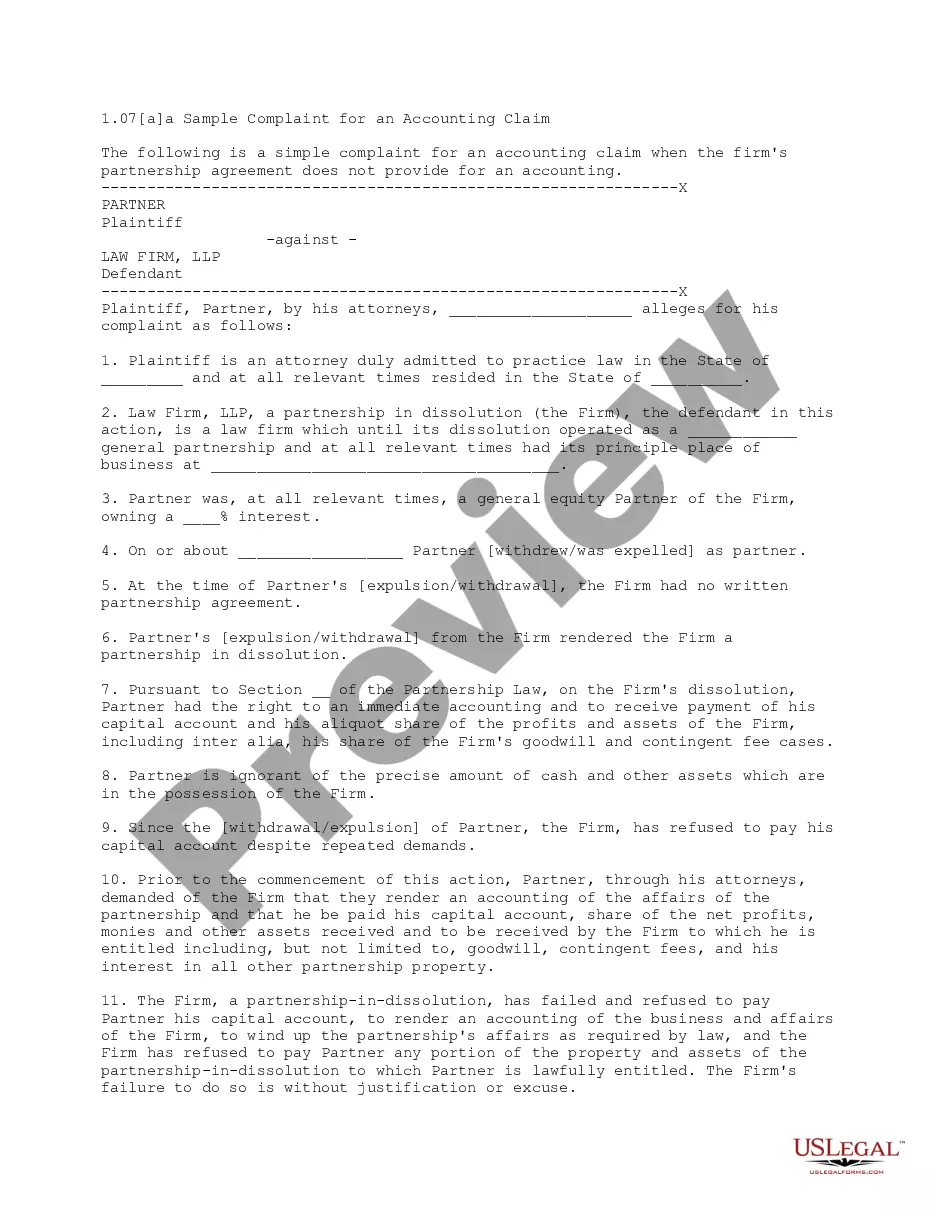
The Complaint for Breach of Contract and Suit on Open Account is a legal document used when a party seeks damages for an unpaid debt resulting from a breach of contract. This form is specifically designed to address situations where goods or services were provided under an agreement, but the other party has failed to fulfill their payment obligations. Unlike general demand letters, this complaint formally initiates legal proceedings to recover debts owed.
What’s included in this form
- Identification of the plaintiff and defendant, including their roles and contact details.
- Clear statements outlining the terms of the contract and the breach that occurred.
- Details about the outstanding debt, including the amount owed and any supporting affidavit.
- Legal basis for jurisdiction and venue, explaining why the case is filed in that particular court.
- Requests for damages, which may include principal amount, interest, attorneys' fees, and other costs.
When to use this form
This form should be used when you need to file a legal complaint for damages due to a breach of contract, particularly in instances where there is an open account that has not been paid. Typical scenarios include cases involving unpaid invoices, advertising contracts, or any service agreements where payment has not been received as stipulated.
Who this form is for
- Businesses or individuals seeking to recover unpaid debts from clients or customers.
- Creditors who have provided goods or services and need to enforce payment agreements.
- Any party that has engaged in a contractual agreement and has faced non-compliance from the other party.
Steps to complete this form
- Identify and enter the names of the plaintiff and defendant, along with their respective addresses.
- Clearly outline the details of the contract, including the obligations of both parties and the nature of the breach.
- Specify the total amount required to satisfy the debt and include any applicable interest rates.
- Include any relevant affidavits or exhibits that support your claim.
- Sign and date the document, ensuring it is filed in the appropriate court.
Does this form need to be notarized?
This form does not typically require notarization unless specified by local law. However, it is essential to check if your jurisdiction has specific requirements regarding notarizing legal documents.
Get your form ready online
Our built-in tools help you complete, sign, share, and store your documents in one place.
Make edits, fill in missing information, and update formatting in US Legal Forms—just like you would in MS Word.
Download a copy, print it, send it by email, or mail it via USPS—whatever works best for your next step.
Sign and collect signatures with our SignNow integration. Send to multiple recipients, set reminders, and more. Go Premium to unlock E-Sign.
If this form requires notarization, complete it online through a secure video call—no need to meet a notary in person or wait for an appointment.
We protect your documents and personal data by following strict security and privacy standards.

Make edits, fill in missing information, and update formatting in US Legal Forms—just like you would in MS Word.

Download a copy, print it, send it by email, or mail it via USPS—whatever works best for your next step.

Sign and collect signatures with our SignNow integration. Send to multiple recipients, set reminders, and more. Go Premium to unlock E-Sign.

If this form requires notarization, complete it online through a secure video call—no need to meet a notary in person or wait for an appointment.

We protect your documents and personal data by following strict security and privacy standards.
Common mistakes
- Failing to properly identify all parties involved in the contract.
- Not including all necessary supporting documentation, such as affidavits or proof of the contract.
- Ignoring state-specific requirements for filing the complaint.
- Using vague language instead of clear, specific statements regarding the breach and the amount owed.
Advantages of online completion
- Convenient access to professionally drafted legal templates that save time.
- Editability allows users to tailor the document to their specific needs.
- Reliable legal language helps ensure compliance with legal standards.
Looking for another form?
Form popularity
FAQ
A civil action begins when a party to a dispute files a complaint, and pays a filing fee required by statute. A plaintiff who is unable to pay the fee may file a request to proceed in forma pauperis. If the request is granted, the fee is waived.
NMSA 1978 §37-1-1 et seq. governs New Mexico's statute of limitations for the collection of open accounts, written contracts, and judgments entered by the Court. In New Mexico, the statute of limitations for open accounts is four years, while the statute of limitations for written contracts is six years.
How to File a Small Claims Suit in New Mexico. The first step in filing a small claims case is to obtain and fill out the necessary forms (such as the complaint) and pay the required fees. You'll need the name and address of the person or business you're suing (the defendant).
If your dispute is for slightly more than the limit, it may still be worth it to file a small claims suit.You won't be able to sue for the full amount, but you'll avoid the expense of a regular lawsuit. The small claims filing fee varies from state to state.
Introduction. If you need to file civil court forms and documents in the NSW Local, District or Supreme Court, you can do this online via the Online Registry website. Alternatively, you can mail your documentation, or visit a court registry and deliver it in person.
In New Mexico, the state's civil statute of limitations is three years for personal injury or defamation and four years for injury to personal property and most other civil claims. New Mexico's criminal statute of limitations ranges from three to six years for felonies and one to two years for misdemeanors.
Customer Service on the 1st floor of the Courthouse; The Self-Help Center; or. The Metropolitan Court website. (www.metrocourt.state.nm.us)
The complaint should include the following sections: Jurisdiction: Explain why the federal court has jurisdiction over your case. Venue: Explain why you are suing in this court. Parties: Identify the plaintiff and defendants in the case.
How Does a Plaintiff File a Lawsuit? To begin a lawsuit, the plaintiff must file a complaint and a summons in the appropriate court. These are two separate documents. The complaint sets up the reasons for the lawsuit by describing what the defendant did wrong (breach of contract, for example).