New Mexico Advance Directive for Mental Health Treatment
Understanding this form
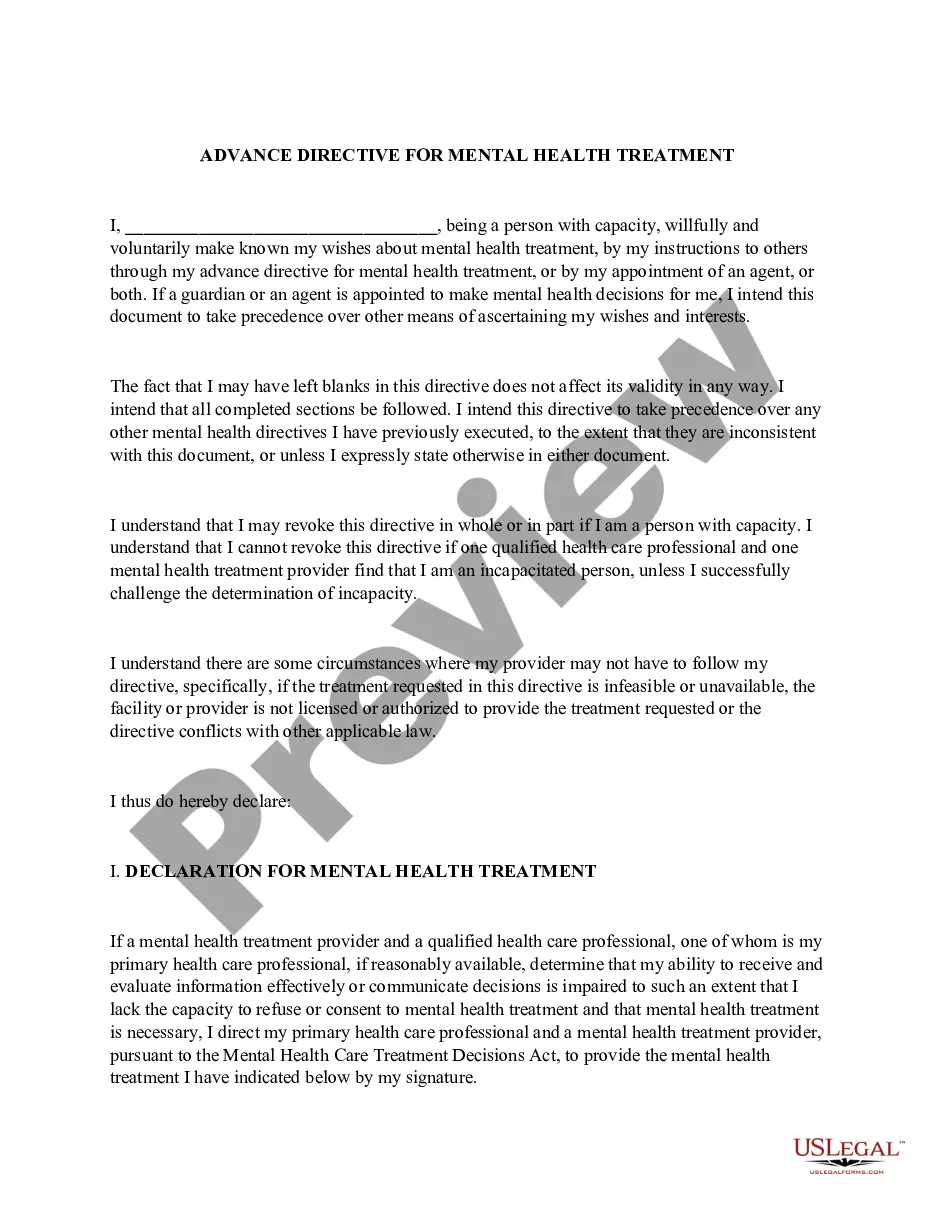
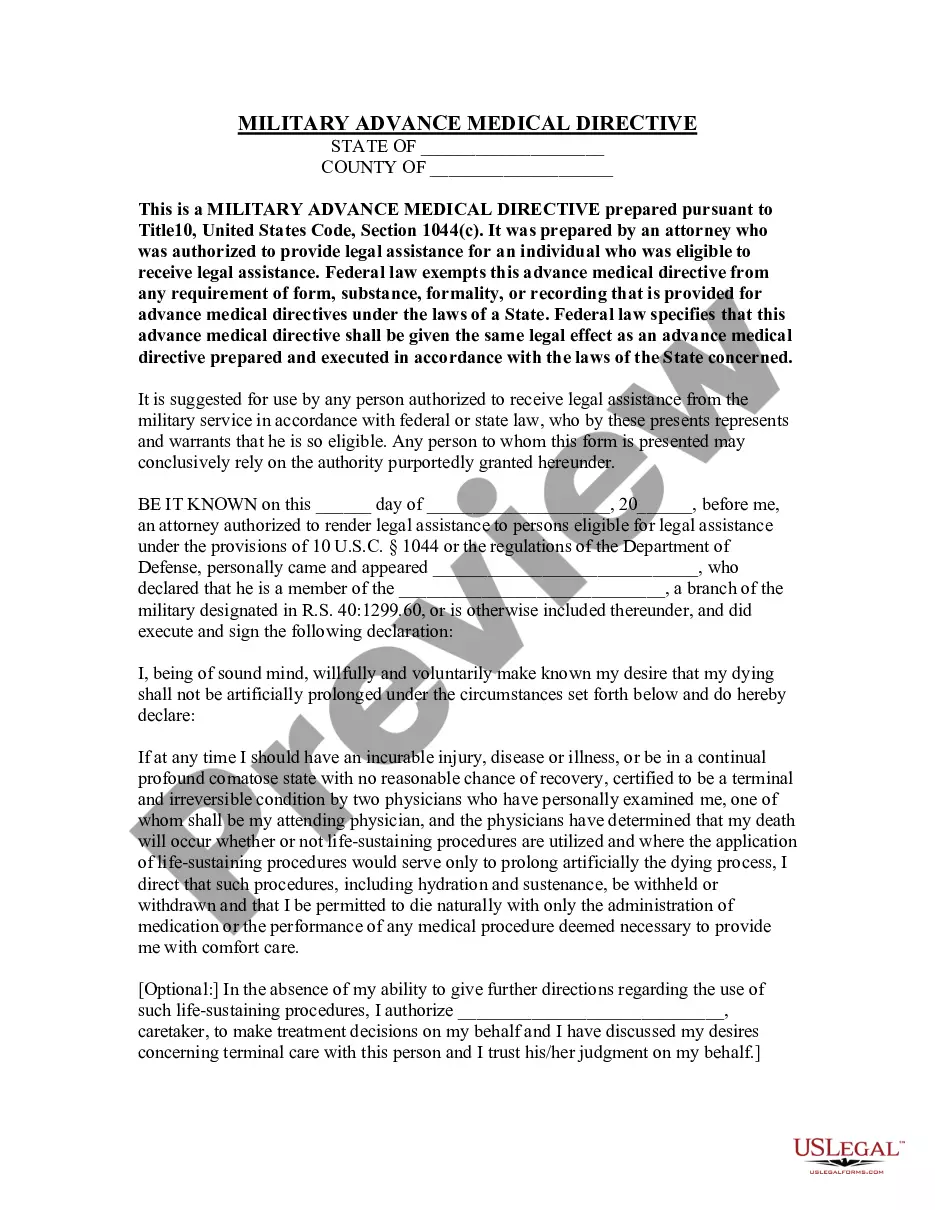
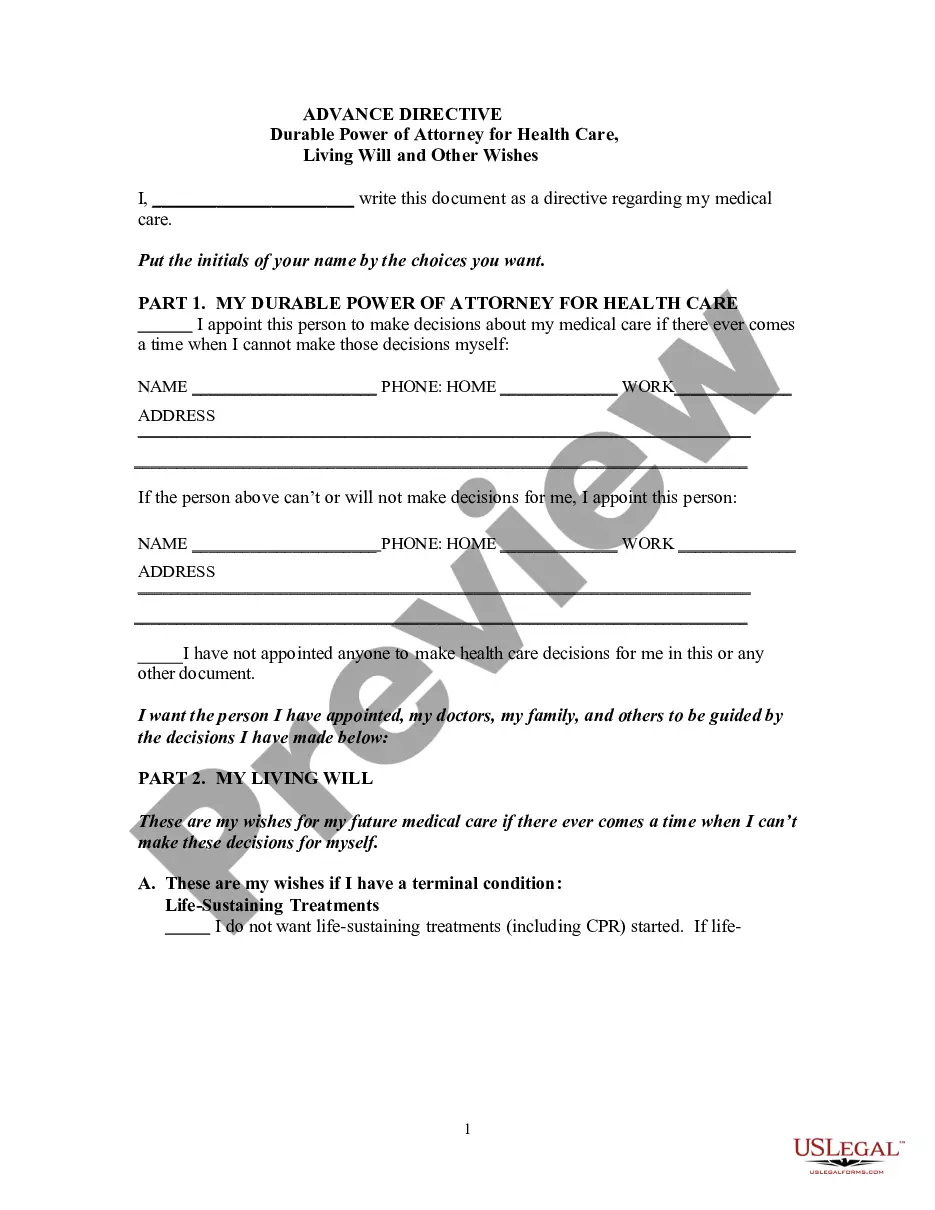
The Advance Directive for Mental Health Treatment is a legal document that outlines your preferences regarding future mental health care. This directive allows you to specify the types of treatments you wish to receive or refuse, as well as to appoint a trusted individual to make decisions on your behalf if you become unable to do so. This form is tailored specifically for mental health treatment, setting it apart from other advance directives that may not be as focused on mental health care needs.
What’s included in this form
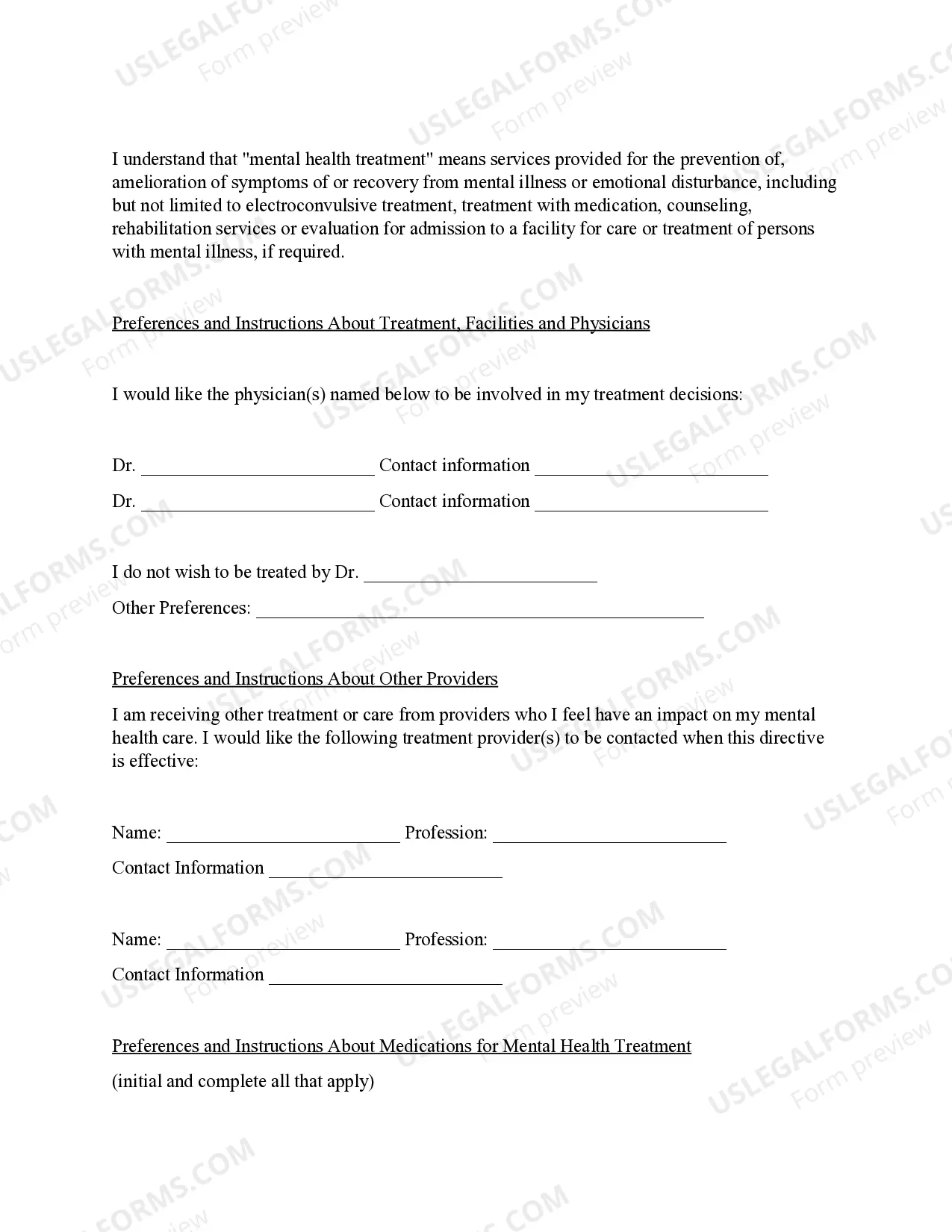
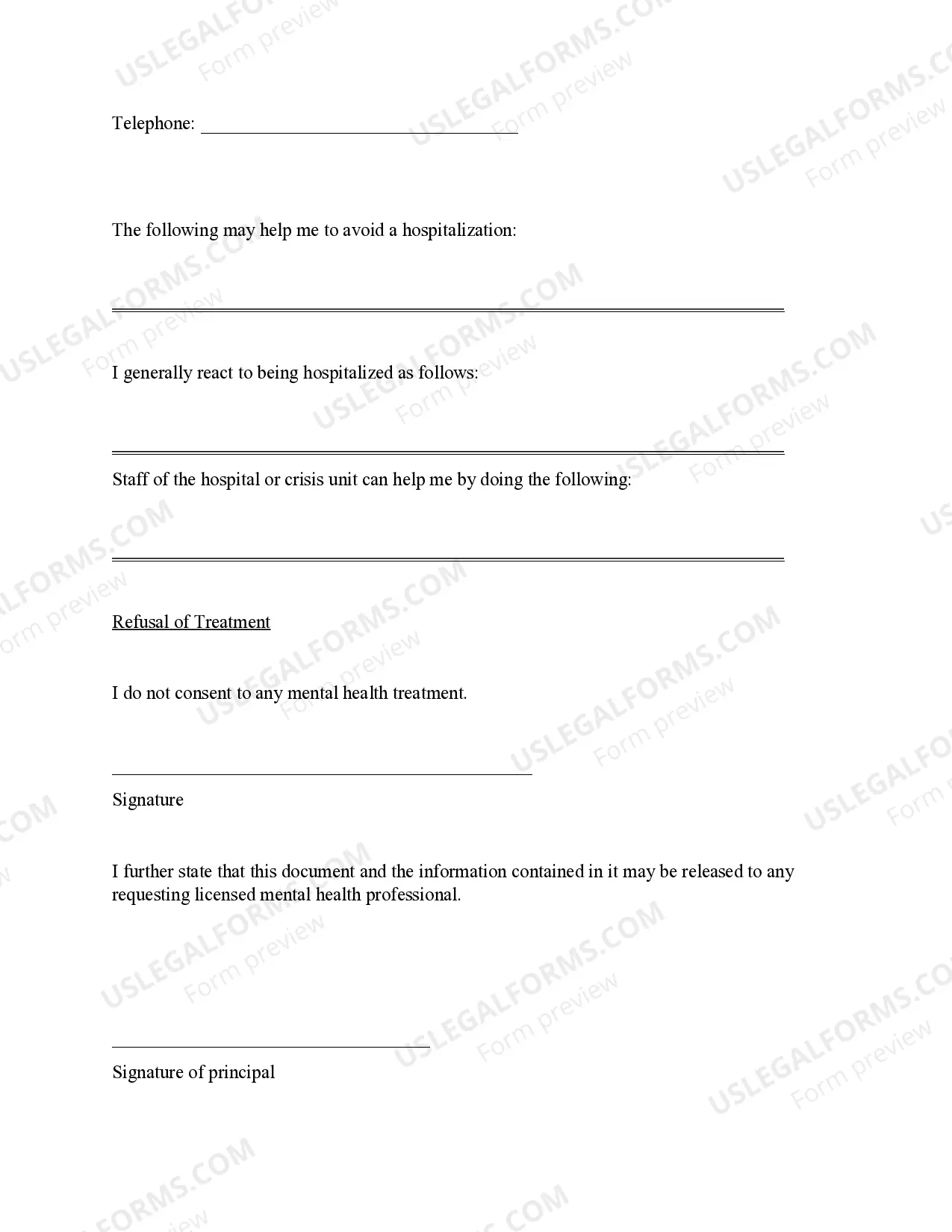
- Declaration for mental health treatment: Specifies your wishes concerning mental health care and identifies preferred providers.
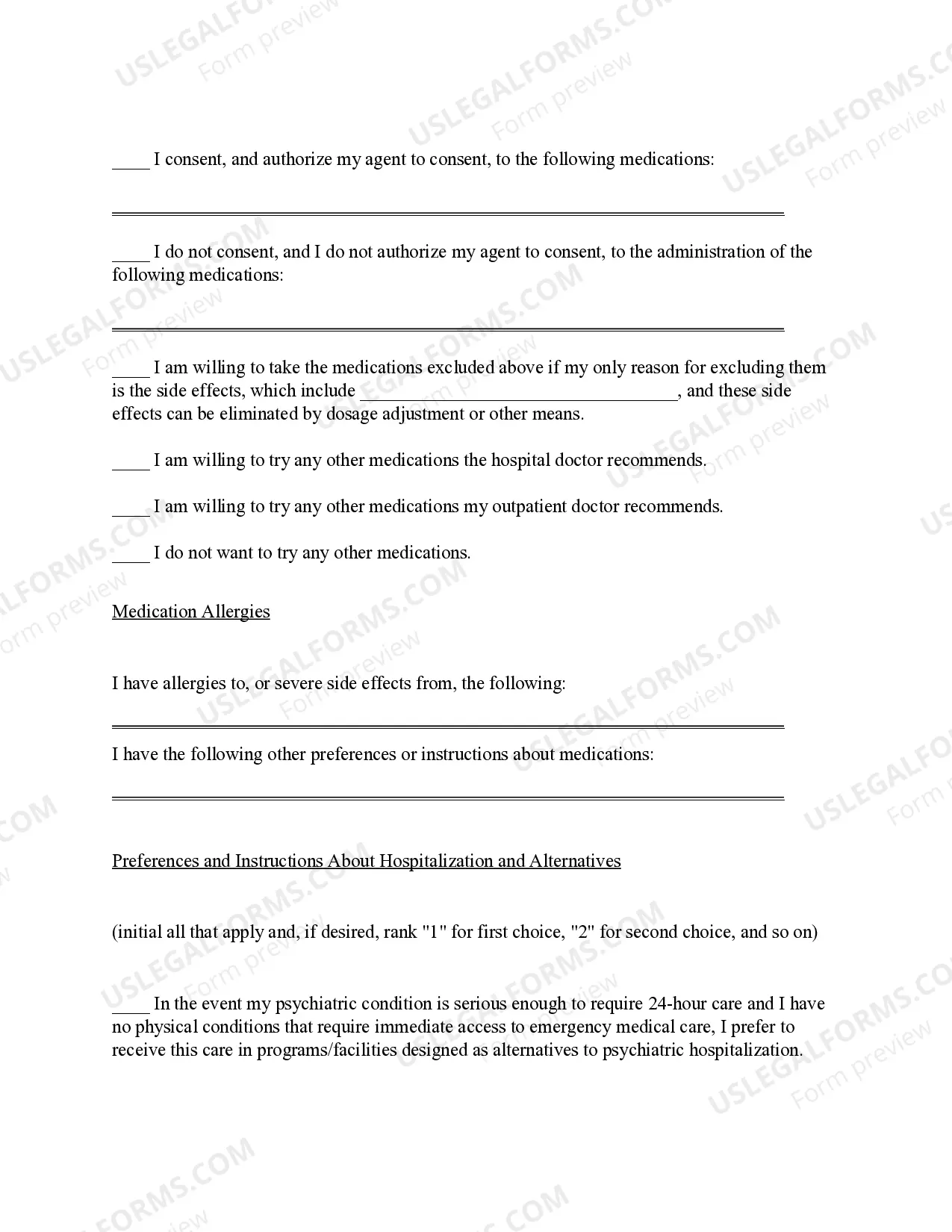
- Preferences regarding medications: Allows you to indicate consents or refusals for certain medications, including managing side effects.
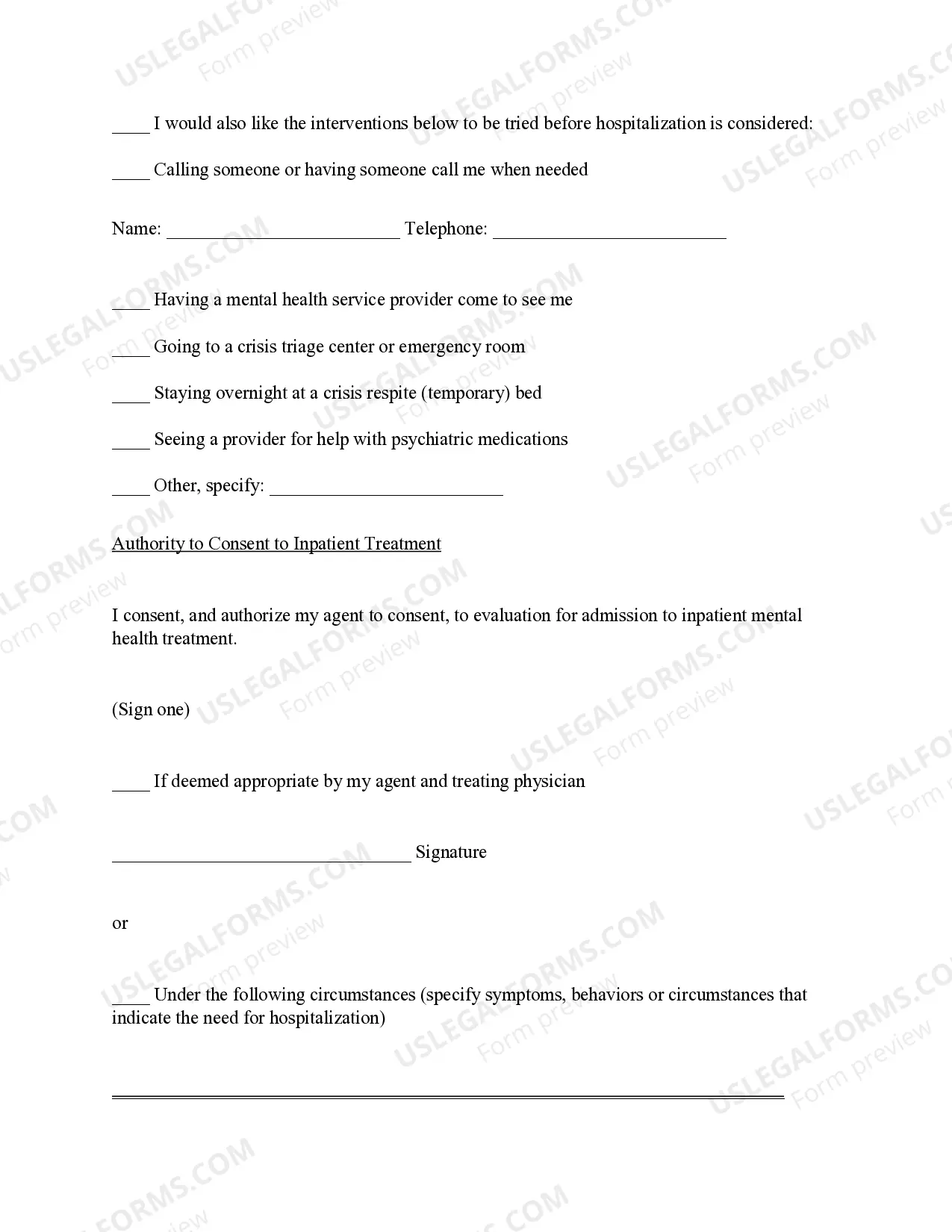
- Inpatient treatment authority: Grants permission for hospitalization and defines conditions under which it can occur.
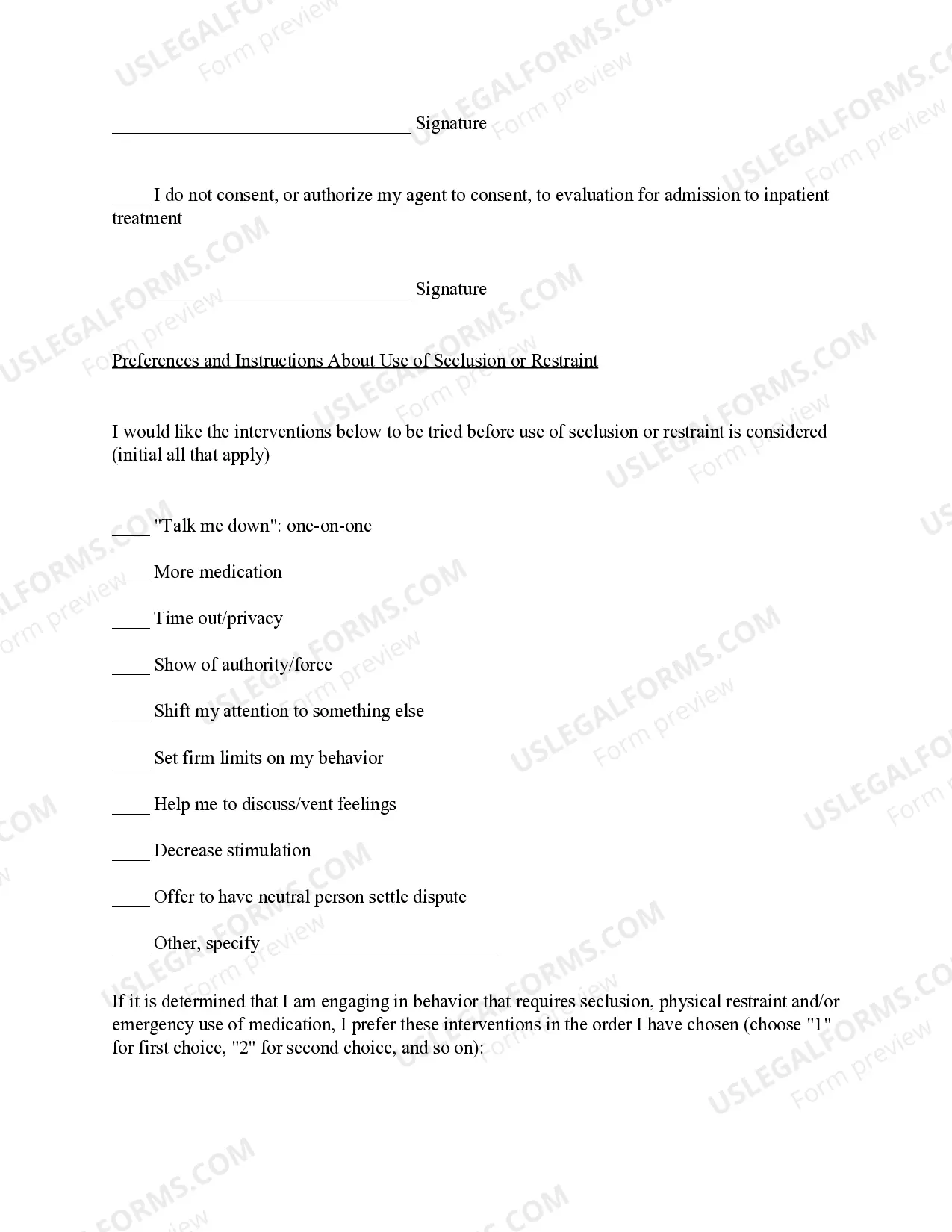
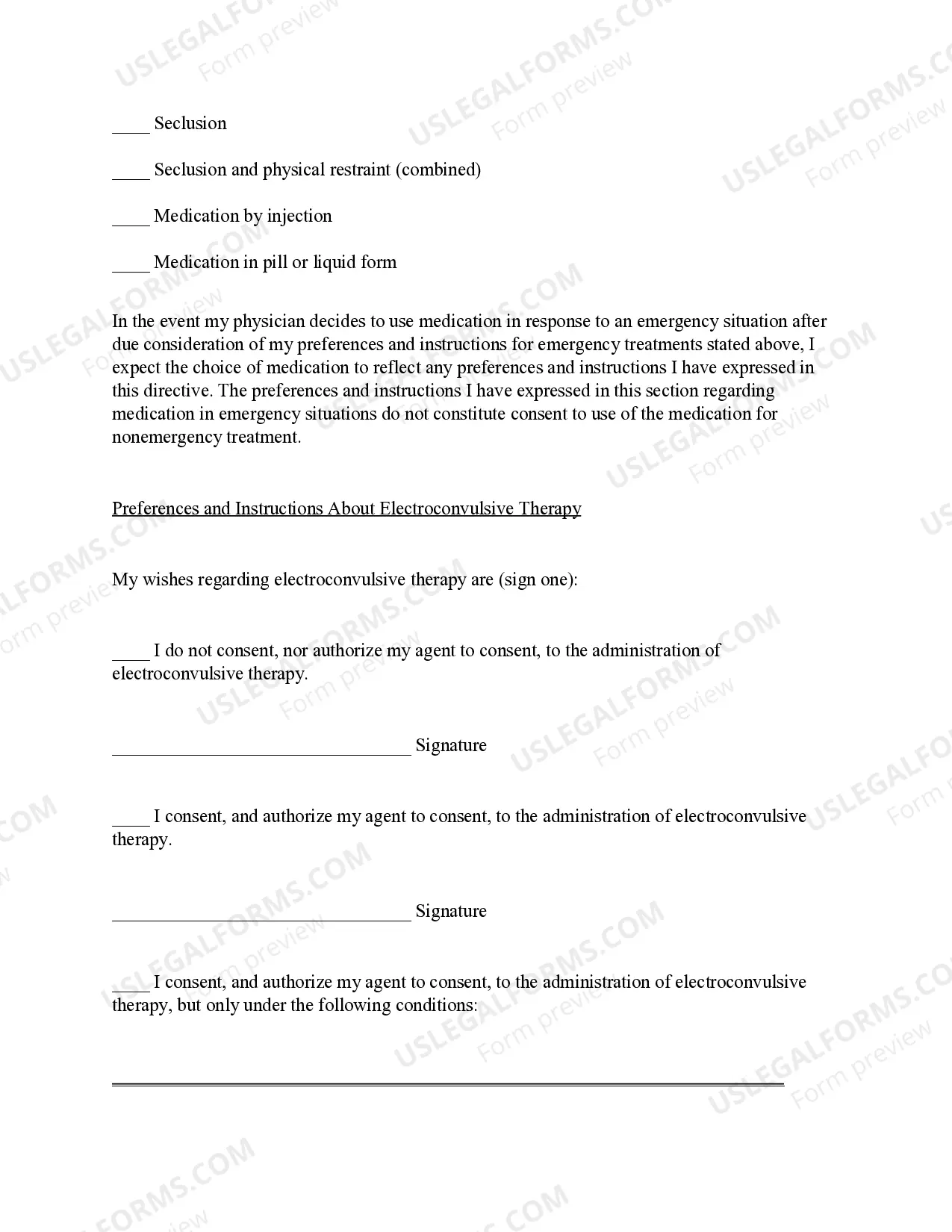
- Emergency interventions: Outlines strategies for managing crises before resorting to seclusion or restraint.
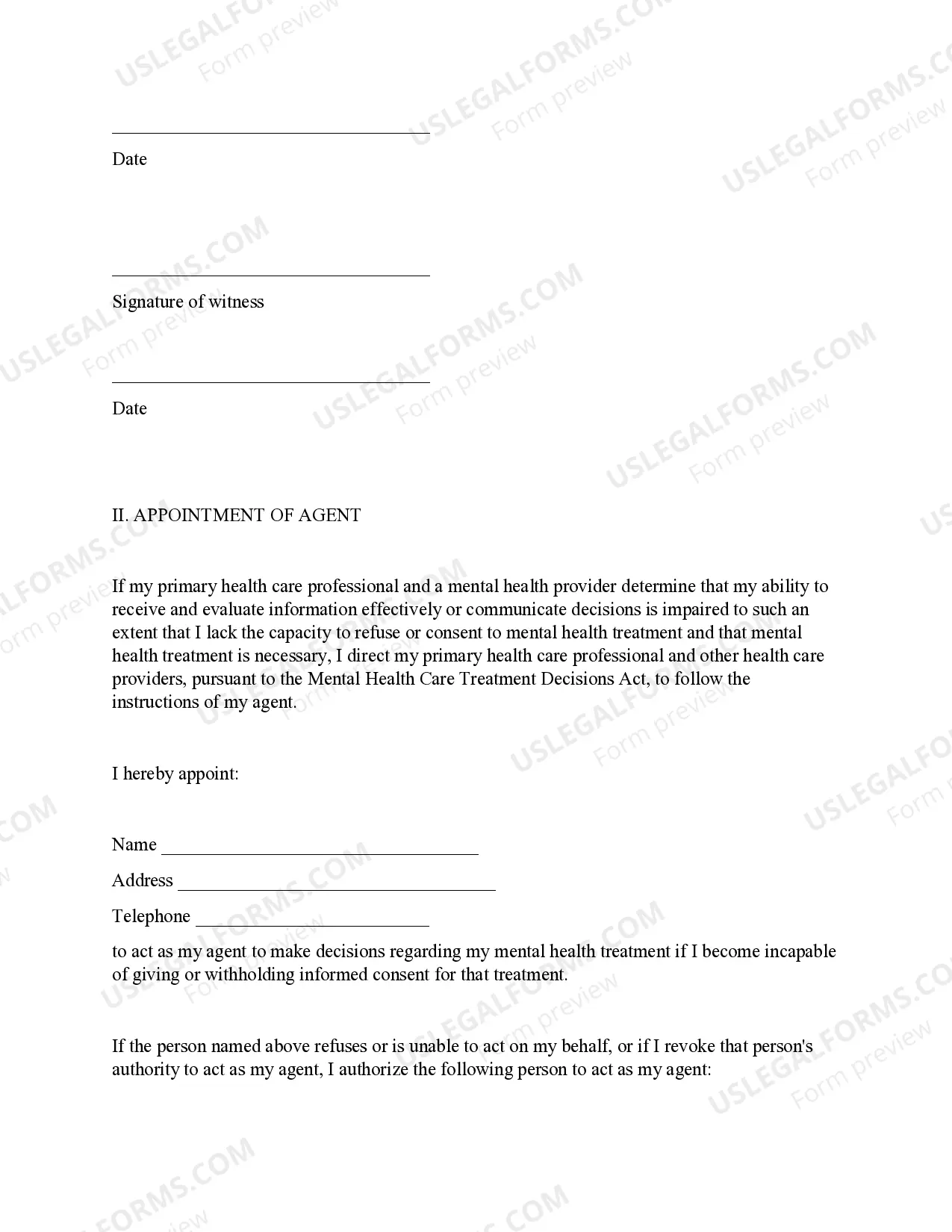
- Appointment of agent: Allows you to designate someone to make mental health decisions for you when you are incapacitated.
Common use cases
This form should be used when you want to proactively express your wishes regarding mental health treatment, particularly if you have a condition that may impact your ability to make decisions in the future. You may consider completing this directive if you are dealing with a mental health diagnosis, are undergoing treatment, or are concerned about potential crises that may leave you incapacitated.
Who this form is for
- Individuals with a history of mental health issues seeking to outline their treatment preferences.
- Persons who wish to ensure their treatment choices are respected in the event of incapacity.
- Caregivers or family members looking to assist loved ones in expressing their mental health care preferences.
- Anyone wanting to proactively manage their mental health care through legal documentation.
Completing this form step by step
- Begin by filling in your personal information at the top of the directive.
- Clearly articulate your preferences regarding treatment, including the names of preferred physicians and any treatments you wish to refuse.
- Designate an agent who will make decisions on your behalf if you are incapacitated.
- Specify your preferences regarding medication and any tolerances for side effects.
- Review the entire document for completeness and sign it in the presence of a witness.
Notarization guidance
This form does not typically require notarization unless specified by local law. It is important to check your state's regulations to ensure that all legal requirements are met for your advance directive to be valid.
Get your form ready online
Our built-in tools help you complete, sign, share, and store your documents in one place.
Make edits, fill in missing information, and update formatting in US Legal Forms—just like you would in MS Word.
Download a copy, print it, send it by email, or mail it via USPS—whatever works best for your next step.
Sign and collect signatures with our SignNow integration. Send to multiple recipients, set reminders, and more. Go Premium to unlock E-Sign.
If this form requires notarization, complete it online through a secure video call—no need to meet a notary in person or wait for an appointment.
We protect your documents and personal data by following strict security and privacy standards.

Make edits, fill in missing information, and update formatting in US Legal Forms—just like you would in MS Word.

Download a copy, print it, send it by email, or mail it via USPS—whatever works best for your next step.

Sign and collect signatures with our SignNow integration. Send to multiple recipients, set reminders, and more. Go Premium to unlock E-Sign.

If this form requires notarization, complete it online through a secure video call—no need to meet a notary in person or wait for an appointment.

We protect your documents and personal data by following strict security and privacy standards.
Avoid these common issues
- Not clearly specifying preferences, leading to confusion during treatment.
- Forgetting to sign the document or have it witnessed, which may invalidate it.
- Leaving too many sections blank, which could cause ambiguity in healthcare decisions.
- Neglecting to regularly update the directive as your preferences or circumstances change.
Advantages of online completion
- Immediate access to a legally drafted and comprehensive mental health treatment directive.
- Easy to customize your preferences according to your personal healthcare needs.
- Reliable and consistent formatting, ensuring compliance with legal standards.
- Convenient, as you can complete and download the form from anywhere.
Looking for another form?
Form popularity
FAQ
An advance directive isn't the same as a DNR DNRs, like POLST forms, require a physician's sign-off and are medical orders, instructing emergency personnel to withhold resuscitation efforts. If you don't want to receive resuscitation, including that information in an advance care directive is not enough.
The type of advance medical directive that the AMA recommends is a durable power of attorney. The type of advance medical directive that the AMA recommends is a durable power of attorney.
An advance directive is a set of instructions someone prepares in advance of ill health that determines his healthcare wishes. A living will is one type of advance directive that becomes effective when a person is terminally ill.
They do this with cardiopulmonary resuscitation (CPR). A DNR is a request not to have CPR if your heart stops or if you stop breathing. You can use an advance directive form or tell your doctor that you don't want to be resuscitated. Your doctor will put the DNR order in your medical chart.
The living will. Durable power of attorney for health care/Medical power of attorney. POLST (Physician Orders for Life-Sustaining Treatment) Do not resuscitate (DNR) orders. Organ and tissue donation.
An advance directive, alone, may not be sufficient to stop all forms of life-saving treatment. You may also need specific do not resuscitate, or DNR orders.You retain the right to override the decisions or your representative, change the terms of your living will or POA, or completely revoke an advance directive.
The name and contact information of your healthcare agent/proxy. Answers to specific questions about your preferences for care if you become unable to speak for yourself. Names and signatures of individuals who witness your signing your advance directive, if required.
Is the Five Wishes advance directive a legal document? Yes. It was written with the help of the American Bar Association's Commission on Law & Aging. It meets the legal requirements of 44 states, but is used widely in all 50, and a federal law requires medical care providers to honor patient wishes as expressed.
Advance directives generally fall into three categories: living will, power of attorney, and health care proxy.