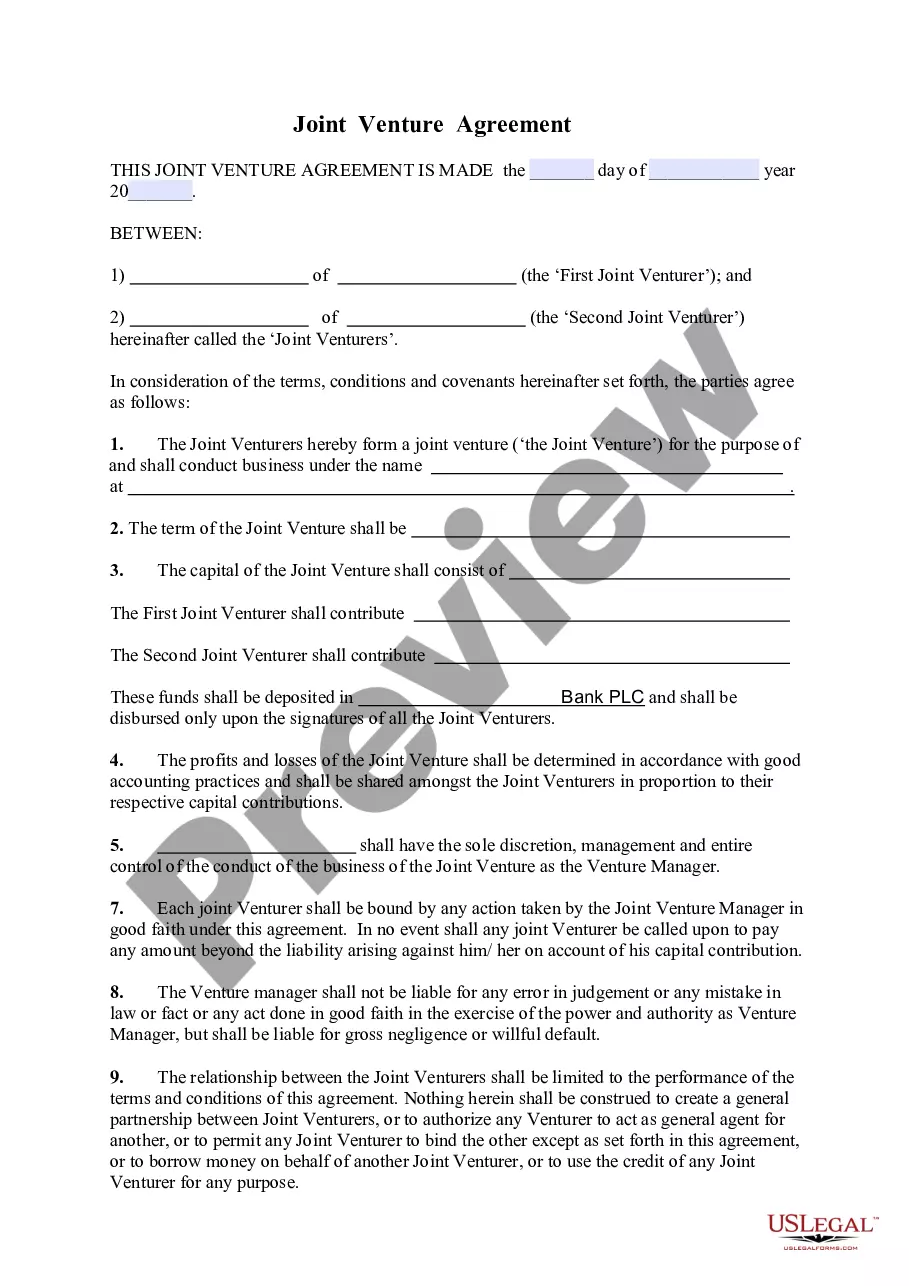
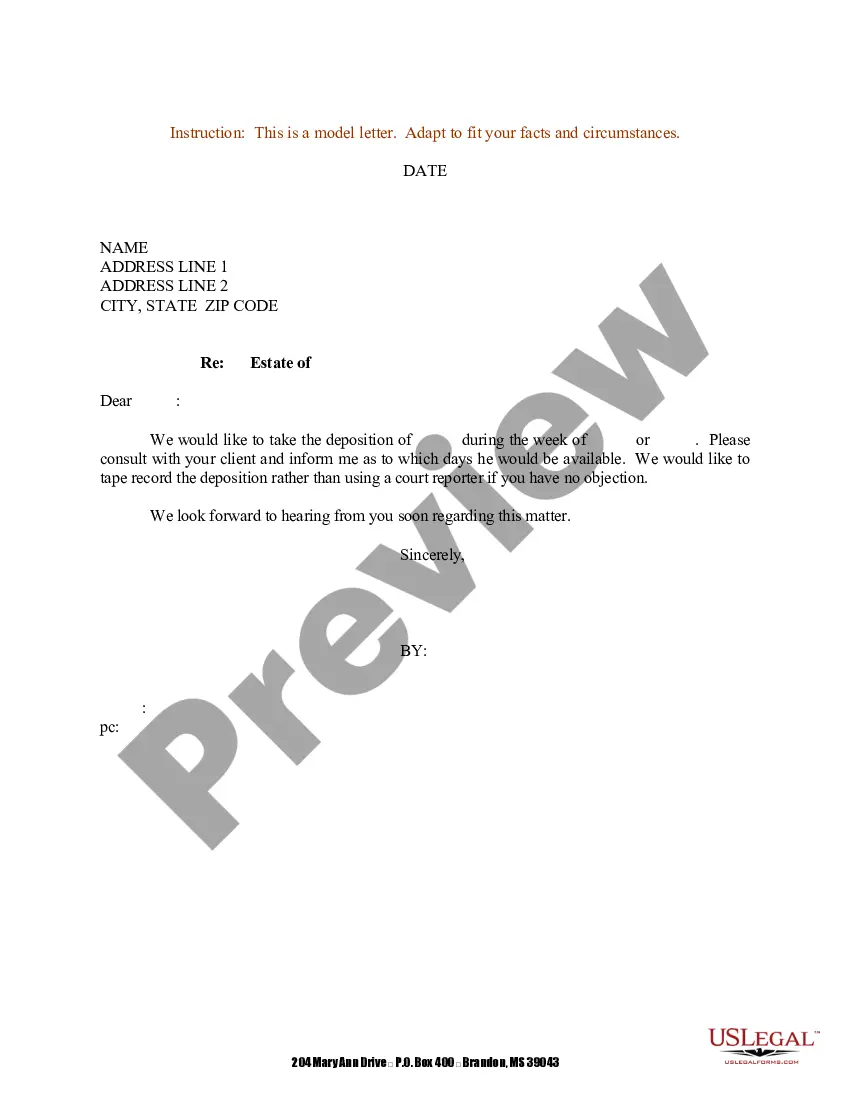
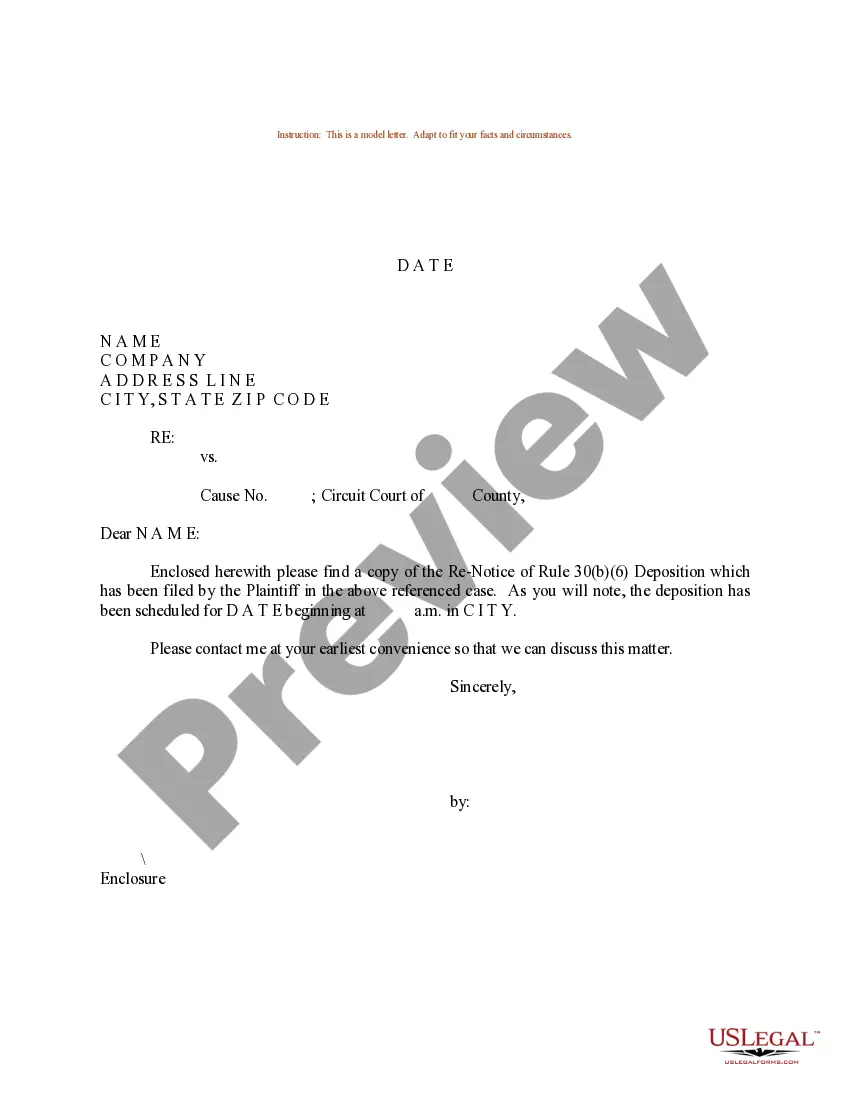
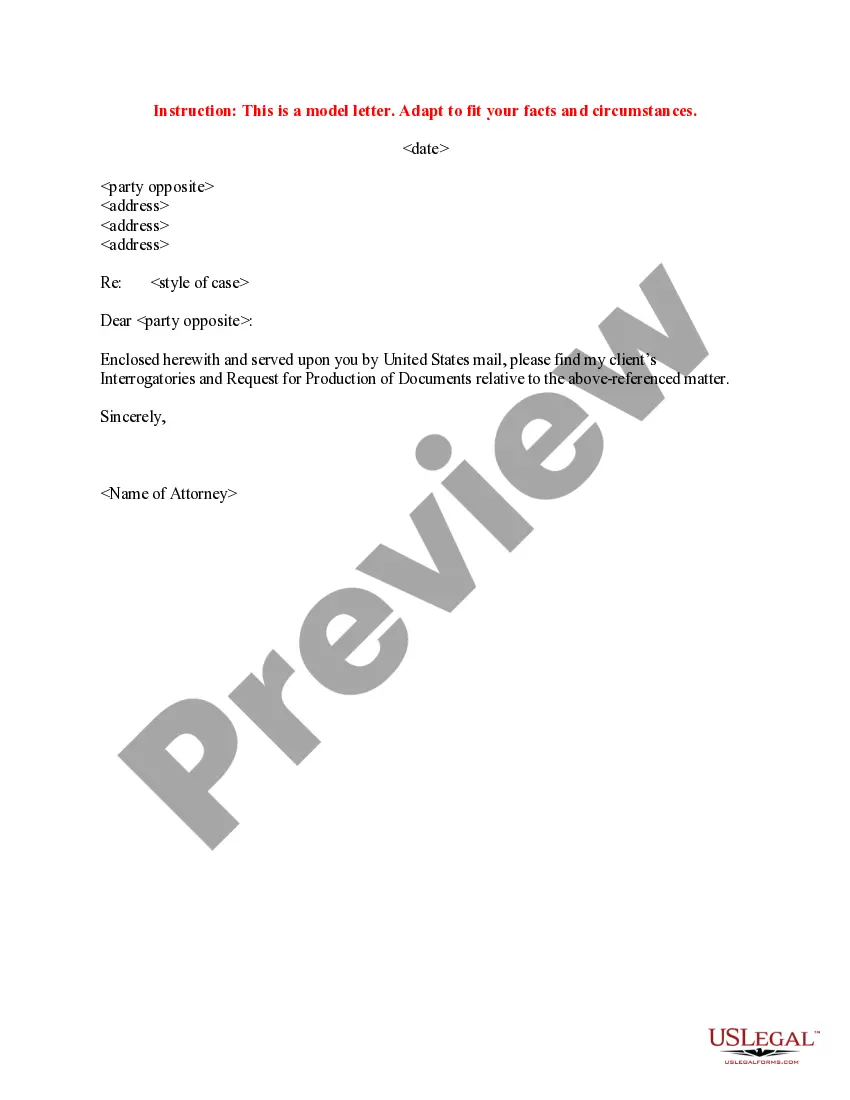
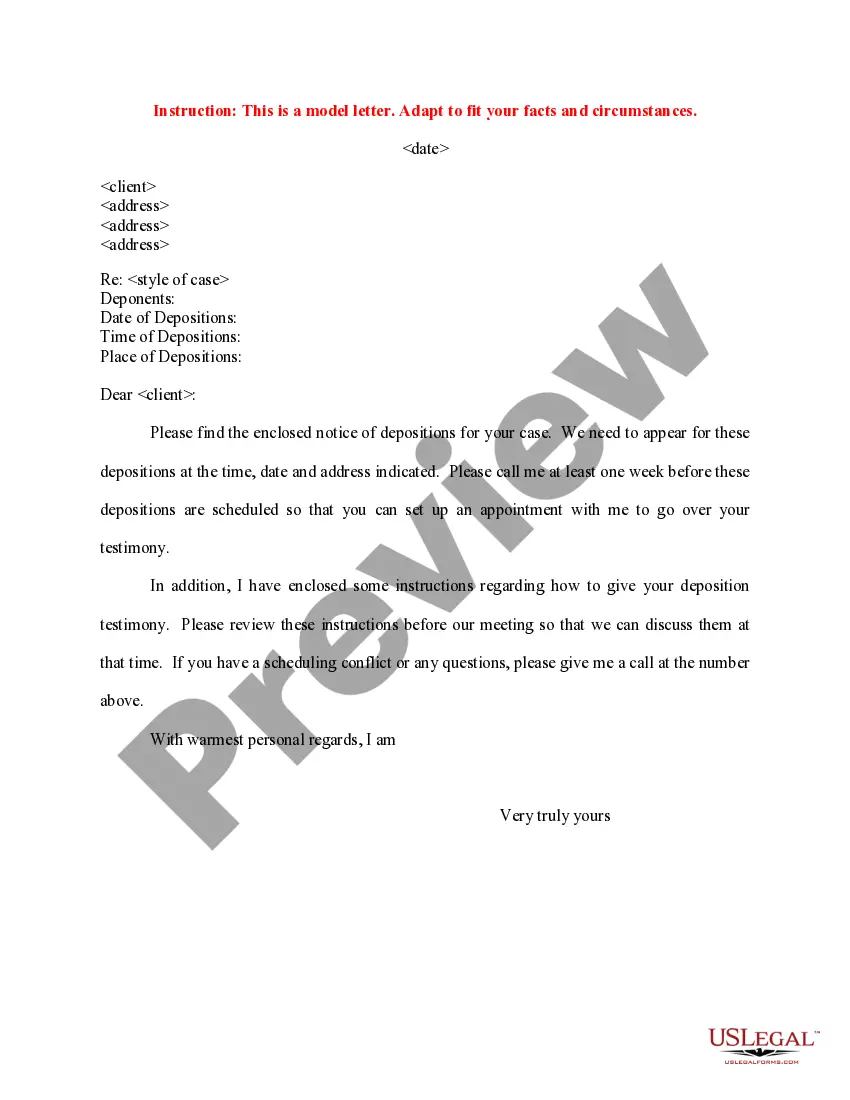
New Mexico Sample Letter for Request for Deposition - Discovery
Description

Get your form ready online
Our built-in tools help you complete, sign, share, and store your documents in one place.
Make edits, fill in missing information, and update formatting in US Legal Forms—just like you would in MS Word.
Download a copy, print it, send it by email, or mail it via USPS—whatever works best for your next step.
Sign and collect signatures with our SignNow integration. Send to multiple recipients, set reminders, and more. Go Premium to unlock E-Sign.
If this form requires notarization, complete it online through a secure video call—no need to meet a notary in person or wait for an appointment.
We protect your documents and personal data by following strict security and privacy standards.

Make edits, fill in missing information, and update formatting in US Legal Forms—just like you would in MS Word.

Download a copy, print it, send it by email, or mail it via USPS—whatever works best for your next step.

Sign and collect signatures with our SignNow integration. Send to multiple recipients, set reminders, and more. Go Premium to unlock E-Sign.

If this form requires notarization, complete it online through a secure video call—no need to meet a notary in person or wait for an appointment.

We protect your documents and personal data by following strict security and privacy standards.
Looking for another form?

How to fill out Sample Letter For Request For Deposition - Discovery?
If you want to finalize, obtain, or print out legal document templates, utilize US Legal Forms, the leading collection of legal forms available online.
Employ the site's straightforward and user-friendly search to find the documents you require.
Various templates for business and personal purposes are categorized by types and states, or keywords.
Step 4. Once you have found the form you need, select the Purchase now option. Choose the payment plan you prefer and enter your information to register for an account.
Step 5. Complete the transaction. You can use your Visa or MasterCard or PayPal account to finalize the purchase. Step 6. Choose the format of the legal document and download it to your device. Step 7. Fill out, edit, and print or sign the New Mexico Sample Letter for Request for Deposition - Discovery. Every legal document template you acquire is yours indefinitely. You have access to every form you obtained in your account. Select the My documents section and choose a form to print or download again. Stay competitive and obtain and print the New Mexico Sample Letter for Request for Deposition - Discovery with US Legal Forms. There are numerous professional and state-specific forms available for your business or personal needs.
- Utilize US Legal Forms to locate the New Mexico Sample Letter for Request for Deposition - Discovery in just a few clicks.
- If you are already a US Legal Forms user, sign in to your account and click the Download button to access the New Mexico Sample Letter for Request for Deposition - Discovery.
- You can also find forms you have previously acquired in the My documents section of your account.
- If you are using US Legal Forms for the first time, follow the instructions below.
- Step 1. Ensure you have chosen the form for the correct city/state.
- Step 2. Use the Preview option to review the content of the form. Remember to read the instructions.
- Step 3. If you are not satisfied with the form, use the Search field at the top of the screen to find other templates in the legal form category.
Form popularity
FAQ
Discovery is how you gather the evidence you will need to prove your case as plaintiff, or defeat the plaintiff's case as a defendant. You use discovery to find out things like: What the other side plans to say about an issue in your case. What facts or witnesses support their side.
Rule 37 authorizes the court to direct that parties or attorneys who fail to participate in good faith in the discovery process pay the expenses, including attorney's fees, incurred by other parties as a result of that failure.
Discovery requests typically follow a common format that you can mirror. First, list instructions detailing the request for production. Be sure to mention Rule 34 and Rule 26(b), which outline the scope of the discovery request. It's also necessary to include a section with definitions.
Here are some of the things lawyers often ask for in discovery: anything a witness or party saw, heard, or did in connection with the dispute. anything anyone said at a particular time and place (for example, in a business meeting related to the dispute or after a car accident that turned into a lawsuit)
Discovery means you send the other side questions and requests for information or items (like documents) in writing. The other side must respond to your question or request in writing.
This letter is often called a good faith letter. And it is needed under many courts' rules before you can file a motion to compel discovery if the other party ignores your requests or provides evasive responses or move for sanctions if your opponent refuses to comply with the court's discovery order.
Discovery is the formal process by which the parties to a case in court exchange information about the case. This includes information about the witnesses and evidence to be presented at trial. Its purpose is to make the parties aware of the evidence which may be presented at trial.
Discovery means you send the other side questions and requests for information or items (like documents) in writing. The other side must respond to your question or request in writing.