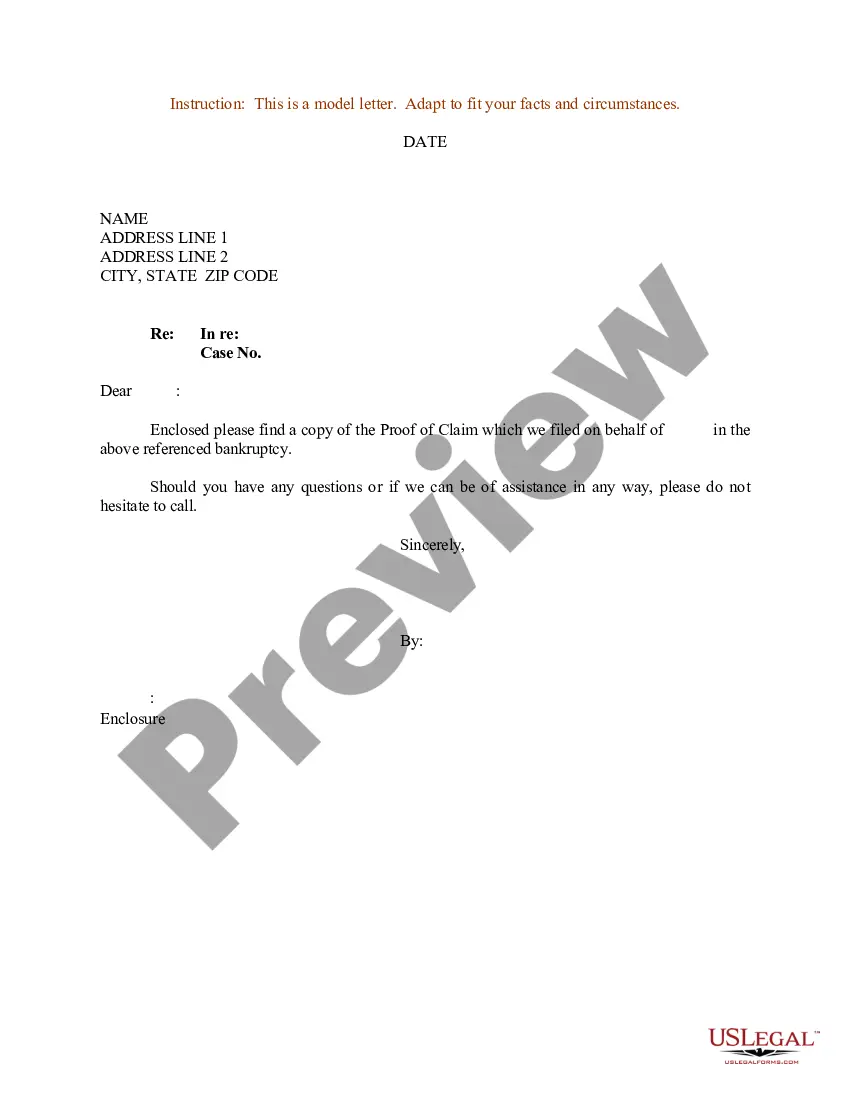
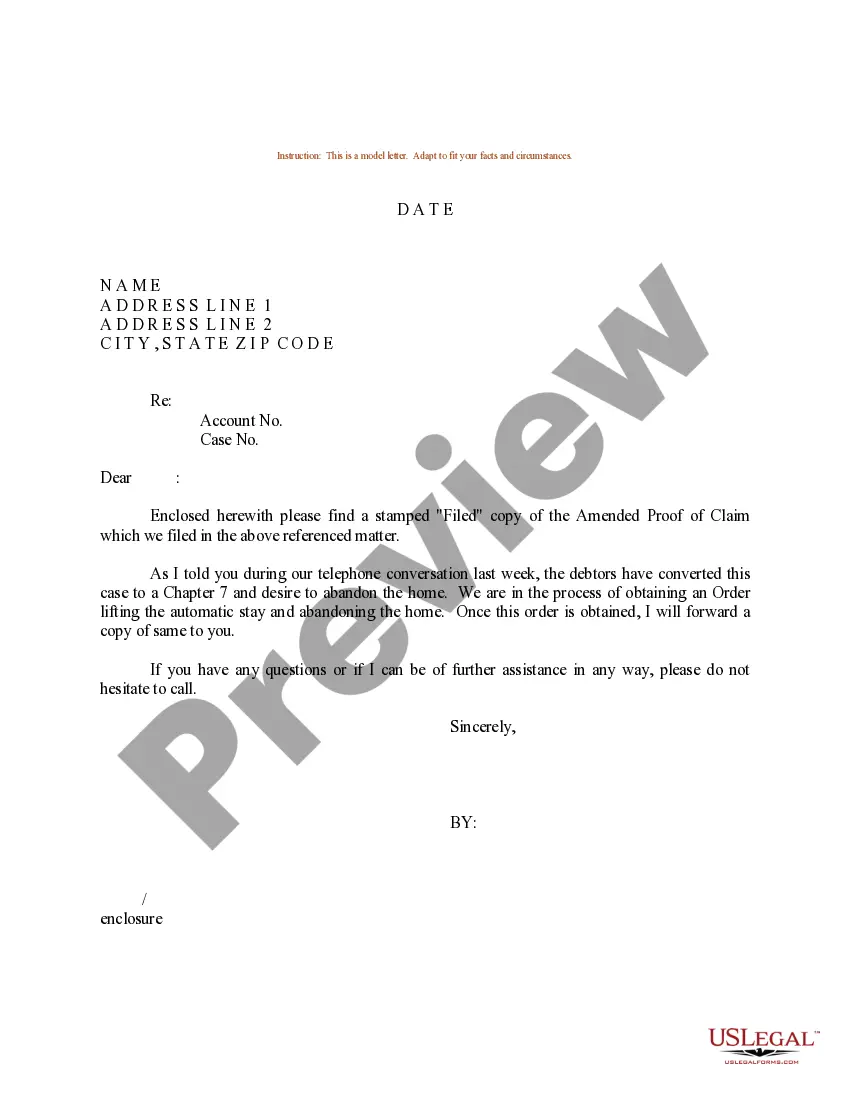
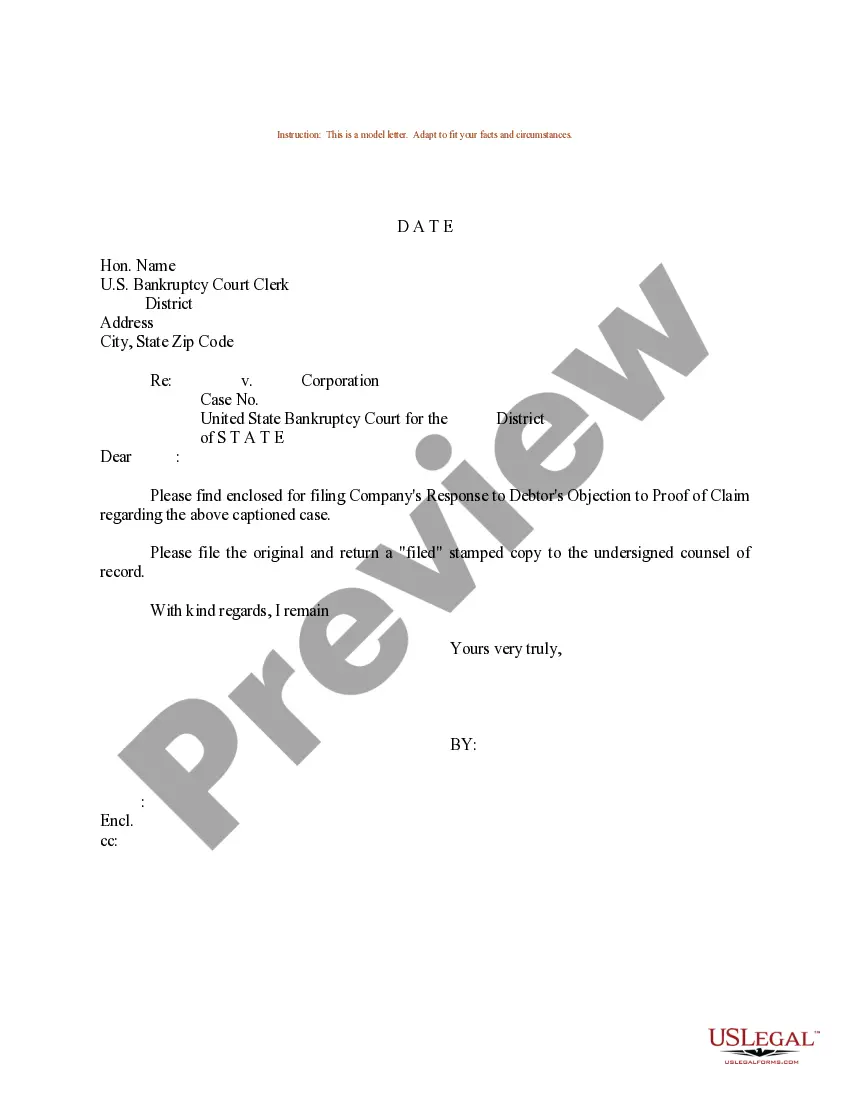
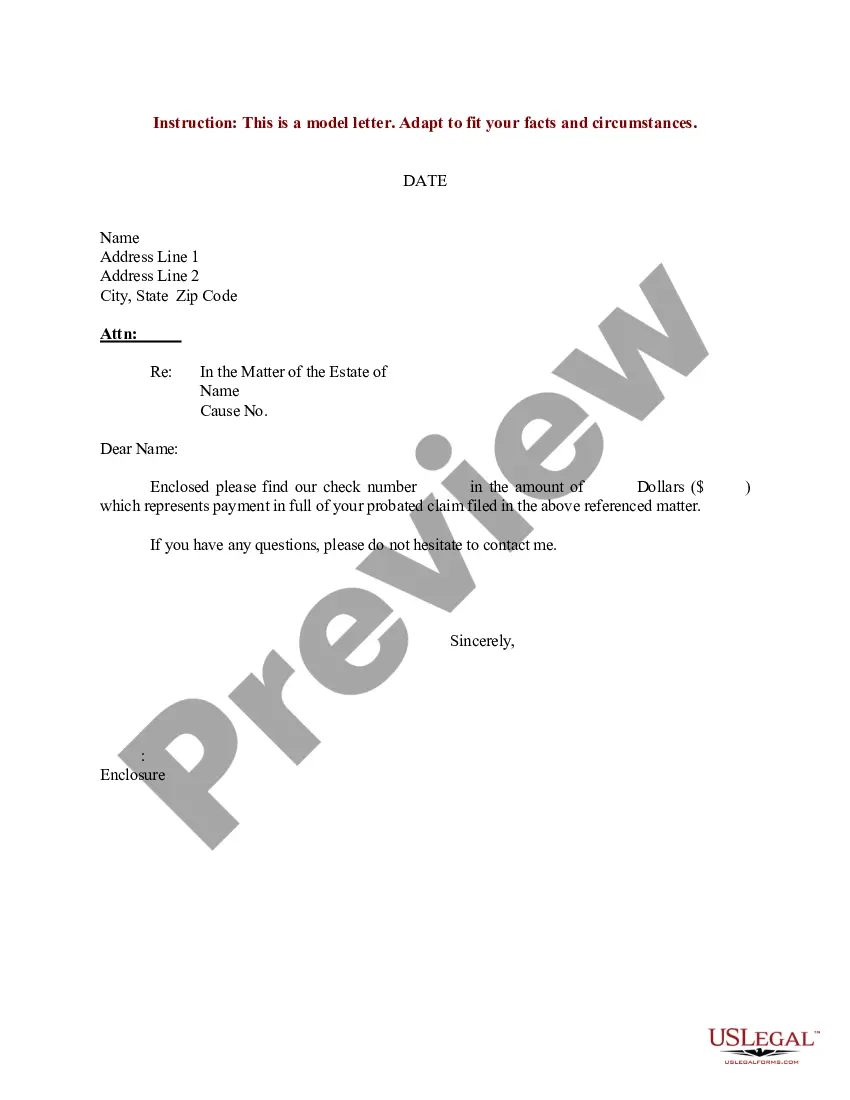
New Mexico Sample Letter regarding Proof of Claim
Description
Get your form ready online
Our built-in tools help you complete, sign, share, and store your documents in one place.
Make edits, fill in missing information, and update formatting in US Legal Forms—just like you would in MS Word.
Download a copy, print it, send it by email, or mail it via USPS—whatever works best for your next step.
Sign and collect signatures with our SignNow integration. Send to multiple recipients, set reminders, and more. Go Premium to unlock E-Sign.
If this form requires notarization, complete it online through a secure video call—no need to meet a notary in person or wait for an appointment.
We protect your documents and personal data by following strict security and privacy standards.

Make edits, fill in missing information, and update formatting in US Legal Forms—just like you would in MS Word.

Download a copy, print it, send it by email, or mail it via USPS—whatever works best for your next step.

Sign and collect signatures with our SignNow integration. Send to multiple recipients, set reminders, and more. Go Premium to unlock E-Sign.

If this form requires notarization, complete it online through a secure video call—no need to meet a notary in person or wait for an appointment.

We protect your documents and personal data by following strict security and privacy standards.
Looking for another form?



How to fill out Sample Letter Regarding Proof Of Claim?
US Legal Forms - one of the largest collections of legal documents in the United States - provides a variety of legal form templates that you can download or print. By using the website, you can access thousands of forms for business and personal purposes, categorized by types, states, or keywords. You can obtain the latest forms such as the New Mexico Sample Letter concerning Proof of Claim in moments.
If you already have a subscription, Log In and download the New Mexico Sample Letter concerning Proof of Claim from the US Legal Forms library. The Download option will appear on every form you view. You can access all previously downloaded forms from the My documents tab of your account.
If you want to use US Legal Forms for the first time, here are simple instructions to help you get started: Make sure to have selected the correct form for your city/state. Click the Review option to examine the form's content. Review the form description to ensure you have chosen the correct form. If the form doesn’t meet your requirements, use the Search bar at the top of the screen to find one that does. If you are satisfied with the form, confirm your choice by clicking the Purchase now option. Then, select the payment plan you prefer and provide your credentials to register for an account. Complete the transaction. Use your credit card or PayPal account to finalize the transaction. Choose the format and download the form to your device. Make modifications. Fill out, edit, print, and sign the downloaded New Mexico Sample Letter concerning Proof of Claim. Each template you add to your account has no expiration date and is yours permanently. Therefore, if you wish to download or print another copy, simply go to the My documents section and click on the form you need.
US Legal Forms provides an extensive selection of legal documents, ensuring that users can find the specific templates they require.
Whether for personal or business use, the platform simplifies the process of obtaining legally sound documents.
- Access the New Mexico Sample Letter concerning Proof of Claim with US Legal Forms, the most extensive collection of legal document templates.
- Utilize thousands of professional and state-specific templates that meet your business or personal needs and requirements.
- Enjoy the convenience of having a vast library of legal documents at your fingertips.
- Download and customize forms easily to suit your particular circumstances.
- Benefit from the assurance that all forms are up-to-date and legally compliant.
- Navigate through the user-friendly interface to find the forms you need quickly.
Form popularity
FAQ
A proof of claim is a form submitted by a creditor in order to receive money from a debtor who has filed for bankruptcy. The document provides notice of the claim to all of the other relevant parties involved in the bankruptcy, including the court, the debtor, and any other creditors.
Typically, all creditors, whether they are owed secured or unsecured debts, should file a proof of claim in order to have a chance for recouping all or at least some of the amount they are due.
A Proof of Claim must include any pertinent documentation, such as promissory notes, purchase orders, contracts, invoices, delivery receipts or security agreements. Other documentation might include monthly statements, pay records and ledgers.
A written statement filed in a bankruptcy case setting forth a creditor's claim is called a proof of claim. A proof of claim should include a copy of any documentation giving rise to the claim as well as any evidence in support of the claim, such as evidence of secured status if the claim is secured.
An objection to a proof of claim must be in writing and filed with the bankruptcy court. A copy of the objection and the notice of court hearing date must be mailed to the creditor, the trustee, and the debtor at least 30 days before the hearing.
A proof of claim is a written statement setting forth a creditor's claim. A proof of claim shall conform substantially to the appropriate Official Form. (b) Who May Execute. A proof of claim shall be executed by the creditor or the creditor's authorized agent except as provided in Rules 3004 and 3005.
Basis for perfection: Attach redacted copies of documents, if any, that show evidence of perfection of a security interest (for example, a mortgage, lien, certificate of title, financing statement, or other document that shows the lien has been filed or recorded.)
A proof of claim is a form used by the creditor to indicate the amount of the debt owed by the debtor on the date of the bankruptcy filing. The creditor must file the form with the clerk of the same bankruptcy court in which the bankruptcy case was filed.