Nevada Time Share Quitclaim Deed - Individual to Two Individuals / Husband and Wife
What this document covers
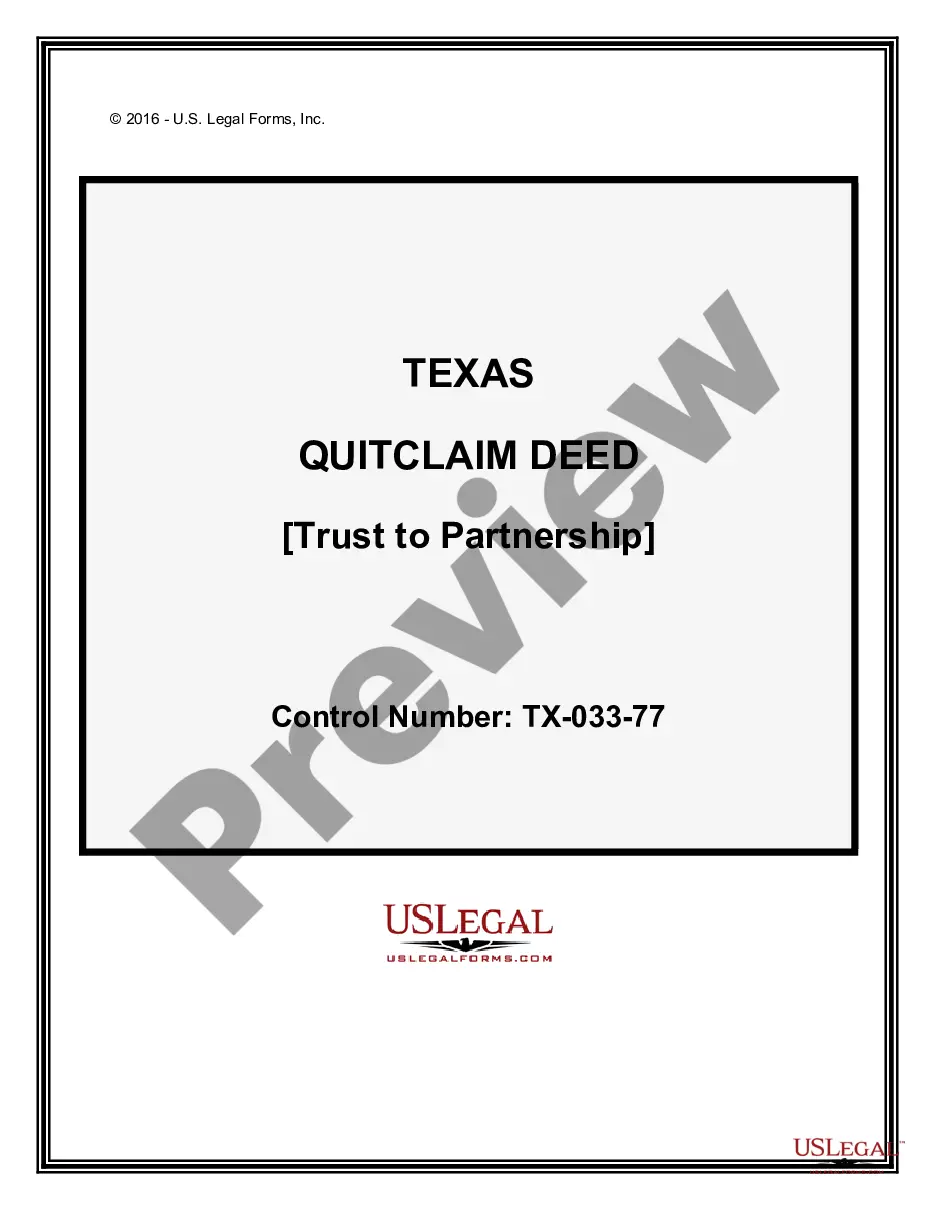
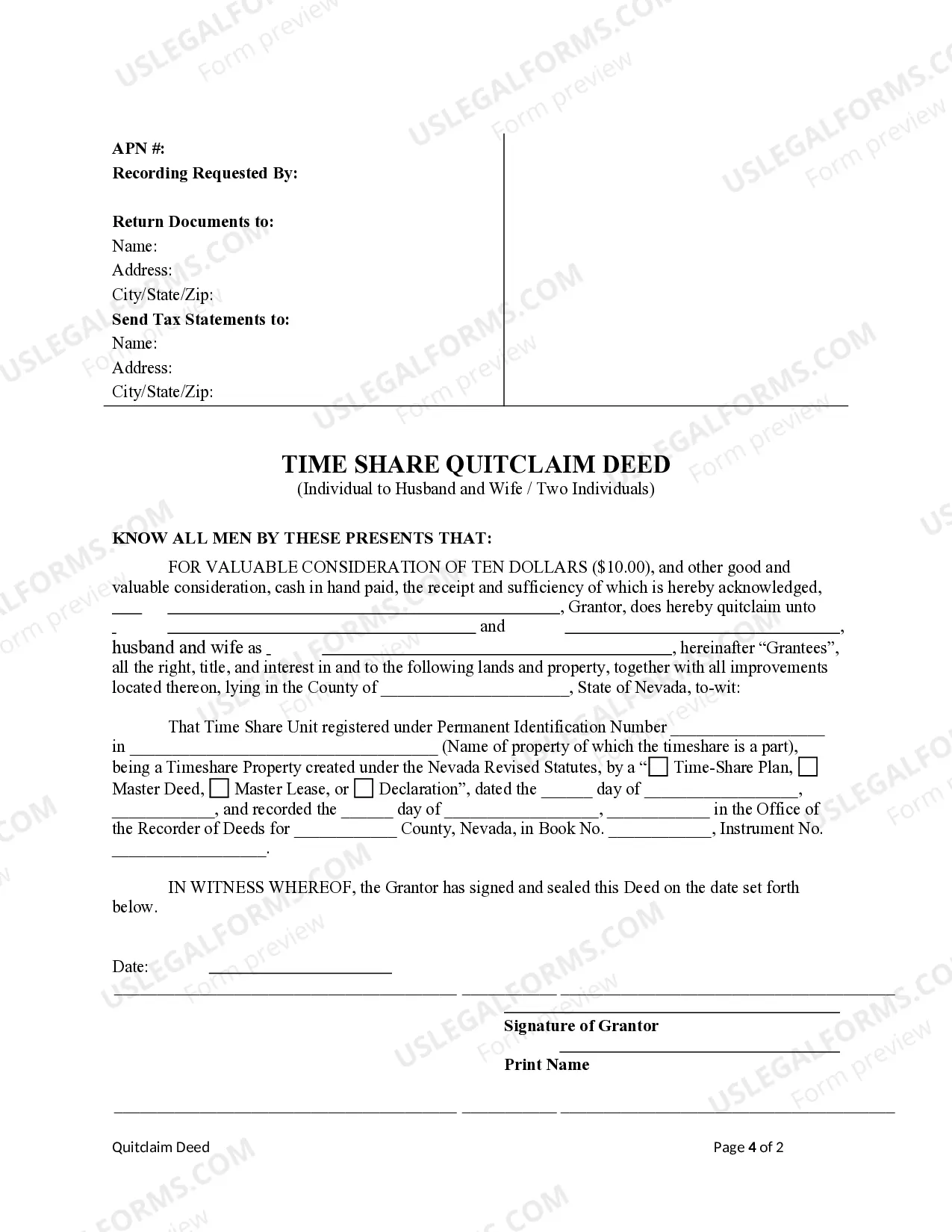
This Time Share Quitclaim Deed allows an individual (the Grantor) to transfer their interests in a timeshare property to two individuals, specifically a husband and wife. This form facilitates the transfer of property rights without guaranteeing clear title, distinguishing it from other types of deeds that provide additional warranties or guarantees.
Key components of this form
- Name of Grantor and Grantees
- Description of the timeshare property
- Date of the agreement
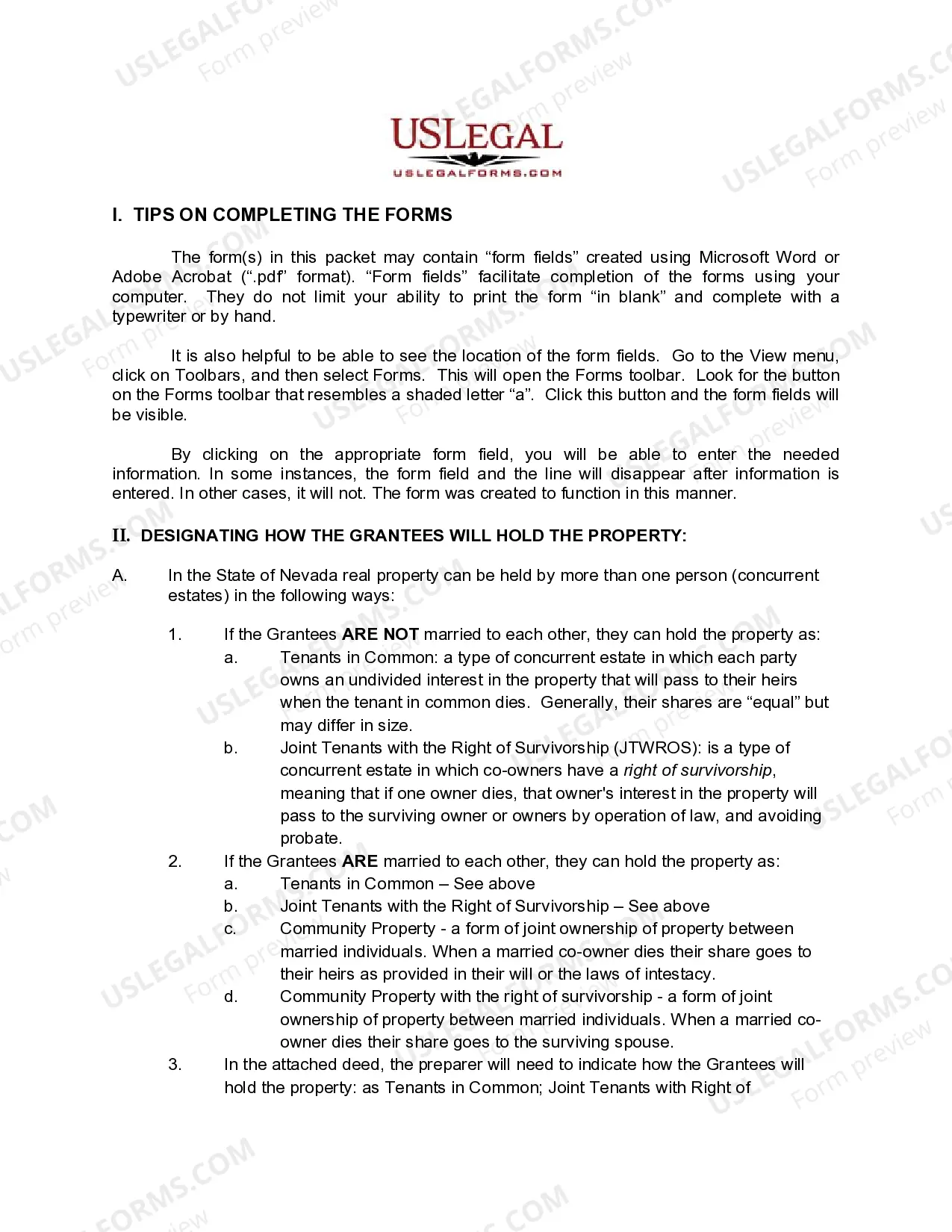
- Method of property holding for Grantees (e.g., Joint Tenants, Community Property)
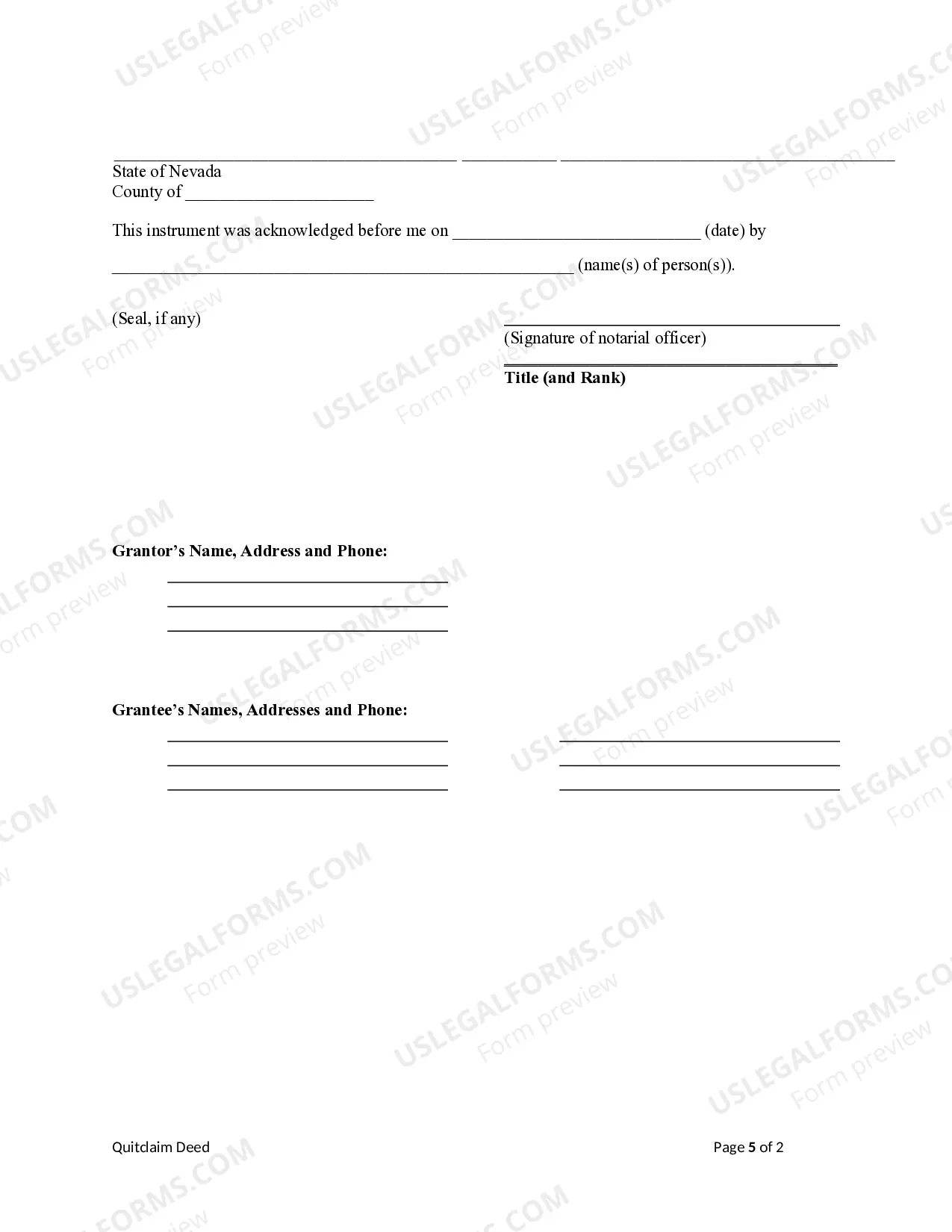
- Signatures of the parties involved



When to use this form
This Quitclaim Deed is useful when an individual wants to transfer their interest in a timeshare property to a married couple or two individuals. Scenarios may include divorce, estate planning, or transferring ownership as part of gift-giving arrangements. It is important to ensure that all relevant parties are in agreement and that the transfer aligns with any applicable state laws.
Who needs this form
This form is intended for:
- Individuals looking to transfer their interest in a timeshare to a spouse or another individual.
- Husbands and wives who want to consolidate or clarify their ownership of a timeshare property.
- Anyone needing a simple and efficient way to convey real property interests without warranties.
Instructions for completing this form
- Identify the parties involved: enter the names of both the Grantor and the Grantees.
- Specify the timeshare property: include a detailed description of the timeshare and its location.
- Choose the method of property holding: indicate whether Grantees will hold title as Joint Tenants, Tenants in Common, or as Community Property.
- Enter the relevant dates: fill in the date of the deed and any other necessary dates.
- Obtain signatures: ensure that all parties sign the document in the appropriate places.
Notarization guidance
Notarization is required for this form to take effect. Our online notarization service, powered by Notarize, lets you verify and sign documents remotely through an encrypted video session, available 24/7.
Get your form ready online
Our built-in tools help you complete, sign, share, and store your documents in one place.
Make edits, fill in missing information, and update formatting in US Legal Forms—just like you would in MS Word.
Download a copy, print it, send it by email, or mail it via USPS—whatever works best for your next step.
Sign and collect signatures with our SignNow integration. Send to multiple recipients, set reminders, and more. Go Premium to unlock E-Sign.
If this form requires notarization, complete it online through a secure video call—no need to meet a notary in person or wait for an appointment.
We protect your documents and personal data by following strict security and privacy standards.

Make edits, fill in missing information, and update formatting in US Legal Forms—just like you would in MS Word.

Download a copy, print it, send it by email, or mail it via USPS—whatever works best for your next step.

Sign and collect signatures with our SignNow integration. Send to multiple recipients, set reminders, and more. Go Premium to unlock E-Sign.

If this form requires notarization, complete it online through a secure video call—no need to meet a notary in person or wait for an appointment.

We protect your documents and personal data by following strict security and privacy standards.
Common mistakes
- Failing to accurately describe the property, which can lead to issues in the future.
- Not specifying how Grantees will hold the property.
- Omitting signatures or dates, rendering the deed invalid.
- Not consulting local law for any specific requirements that may apply.
Why use this form online
- Convenience of accessing legal documents at any time from anywhere.
- Editability allows users to customize the form easily to suit their specific needs.
- Peace of mind knowing that forms are drafted based on current laws and regulations.
Looking for another form?
Form popularity
FAQ
A quitclaim deed is dangerous if you don't know anything about the person giving you the property. You should be sure that a person actually has rights to a property before signing it over with a quitclaim deed.
But you might be wondering if an owner can transfer a deed to another person without a real estate lawyer. The answer is yes. Parties to a transaction are always free to prepare their own deeds.A quitclaim deed, for example, is far simpler than a warranty deed.
Contesting A Quitclaim Deed Contesting the validity of a quitclaim deed must prove that one of the stipulations described above is invalid, that the deed was filed under false pretenses (e.g., the grantor's signature was forged) or that the grantor signed the deed under duress.
The term 'deed' refers to an instrument, like a written document that is signed by all the parties to a contract, in this case, the seller and buyer. It is a binding contract that is enforceable in a court of law. A conveyance deed is, therefore, a contract in which, the seller transfers all rights to the legal owner.
Once you sign a quitclaim deed and it has been filed and recorded with the County Clerks Office, the title has been officially transferred and cannot be easily reversed. In order to reverse this type of transfer, it would require your spouse to cooperate and assist in adding your name back to the title.
The drawback, quite simply, is that quitclaim deeds offer the grantee/recipient no protection or guarantees whatsoever about the property or their ownership of it. Maybe the grantor did not own the property at all, or maybe they only had partial ownership.
A quitclaim deed transfers title but makes no promises at all about the owner's title.A person who signs a quitclaim deed to transfer property they do not own results in no title at all being transferred since there is no actual ownership interest. The quitclaim deed only transfers the type of title you own.
The grantor must sign the deed according to the law in every state and county. The grantor's signature finalizes the transfer of ownership, and quitclaim deeds aren't considered valid unless the grantor signs them. A certified notary public must typically be present as the grantor signs.
The deed transfer is done simply and there is no title search or title insurance used. It is fast and easy. Quitclaim deeds are not used for real estate sales, because the new owner receives no guarantees about the title and how valid it is.