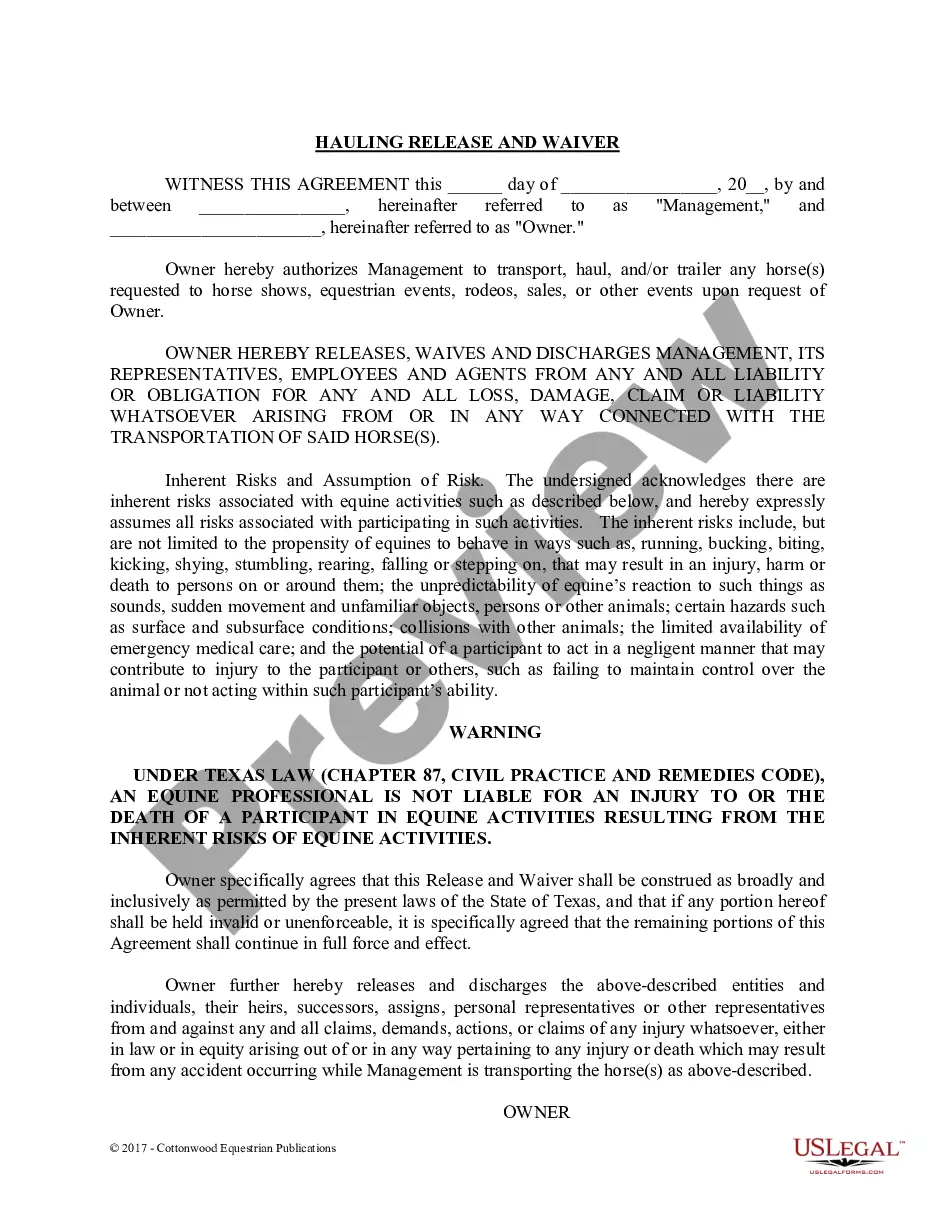
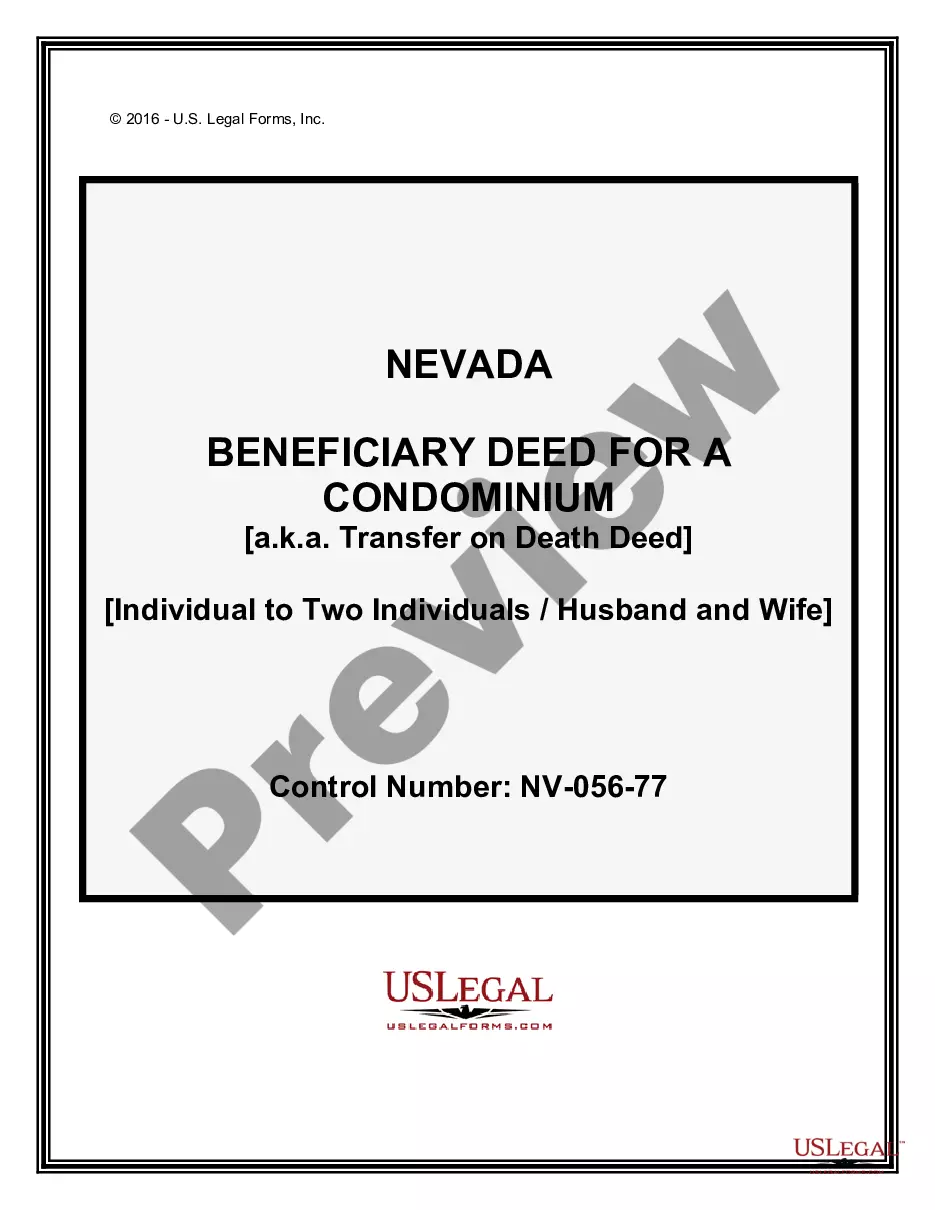
Nevada Beneficiary Deed (TOD) for a Condominium from an Individual to Two Individuals / Husband and Wife
What this document covers
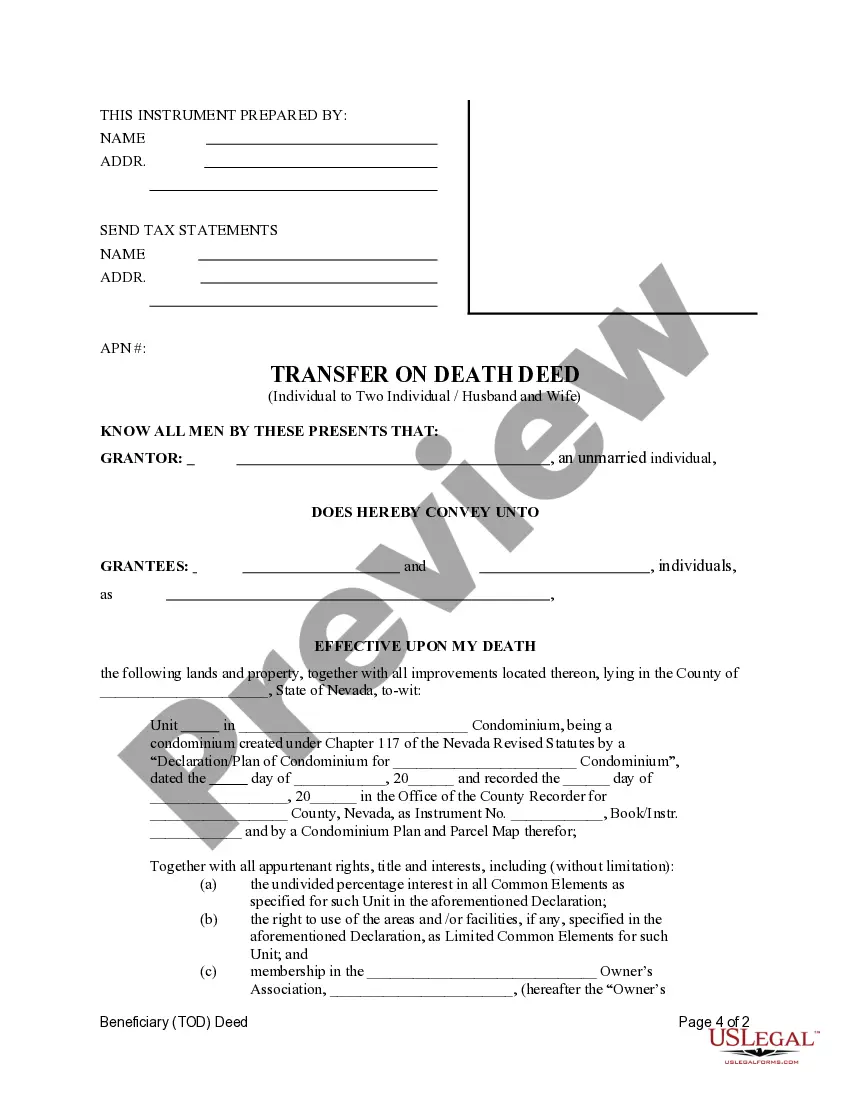
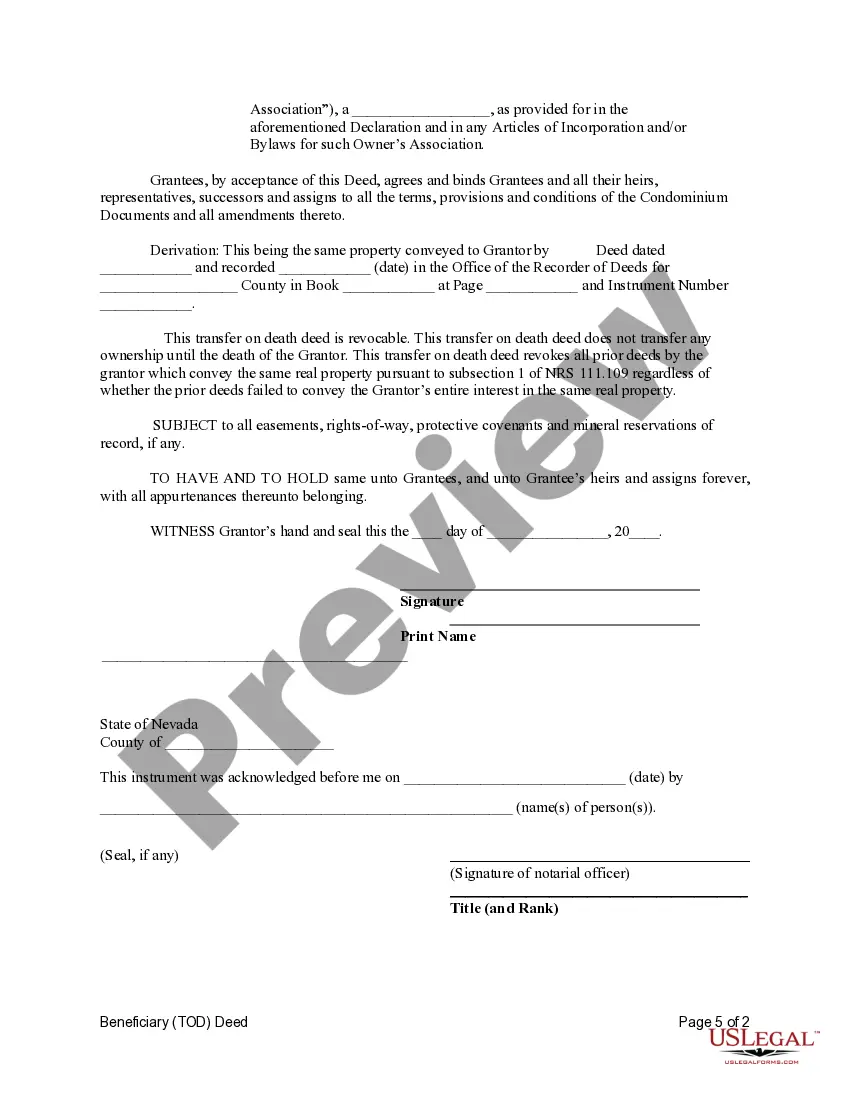
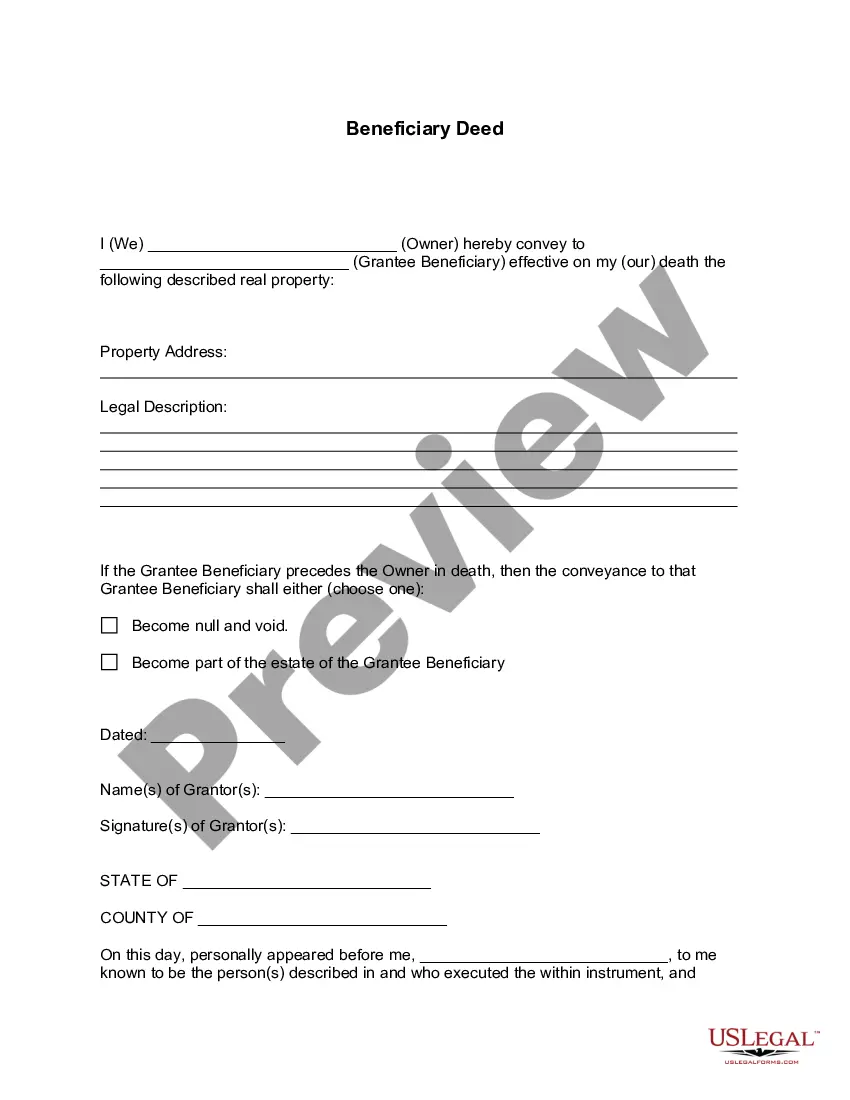
The Beneficiary Deed (Transfer on Death Deed) allows an individual (the Grantor) to designate two individuals or a married couple (the Grantees) as the recipients of a condominium property upon the Grantor's death. This deed is revocable until the death of the Grantor and is effective only after their passing. It simplifies the transfer of property ownership and avoids probate, differentiating it from traditional deeds by creating a direct transfer at death without immediate ownership rights for the Grantees.
Form components explained
- Identification of the Grantor and Grantees
- Description of the condominium property being transferred
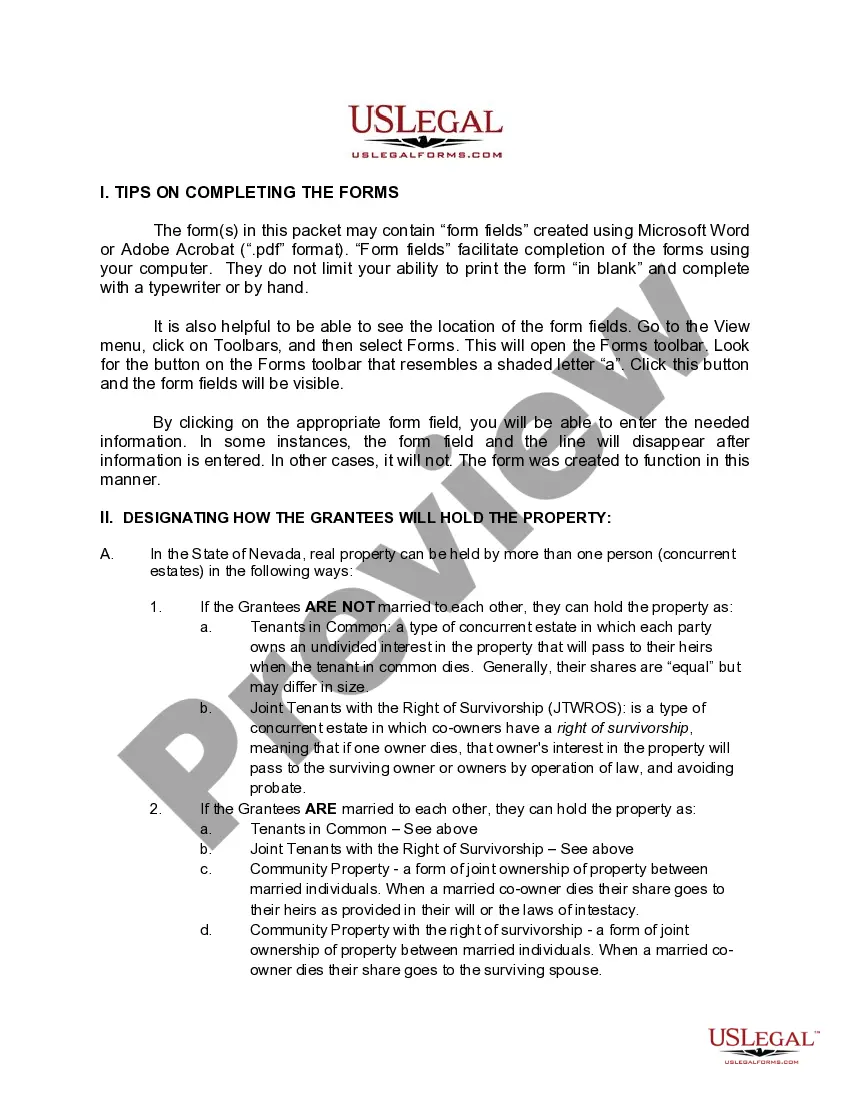
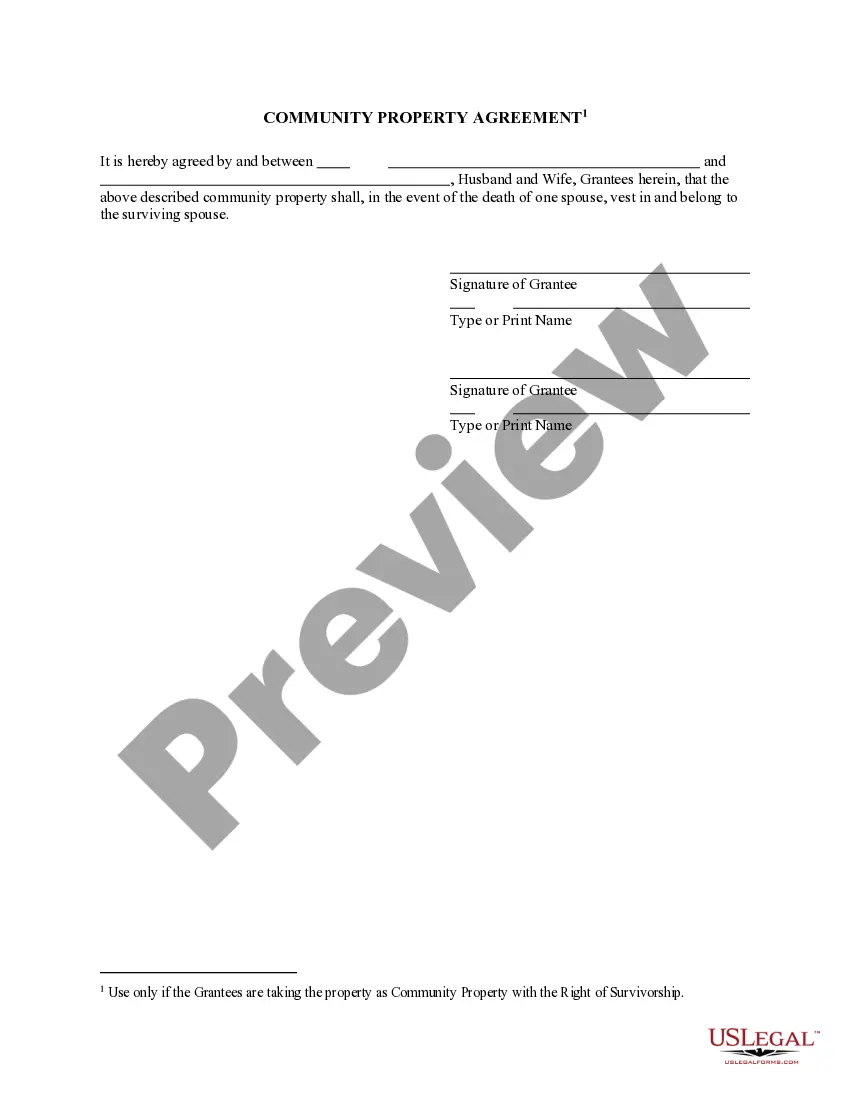
- Options for how Grantees will hold the property (e.g., tenants in common, joint tenants with right of survivorship, community property)
- Revocability clause allowing the Grantor to change or cancel the deed
- Signatures and date section to validate the deed


Common use cases
This form is useful for homeowners who wish to ensure their condominium property passes directly to their chosen beneficiaries upon their death, thereby streamlining the transfer process and avoiding the complications of probate court proceedings. It is often used by individuals who want to retain control of their property during their lifetime while providing a clear instruction for after their passing.
Who this form is for
- Individuals who own a condominium and want to plan for property transfer after death
- Married couples looking to ensure joint ownership of their property upon the death of one spouse
- Anyone who wishes to avoid probate for their condominium property
How to complete this form
- Identify the Grantor (the person transferring the property) and the Grantees (the beneficiaries receiving the property).
- Clearly describe the condominium property that is being transferred, including any appurtenant rights.
- Choose how the Grantees will hold the property (as tenants in common, joint tenants, or community property).
- Fill in the date, signatures of the Grantor, and any required witness or notary sections if applicable.
- Ensure that the deed is properly executed in accordance with state laws to be legally binding.
Does this document require notarization?
This document requires notarization to meet legal standards. US Legal Forms provides secure online notarization powered by Notarize, allowing you to complete the process through a verified video call, available 24/7.
Get your form ready online
Our built-in tools help you complete, sign, share, and store your documents in one place.
Make edits, fill in missing information, and update formatting in US Legal Forms—just like you would in MS Word.
Download a copy, print it, send it by email, or mail it via USPS—whatever works best for your next step.
Sign and collect signatures with our SignNow integration. Send to multiple recipients, set reminders, and more. Go Premium to unlock E-Sign.
If this form requires notarization, complete it online through a secure video call—no need to meet a notary in person or wait for an appointment.
We protect your documents and personal data by following strict security and privacy standards.

Make edits, fill in missing information, and update formatting in US Legal Forms—just like you would in MS Word.

Download a copy, print it, send it by email, or mail it via USPS—whatever works best for your next step.

Sign and collect signatures with our SignNow integration. Send to multiple recipients, set reminders, and more. Go Premium to unlock E-Sign.

If this form requires notarization, complete it online through a secure video call—no need to meet a notary in person or wait for an appointment.

We protect your documents and personal data by following strict security and privacy standards.
Common mistakes
- Failing to properly identify the property or Grantees.
- Not specifying how Grantees will hold the property.
- Signing the document without proper witnessing or notarization where required.
Advantages of online completion
- Convenient access to legal forms from home or office at any time.
- Easy to fill out and edit, reducing the risk of errors.
- Reliable resources and templates drafted by licensed attorneys.
Legal use & context
The Beneficiary Deed is designed to facilitate a straightforward transition of property ownership upon death, ensuring efficient inheritance while complying with state laws. It is important to be aware of any limitations based on local regulations regarding property transfers.
Quick recap
- The Beneficiary Deed allows for direct transfer of property upon death.
- This form is revocable and provides simplicity in estate planning.
- Proper execution and clarity in form details are essential to ensure its effectiveness.
Looking for another form?
Form popularity
FAQ
If you'd like to avoid having your property going through the probate process, it's a good idea to look into a transfer on death deed. A transfer on death deed allows you to select a beneficiary who will receive your property, but only when you've passed away.
Including California, TOD deeds are now permitted in 26 states and the District of Columbia. The TOD deed allows a person to leave his or her real property to a designated person or persons such as a family member, friend, life-long partner or other loved one without having to set up a living trust.
When a joint owner dies, the process is relatively simple you just need to inform the Land Registry of the death. You should complete a 'Deceased joint proprietor' form on the government's website and then send the form to the Land Registry, with an official copy of the death certificate.
File an Affidavit of Death form, an original certified death certificate, executor approval for the transfer, a Preliminary Change of Ownership Report form and a transfer tax affidavit. All signed forms should be notarized. Pay all applicable fees to get the title deed, which is the official notice of ownership.
The Nevada Deed Upon Death is like a regular deed you might use to transfer real estate located in Nevada, but with a crucial difference: It doesn't take effect until your death. At your death, the real estate goes automatically to the person you named to inherit it, without the need for probate court proceedings.
Get a Deed Form or Prepare Your Own. You can buy a state-specific TOD deed form for your state or type up your own document. Name the Beneficiary. Describe the Property. Sign the Deed. Record the Deed.
In most cases, the surviving owner or heir obtains the title to the home, the former owner's death certificate, a notarized affidavit of death, and a preliminary change of ownership report form. When all these are gathered, the transfer gets recorded, the fees are paid, and the county issues a new title deed.
The California TOD deed form allows property to be automatically transferred to a new owner when the current owner dies, without the need to go through probate. It also gives the current owner retained control over the property, including the right to change his or her mind about the transfer.
All you need to do is fill out a simple form, provided by the bank, naming the person you want to inherit the money in the account at your death. As long as you are alive, the person you named to inherit the money in a payable-on-death (POD) account has no rights to it.