Nevada Testamentary Provisions for Charitable Remainder Annuity Trust for Term of Years
Description
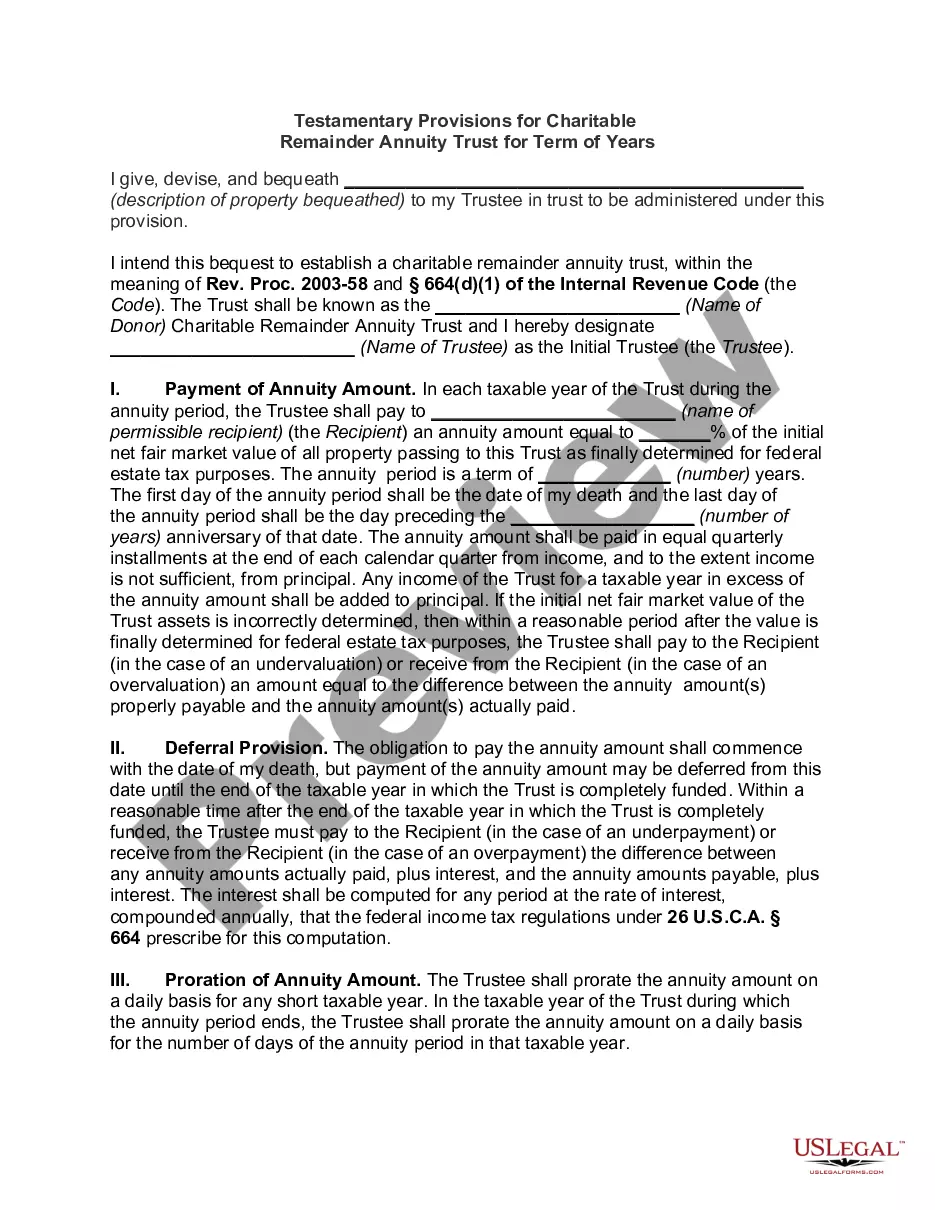
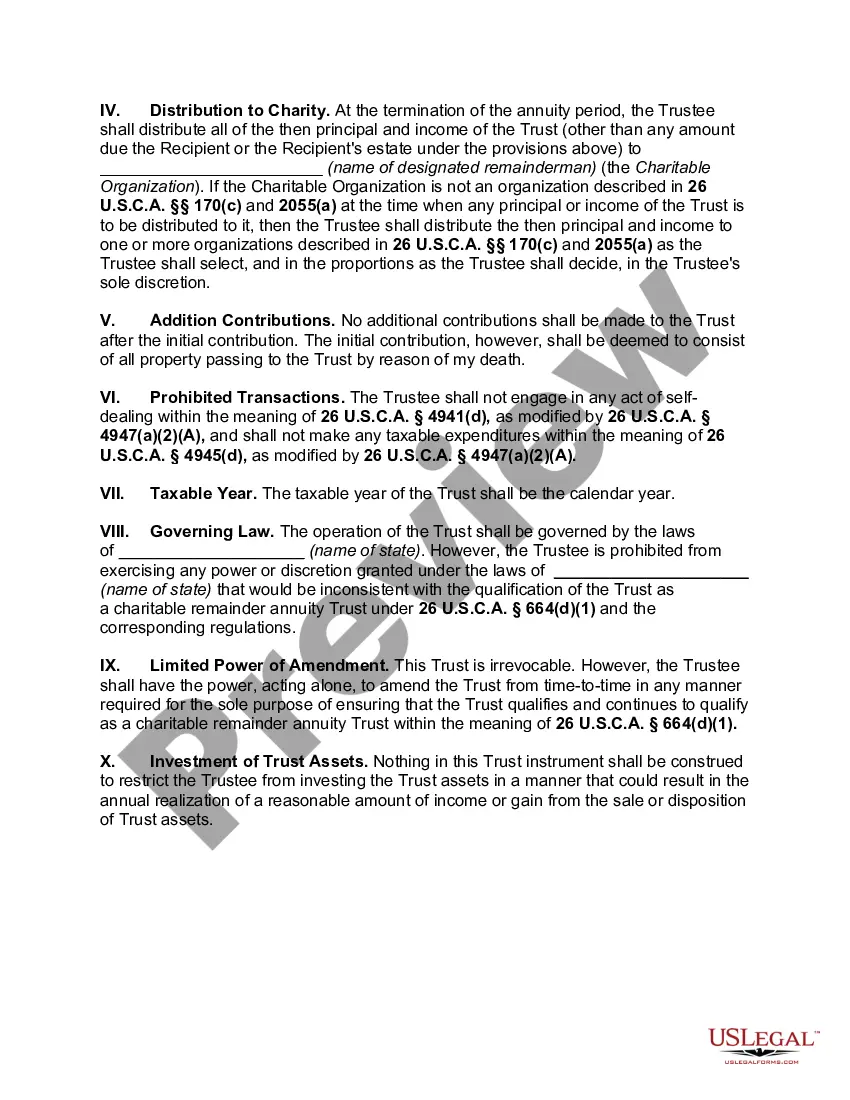
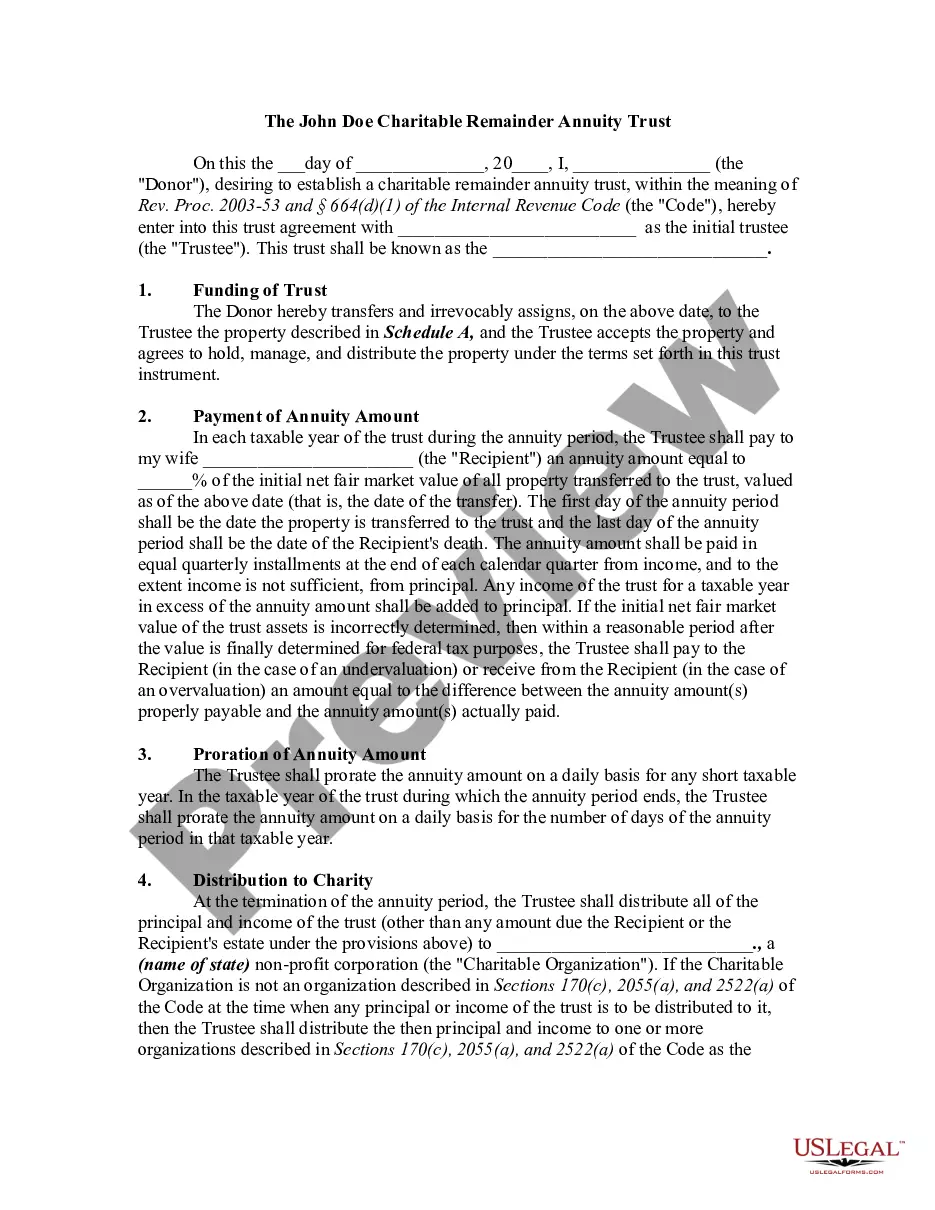


How to fill out Testamentary Provisions For Charitable Remainder Annuity Trust For Term Of Years?
You can spend hours online trying to locate the proper legal document template that meets the federal and state requirements you have. US Legal Forms offers a wide selection of legal forms that are reviewed by experts.
You can download or print the Nevada Testamentary Provisions for Charitable Remainder Annuity Trust for Term of Years from my service.
If you already possess a US Legal Forms account, you can Log In and click on the Obtain button. Subsequently, you can complete, modify, print, or sign the Nevada Testamentary Provisions for Charitable Remainder Annuity Trust for Term of Years. Each legal document template you purchase is yours for an extended period. To obtain another copy of any purchased form, visit the My documents tab and click on the relevant button.
Make adjustments to your document if necessary. You can complete, modify, and sign, as well as print the Nevada Testamentary Provisions for Charitable Remainder Annuity Trust for Term of Years. Acquire and print a multitude of document templates using the US Legal Forms website, which offers the most extensive collection of legal forms. Utilize professional and state-specific templates to address your business or personal needs.
- If you are using the US Legal Forms website for the first time, follow the simple instructions below.
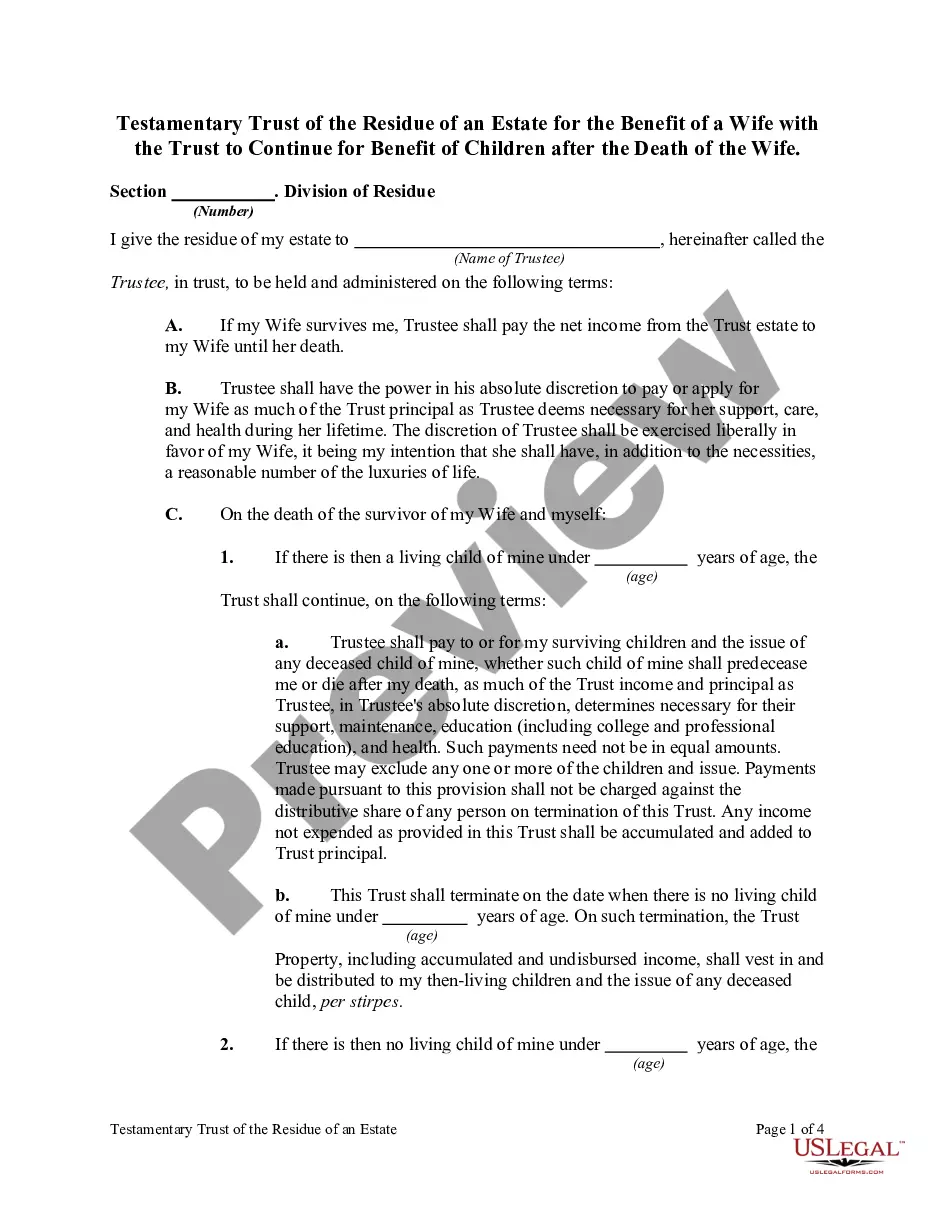
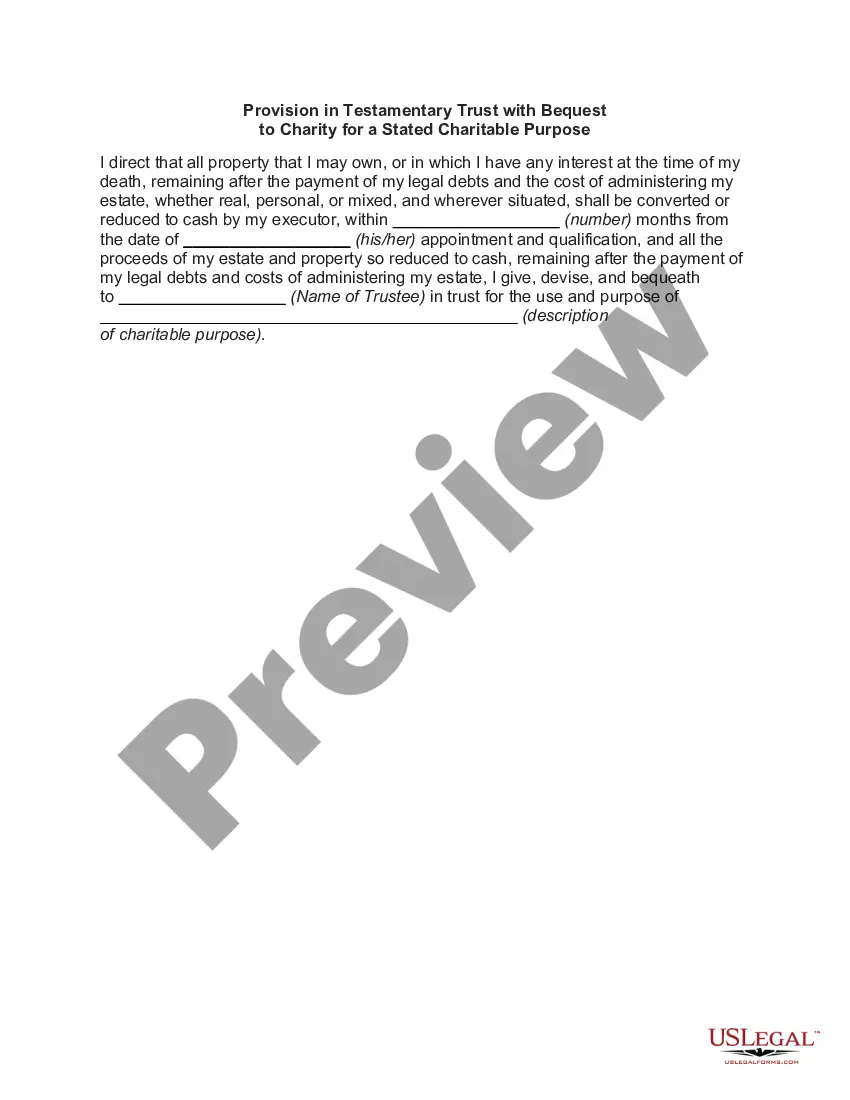
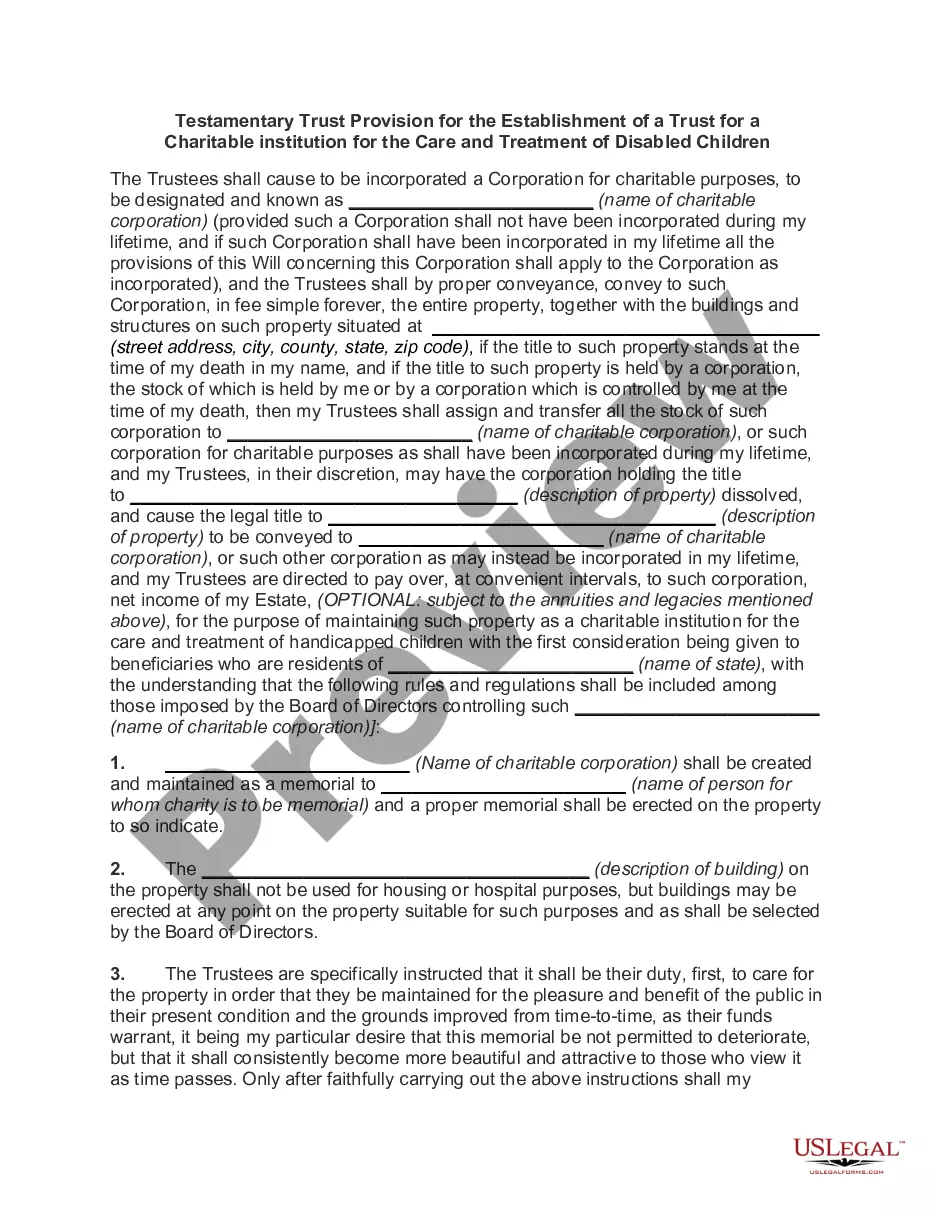
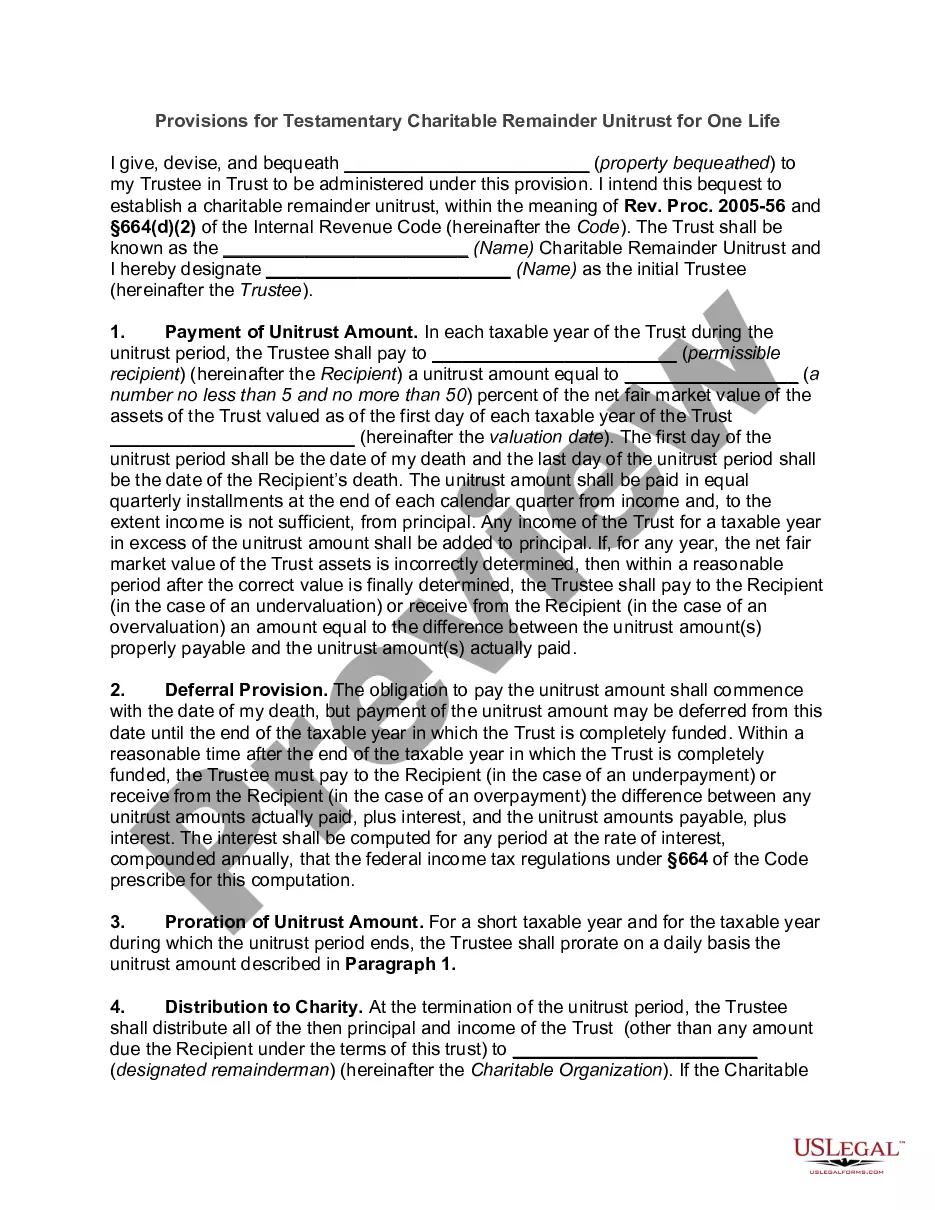
- First, ensure that you have chosen the correct document template for the state/region of your choice. Check the form description to confirm that you have selected the appropriate form. If available, use the Preview button to browse through the document template as well.
- If you wish to obtain another version of the form, use the Lookup area to find the template that suits your needs and requirements.
- Once you have located the template you want, click Get now to proceed.
- Select the pricing option you prefer, enter your details, and create an account on US Legal Forms.
- Complete the purchase. You can use your Visa or Mastercard or PayPal account to pay for the legal document.
- Choose the format of the document and download it to your device.
Form popularity
FAQ
Generally, the charitable deduction for contributions to a CRT with a public charity as its remainder beneficiary is limited to 50% of adjusted gross income (AGI).
First, the payment is taxed as ordinary income to the extent of the CRT's ordinary income for that year and undistributed ordinary income from prior years. Second, the distribution is treated as capital gains to the extent of the CRT's capital gains for that year and undistributed capital gains from prior years.
Any income that you receive from your charitable trust could reduce the total contribution that you end up leaving to your charity. You may risk leaving nothing to your charity if you plan to receive high payments from the trust while you're alive.
For example, contingent remainder beneficiaries of a trust are qualified beneficiaries under §736.0103(16), F.S. because of their interest in the distribution of any principal remaining after the death of a lifetime beneficiary.
The statute was later modified to allow 365-year interests, allowing trusts in Nevada to last 365 years. For individuals wanting to pass their wealth down to children, grandchildren and successive generations, these long-term trusts are thought of as a way to share the wealth within a family for generations to come.
A remainder beneficiary is a person who is entitled to receive principal when the income interest in a trust ends. This typically means that the income from a trust goes to one or more income beneficiaries, either for a fixed period of time or until a future event (such as their deaths).
A CRAT is a tax exempt trust that pays income to the donor's designee. After the trust term ends, the charity you name, e.g., the RMS receives the remainder of the assets in the trust. The year you establish the CRAT, you receive an income tax charitable deduction.
A qualified beneficiary in this context refers to someone who is either currently entitled to receive the income or principal of the trust, someone who would be entitled to receive the income or principal if the current recipients' rights are terminated, or someone entitled to receive the income or principal upon the
But, jurisdictions like California, New York, Nevada, Texas, Dela- ware and South Dakota remain notable states which continue to resist the adoption of the UTC.
A charitable gift annuity is a contractual agreement between one or two donors and a charity. The donor(s) transfer assets as a gift to the charity and in return, the charity is obligated to pay a fixed annuity to one or two annuitants (recipients of the annuity), for the lifetime of the annuitant(s).