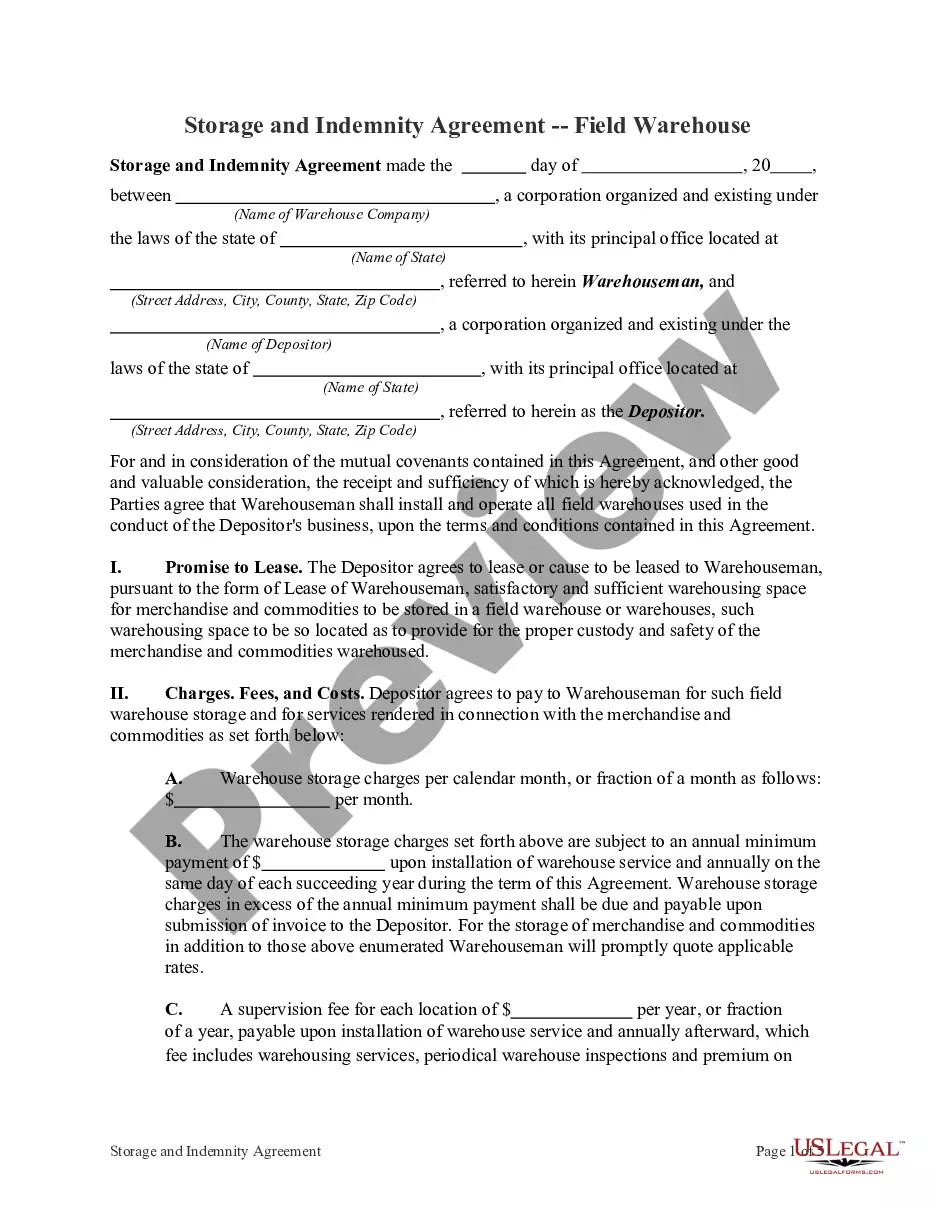
Nevada Field Warehouse Storage and Indemnity Agreement
Description
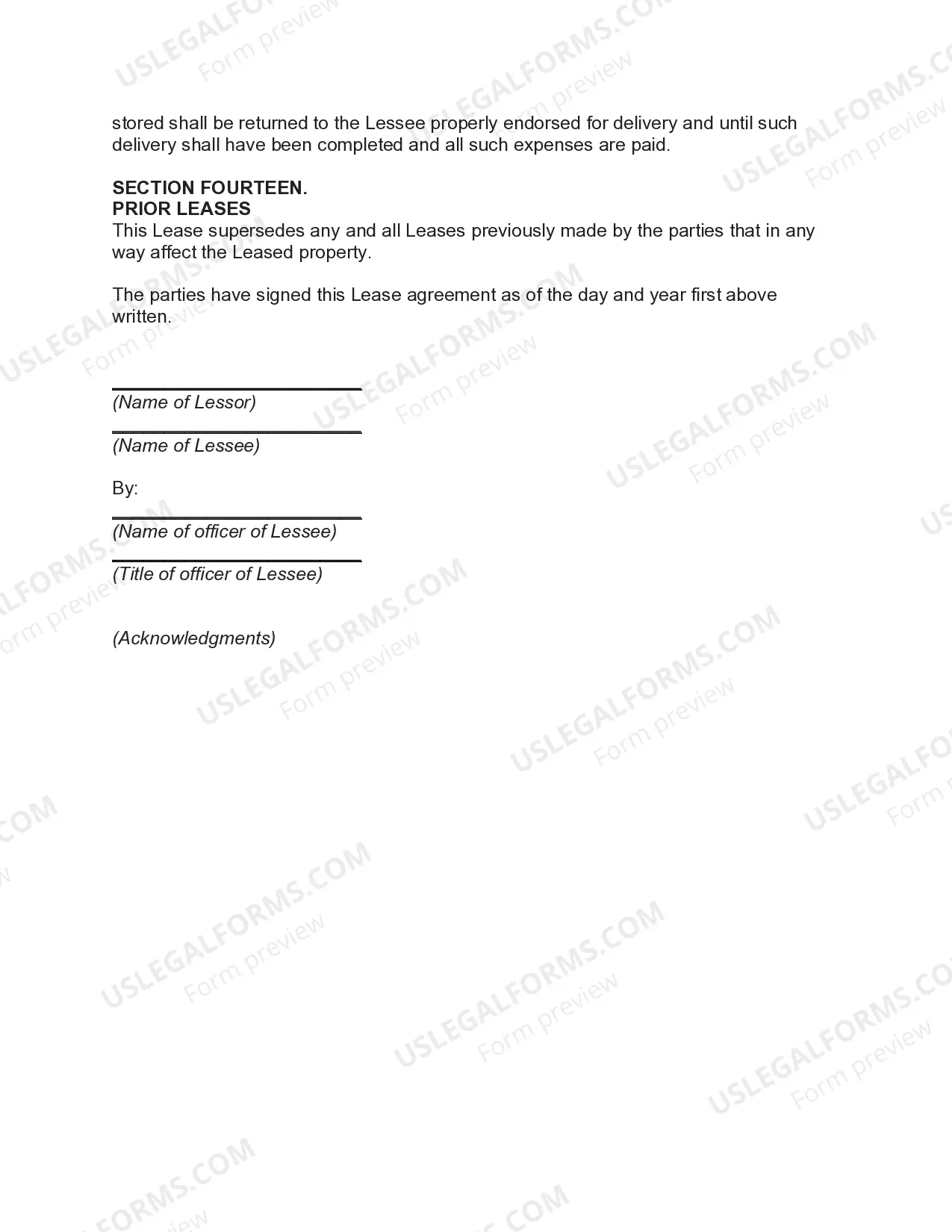
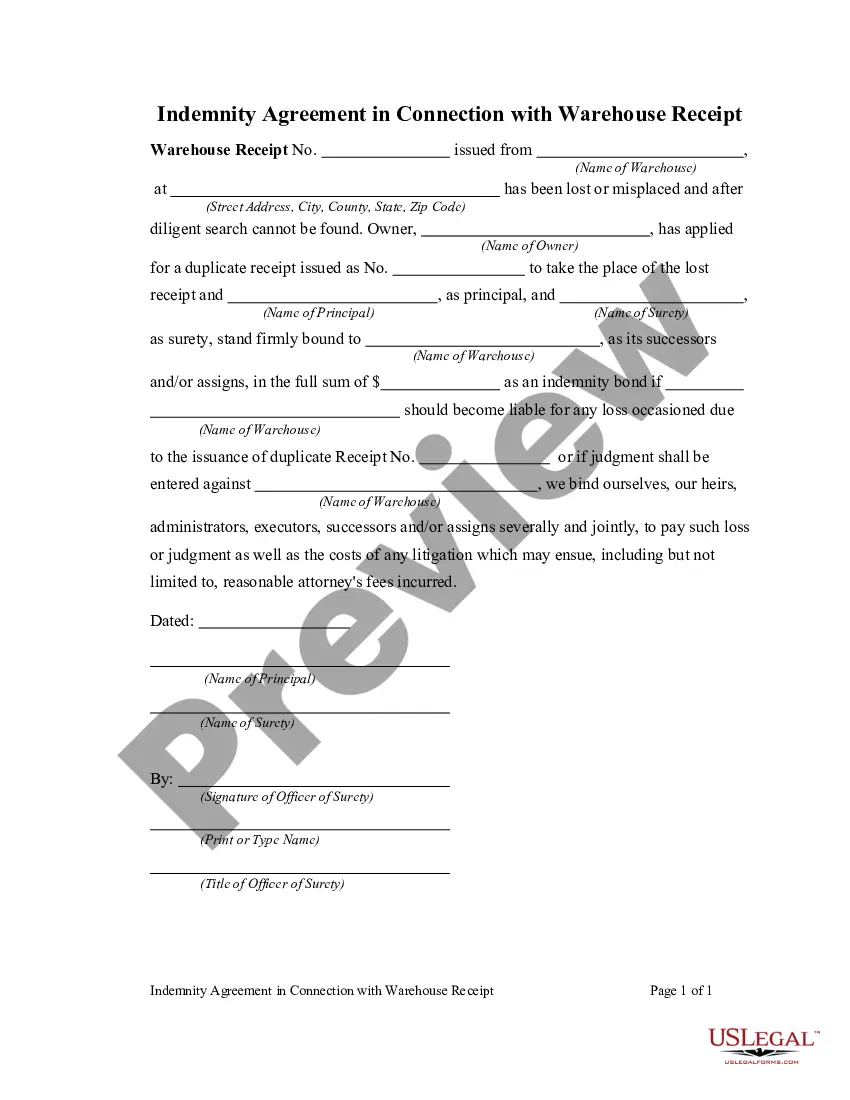
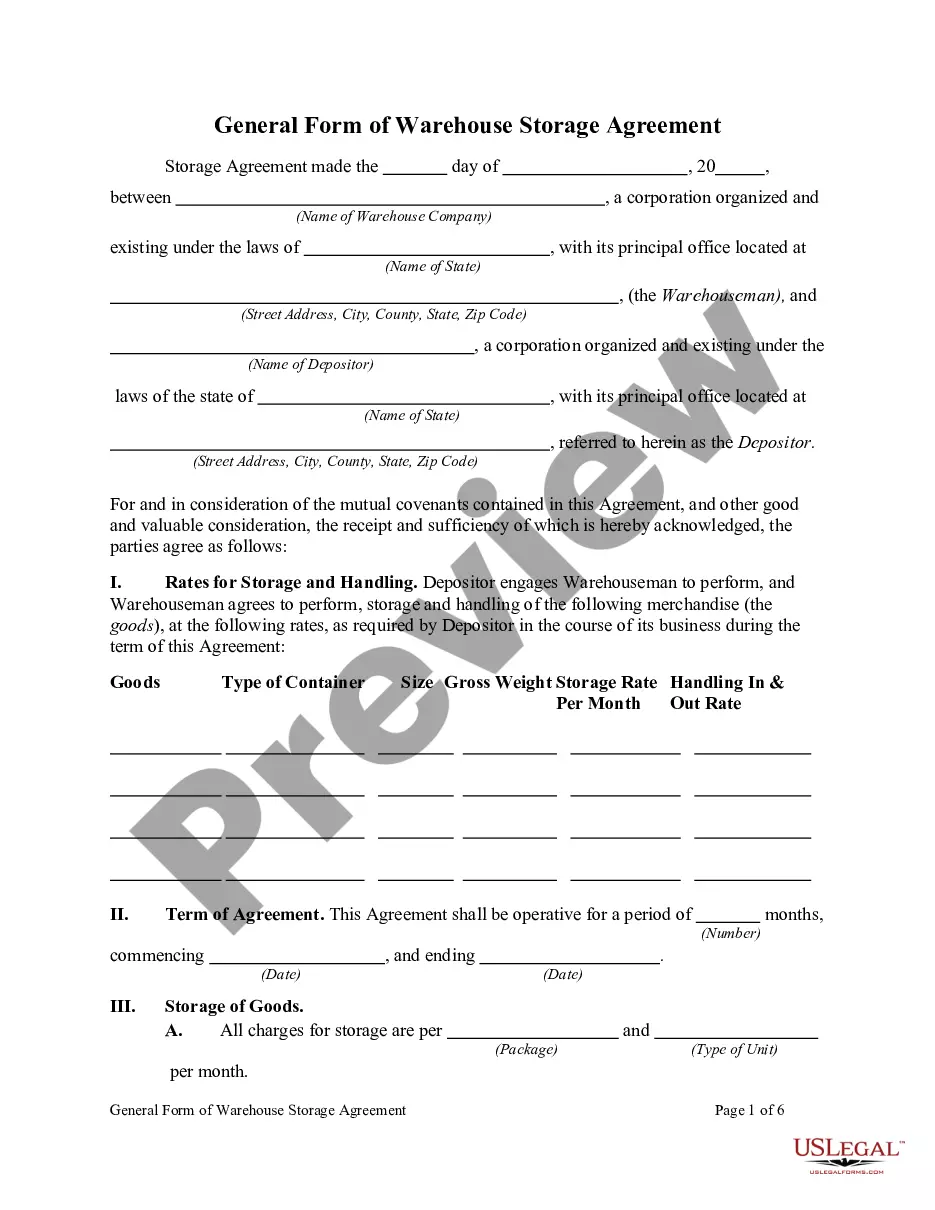
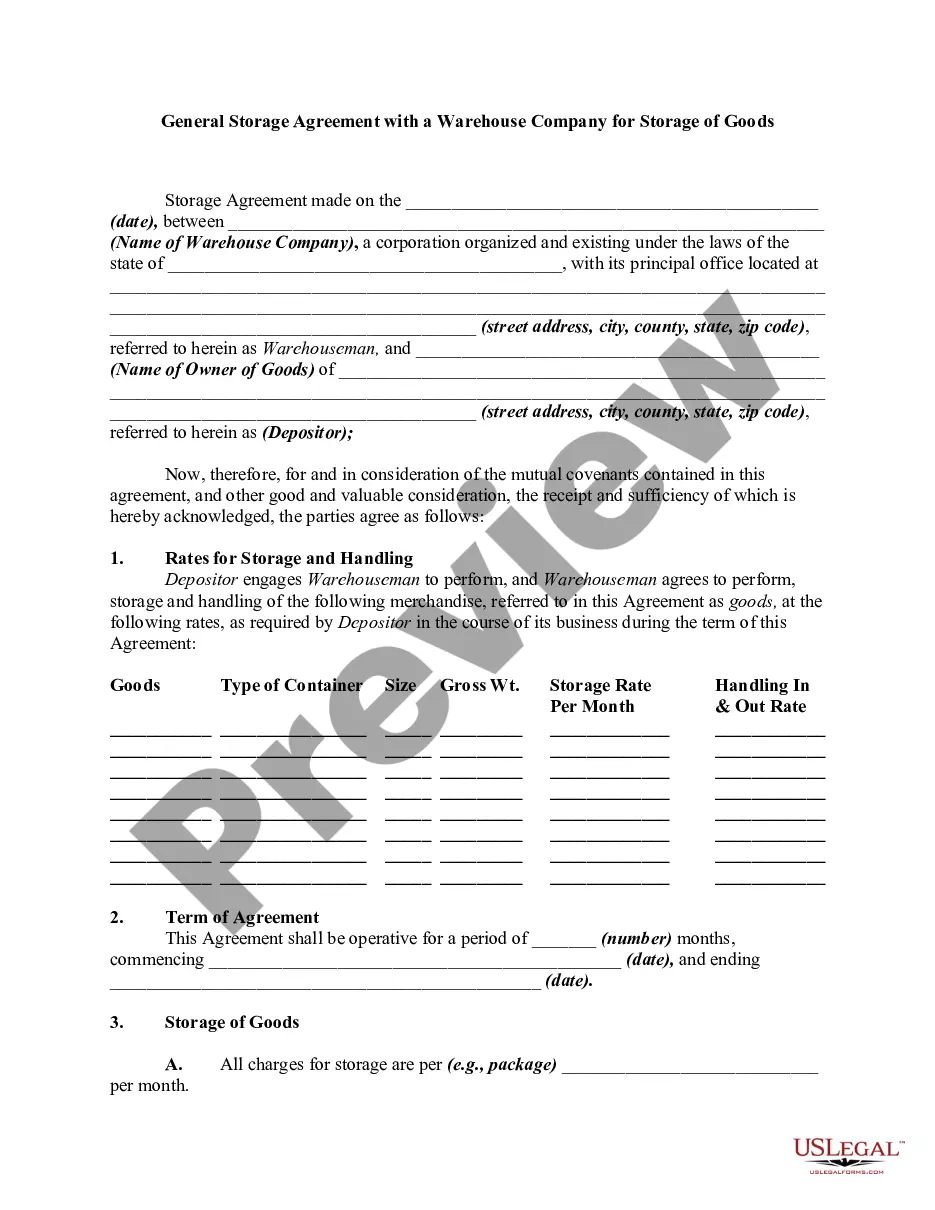







How to fill out Field Warehouse Storage And Indemnity Agreement?
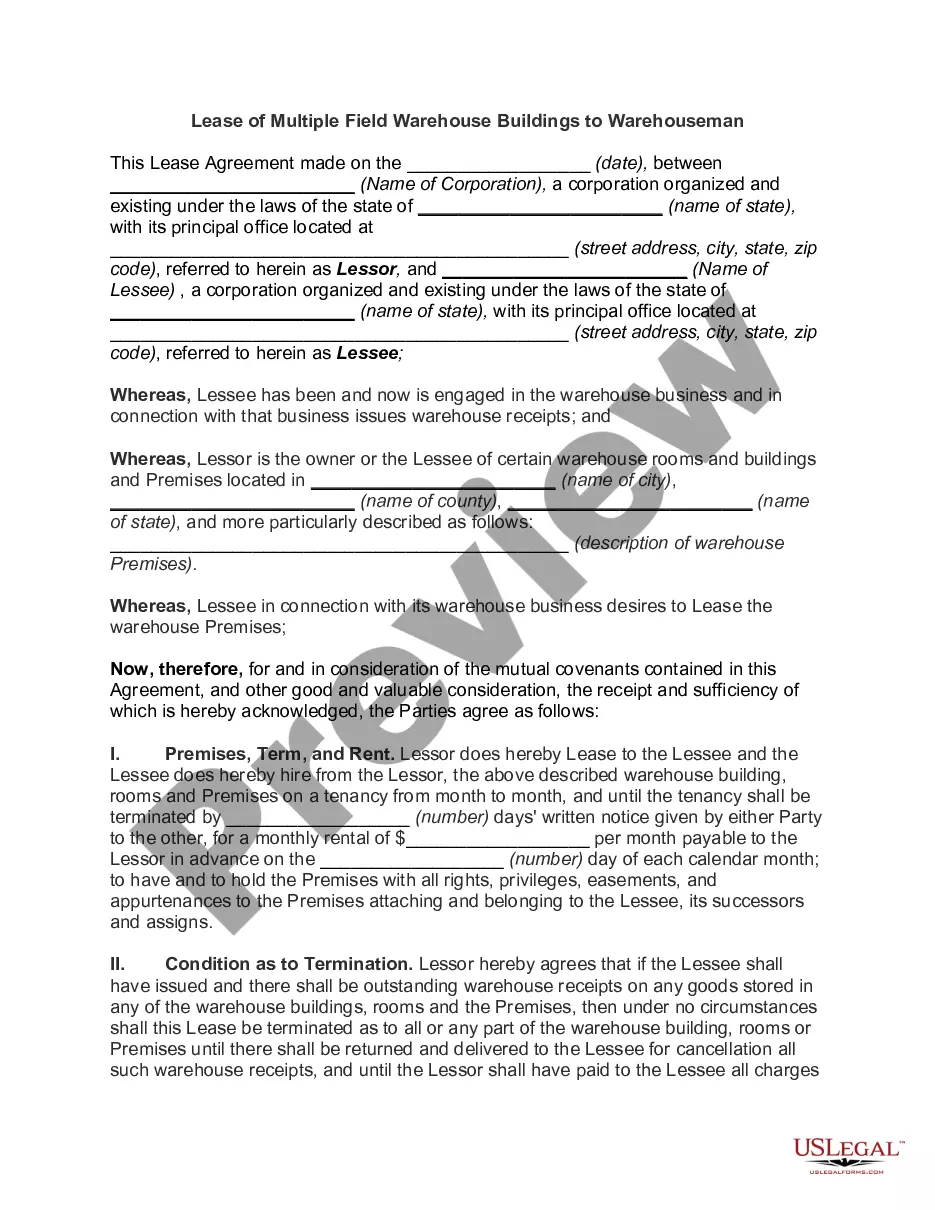
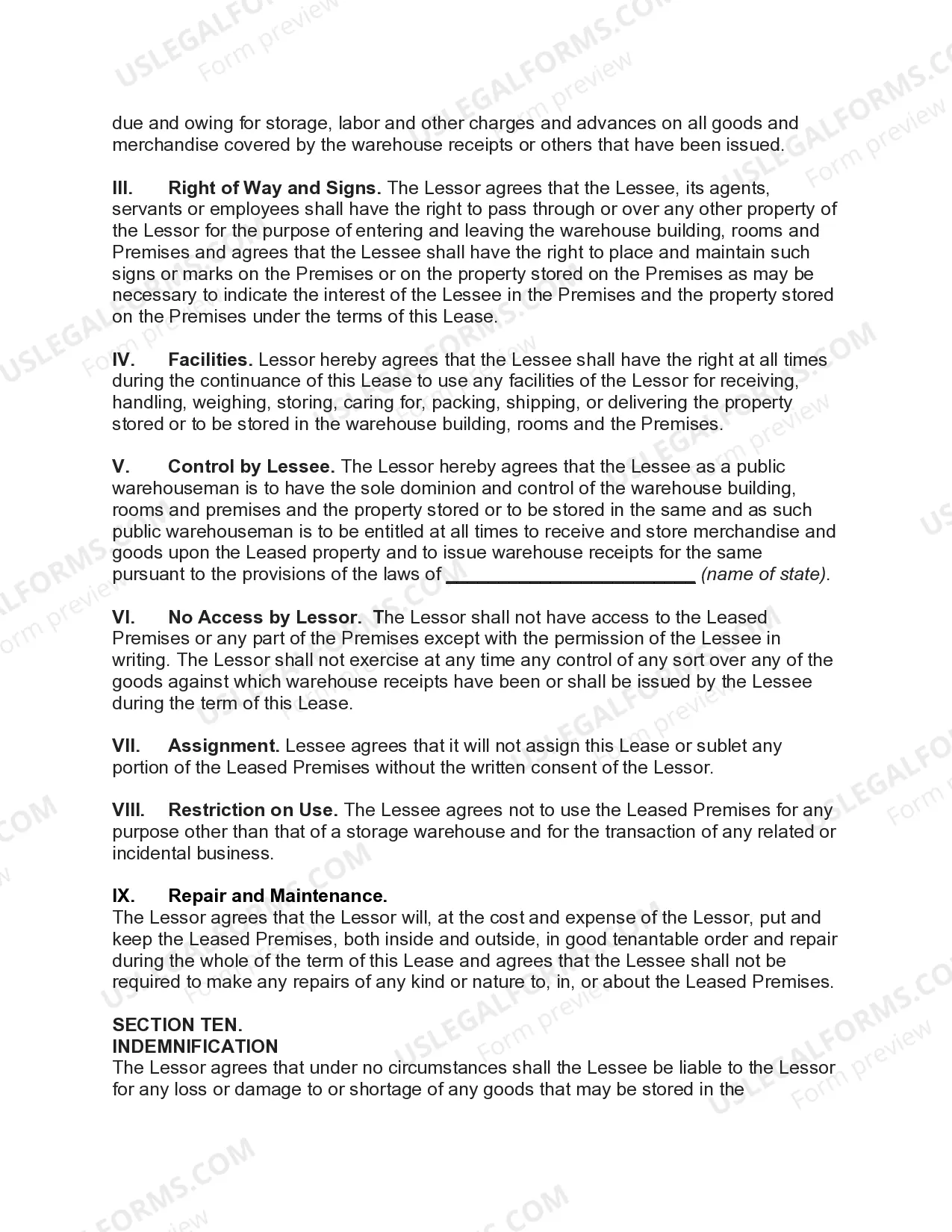
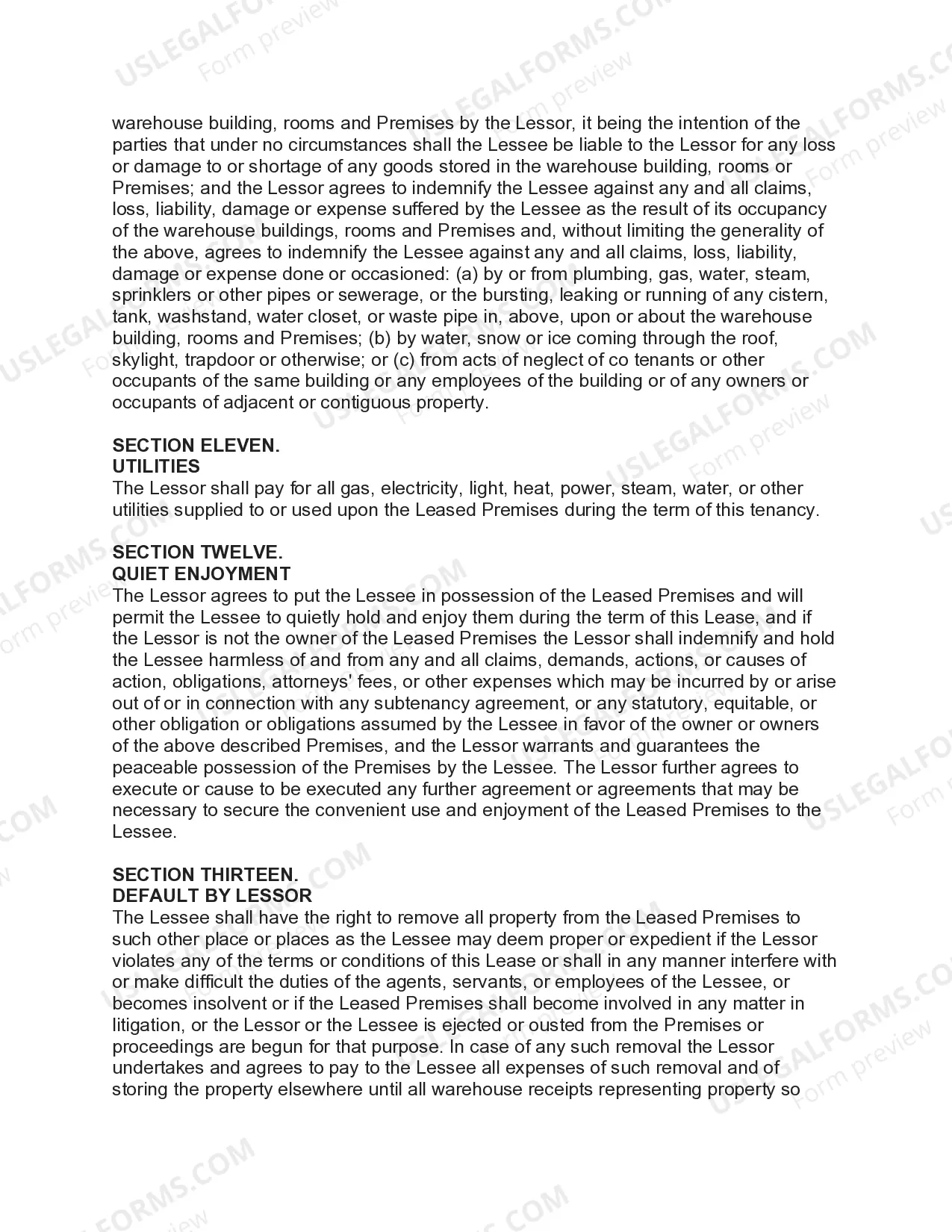
Are you presently inside a place in which you need paperwork for both business or individual uses virtually every day? There are tons of legitimate papers web templates available online, but discovering ones you can depend on isn`t easy. US Legal Forms delivers a huge number of form web templates, like the Nevada Field Warehouse Storage and Indemnity Agreement, which can be published to fulfill state and federal needs.
Should you be currently knowledgeable about US Legal Forms site and get a free account, merely log in. Following that, you can acquire the Nevada Field Warehouse Storage and Indemnity Agreement format.
Unless you provide an accounts and need to begin using US Legal Forms, abide by these steps:
- Obtain the form you require and make sure it is for that appropriate city/region.
- Make use of the Review switch to analyze the shape.
- Look at the information to ensure that you have chosen the proper form.
- If the form isn`t what you`re looking for, take advantage of the Look for industry to discover the form that meets your needs and needs.
- Whenever you obtain the appropriate form, simply click Purchase now.
- Pick the rates program you want, complete the necessary info to produce your account, and buy an order making use of your PayPal or charge card.
- Choose a handy paper format and acquire your copy.
Discover every one of the papers web templates you have purchased in the My Forms food list. You may get a further copy of Nevada Field Warehouse Storage and Indemnity Agreement anytime, if possible. Just select the required form to acquire or print out the papers format.
Use US Legal Forms, probably the most extensive assortment of legitimate varieties, to conserve time as well as prevent faults. The assistance delivers appropriately created legitimate papers web templates which you can use for a selection of uses. Generate a free account on US Legal Forms and initiate making your daily life easier.
Form popularity
FAQ
The most common example of indemnity in the financial sense is an insurance contract. For instance, in the case of home insurance, homeowners pay insurance to an insurance company in return for the homeowners being indemnified if the worst were to happen.
The objective of entering into a contract of indemnity is to protect the promisee against unanticipated losses.
Key Takeaways. A letter of indemnity (LOI) is a legal agreement that renders one or both parties to a contract harmless by some third party in the event of a delinquency or breach by the contracted parties.
The supplier agrees to indemnify and hold harmless the customer against all claims arising in respect of any injury, death, sickness or ill-health caused to or suffered by the customer and its personnel as a result of performance or non-performance of this Agreement.
How to Write an Indemnity Agreement Consider the Indemnity Laws in Your Area. ... Draft the Indemnification Clause. ... Outline the Indemnification Period and Scope of Coverage. ... State the Indemnification Exceptions. ... Specify How the Indemnitee Notifies the Indemnitor About Claims. ... Write the Settlement and Consent Clause.
An indemnification clause should clearly define the following elements: who are the indemnifying party and the indemnified party, what are the covered claims or losses, what are the obligations and duties of each party, and what are the exclusions or limitations of the indemnity.
It is primarily intended to protect the person who is providing goods or services from being held legally liable for the consequences of actions taken or not taken in providing that service to the person who signs the form. Indemnity clauses vary widely.
An indemnification clause should clearly define the following elements: who are the indemnifying party and the indemnified party, what are the covered claims or losses, what are the obligations and duties of each party, and what are the exclusions or limitations of the indemnity.
Indemnification, also referred to as indemnity, is an undertaking by one party (the indemnifying party) to compensate the other party (the indemnified party) for certain costs and expenses, typically stemming from third-party claims.
?To indemnify? means to compensate someone for his/her harm or loss. In most contracts, an indemnification clause serves to compensate a party for harm or loss arising in connection with the other party's actions or failure to act. The intent is to shift liability away from one party, and on to the indemnifying party.