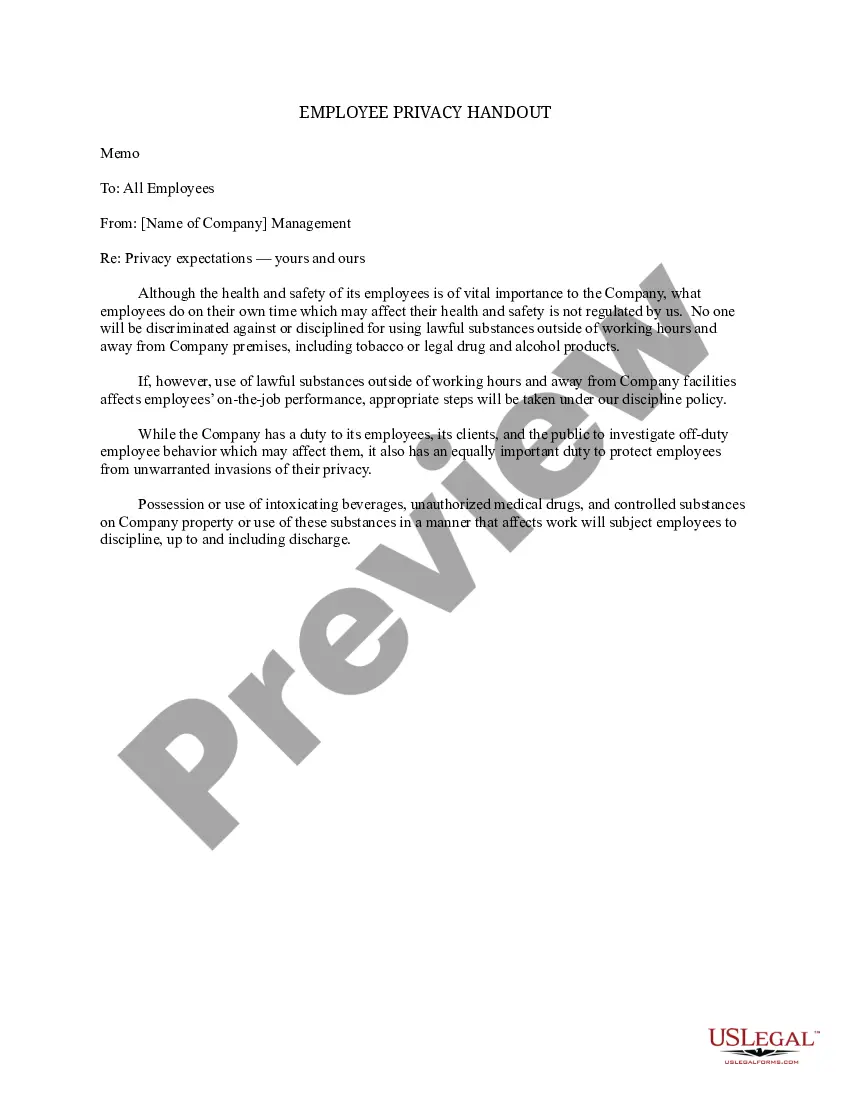
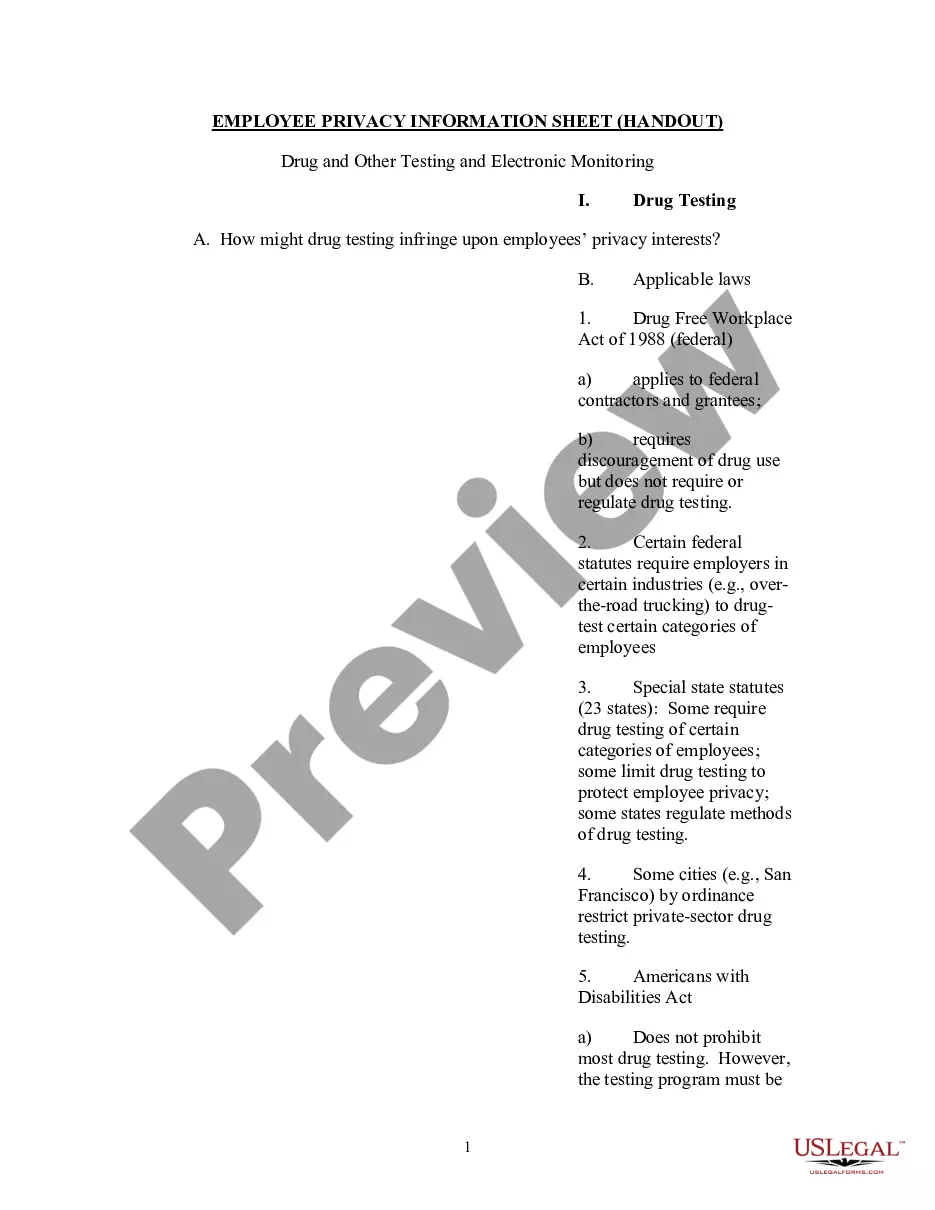
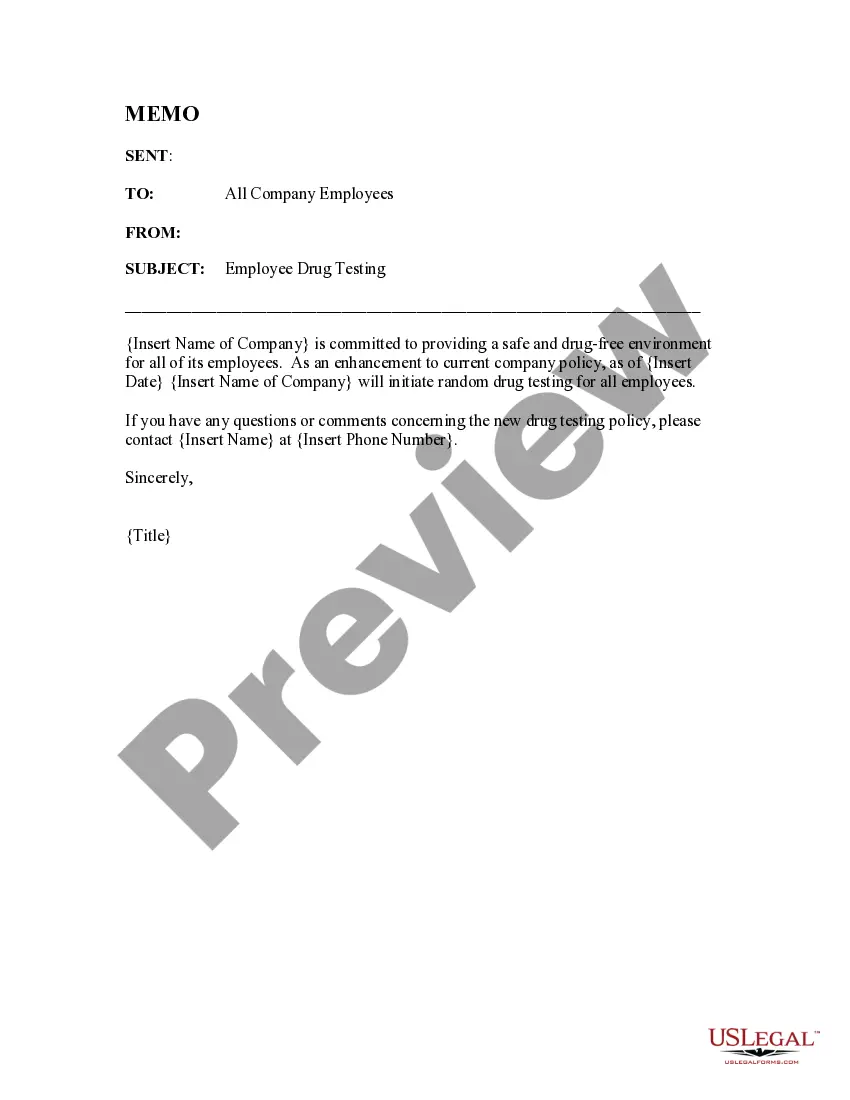
Nevada Employee Privacy Memo
Description
Get your form ready online
Our built-in tools help you complete, sign, share, and store your documents in one place.
Make edits, fill in missing information, and update formatting in US Legal Forms—just like you would in MS Word.
Download a copy, print it, send it by email, or mail it via USPS—whatever works best for your next step.
Sign and collect signatures with our SignNow integration. Send to multiple recipients, set reminders, and more. Go Premium to unlock E-Sign.
If this form requires notarization, complete it online through a secure video call—no need to meet a notary in person or wait for an appointment.
We protect your documents and personal data by following strict security and privacy standards.

Make edits, fill in missing information, and update formatting in US Legal Forms—just like you would in MS Word.

Download a copy, print it, send it by email, or mail it via USPS—whatever works best for your next step.

Sign and collect signatures with our SignNow integration. Send to multiple recipients, set reminders, and more. Go Premium to unlock E-Sign.

If this form requires notarization, complete it online through a secure video call—no need to meet a notary in person or wait for an appointment.

We protect your documents and personal data by following strict security and privacy standards.
Looking for another form?
How to fill out Employee Privacy Memo?
Locating the appropriate legal document template can be a challenge.
Clearly, there is an abundance of templates accessible online, but how do you find the legal form you need.
Make use of the US Legal Forms website. This service offers thousands of templates, such as the Nevada Employee Privacy Memo, which you can utilize for both business and personal purposes.
You can preview the form using the Preview button and review the form description to ensure it's suitable for your needs.
- All forms are reviewed by professionals and conform to federal and state regulations.
- If you are already registered, Log Into your account and click the Download button to retrieve the Nevada Employee Privacy Memo.
- Use your account to access the legal forms you have previously purchased.
- Visit the My documents section of your account to obtain another copy of the document you need.
- If you are a new user of US Legal Forms, here are simple instructions to follow.
- First, ensure you have selected the correct form for your city/state.
Form popularity
FAQ
4.1 As outlined in the Issues Paper, the Privacy Act currently includes exemptions in relation to small businesses, employee records, registered political parties and political acts and practices and journalism.
Dealing with employee records falls under an 'exempt practice' under the Privacy Act. This means that the normal rules about the way you deal with personal information do not apply to employee records.
The Privacy Act only applies to EPA records that: contain information on individuals', are maintained by the EPA in a system of records; and. are retrieved by a personal identifier, such as a person's name, Social Security Number, biometrics, medical record number or other unique identifier.
These exempt entities include small business operators, registered political parties, agencies, state and territory authorities, and prescribed state and territory instrumentalities. 33.13 Certain acts and practices of organisations also fall outside the operation of the Privacy Act.
The Privacy Act only applies to an employee record if the information is used for a purpose not directly related to the employment relationship. However, workplace laws require a range of information to be made and kept for each employee.
Information compiled in reasonable anticipation of a civil action or proceeding. Material reporting investigative efforts pertaining to the enforcement of criminal law, including efforts to prevent, control or reduce crime or to apprehend criminals.
Employees have the right to keep private facts about themselves confidential and the right to some degree of personal space. An employer that discloses private facts or lies about an employee may be held accountable in a civil action for invasion of privacy or defamation.
Most Commonly Used Exceptions (1) To those officers and employees of the agency which maintains the record, who have a need for the record in the performance of their duties. Make sure all disclosures to HUD officers and employees are necessary and allowed by the SORN that has been published on the Federal Register.
An employee Privacy Notice is a source of information that explains to an individual the what, how, where, why and when? regarding how a data controller (in our case an employer) processes an employee's personal data.
What Are Employee Privacy Rights? Employee privacy rights are the rules that limit how extensively an employer can search an employee's possessions or person; monitor their actions, speech, or correspondence; and know about their personal lives, especially but not exclusively in the workplace.