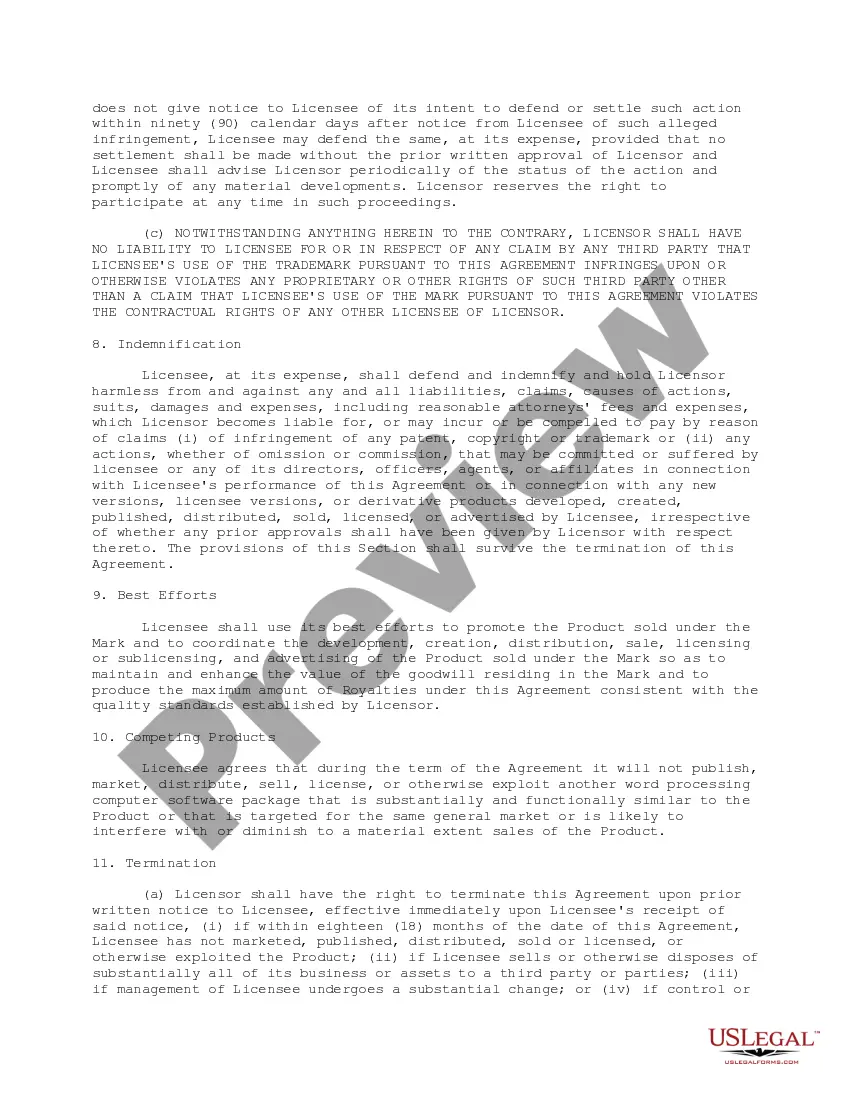
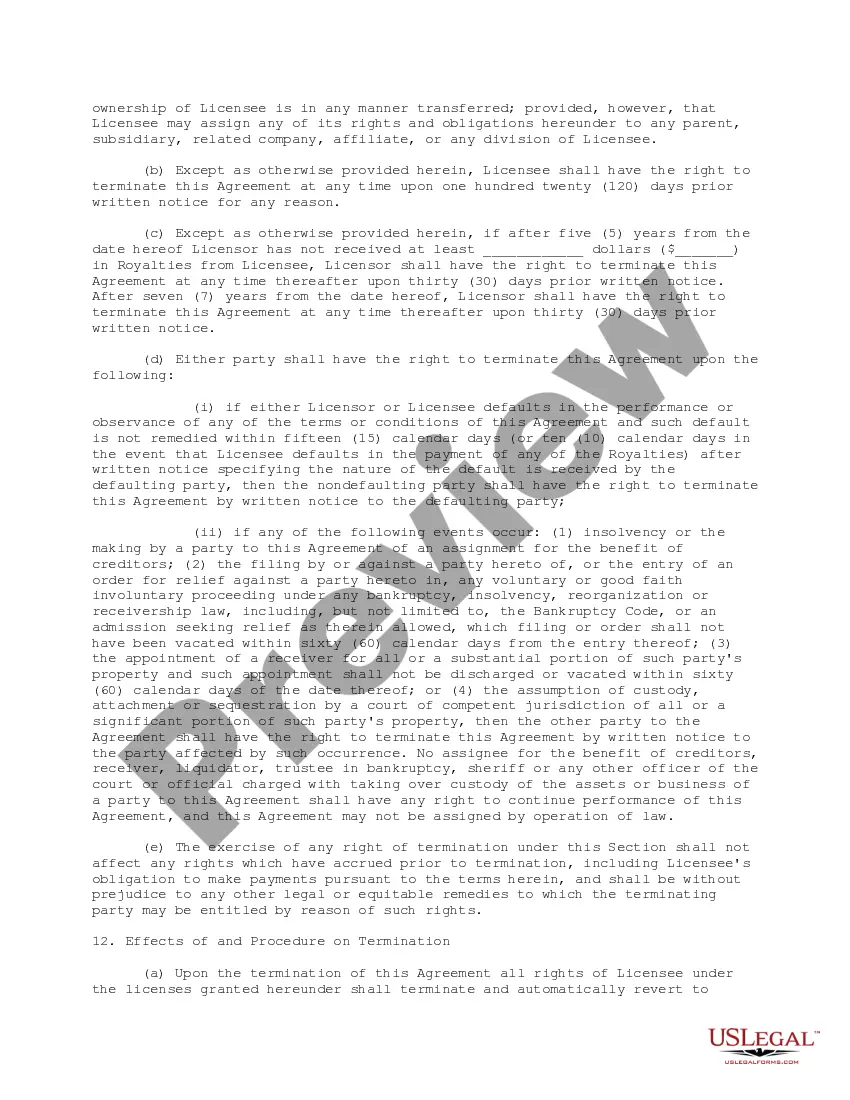
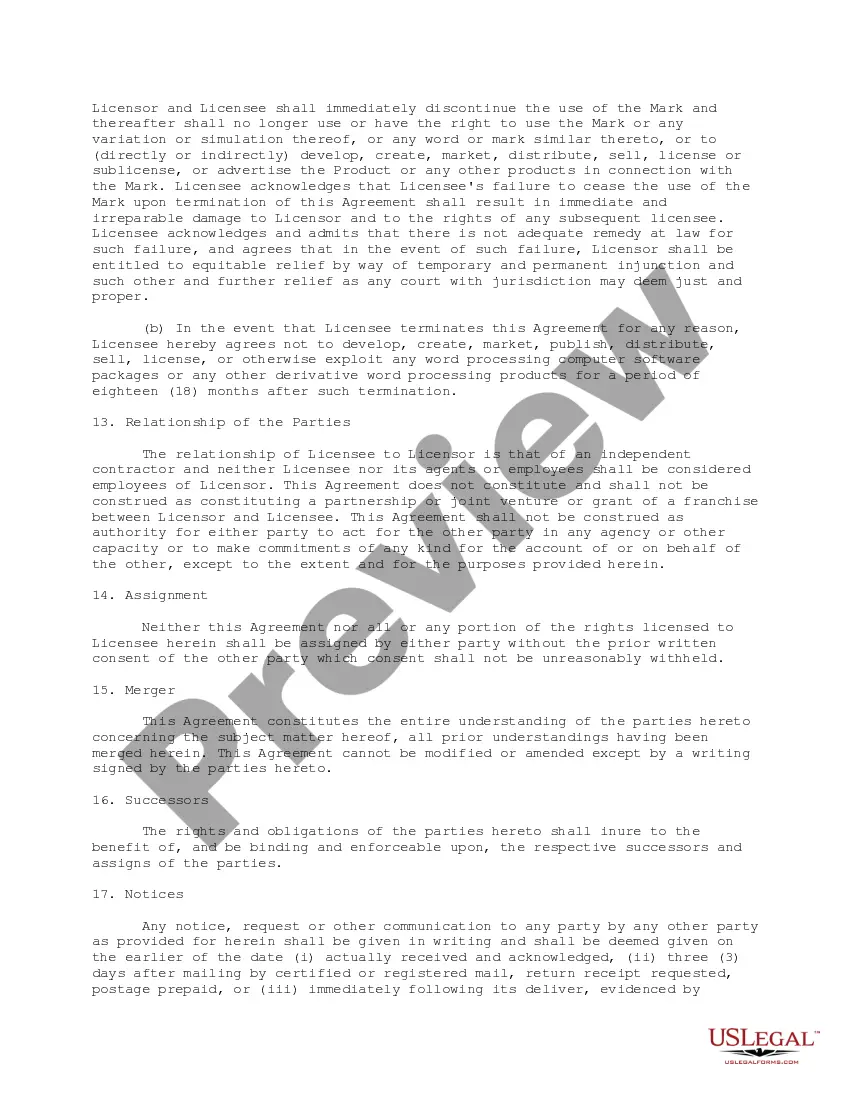
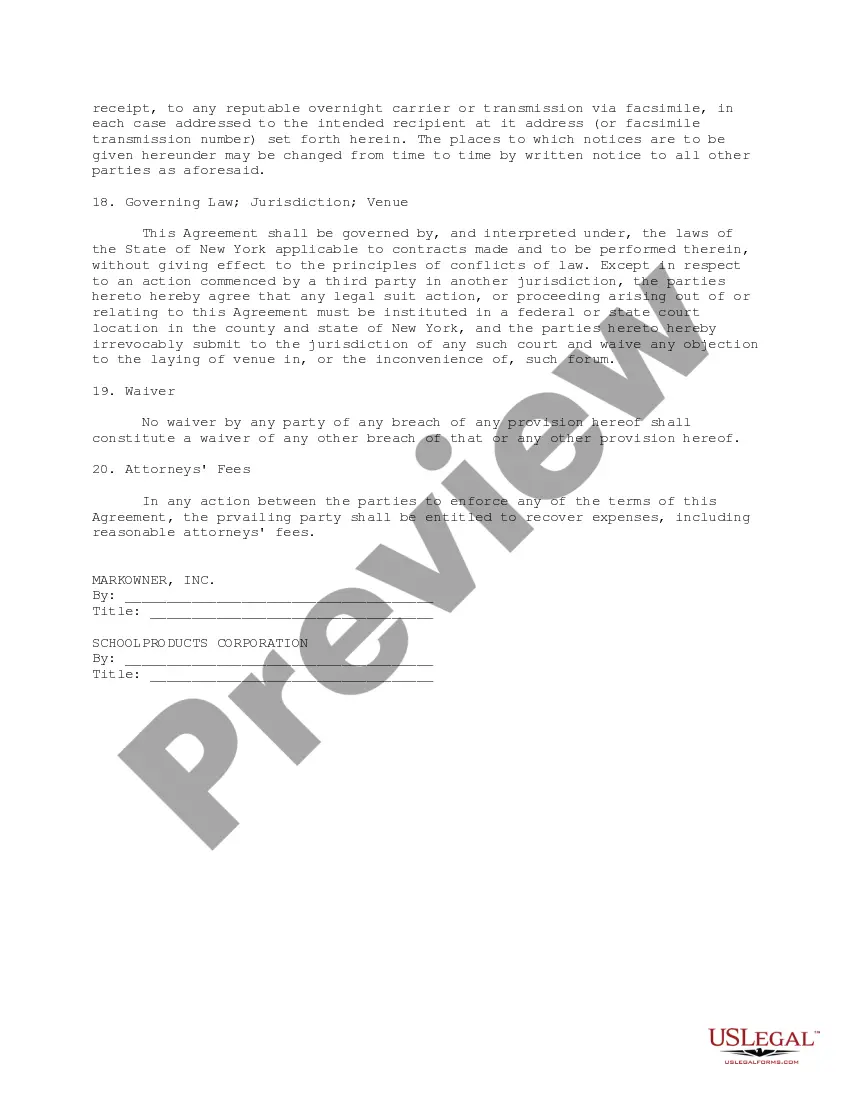
This agreement is used when a Licensor wishes to give the Licensee an exclusive license to all existing versions of a software program and all related documentation, if any, solely for a specific purpose.
Nevada Trademark License Agreement
State:
Multi-State
Control #:
US-CP5A08
Format:
Word;
PDF;
Rich Text
Instant download
Description
Free preview
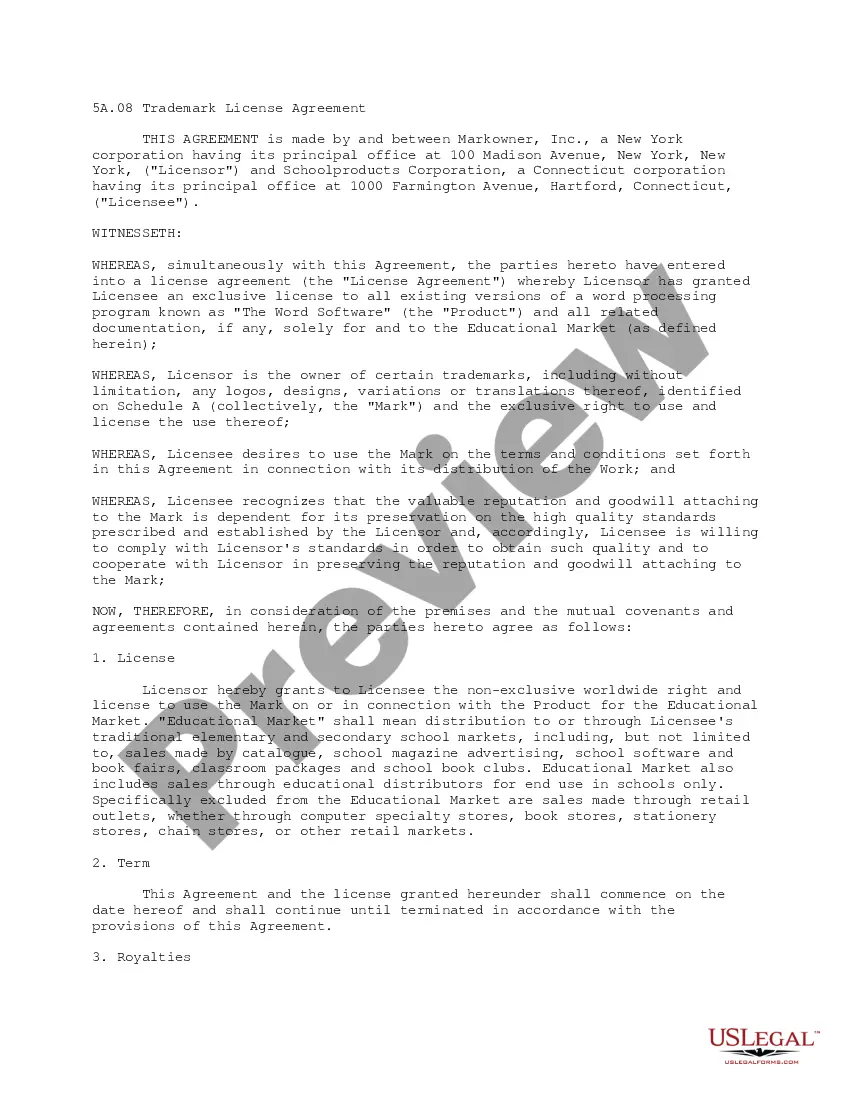
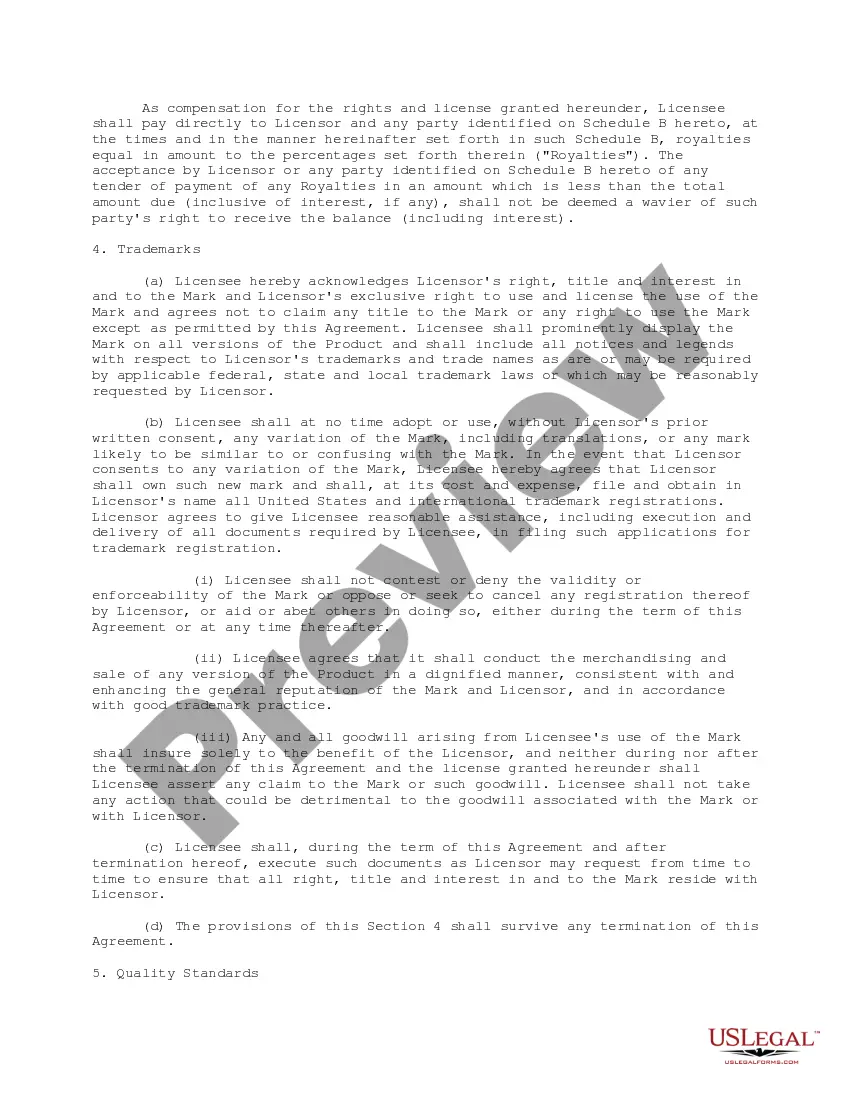
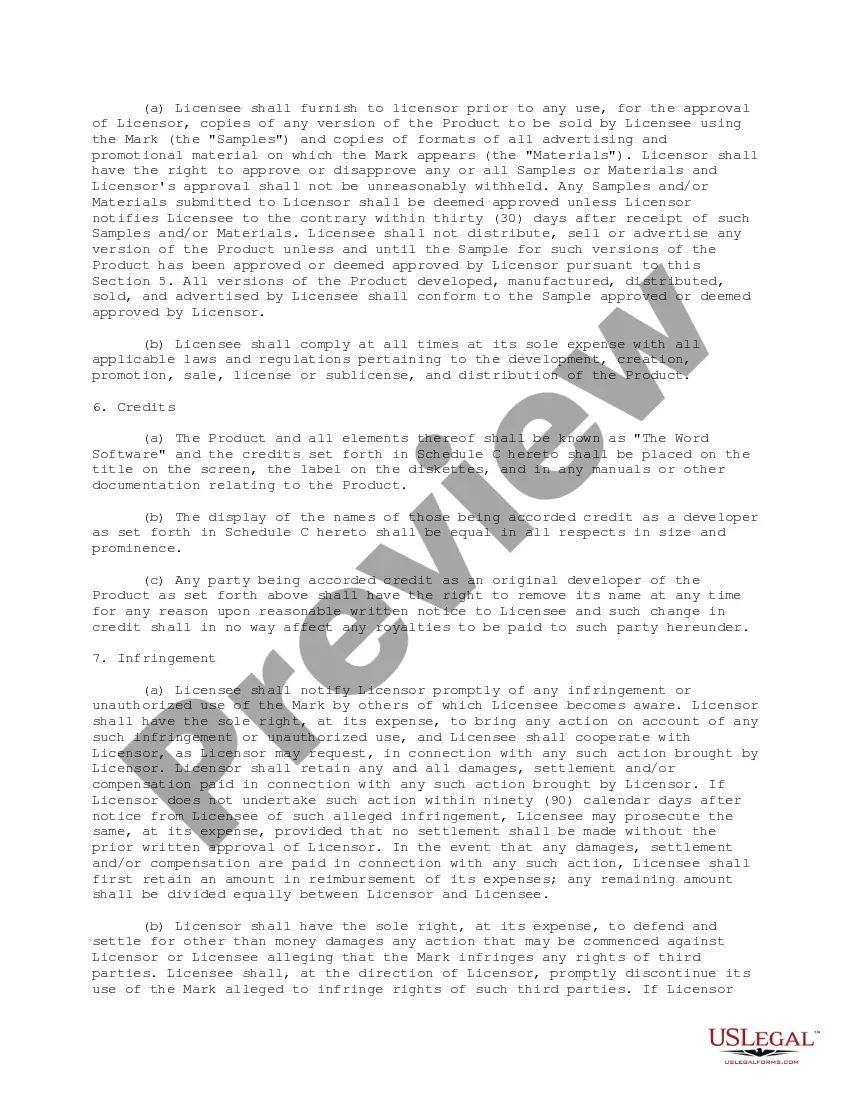

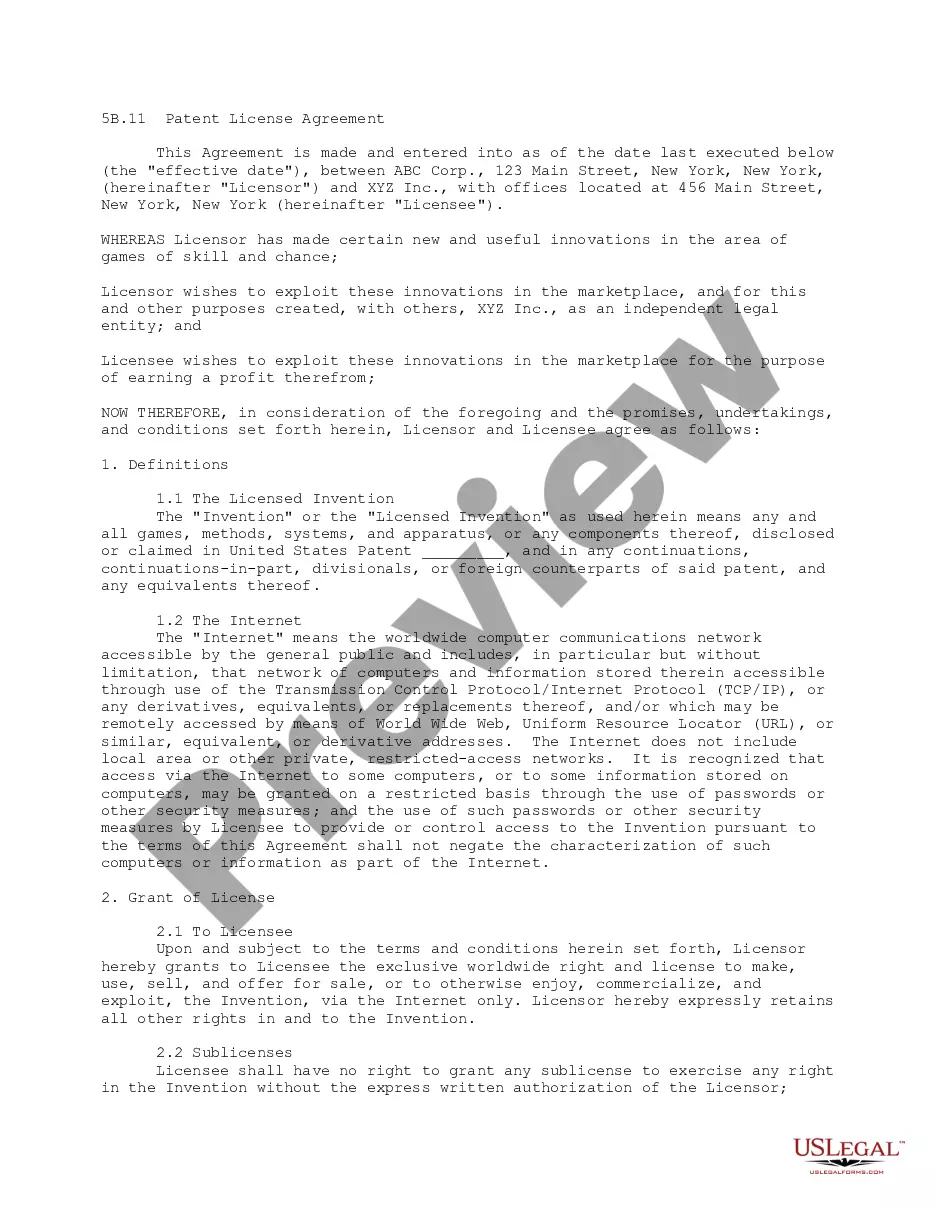
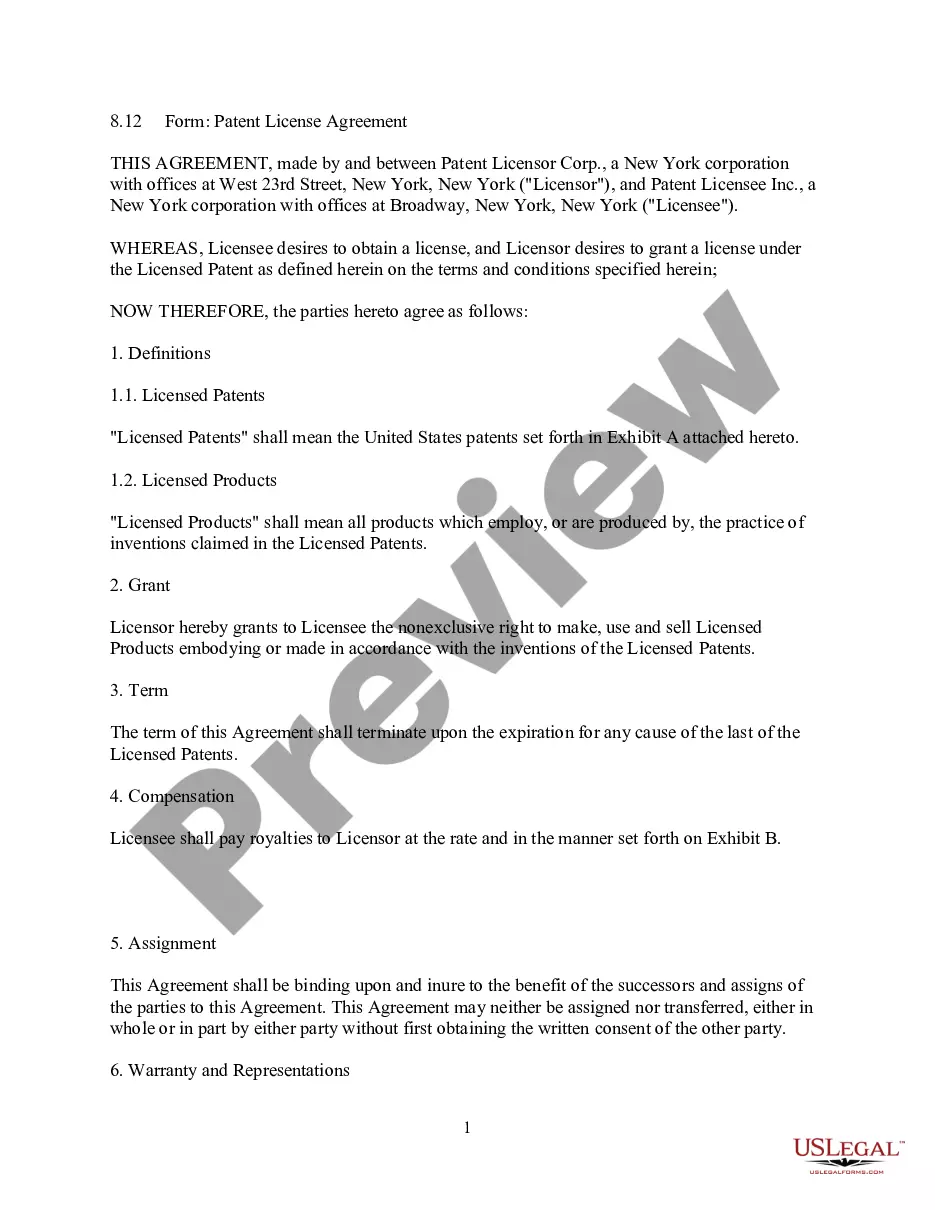
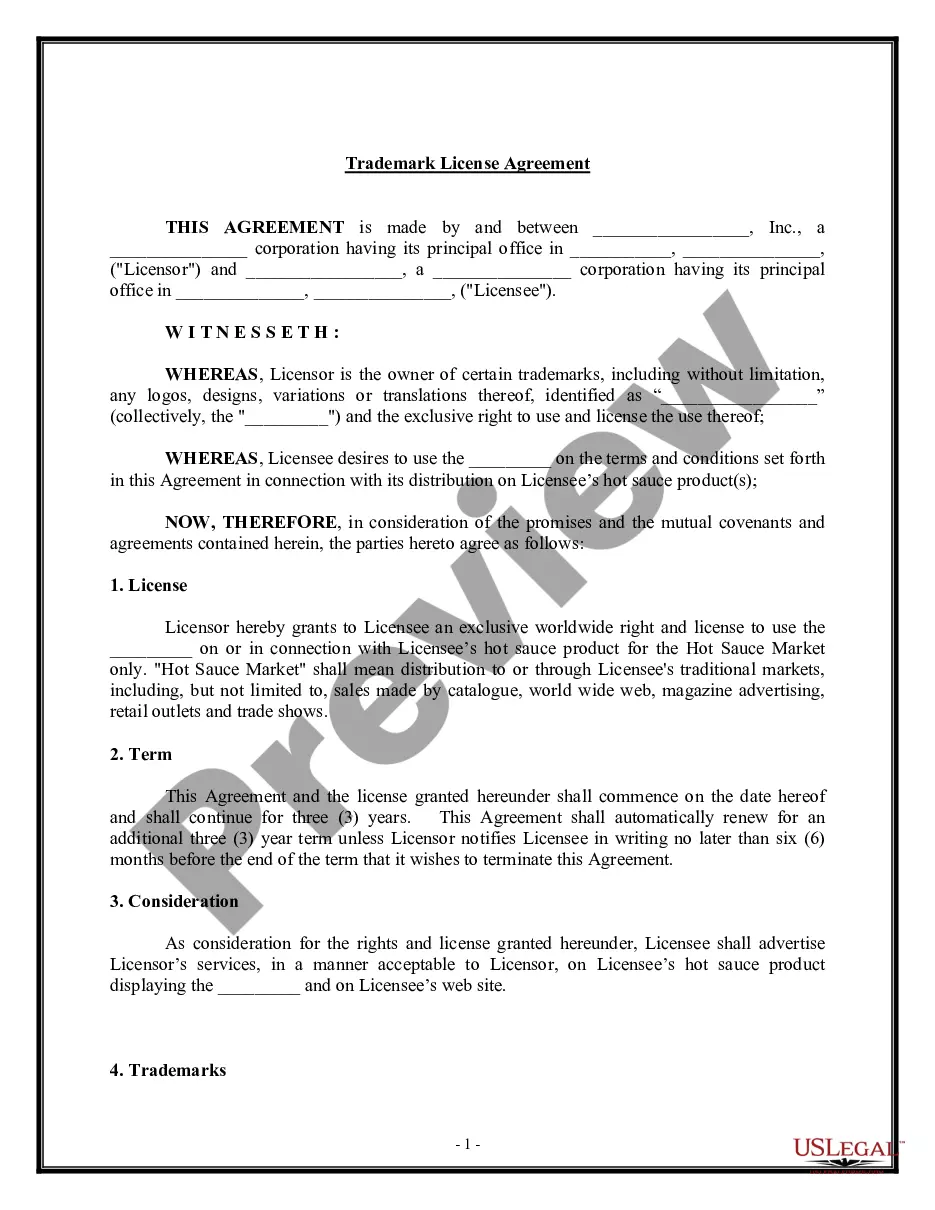
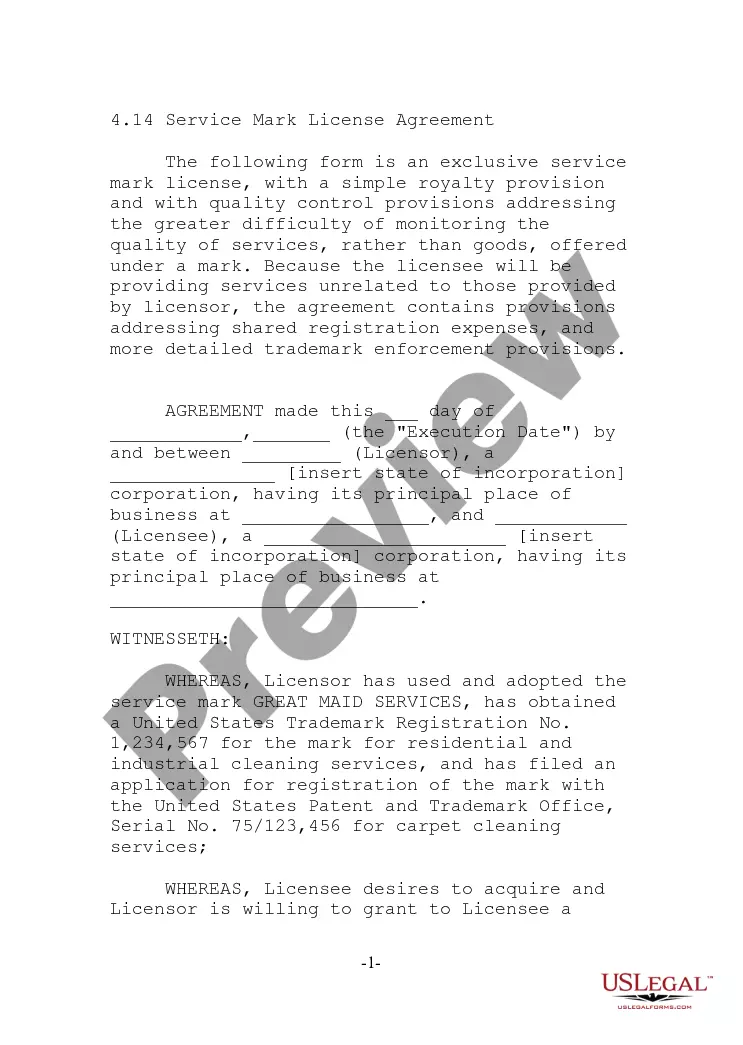


How to fill out Trademark License Agreement?
Should you need exhaustive, retrieve, or formulate sanctioned document templates, utilize US Legal Forms, the largest assortment of legal forms accessible online.
Employ the site’s straightforward and user-friendly search to locate the documents you need.
Different templates for corporate and personal applications are categorized by types and states, or keywords. Use US Legal Forms to locate the Nevada Trademark License Agreement with just a few clicks.
Step 4. Once you have found the form you need, click the Purchase now button. Select your preferred pricing plan and enter your information to register for an account.
Step 5. Complete the purchase. You may use your credit card or PayPal account to finalize the transaction.
- If you are already a US Legal Forms user, sign in to your account and click the Download button to retrieve the Nevada Trademark License Agreement.
- You can also access forms you previously downloaded from the My documents section of your account.
- If you are using US Legal Forms for the first time, follow the directions below.
- Step 1. Confirm that you have selected the form for the appropriate city/state.
- Step 2. Utilize the Review option to examine the form’s content. Remember to read the summary.
- Step 3. If you are not satisfied with the form, use the Search area at the top of the page to find additional models in the legal form category.
Form popularity
FAQ
It is permissible to license an unregistered Trade mark. Permitted use without recordal of Registered User is permissible under the Trade Marks Act 1999, which came into force on September 15, 2003.
A trademark licence is an agreement between a trademark owner (the licensor) and another entity (the licensee) in which the licensor permits the licensee to use its trademark for commercial purposes.
Most trademark license agreements aren't assignable, transferable or perpetual, and when you add in exclusive you get an agreement that looks much more like a transfer of all rights rather than a license.
Exclusive license allows a licensor to share intellectual property with a licensee for a specific period of time that usually binds the licensor to not share the property with anyone else.
The licensing of the trademark allows the registered proprietor to let others use the mark without assigning the ownership of the mark. The proprietor can also put other limitations on the use of the mark through the terms that he puts into the licensing agreement.
Practitioners and licensing executives often refer to three basic types of voluntary licenses: non-exclusive, sole, and exclusive. A non-exclusive licence allows the licensor to retain the right to use the licensed property and the right to grant additional licenses to third parties.
A perpetual license is one where a software application is sold on a one-time basis and the licensee can then use a copy of the software forever. A perpetual license model offers a customer access to a software application in perpetuity, hence the name.
A perpetual license agreement is a legal contract between a customer and software provider where the customer purchases a license to use the software indefinitely. This type of licensing agreement does not have an expiration date and the licensee can continue using the product or service indefinitely.
A licensing agreement allows one party (the licensee) to use and/or earn revenue from the property of the owner (the licensor). Licensing agreements generate revenues, called royalties, earned by a company for allowing its copyrighted or patented material to be used by another company.
A trademark licensing agreement is a legal contract between a trademark owner and another party that have agreed to use the trademark on preapproved terms decided between the contracting parties.