New York Warranty Deed - Four Individuals to Five Individuals
Understanding this form
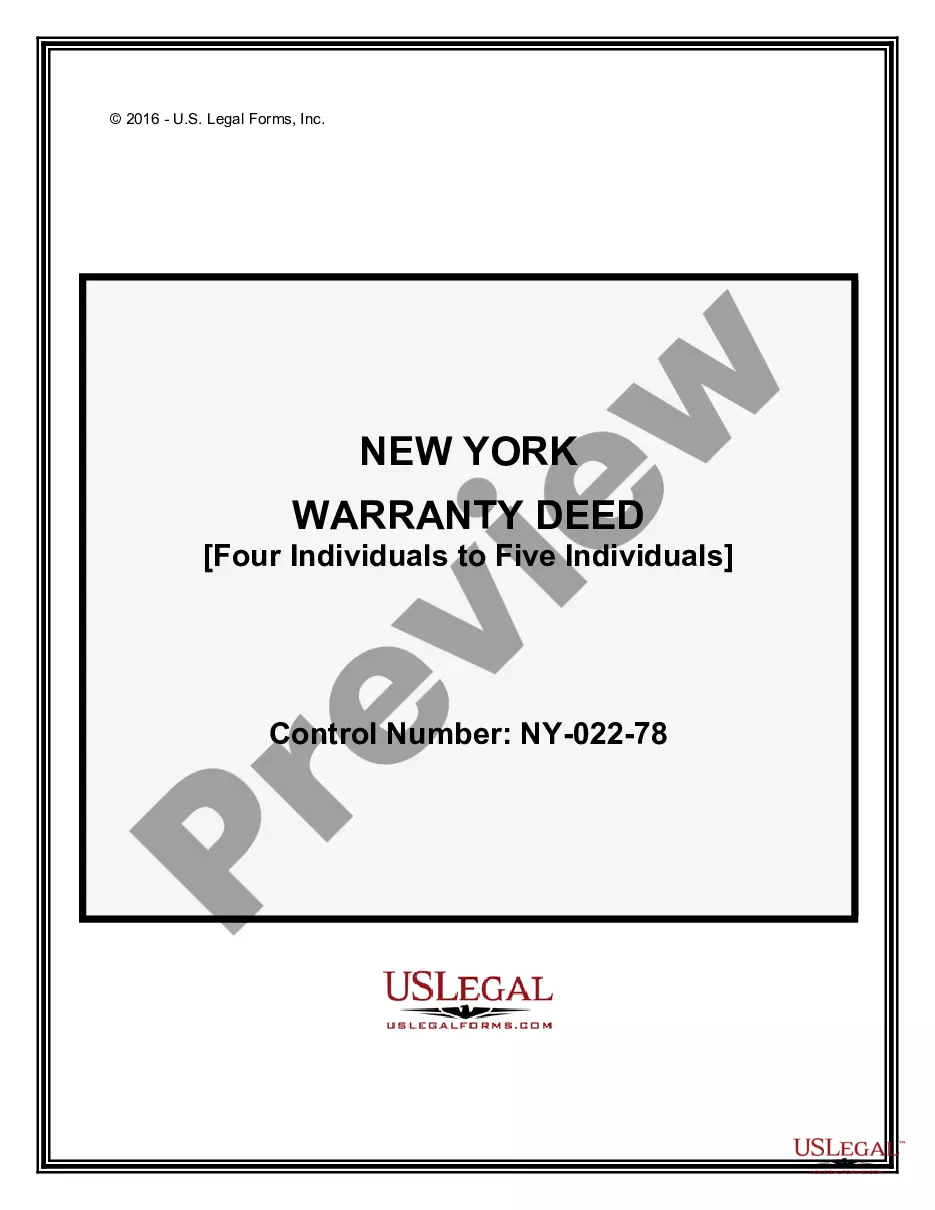
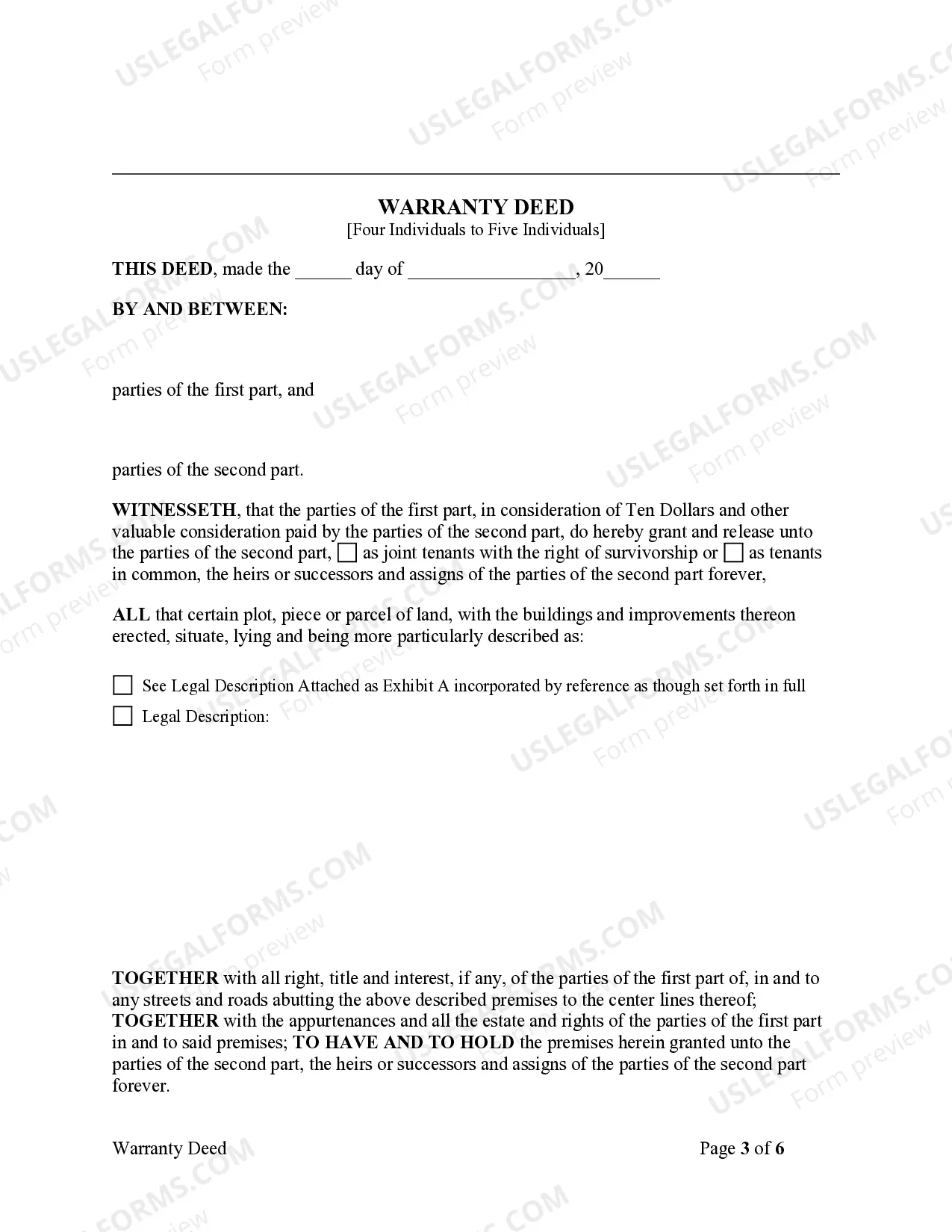
A Warranty Deed - Four Individuals to Five Individuals is a legal document that allows four grantors to transfer property ownership to five grantees. This form includes warranties from grantors who assure that they have clear title to the property and that the property is free from encumbrances, except as otherwise stated. This deed is distinct from other property transfer documents due to its inclusion of covenants of warranty, which provide an additional layer of protection for the grantees.
What’s included in this form
- Identification of parties involved: names and addresses of the grantors and grantees.
- Description of the property being transferred, including legal property description.
- Covenants of warranty, assuring the grantees of clear title and freedom from encumbrances.
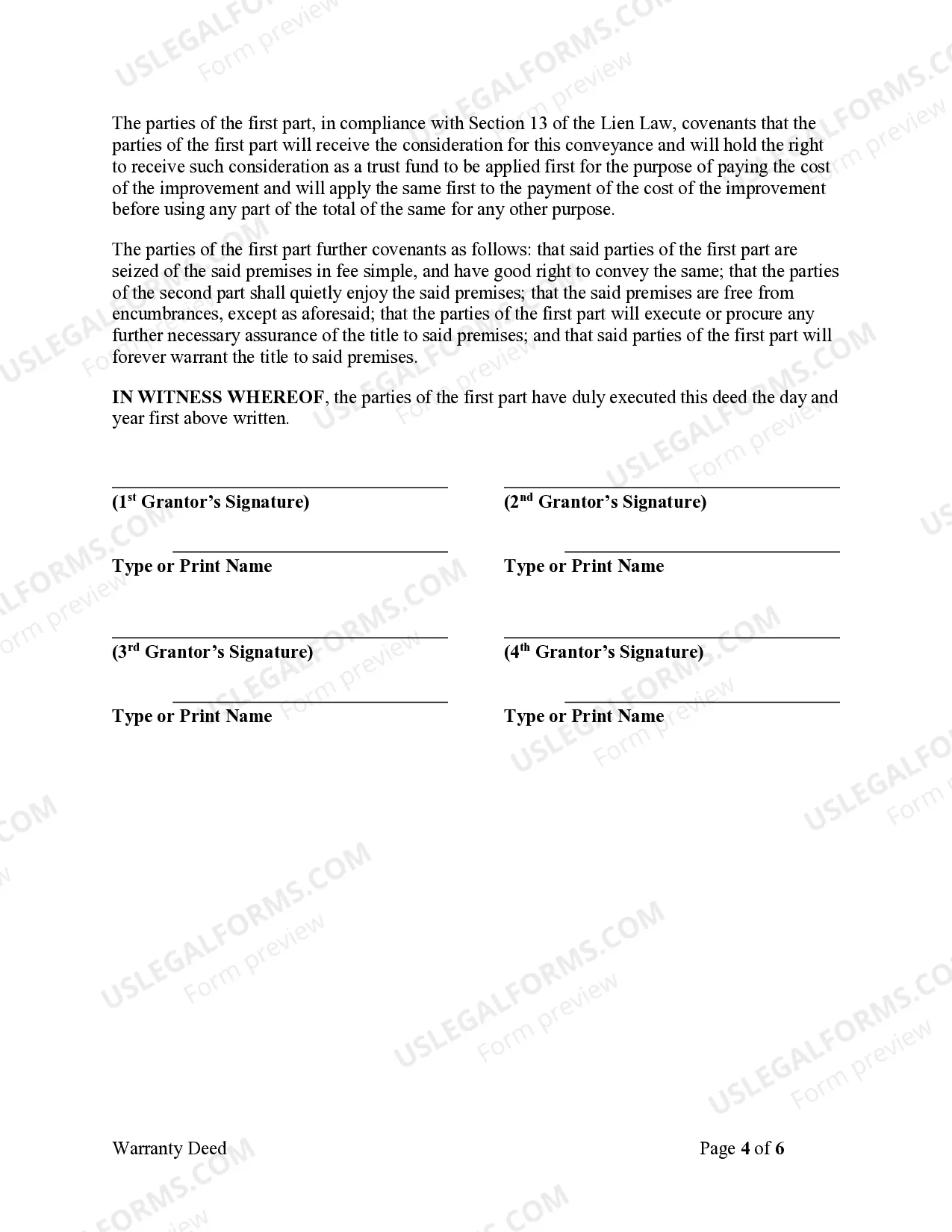
- Signatures of all parties involved to validate the document.
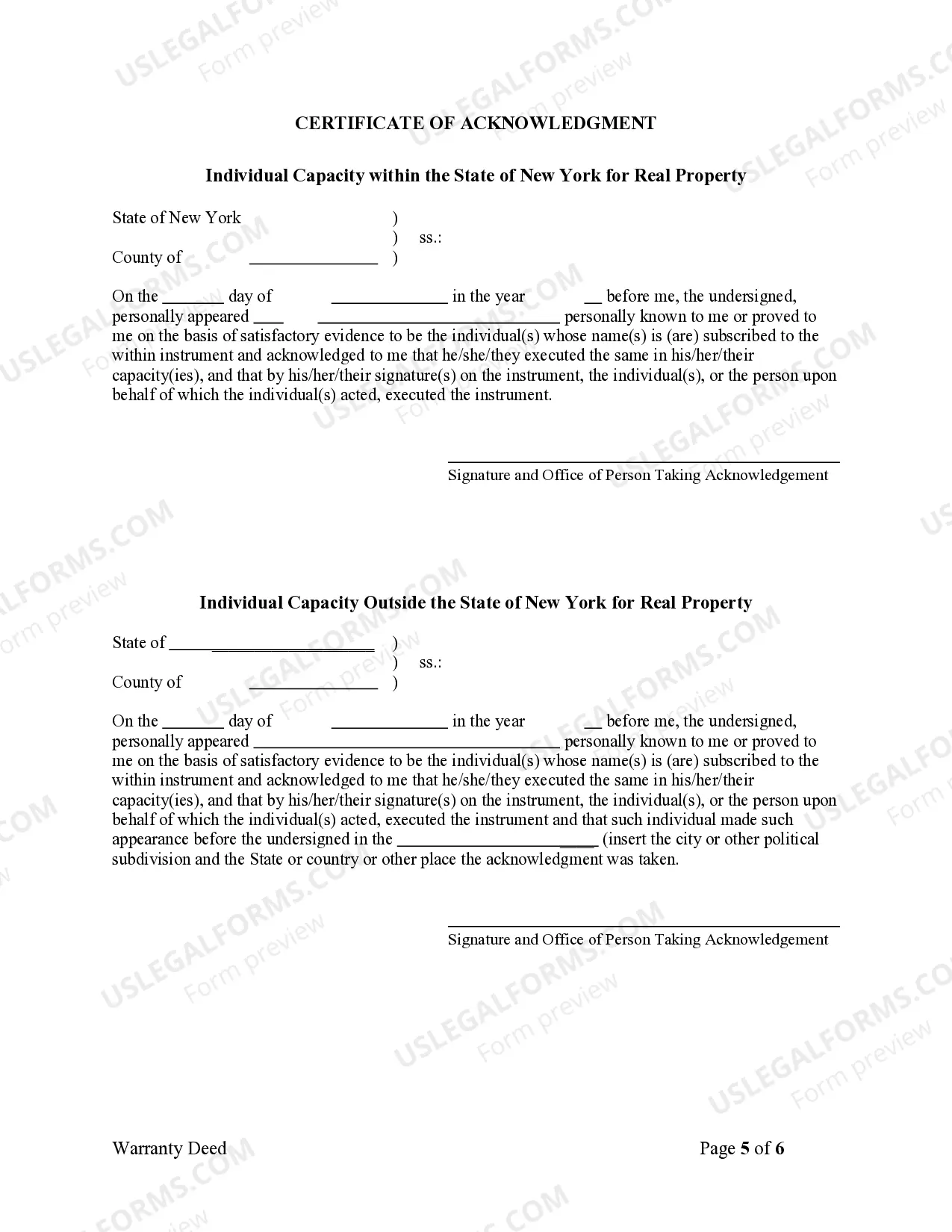
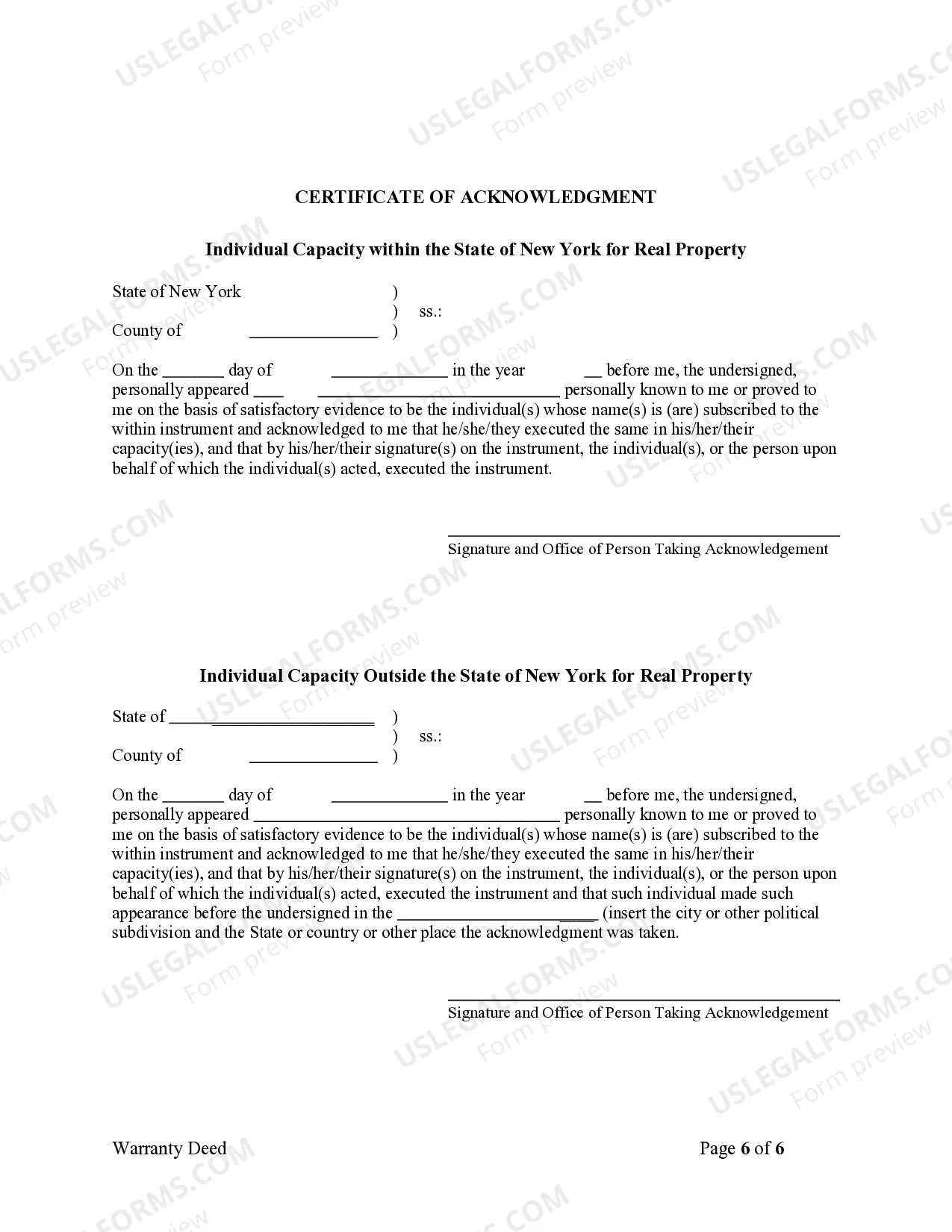
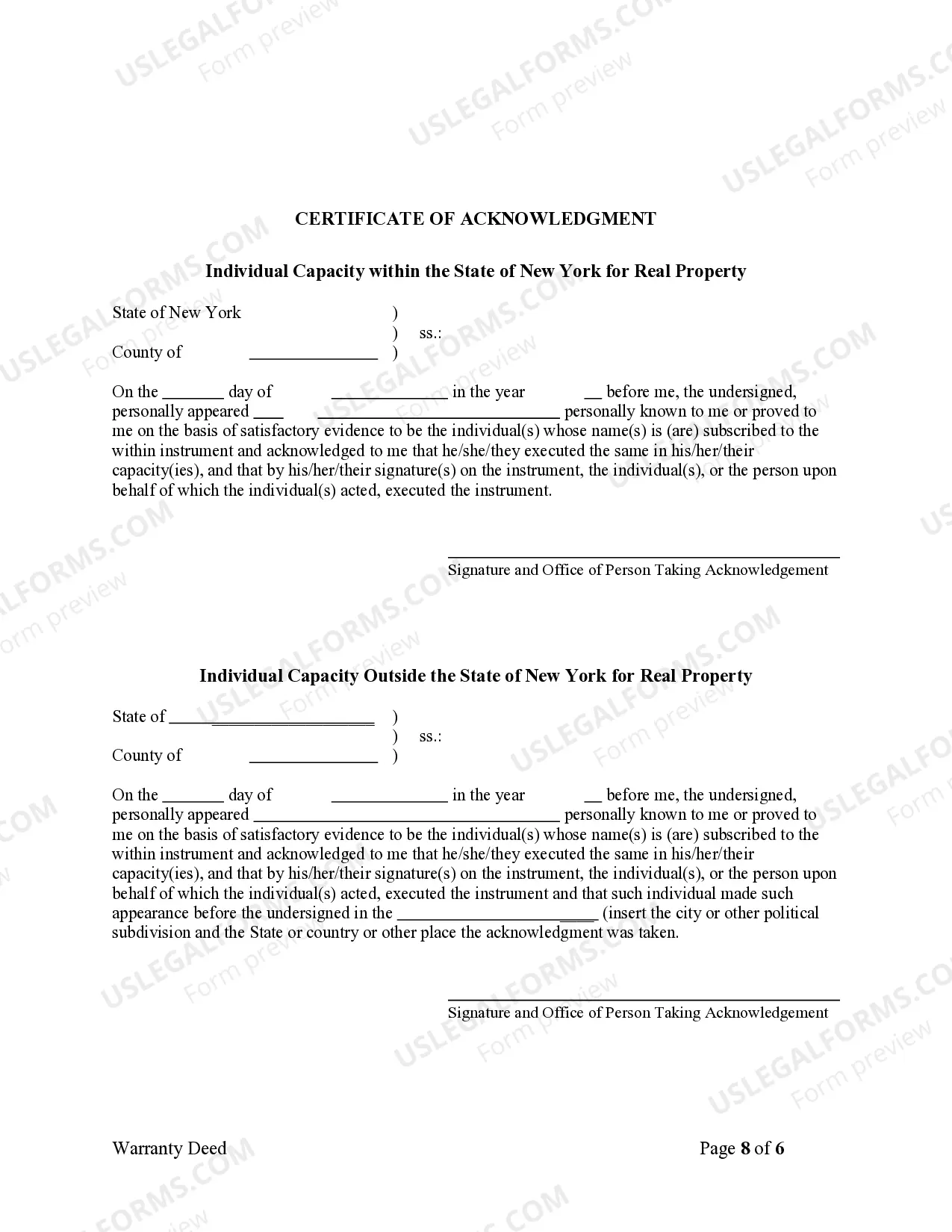
- Space for acknowledgment and notarization, if required.






Situations where this form applies
This form is typically used in property transactions where four individuals, often family members or joint owners, wish to convey their property rights to five other individuals. Common scenarios might include transferring family vacation homes, shared inheritance properties, or reorganizing ownership among multiple partners in a company. Using this form ensures that the grantees receive a legally binding document that guarantees their ownership rights.
Intended users of this form
Individuals or groups who may find this form useful include:
- Family members who are transferring property within their group.
- Business partners looking to redistribute ownership interests in a property.
- Individuals managing inheritance rights for shared property among heirs.
- Real estate agents involved in multi-party property transactions.
How to prepare this document
To complete this form, follow these steps:
- Identify the parties by entering the names and addresses of all grantors and grantees.
- Specify the legal description of the property being conveyed.
- Include any specific encumbrances on the property, if applicable.
- Sign the form in front of a notary public, if required.
- Verify that all signatures are complete and dated.
Does this document require notarization?
Yes, this form must be notarized to be legally valid. This ensures that the signatures are verified and adds a layer of authenticity to the document. US Legal Forms offers integrated online notarization, providing secure video calls with licensed notaries, so you can get your document notarized without leaving home.
Get your form ready online
Our built-in tools help you complete, sign, share, and store your documents in one place.
Make edits, fill in missing information, and update formatting in US Legal Forms—just like you would in MS Word.
Download a copy, print it, send it by email, or mail it via USPS—whatever works best for your next step.
Sign and collect signatures with our SignNow integration. Send to multiple recipients, set reminders, and more. Go Premium to unlock E-Sign.
If this form requires notarization, complete it online through a secure video call—no need to meet a notary in person or wait for an appointment.
We protect your documents and personal data by following strict security and privacy standards.

Make edits, fill in missing information, and update formatting in US Legal Forms—just like you would in MS Word.

Download a copy, print it, send it by email, or mail it via USPS—whatever works best for your next step.

Sign and collect signatures with our SignNow integration. Send to multiple recipients, set reminders, and more. Go Premium to unlock E-Sign.

If this form requires notarization, complete it online through a secure video call—no need to meet a notary in person or wait for an appointment.

We protect your documents and personal data by following strict security and privacy standards.
Common mistakes to avoid
- Failing to include the full legal description of the property.
- Not having all grantors sign the document.
- Leaving out necessary information about existing encumbrances.
- Not verifying residency or identity of signers during notarization.
Why complete this form online
- Convenience of completing the form online without the need for physical trips to a lawyer's office.
- Editability allows users to ensure accuracy before finalizing the document.
- Access to professional attorney-drafted templates, ensuring legal compliance.
- 24/7 availability to complete and download the form at your convenience.
Legal use & context
- This Warranty Deed provides a legally binding method for transferring property.
- It helps protect the rights of grantees against claims on the property.
- Proper use of this form can help avoid future disputes regarding property ownership and title.
Quick recap
- The Warranty Deed transfers property from four individuals to five, ensuring title protection.
- Completing the form accurately is essential to its legal effectiveness.
- Notarization is required to validate the document.
- Using an online form can streamline the legal documentation process.
Looking for another form?
Form popularity
FAQ
The answer is yes. Parties to a transaction are always free to prepare their own deeds. If you do so, be sure your deed measures up to your state's legal regulations, to help avert any legal challenge to the deed later.
Discuss property ownership interests. Access a copy of your title deed. Complete, review and sign the quitclaim or warranty form. Submit the quitclaim or warranty form. Request a certified copy of your quitclaim or warranty deed.
You would simply prepare a deed to you and your fiance. You would then have to prepare and execute the other necessary forms take them to the clerks office and file them. I suggest that you consult with a local attorney. They can do this at a modest cost.
Under the Grantor section of the deed, write the name of the person transferring title. Under Grantee, write the name of the person receiving title. Describe the parcel of land. Use the street address and include the North Carolina County where the land is located.
Adding someone to your house deed requires the filing of a legal form known as a quitclaim deed. When executed and notarized, the quitclaim deed legally overrides the current deed to your home. By filing the quitclaim deed, you can add someone to the title of your home, in effect transferring a share of ownership.
To make the form legally binding, you must sign it in front of a notary public. You must then file your signed and notarized deed with the county office that's in charge of recording property documents. Once the grantee signs the warranty deed, he/she legally has ownership and claim to the property.
The name and address of the seller (called the grantor) The name and address of the buyer (called the grantee) A legal description of the property (found on the previous deed) A statement that the grantor is transferring the property to the grantee.
The name and address of the seller (called the grantor) The name and address of the buyer (called the grantee) A legal description of the property (found on the previous deed) A statement that the grantor is transferring the property to the grantee.
If you've recently married and already own a home or other real estate, you may want to add your new spouse to the deed for your property so the two of you own it jointly. To add a spouse to a deed, all you have to do is literally fill out, sign and record a new deed in your county recorder's office.