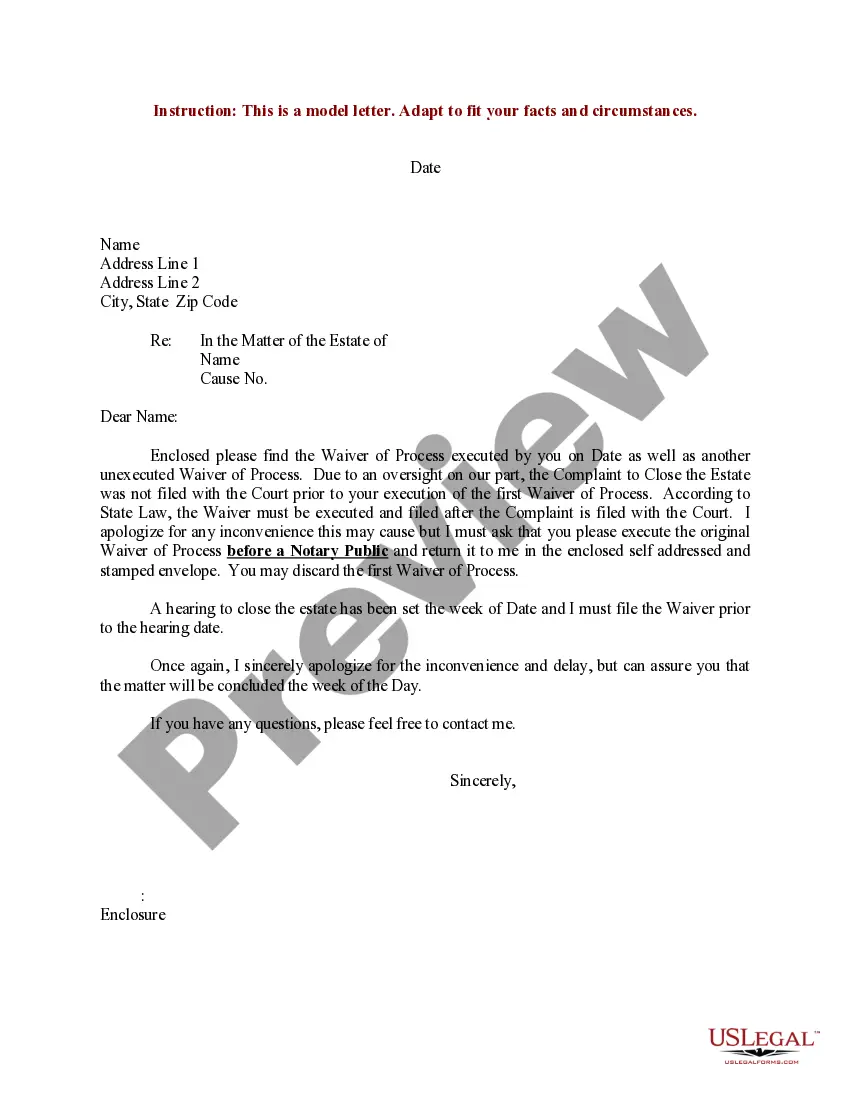
New York Warranty Deed from an Individual Trust to a Joint Trust.
What this document covers
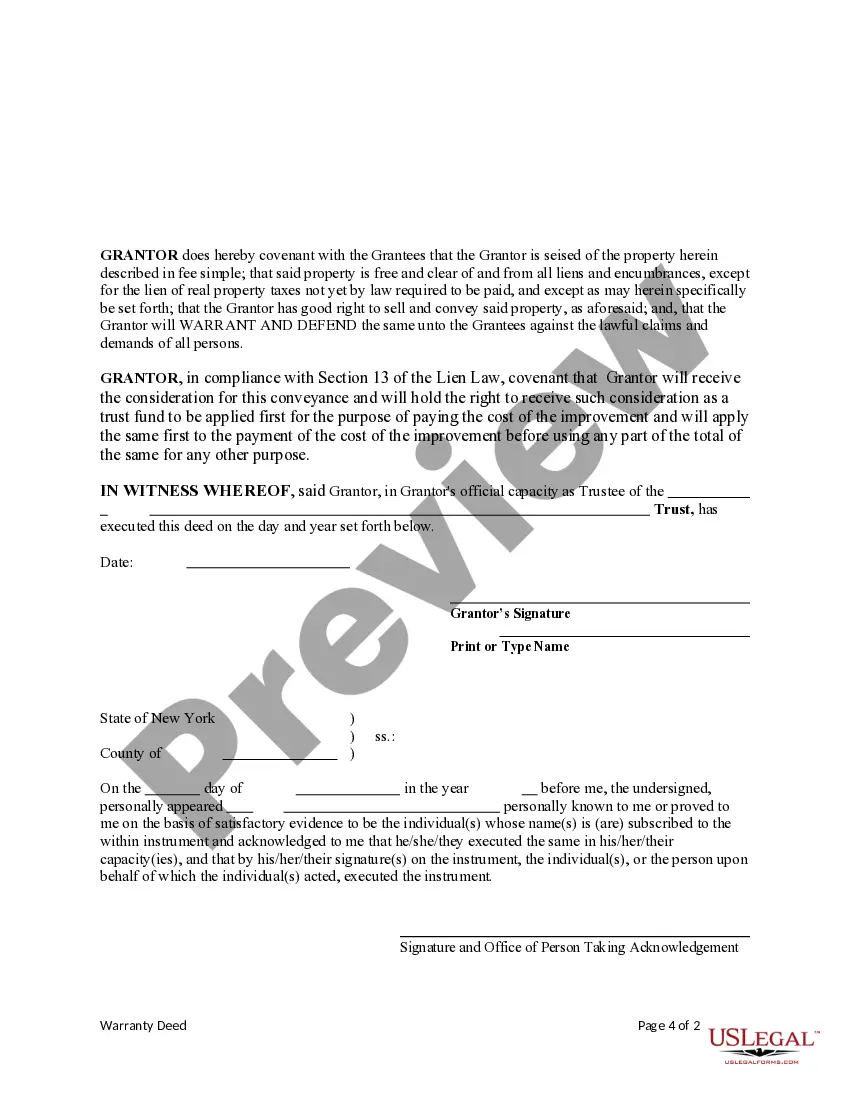
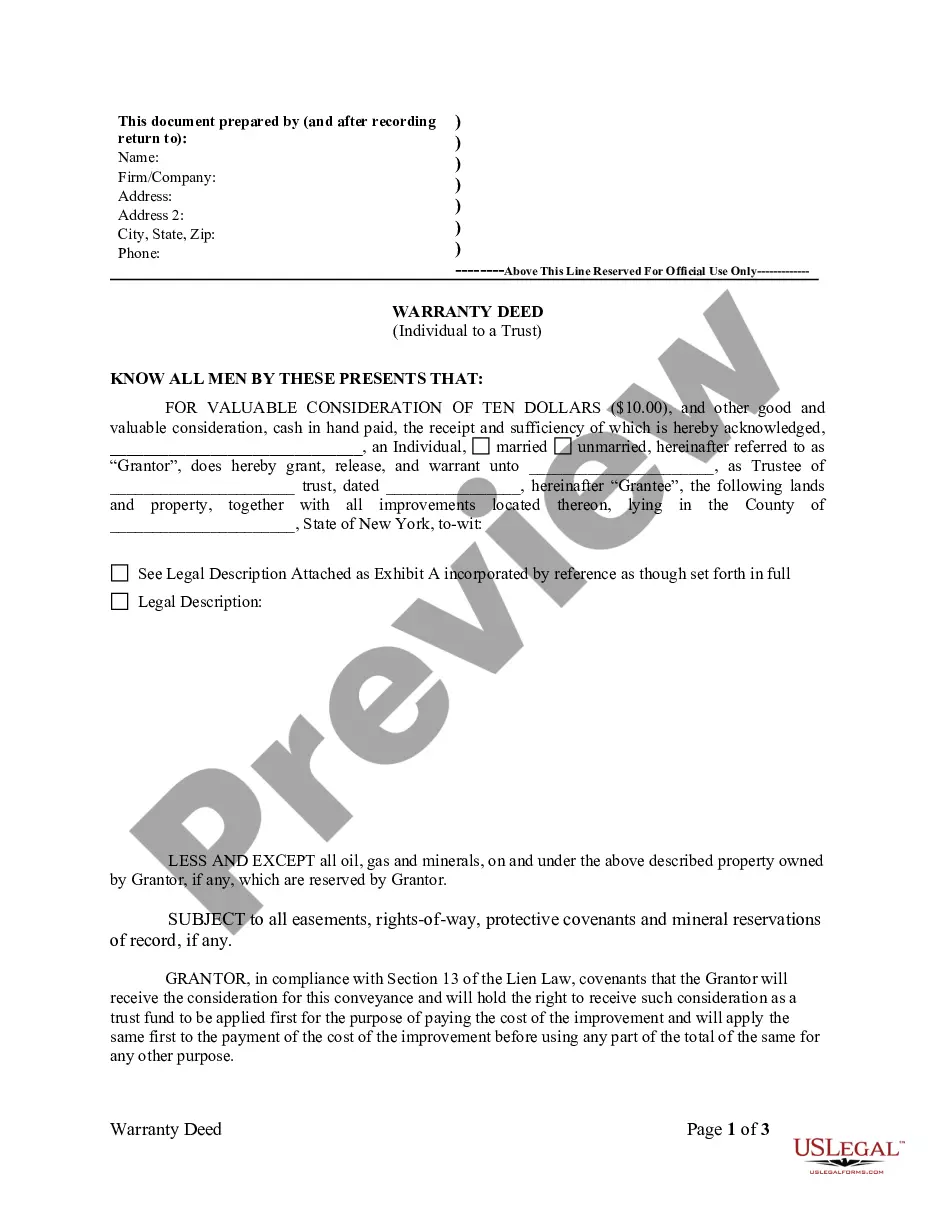
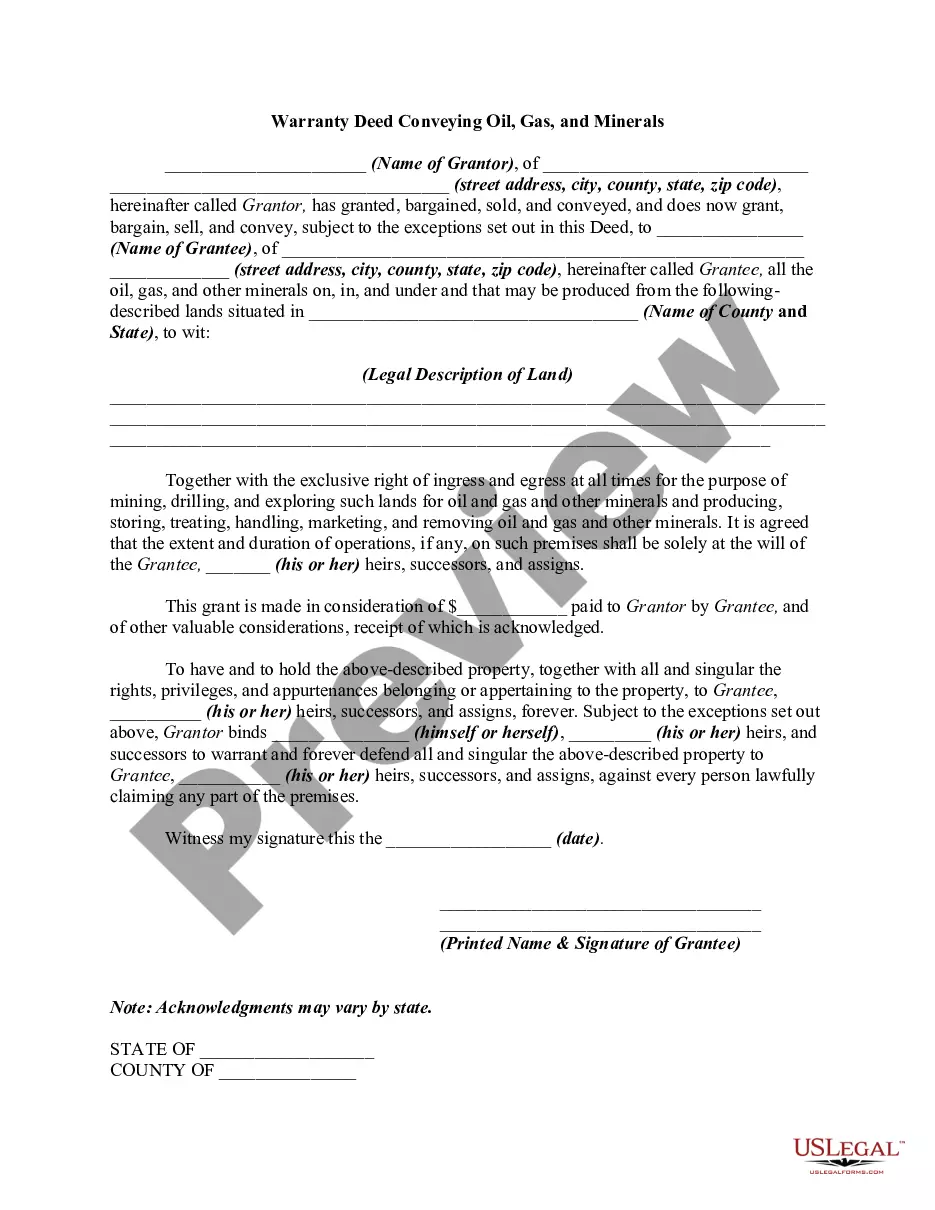
The Warranty Deed from an Individual Trust to a Joint Trust is a legal document used to transfer property ownership from an individual trust, represented by its trustee, to a joint trust, represented by its trustees. This form ensures that the property is conveyed with a warranty, meaning the grantor guarantees the title is clear of any claims. This deed is different from other types of deeds, such as quitclaim deeds, as it provides greater protection to the grantees by assuring them of the grantor's legal right to transfer the property.
Key parts of this document
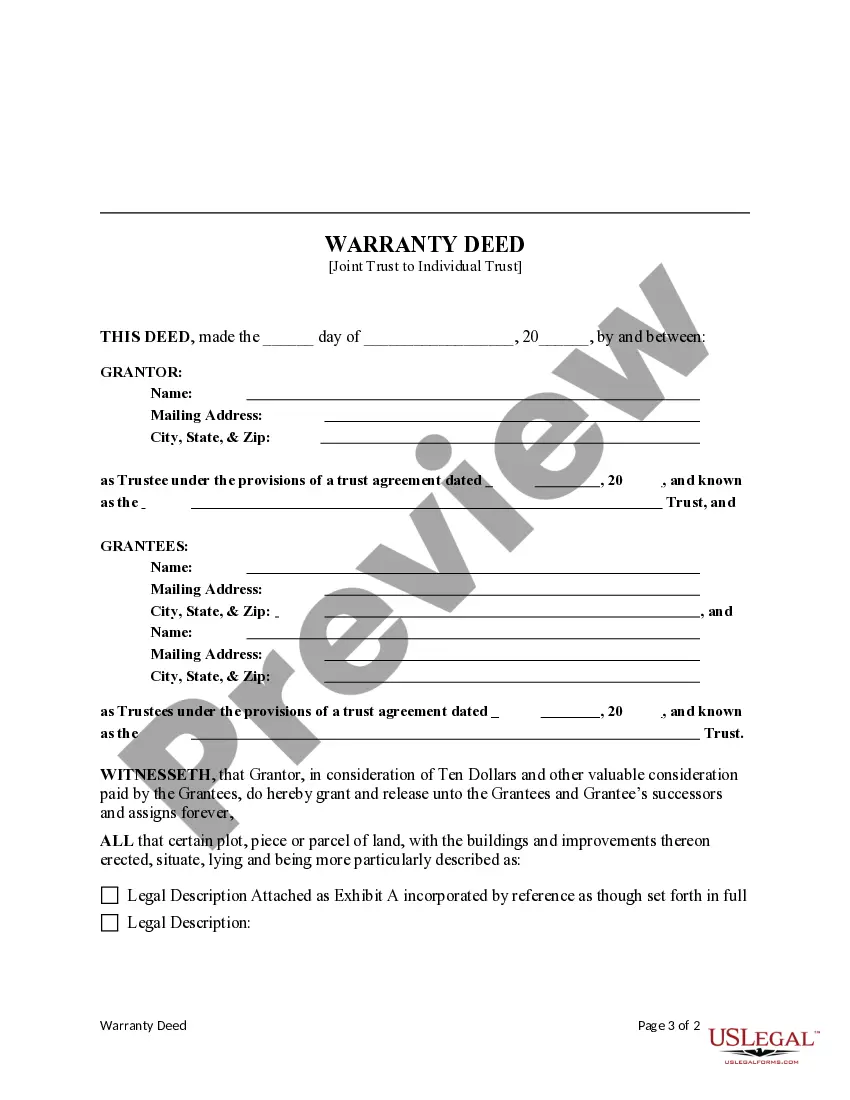
- Identification of the Grantor and Grantees, including their roles as trustees.
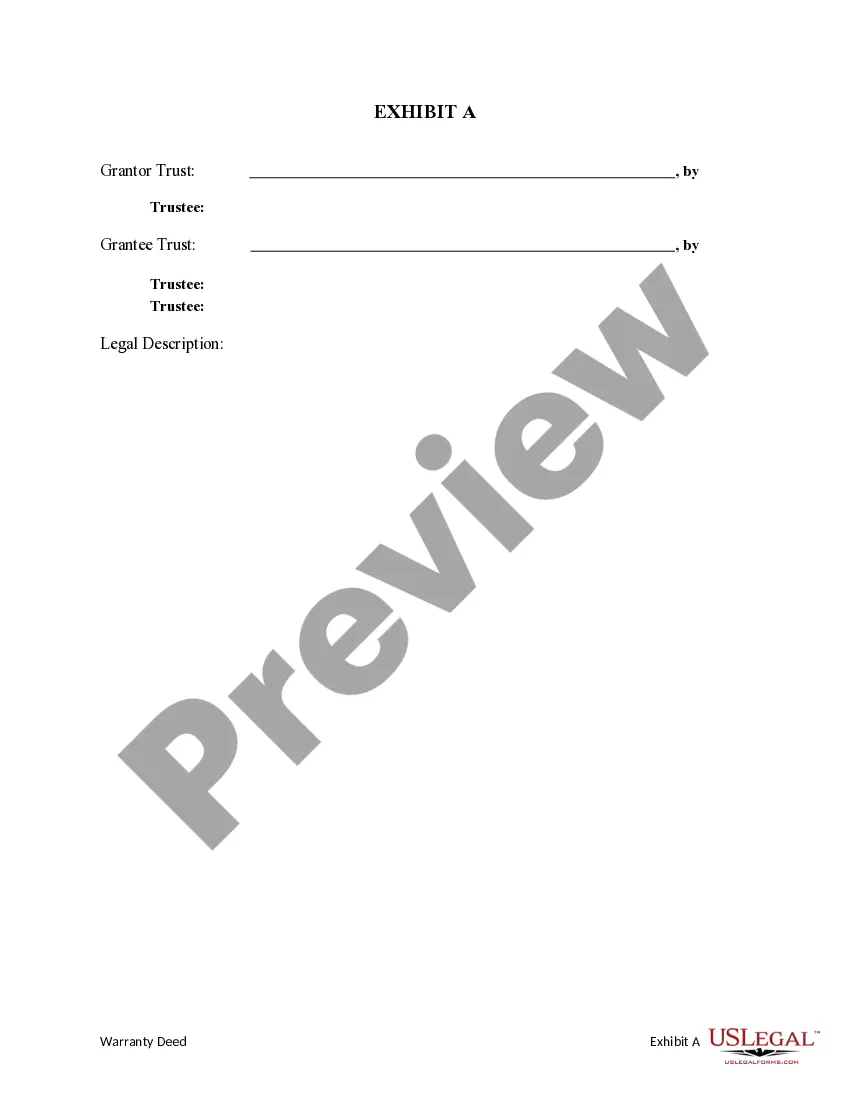
- A clear legal description of the property being transferred.
- A statement of warranty assuring the title is free from encumbrances.
- Signature line for the Grantor, affirming the transfer.
- A section for notarization to validate the signing of the deed.


Common use cases
This form is necessary when a trustee of an individual trust wishes to transfer property to a joint trust, typically established for shared ownership among multiple individuals. Common scenarios include estate planning situations where property needs to be consolidated into a joint trust for better management and distribution upon death. It formalizes the transfer and protects the interests of all parties involved.
Who this form is for
This form is suitable for:
- Trustees of individual trusts who need to transfer property ownership.
- Trustees of joint trusts seeking to consolidate property for trust management.
- Individuals involved in estate planning looking to streamline property ownership.
- Attorneys who are advising clients on property transfers between trusts.
How to prepare this document
- Identify and enter the full names and addresses of the Grantor and Grantees.
- Provide a complete legal description of the property being transferred.
- Sign the document in the presence of a notary to validate the transfer.
- Ensure all parties to the deed receive a copy for their records.
- File the completed deed with the appropriate local government office if necessary.
Notarization requirements for this form
This form needs to be notarized to ensure legal validity. US Legal Forms provides secure online notarization powered by Notarize, allowing you to complete the process through a verified video call, available anytime.
Get your form ready online
Our built-in tools help you complete, sign, share, and store your documents in one place.
Make edits, fill in missing information, and update formatting in US Legal Forms—just like you would in MS Word.
Download a copy, print it, send it by email, or mail it via USPS—whatever works best for your next step.
Sign and collect signatures with our SignNow integration. Send to multiple recipients, set reminders, and more. Go Premium to unlock E-Sign.
If this form requires notarization, complete it online through a secure video call—no need to meet a notary in person or wait for an appointment.
We protect your documents and personal data by following strict security and privacy standards.

Make edits, fill in missing information, and update formatting in US Legal Forms—just like you would in MS Word.

Download a copy, print it, send it by email, or mail it via USPS—whatever works best for your next step.

Sign and collect signatures with our SignNow integration. Send to multiple recipients, set reminders, and more. Go Premium to unlock E-Sign.

If this form requires notarization, complete it online through a secure video call—no need to meet a notary in person or wait for an appointment.

We protect your documents and personal data by following strict security and privacy standards.
Common mistakes
- Failing to include a complete legal description of the property.
- Not having the deed notarized, which may impact its validity.
- Incorrectly identifying the grantor or grantees, leading to potential disputes.
- Not retaining copies for all parties involved in the transaction.
Why use this form online
- Convenience of downloading and completing the form at your own pace.
- Editability allows for easy customization to fit your specific needs.
- Access to legally compliant forms drafted by licensed attorneys.
- Time-saving by eliminating the need for in-person appointments with legal advisors.
Looking for another form?
Form popularity
FAQ
A warranty deed protects property owners from future claims that someone else actually owns a portion (or all) of their property, while trustee deeds protect lenders when borrowers default on their mortgage loans.
Party information: names and addresses of the trustor(s), trustee(s), beneficiary(ies), and guarantor(s) (if applicable) Property details: full address of the property and its legal description (which can be obtained from the County Recorder's Office)
Transferring property out of a trust can be simple or nearly impossible, depending on which kind of trust you formed. Typically, you act as the trustee if you form a revocable trust. You retain control of the property you place into it. You can sell it or move it back out of the trust as you see fit.
A trustee deed offers no such warranties about the title.
Yes, properties held in a living revocable trust can be refinanced. However, refinancing a mortgage held in a trust involves specific steps which may occur outside of the refinancing transaction. It's important to ensure it's done correctly so there's no lapse in your homeowner's title insurance coverage.
Locate the deed that's in trust. Use the proper deed. Check with your title insurance company and lender. Prepare a new deed. Sign in the presence of a notary. Record the deed in the county clerk's office.
California Property TaxesTransferring real property to yourself as trustee of your own revocable living trust -- or back to yourself -- does not trigger a reassessment for property tax purposes. (Cal. Rev. & Tax Code § 62(d).)
Determine the Current Title and Vesting to Your Property. Prepare a Deed. Be Aware of Your Lender and Title Insurance. Prepare a Preliminary Change of Ownership Report. Execute Your Deed. Record Your Deed. Wait for the Deed to be Returned. Keep the Property in the Trust.