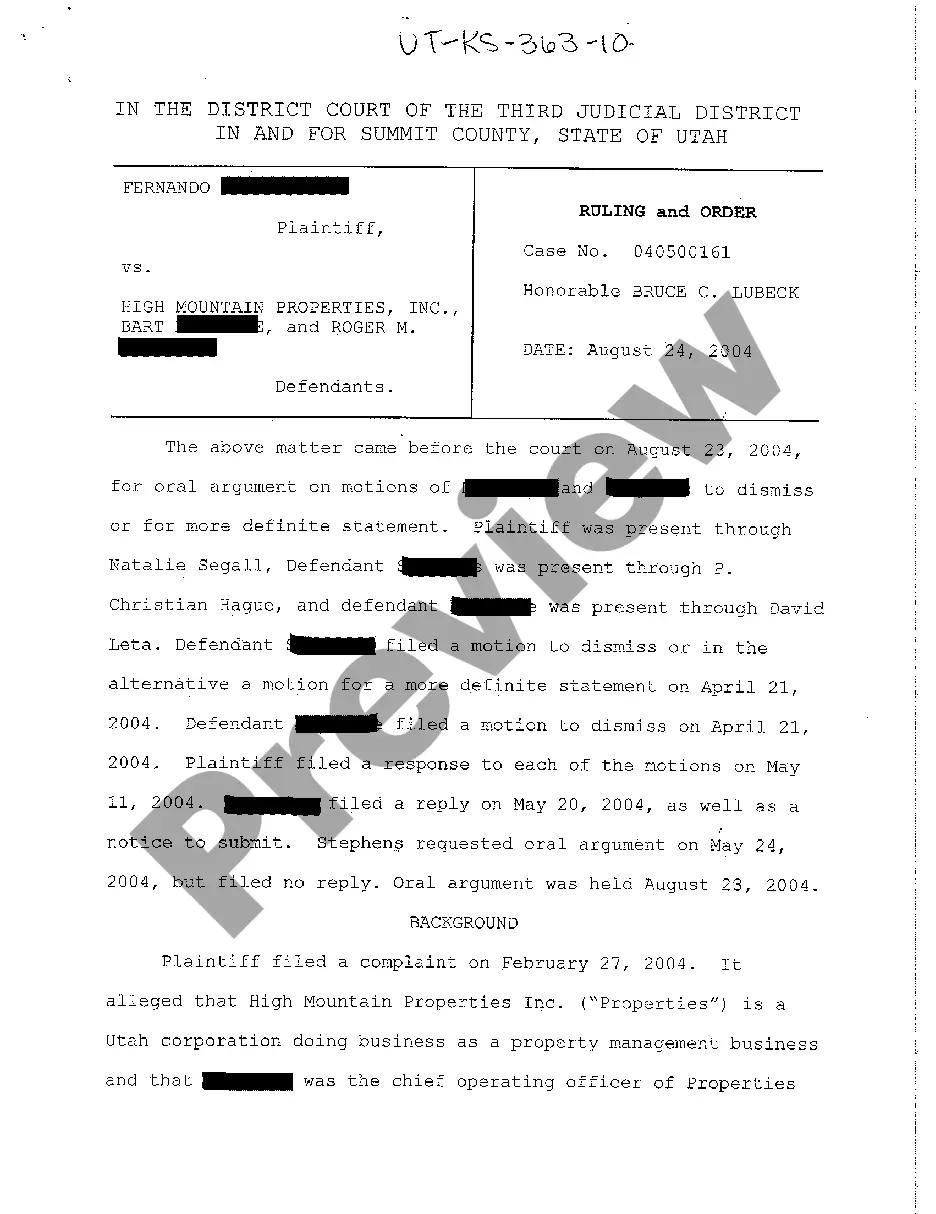
The New York Bill of Costs is a standard form used in civil actions in the New York State Supreme Court. This form, which is also known as Form CPR 8019, is used to itemize the costs and expenses associated with a civil action in New York. The New York Bill of Costs is divided into two parts: 1) taxable costs, and 2) non-taxable costs. Taxable costs include the costs of filing and service of process fees, stenographer's fees, copying fees, and other costs associated with bringing a civil action. Non-taxable costs include attorney's fees, expert witness fees, and other costs associated with defending a civil action. The New York Bill of Costs must be filed with the court along with other required documents in order for the court to award costs to either party.
New York Bill of Costs
Description



Key Concepts & Definitions
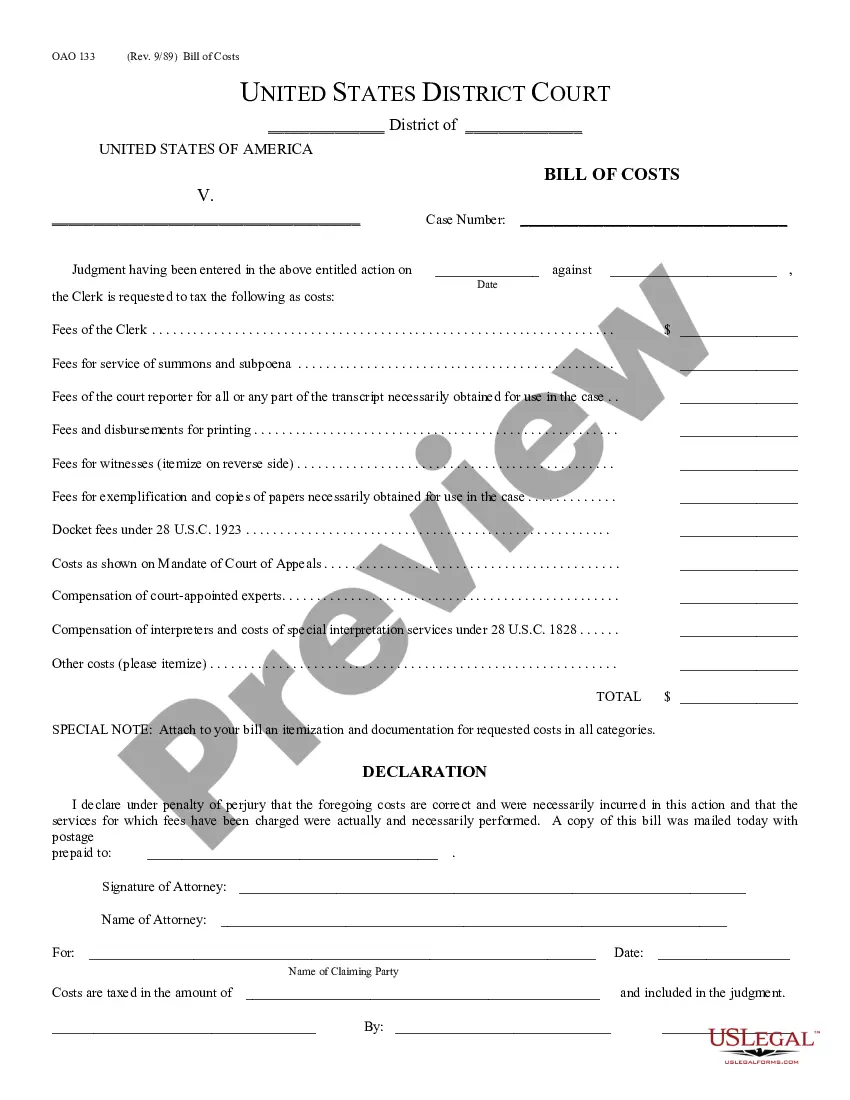
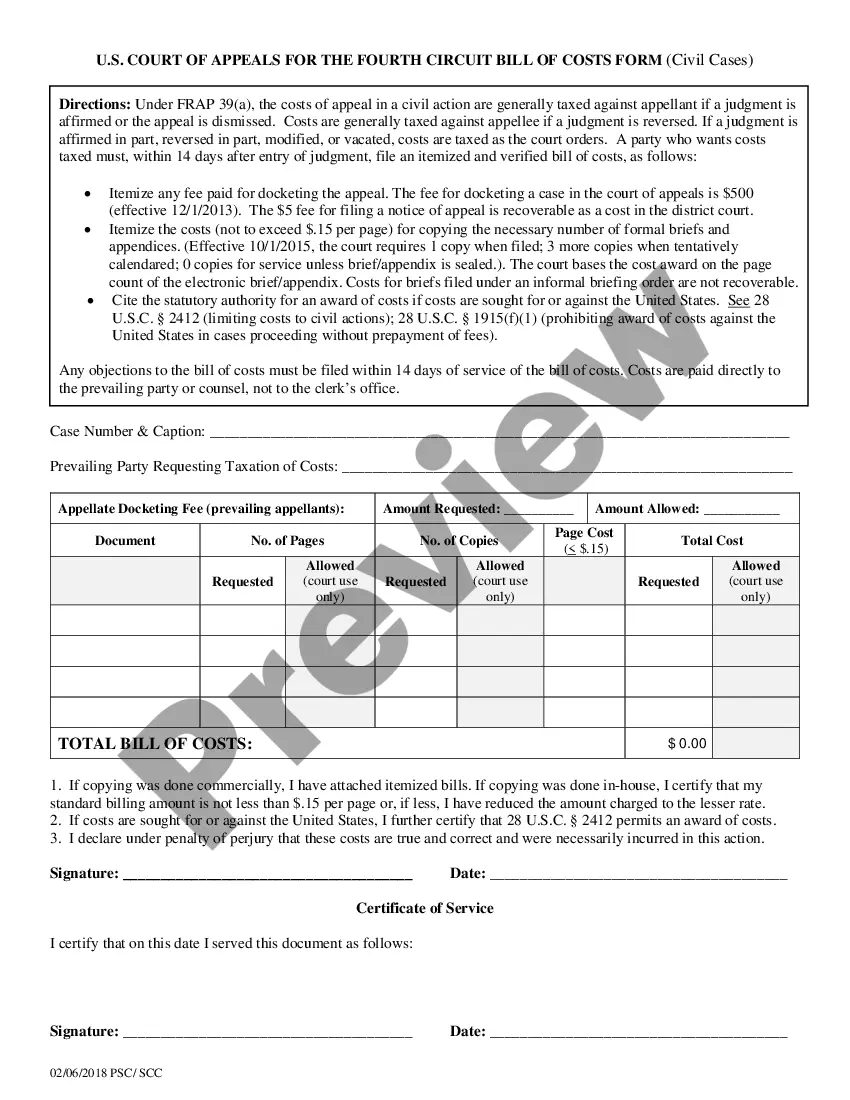
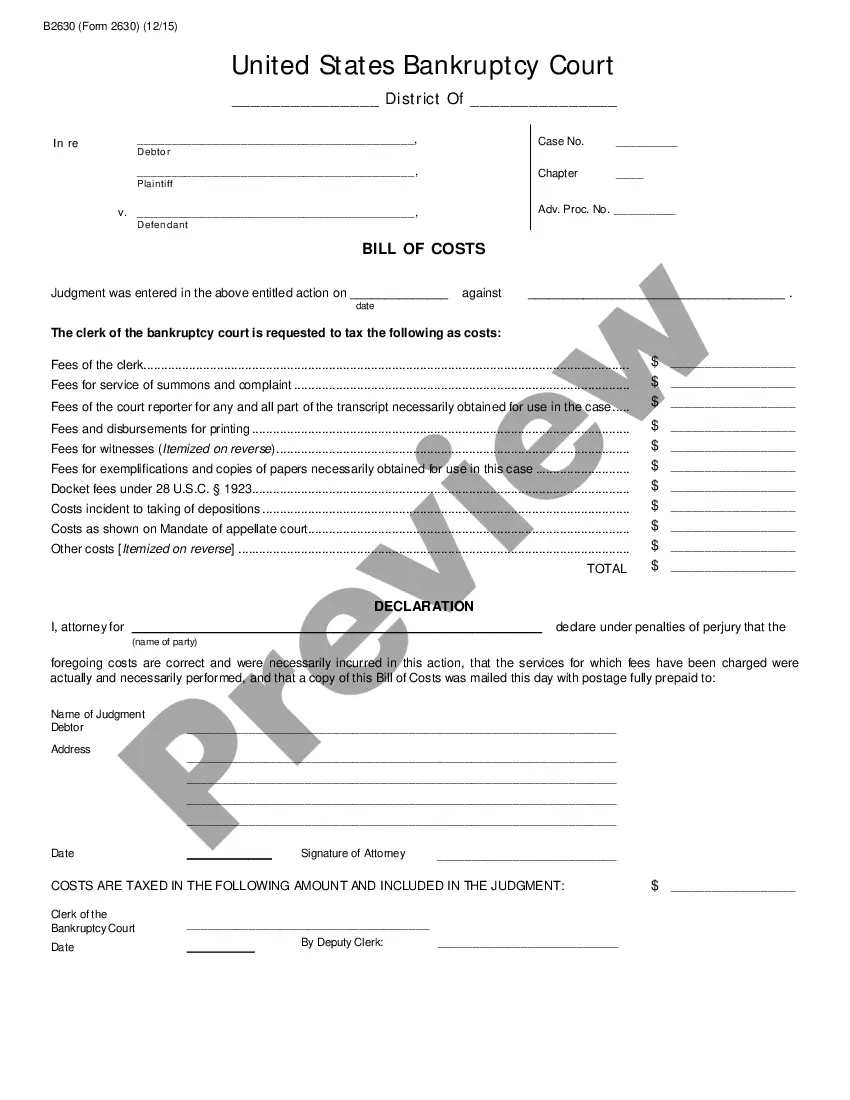
Bill of Costs: A detailed statement prepared by the prevailing party in a lawsuit, itemizing the legal costs and expenses incurred. It is submitted for approval to recover costs from the losing party as per the regulations of the federal judiciary in the United States.
Understanding the Federal Judiciary System
- Federal Judiciary: Comprises the network of federal courts authorized by the U.S. Constitution to decide controversies involving federal law and disputes between states or between the U.S. and foreign governments.
- Rules Committees: These are essential elements of the federal courts system, responsible for crafting and updating the Federal Rules of Procedure, which govern the conduct of all federal court proceedings.
Step-by-Step Guide: Submitting a Bill of Costs
- Verification of Allowable Costs: Reference the Federal Rules of Procedure to determine which costs can be included in a bill of costs.
- Documentation and Preparation: Collect all receipts and records of court fees, copying, expert witness fees, and other expenses related to your case.
- Filing the Bill: Submit the bill of costs to the clerk of the involved federal court within the time frame specified by the court.
- Judicial Review: The bill is then reviewed and, if appropriate, approved by a judge, which allows for the recovery of specified costs.
Risk Analysis
- Noncompliance with Court Rules: Incorrectly prepared bills of costs may lead to refusal of cost recovery.
- Timing Issues: Missing the deadline for submitting the bill of costs could also result in forfeiture of reimbursement rights.
Key Takeaways
- Always ensure the bill of costs aligns with the Federal Rules of Procedure and includes only allowable expenses.
- Understanding the structure of the federal judiciary and the functions of its rules committees can provide invaluable insights during litigation processes.
Common Mistakes & How to Avoid Them
- Poor Documentation: Always keep detailed and organized records of all expenses to avoid disputes over your bill of costs.
- Ignoring Local Court Rules: Each federal court might have specific rules that slightly alter the submission process. Always verify the rules of the court processing your case.
How to fill out New York Bill Of Costs?
If you’re searching for a way to properly complete the New York Bill of Costs without hiring a legal representative, then you’re just in the right spot. US Legal Forms has proven itself as the most extensive and reputable library of formal templates for every individual and business scenario. Every piece of documentation you find on our online service is drafted in accordance with nationwide and state regulations, so you can be sure that your documents are in order.
Adhere to these straightforward instructions on how to get the ready-to-use New York Bill of Costs:
- Make sure the document you see on the page meets your legal situation and state regulations by checking its text description or looking through the Preview mode.
- Type in the document title in the Search tab on the top of the page and select your state from the dropdown to find another template if there are any inconsistencies.
- Repeat with the content verification and click Buy now when you are confident with the paperwork compliance with all the requirements.
- Log in to your account and click Download. Sign up for the service and opt for the subscription plan if you still don’t have one.
- Use your credit card or the PayPal option to pay for your US Legal Forms subscription. The blank will be available to download right after.
- Choose in what format you want to get your New York Bill of Costs and download it by clicking the appropriate button.
- Import your template to an online editor to fill out and sign it quickly or print it out to prepare your hard copy manually.
Another wonderful thing about US Legal Forms is that you never lose the paperwork you purchased - you can pick any of your downloaded blanks in the My Forms tab of your profile whenever you need it.
Form popularity
FAQ
The judgment-roll must contain the summons, pleadings, admissions, each judgment and each order involving the merits or necessarily affecting the final judgment.
1. : a parchment roll or a book containing a record of the proceedings and judgment of a case in a court of law. the cost of transcribing the judgment roll Ward v. Cruse. : a roll of papers constituted by a collection of the original records of a judicial proceeding.
In New York, a Bill of Particulars is a pleading that is substantively equivalent to responses to interrogatories and typically details in specificity a plaintiff's injuries, the defendant's alleged misconduct, and the specific statutes and/or code violations that the defendant is alleged to have violated.
New York State judgments are valid for 20 years. A judgment can act as a lien on real property for ten years which may be extended for an additional term if you to take affirmative action.
A Demand for a Bill of Particulars is ?a list of written questions from one party to another asking for details (particulars) about a claim or defense.? While it is not technically considered discovery, a Demand for a Bill of Particulars can be used to get information regarding a claim or defense.
(a) Preparation and filing. A judgment-roll shall be prepared by the attorney for the party at whose instance the judgment is entered or by the clerk. It shall be filed by the clerk when he enters judgment, and shall state the date and time of its filing.
Default Judgments The default judgment usually gives the plaintiff the right to collect the amount of money that was asked for in the complaint, plus interest and court costs. The judgment will appear on the defendant's credit report, and it can be there for up to seven years if it is not paid.