New York Quitclaim Deed
Understanding this form
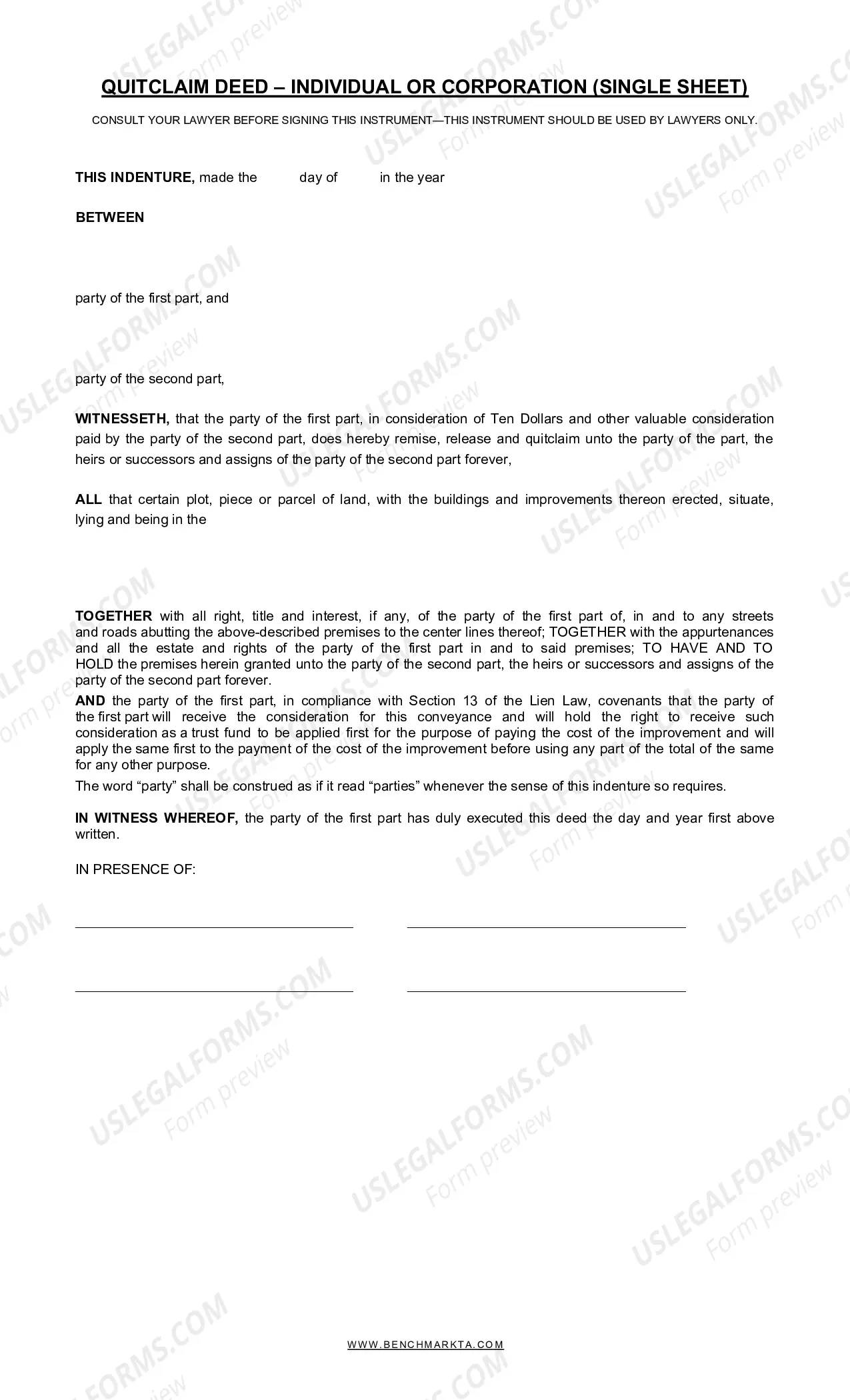
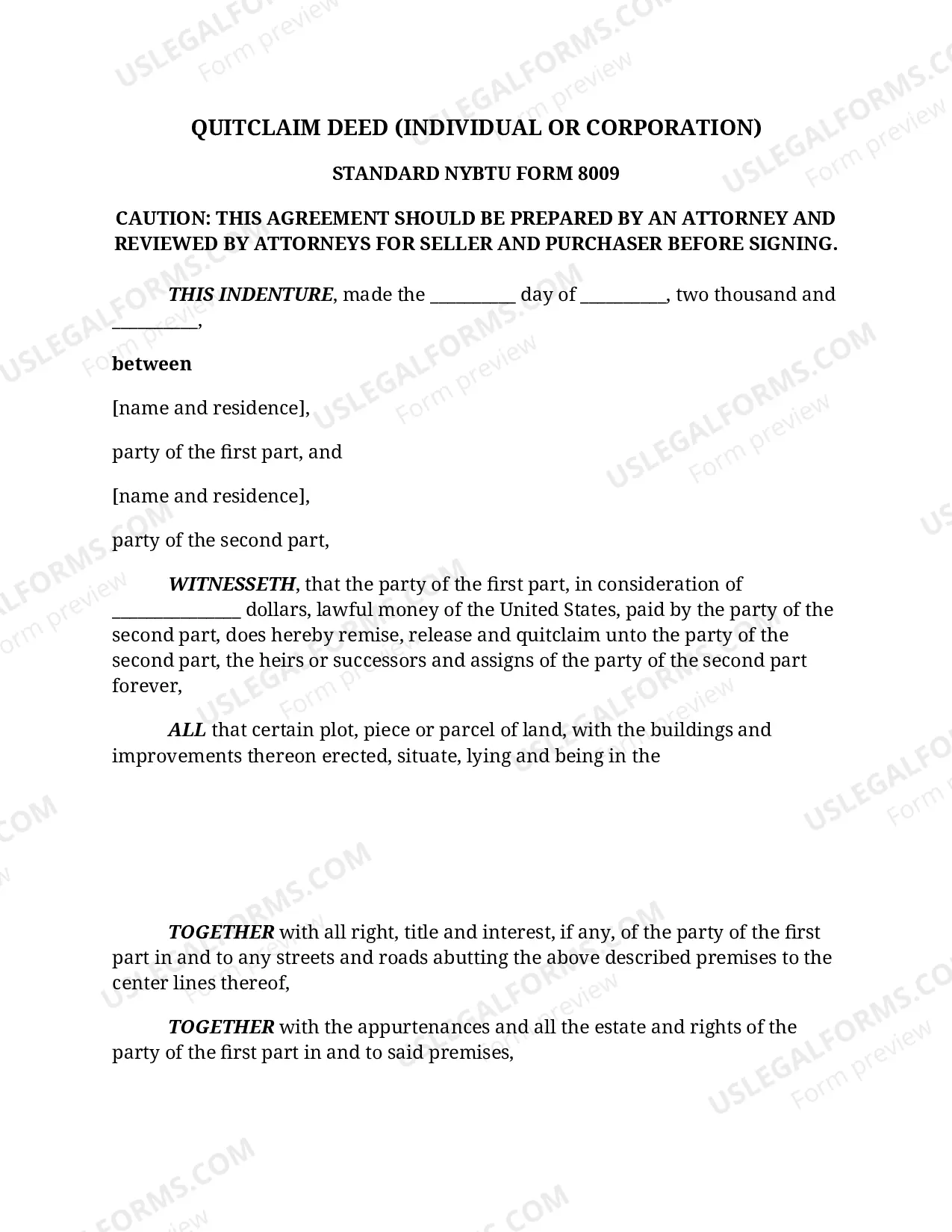
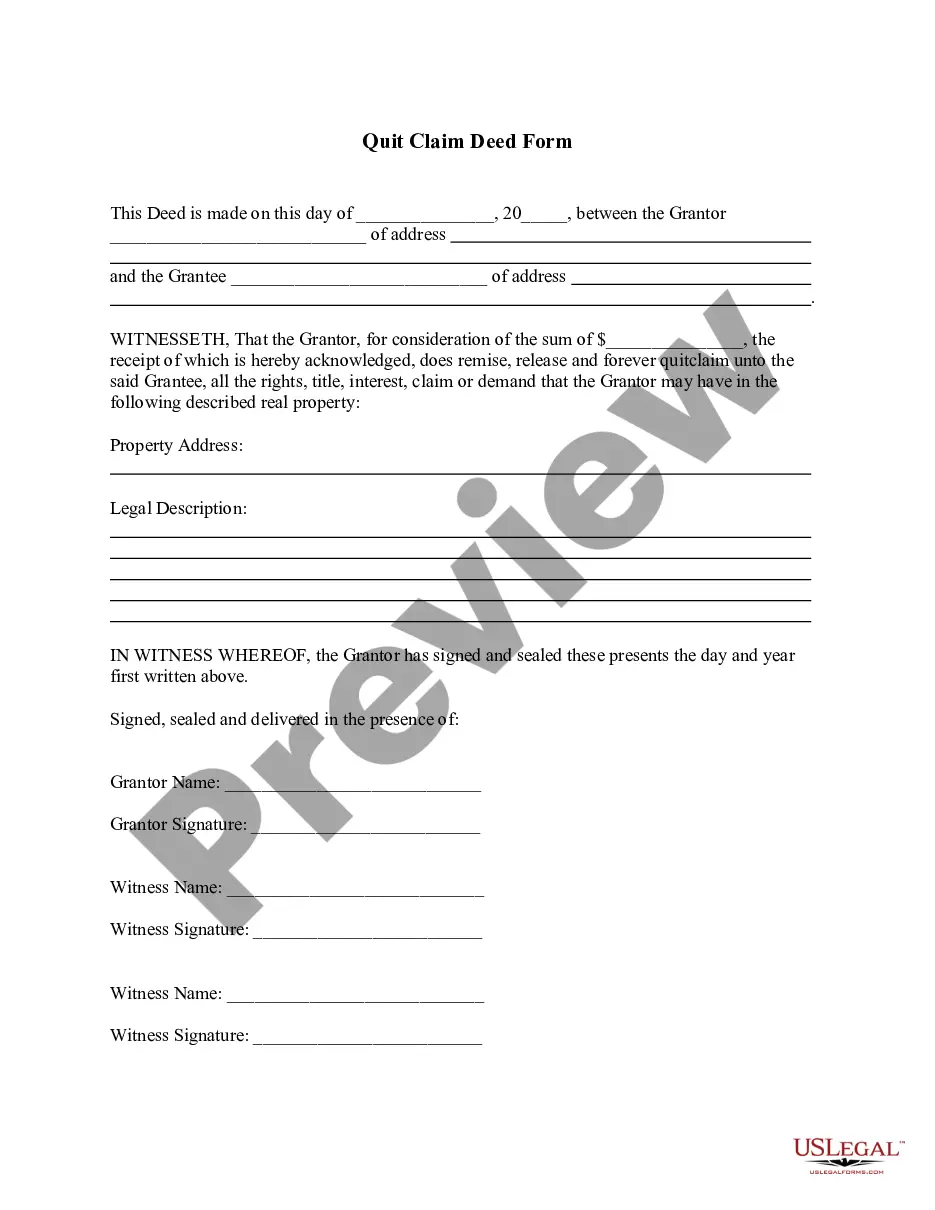
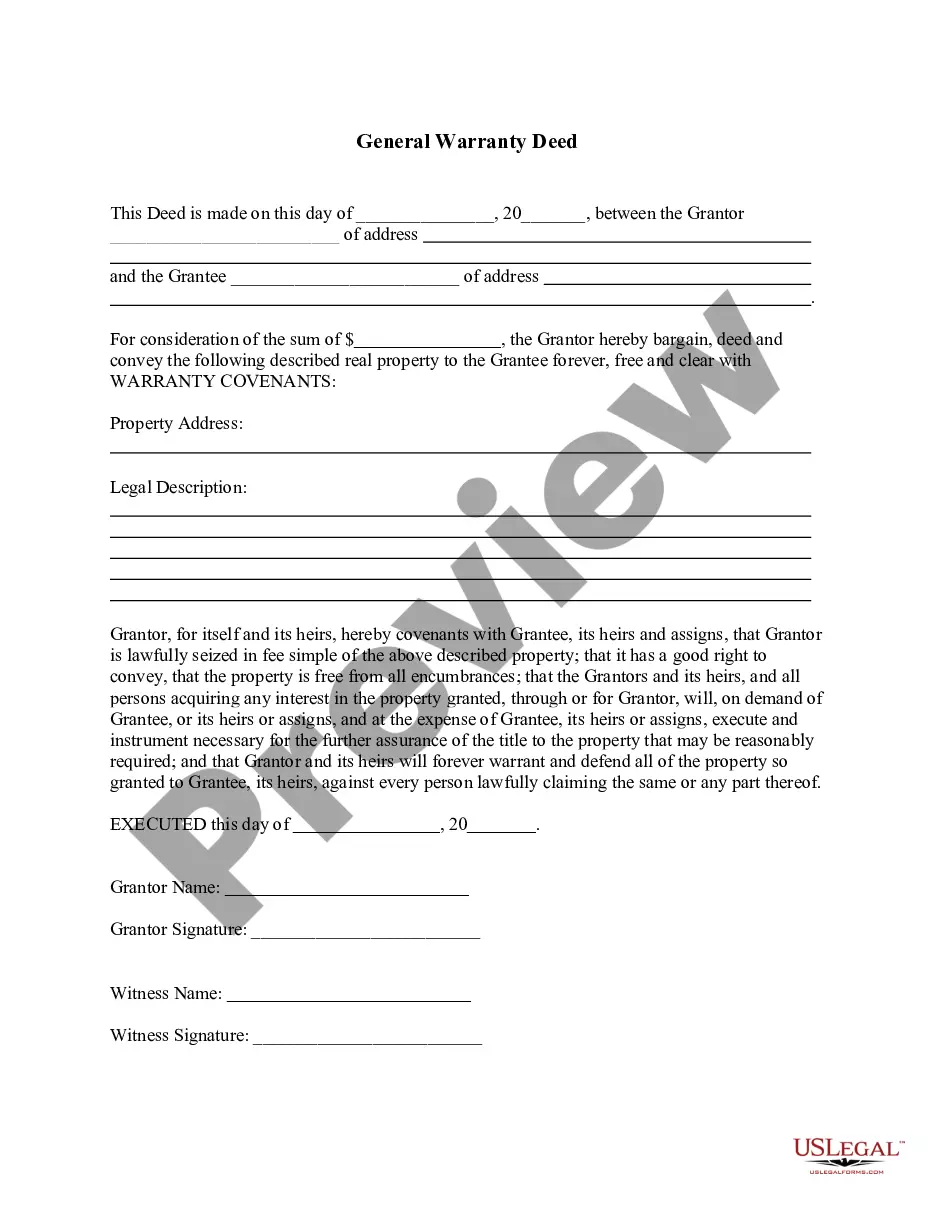
A quitclaim deed is a legal document used to transfer ownership of real estate from one party to another. This form does not guarantee that the property is free from claims or liens, making it different from other types of deeds, such as warranty deeds, which offer more protection to the grantee. The quitclaim deed is often used in situations where the parties know each other, such as family transfers or divorces, and is typically popular for transferring property without a warranty of title.
What’s included in this form
- Grantor: The individual or entity transferring the property.
- Grantee: The individual or entity receiving the property.
- Legal description of the property: Detailed identification of the real estate being transferred.
- Consideration: The amount of money or value exchanged for the property.
- Signatures: Required from both parties to make the document effective.
- Date of execution: The date the deed is signed.


When this form is needed
This form is typically used in various circumstances, including:
- Transferring property between family members.
- Facilitating property transfers during divorce settlements.
- Clearing up title issues when selling or buying property.
- Transferring property into or out of a trust.
- Changing the name on the title due to marriage or divorce.
Who can use this document
- Individuals transferring property to family members.
- Couples undergoing divorce who need to divide property.
- People looking to quickly transfer property without warranties.
- Trustees managing real estate within a trust.
How to prepare this document
- Identify the grantor and grantee, providing full names and addresses.
- Specify the legal description of the property being transferred.
- Enter the consideration amount that reflects the value of the property.
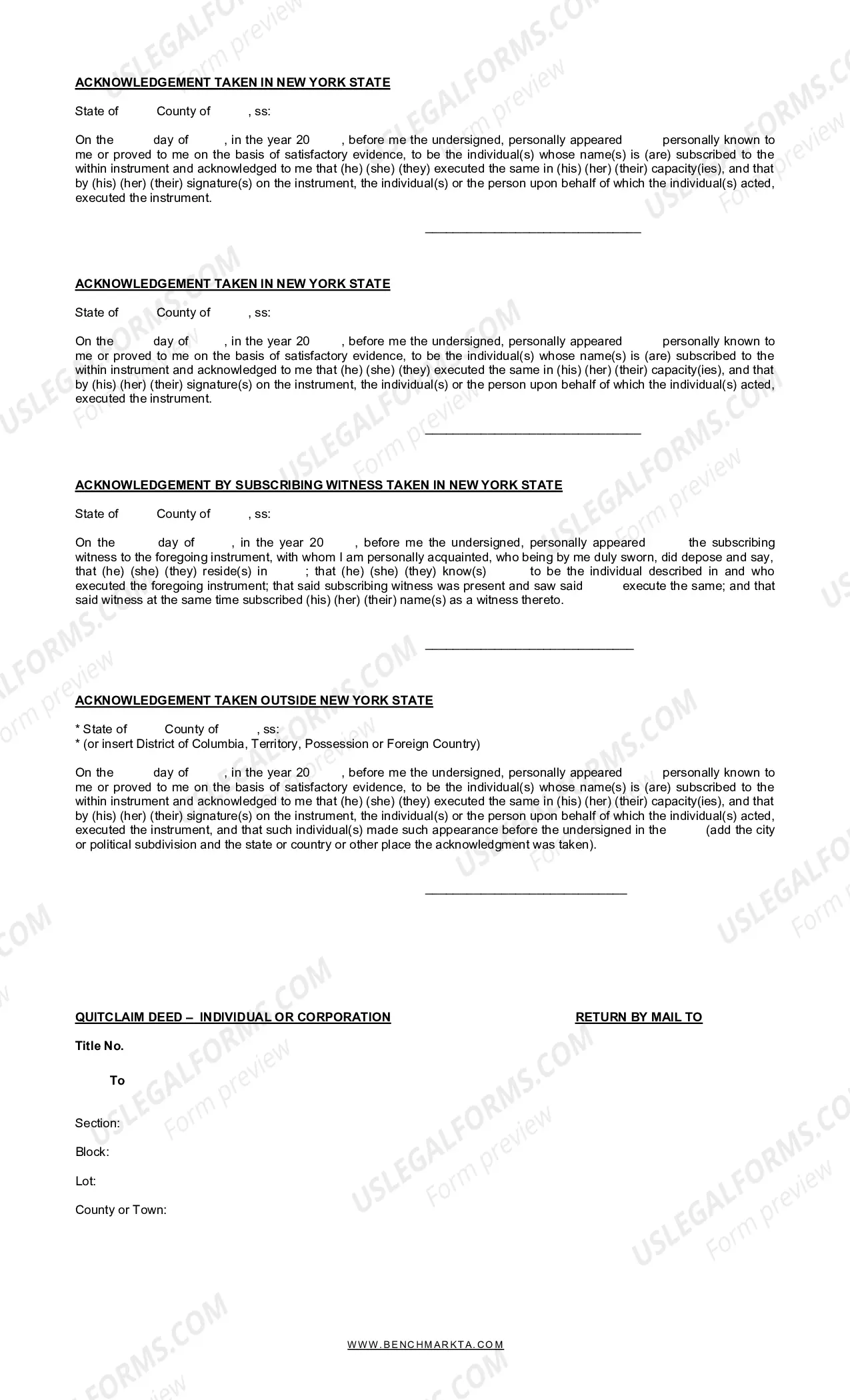
- Have both parties sign the deed in the presence of a notary if required.
- Record the completed quitclaim deed with the appropriate local authority, if necessary.
Does this document require notarization?
Notarization is generally not required for this form. However, certain states or situations might demand it. You can complete notarization online through US Legal Forms, powered by Notarize, using a verified video call available anytime.
Get your form ready online
Our built-in tools help you complete, sign, share, and store your documents in one place.
Make edits, fill in missing information, and update formatting in US Legal Forms—just like you would in MS Word.
Download a copy, print it, send it by email, or mail it via USPS—whatever works best for your next step.
Sign and collect signatures with our SignNow integration. Send to multiple recipients, set reminders, and more. Go Premium to unlock E-Sign.
If this form requires notarization, complete it online through a secure video call—no need to meet a notary in person or wait for an appointment.
We protect your documents and personal data by following strict security and privacy standards.

Make edits, fill in missing information, and update formatting in US Legal Forms—just like you would in MS Word.

Download a copy, print it, send it by email, or mail it via USPS—whatever works best for your next step.

Sign and collect signatures with our SignNow integration. Send to multiple recipients, set reminders, and more. Go Premium to unlock E-Sign.

If this form requires notarization, complete it online through a secure video call—no need to meet a notary in person or wait for an appointment.

We protect your documents and personal data by following strict security and privacy standards.
Common mistakes
- Failing to provide a correct legal description of the property.
- Not signing the document in front of a notary when required.
- Leaving out necessary information about the grantor or grantee.
- Not recording the deed with the local government's office.
Benefits of using this form online
- Convenient access to the form anytime, eliminating the need for in-person visits.
- Immediate download and editing capabilities allow for quick completion.
- Designed by licensed attorneys, ensuring that the form meets legal standards.
- Secure process that protects personal information during preparation.
Looking for another form?
Form popularity
FAQ
The grantor must sign the deed form and that signature must be properly acknowledged by a notary public. All signatures must be original; we cannot accept photocopies. A complete description of the property including the village, town, county and state where the property is located must also be included on the form.
A deed is a document used by the owner of real property to transfer or convey the right, title, and interest to the property. A deed can transfer ownership to part of an interest, and must be in writing.
The quitclaim deed must be in writing. For real estate in New York City, quitclaim deeds typically require two main forms: Form RP-5217NYC and Form TP-584. Many parties hire attorneys to prepare these documents for them. Most quitclaim deeds in New York require the grantor's signature.
The deed must be signed by the grantor and notarized (the grantee does not need to sign), The grantee or their representative must receive and accept the deed, The county clerk's office must record the deed.
The filing fee is generally $125 for residential and farm properties and $250 for all other properties.
To change a deed in New York City, you will need a deed signed and notarized by the grantor. The deed must also be filed and recorded with the Office of the City Register. Transfer documents identifying if any taxes are due must also be filed and recorded with the City Register.
The three most common New York deeds are listed below: Warranty Deed. Bargain and Sale Deed. Quitclaim Deed.
A deed is a legal document that grants ownership to a piece of real estate or other property asset. A deed transfers the title of an asset to a new owner, and it is usually recorded in the local county clerk's office.