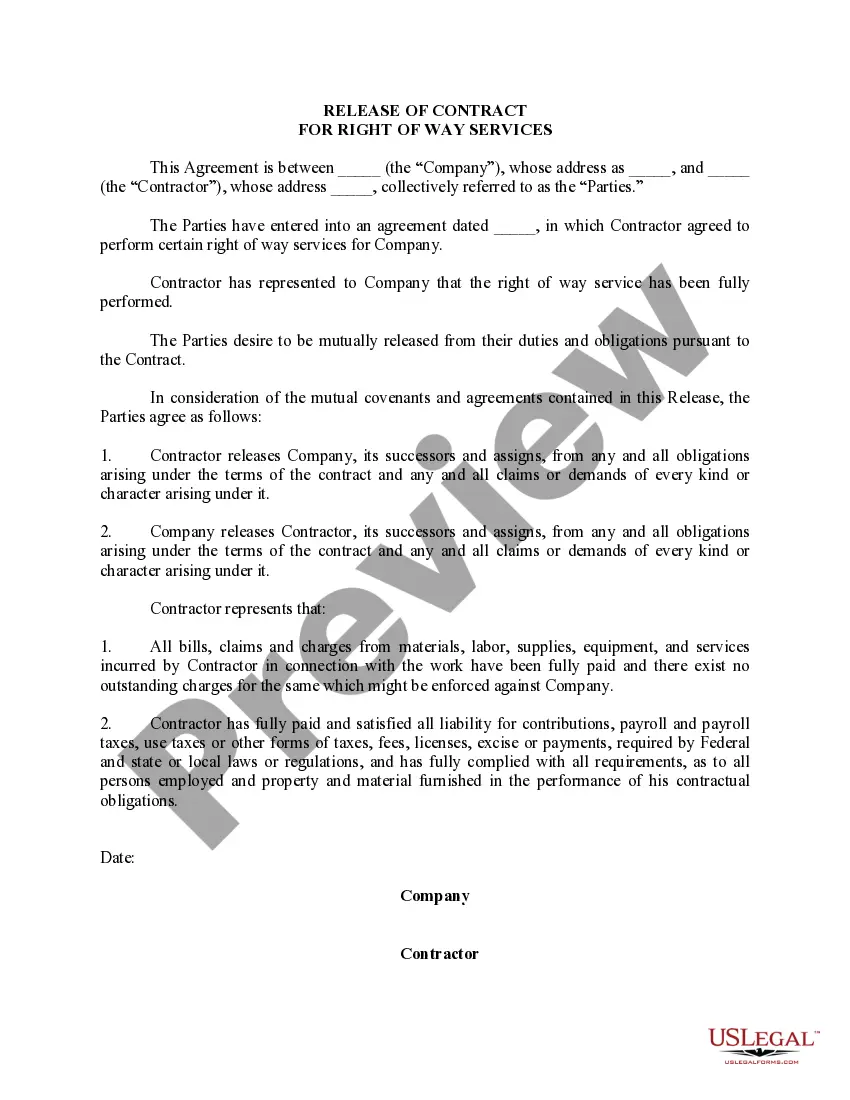
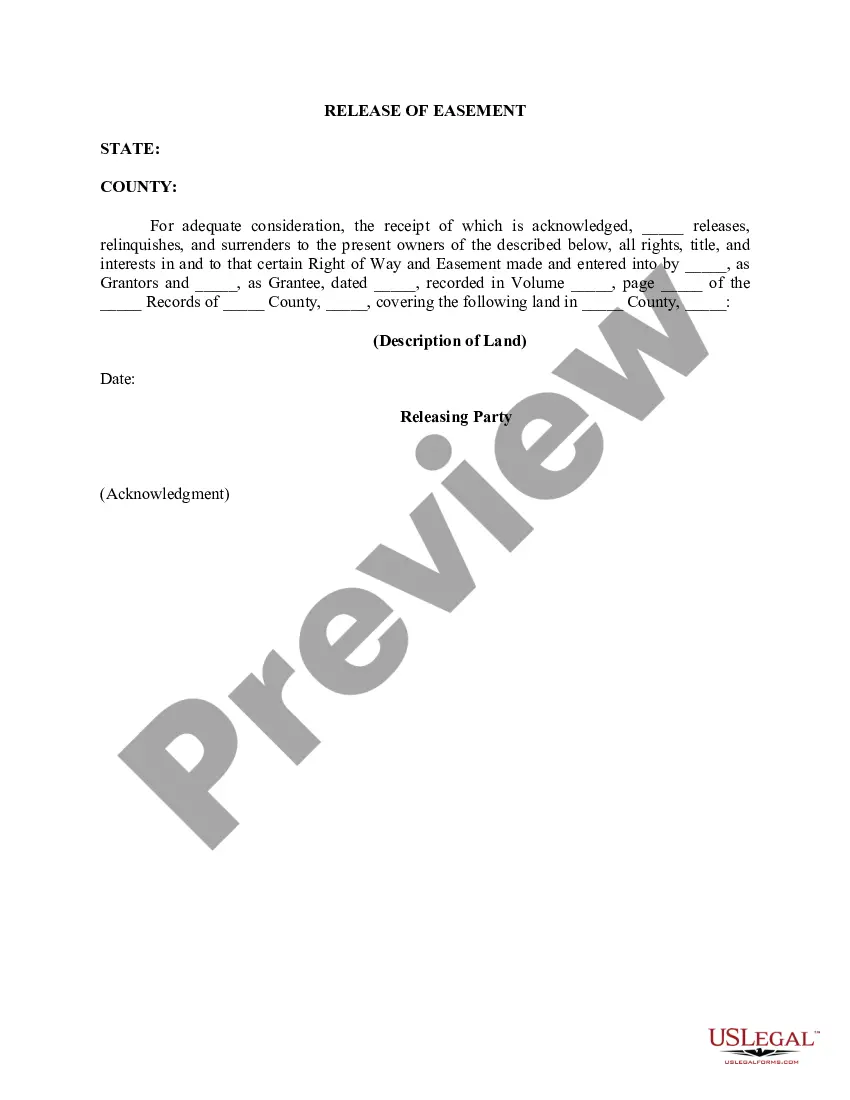
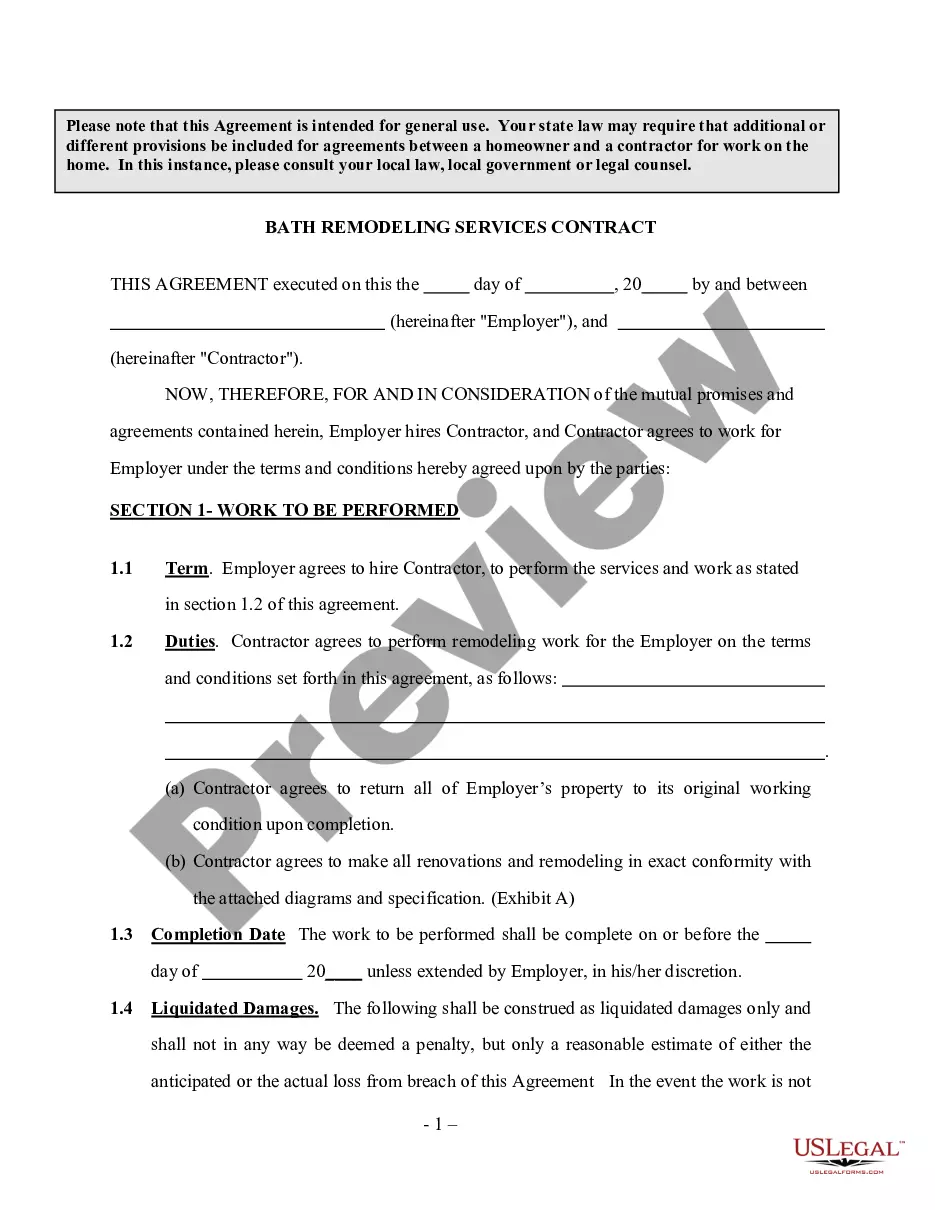
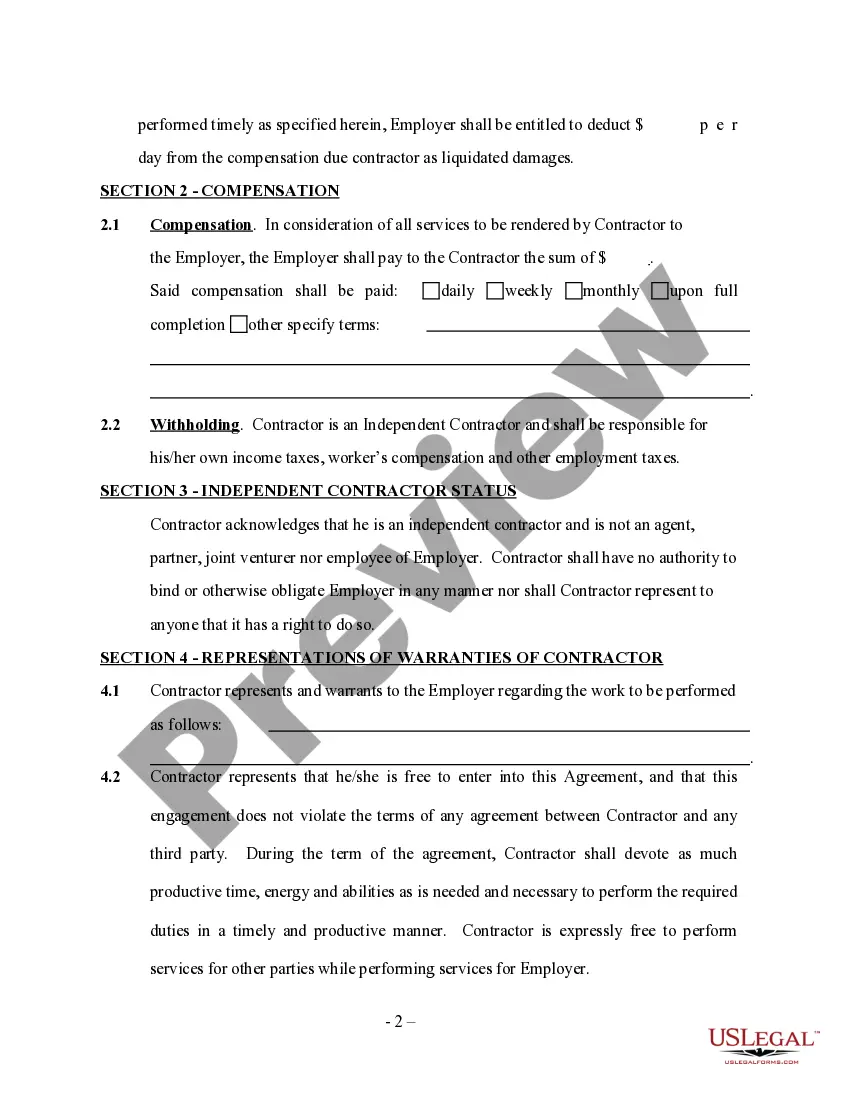
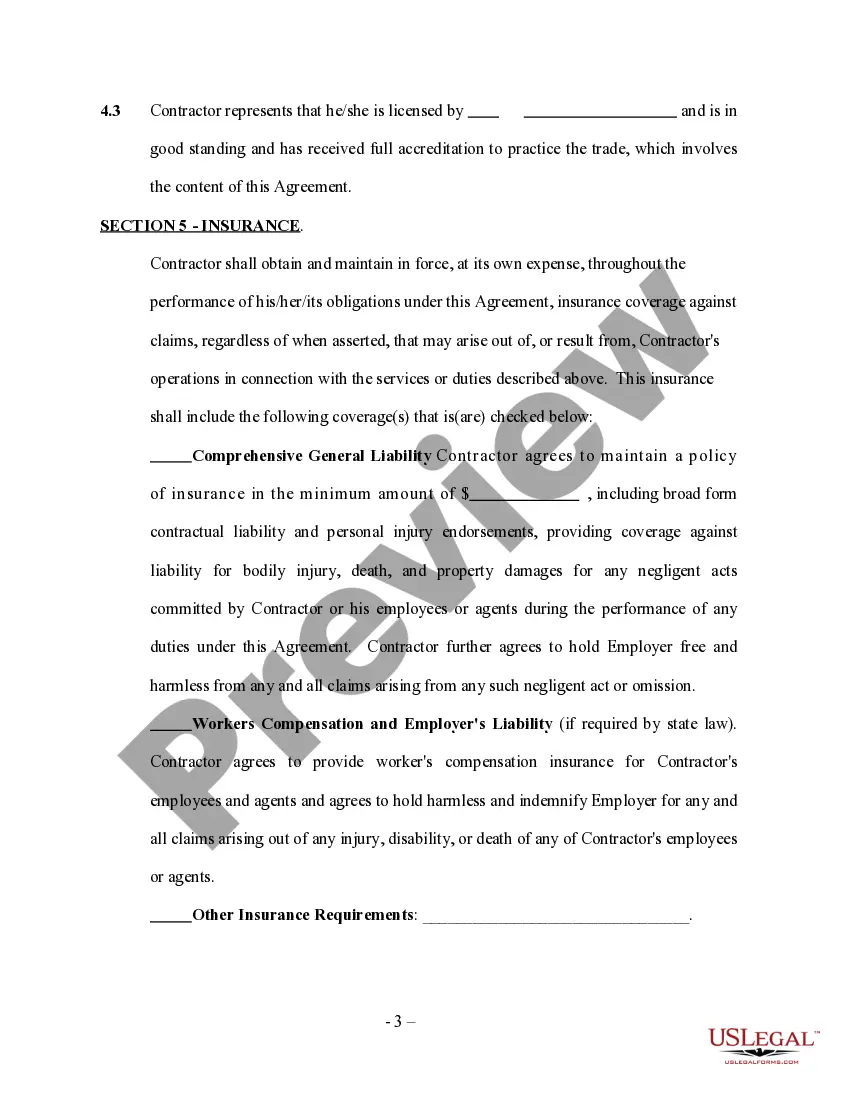
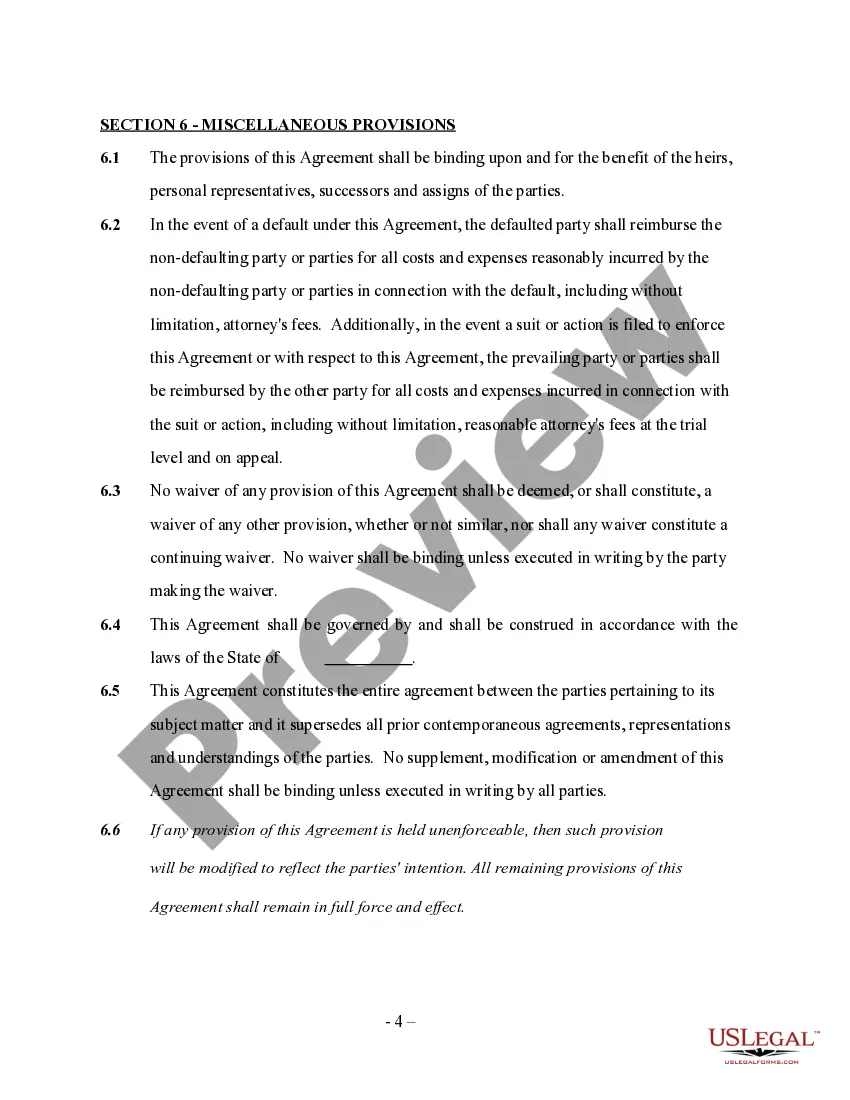
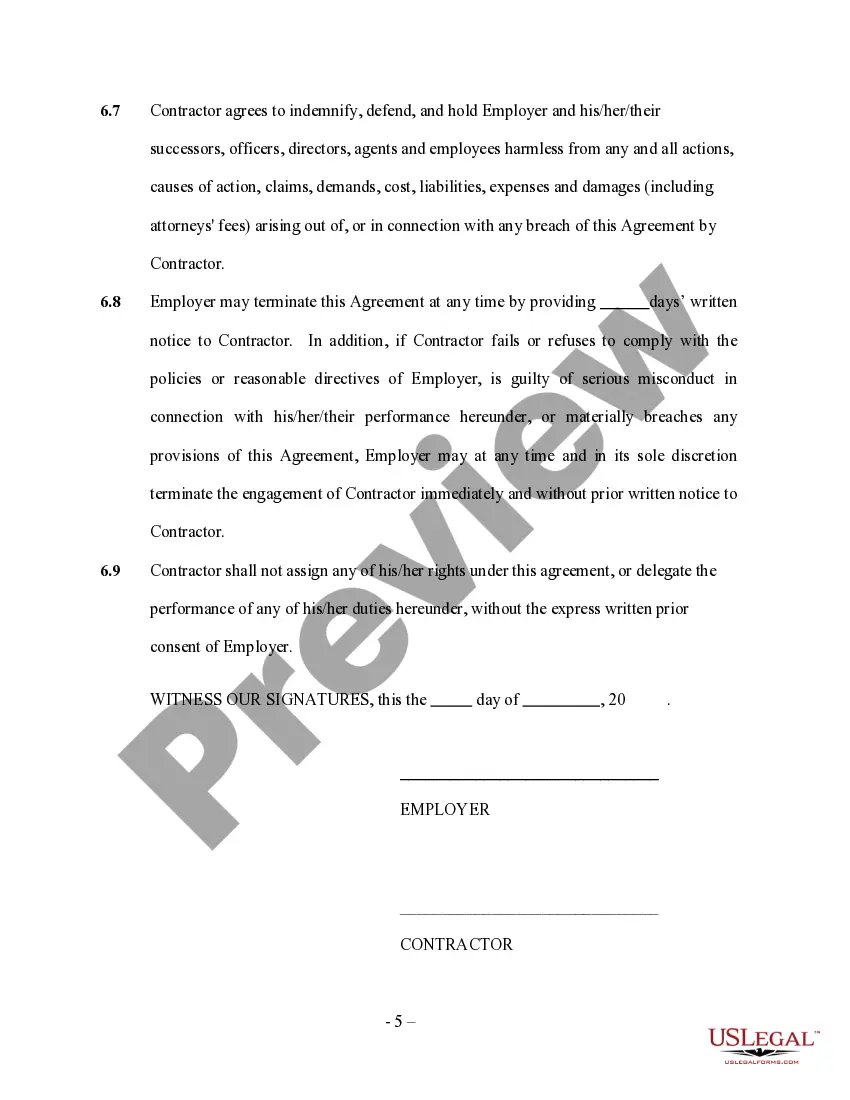
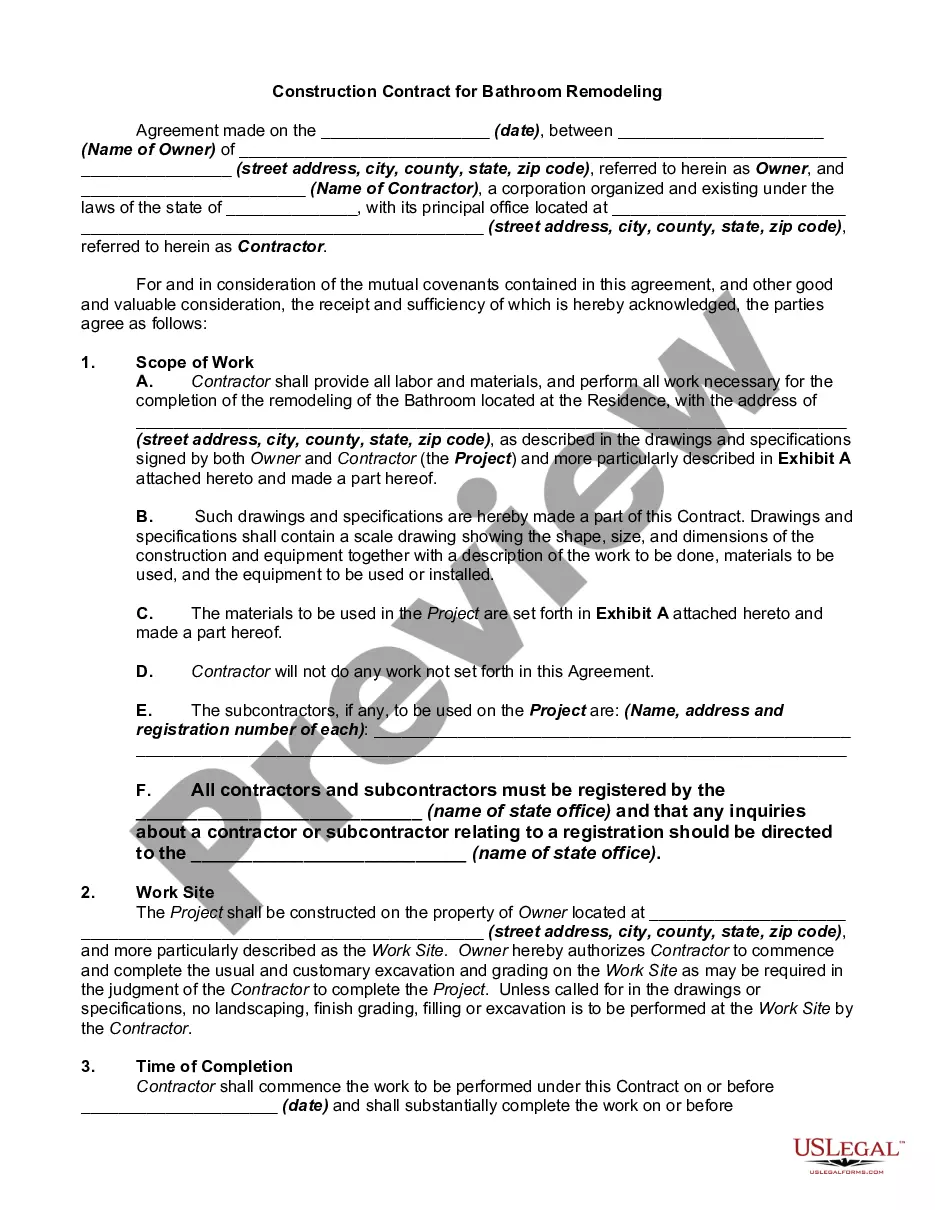
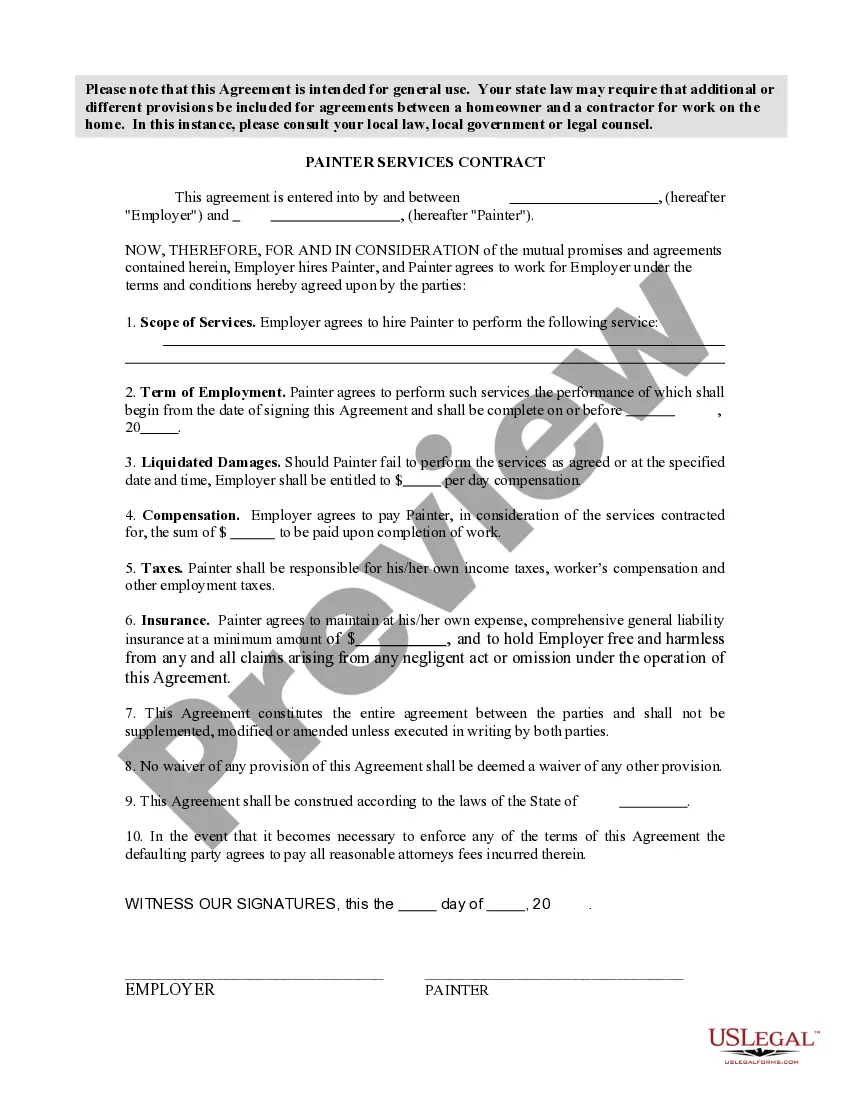
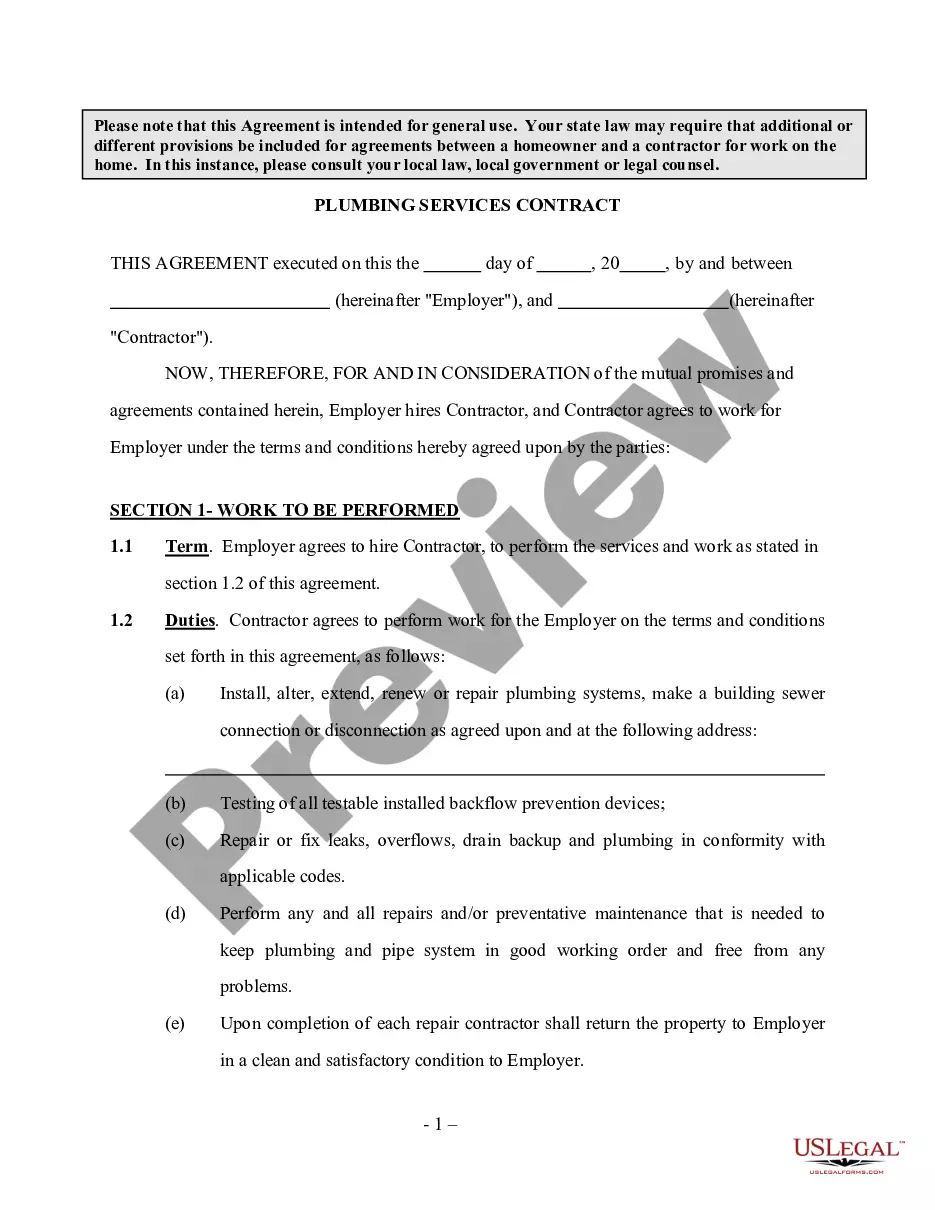
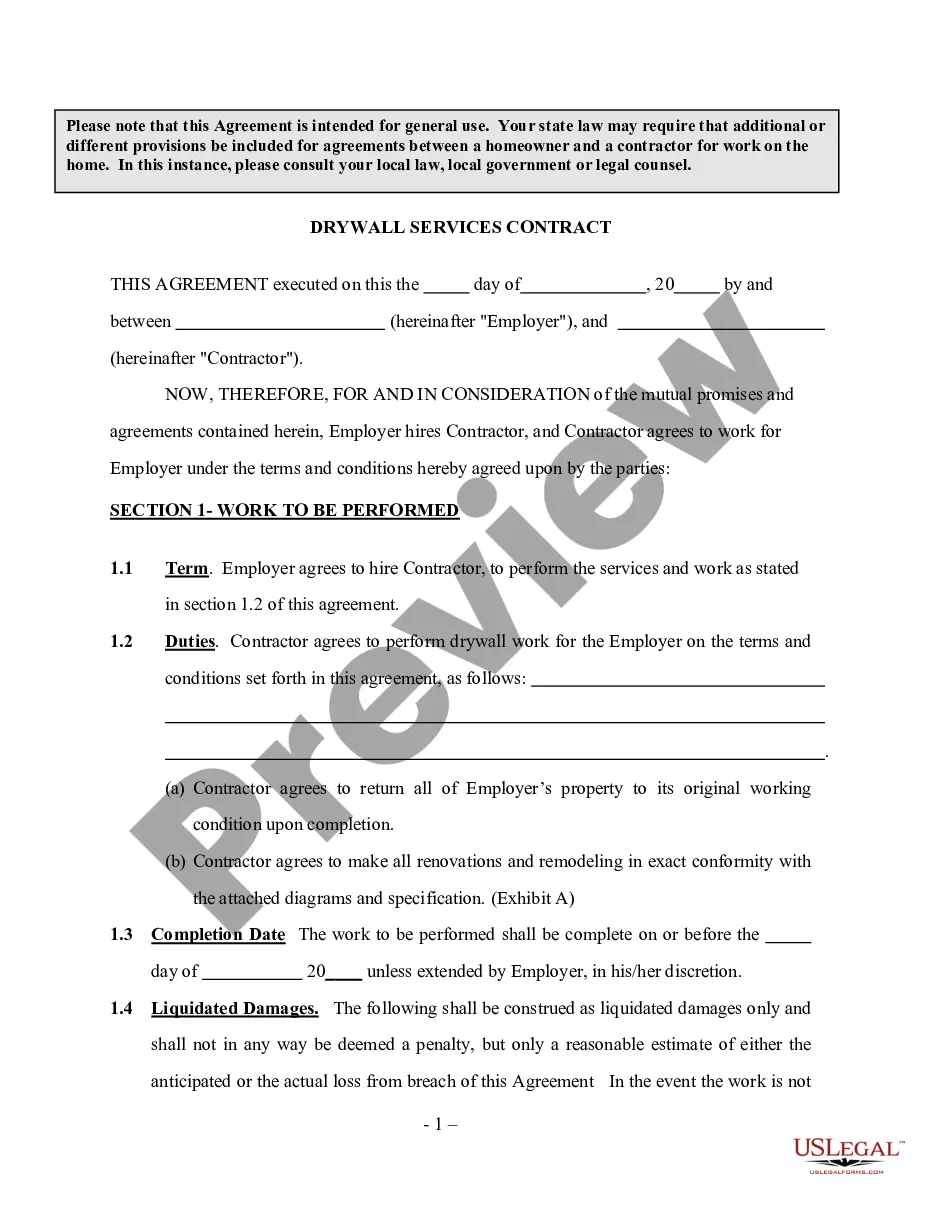
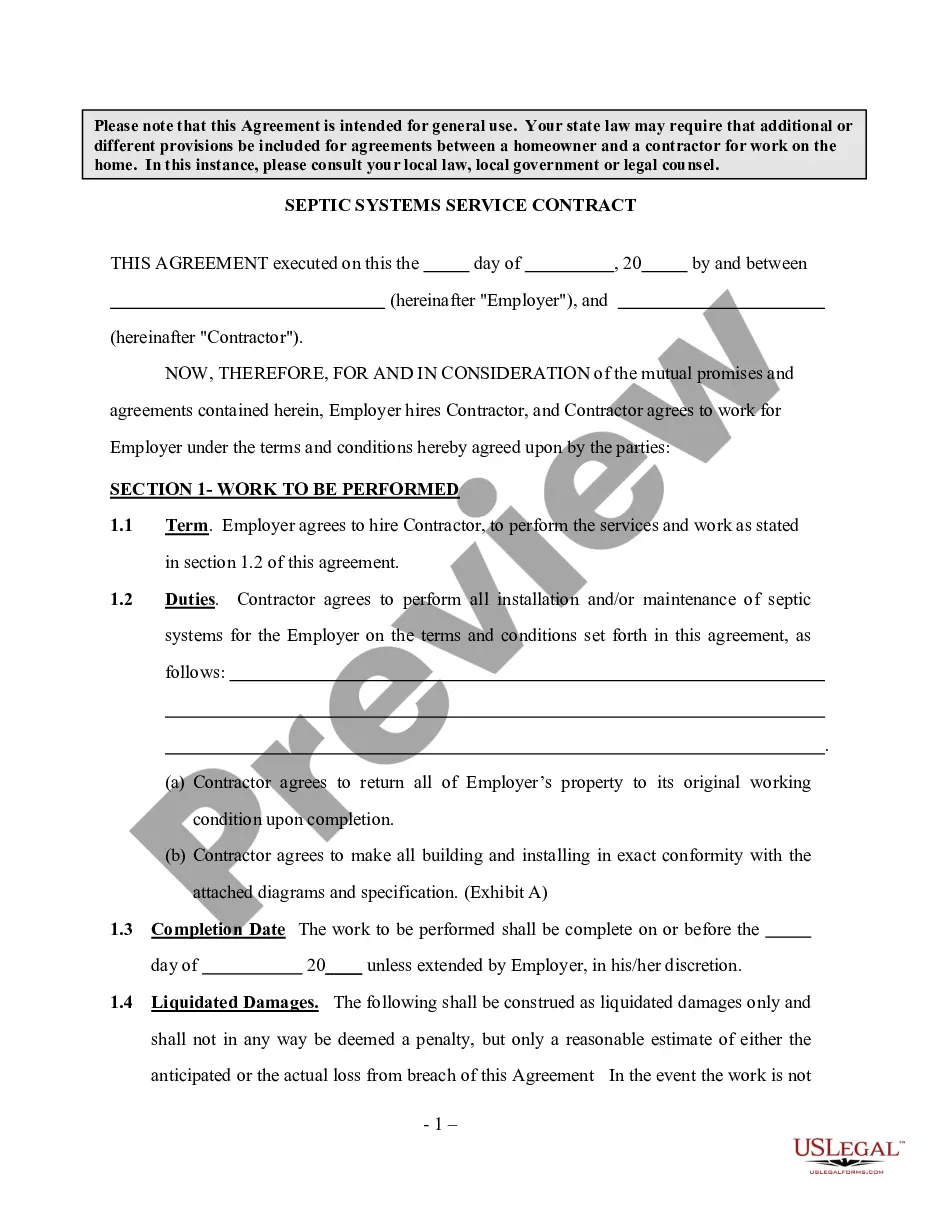
Employer contracts with an independent contractor to install or remodel bathroom as specified and agreed upon in the contract. Please note that this Agreement is intended for general use. Your state law may require that additional or different provisions be included for agreements between a homeowner and a contractor for work on the home. In this instance, please consult your local law, local government or legal counsel.
New York Self-Employed Bathroom Remodeling Services Contract
State:
Multi-State
Control #:
US-INDC-89
Format:
Word;
Rich Text
Instant download
Description
Free preview
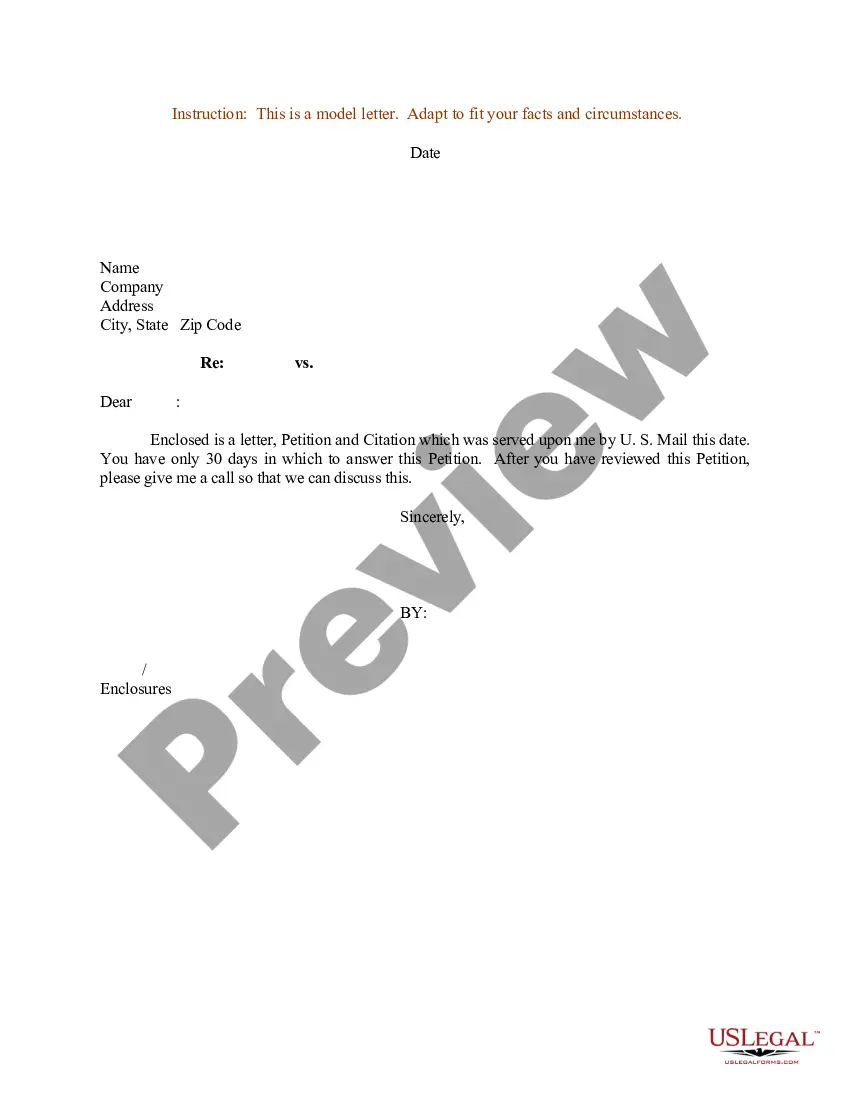



How to fill out Self-Employed Bathroom Remodeling Services Contract?
Are you in the location where you will require documents for possibly business or personal purposes virtually every day.
There are numerous legal document templates accessible online, but finding ones you can trust is not simple.
US Legal Forms provides thousands of form templates, including the New York Self-Employed Bathroom Remodeling Services Contract, which are designed to comply with state and federal requirements.
Once you find the correct form, simply click Purchase now.
Select the pricing plan you prefer, fill in the required information to create your account, and pay for the order using your PayPal or credit card.
- If you are already familiar with the US Legal Forms website and have an account, simply Log In.
- After that, you can download the New York Self-Employed Bathroom Remodeling Services Contract template.
- If you do not have an account and want to start using US Legal Forms, follow these steps.
- Find the form you need and ensure it is for the correct area/state.
- Use the Preview button to review the form.
- Check the details to confirm that you have selected the correct form.
- If the form is not what you're searching for, use the Search box to locate the form that fits your needs.
Form popularity
FAQ
Yes, permits are often required for bathroom remodels in New York State, especially if you are making structural changes or altering plumbing and electrical systems. It's crucial to check local building codes to determine the specific permits needed for your project. To streamline this process, consider referencing guidelines in a New York Self-Employed Bathroom Remodeling Services Contract, which can help outline the necessary steps for compliance.
Creating a remodeling contract involves several key steps. Start by defining the scope of work, including all tasks and materials involved. Then, ensure you include payment terms, timelines, and any necessary permits. Using a New York Self-Employed Bathroom Remodeling Services Contract template from a reliable source like uslegalforms can simplify this process and ensure you cover all legal bases.
Typically, a contractor should aim for a profit margin between 10% to 20% on a bathroom remodel. This margin allows for covering expenses while also providing a reasonable return on investment. When drafting a New York Self-Employed Bathroom Remodeling Services Contract, it's essential to clearly outline costs and expected profits to avoid misunderstandings with clients.
A remodeling contract should include the project description, timelines, payment terms, and a warranty clause. It is crucial to specify the materials and labor involved, along with any required permits. Additionally, addressing dispute resolution methods can protect both parties. To create a comprehensive agreement, consider using the New York Self-Employed Bathroom Remodeling Services Contract available through USLegalForms, which simplifies this essential task.
The 30% rule in remodeling suggests that you should allocate no more than 30% of your home's value to any single renovation project. This guideline helps maintain your property’s overall value and prevents overspending. When planning your bathroom remodel, consider this rule to ensure your investment aligns with market expectations. For formalizing your budget, the New York Self-Employed Bathroom Remodeling Services Contract can help outline financial parameters effectively.
To write up a remodel contract, start by clearly defining the scope of work. Include details such as project timelines, payment schedules, and specific materials to be used. Additionally, ensure both parties understand their responsibilities and any potential penalties for delays. Utilizing the New York Self-Employed Bathroom Remodeling Services Contract template from USLegalForms can streamline this process and ensure compliance with local regulations.
A comprehensive bathroom remodel contract should include project scope, timelines, payment terms, and warranty details. Additionally, it should outline specifications for materials and fixtures, as well as roles and responsibilities for both parties. By using a New York Self-Employed Bathroom Remodeling Services Contract, you can ensure all essential items are covered, which helps prevent misunderstandings. This clarity fosters a smoother remodeling process for everyone involved.
Yes, in New York, you typically need a permit to remodel a bathroom. This requirement ensures that your renovation complies with local building codes and safety regulations. When you create a New York Self-Employed Bathroom Remodeling Services Contract, it's crucial to include language about obtaining the necessary permits. This helps protect both you and your contractor from potential legal issues.