Ohio Transfer on Death Designation Affidavit - TOD from Individual to a Business Entity
About this form
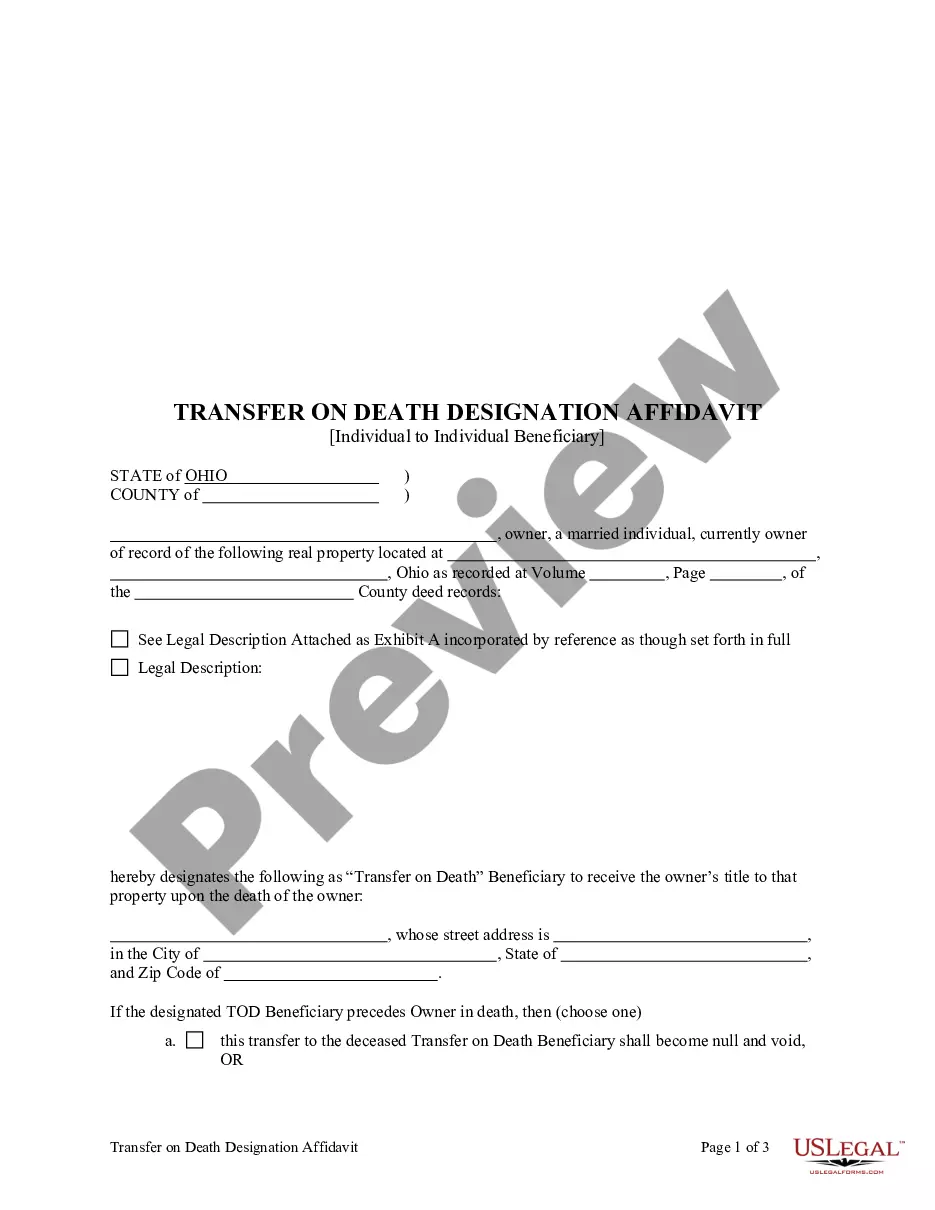
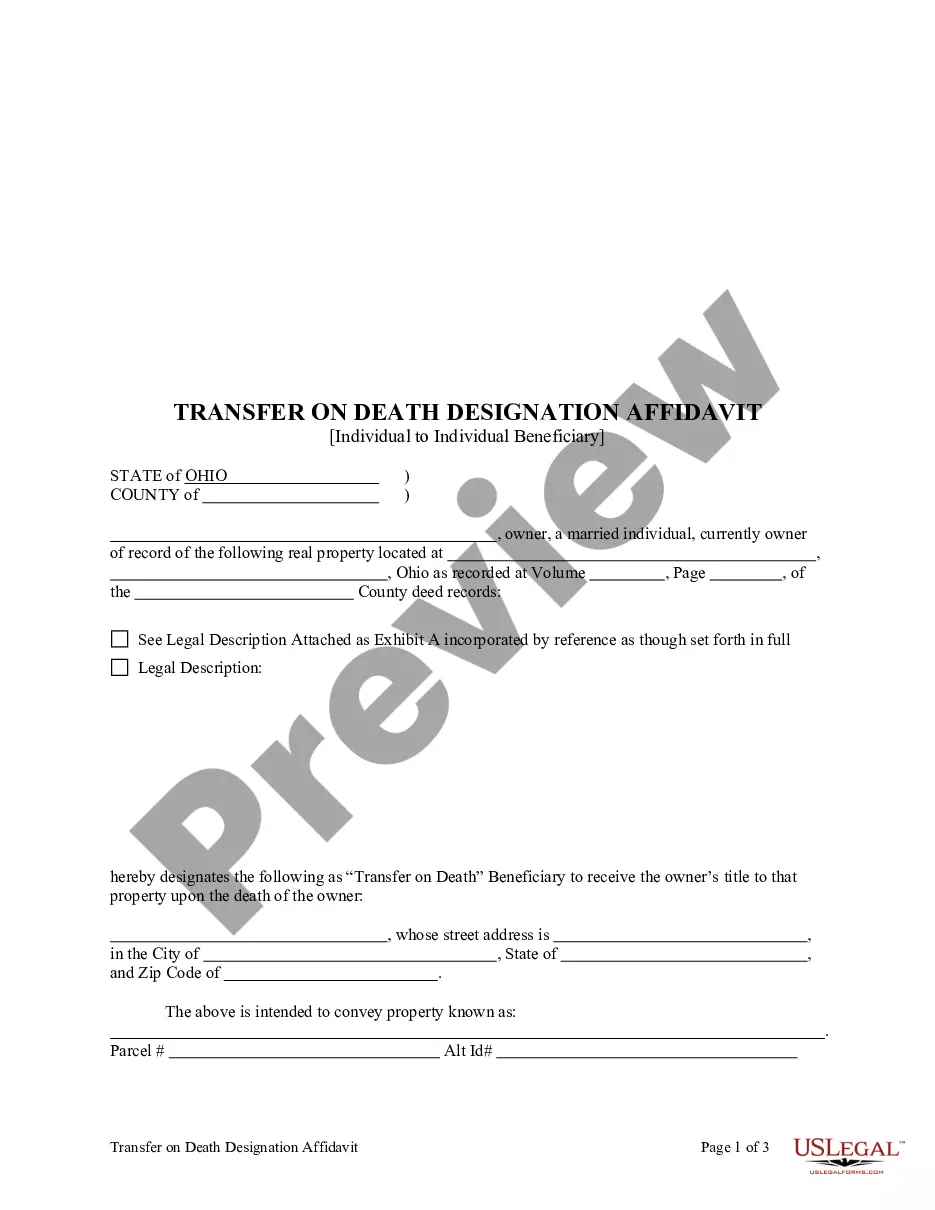
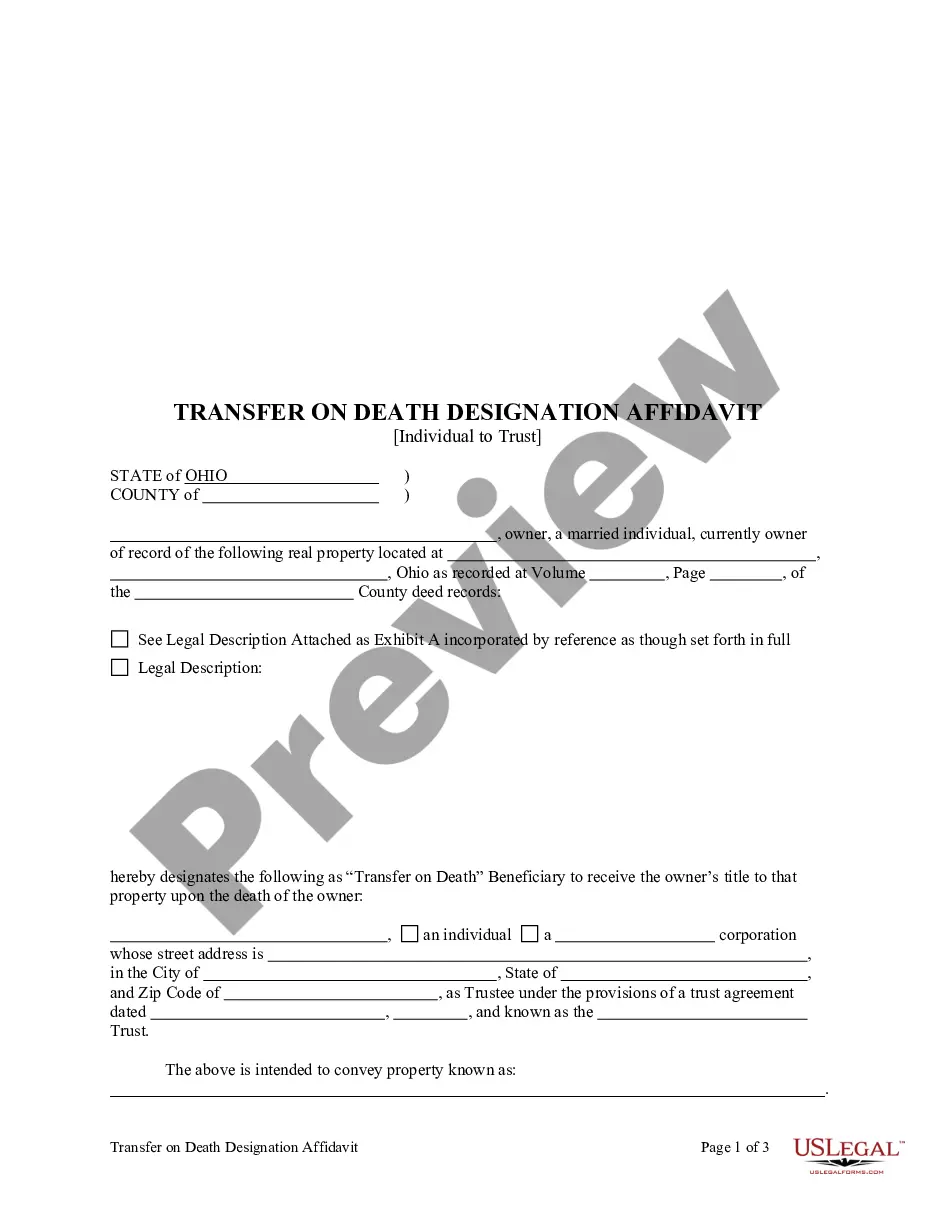
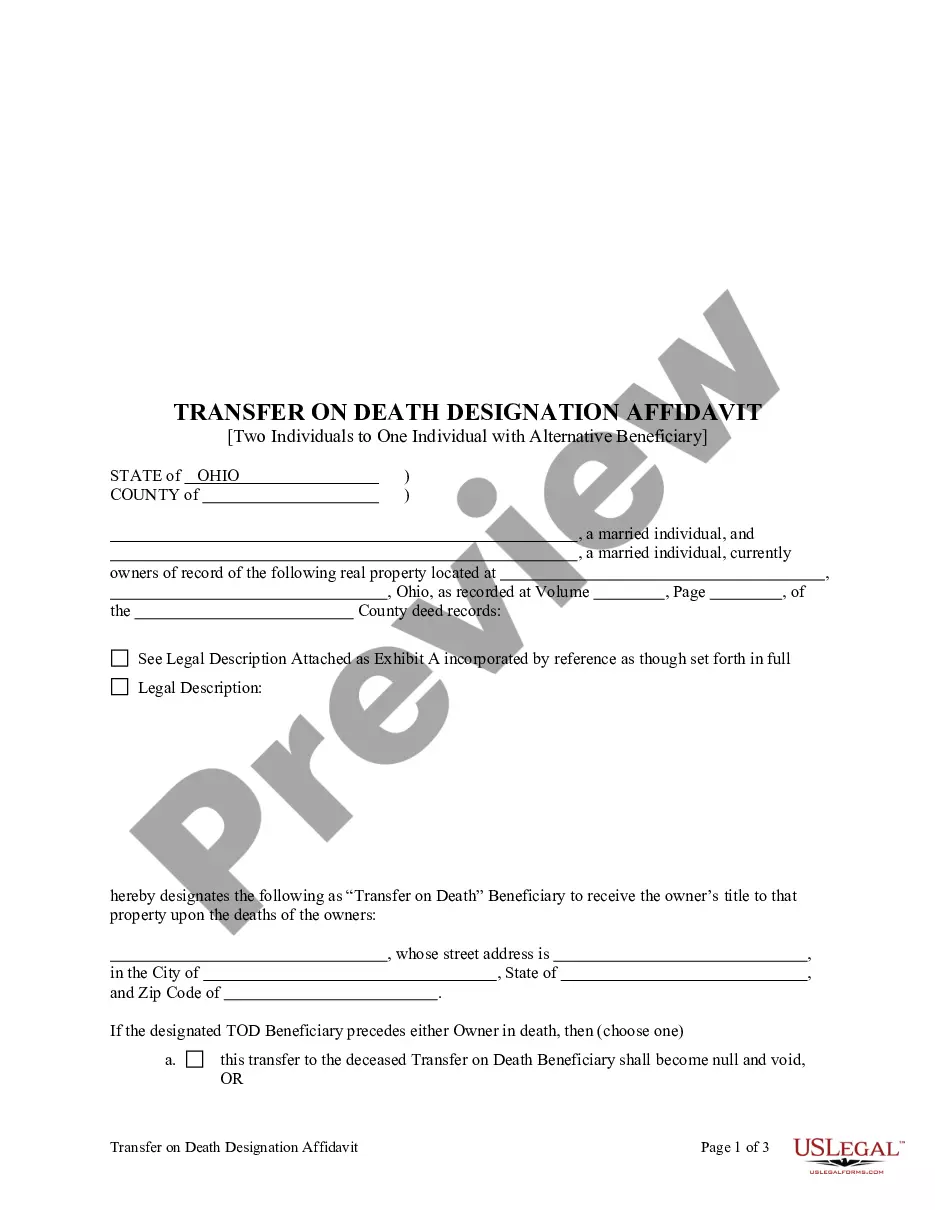
The Transfer on Death Designation Affidavit (TOD) from Individual to a Business Entity is a legal document that allows an individual to designate a business entity as the beneficiary of their property upon their death. This affidavit serves as a means of transferring title without the need for probate, ensuring that the property passes directly to the designated business entity. This form differs from similar documents, as it specifically addresses transfers from individuals to business entities and includes provisions for alternate beneficiaries and revocation techniques.
Key components of this form
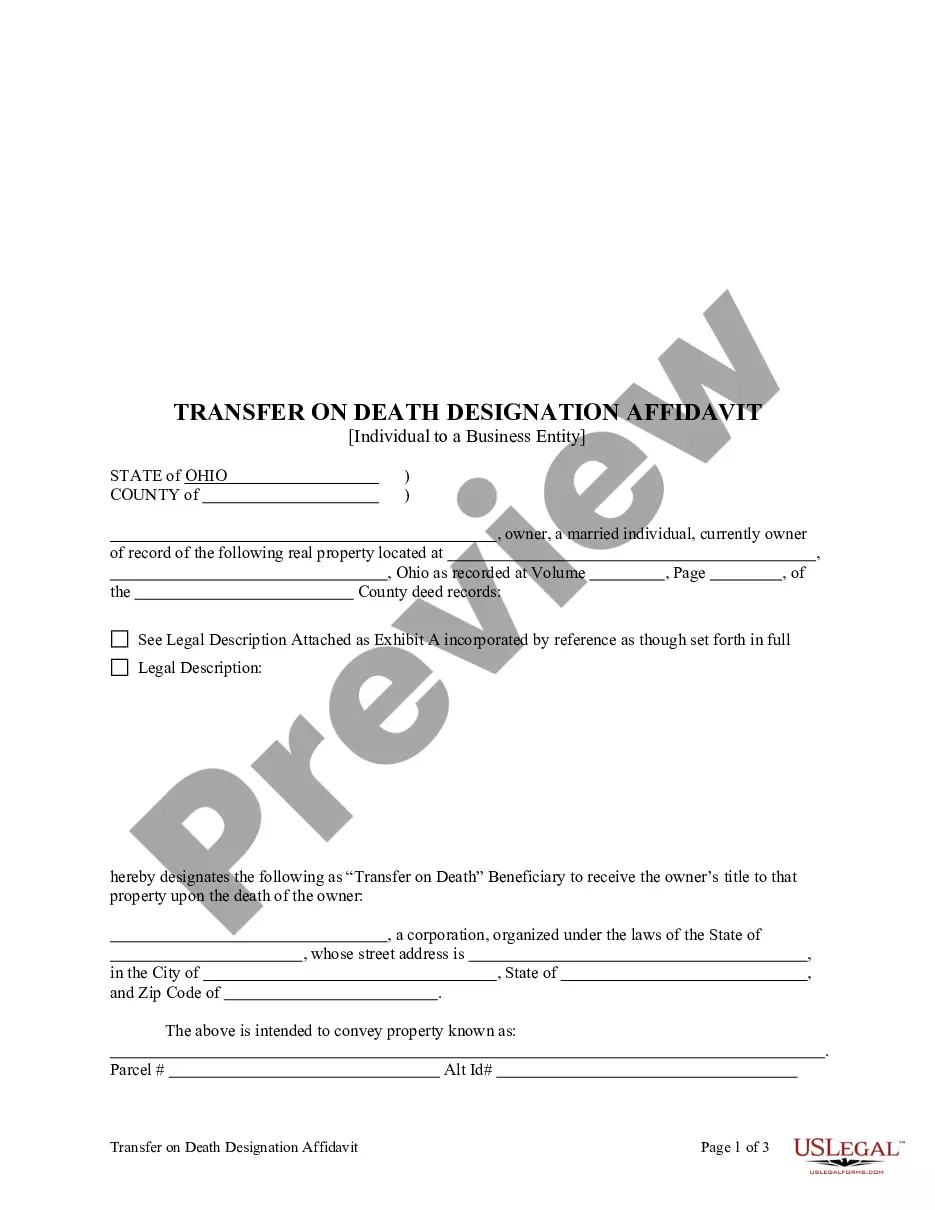
- Identification of the Owner/Affiant and the designated business entity as the beneficiary.
- Details of the property to be transferred, including legal descriptions.
- Provisions for alternate beneficiaries if the primary beneficiary predeceases the owner.
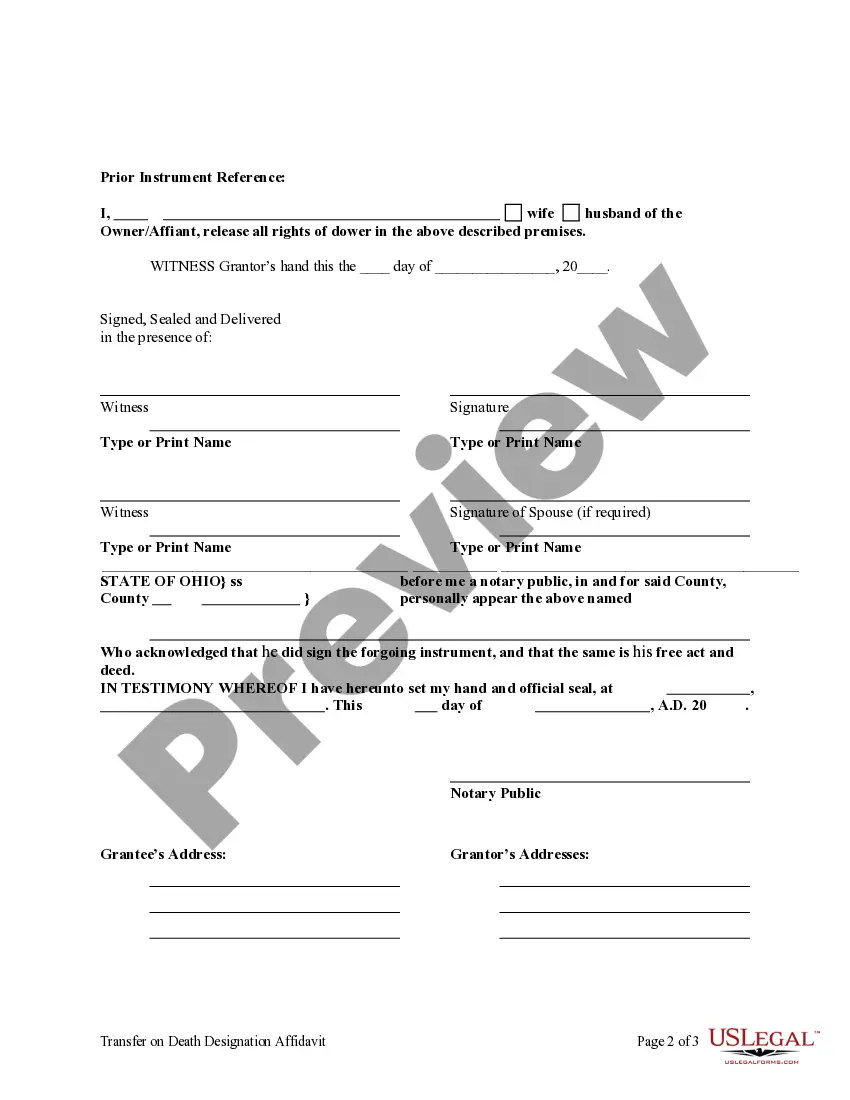
- Signature lines for the Owner/Affiant and a Notary Public.
- Revocation clause allowing the owner to change the beneficiary at any time.

When this form is needed
This form is needed when an individual wants to ensure that their property is automatically transferred to a business entity upon their death. It is particularly useful for business owners looking to streamline the transfer of property without involving probate. You might consider using this form if you own real estate or other significant assets that you wish to pass directly to a business entity rather than through your estate.
Who should use this form
- Individuals who own property and wish to benefit a business entity upon their passing.
- Business owners aiming to simplify property transfer processes.
- Estate planners seeking to provide clarity and efficiency in property transfers.
How to complete this form
- Identify the Owner/Affiant by providing your full name and address.
- Specify the business entity receiving the property and provide its legal name.
- Enter a detailed description of the property to be transferred.
- Designate an alternate beneficiary, if applicable, in case the primary beneficiary cannot inherit.
- Sign the form in the presence of a Notary Public to validate the affidavit.
Does this form need to be notarized?
Yes, this form must be notarized to be legally valid. US Legal Forms provides integrated online notarization. You can complete the notarization process through secure video calls at any time, ensuring convenience without needing to travel.
Get your form ready online
Our built-in tools help you complete, sign, share, and store your documents in one place.
Make edits, fill in missing information, and update formatting in US Legal Forms—just like you would in MS Word.
Download a copy, print it, send it by email, or mail it via USPS—whatever works best for your next step.
Sign and collect signatures with our SignNow integration. Send to multiple recipients, set reminders, and more. Go Premium to unlock E-Sign.
If this form requires notarization, complete it online through a secure video call—no need to meet a notary in person or wait for an appointment.
We protect your documents and personal data by following strict security and privacy standards.

Make edits, fill in missing information, and update formatting in US Legal Forms—just like you would in MS Word.

Download a copy, print it, send it by email, or mail it via USPS—whatever works best for your next step.

Sign and collect signatures with our SignNow integration. Send to multiple recipients, set reminders, and more. Go Premium to unlock E-Sign.

If this form requires notarization, complete it online through a secure video call—no need to meet a notary in person or wait for an appointment.

We protect your documents and personal data by following strict security and privacy standards.
Mistakes to watch out for
- Failing to accurately describe the property may lead to disputes later.
- Not obtaining a notarization, which is essential for the affidavitâs validity.
- Neglecting to name an alternate beneficiary, which could result in complications if the primary beneficiary passes away.
Benefits of completing this form online
- Convenient access to the form allows for easy completion at your own pace.
- Edit and customize the form according to your specific needs without hassle.
- Secure and reliable templates designed by licensed attorneys ensure legal compliance.
What to keep in mind
- The Transfer on Death Designation Affidavit allows direct property transfer to a business entity after the owner's death.
- Proper completion requires accurate property details and notarization.
- It's essential to consider alternate beneficiaries to avoid complications.
Looking for another form?
Form popularity
FAQ
This form is a Transfer on Death designation affidavit that lets an individual name a business entity as the beneficiary of their property at death, bypassing probate. It specifies the owner and business entity, property details, alternate beneficiaries, and includes a revocation clause and notarization.
Yes. This TOD from Individual to a Business Entity form is designed to designate a business entity, such as an LLC, as the beneficiary of property after the owner's death. It names the Owner/Affiant and the business entity, describes the property, allows alternate beneficiaries, and requires a signature and Notary Public.
Ohio uses a Transfer on Death designation affidavit to pass property to a beneficiary, including a business entity, at death. This form is designed for that purpose and emphasizes avoiding probate, identifying the owner and the beneficiary, property details, any alternates, and a revocation option with a Notary Public signature.
Yes. This form supports designating a business entity, including an LLC, as the TOD beneficiary. It requires identifying the Owner/Affiant and the LLC, detailing the property, providing alternate beneficiaries, and including signature lines and a Notary Public; the revocation clause allows you to change the beneficiary later.
Using this form, the Owner/Affiant designates the LLC as the TOD beneficiary. Upon death, the property passes directly to the LLC, bypassing probate. The document requires property details, alternate beneficiaries, and a revocation clause, plus signatures and notarization; consult an attorney to ensure all assets are correctly covered.
This form uniquely designates a business entity as the beneficiary, rather than a person, and includes provisions for alternate beneficiaries and a revocation clause. It also requires owner and Notary signatures. These elements distinguish it from TODs aimed at individuals.