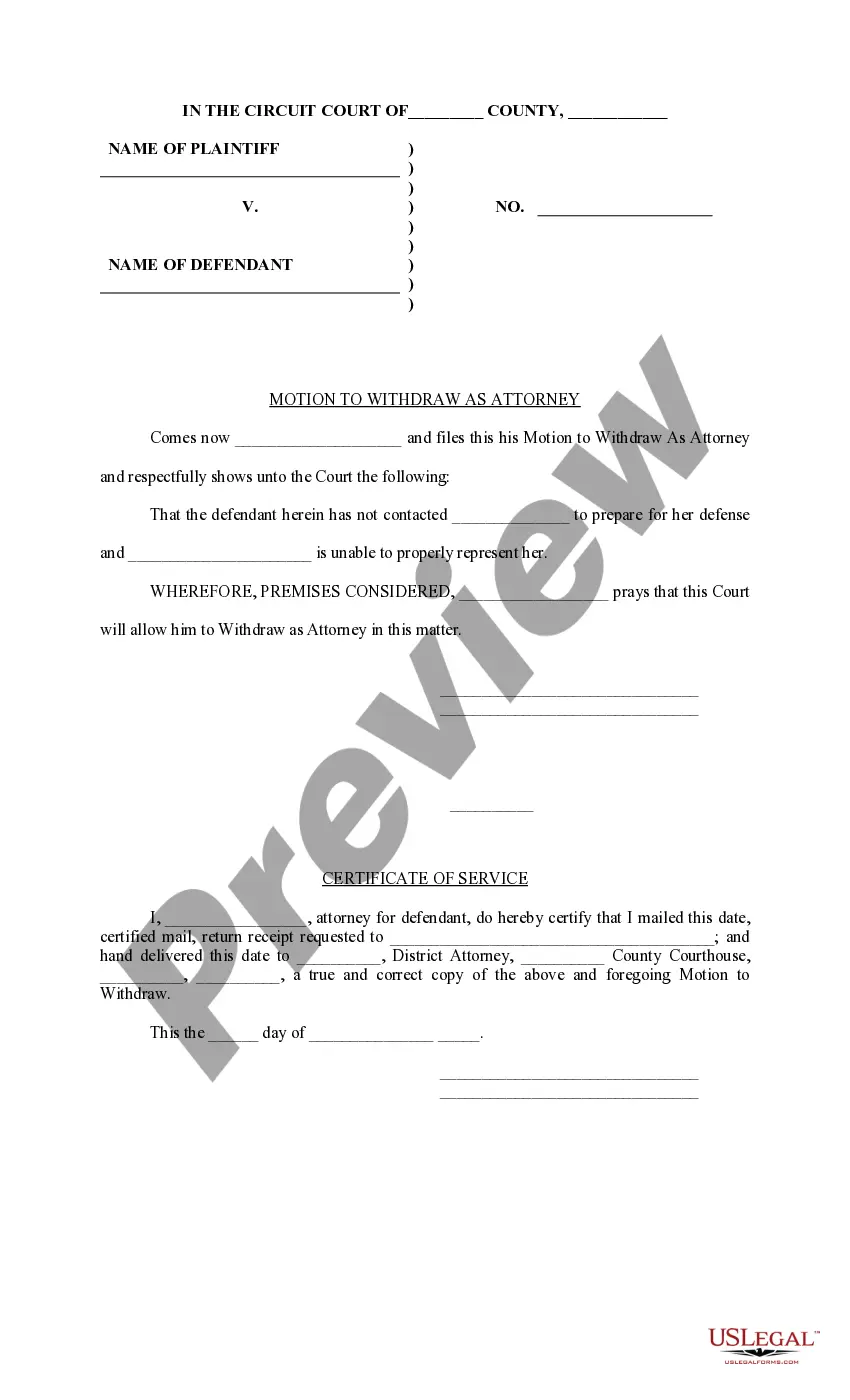
Ohio Motion to Withdraw as Attorney
Description
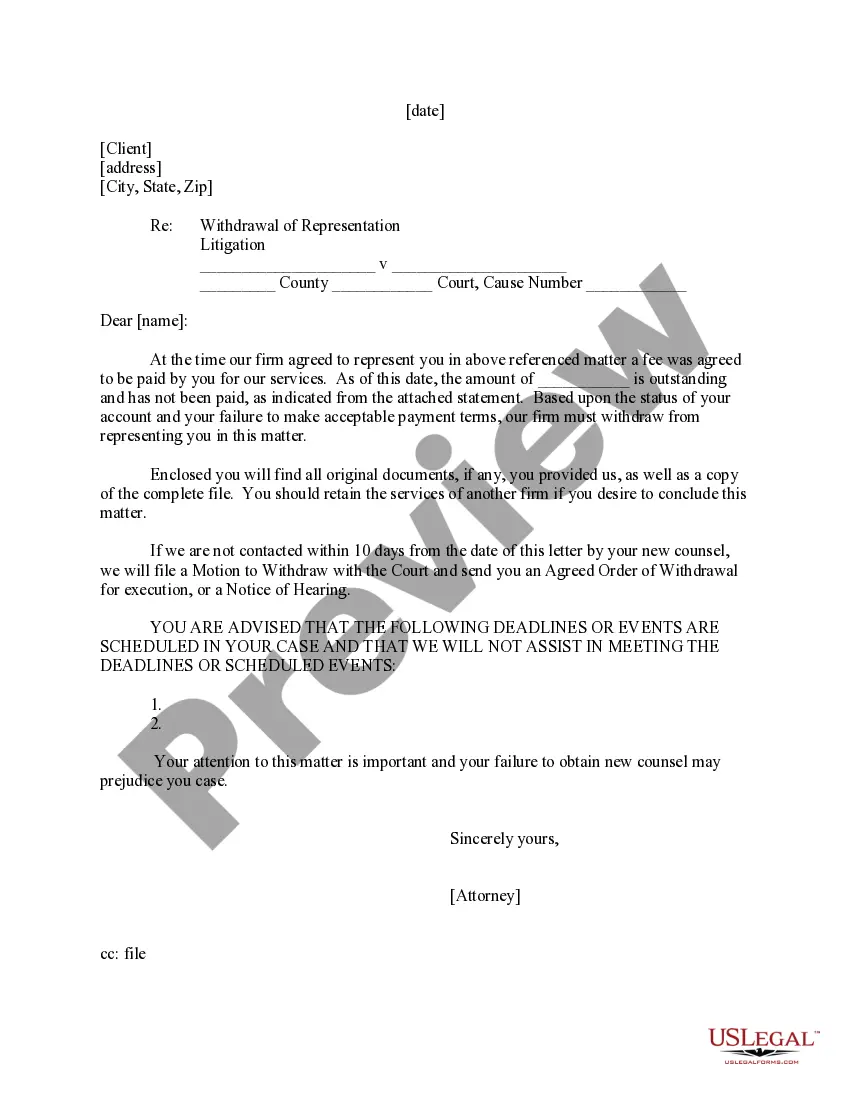
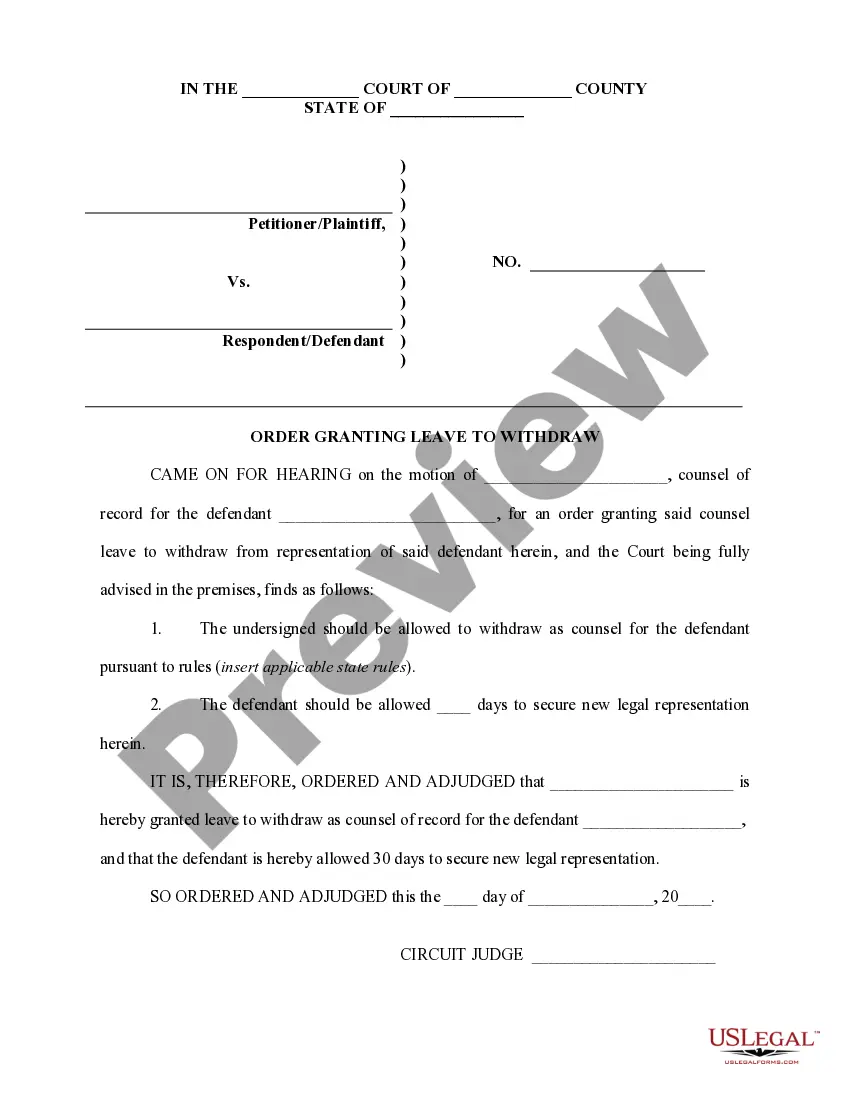
Get your form ready online
Our built-in tools help you complete, sign, share, and store your documents in one place.
Make edits, fill in missing information, and update formatting in US Legal Forms—just like you would in MS Word.
Download a copy, print it, send it by email, or mail it via USPS—whatever works best for your next step.
Sign and collect signatures with our SignNow integration. Send to multiple recipients, set reminders, and more. Go Premium to unlock E-Sign.
If this form requires notarization, complete it online through a secure video call—no need to meet a notary in person or wait for an appointment.
We protect your documents and personal data by following strict security and privacy standards.

Make edits, fill in missing information, and update formatting in US Legal Forms—just like you would in MS Word.

Download a copy, print it, send it by email, or mail it via USPS—whatever works best for your next step.

Sign and collect signatures with our SignNow integration. Send to multiple recipients, set reminders, and more. Go Premium to unlock E-Sign.

If this form requires notarization, complete it online through a secure video call—no need to meet a notary in person or wait for an appointment.

We protect your documents and personal data by following strict security and privacy standards.
Looking for another form?
How to fill out Motion To Withdraw As Attorney?
US Legal Forms - one of the largest collections of legal documents in the United States - offers a broad range of legal paper templates that you can obtain or print. By utilizing the website, you will find a vast selection of forms for commercial and personal needs, organized by categories, states, or keywords. You can locate the latest versions of forms such as the Ohio Motion to Withdraw as Attorney in just a few minutes.
If you already have a subscription, Log In and obtain the Ohio Motion to Withdraw as Attorney from the US Legal Forms library. The Download button will be visible on every form you view. You can access all previously downloaded forms in the My documents section of your account.
If you wish to use US Legal Forms for the first time, here are simple instructions to assist you in getting started: Ensure you have selected the correct form for the city/state. Click on the Review button to check the form’s details. Review the form summary to confirm you have chosen the right one. If the form doesn’t meet your requirements, utilize the Search field at the top of the screen to find one that does. If you are satisfied with the form, confirm your selection by clicking on the Purchase now button. Then, select your preferred payment method and provide your information to sign up for an account.
Avoid altering or deleting any HTML tags. Only synonymize plain text outside of the HTML tags.
- Complete the transaction. Use a Visa or Mastercard or PayPal account to finalize the purchase.
- Select the format and download the form to your device.
- Make modifications. Fill out, edit, print, and sign the downloaded Ohio Motion to Withdraw as Attorney.
- Each template you added to your account has no expiration date and is yours indefinitely. Therefore, if you wish to download or print another copy, simply navigate to the My documents section and click on the form you need.
- Access the Ohio Motion to Withdraw as Attorney through US Legal Forms, the most comprehensive collection of legal document templates.
- Utilize a vast array of professional and state-specific templates that meet your business or personal requirements and needs.
Form popularity
FAQ
The Rules of Professional Conduct of the State Bar of California (?Rules of Conduct?) specify three circumstances under which an attorney must terminate a client relationship: (1) where the attorney knows or reasonably should know that a client is bringing an action, conducting a defense, asserting a position in ...
Rule 1.16 requires that as part of the termination of representation, the lawyer reasonably protect the client's interests by giving due notice, allowing reasonable time to employ other counsel, and returning the client file. This applies regardless of whether the client has paid the lawyer.
The confidentiality rule, for example, applies not only to matters communicated in confidence by the client but also to all information relating to the representation, whatever its source. A lawyer may not disclose such information except as authorized or required by the Ohio Rules of Professional Conduct or other law.
Rule 1.6(a) generally corresponds to DR 4-101(A) by protecting the confidences and secrets of a client under the rubric of "information relating to the representation." To clarify that this includes privileged information, the rule is amended to add the phrase, "including information protected by the attorney-client ...
A motion to withdraw is a procedure used to ask a court's permission to take back or ?withdraw? some step the party or lawyer has taken.
This rule is to provide all parties in a criminal case with the information necessary for a full and fair adjudication of the facts, to protect the integrity of the justice system and the rights of defendants, and to protect the well-being of witnesses, victims, and society at large.
Withdrawal is also permitted if the lawyer's services were misused in the past even if that would materially prejudice the client. The lawyer may also withdraw where the client insists on taking action that the lawyer considers repugnant or with which the lawyer has a fundamental disagreement.
Key Takeaways. A notice of withdrawal is a notice a depositor gives their bank that they will be withdrawing funds from their account. Banks require notice of withdrawals for time deposits, negotiable orders of withdrawals (NOWs), and sometimes for savings accounts.
Withdrawal of charges refers to the removal of charges by the person who brought them, such as a prosecutor. This can happen when the prosecutor decides not to pursue the case any further. Another term for this is nolle prosequi, which is a legal notice that a lawsuit or prosecution has been abandoned.
The other case when something is withdrawn in court is when a decision is made to remove the charges entirely for someone that is accused of committing a crime. In other words, this isn't simply removing an objectionable line of questioning, this is erasing the crime itself.