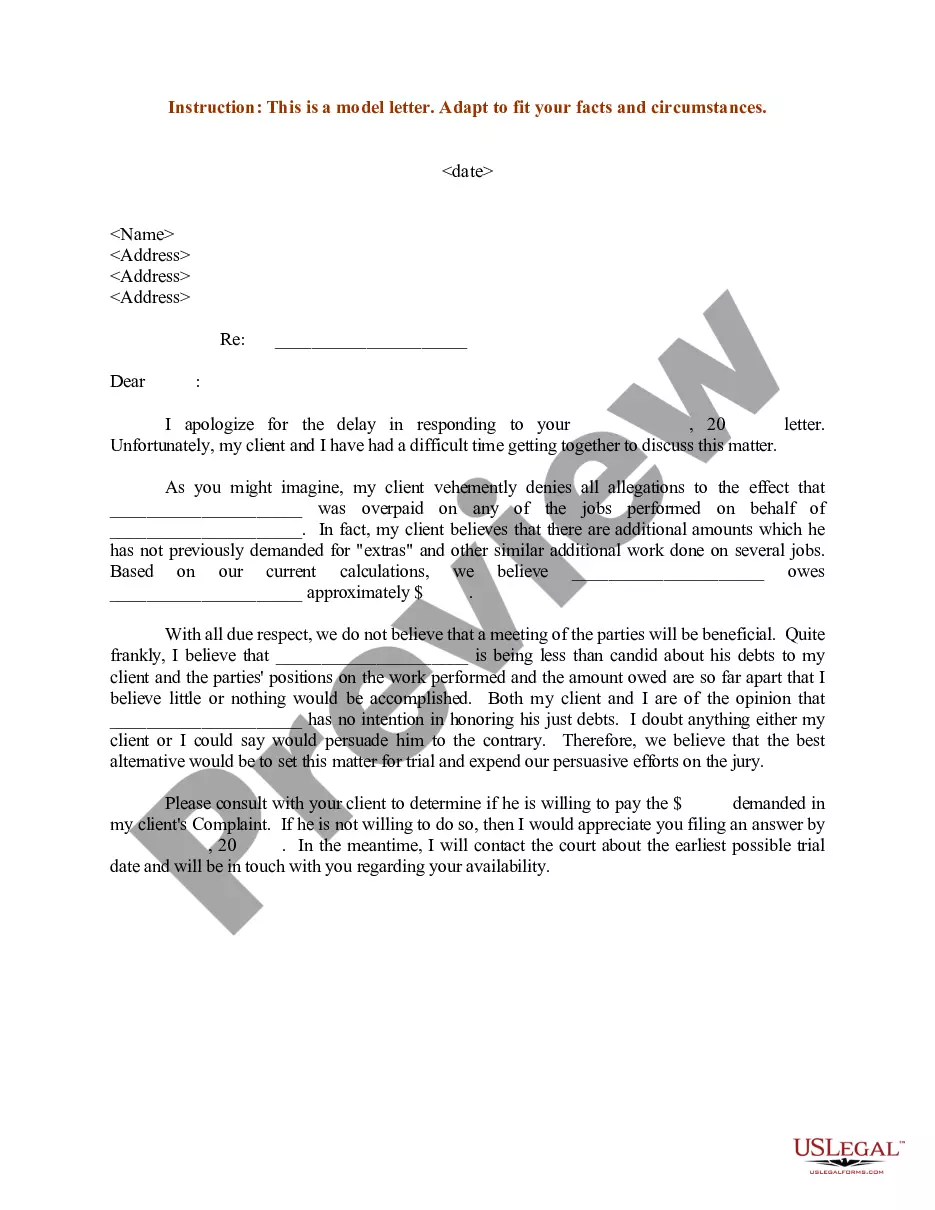
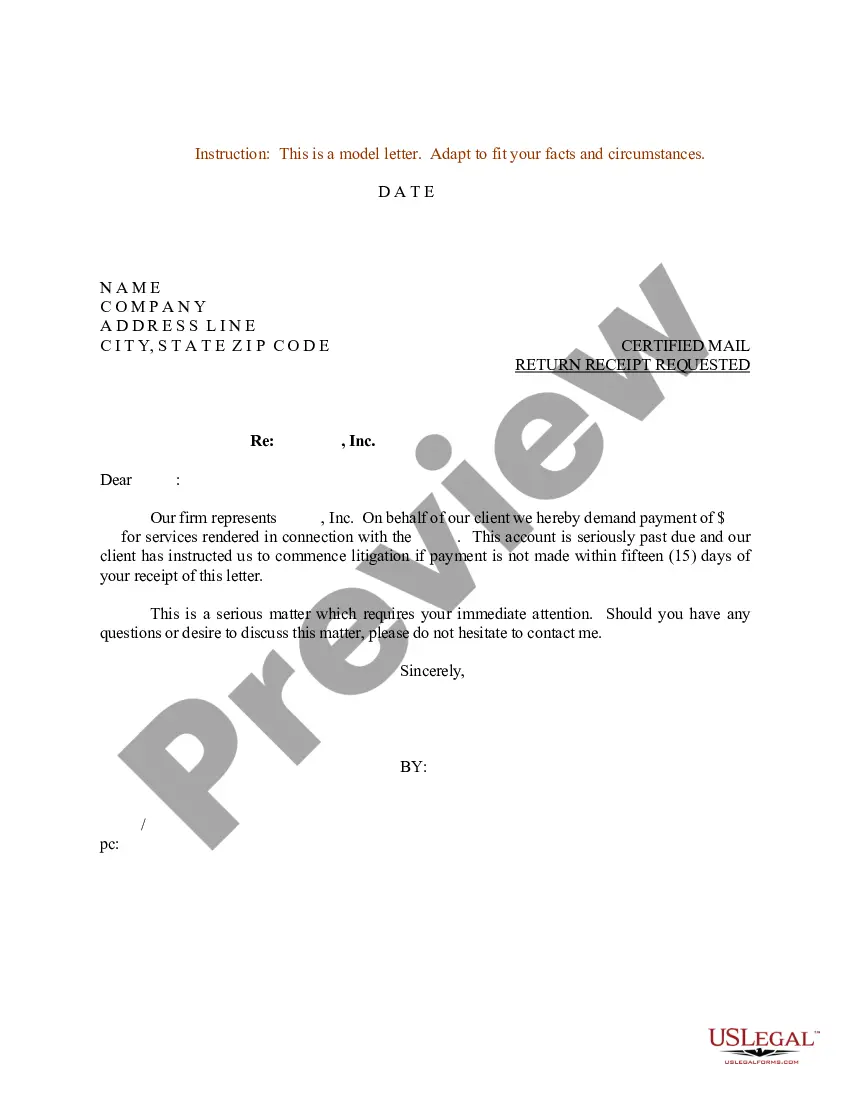
Ohio Sample Letter for Alleged Payments Due from Defendant
Description

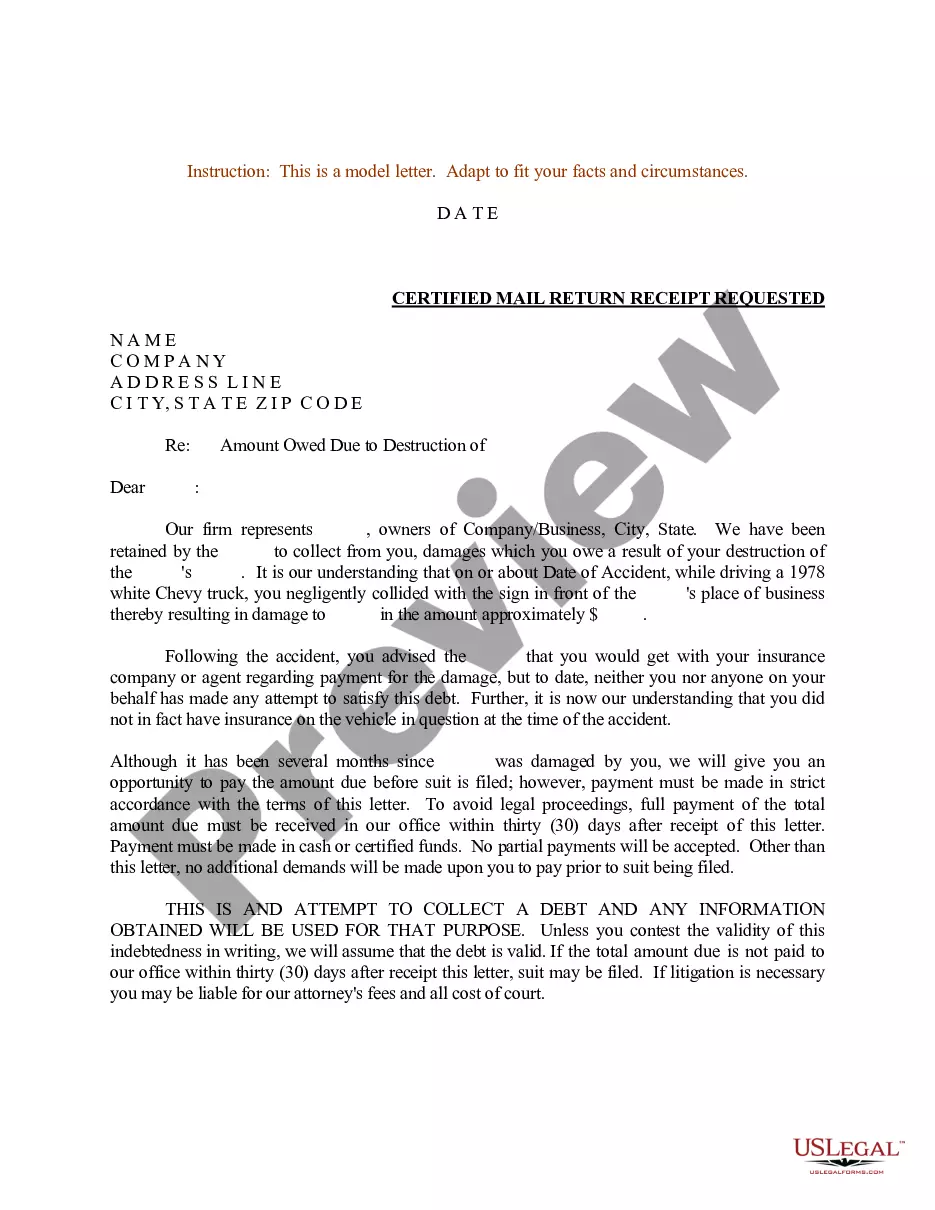
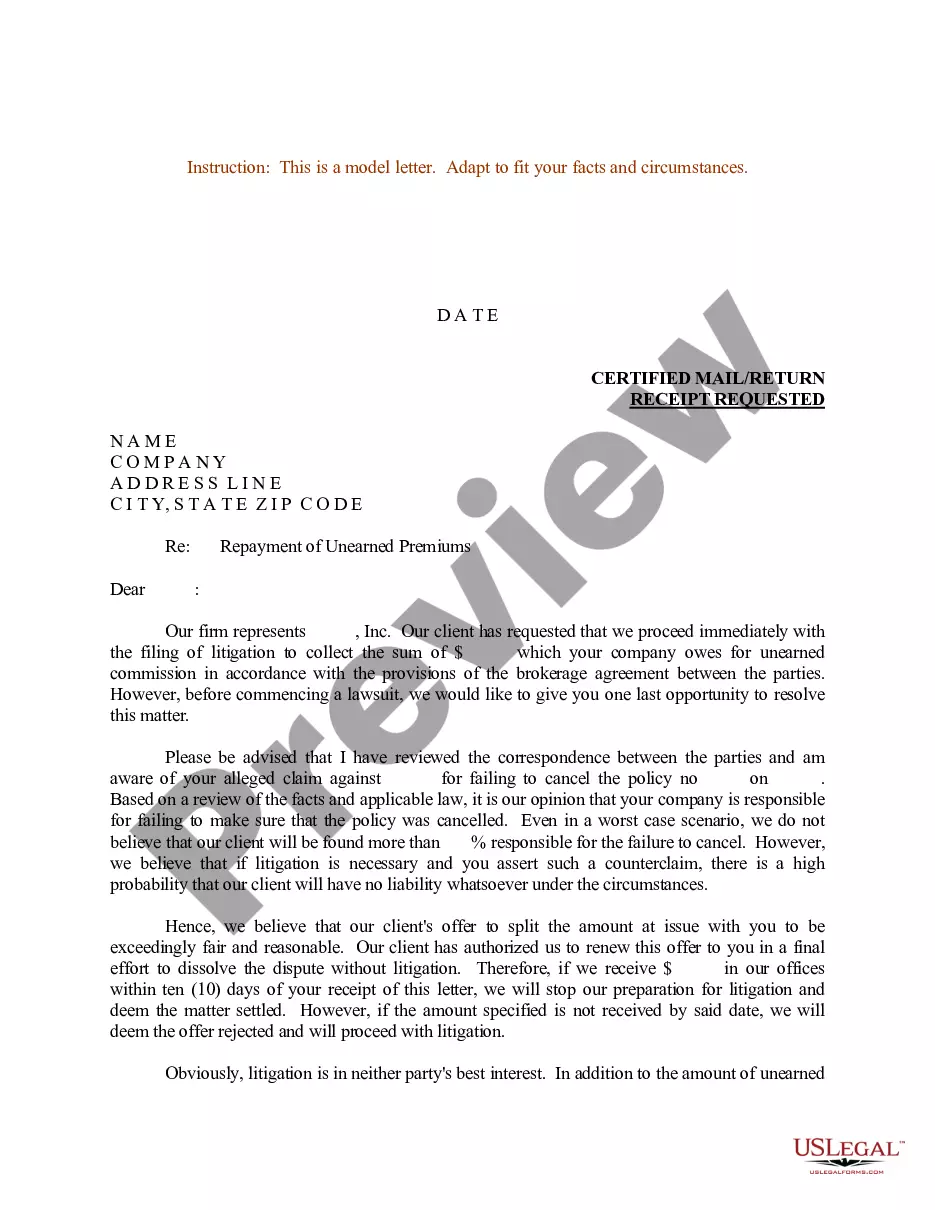
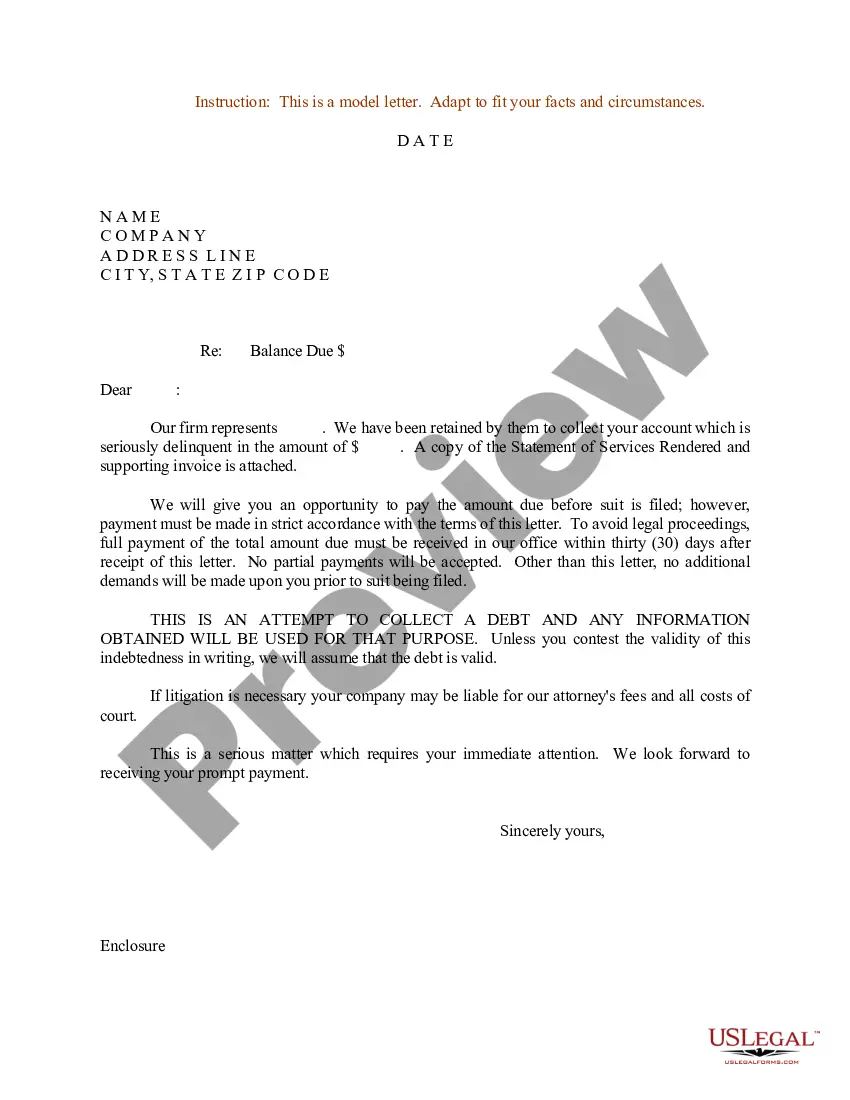
How to fill out Sample Letter For Alleged Payments Due From Defendant?
Selecting the correct legitimate document design can be challenging. Clearly, there is a multitude of templates accessible online, but how do you locate the appropriate type that you require? Utilize the US Legal Forms website. The service offers a plethora of templates, including the Ohio Sample Letter for Alleged Payments Due from Defendant, which can be utilized for both business and personal purposes. All of the forms are reviewed by experts and comply with federal and state regulations.
If you are already registered, Log In to your account and click on the Download button to obtain the Ohio Sample Letter for Alleged Payments Due from Defendant. Use your account to browse through the legitimate forms you have previously obtained. Visit the My documents section of your account to get another copy of the document you need.
If you are a new user of US Legal Forms, here are simple instructions you can follow: First, ensure you have selected the correct form for your city/region. You can review the form using the Preview option and read the form details to confirm it is the right one for you. If the form does not suit your needs, use the Search area to find the appropriate form. Once you are certain that the form is suitable, click on the Get now button to acquire the form. Choose the pricing plan you wish and enter the required information. Create your account and complete the transaction using your PayPal account or credit card. Select the file format and download the legitimate document design to your device. Complete, edit, print, and sign the received Ohio Sample Letter for Alleged Payments Due from Defendant.
- US Legal Forms is the largest repository of legal forms where you can find various document templates.
- Use the service to download professionally crafted documents that fulfill state requirements.
- Access a wide range of templates for diverse legal needs.
- Find forms that are tailored to specific locations and purposes.
- Ensure compliance with legal standards with every document you acquire.
- Streamline the process of obtaining necessary legal paperwork.
Form popularity
FAQ
In Ohio, a defendant must respond within 28 days after being served the summons and complaint or after completion of service by publi- cation (Ohio Civ. R. Rule 12).
Ohio Civil Rule 56(C) requires that documents submitted in defense of a motion for summary judgment be properly sworn, certified, or authenticated by affidavit, or such evidence may not be considered in determining whether an issue of fact exists.
Civ. R. 37(F) provides factors for judges to consider when a party seeks sanctions against an opponent who has lost potentially relevant electronically stored information. This rule does not attempt to address the larger question of when the duty to preserve electronically stored information is triggered.
When a party against whom a judgment for affirmative relief is sought has failed to plead or otherwise defend as provided by these rules, the party entitled to a judgment by default shall apply in writing or orally to the court therefor; but no judgment by default shall be entered against a minor or an incompetent ...
R. 52. When questions of fact are tried by the court without a jury, judgment may be general for the prevailing party unless one of the parties in writing requests otherwise before the entry of judgment pursuant to Civ.
Except as to a party against whom a judgment is entered by default, every final judgment shall grant the relief to which the party in whose favor it is rendered is entitled, even if the party has not demanded the relief in the pleadings.
Rule 4.1(A) is subdivided and amended to permit the clerk to make service of process using a commercial carrier service to make delivery by any method requiring a signed receipt. A "signed receipt" includes the return and filing of an electronic image of the signature.
57. The procedure for obtaining a declaratory judgment pursuant to Chapter 2721 of the Revised Code shall be in ance with these rules. The existence of another adequate remedy does not preclude a judgment for declaratory relief in cases where it is appropriate.