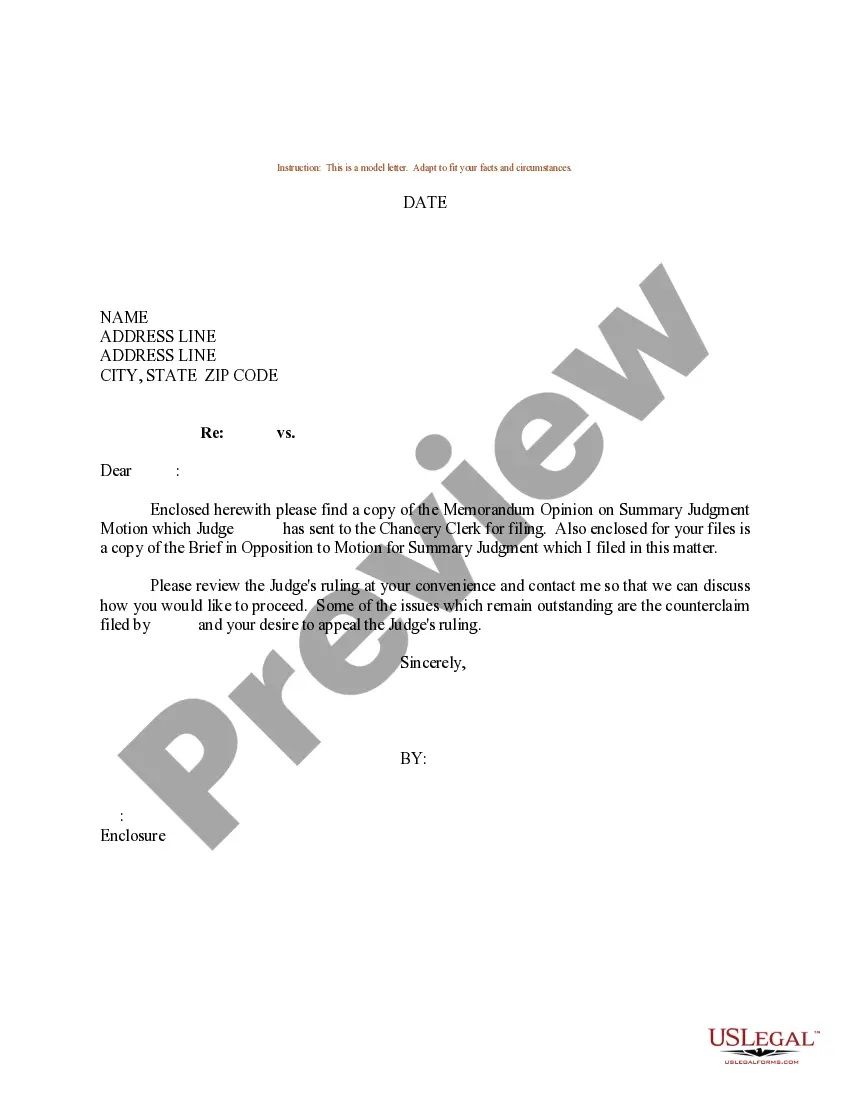
Ohio Sample Letter regarding Memorandum Opinion on Summary Judgment Motion
Description
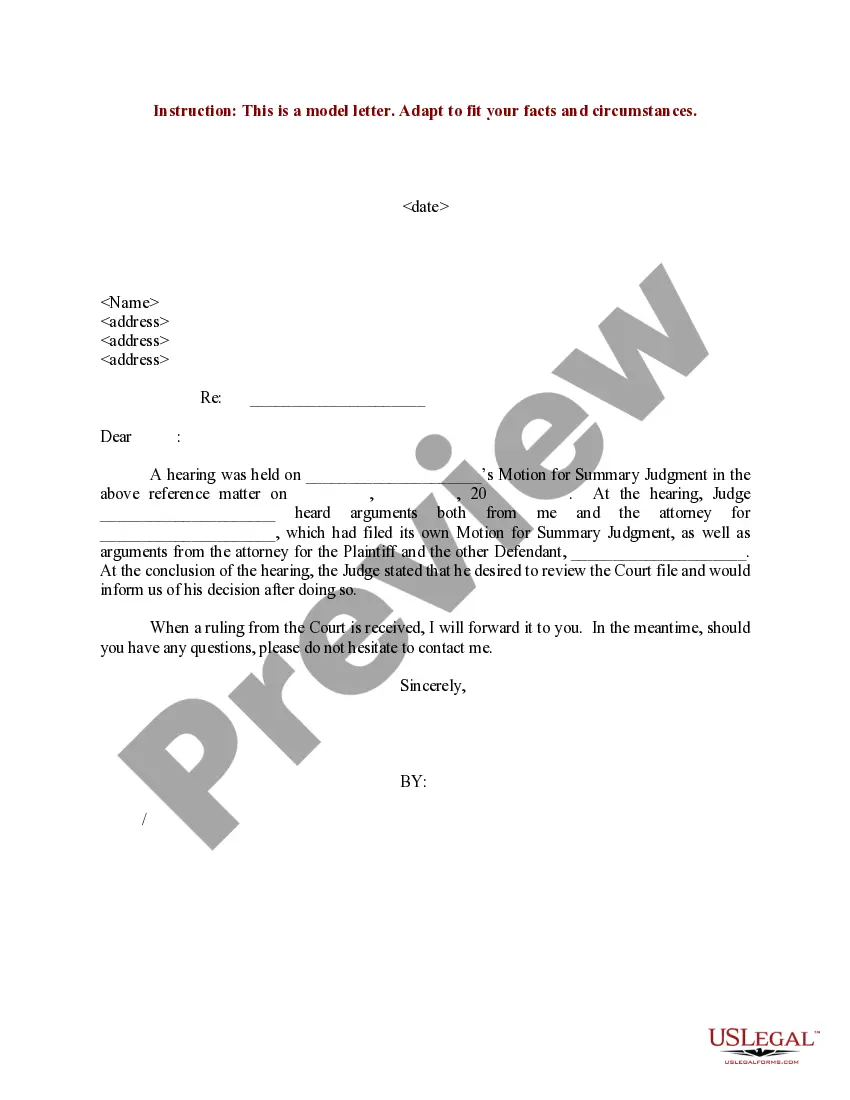
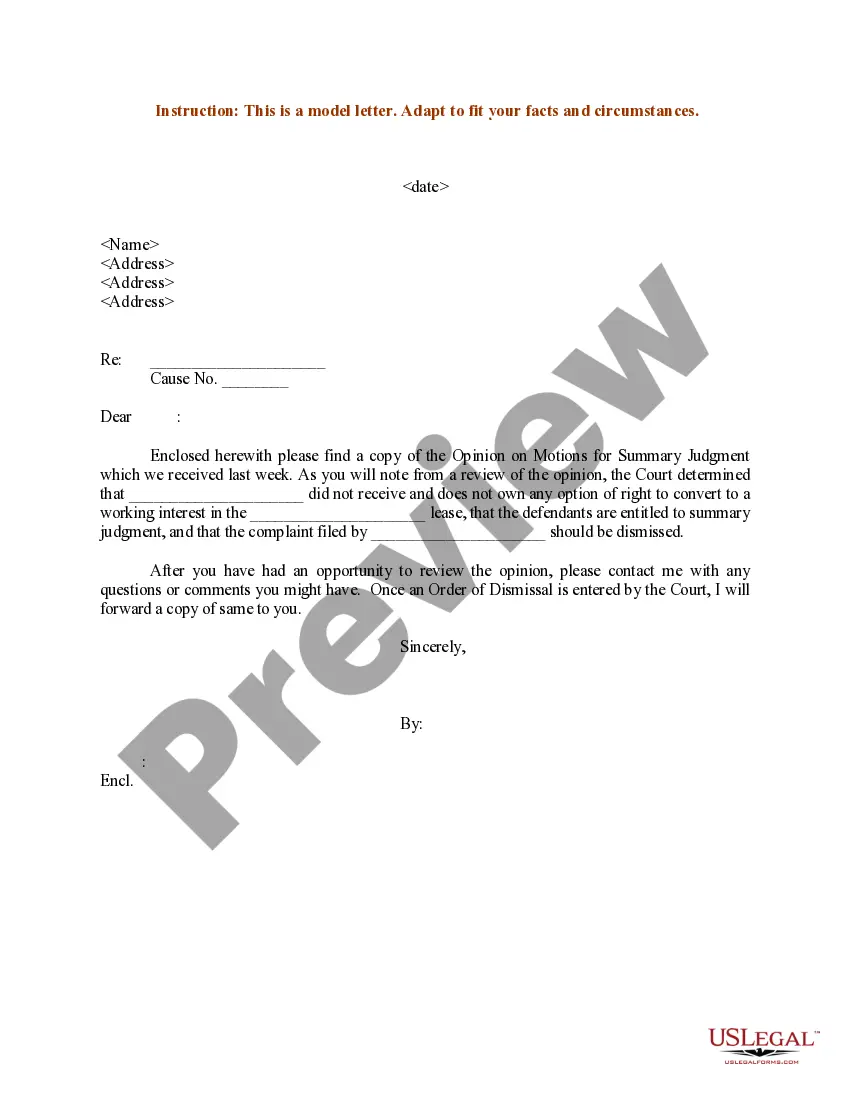
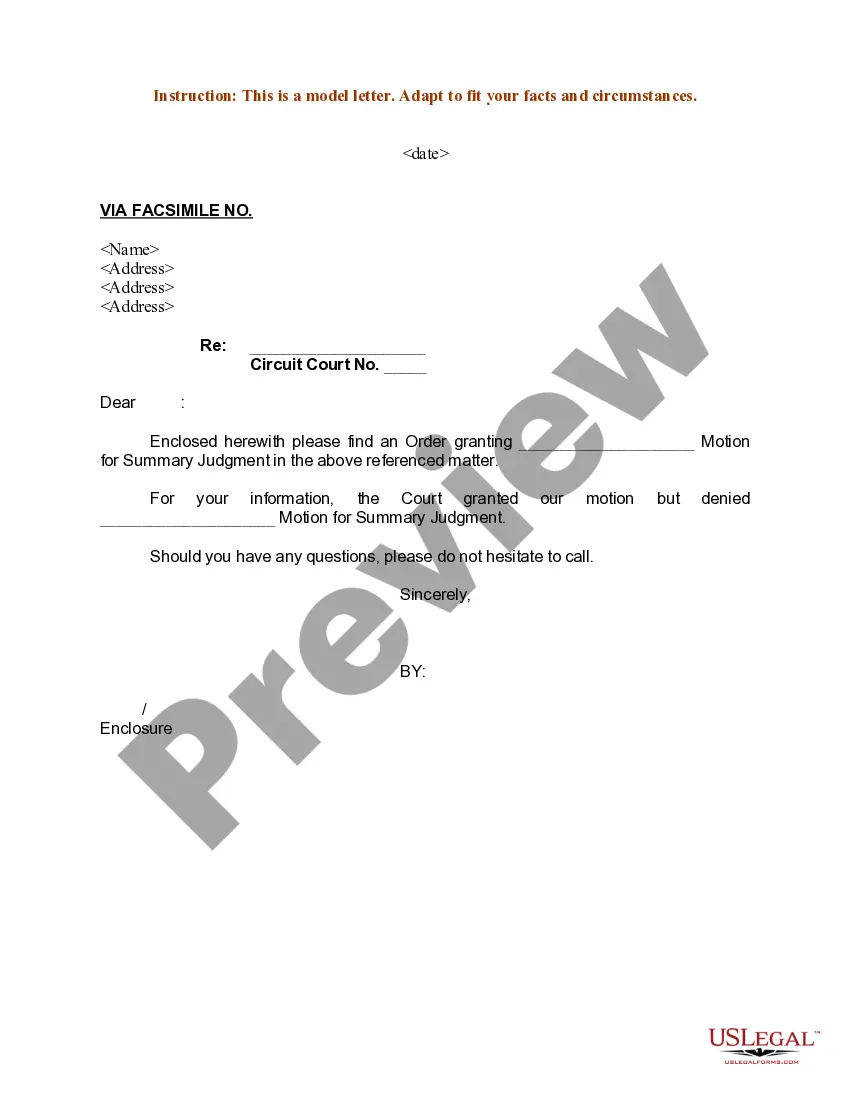
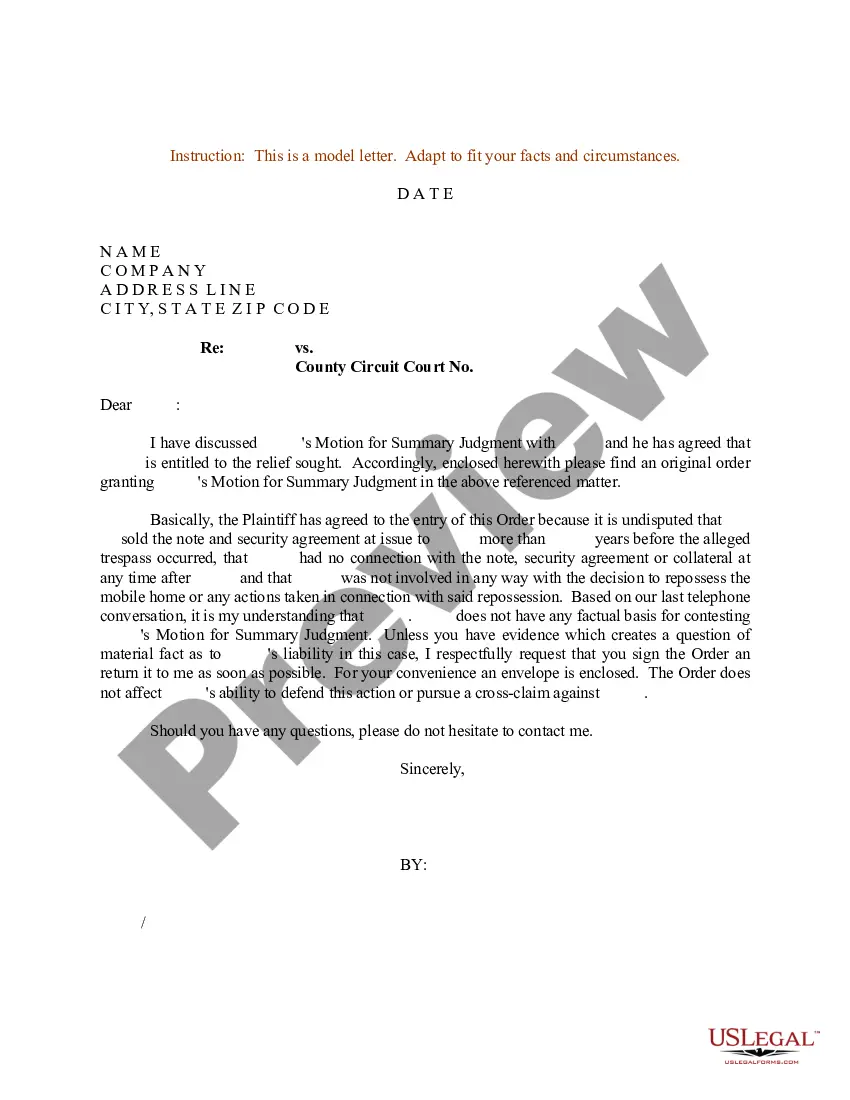
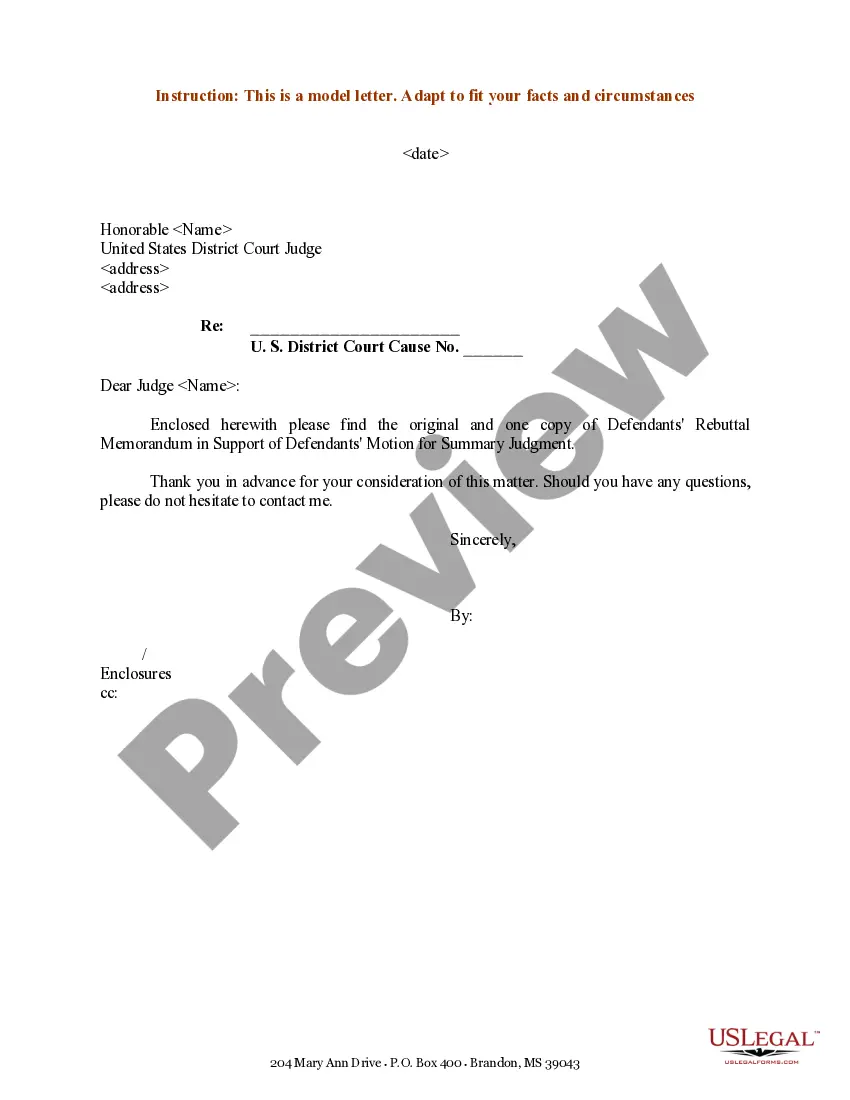
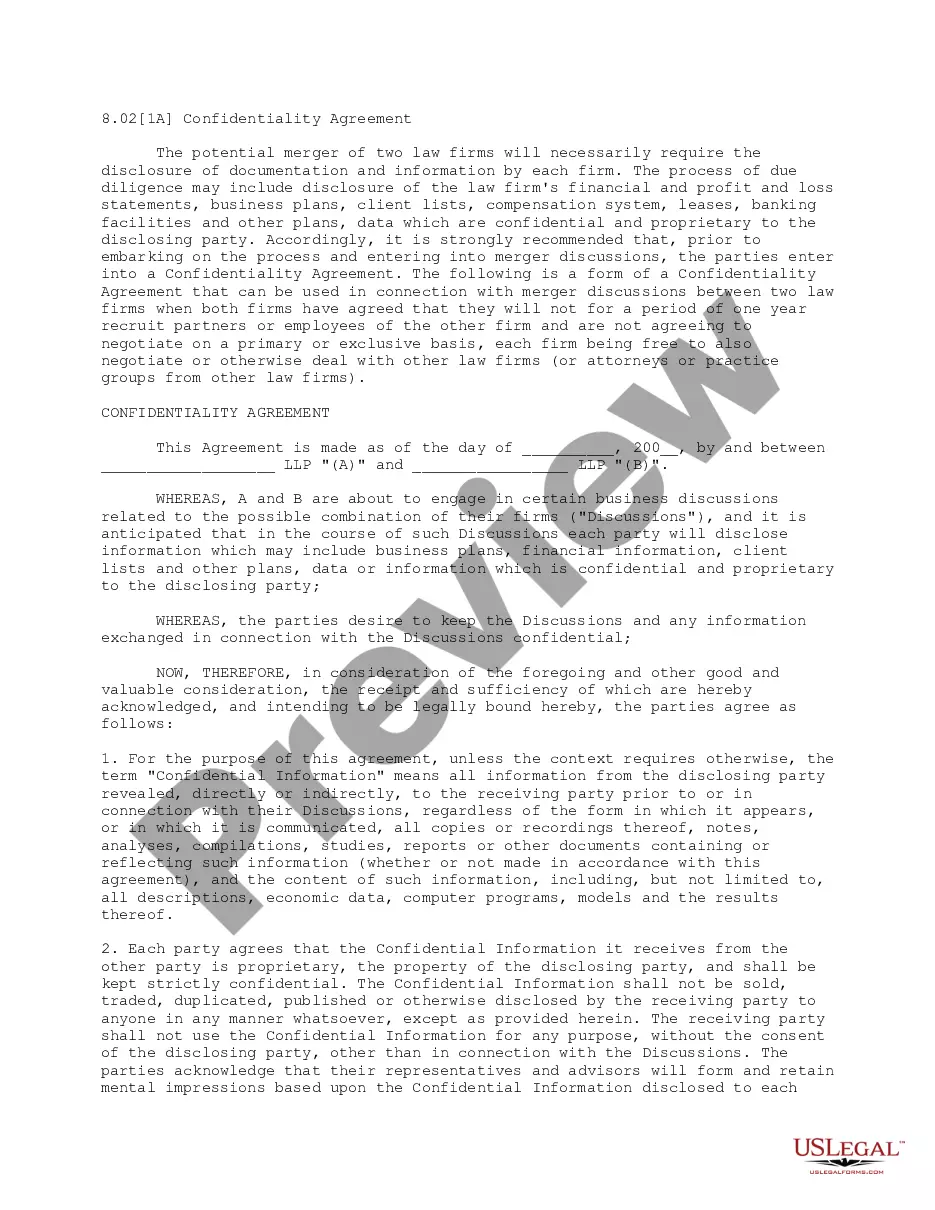
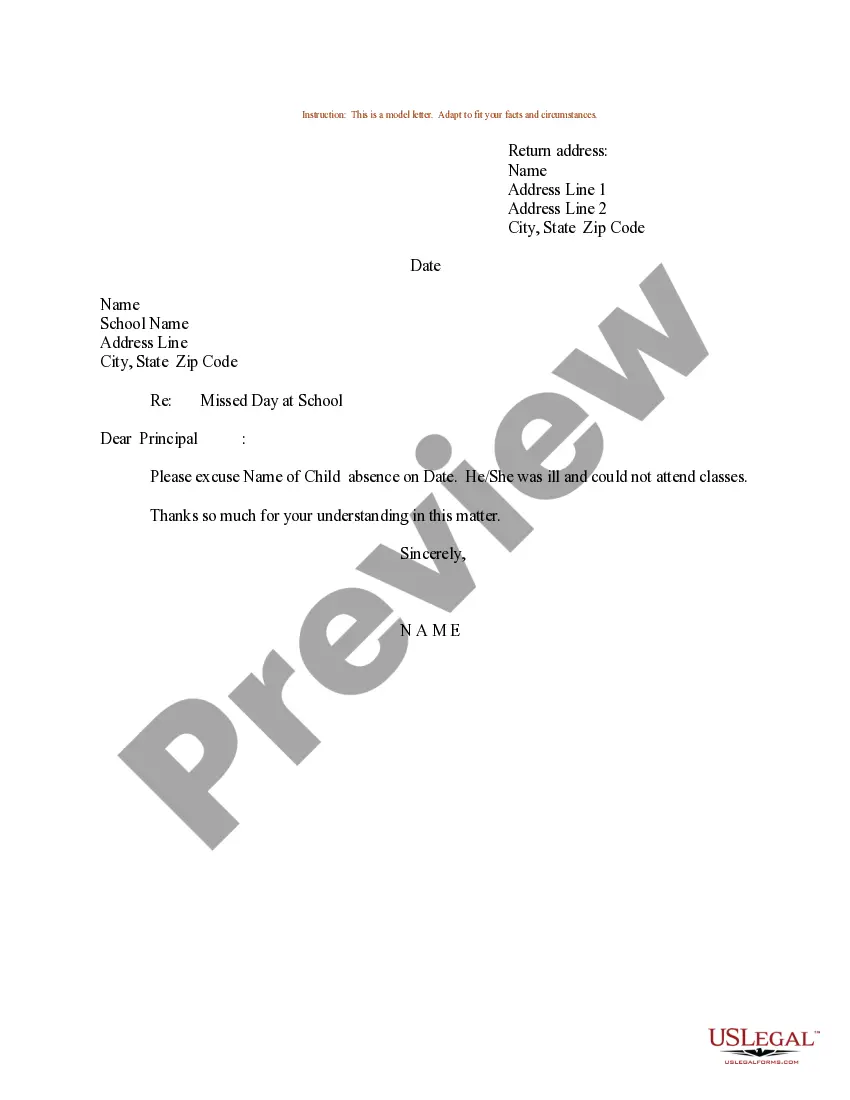
How to fill out Sample Letter Regarding Memorandum Opinion On Summary Judgment Motion?
You can allocate time online searching for the legal document template that satisfies the state and federal requirements you have.
US Legal Forms provides a vast array of legal documents that are evaluated by experts.
You can conveniently download or print the Ohio Sample Letter concerning Memorandum Opinion on Summary Judgment Motion from the support.
If available, utilize the Preview button to review the document format as well.
- If you already possess a US Legal Forms account, you can Log In and click the Download button.
- Then, you can complete, modify, print, or sign the Ohio Sample Letter regarding Memorandum Opinion on Summary Judgment Motion.
- Each legal document template you acquire is yours permanently.
- To obtain another copy of any downloaded form, navigate to the My documents tab and click the corresponding button.
- If you are using the US Legal Forms website for the first time, follow the simple instructions below.
- First, ensure that you have selected the correct document format for the region/city of your choice.
- Review the form description to confirm you have chosen the right form.
Form popularity
FAQ
The court shall grant summary judgment if the movant shows that there is no genuine dispute as to any material fact and the movant is entitled to judgment as a matter of law. The court should state on the record the reasons for granting or denying the motion.
A summary judgment shall not be rendered unless it appears from the evidence or stipulation, and only from the evidence or stipulation, that reasonable minds can come to but one conclusion and that conclusion is adverse to the party against whom the motion for summary judgment is made, that party being entitled to have ...
What Must an Opposition to a Motion for Summary Judgment Include? The Memorandum of Points and Authorities includes any legal authorities and arguments that support your Opposition. An effective Memorandum of Points and Authorities will directly address the arguments made in the Motion for Summary Judgment.
A party opposing a summary judgment motion must, within 28 days after the movant serves the motion, file and serve a response brief and any evidence (that is not already in the record) that the party relies on to oppose the motion.
Ohio Civil Rule 56(C) requires that documents submitted in defense of a motion for summary judgment be properly sworn, certified, or authenticated by affidavit, or such evidence may not be considered in determining whether an issue of fact exists.
Rule 56 of the Federal Rules of Civil Procedure governs summary judgment for federal courts. Under Rule 56, in order to succeed in a motion for summary judgment, a movant must show 1) that there is no genuine dispute as to any material fact, and 2) that the movant is entitled to judgment as a matter of law.
Show that the law does not support judgment on the undisputed facts. Your legal research may reveal case law that shows judgment isn't warranted in your case, even when no facts are in dispute. Show that discovery is incomplete and could raise a disputed material fact when completed.
The chance of success in these cases is less than 10% [1]. Another study found that summary judgment is mostly granted in Title VII cases, for example, cases involving equal pay or employment discrimination [2]. When it comes to federal cases, summary judgments are filed in 17% of total cases.