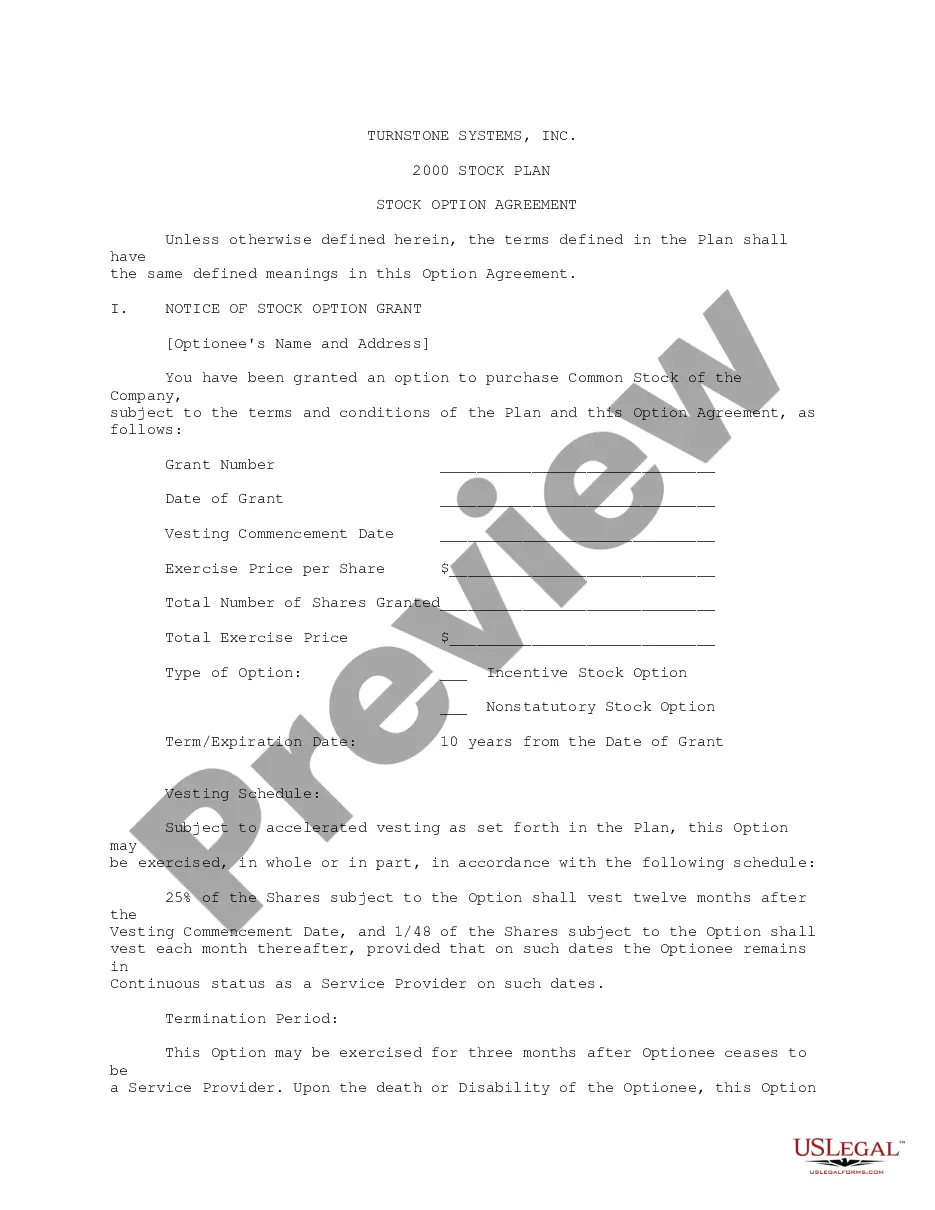
This form is a Distributor Agreement. This is an agreement between a developer of a computer program and a distribution company to market and distribute the computer program. The distributor acknowledges that the territory is the area of its principal responsibility and agrees to use its best efforts to promote the sale of the developer's product.
Ohio Distributor Agreement for Software
Category:
State:
Multi-State
Control #:
US-KWP-0042
Format:
Word;
Rich Text
Instant download
Description
Free preview
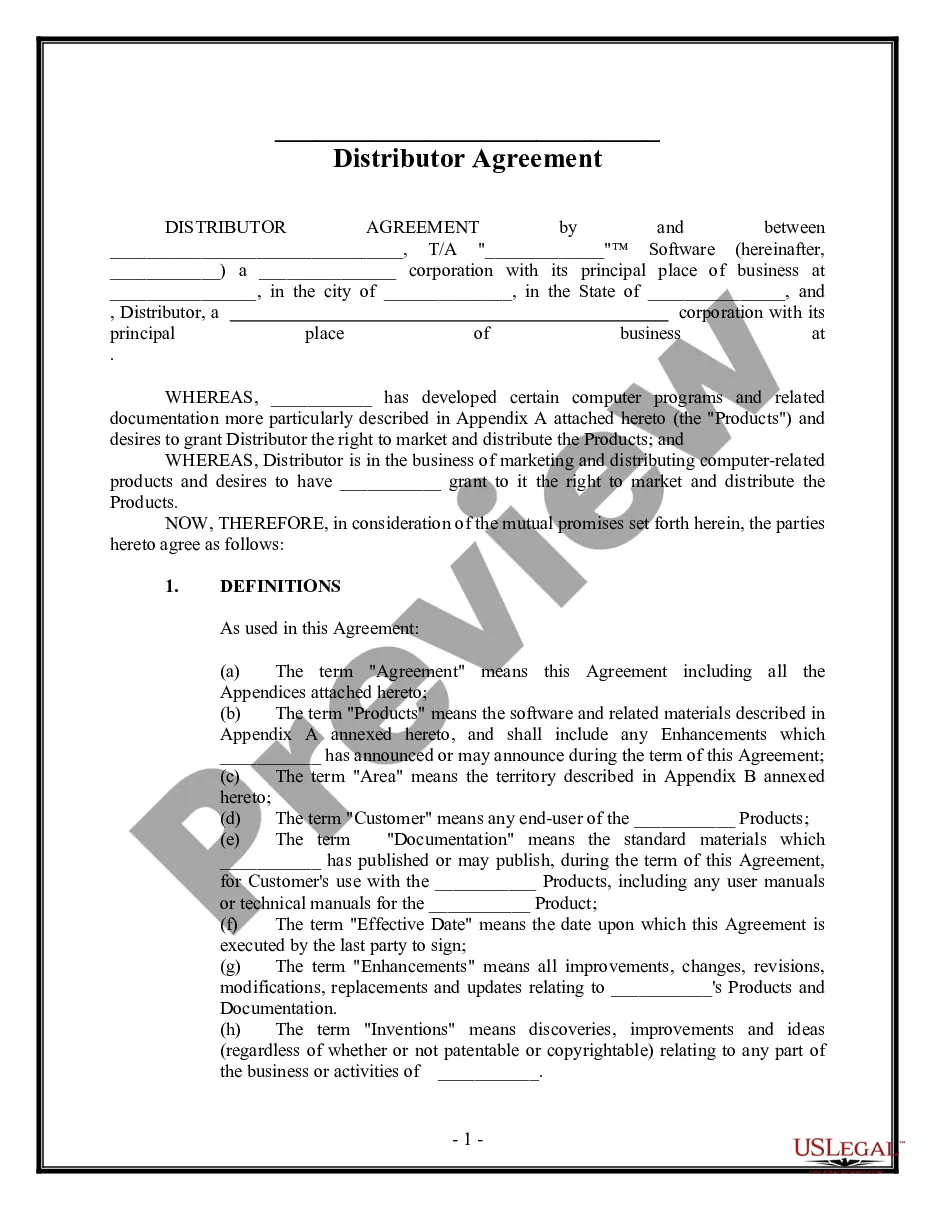


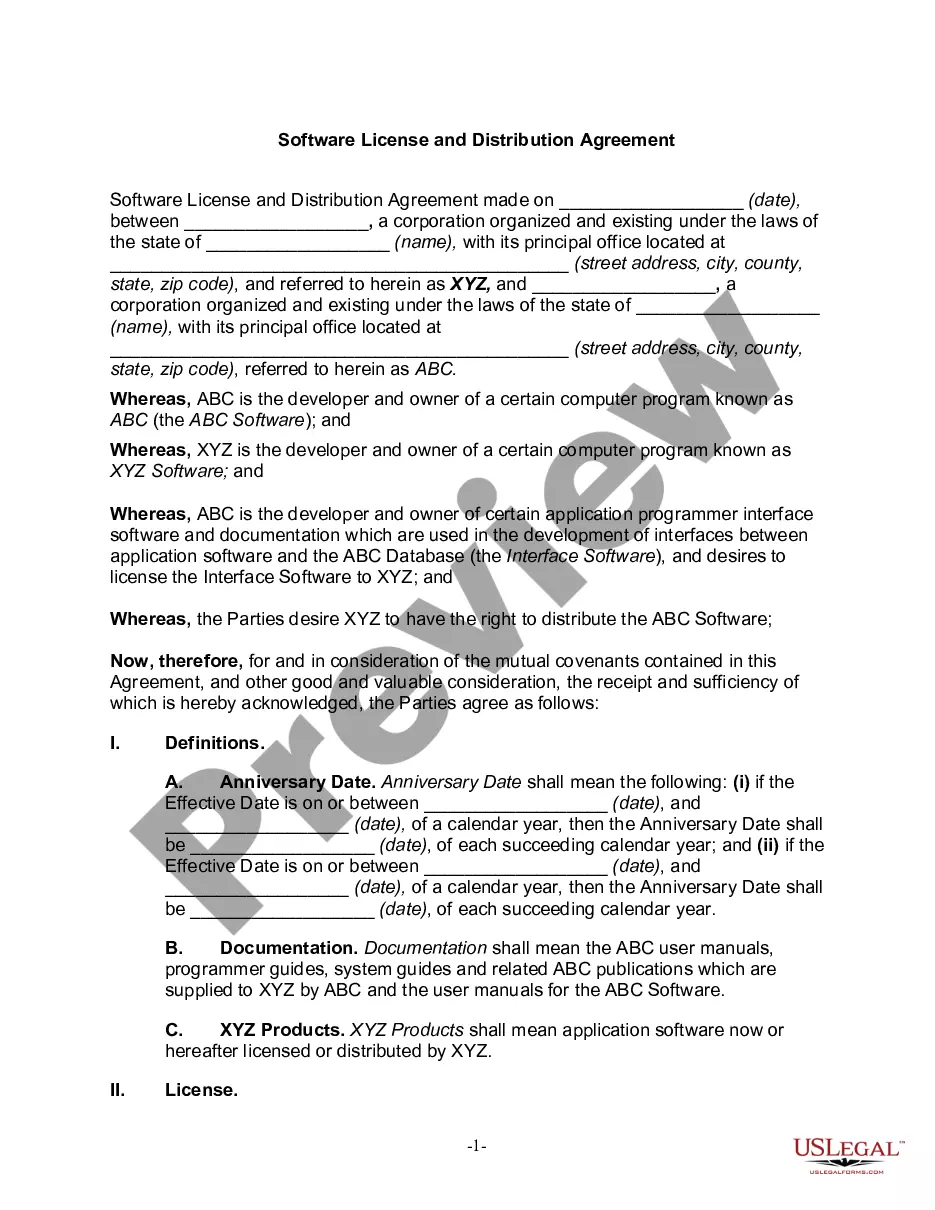
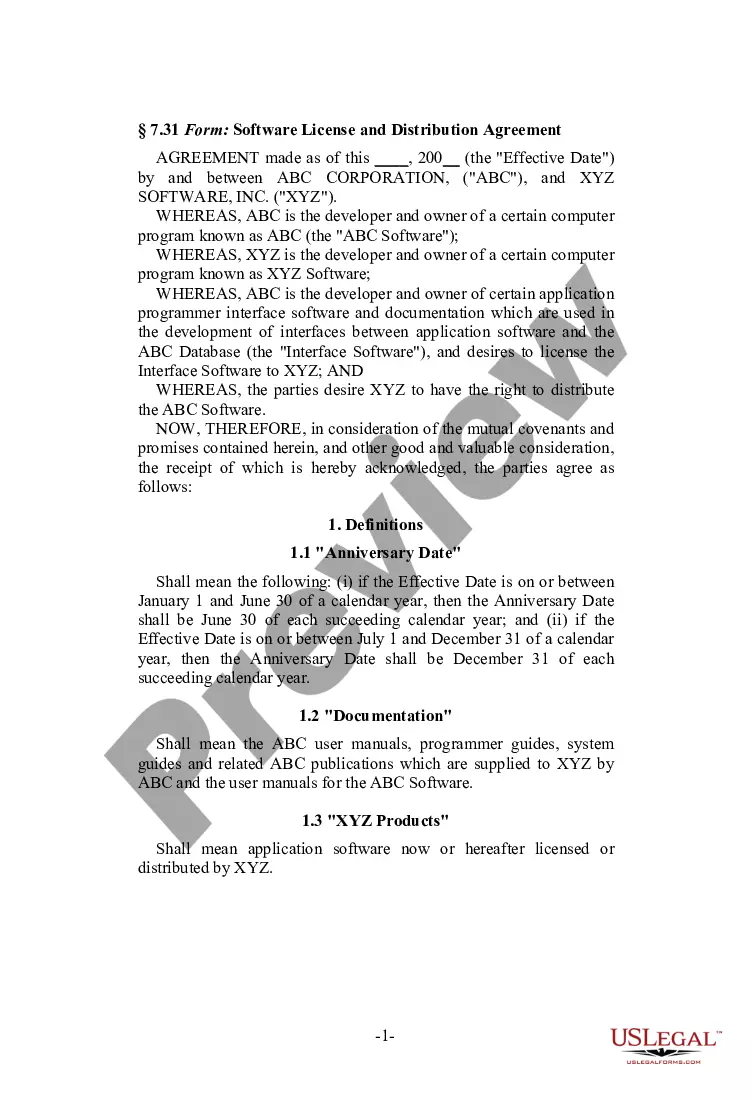
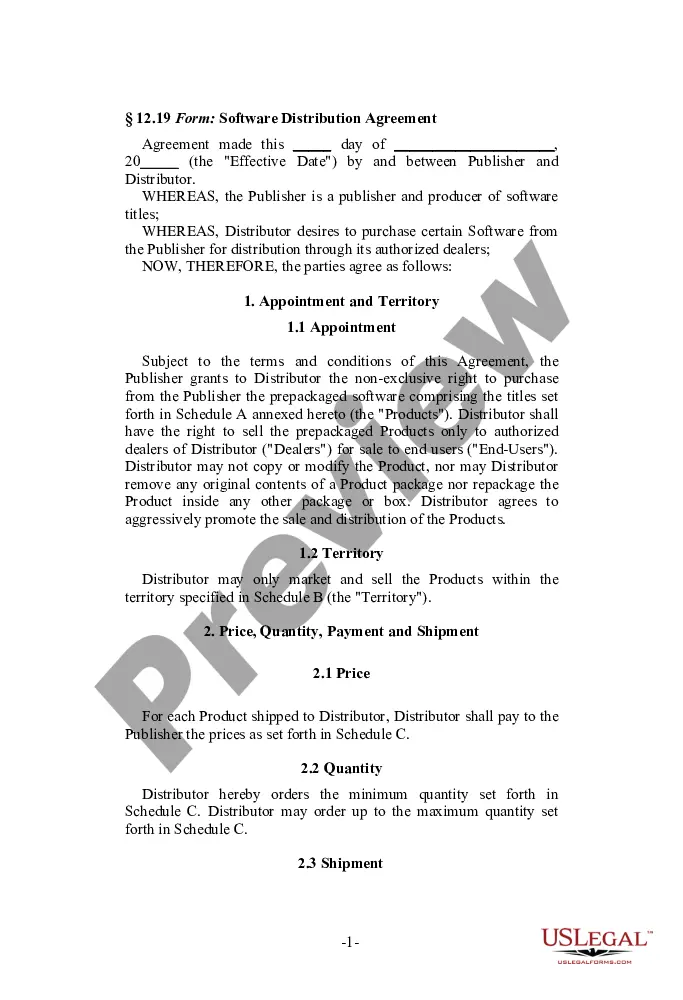
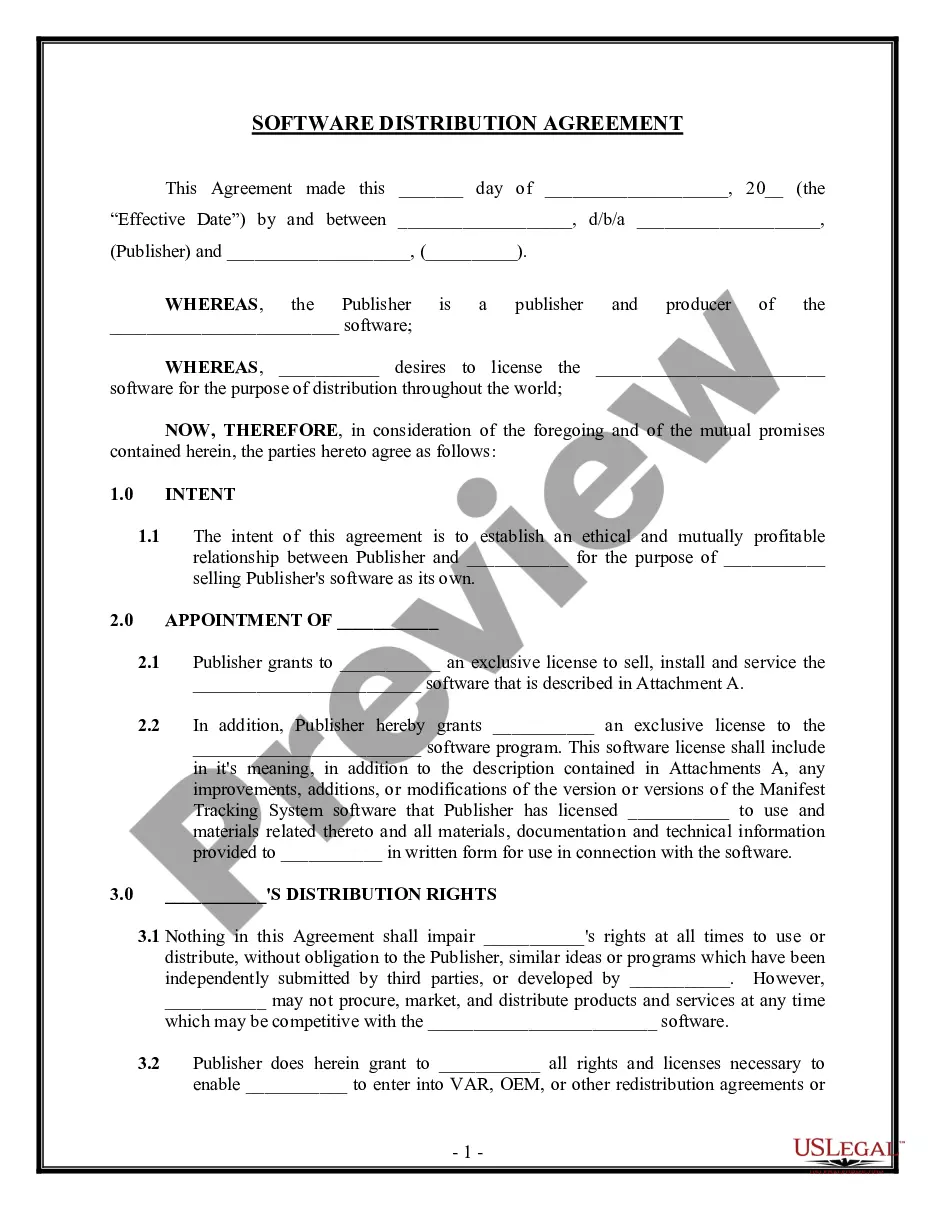
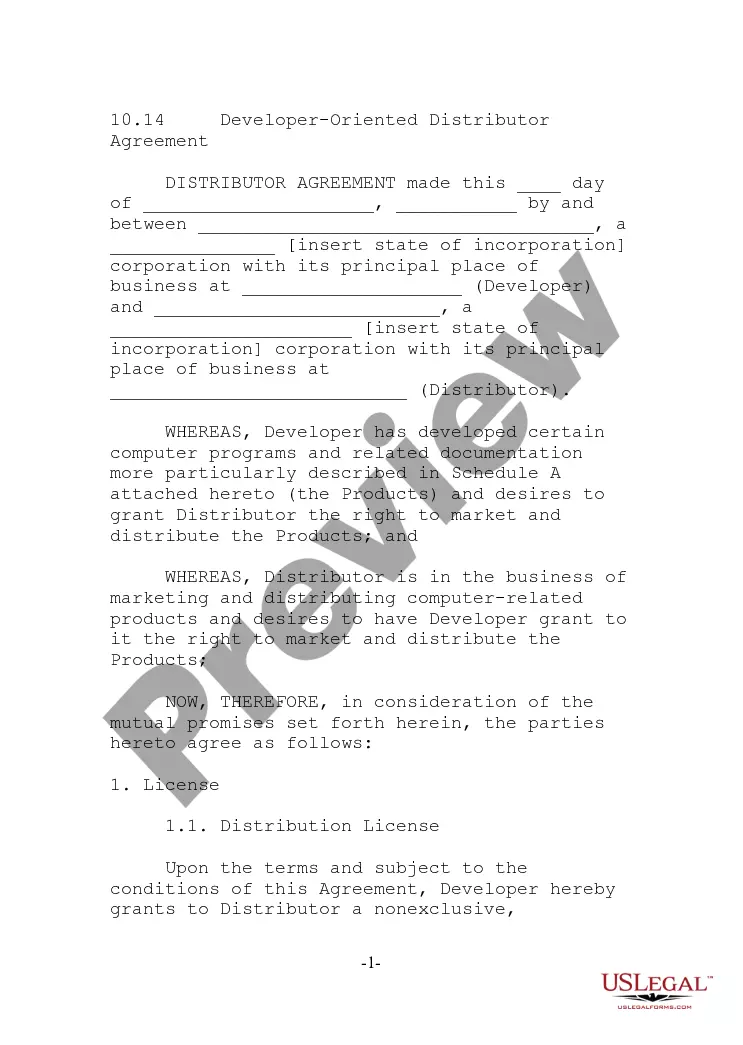

How to fill out Distributor Agreement For Software?
You have the capability to devote time online searching for the authentic document template that aligns with the federal and state requirements you seek.
US Legal Forms offers thousands of authentic forms that are reviewed by specialists.
You can conveniently obtain or print the Ohio Distributor Agreement for Software from your services.
If available, utilize the Preview option to review the document template as well.
- If you already possess a US Legal Forms account, you may Log In and click the Download button.
- Afterwards, you can complete, modify, print, or sign the Ohio Distributor Agreement for Software.
- Every authentic document template you purchase is yours indefinitely.
- To have an additional copy of a purchased form, navigate to the My documents tab and click the appropriate option.
- If you are using the US Legal Forms website for the first time, follow the simple instructions below.
- Initially, ensure that you have selected the right document template for the region/area of your choice.
- Check the form summary to confirm you have selected the correct template.
Form popularity
FAQ
In Ohio, while it is not legally required, having an operating agreement is highly recommended for LLCs. This document outlines the management structure and operating procedures that govern your business. An Ohio Distributor Agreement for Software can complement this by detailing the specific distribution roles and responsibilities, promoting a smoother operation.
Software distribution allows companies to deliver their products to customers efficiently and effectively. It involves various activities, including marketing, licensing, and support services. An Ohio Distributor Agreement for Software can facilitate these processes, ensuring that both the developer and the distributor benefit from a well-defined partnership.
A distribution agreement works by setting the terms for how products or services are delivered from the supplier to the end customer. In an Ohio Distributor Agreement for Software, the distributor agrees to promote and sell the software while adhering to the terms set forth in the contract. This relationship benefits both parties by expanding market reach and establishing clear expectations.
Writing a distributorship agreement involves outlining essential details like the scope of distribution, payment terms, and responsibilities of both parties. Begin by clearly defining the products or services covered by the Ohio Distributor Agreement for Software. You may want to consult a legal professional to ensure that the agreement meets all legal requirements.
A software distribution agreement is a legal contract that specifies the terms under which software products are sold or distributed. This agreement allows a distributor to market and sell the software on behalf of the provider. When you create an Ohio Distributor Agreement for Software, you ensure compliance with local laws while protecting your business interests.
To write a simple agreement for software distribution, start with a clear title such as ‘Ohio Distributor Agreement for Software.’ Include the date, names of the parties, and the purpose of the agreement. Clearly outline the terms, rights, and obligations of both parties, making sure to cover payment details and termination clauses. If you need assistance, consider using US Legal Forms for templates and expert advice to simplify the process.
An example of a distributorship is when a software company partners with a local business to sell its software products in a specific geographic area. This arrangement allows the local business to promote and sell the software while benefiting from the brand's established reputation. Typically, the local business would operate under an Ohio Distributor Agreement for Software, ensuring mutual understanding of sales targets and support. Such partnerships expand market reach and enhance customer access.
To draft an Ohio Distributor Agreement for Software, begin by clearly defining the parties involved. Specify the products or software being distributed, outline the terms of distribution, and include any payment structures. It's essential to cover territories, roles, and obligations to ensure both parties understand their responsibilities. If you're unsure, consider using platforms like US Legal Forms to access templates and guidance.
A license agreement often provides the legal framework for distributing software, including permission to sell or distribute the product. However, it is crucial to review the specific terms outlined in your Ohio Distributor Agreement for Software. This agreement typically outlines the rights, responsibilities, and limitations of both parties. Hence, understanding your license agreement ensures compliance and protects your business interests.