Ohio Last Will and Testament for other Persons
What is this form?
The Last Will and Testament for other Persons is a legal document used to specify how your property and assets will be distributed upon your death. Unlike other wills, this form serves as a versatile option when you can't find a pre-existing document that meets your needs. It covers rights for individuals residing in Ohio and allows you to designate beneficiaries, appoint guardians, and establish trustees, ensuring your wishes are legally recognized after passing.
Main sections of this form
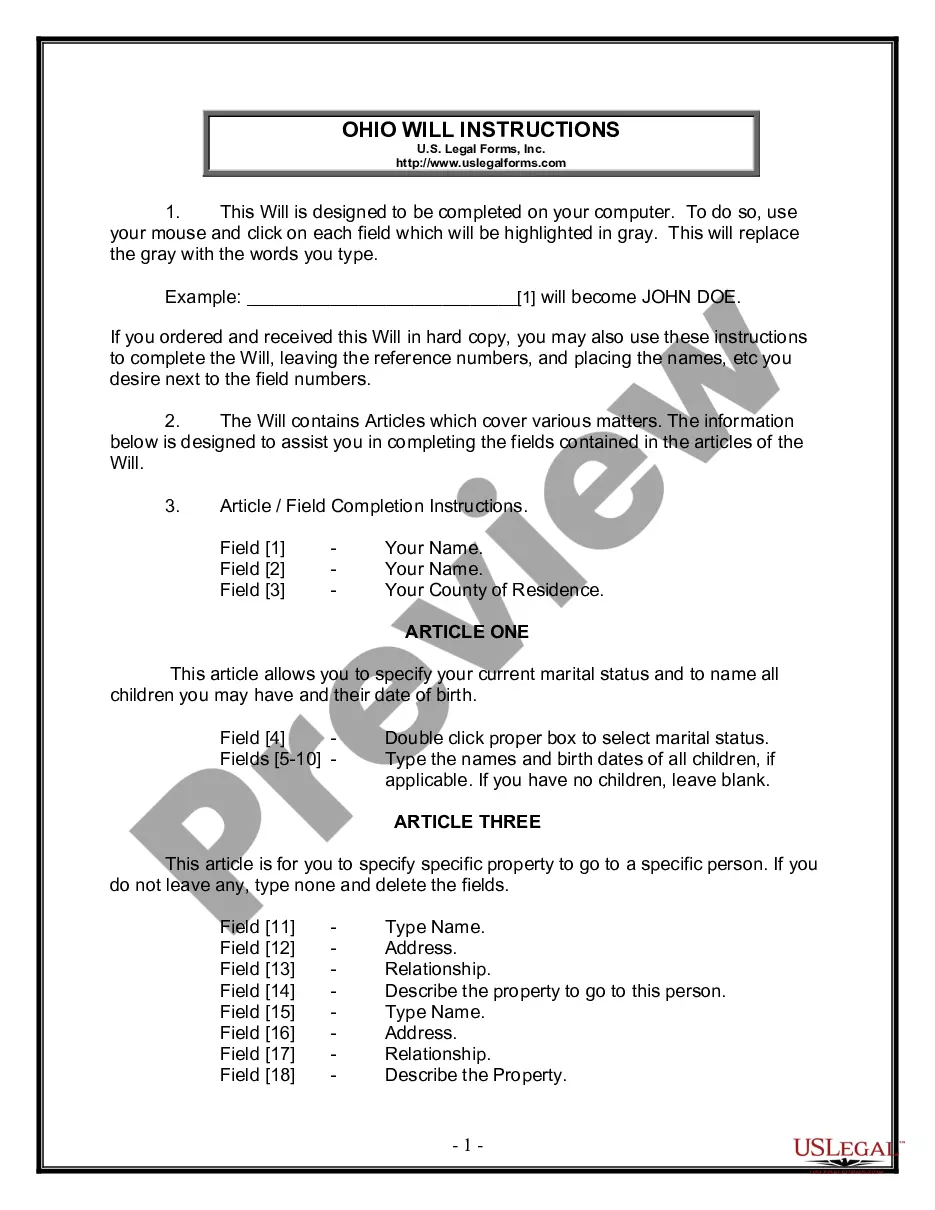
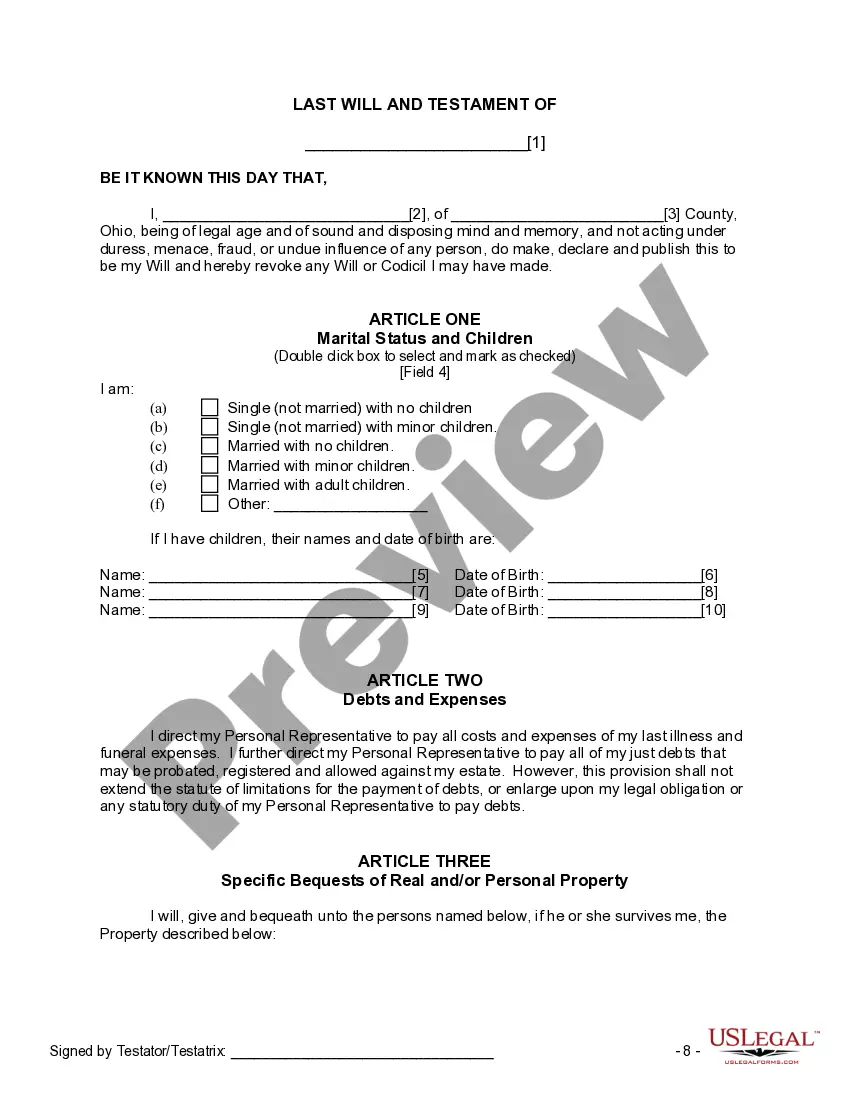
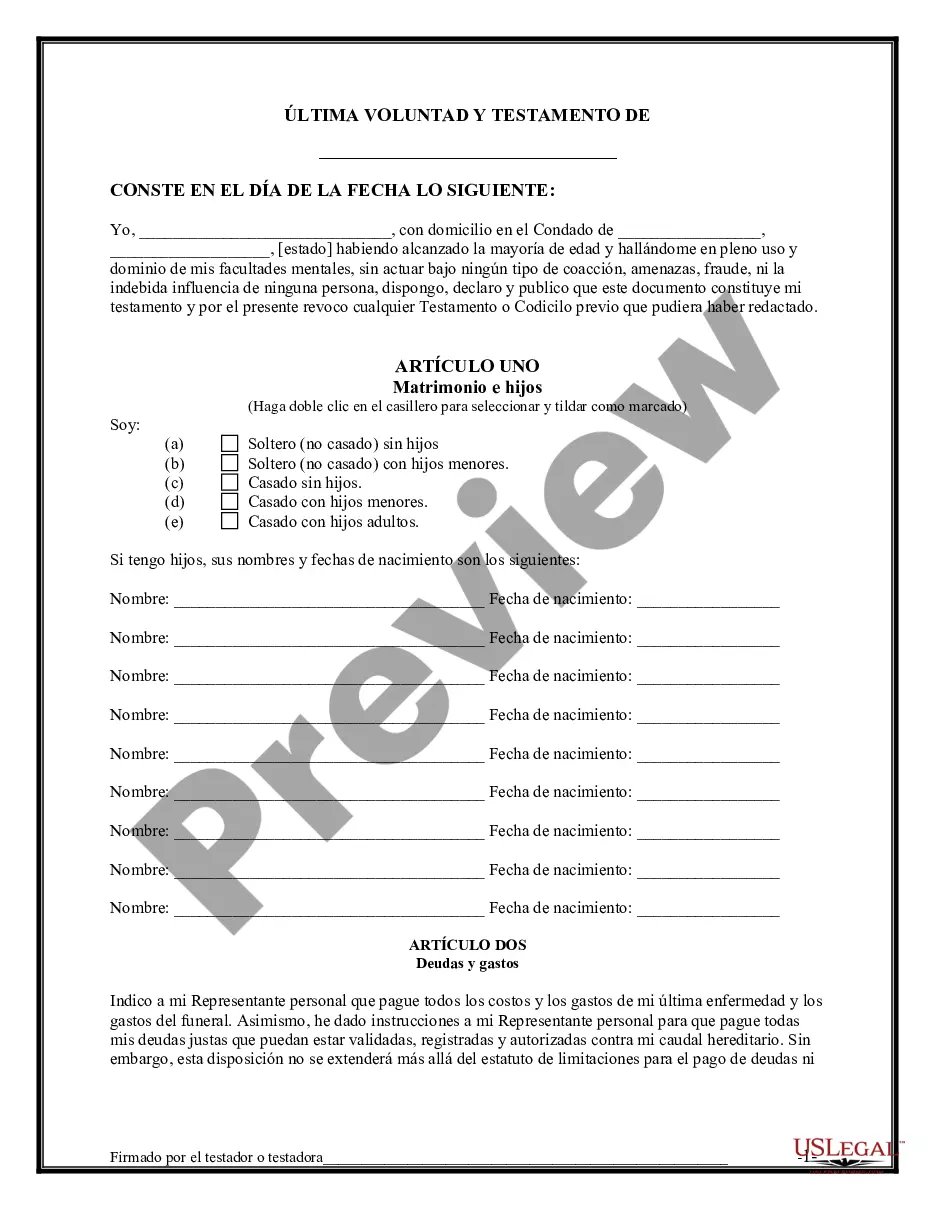
- Article One: Specifies your marital status and lists children with their birth dates.
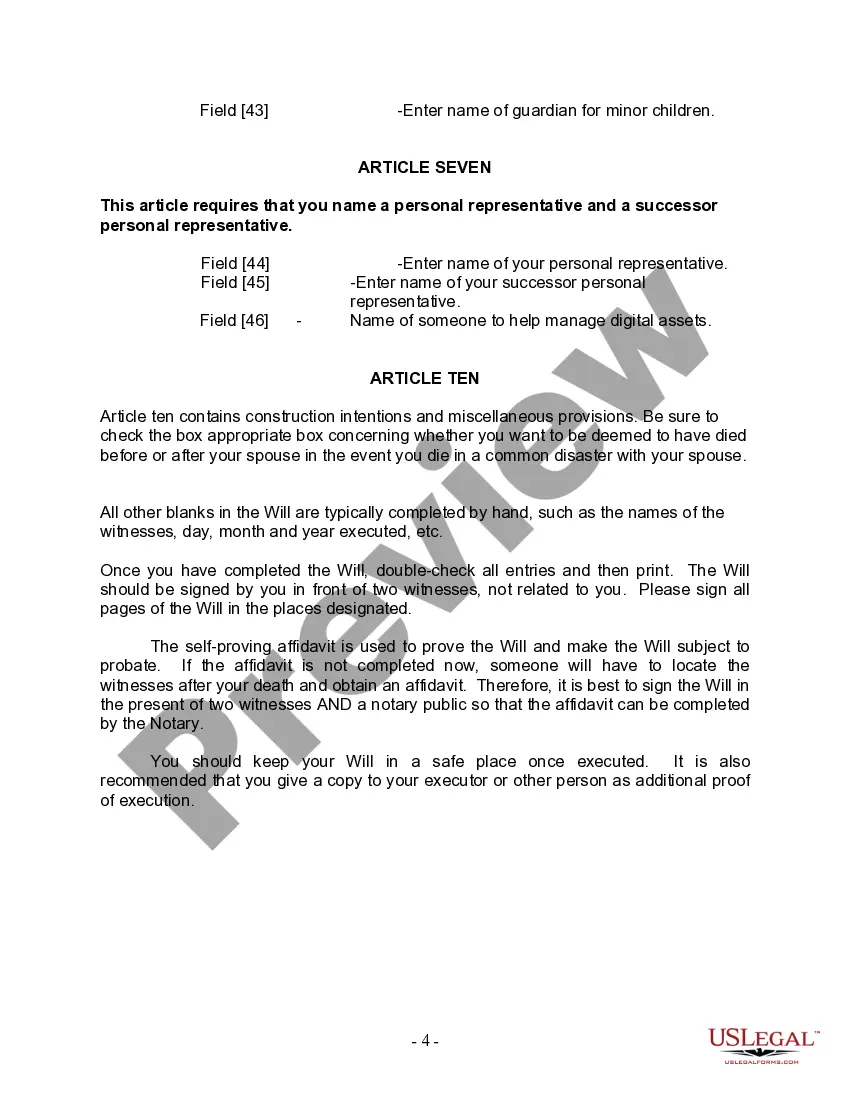
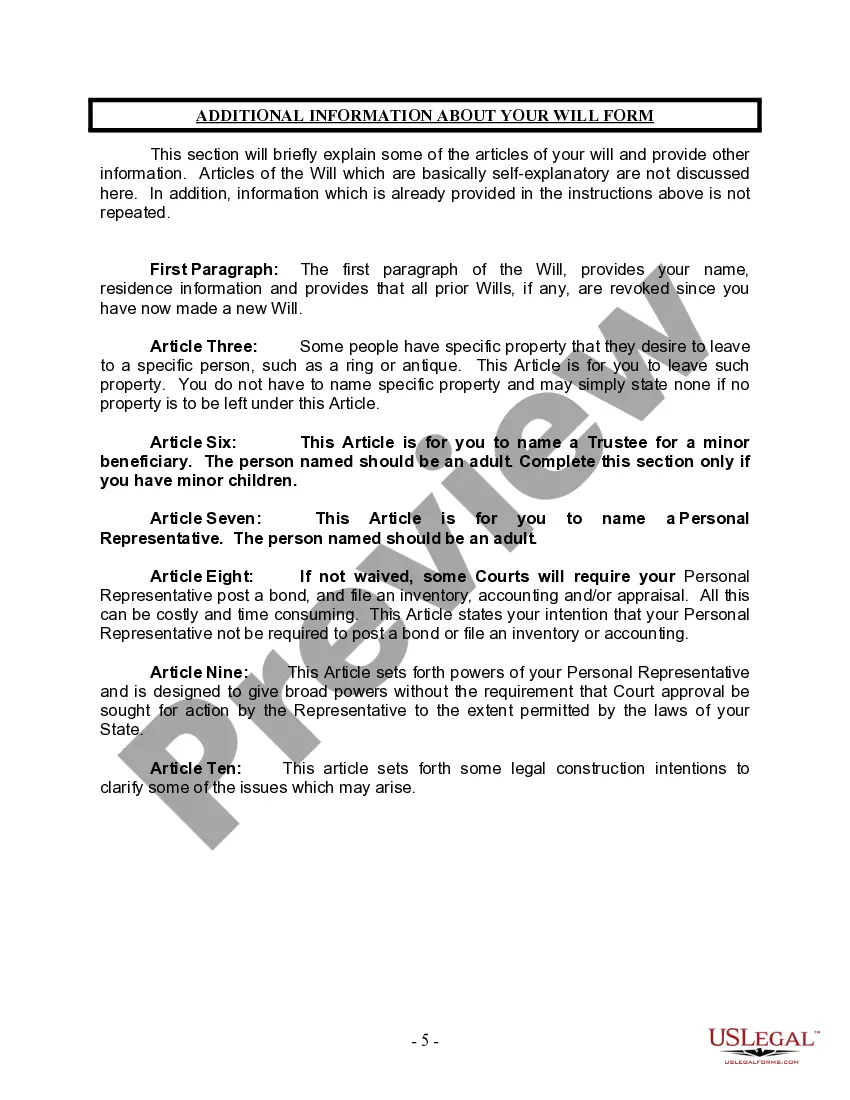
- Article Three: Details specific property bequests to named individuals.
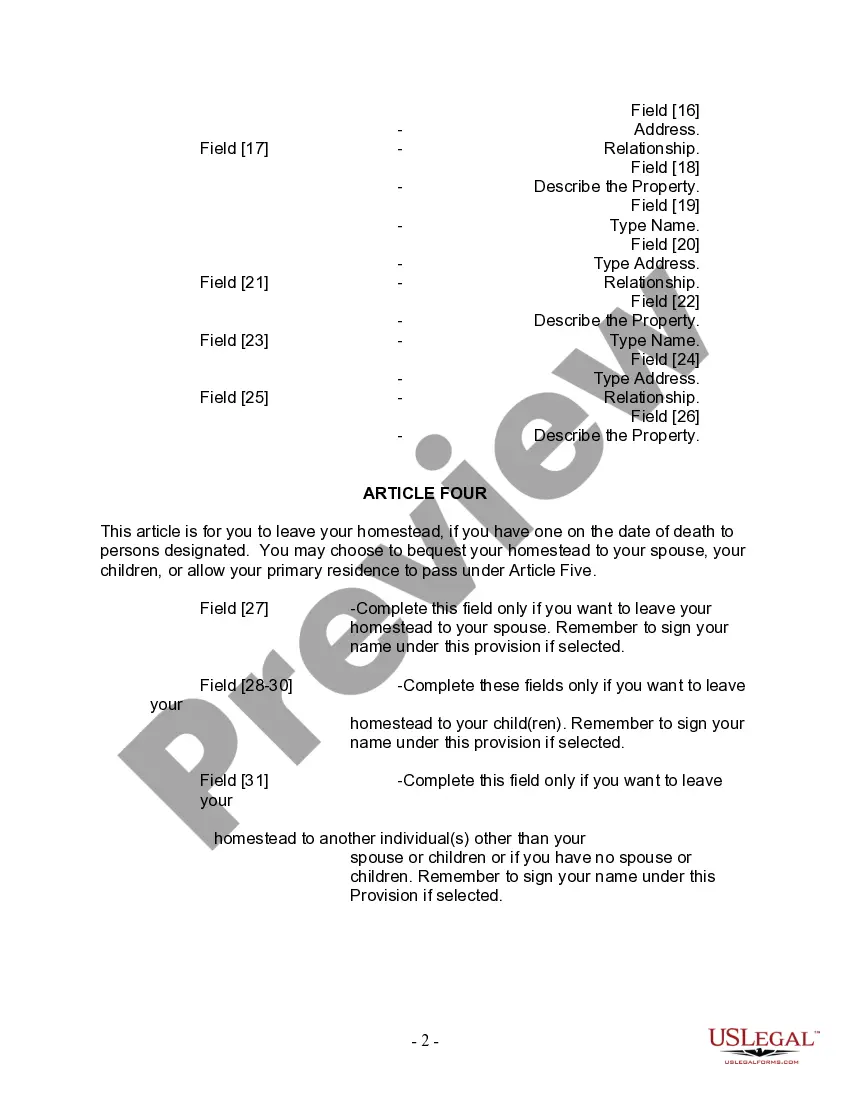
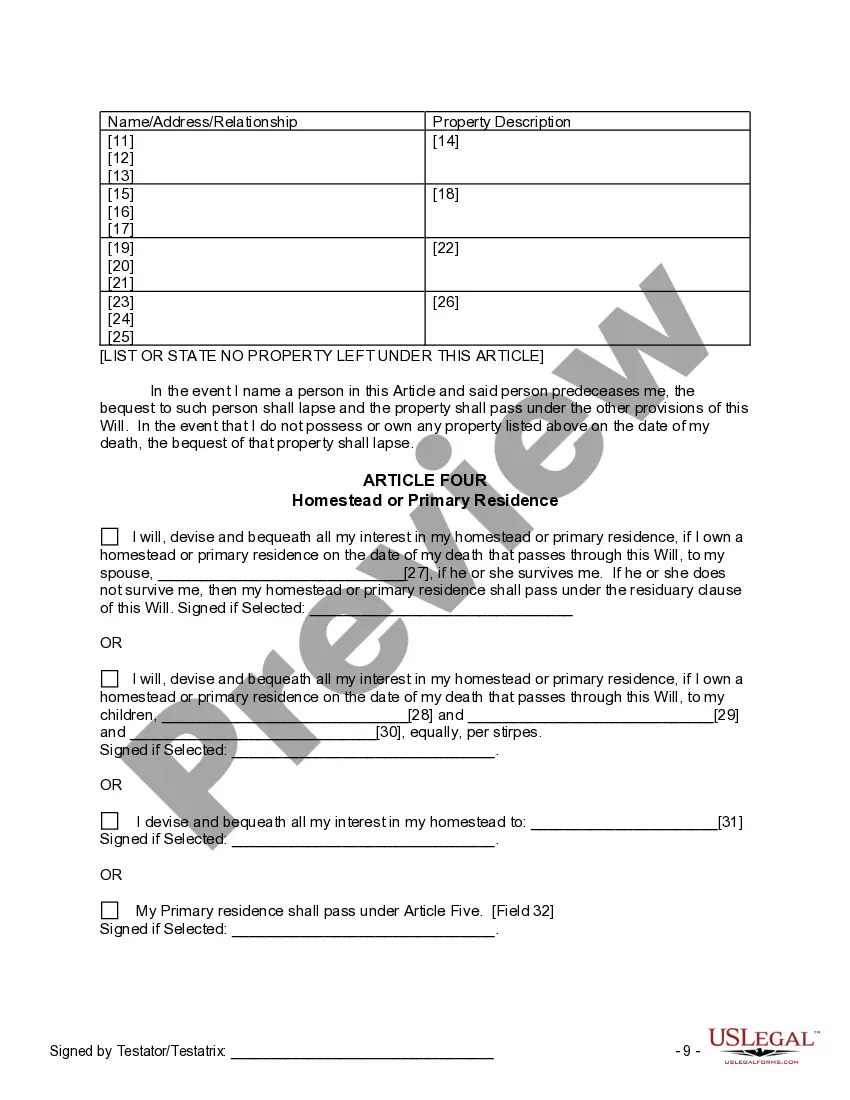
- Article Four: Addresses the disposition of your primary residence or homestead.
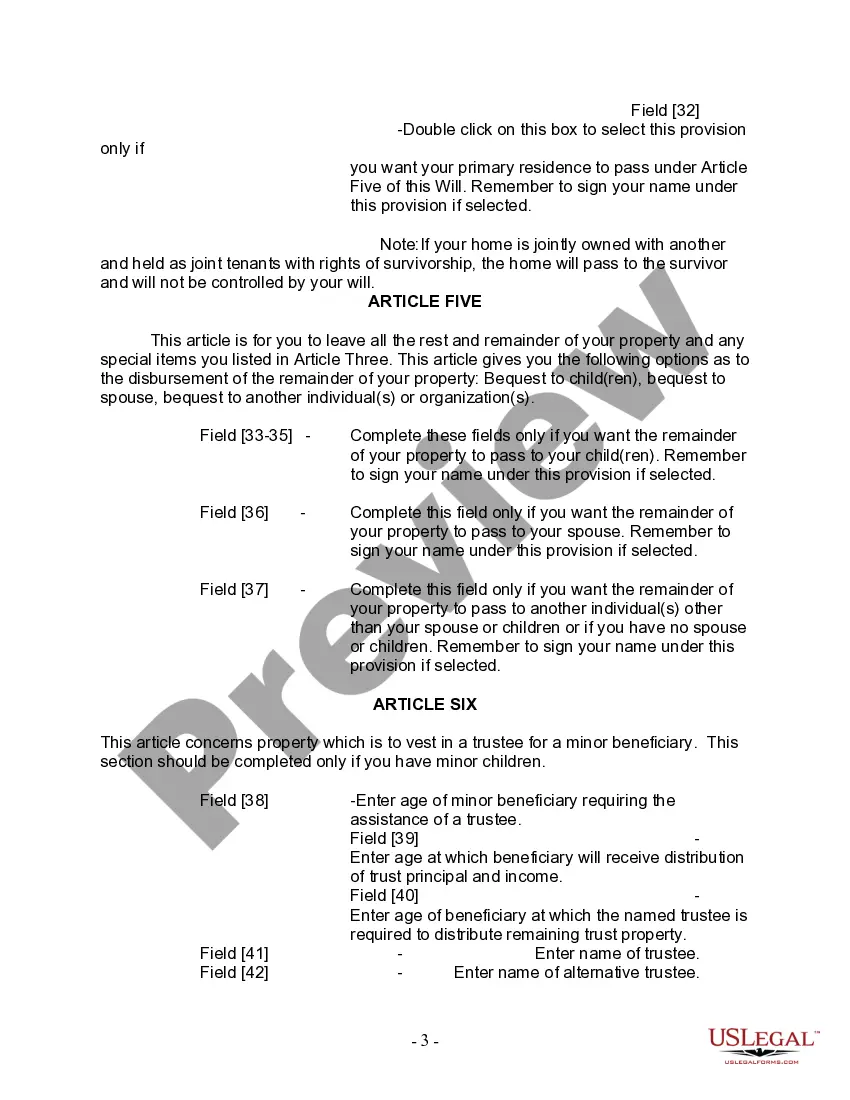
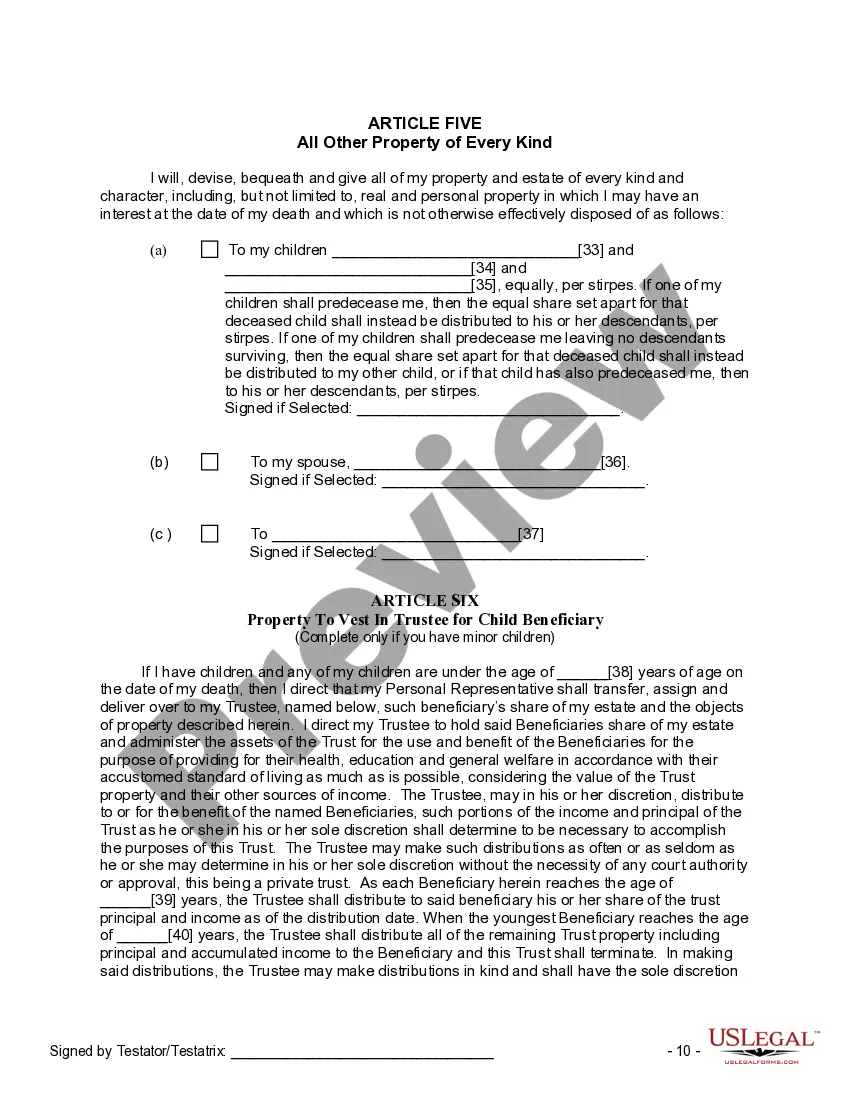
- Article Five: Distributes the remainder of your estate to selected beneficiaries.
- Article Six: Establishes trust arrangements for minor beneficiaries.
- Article Seven: Designates a personal representative to manage your estate.





When to use this form
This form is essential when you want to ensure that your estate is managed and distributed according to your wishes after your death. Use this Last Will and Testament if you are an Ohio resident and wish to make specific designations for your assets, children, or guardianship arrangements, and when you do not have a will that suits your needs.
Who should use this form
- Residents of Ohio looking to create a legally binding Last Will and Testament.
- Individuals who have specific property they want to bequeath to others.
- Parents wanting to appoint guardians for their minor children.
- Anyone needing to specify the distribution of their assets and appoint an executor of their estate.
Instructions for completing this form
- Open the form on your computer and click the highlighted fields to input your information.
- Fill out your marital status and the names along with birth dates of your children if applicable.
- Specify any particular property to bequeath and update the relevant field with the recipient's information.
- Decide and indicate who will receive your homestead and any remaining property.
- Appoint a personal representative and, if necessary, a guardian for your minor children.
- Review the completed will carefully, then print, sign, and have it witnessed according to Ohio law.
Does this document require notarization?
Notarization is required for this form to take effect. Our online notarization service, powered by Notarize, lets you verify and sign documents remotely through an encrypted video session, available 24/7.
Get your form ready online
Our built-in tools help you complete, sign, share, and store your documents in one place.
Make edits, fill in missing information, and update formatting in US Legal Forms—just like you would in MS Word.
Download a copy, print it, send it by email, or mail it via USPS—whatever works best for your next step.
Sign and collect signatures with our SignNow integration. Send to multiple recipients, set reminders, and more. Go Premium to unlock E-Sign.
If this form requires notarization, complete it online through a secure video call—no need to meet a notary in person or wait for an appointment.
We protect your documents and personal data by following strict security and privacy standards.
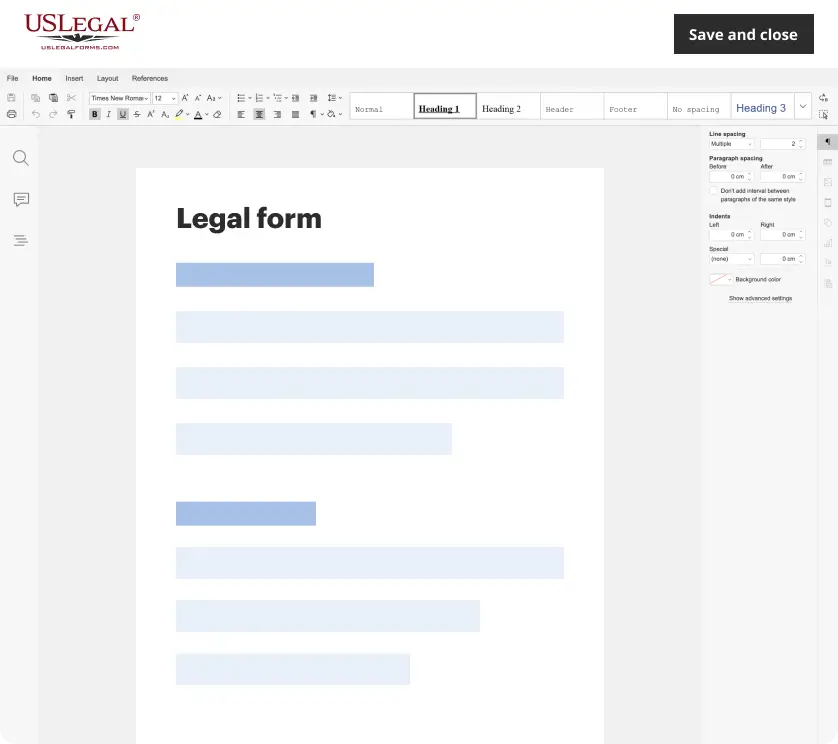
Make edits, fill in missing information, and update formatting in US Legal Forms—just like you would in MS Word.
Download a copy, print it, send it by email, or mail it via USPS—whatever works best for your next step.
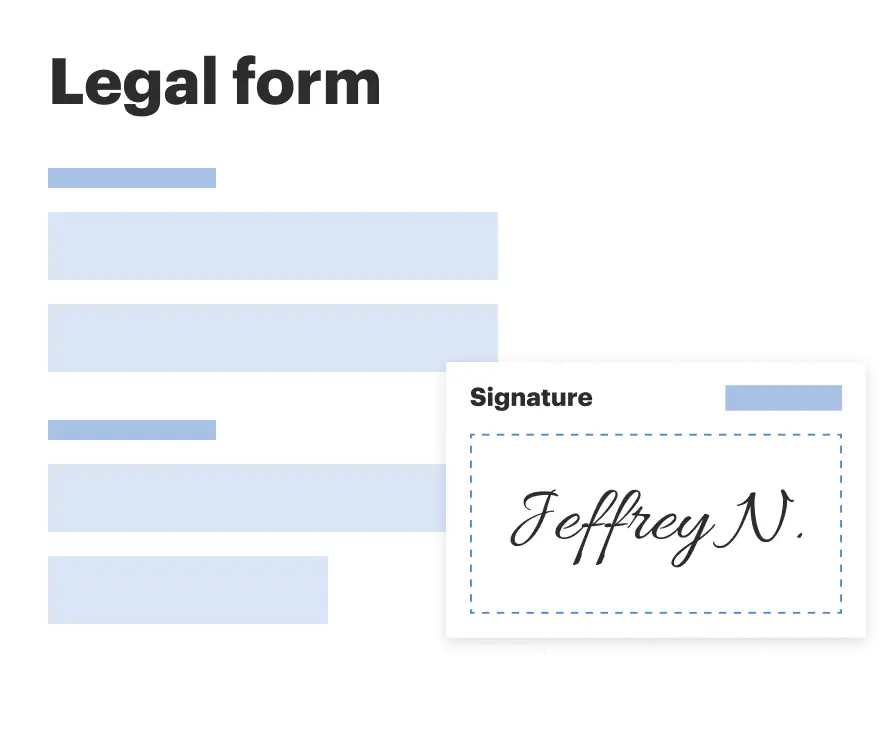
Sign and collect signatures with our SignNow integration. Send to multiple recipients, set reminders, and more. Go Premium to unlock E-Sign.

If this form requires notarization, complete it online through a secure video call—no need to meet a notary in person or wait for an appointment.

We protect your documents and personal data by following strict security and privacy standards.
Common mistakes
- Not specifying all intended beneficiaries or failing to update changes in relationships.
- Neglecting to sign the document in front of required witnesses.
- Leaving fields blank instead of indicating 'none' where applicable.
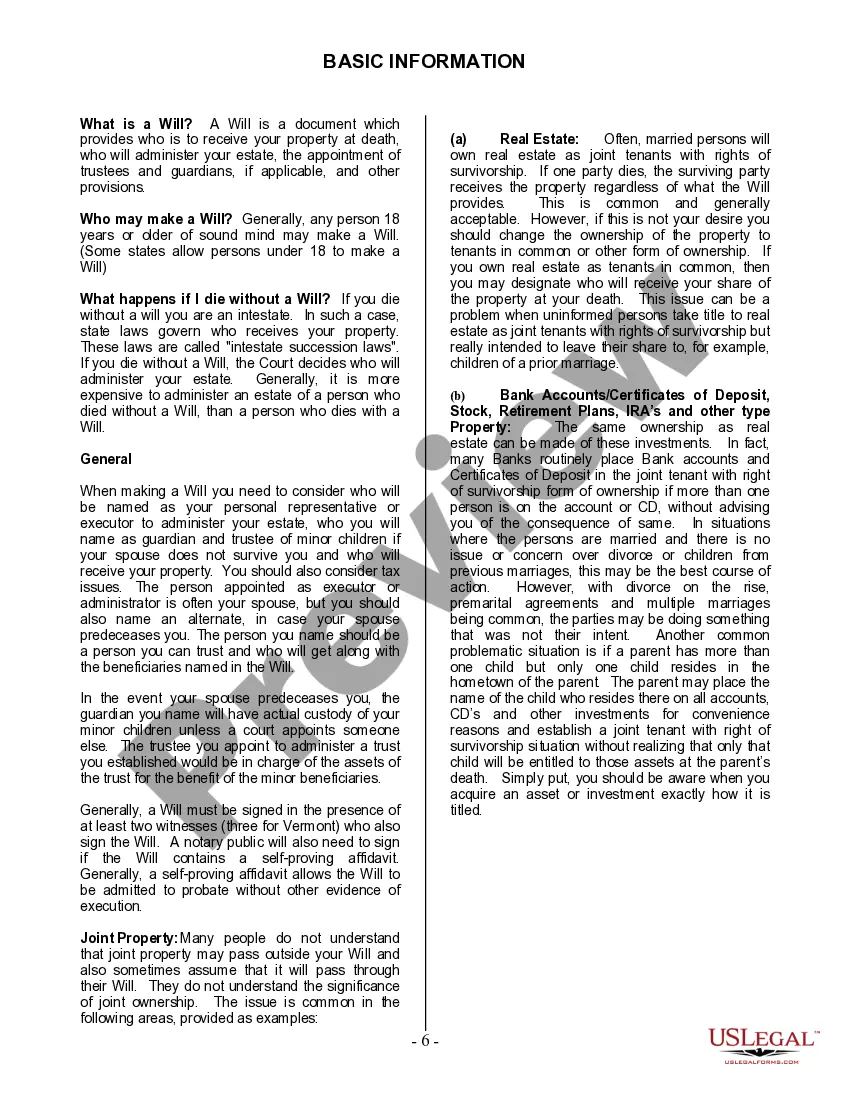
- Failing to consider the implications of jointly owned property outside the will.
Advantages of online completion
- Convenience of filling out the form from your home or office at any time.
- Editable fields ensure accuracy and clarity in your declarations.
- Reliability of having a legally-compliant document tailored to your specific needs.
Quick recap
- This Last Will and Testament allows you to outline your wishes for property distribution after death.
- Proper execution with witnesses and notarization is essential for legal validity.
- Review and update your will as significant life events occur to ensure it reflects your current desires.
Looking for another form?

Form popularity
FAQ
Does a will have to be notarized in Ohio? A will does not need to be notarized in order for it to be a valid legal document.
A will doesn't have to be notarized to be valid. But in most states, you'll want to add a self-proving affidavit to your will, which must be signed by your witnesses and notarized.If you sign your will in a lawyer's office, the lawyer will provide a notary public.
No, in Ohio, you do not need to notarize your will to make it legal. In many states, you and your witnesses can sign a notarized statement that makes your will "self-proving." However, Ohio does not give you this option.
A notarized will does not need to be probated.When a person dies leaving behind a will that is not notarized, the law requires that its validity be ascertained by a notary or by a court. Similarly, any non-notarized modification made to a will must be probated, whether the will is notarized or not.
According to Ohio law and case history, a will is valid if it meets the following requirements: The testator (the person who is leaving the will) must be 18 years of age or older. The testator must be of sound mind. The testator must not otherwise be under restraint or under the undue influence of another person.
You can read, type, print, and staple at the will maker's direction. But you must not decide or even weigh in on the terms of the will. Do not sway the will maker in any way; you must be a neutral actor. Also, do not not use your own handwriting to fill in a fill-in-the-blanks will.
Will a Probate Proceeding Be Necessary? Generally, only assets that the deceased person owned in his or her name alone go through probate. Everything else can probably be transferred to its new owner without probate court approval. Many common assets do not need to go through probate.
A will does not need to be notarized in order for it to be a valid legal document.However, Ohio does not allow for self-proving wills ; the court will call upon the witnesses for testimony during probate even if the deceased had a self-proving affidavit. Build a legacy for your family. Get your estate plan right.
Age: The testator must be at least 18 years old. Capacity: The testator must be of sound mind and memory and not under restraint. Signature: The will must be signed by the testator or by someone else in the testator's name in his conscious presence, by his express direction.