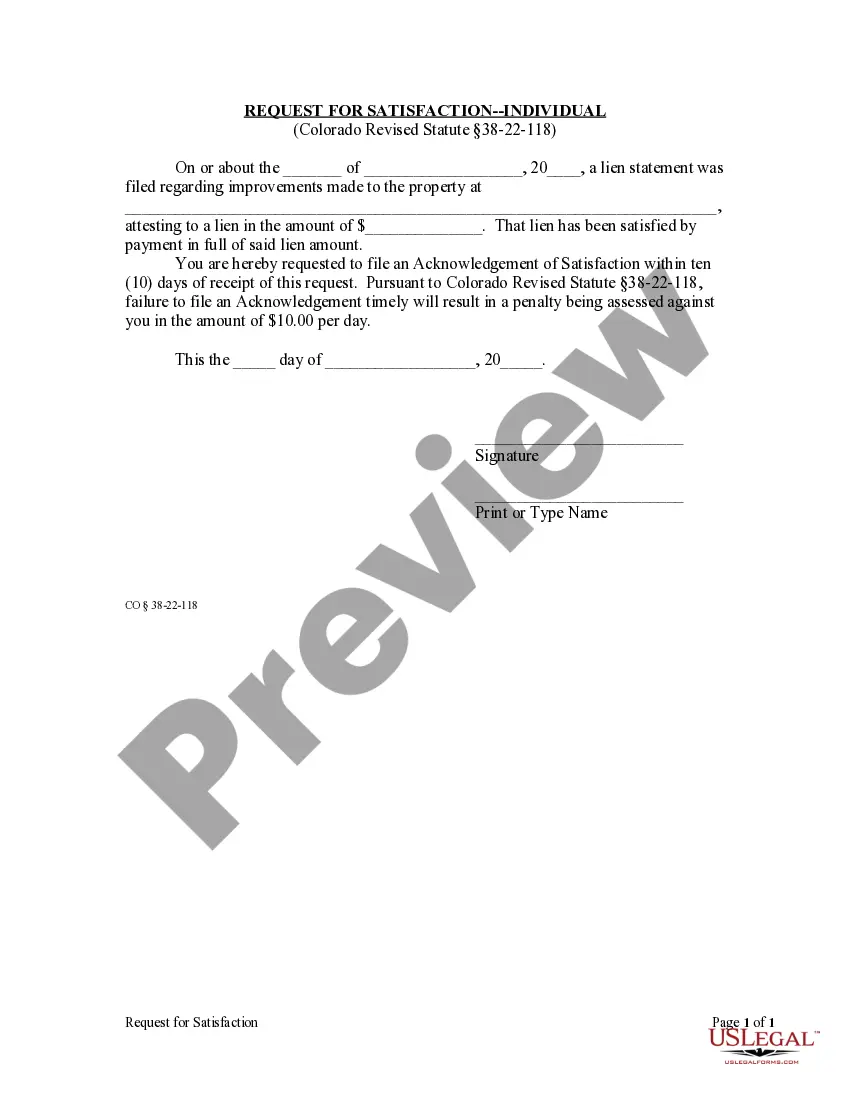
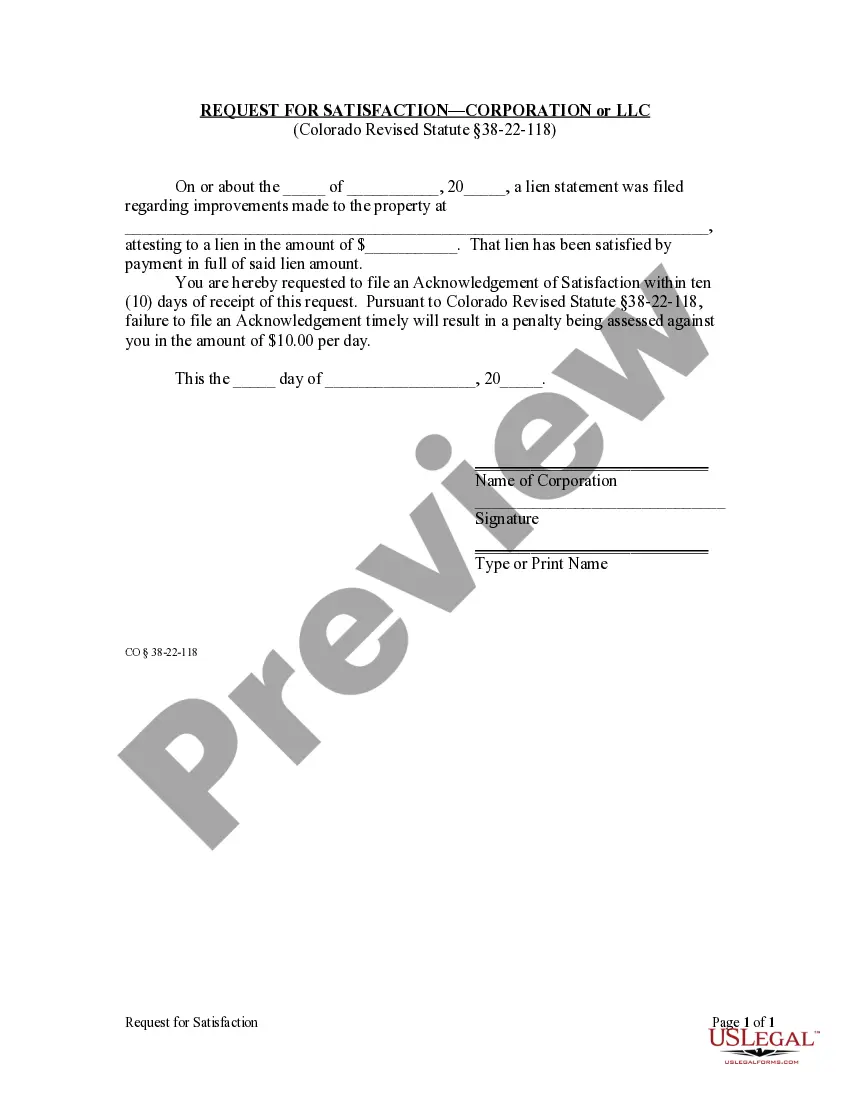
To Indemnify and save Bondsman, and his agents, harmless from and against every and all claims, at any time sustain or incur by reason of the making, filling, posting, and/or execution
of the Bond.
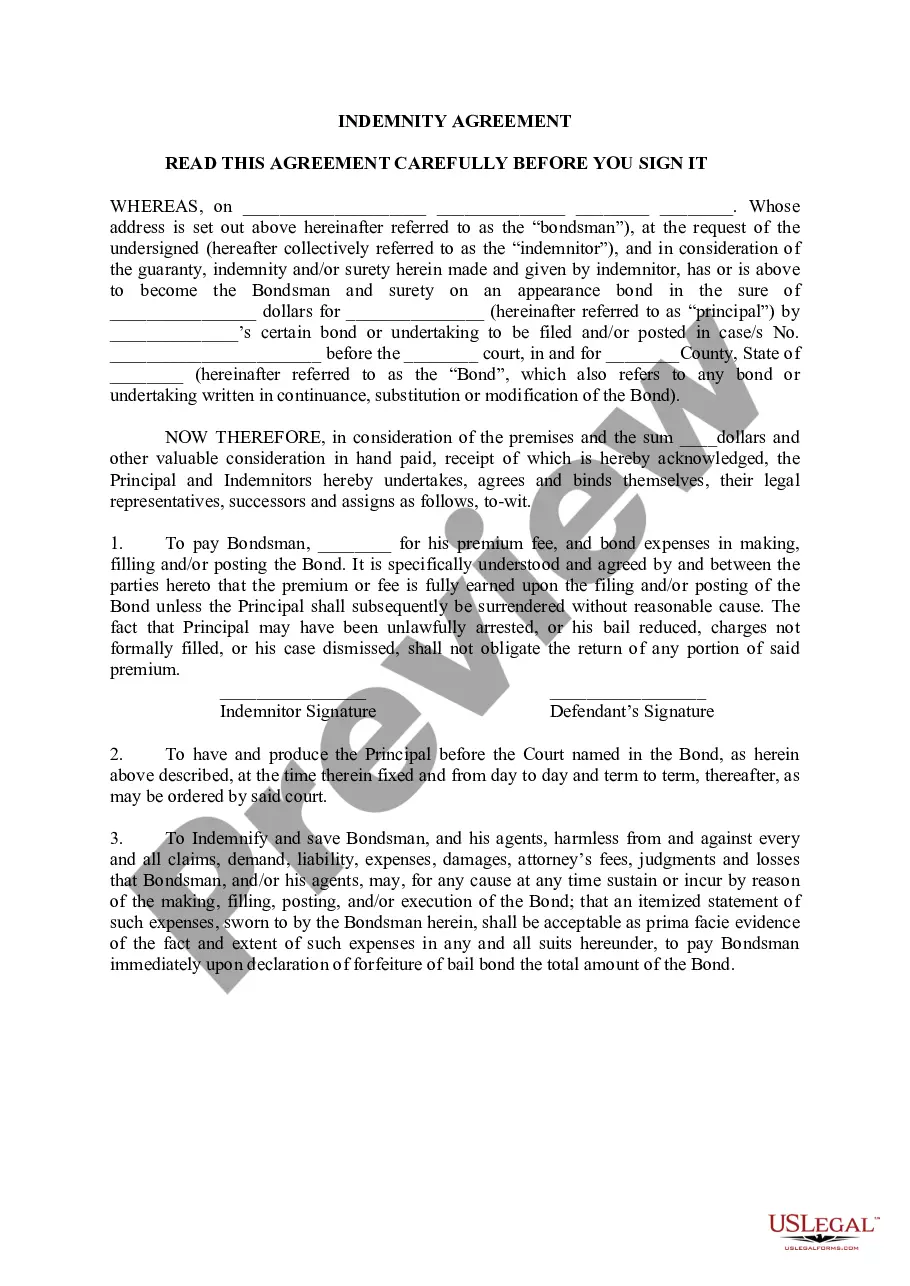
To Indemnify and save Bondsman, and his agents, harmless
from and against every and all claims, at any time sustain or incur by reason of the making, filling, posting, and/or execution
of the Bond.
Oklahoma Indemnity Agreement
Instant download
Description
Free preview
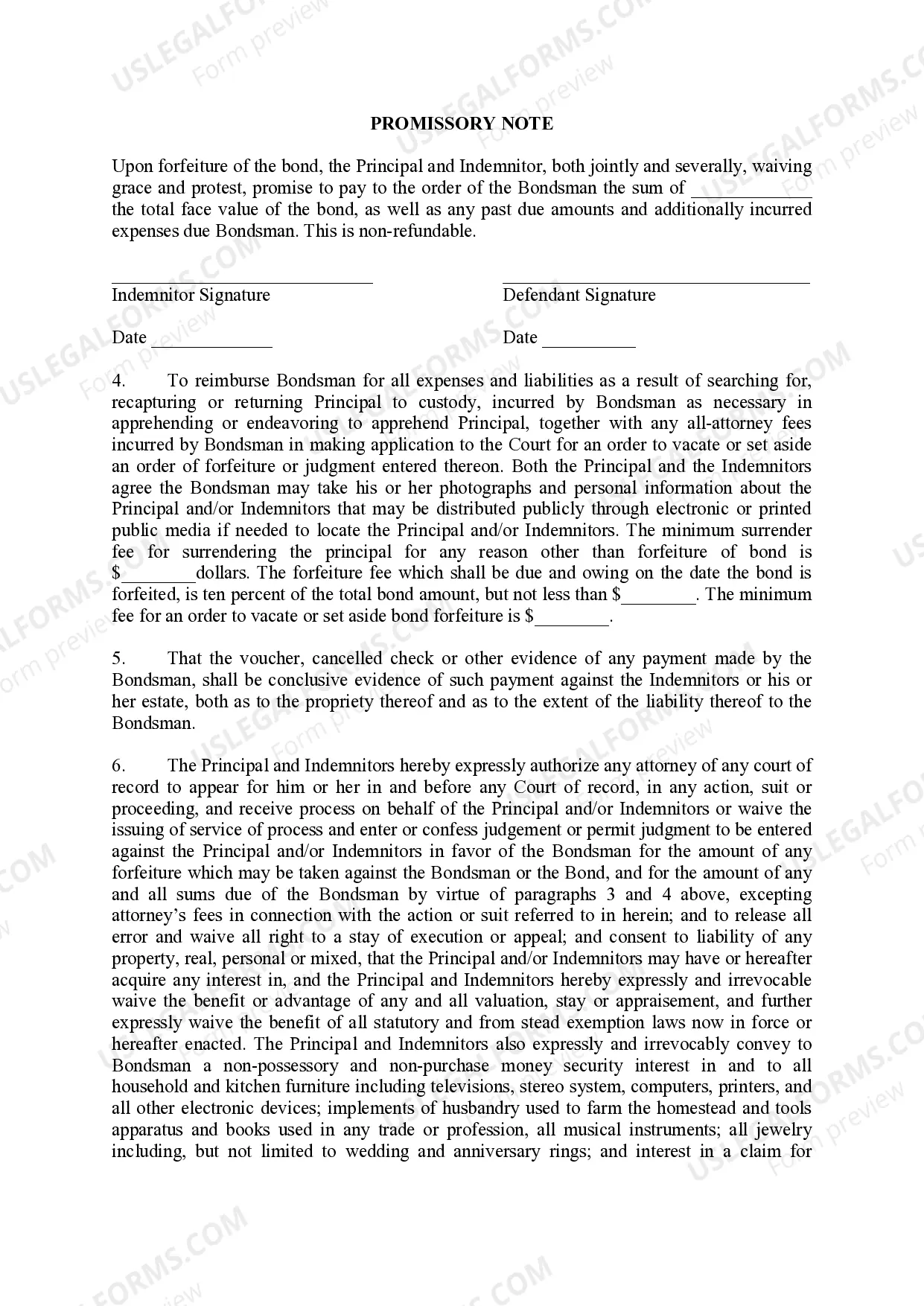
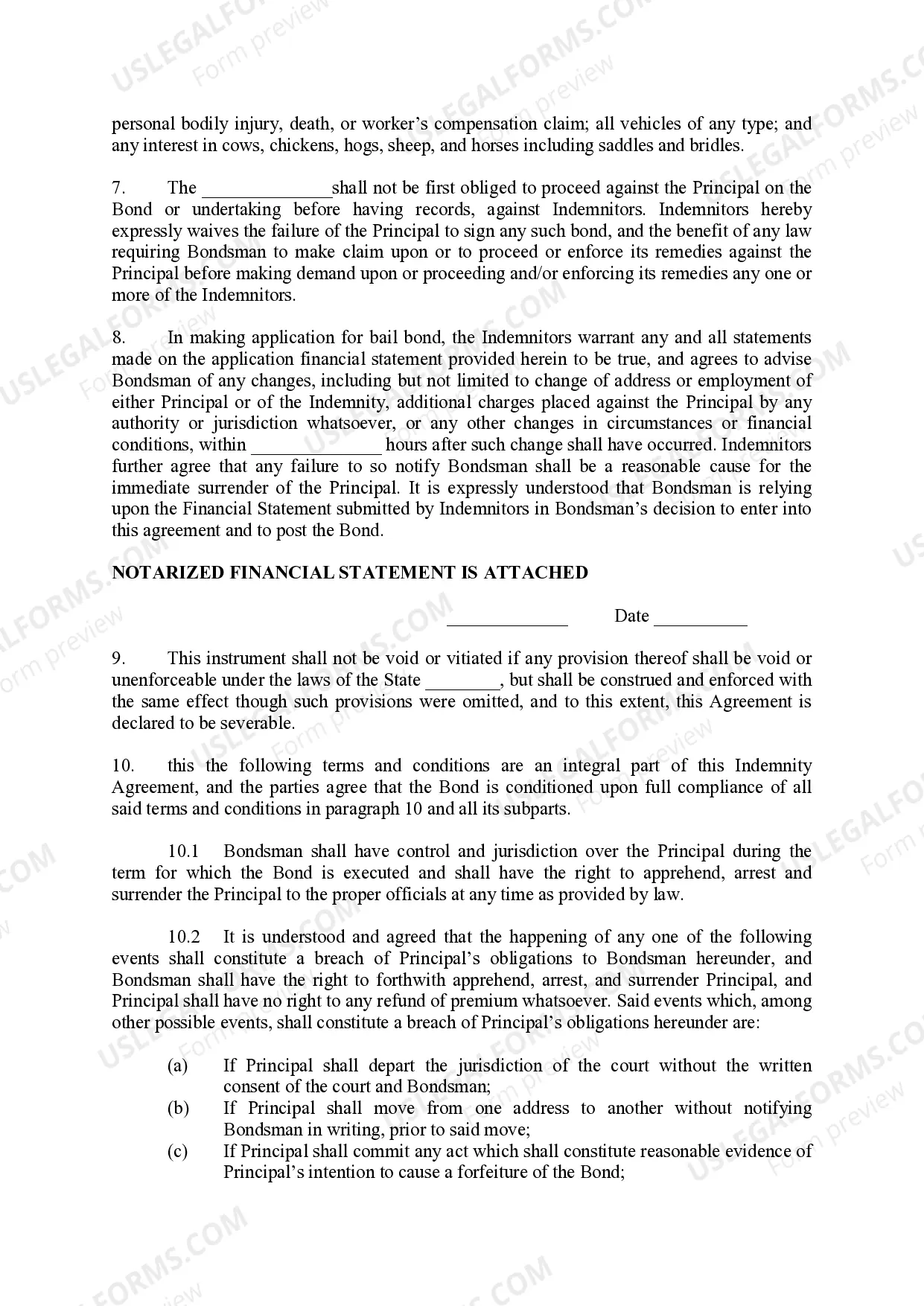
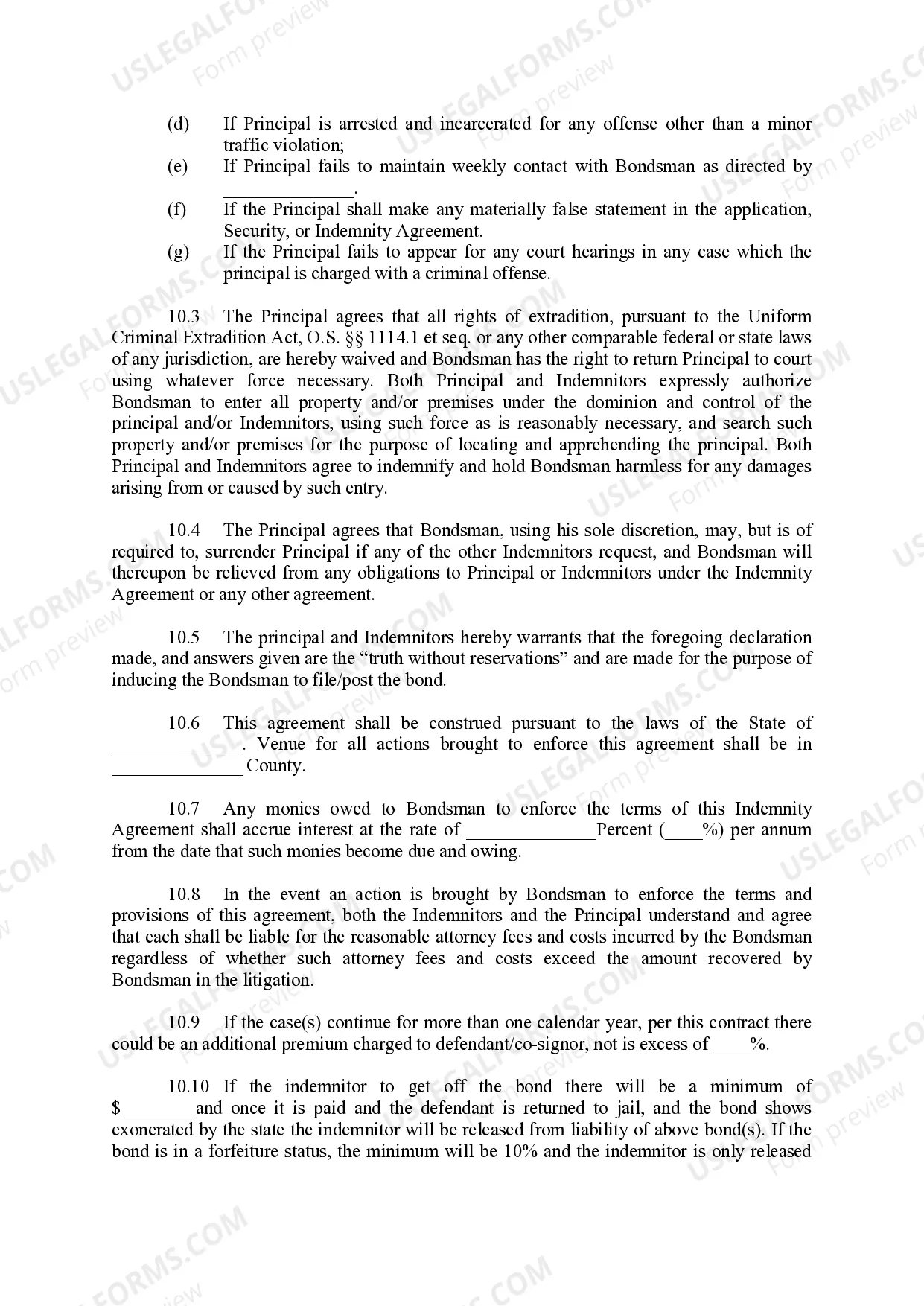
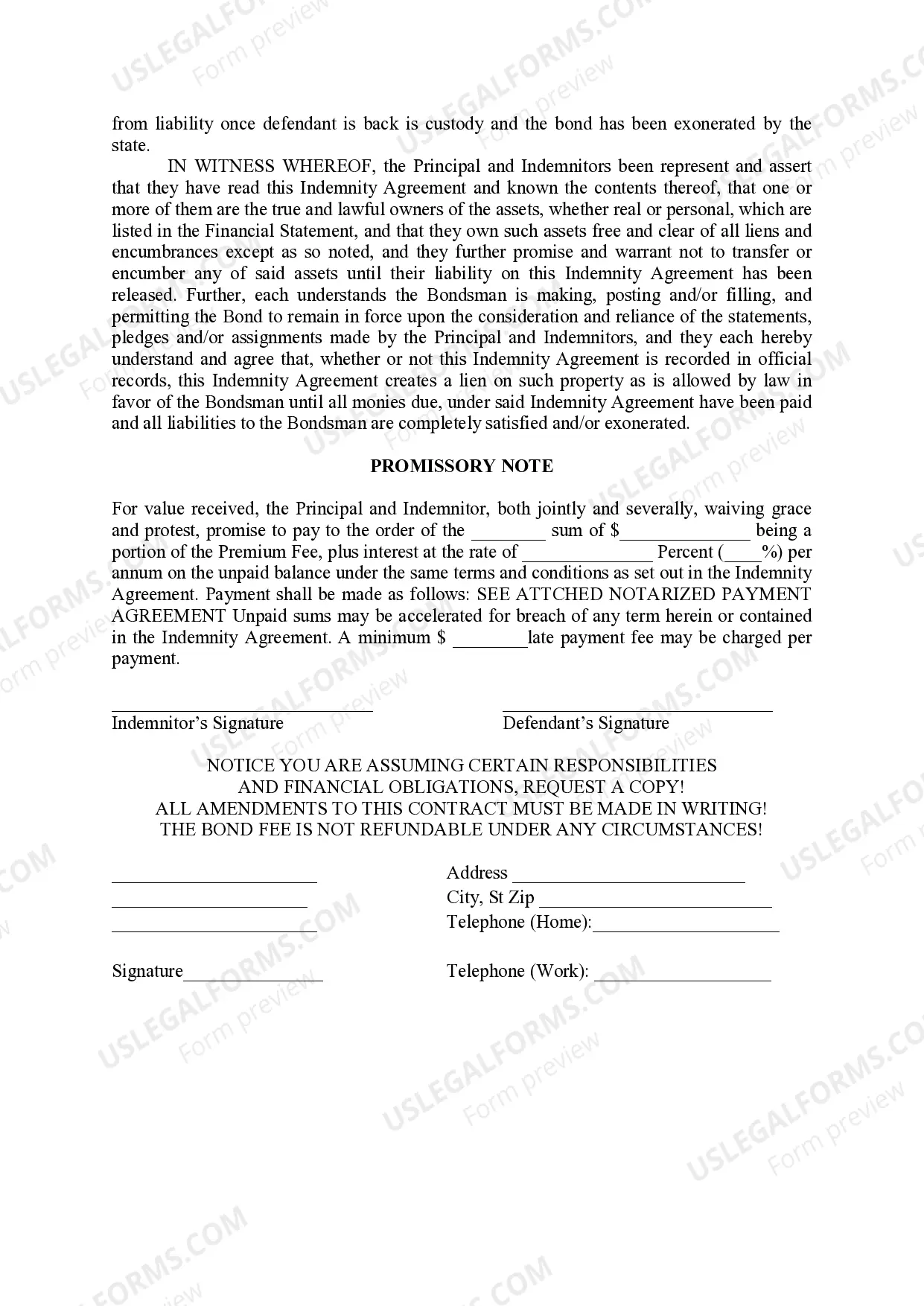
How to fill out Oklahoma Indemnity Agreement?
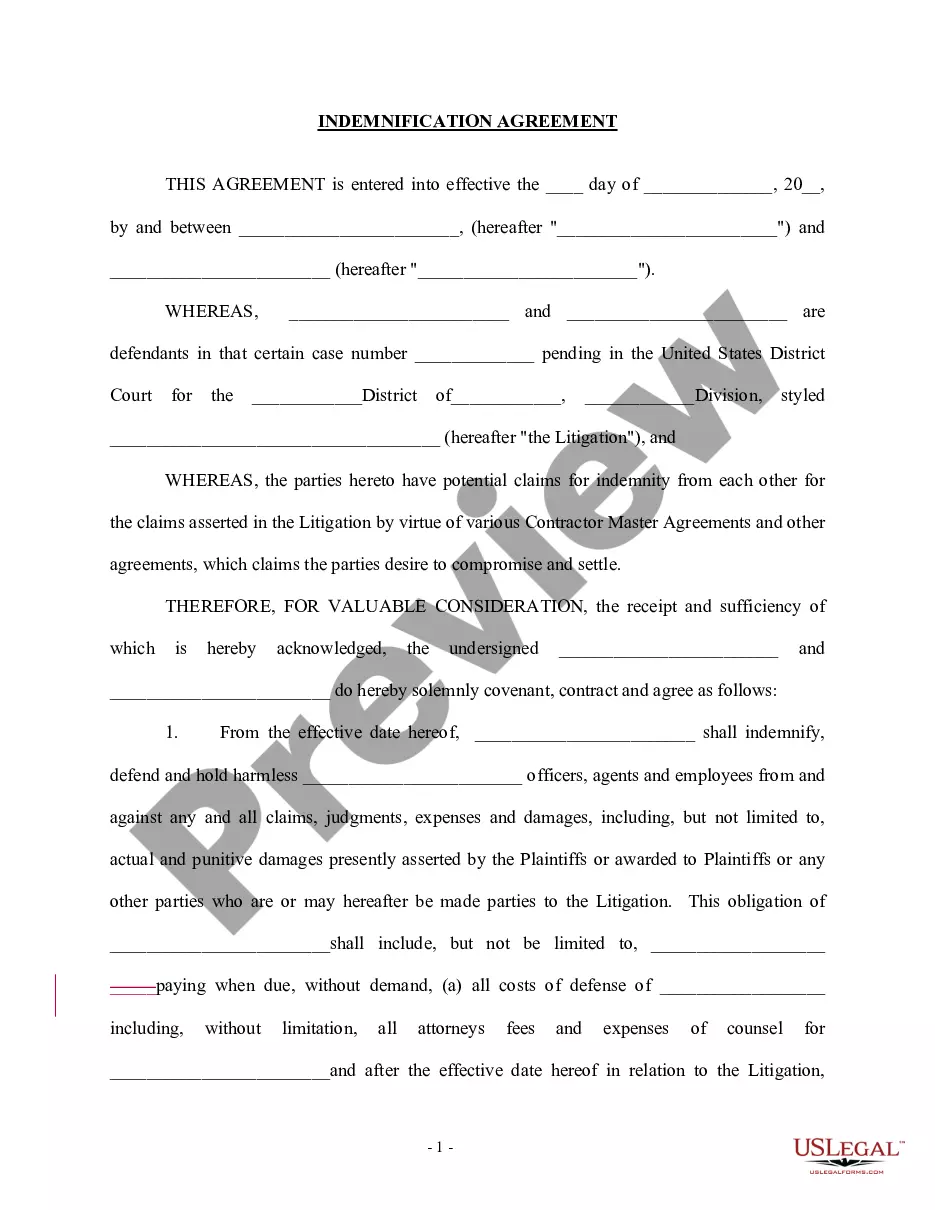
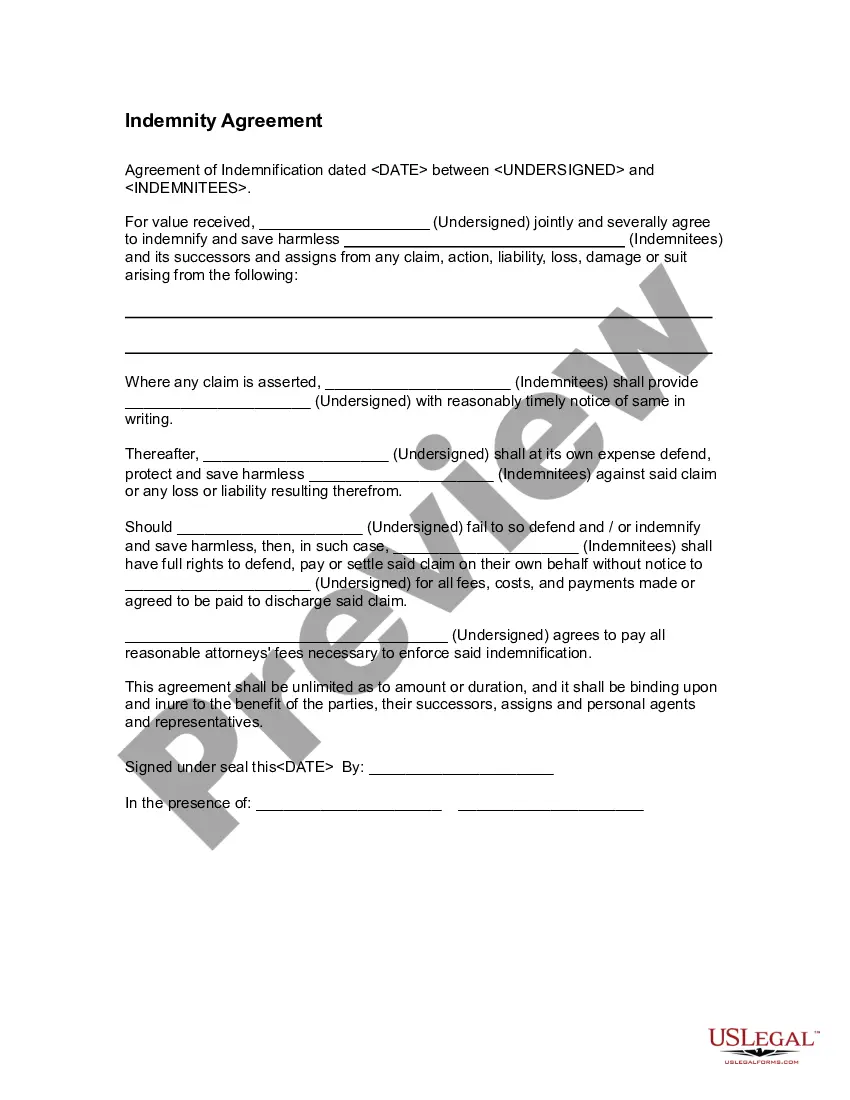
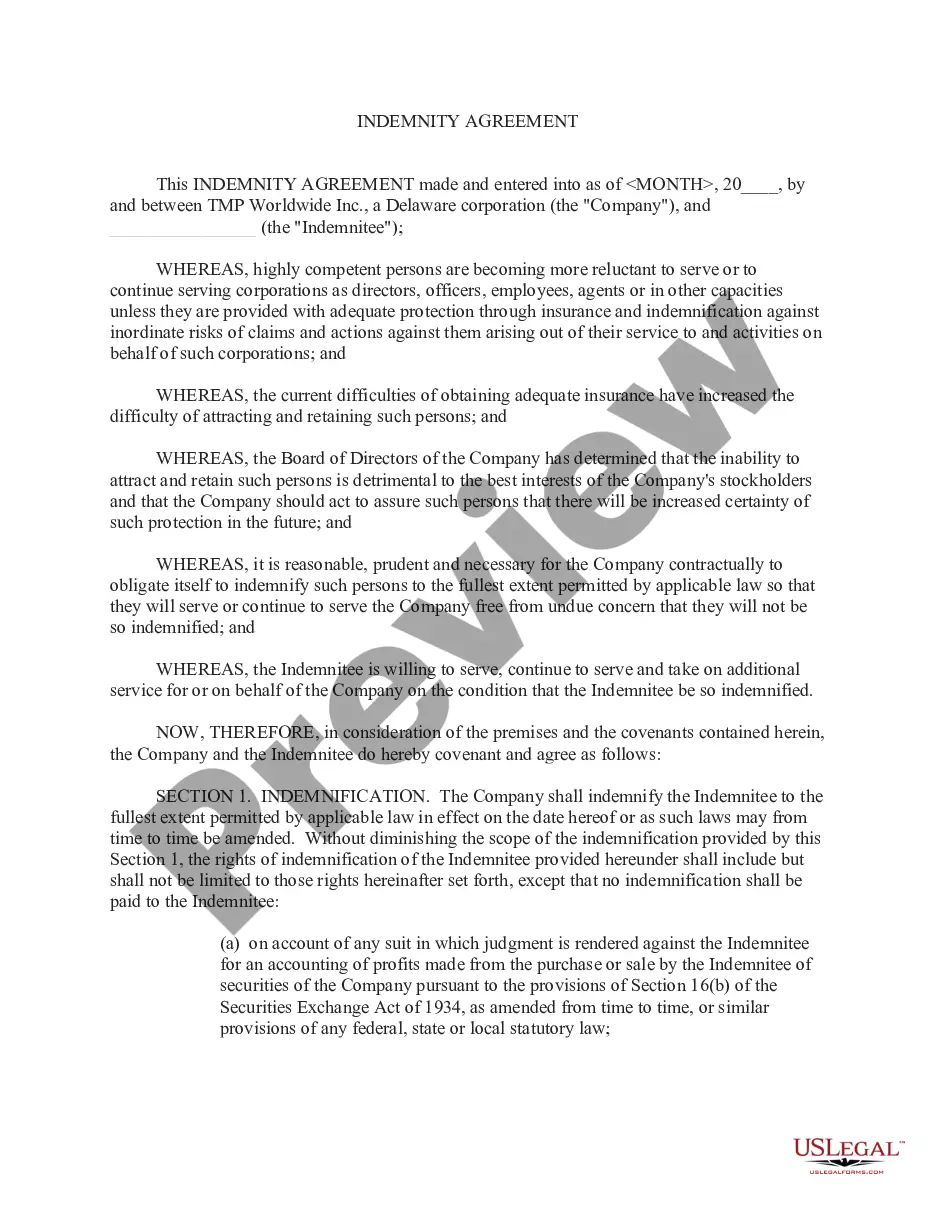
When it comes to completing Oklahoma Indemnity Agreement, you most likely imagine a long procedure that involves finding a perfect sample among countless similar ones then being forced to pay legal counsel to fill it out to suit your needs. Generally, that’s a sluggish and expensive choice. Use US Legal Forms and choose the state-specific form within just clicks.
If you have a subscription, just log in and then click Download to get the Oklahoma Indemnity Agreement form.
If you don’t have an account yet but need one, follow the point-by-point manual below:
- Make sure the document you’re getting applies in your state (or the state it’s required in).
- Do this by reading through the form’s description and by clicking on the Preview function (if available) to see the form’s content.
- Simply click Buy Now.
- Select the proper plan for your budget.
- Sign up to an account and choose how you want to pay: by PayPal or by card.
- Download the document in .pdf or .docx file format.
- Get the file on the device or in your My Forms folder.
Professional legal professionals draw up our samples so that after saving, you don't need to bother about editing content outside of your personal info or your business’s info. Be a part of US Legal Forms and get your Oklahoma Indemnity Agreement example now.
Form popularity
FAQ
If you've signed a contract, chances are you've seen an indemnity clause.In its simplest form, indemnity means that one party in the contract is responsible for compensating another for loss, damages, and/or injury incurred as a result of that party's actions.
Generally (but not always), California courts agree to provide indemnity for own negligence if the parties use sufficiently specific and explicit language that is strictly construed against the indemnitee.
By signing a broad form hold harmless agreement you are possibly exposing your company to uninsurable risk. Contractual Liability Coverage for sole or gross negligent acts of your client is excluded is y most liability policies.As with all contracts, it is best to have legal counsel review prior to signing.
The most important part of an indemnification clause is that it protects the indemnified party from lawsuits filed by third parties. This protection is important because damaged parties are still able to pursue compensation for their losses even if this clause isn't in the contract.
The main difference in this case is that hold harmless may require a party to protect against actual losses as well as potential losses while indemnification protects against actual losses only.
It's still your business decision whether you sign them or not, but you should do so only where it is a critical contract that you have no way of modifying or negotiating changes. In contrast, the best kind of Indemnity Agreement is commonly called a Mutual Indemnity Agreement or a Mutual Hold Harmless Provision.
When the term indemnity is used in the legal sense, it may also refer to an exemption from liability for damages. Indemnity is a contractual agreement between two parties. In this arrangement, one party agrees to pay for potential losses or damages caused by another party.