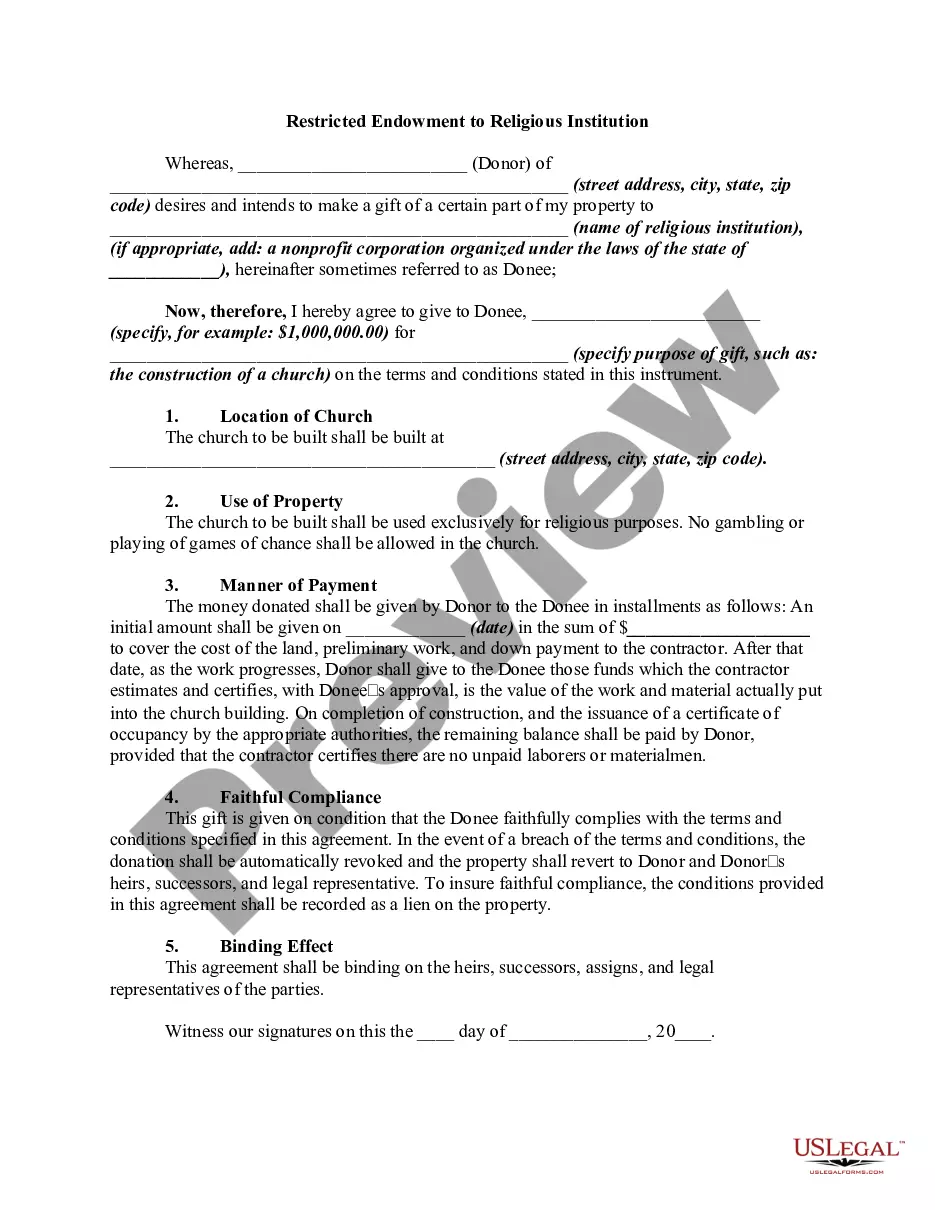
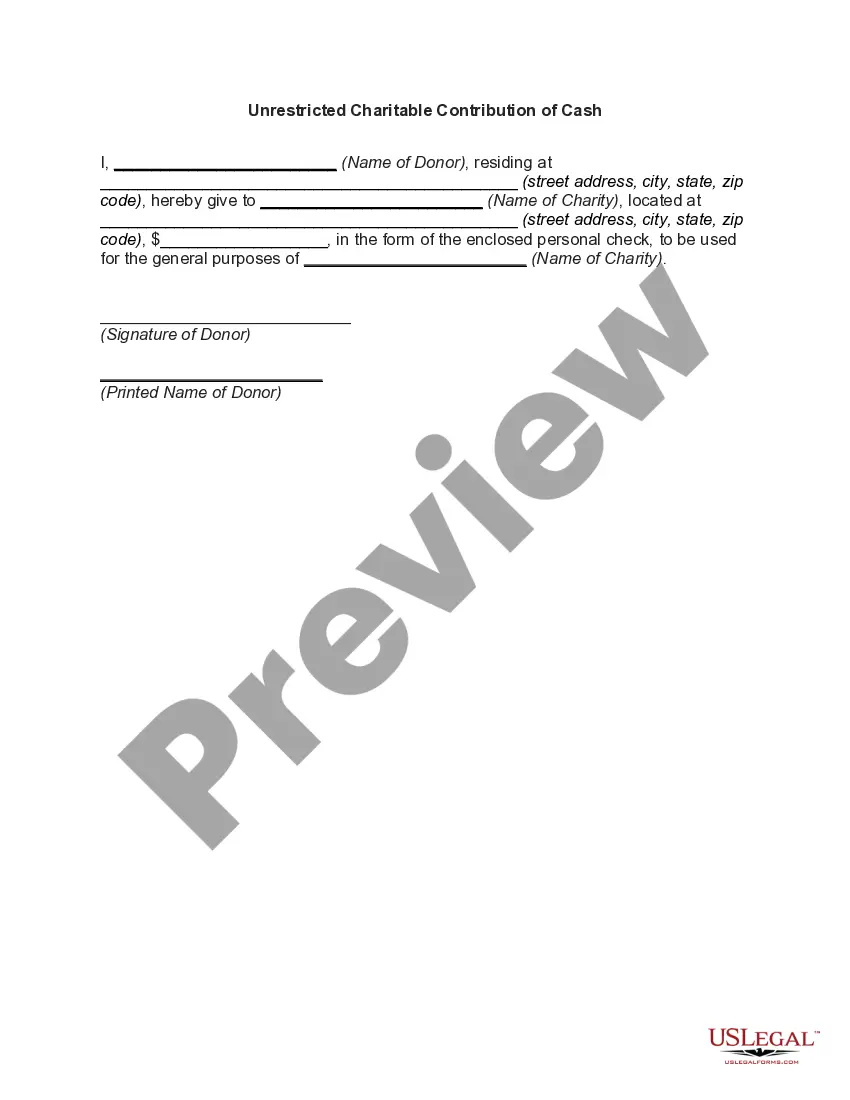
The following form is a gift for a restricted endowment to a religious institution.
Oklahoma Restricted Endowment to Religious Institution
Instant download
Description
Free preview


Get your form ready online
Our built-in tools help you complete, sign, share, and store your documents in one place.
Built-in online Word editor
Make edits, fill in missing information, and update formatting in US Legal Forms—just like you would in MS Word.
Export easily
Download a copy, print it, send it by email, or mail it via USPS—whatever works best for your next step.
E-sign your document
Sign and collect signatures with our SignNow integration. Send to multiple recipients, set reminders, and more. Go Premium to unlock E-Sign.
Notarize online 24/7
If this form requires notarization, complete it online through a secure video call—no need to meet a notary in person or wait for an appointment.
Store your document securely
We protect your documents and personal data by following strict security and privacy standards.

Make edits, fill in missing information, and update formatting in US Legal Forms—just like you would in MS Word.

Download a copy, print it, send it by email, or mail it via USPS—whatever works best for your next step.

Sign and collect signatures with our SignNow integration. Send to multiple recipients, set reminders, and more. Go Premium to unlock E-Sign.

If this form requires notarization, complete it online through a secure video call—no need to meet a notary in person or wait for an appointment.

We protect your documents and personal data by following strict security and privacy standards.
Looking for another form?




How to fill out Restricted Endowment To Religious Institution?
Have you ever found yourself in a situation where you require documents for both business or personal use nearly every day.
There are numerous legal document templates accessible online, but finding forms you can trust is not straightforward.
US Legal Forms offers a vast array of form templates, including the Oklahoma Limited Endowment to Religious Institution, designed to comply with state and federal regulations.
Once you find the correct form, just click Purchase now.
Select the pricing plan you desire, complete the necessary details to create your account, and pay for the order using your PayPal or Visa or Mastercard. Choose a convenient document format and download your version. Access all the document templates you have purchased in the My documents section. You can retrieve an additional copy of the Oklahoma Limited Endowment to Religious Institution whenever necessary. Just select the desired form to download or print the document template. Use US Legal Forms, the most extensive collection of legal forms, to save time and avoid errors. The service provides properly drafted legal document templates that can be utilized for a variety of purposes. Create an account on US Legal Forms and start simplifying your life.
- If you are already familiar with the US Legal Forms website and possess an account, simply Log In.
- After that, you can download the Oklahoma Limited Endowment to Religious Institution template.
- If you do not have an account and wish to start using US Legal Forms, follow these steps.
- Locate the form you need and ensure it is for your specific state/region.
- Use the Preview button to view the form.
- Check the description to confirm that you have selected the correct form.
- If the form is not what you are looking for, utilize the Search box to find the form that fits your needs and requirements.
Form popularity
FAQ
The 4% rule for endowments serves as a guideline for determining sustainable withdrawal rates from an endowment fund. By withdrawing 4% of the fund's average value over several years, organizations can aim to preserve capital while meeting current operational needs. Relating this to an Oklahoma Restricted Endowment to Religious Institution can help institutions balance current funding with future generosity.
The 5% rule for endowment refers to a guideline suggesting that organizations withdraw no more than 5% of their endowment's total value annually to maintain its purchasing power over time. This approach promotes long-term stability and prevents the depletion of funds essential for future operations. When considering an Oklahoma Restricted Endowment to Religious Institution, adopting prudent financial strategies like the 5% rule is wise.
A restricted endowment refers to funds that an organization must use according to specific limitations imposed by the donor. These restrictions usually dictate how and when the funds can be utilized, ensuring they serve the intended purpose long-term. For religious institutions in Oklahoma, understanding the implications of a restricted endowment is crucial for effective financial planning.
Setting up an endowment usually requires a commitment of funds, adherence to applicable legal regulations, and the establishment of specific guidelines for fund use. Institutions often need to engage stakeholders to determine the endowment's purpose and alignment with overarching goals. For those interested in creating an Oklahoma Restricted Endowment to Religious Institution, organized planning and consultation with legal experts, such as those available on the Uslegalforms platform, is essential.
The three primary types of endowments are true endowments, term endowments, and quasi-endowments. True endowments contain permanently restricted funds intended for a particular purpose, while term endowments have a fixed duration for fund usage. Quasi-endowments offer institutions more flexibility in accessing funds as needed, making them a vital consideration in establishing an Oklahoma Restricted Endowment to Religious Institution.
An endowment permanently restricts the use of funds provided to an institution, ensuring that the principal amount remains intact while the generated earnings support operations. In contrast, a quasi-endowment allows the institution some flexibility, enabling it to use the funds for specific purposes without strict limitations. Understanding the distinction is essential when considering an Oklahoma Restricted Endowment to Religious Institution.
Oklahoma has a reputation for being a religious state, with a significant portion of its population engaged in various faith-based communities. This environment influences discussions about the Oklahoma Restricted Endowment to Religious Institution and its implications for financing religious entities. While the state is diverse in beliefs, legal frameworks guide the relationship between religion and state-supported initiatives. Engaging with these frameworks can provide clarity on funding opportunities in Oklahoma.
The Oklahoma Constitution provides provisions that ensure the separation of church and state, directly impacting the Oklahoma Restricted Endowment to Religious Institution. It states that no public funds can support religious activities or institutions. This legal framework influences how religious organizations acquire funding and interact with state resources. For those interested in understanding this dynamic, it's essential to consider these constitutional limits.
The recent ruling on the Oklahoma charter school emphasizes the legal complexities surrounding funding and sponsorship. The court highlighted constraints on financial support derived from the Oklahoma Restricted Endowment to Religious Institution. This decision impacts how charter schools operate, particularly their ability to collaborate with religious organizations. Understanding these rulings is crucial for stakeholders looking to navigate the educational landscape.
As of the last reported figures, UCLA's endowment surpassed $5 billion, reflecting its strong financial foundation. This substantial sum empowers the university to support various initiatives, including research, scholarships, and other educational programs. Similar financial strategies can be applied to institutions managing an Oklahoma Restricted Endowment to Religious Institution, providing a blueprint for sustainable funding.