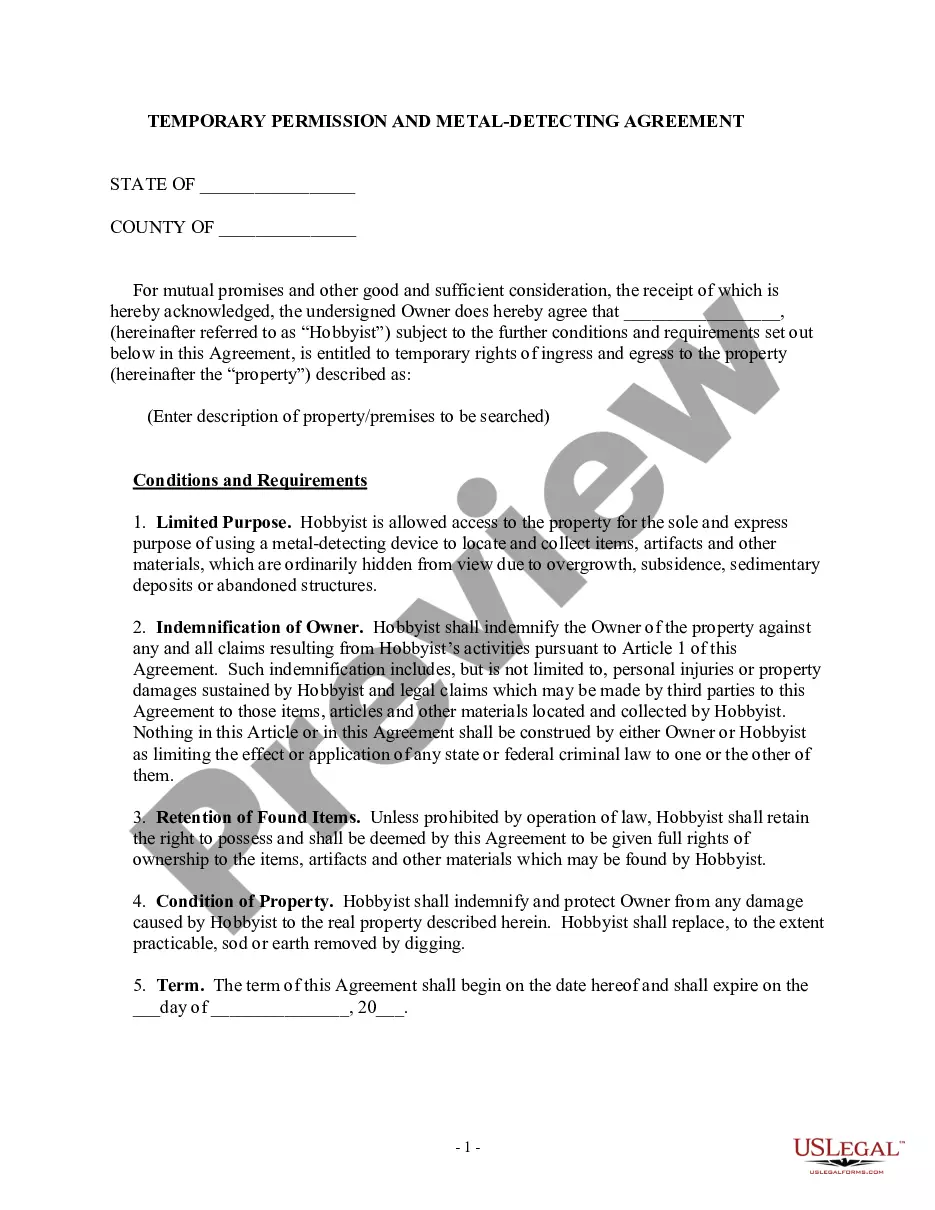
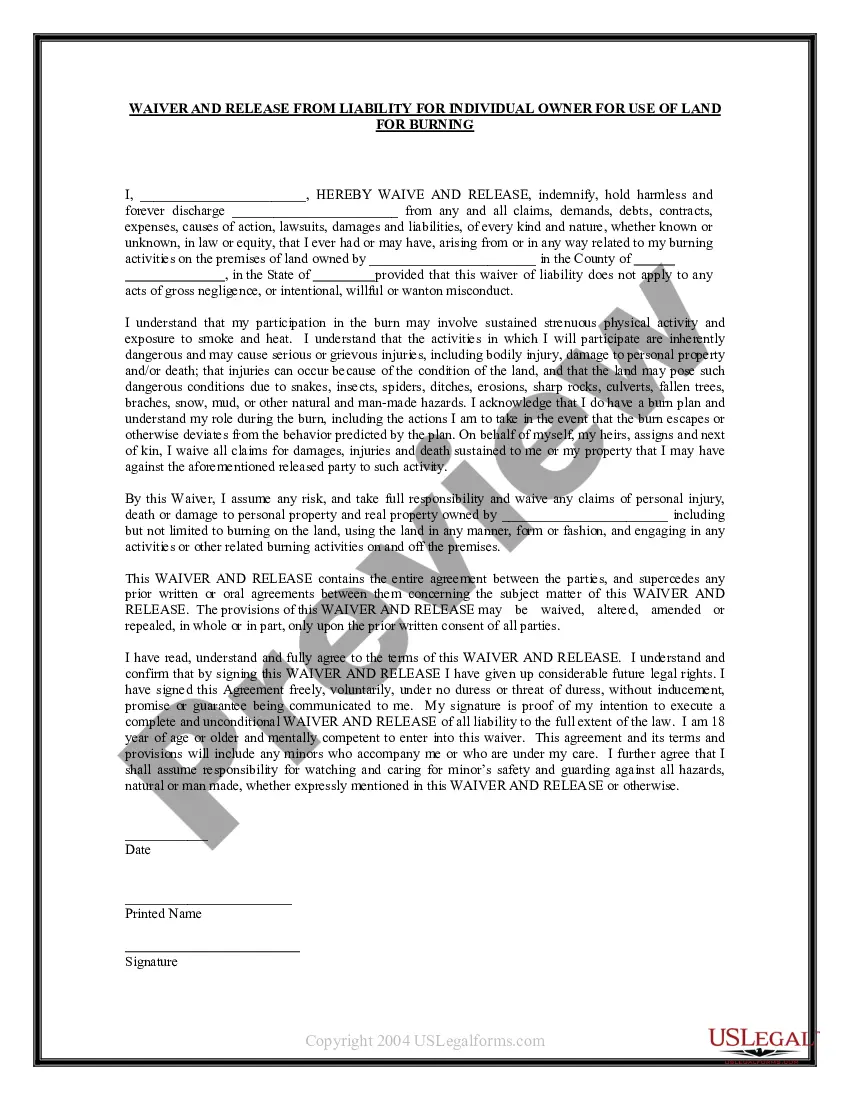
This form releases a property owner from liability for permitting an individual from burning on the property owner's land.
Oklahoma Waiver and Release From Liability For Adult for Land for Individual Burning
State:
Multi-State
Category:
Control #:
US-WAV-63A
Format:
Word;
Rich Text
60 downloads
Description
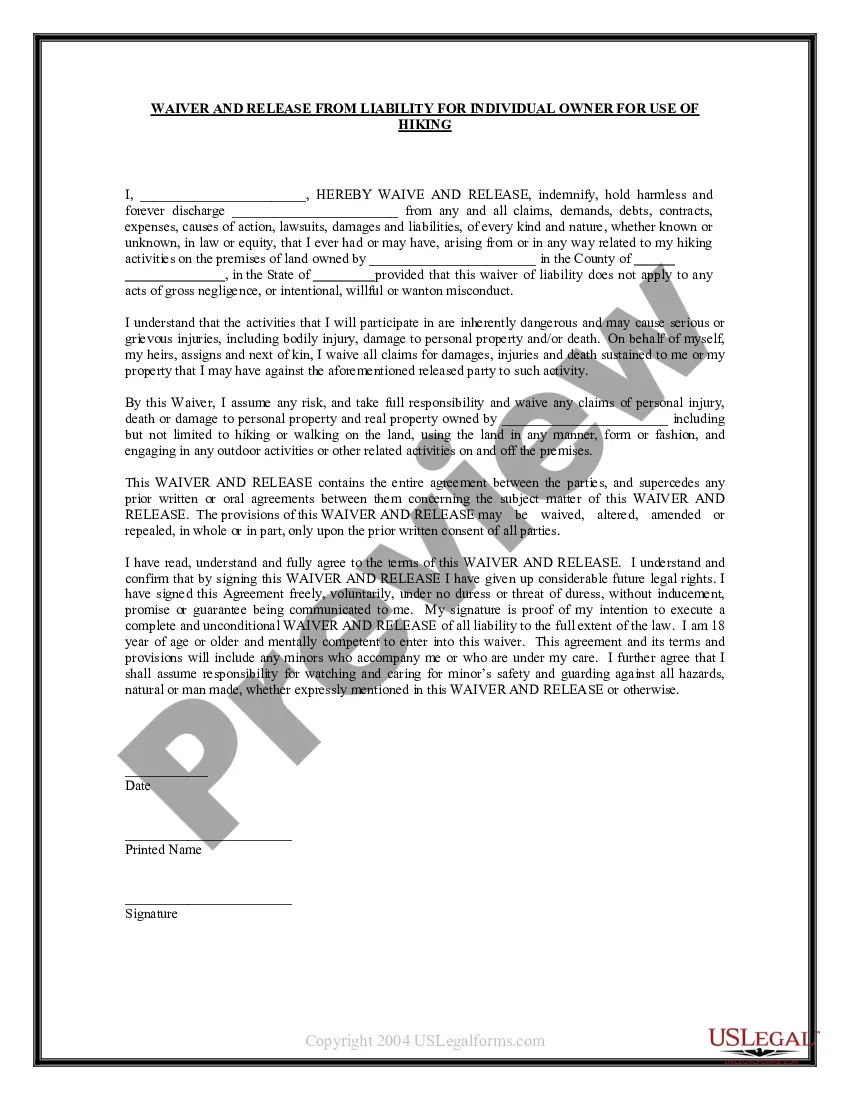
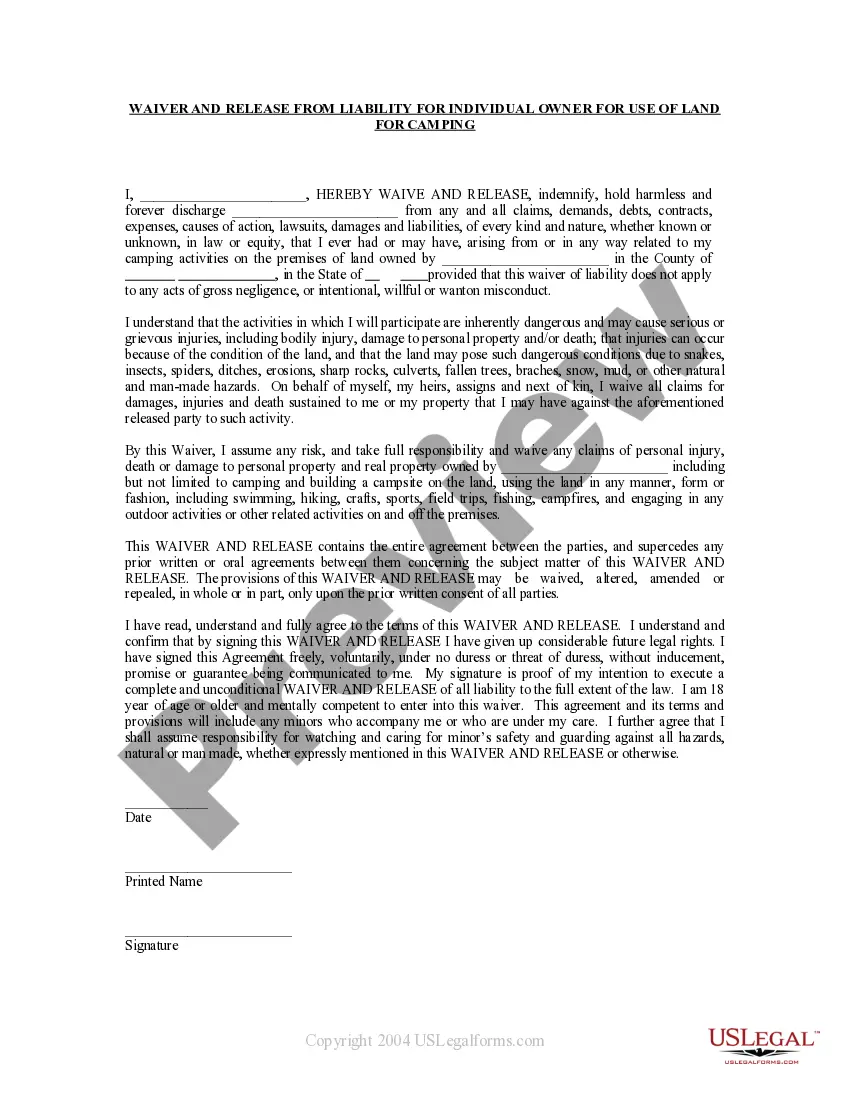
Get your form ready online
Our built-in tools help you complete, sign, share, and store your documents in one place.
Built-in online Word editor
Make edits, fill in missing information, and update formatting in US Legal Forms—just like you would in MS Word.
Export easily
Download a copy, print it, send it by email, or mail it via USPS—whatever works best for your next step.
E-sign your document
Sign and collect signatures with our SignNow integration. Send to multiple recipients, set reminders, and more. Go Premium to unlock E-Sign.
Notarize online 24/7
If this form requires notarization, complete it online through a secure video call—no need to meet a notary in person or wait for an appointment.
Store your document securely
We protect your documents and personal data by following strict security and privacy standards.

Make edits, fill in missing information, and update formatting in US Legal Forms—just like you would in MS Word.

Download a copy, print it, send it by email, or mail it via USPS—whatever works best for your next step.

Sign and collect signatures with our SignNow integration. Send to multiple recipients, set reminders, and more. Go Premium to unlock E-Sign.

If this form requires notarization, complete it online through a secure video call—no need to meet a notary in person or wait for an appointment.

We protect your documents and personal data by following strict security and privacy standards.
Looking for another form?

How to fill out Waiver And Release From Liability For Adult For Land For Individual Burning?
Finding the correct legal document template can be a challenge.
Indeed, numerous templates are available online, but how can you locate the legal form you require.
Utilize the US Legal Forms website.
First, ensure you have selected the correct form for your state/region. You can preview the form using the Review button and read the form details to confirm it is the right one for you.
- The service provides thousands of templates, such as the Oklahoma Waiver and Release From Liability For Adult for Land for Individual Burning, suitable for both business and personal needs.
- All forms are reviewed by professionals and comply with state and federal regulations.
- If you are already registered, Log In to your account and click the Download button to get the Oklahoma Waiver and Release From Liability For Adult for Land for Individual Burning.
- Use your account to search through the legal forms you have purchased previously.
- Visit the My documents tab in your account and download another copy of the document you need.
- If you are a new user of US Legal Forms, here are simple instructions to follow.
Form popularity
FAQ
Liability waivers are enforceable in California solely to the extent they shift to the customer the risk of ordinary negligence. Under California law, a liability waiver cannot excuse an injury caused by a defendant's gross negligence, recklessness or intentionally wrongful act.
How long do I keep signed waivers? The sponsoring unit is required to retain the waiver for six (6) years after the end of the event or activity for which the waiver was signed.
A waiver is a legally binding provision where either party in a contract agrees to voluntarily forfeit a claim without the other party being liable. Waivers can either be in written form or some form of action.
A liability waiver, or release waiver, is a legal document that a company or organization requires members of the public to sign in order to protect their organization from being sued if you sustain an injury.
If the risks are specifically outlined in the waiver, chances are you will experience them. If nothing else, reading the waiver will prepare you for the activity, which may help you avoid injuries. The document will also state that signing the waiver releases the company of any injury liability.
Generally, a liability waiver document is a legally binding agreement that relinquishes the right of one party to pursue legal remedy for injuries accrued on the property, regardless of fault involved.
Additionally, to be enforceable in California a waiver of liability must be clear, unambiguous, and explicit in expressing the parties' intent. This means waivers printed in faint or small font, or in an inconspicuous place (deep in a document, on the back of a page, etc.), are less likely to be held enforceable.
In California, waivers of liability are generally enforceable so long as they have been drafted correctly, are explicit as to the scope of coverage, are legible and use high-visibility text, and do not illegally waive unknown or unrelated claims.
As tempting as it may be, you should never write your own liability waiver. Unless you're a fully qualified lawyer with experience in this area, it's likely that you'll omit critical language that puts your business at risk for lawsuits.
To sum it up, customers can still sue business owners even when they've signed a waiver to use the business.