Oregon Letter to Earnest Money Holder
Understanding this form
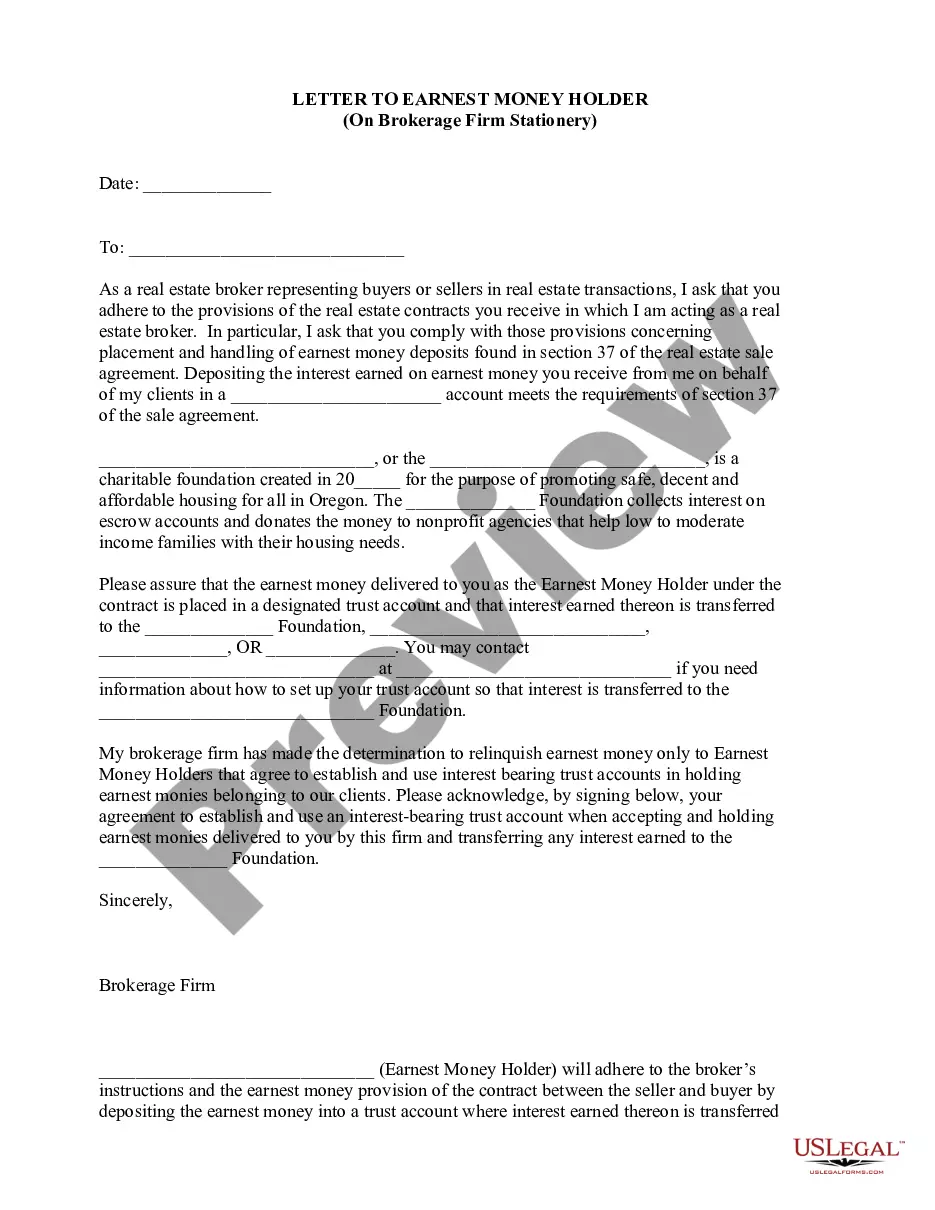
The Letter to Earnest Money Holder is a legal document used in real estate transactions, specifically in Oregon. It requests that the holder of earnest money comply with the provisions outlined in the real estate contract. This form distinguishes itself by directing accrued interest from earnest money deposits to a charitable foundation that supports housing for low to moderate income families, reinforcing social responsibility in real estate dealings.
Main sections of this form
- Date: The date when the letter is prepared.
- Recipient: The name of the earnest money holder or brokerage firm.
- Contract provisions: Specific sections from the real estate contract regarding earnest money handling.
- Charitable foundation details: Information about the foundation receiving interest from earnest money.
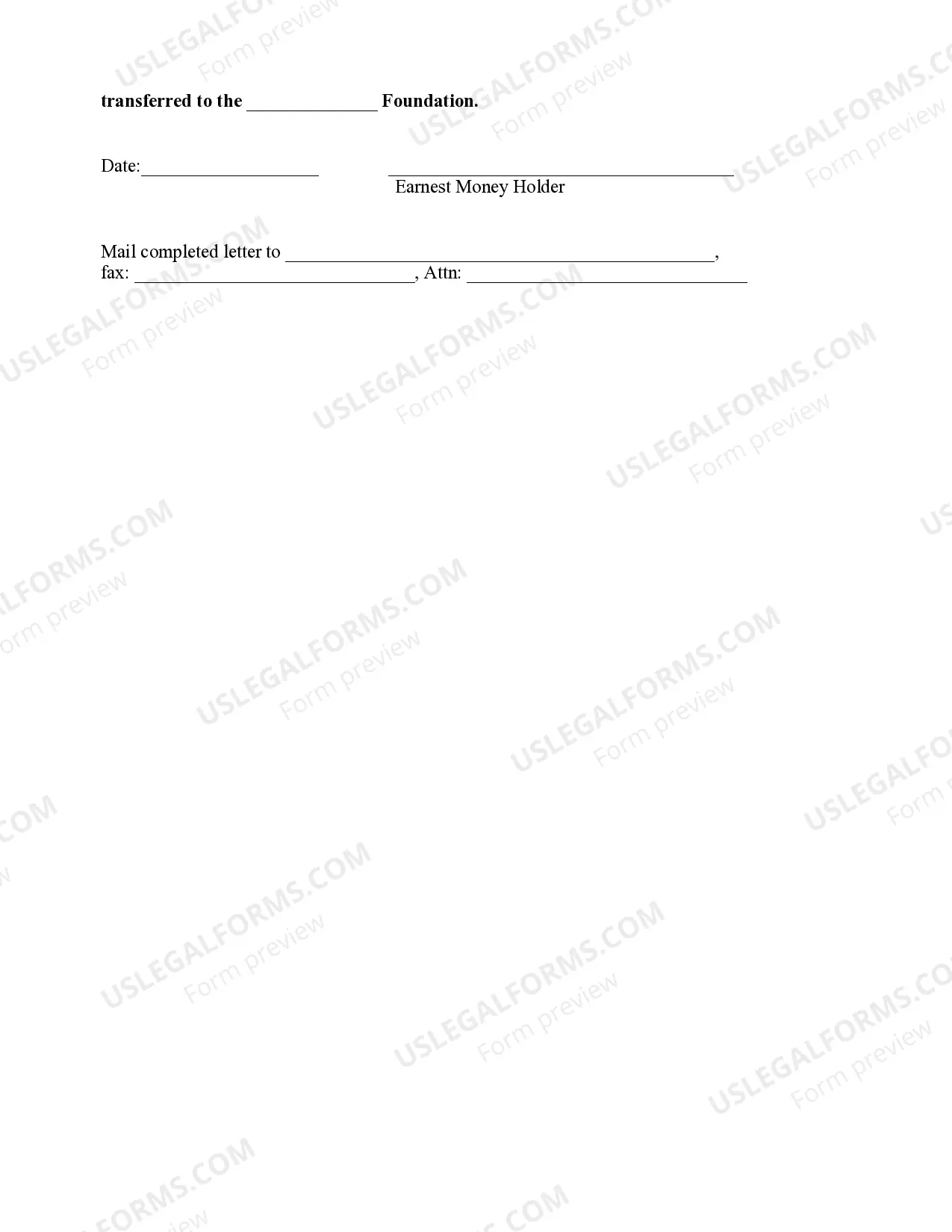
- Acknowledgment section: Space for the earnest money holder to agree and sign, confirming adherence to the terms outlined.
- Contact information: Details for further communication regarding the trust account setup.
When to use this form
This form is utilized when engaging in real estate transactions in Oregon that involve earnest money deposits. Real estate brokers representing buyers or sellers might need to request that earnest money holders deposit these funds into a designated trust account, particularly when they wish for the interest to help charitable organizations focused on housing support. It is essential for ensuring compliance with contractual obligations regarding earnest money handling.
Who this form is for
- Real estate brokers acting on behalf of clients in Oregon.
- Buyers and sellers involved in real estate transactions requiring earnest money.
- Earnest money holders who need to comply with state-specific contractual provisions.
Completing this form step by step
- Identify the date the letter is prepared.
- Enter the name of the earnest money holder.
- Specify the charitable foundation's name and details where interest will be directed.
- Provide contract specifics as mentioned in the real estate agreement.
- Have the earnest money holder sign the document to confirm agreement.
- Mail or fax the completed letter to the appropriate parties as specified.
Does this form need to be notarized?
This form does not typically require notarization unless specified by local law. Be sure to check any specific state requirements that may apply to your situation.
Get your form ready online
Our built-in tools help you complete, sign, share, and store your documents in one place.
Make edits, fill in missing information, and update formatting in US Legal Forms—just like you would in MS Word.
Download a copy, print it, send it by email, or mail it via USPS—whatever works best for your next step.
Sign and collect signatures with our SignNow integration. Send to multiple recipients, set reminders, and more. Go Premium to unlock E-Sign.
If this form requires notarization, complete it online through a secure video call—no need to meet a notary in person or wait for an appointment.
We protect your documents and personal data by following strict security and privacy standards.

Make edits, fill in missing information, and update formatting in US Legal Forms—just like you would in MS Word.

Download a copy, print it, send it by email, or mail it via USPS—whatever works best for your next step.

Sign and collect signatures with our SignNow integration. Send to multiple recipients, set reminders, and more. Go Premium to unlock E-Sign.

If this form requires notarization, complete it online through a secure video call—no need to meet a notary in person or wait for an appointment.

We protect your documents and personal data by following strict security and privacy standards.
Mistakes to watch out for
- Failing to include all required details about the charitable foundation.
- Not reviewing the real estate contract before completing the letter.
- Omitting signatures from the earnest money holder.
- Using incorrect or outdated forms.
Advantages of online completion
- Convenient access to fillable templates that save time and effort.
- Editability allows users to customize the form to specific transactions.
- Reliability through attorney-drafted content ensuring legal compliance.
Looking for another form?
Form popularity
FAQ
An earnest money deposit receipt is given to a buyer of real estate after entering into a purchase agreement with a seller. The deposit slip is given to the buyer after funds have been received which binds the parties into the agreement.
An earnest money deposit receipt is given to a buyer of real estate after entering into a purchase agreement with a seller. The deposit slip is given to the buyer after funds have been received which binds the parties into the agreement.
Receipt of the deposit must be verified by either a copy of the borrower's canceled check or a written statement from the holder of the deposit.
What is an escrow letter in real estate? Escrow Letter means the letter from the Facility Agent acknowledged by the Company dated on or about the date hereof regarding the various payments to be made at or about the Closing in respect of the Closing.
An earnest money receipt produces a paper record detailing information about the money allocated to secure the purchase of real estate before the predetermined closing date. The earnest money is granted to the buyer as a demonstration of good faith.
When buying your home, you will be asked for an ?Earnest money? deposit. While many inexperienced home buyers think that this is the down payment, it really isn't. The earnest money deposit is made along with your offer to show the buyer that you are a serious buyer and goes TOWARDS your down payment.
Earnest Money ? Specify the amount of earnest (?good faith?) money you intend to submit if and when a contract is written. This money is your guarantee that you'll hold up your end of the deal. The purchase and sale contract will contain precise language for how earnest money is to be handled.
Assuming your earnest money is refundable and is still held in escrow by the title company, in a usual transaction, you will receive it back if you cancel the sale based upon inspection results or failure of financing (you as the borrower or the property fails appraisal because of condition or value), assuming your