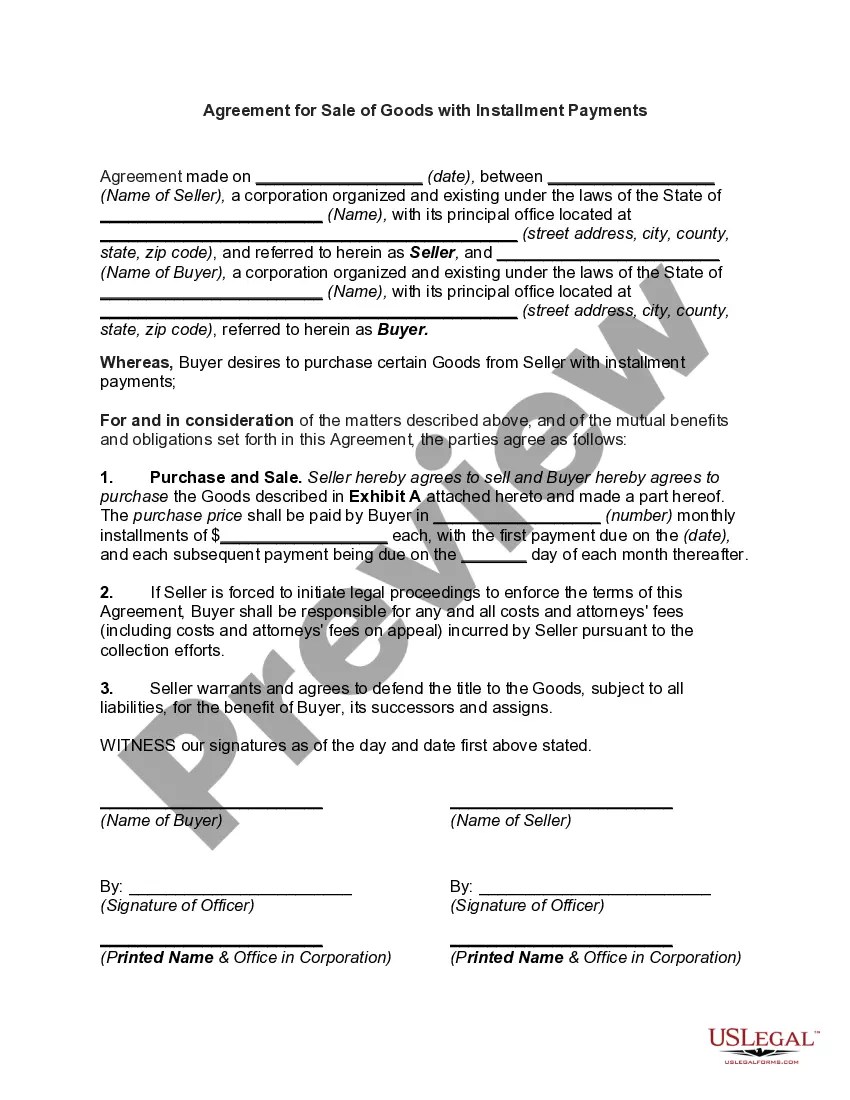
Oregon Agreed Order Granting Additional Time to Plead
Description
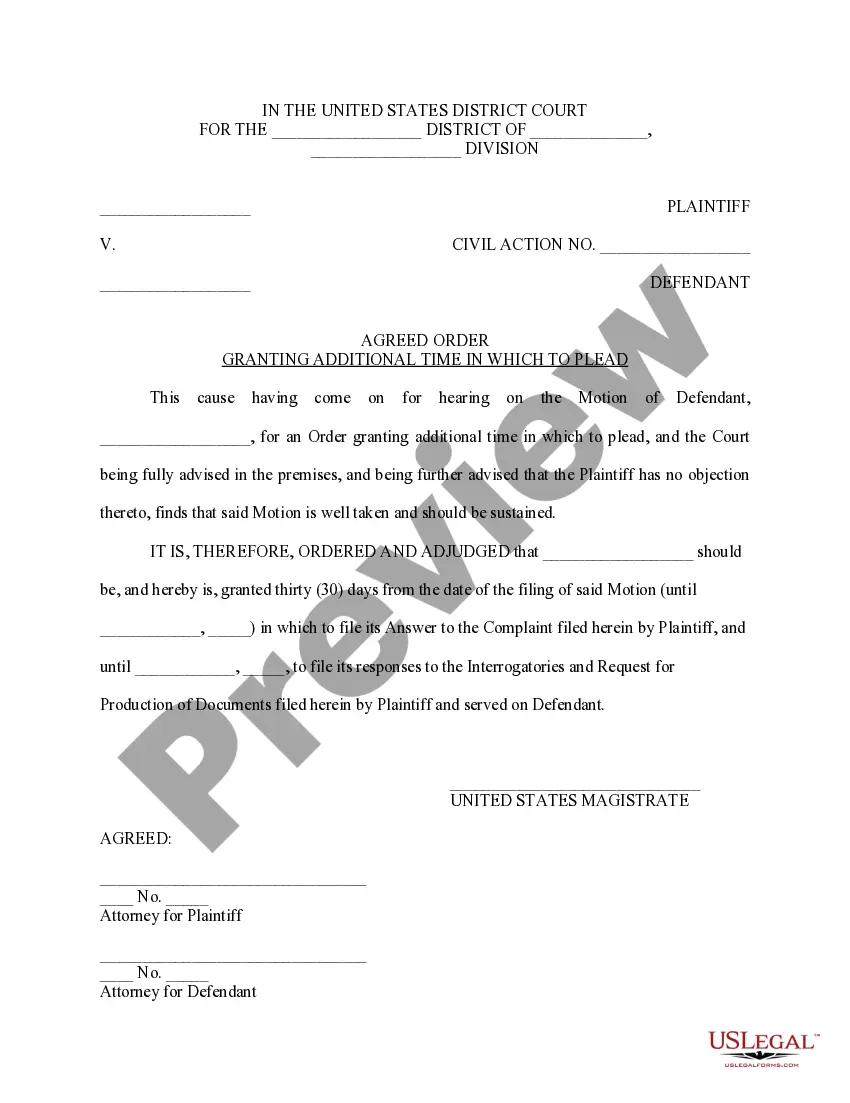
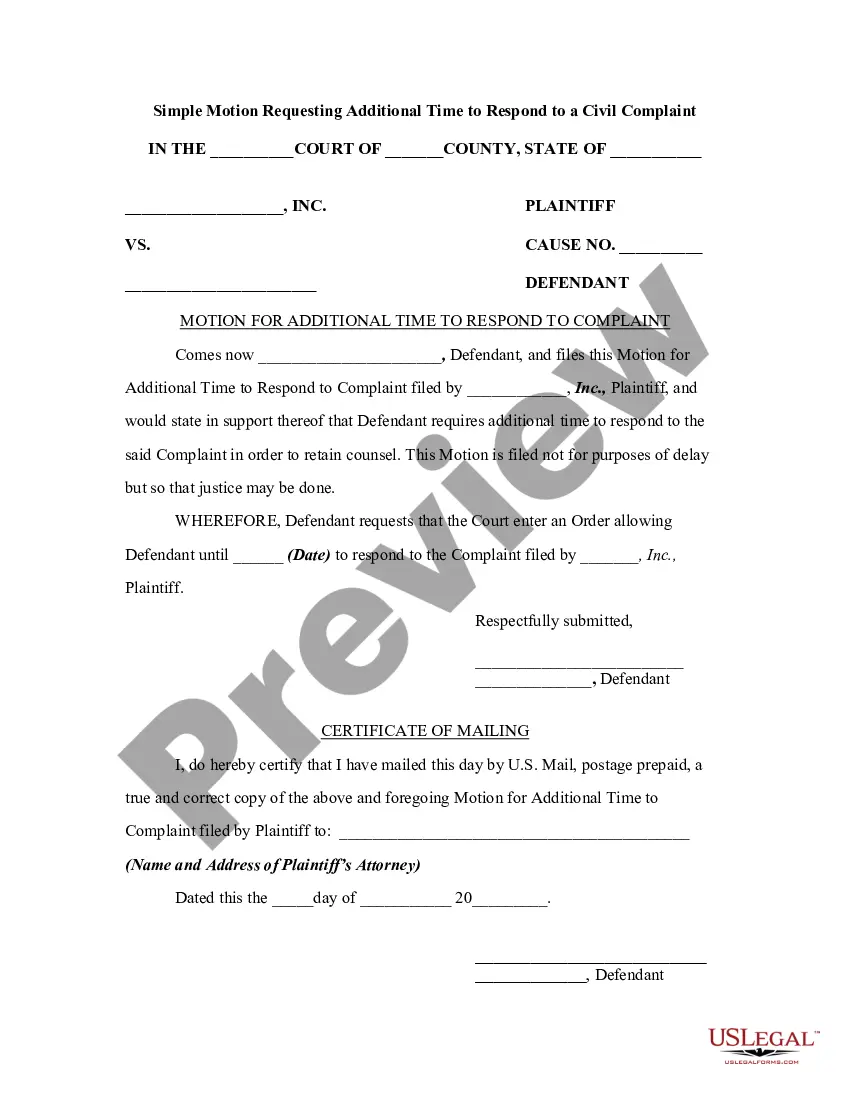


How to fill out Agreed Order Granting Additional Time To Plead?
US Legal Forms - one of the largest collections of legal forms in the United States - provides a diverse array of legal document templates that you can download or print.
By using the website, you will find thousands of forms for business and personal purposes, organized by categories, states, or keywords. You can locate the latest versions of forms such as the Oregon Agreed Order Granting Additional Time to Plead in just minutes.
If you already have a membership, Log In and download the Oregon Agreed Order Granting Additional Time to Plead from the US Legal Forms library. The Download button will appear on every form you view. You can access all previously downloaded forms from the My documents section of your account.
Every template you add to your account does not expire and is yours indefinitely. Therefore, if you want to download or print another copy, simply visit the My documents section and click on the form you need.
Access the Oregon Agreed Order Granting Additional Time to Plead with US Legal Forms, the most extensive library of legal document templates. Utilize thousands of professional and state-specific templates that cater to your business or personal needs.
- Ensure you have selected the correct form for your city/area. Click on the Review button to examine the form's details. Check the form description to confirm you have selected the right form.
- If the form does not meet your requirements, utilize the Search field at the top of the screen to find one that does.
- If you are satisfied with the form, confirm your choice by clicking the Purchase now button. Then, choose the payment plan you prefer and provide your details to register for an account.
- Complete the transaction. Use your Visa or Mastercard or PayPal account to finalize the transaction.
- Select the format and download the form onto your device.
- Make edits. Fill out, modify, and print and sign the downloaded Oregon Agreed Order Granting Additional Time to Plead.
Form popularity
FAQ
Pleading requirements in Oregon specify that all documents must be clear, concise, and provide sufficient facts to support your claims. Each pleading must adhere to the court's formatting and filing requirements to ensure acceptance. To give yourself adequate time to meet these requirements, consider filing for an Oregon Agreed Order Granting Additional Time to Plead for your case.
Amending pleadings in Oregon can vary based on the complexity of the case and the court's schedule. Generally, the process can take a few weeks, especially if the amendment requires additional court approval. If you anticipate needing more time to finalize your amendments, an Oregon Agreed Order Granting Additional Time to Plead can aid in extending your deadlines.
Yes, you can serve divorce papers yourself in Oregon, provided you follow the proper procedures outlined by the court. However, it is often advisable to have a professional handle the service to ensure compliance with legal requirements. If you face any delays, consider filing for an Oregon Agreed Order Granting Additional Time to Plead to manage your timeline effectively.
The 3 year rule in Oregon refers to the statute of limitations for certain civil actions, which typically requires parties to file their claims within three years. Failing to meet this deadline can result in the dismissal of your case. To avoid issues, consider seeking an Oregon Agreed Order Granting Additional Time to Plead if you require more time to gather your evidence.
Oregon Rule 63 deals with the disqualification of judges and the procedures for appointing a new judge in a case. This rule ensures fairness in legal proceedings by allowing parties to request a new judge when necessary. If you find yourself needing more time to prepare your case, an Oregon Agreed Order Granting Additional Time to Plead may be beneficial.
Rule 18 in Oregon pertains to the requirements for written motions and the accompanying documents in civil proceedings. It emphasizes clarity and organization in presenting motions to the court. If you need additional time to respond, consider utilizing an Oregon Agreed Order Granting Additional Time to Plead, which can help streamline the process.
Summons shall be served, either within or without this state, in any manner reasonably calculated, under all the circumstances, to apprise the defendant of the existence and pendency of the action and to afford a reasonable opportunity to appear and defend.
The following are some of the most common pleadings and motions in any civil trial or case: The Complaint. The Answer. The Counterclaim. The Cross Claim. The Pre-Trial Motions. Post-Trial Motions.
Statutory Time Requirements for Civil Cases -- Oregon Circuit Courts. Decide and render decision on questions submitted. Within 3 months after submission. (CAVEAT ? Unless prevented by sickness/unavoidable casualty or extended by stipulation of parties.)
Pleadings generally The formal written statements submitted at the opening of the trial are called the pleadings. The plaintiff first submits a complaint, then the defendant submits its answer.