Oregon Warehousing and Distribution Agreement between Warehouseman and Depositor
Description
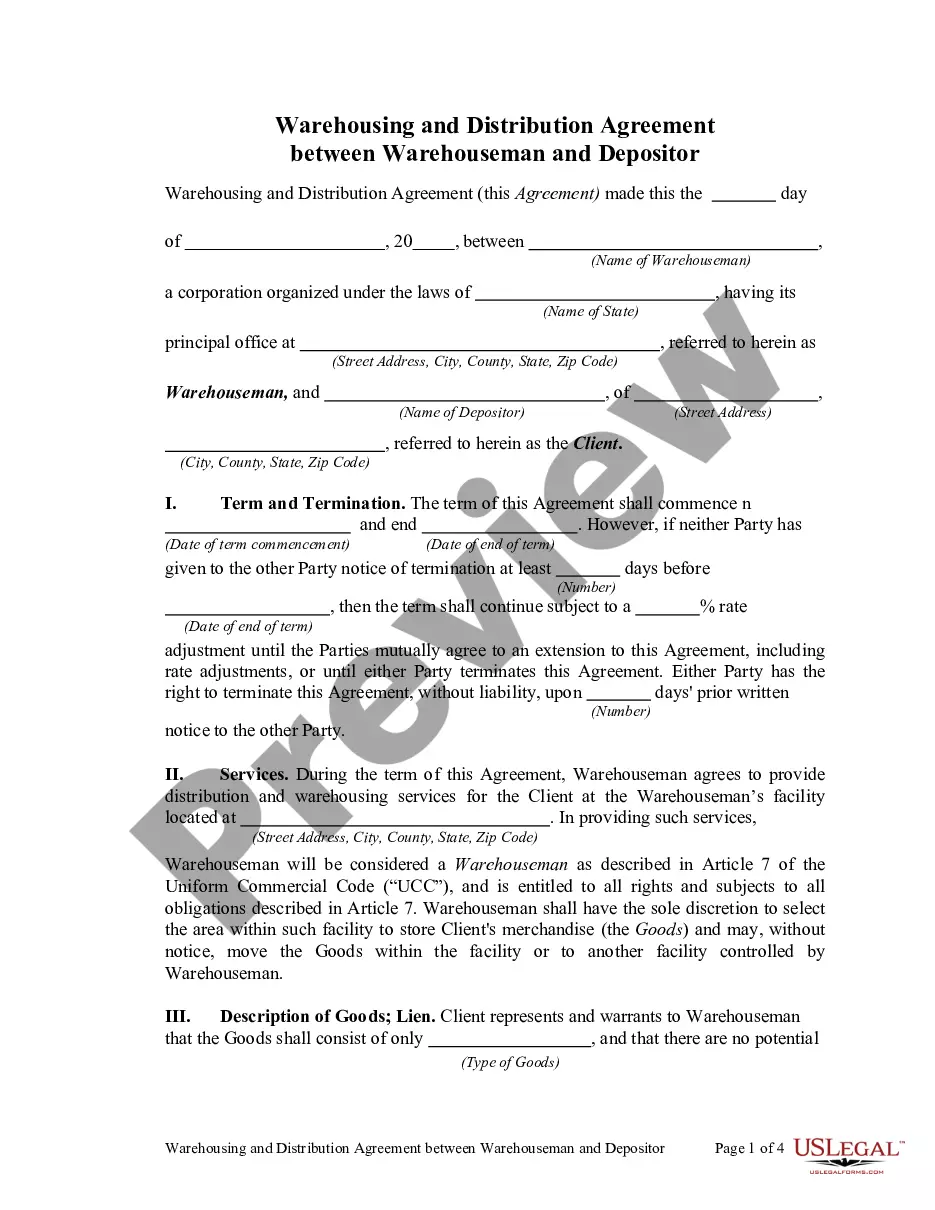
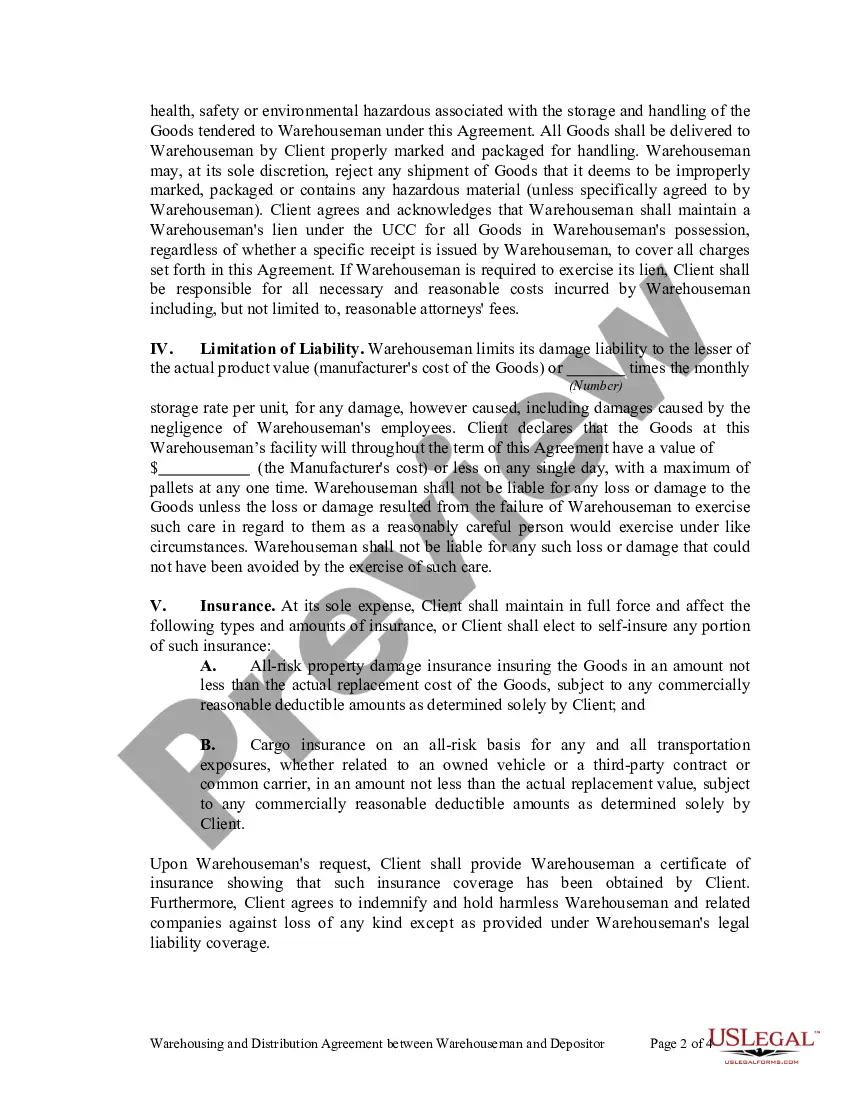
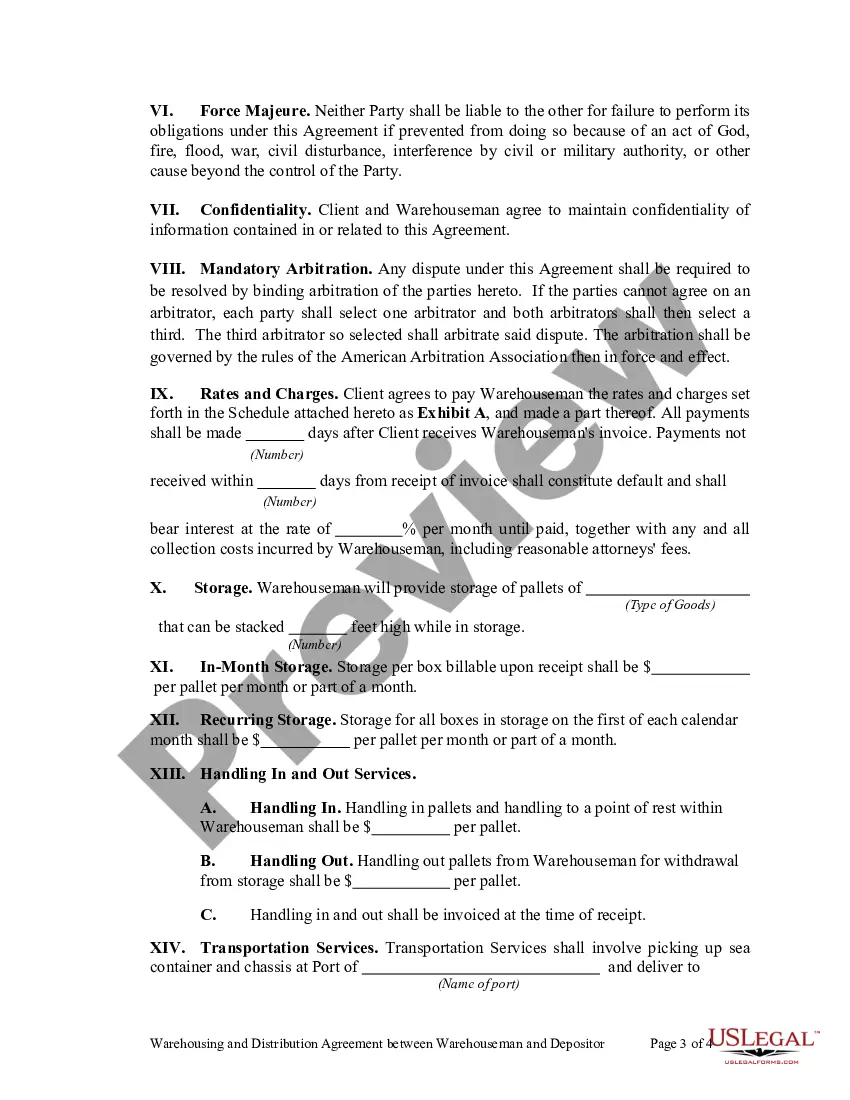
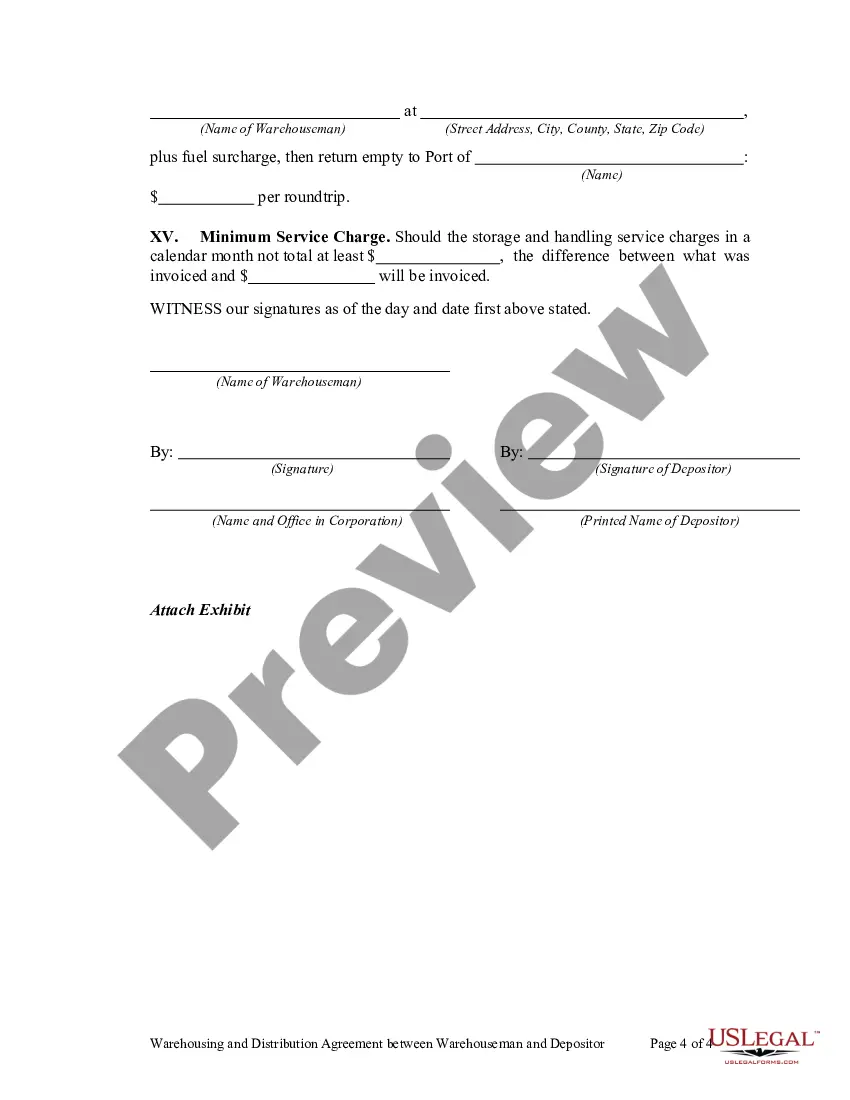
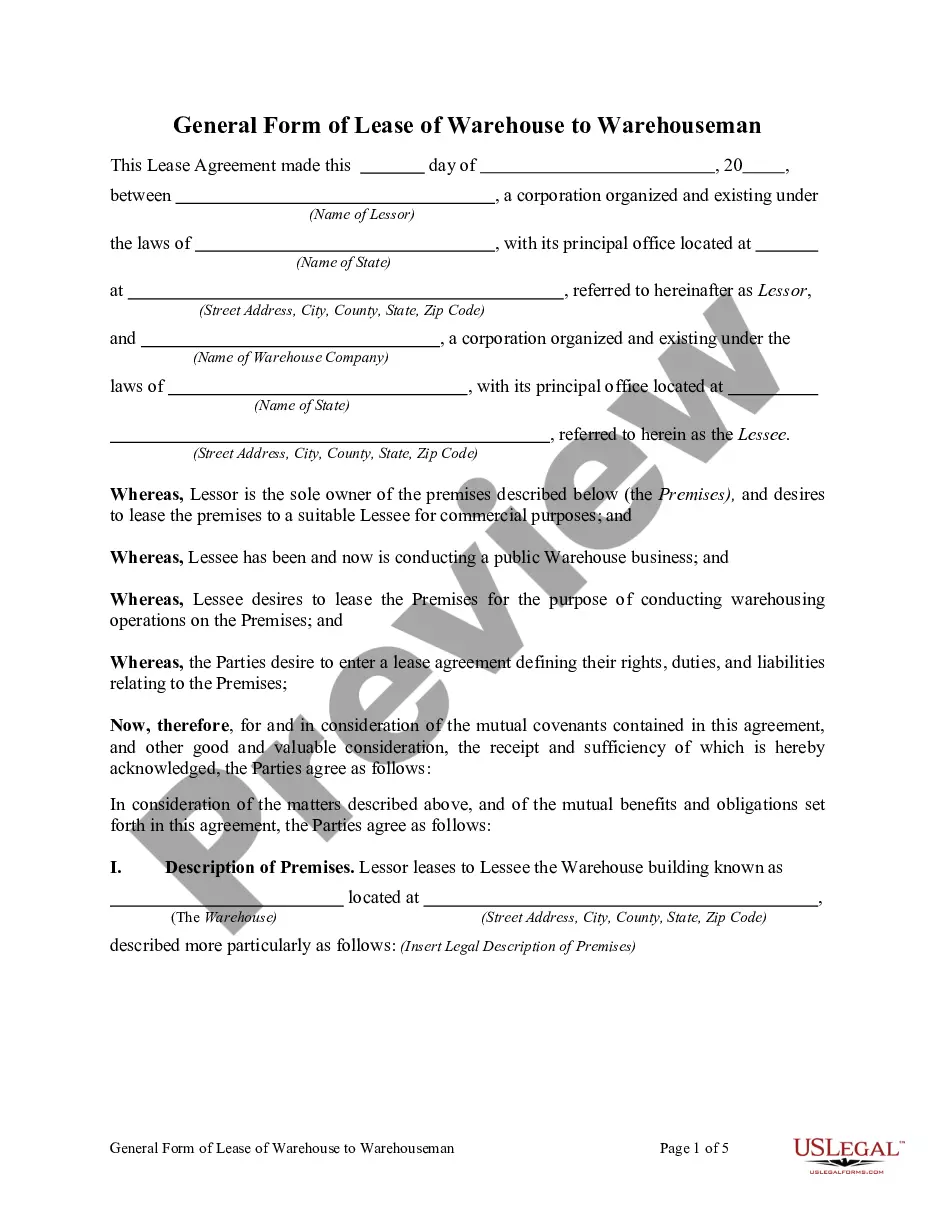


How to fill out Warehousing And Distribution Agreement Between Warehouseman And Depositor?
US Legal Forms - one of the largest collections of legal documents in the USA - offers a broad selection of legal form templates you can download or print.
Through the website, you can discover thousands of forms for business and personal purposes, organized by categories, states, or keywords. You can obtain the latest versions of documents similar to the Oregon Warehousing and Distribution Agreement between Warehouseman and Depositor in moments.
If you already possess a subscription, Log In and obtain the Oregon Warehousing and Distribution Agreement between Warehouseman and Depositor from the US Legal Forms library. The Download button will appear on every form you view. You can access all previously downloaded forms from the My documents section of your account.
Choose the format and download the form to your device.
Edit. Fill out, modify and print and sign the downloaded Oregon Warehousing and Distribution Agreement between Warehouseman and Depositor. Each template you add to your account has no expiration date and is yours indefinitely. Therefore, if you wish to download or print another copy, simply go to the My documents section and click on the form you need.
- Make sure you have selected the correct form for the city/county. Click on the Preview button to check the form's content.
- Review the form details to ensure you've chosen the right one.
- If the form does not meet your needs, utilize the Search field at the top of the page to find the one that does.
- If you are satisfied with the form, confirm your choice by clicking the Purchase now button.
- Next, select the payment plan you prefer and provide your details to sign up for the account.
- Complete the transaction. Use a Visa or Mastercard or PayPal account to finalize the purchase.
Form popularity
FAQ
The main benefit of Contract warehousing is its lower costs. Often the two parties come to a fixed agreement regarding the payment and stick to it until the end of the agreement. Depending on a contract warehouse reduces the expenses when compared to managing your warehouse.
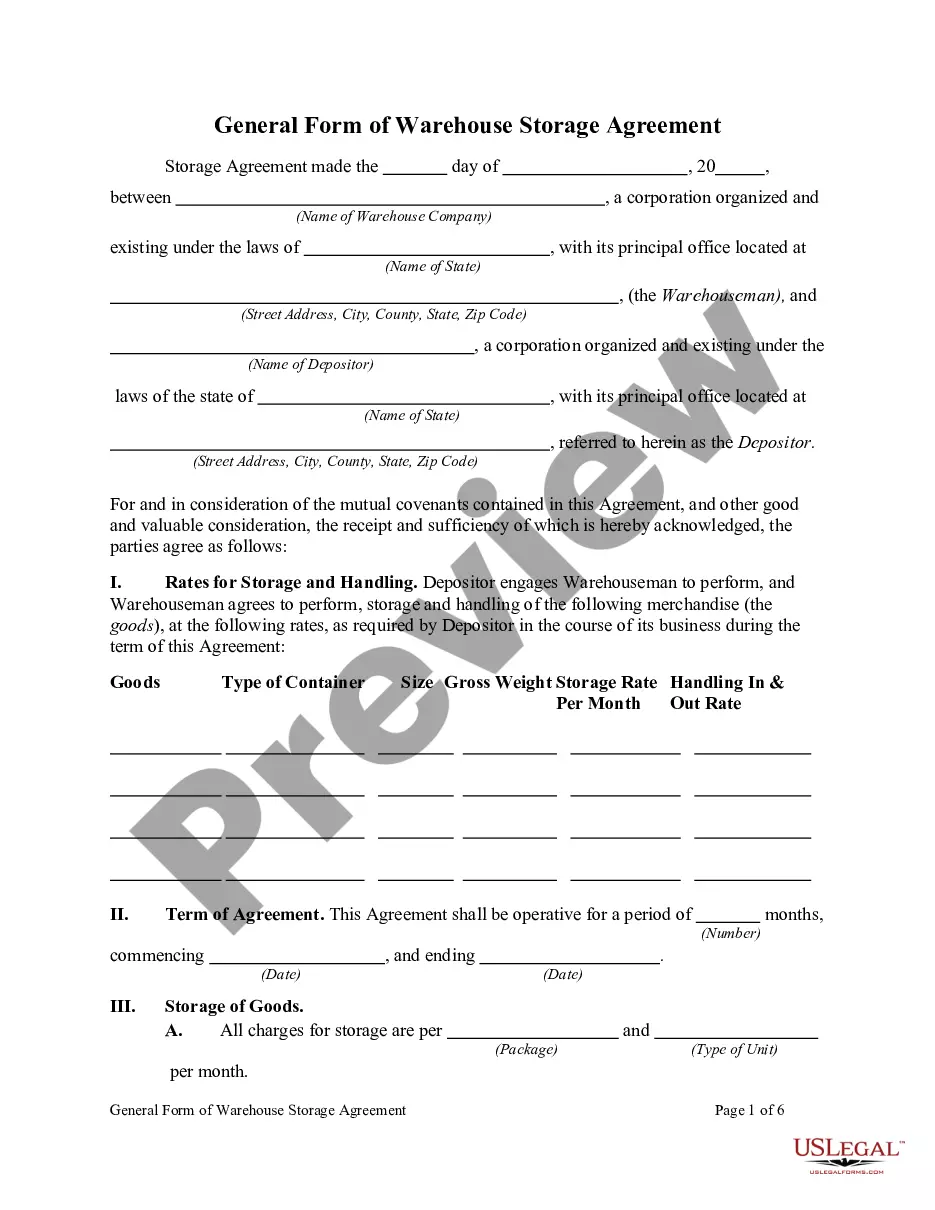
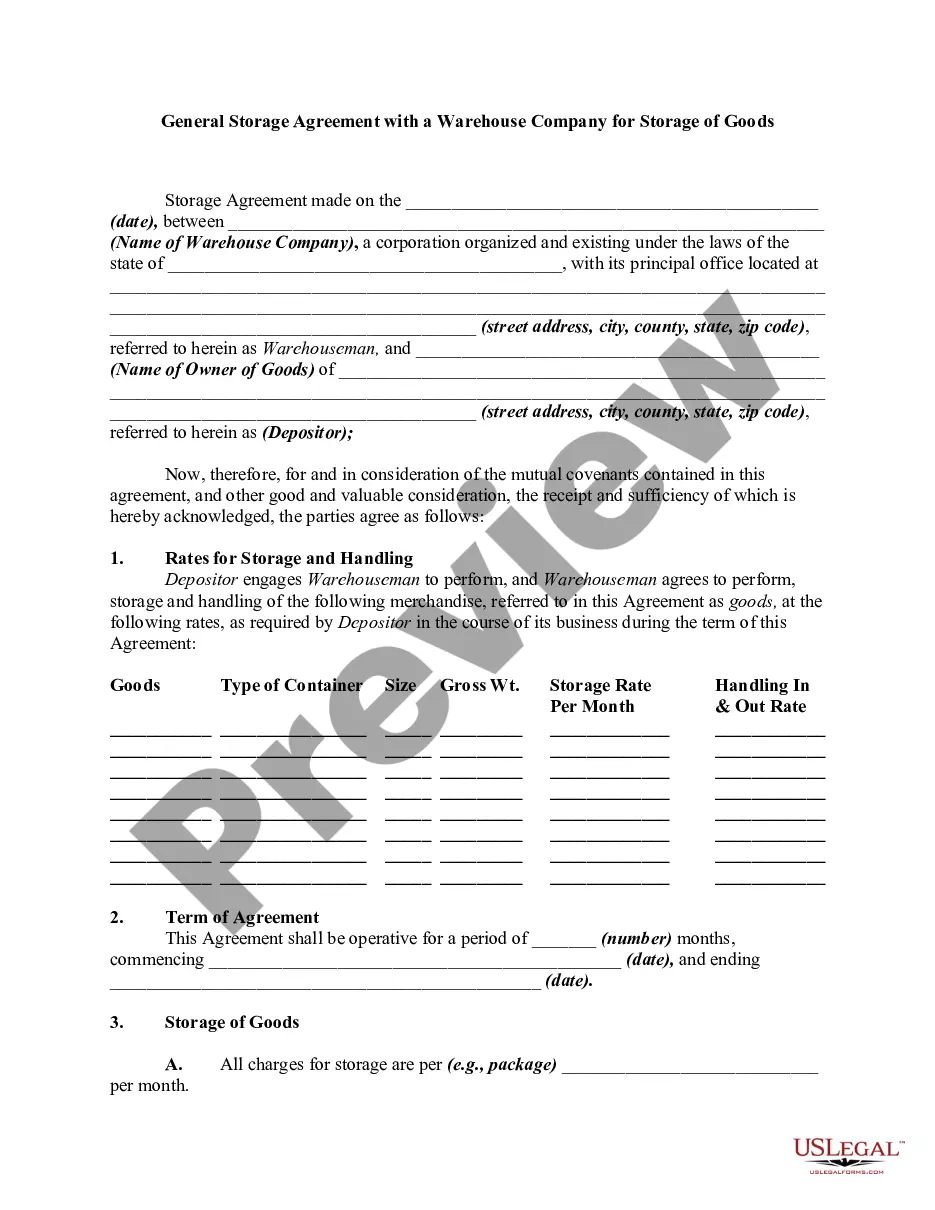
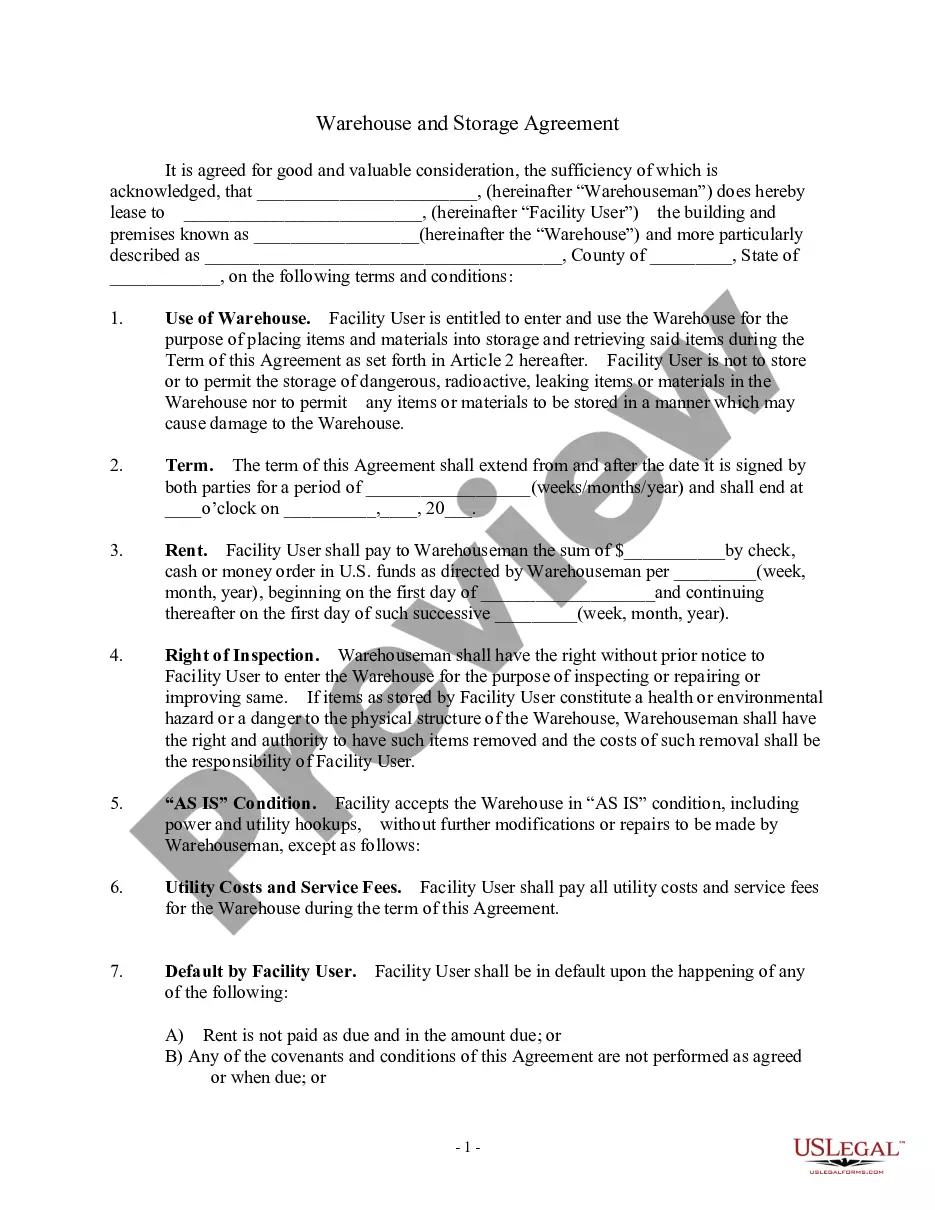
What is a Storage Agreement? A storage agreement is an agreement between the storer of the goods, known as the warehouseman, and the party storing the items, known as the depositor. The storage space can be a garage, barn, land, or storage unit.
A warehousing agreement for the storage of goods for a business customer. A professional warehousing provider agrees to store the customer's goods on a long-term or regular basis. The agreement is drafted to be broadly neutral between the parties.
Operating Costs: Contract warehouses provide similar characteristics to private warehouses but at lower costs. Private warehouses require significant capital inputs for development and maintenance, whereas contract warehouses maintained by third parties offer more cost-effective solutions.
Contract warehousing is an arrangement in which a partner warehouse agrees to receive, store and ship goods for a client. The contract dictates the terms of service and length of the agreement. The time-frame can vary from months to years and the fee structure can be fixed cost, costs-plus or a combination of the two.