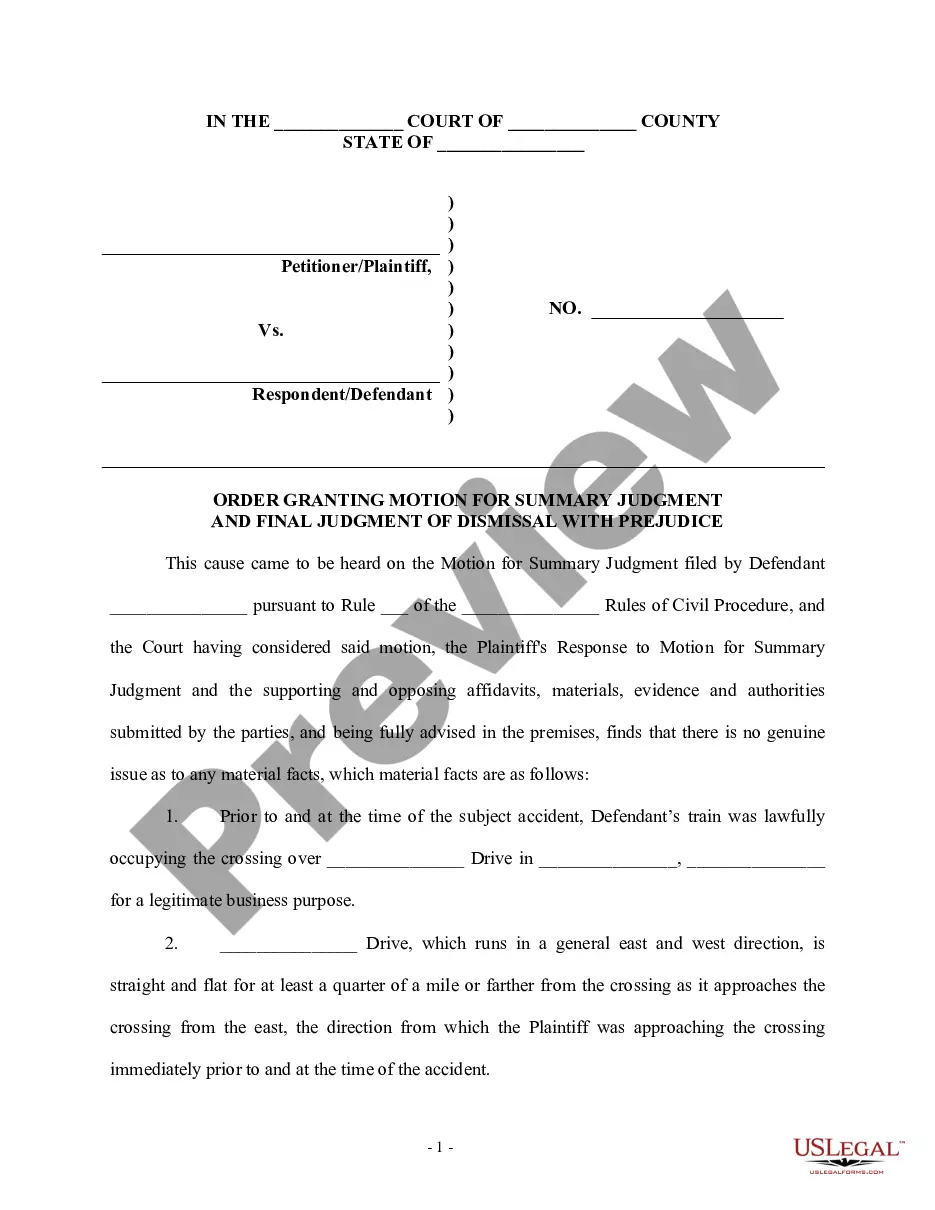
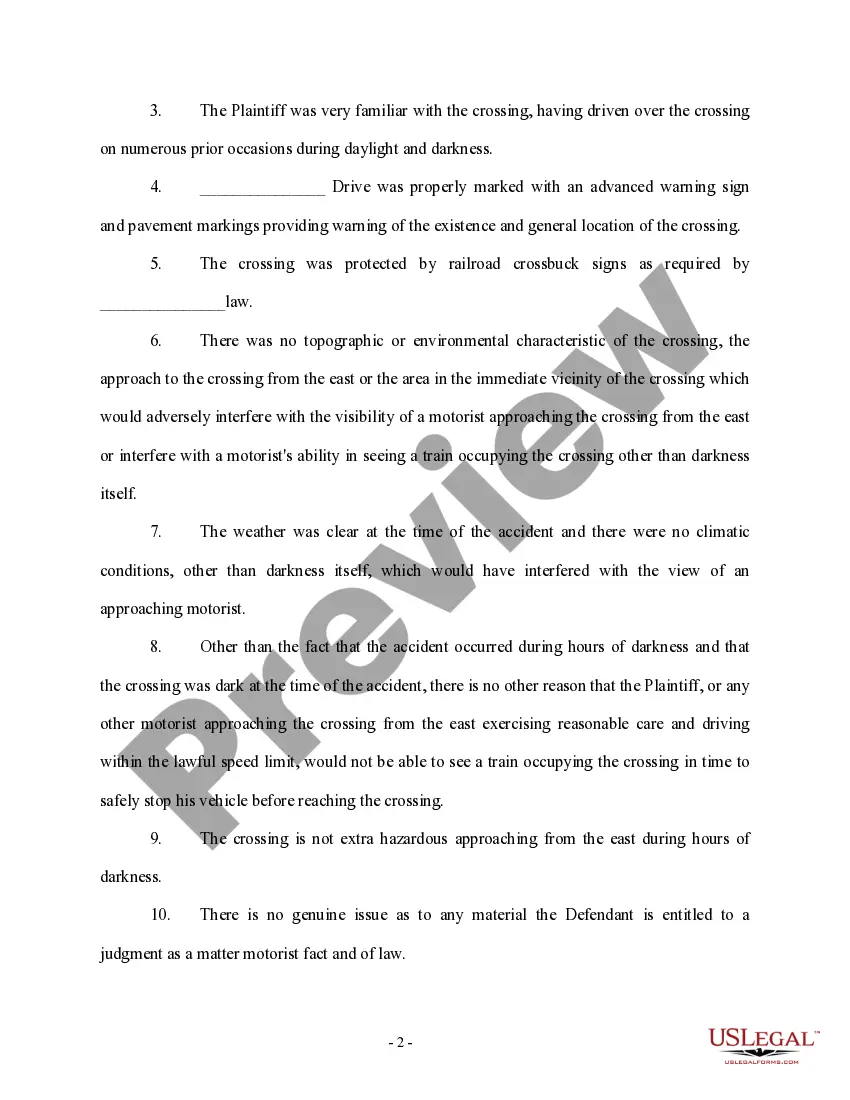
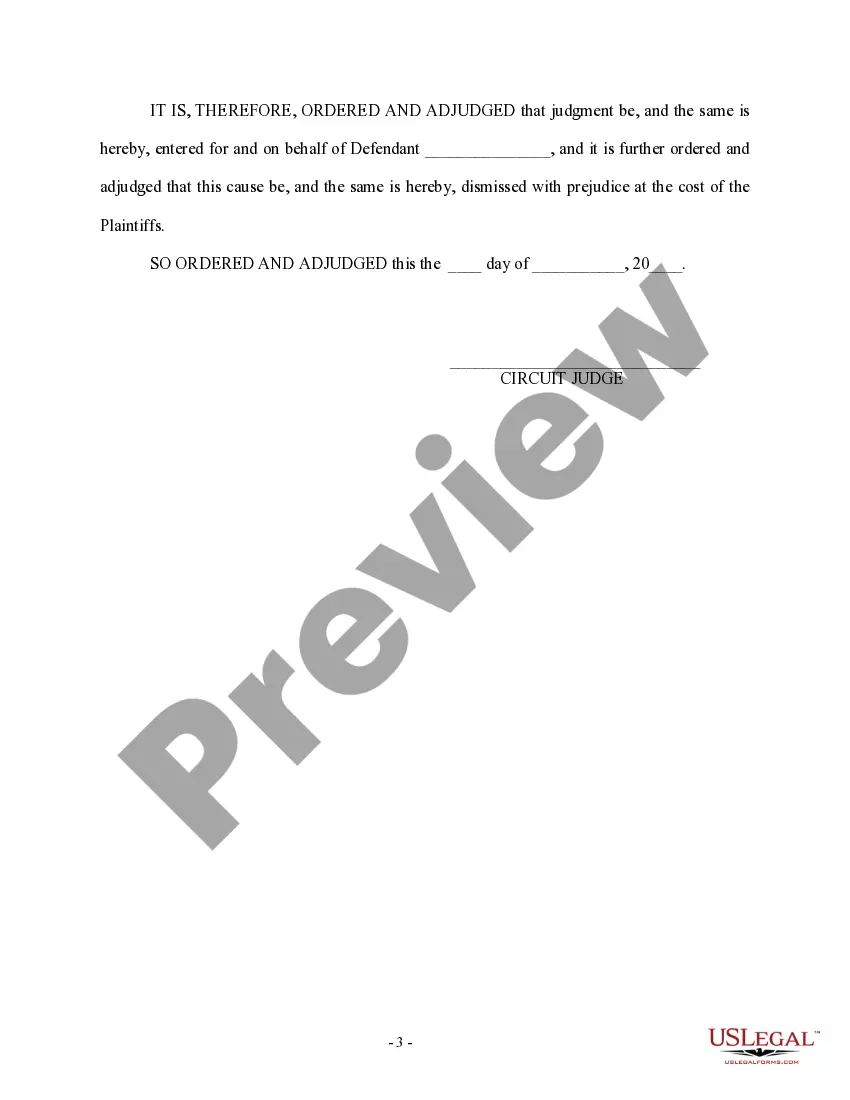
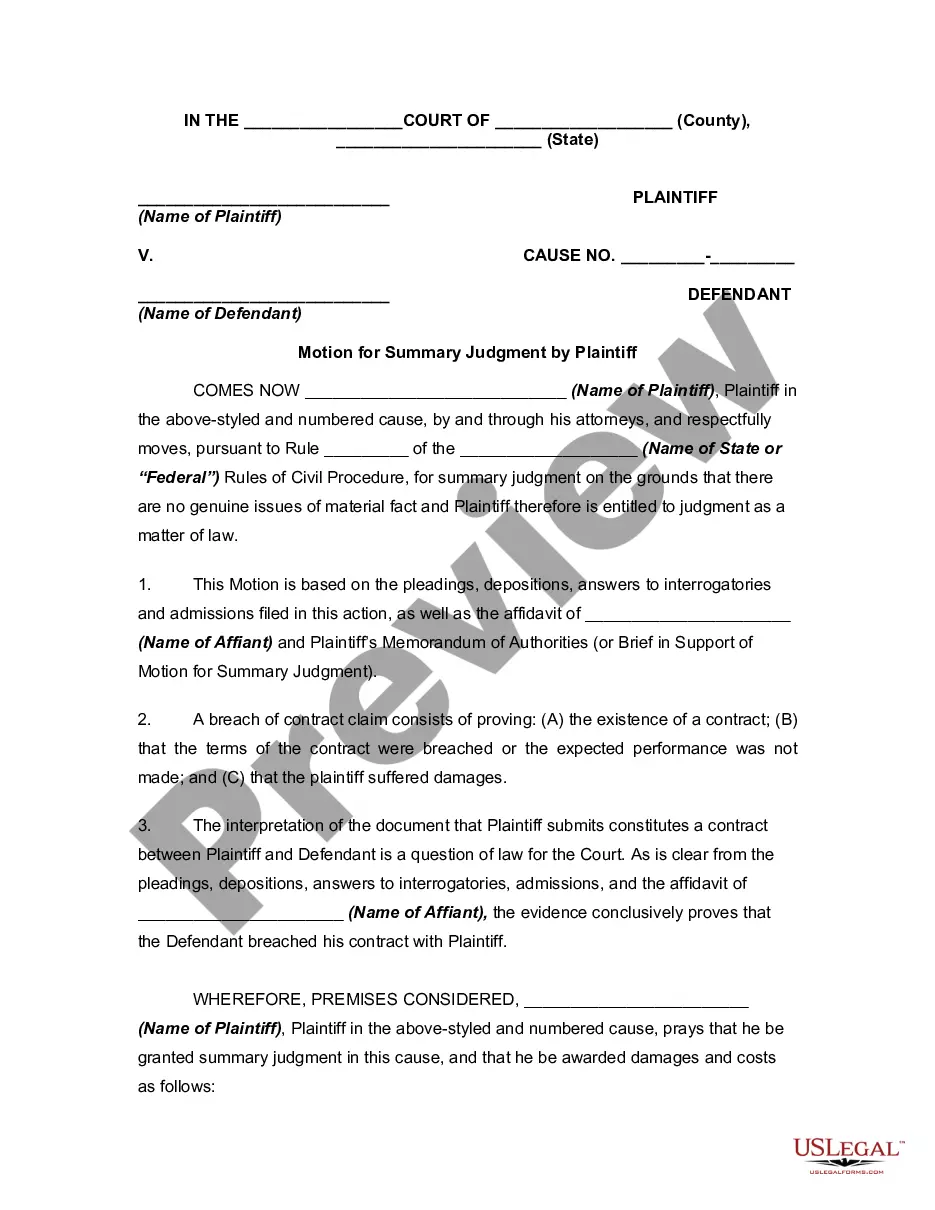
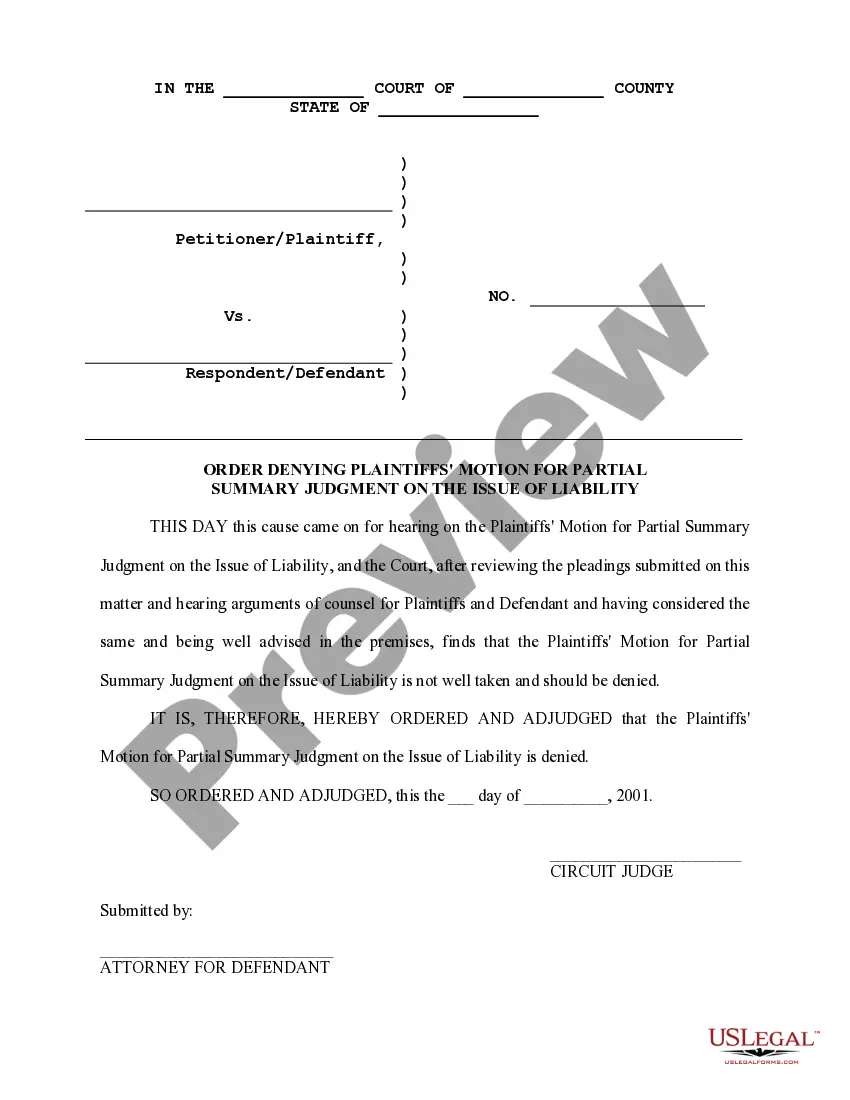
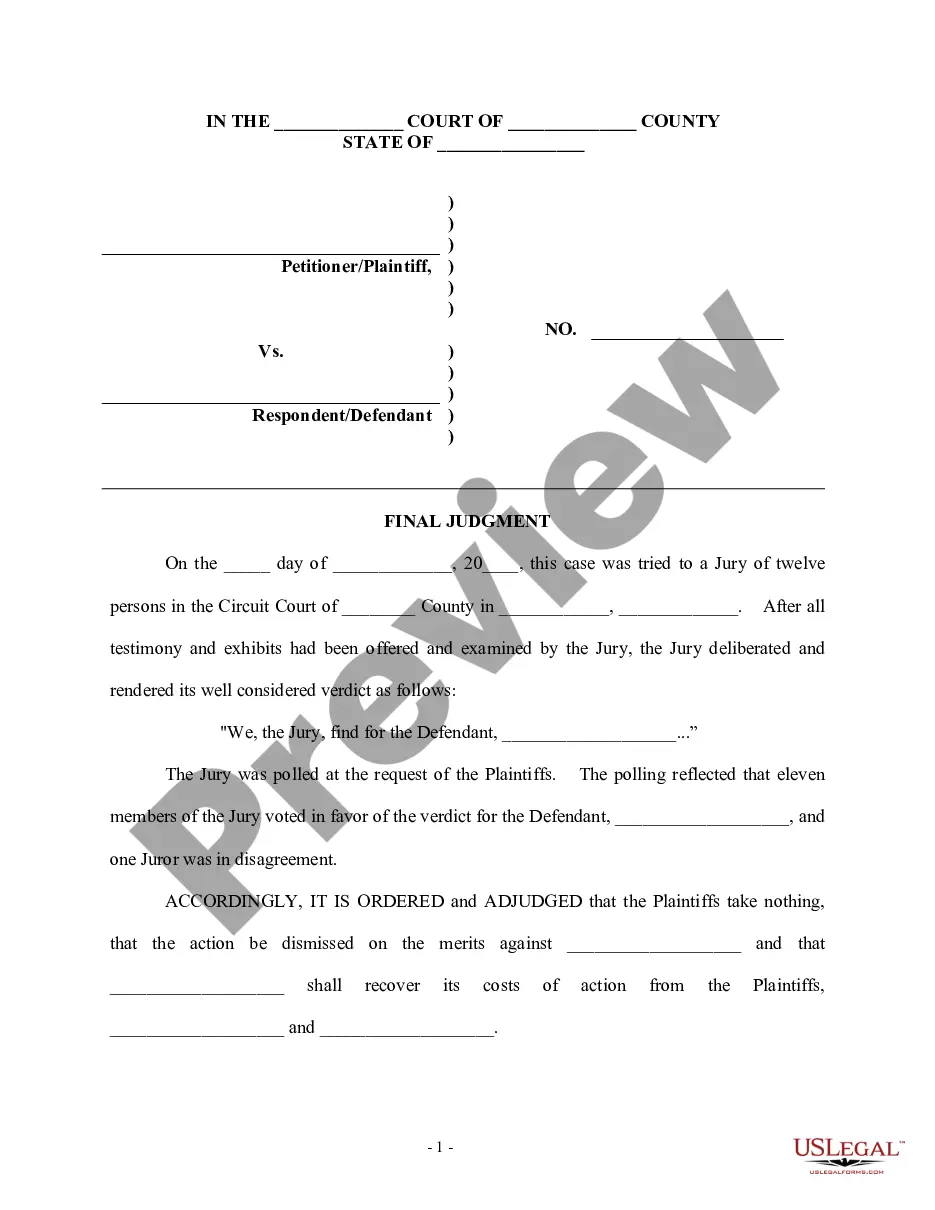
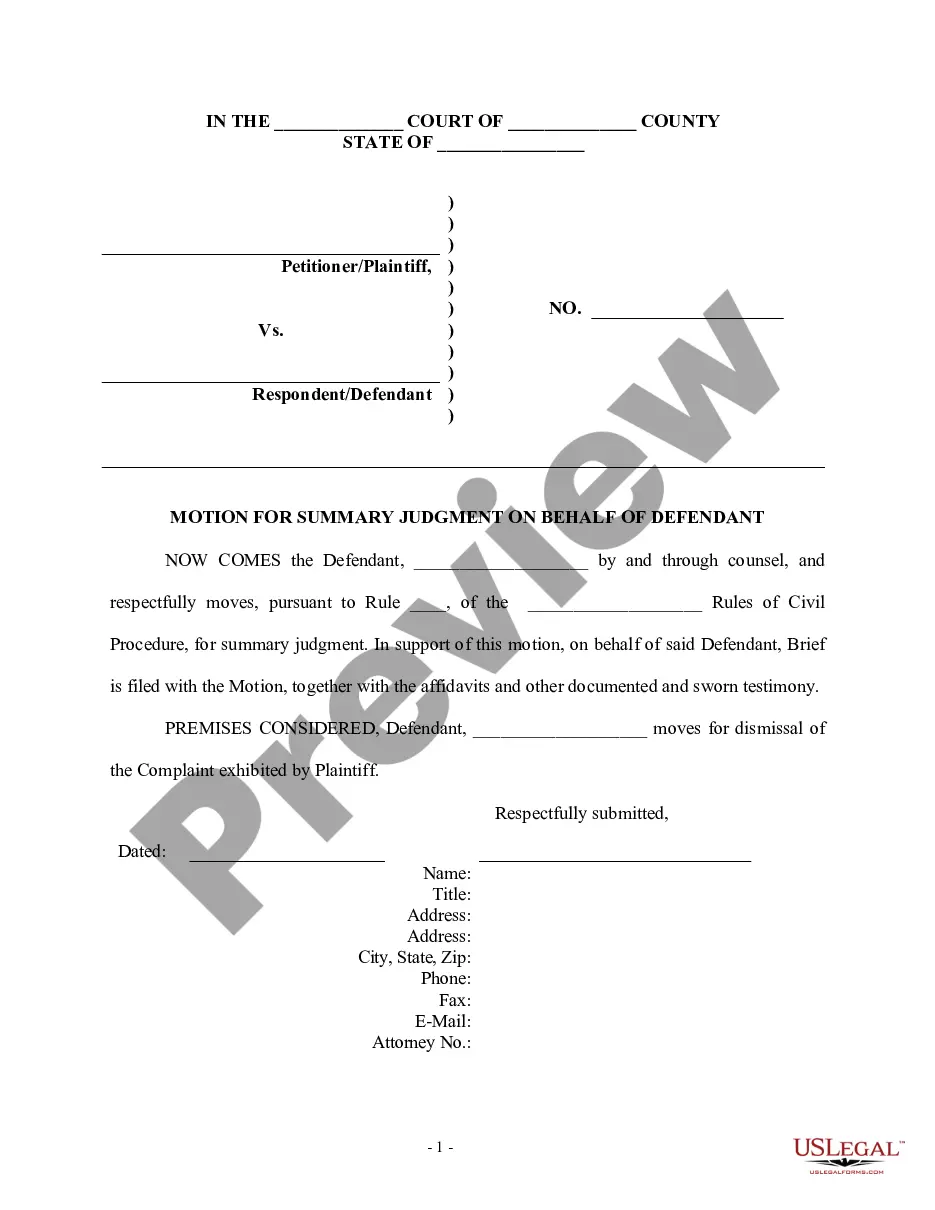
This form is a sample order granting the defendant's motion for summary judgment dismissing the plaintiff's cause of action with prejudice.
Oregon Order Granting Motion for Summary Judgment and Final Judgment of Dismissal with Prejudice
State:
Multi-State
Control #:
US-PI-0272
Format:
Word;
Rich Text
Instant download
Description
Free preview
Get your form ready online
Our built-in tools help you complete, sign, share, and store your documents in one place.
Built-in online Word editor
Make edits, fill in missing information, and update formatting in US Legal Forms—just like you would in MS Word.
Export easily
Download a copy, print it, send it by email, or mail it via USPS—whatever works best for your next step.
E-sign your document
Sign and collect signatures with our SignNow integration. Send to multiple recipients, set reminders, and more. Go Premium to unlock E-Sign.
Notarize online 24/7
If this form requires notarization, complete it online through a secure video call—no need to meet a notary in person or wait for an appointment.
Store your document securely
We protect your documents and personal data by following strict security and privacy standards.
Make edits, fill in missing information, and update formatting in US Legal Forms—just like you would in MS Word.
Download a copy, print it, send it by email, or mail it via USPS—whatever works best for your next step.
Sign and collect signatures with our SignNow integration. Send to multiple recipients, set reminders, and more. Go Premium to unlock E-Sign.

If this form requires notarization, complete it online through a secure video call—no need to meet a notary in person or wait for an appointment.
We protect your documents and personal data by following strict security and privacy standards.
Looking for another form?
How to fill out Order Granting Motion For Summary Judgment And Final Judgment Of Dismissal With Prejudice?
US Legal Forms - one of the largest libraries of authorized types in the States - delivers a wide range of authorized record layouts it is possible to down load or print out. While using website, you will get a large number of types for enterprise and person purposes, categorized by categories, suggests, or keywords.You can find the most up-to-date variations of types like the Oregon Order Granting Motion for Summary Judgment and Final Judgment of Dismissal with Prejudice within minutes.
If you have a registration, log in and down load Oregon Order Granting Motion for Summary Judgment and Final Judgment of Dismissal with Prejudice from the US Legal Forms collection. The Download key can look on each and every form you view. You have accessibility to all previously delivered electronically types from the My Forms tab of your respective bank account.
If you would like use US Legal Forms the first time, listed here are easy recommendations to help you get started off:
- Be sure to have selected the correct form for the town/region. Select the Review key to analyze the form`s articles. Look at the form information to ensure that you have chosen the proper form.
- In case the form doesn`t satisfy your specifications, use the Lookup area near the top of the monitor to discover the one who does.
- When you are satisfied with the form, validate your selection by clicking the Acquire now key. Then, pick the prices prepare you favor and give your accreditations to register for an bank account.
- Process the financial transaction. Make use of bank card or PayPal bank account to accomplish the financial transaction.
- Pick the format and down load the form on your system.
- Make alterations. Complete, edit and print out and sign the delivered electronically Oregon Order Granting Motion for Summary Judgment and Final Judgment of Dismissal with Prejudice.
Every single web template you included with your money does not have an expiry day and is your own property for a long time. So, if you would like down load or print out yet another version, just check out the My Forms segment and click around the form you require.
Obtain access to the Oregon Order Granting Motion for Summary Judgment and Final Judgment of Dismissal with Prejudice with US Legal Forms, one of the most extensive collection of authorized record layouts. Use a large number of professional and express-certain layouts that satisfy your small business or person needs and specifications.
Form popularity
FAQ
A dismissed case is closed. However, a closed case doesn't mean it's always dismissed. A closed case means there's nothing else going on with the case. A case can be closed if no charges are filed, but not technically dismissed.
A dismissal refers to the court's decision to terminate a court case without imposing liability on the defendant. The court may dismiss a case in response to a defendant's motion to dismiss or do so sua sponte.
Notice of Dismissal means a written notification provided to a violator by the assessment officer or the Secretary dismissing and vacating the civil administrative penalty.
When a judge dismisses a case against someone, he or she formally states that there is no need for a trial, usually because there is not enough evidence for the case to continue.
Stipulation to Dismiss Both parties have agreed (stipulated) to dismiss this case without prejudice certifying that: (a) This notice is the first dismissal filed by Petitioner in this case; and; (b) All costs and filing of service have been paid.
The conditions under which a court must grant a motion for summary judgment are delineated in ORCP 47 C. A party moving for summary judgment has the initial burden of showing that there is no genuine issue as to any material fact and that the party is entitled to judgment as a matter of law.
A motion to dismiss challenges the sufficiency of the complaint, while a motion for summary judgment challenges the underlying merits of the case. In other words, a motion to dismiss is based on the legal sufficiency of the complaint, while a motion for summary judgment is based on the factual sufficiency of the case.
When a criminal case is dismissed, then it is over with no finding of guilt or conviction. Legal action has been terminated and the state is not moving forward with the prosecution ? at least for now.