Sample Corporate Records for a Pennsylvania Professional Corporation
Overview of this form
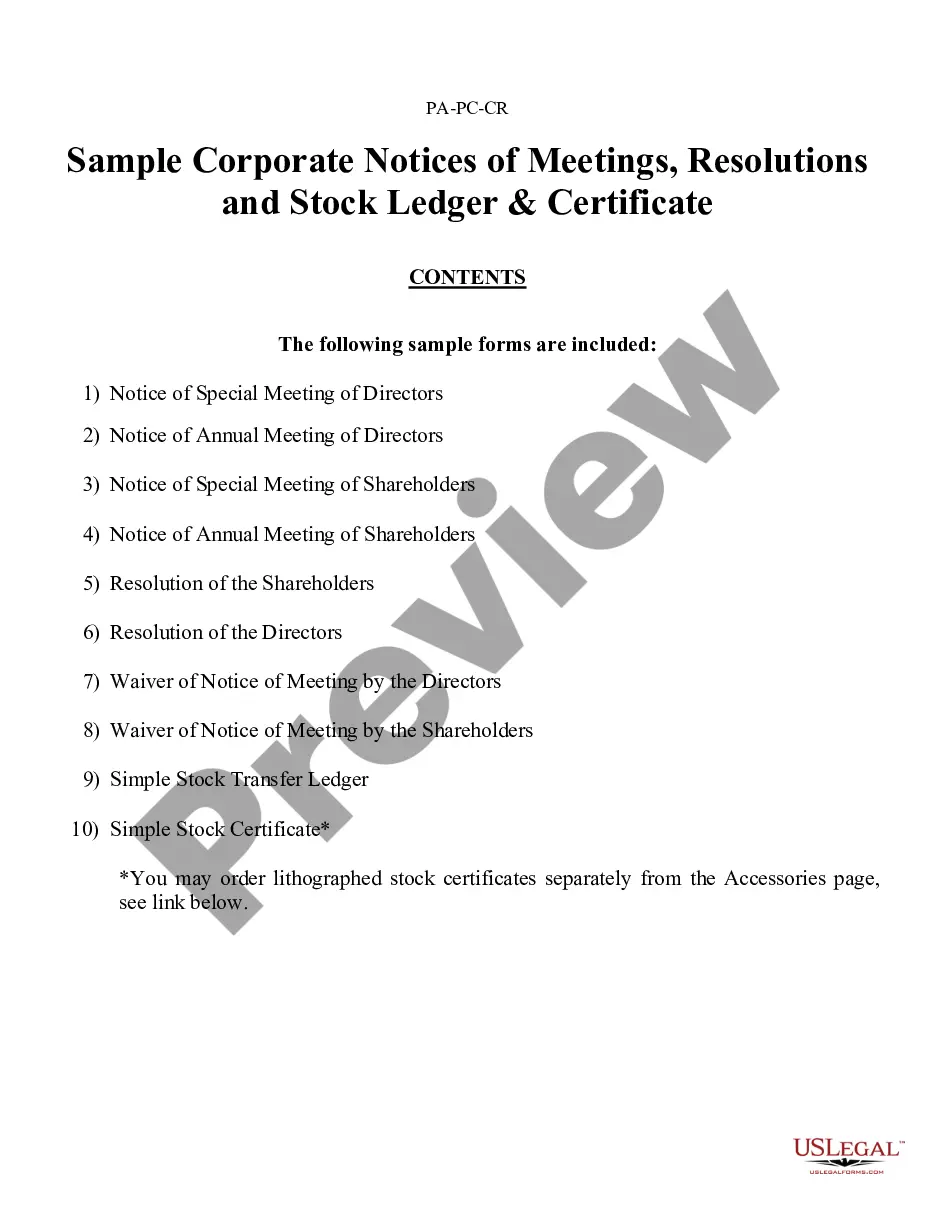
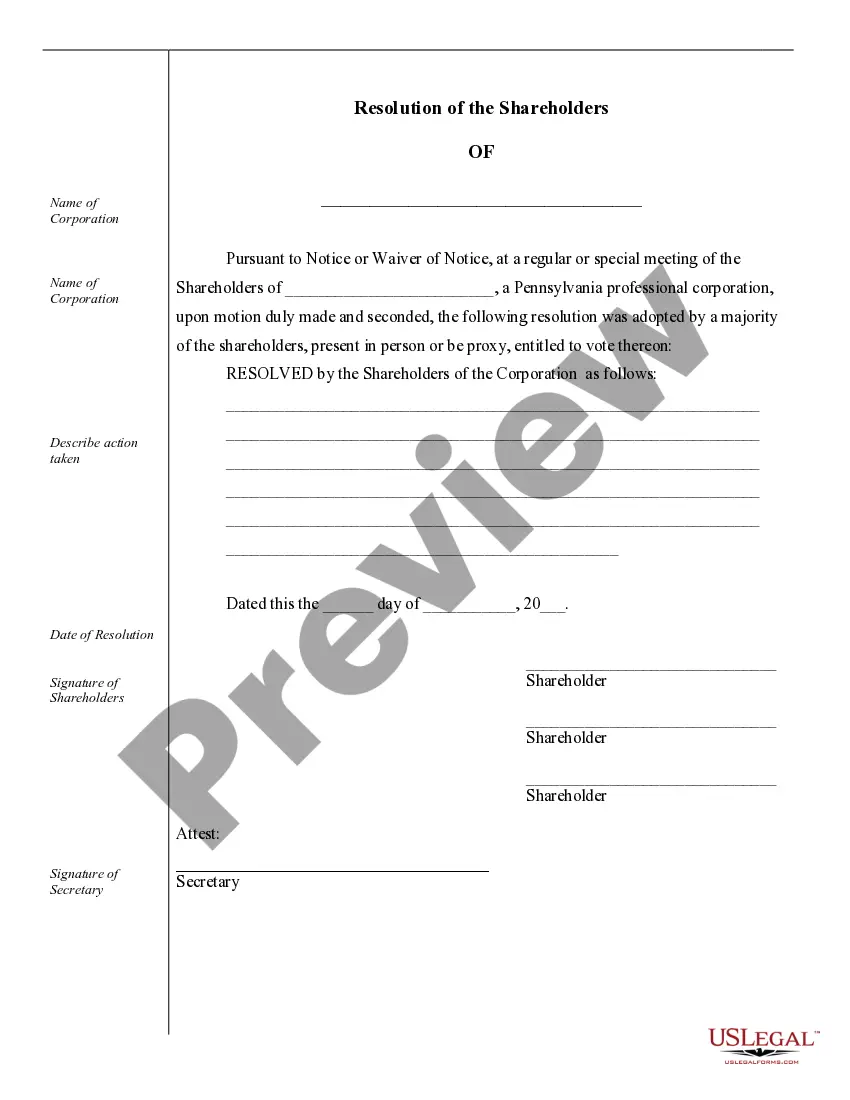
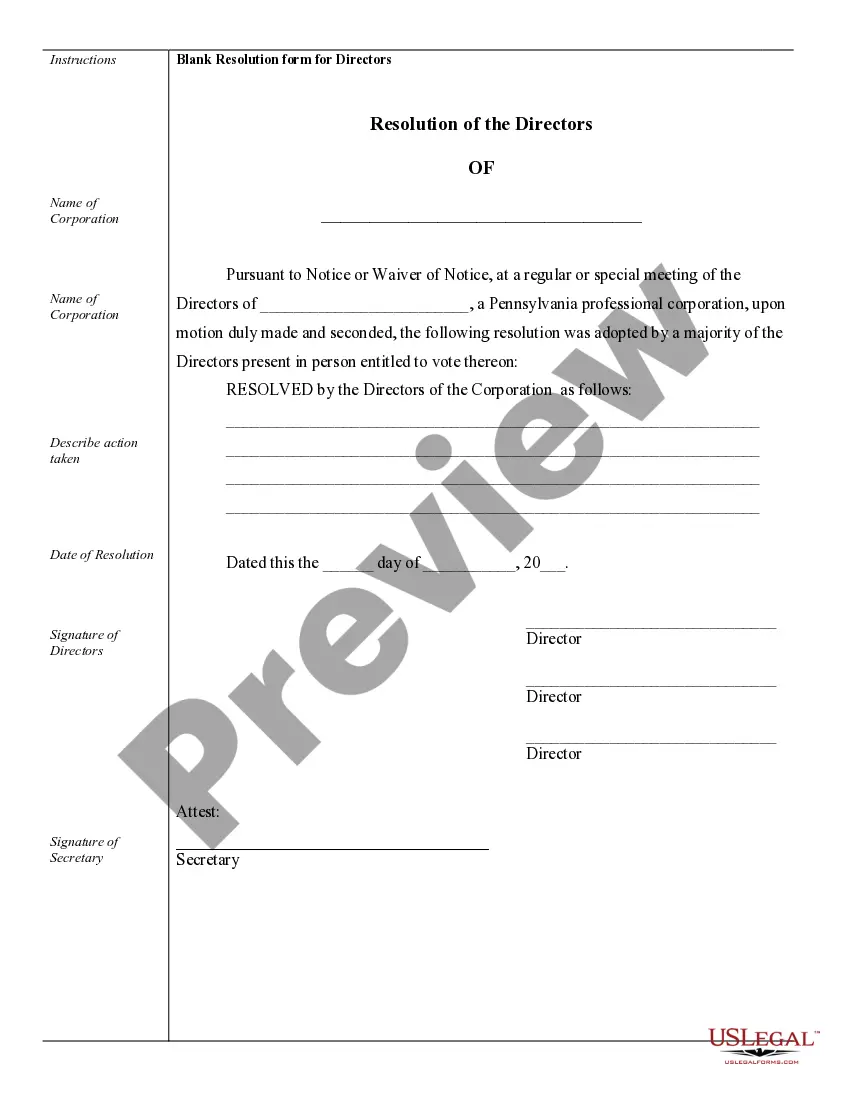
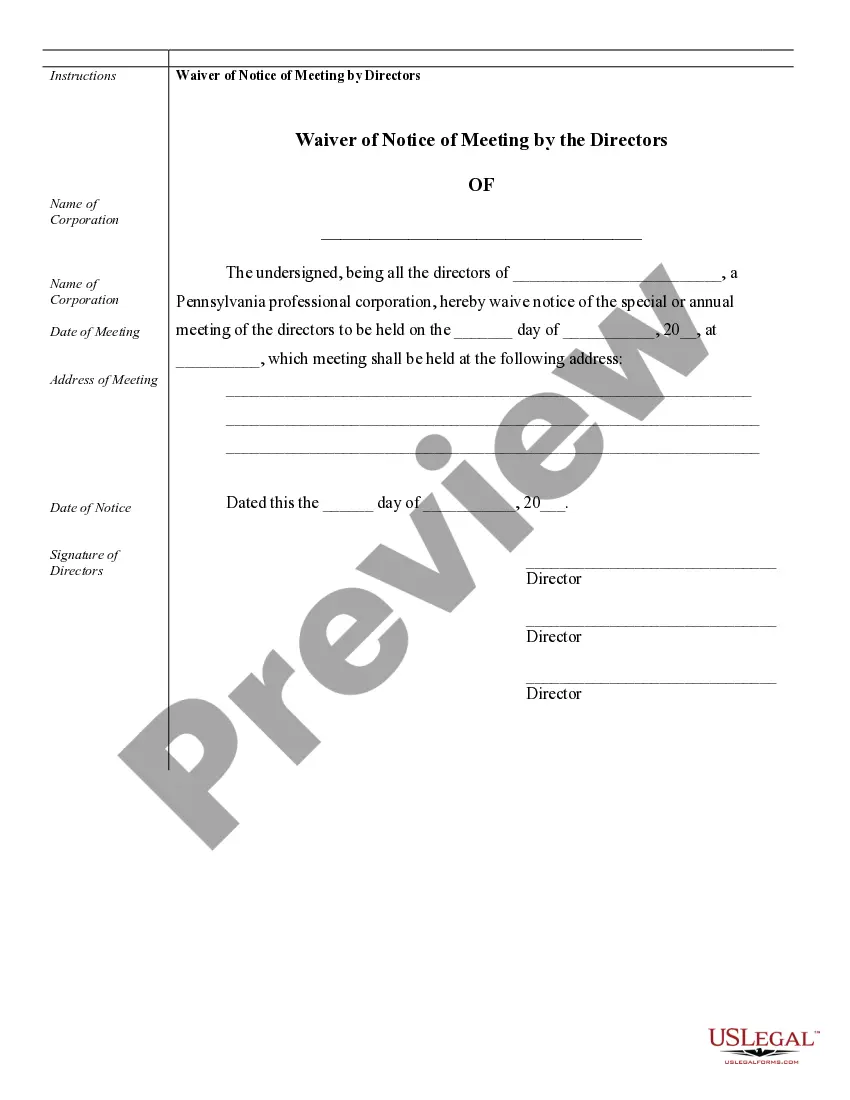
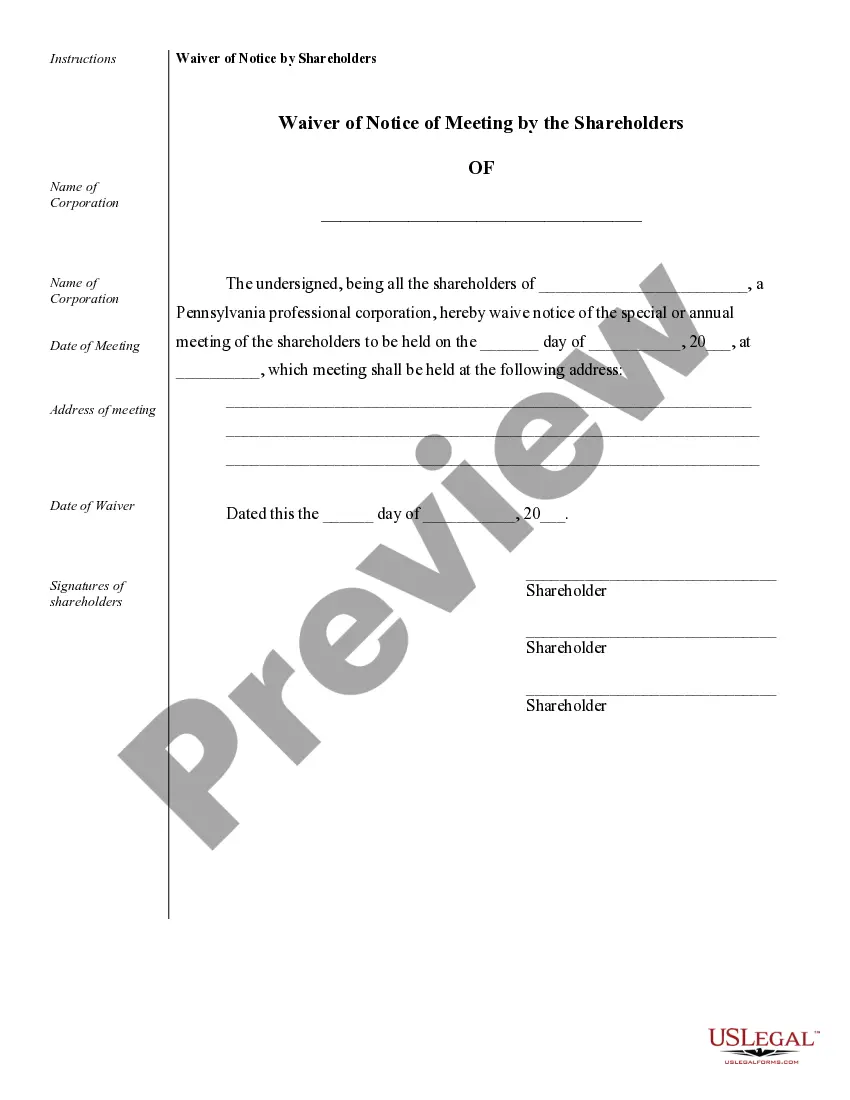
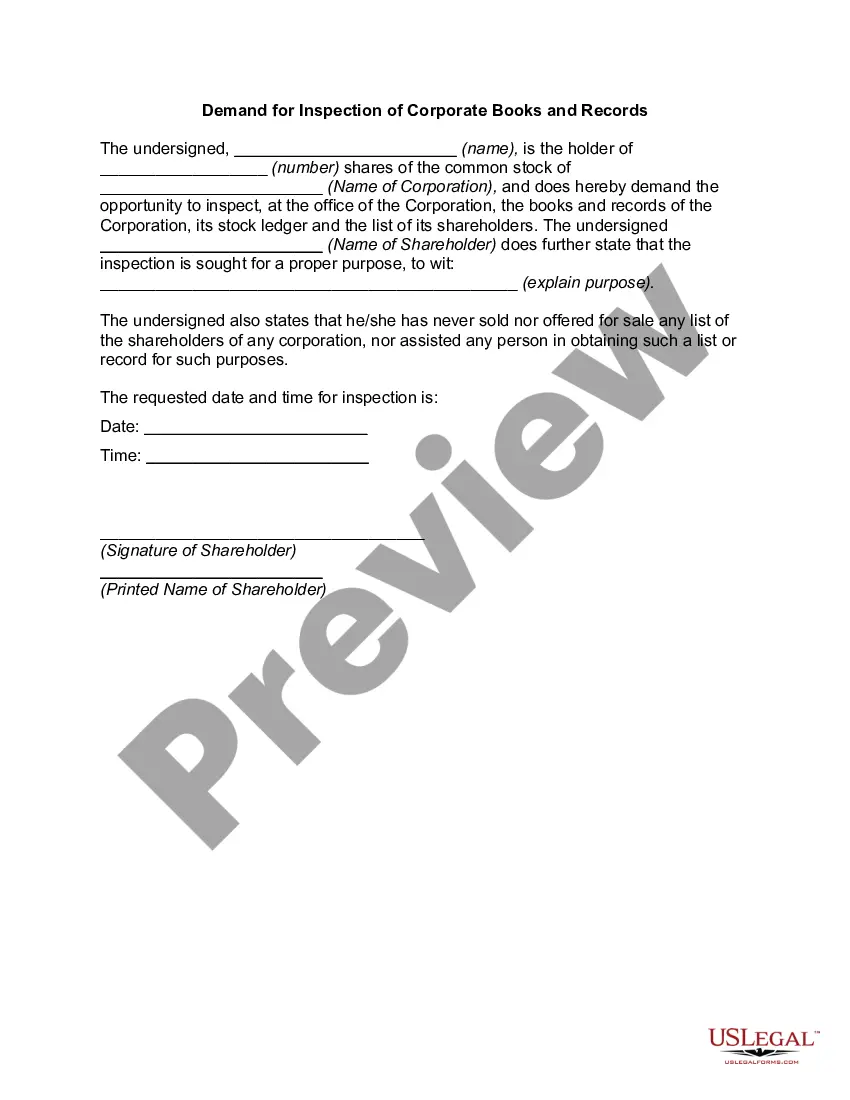
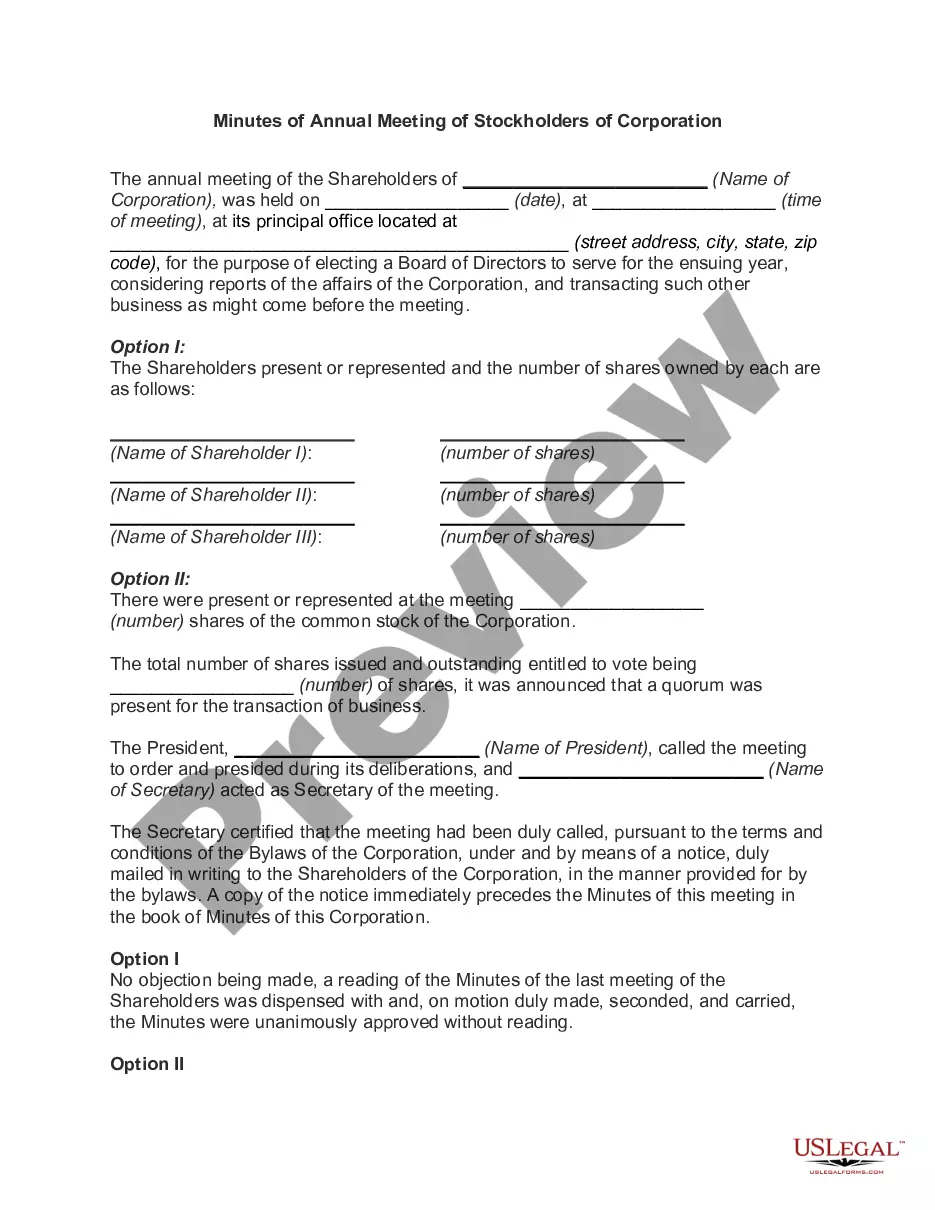
The Sample Corporate Records for a Pennsylvania Professional Corporation is a collection of essential documents used to maintain the official records of a professional corporation in Pennsylvania. This form package includes sample notices for meetings, resolutions, a stock ledger, and a stock certificate, differentiating itself by providing templates tailored for corporate governance within Pennsylvania's legal framework.
What’s included in this form
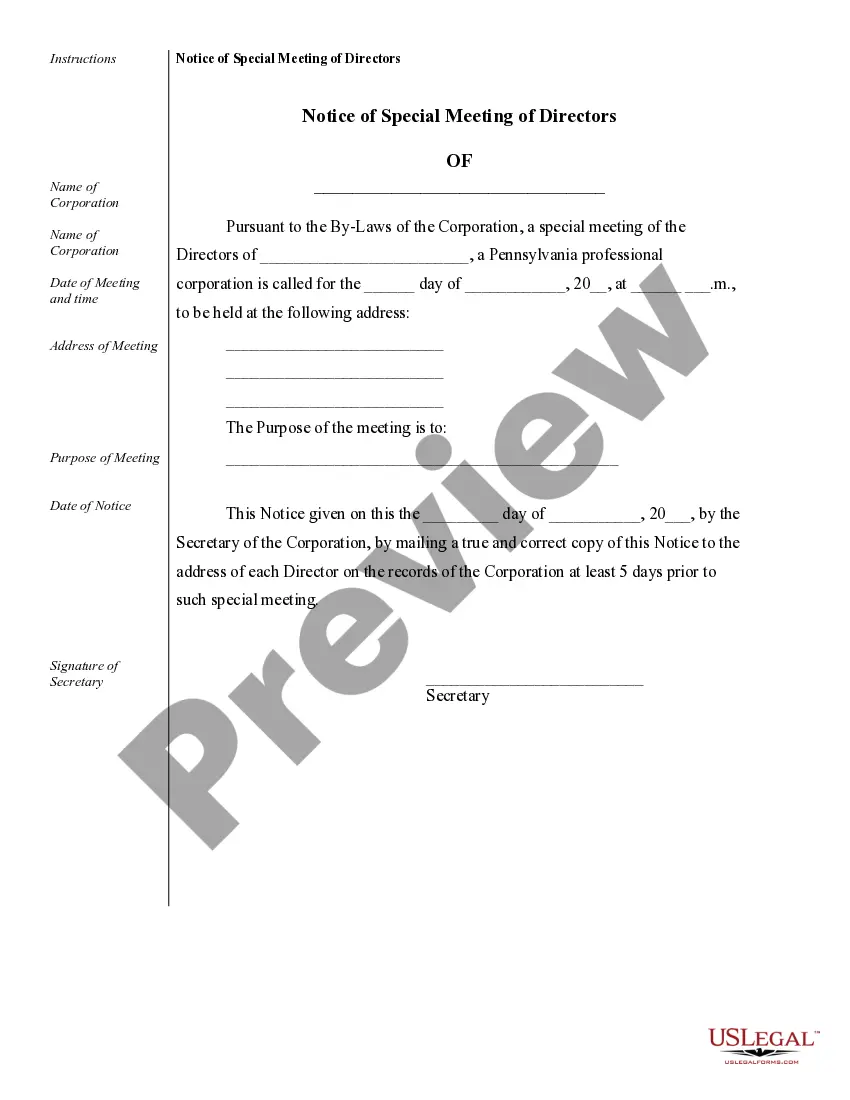
- Notice of Special Meeting of Directors
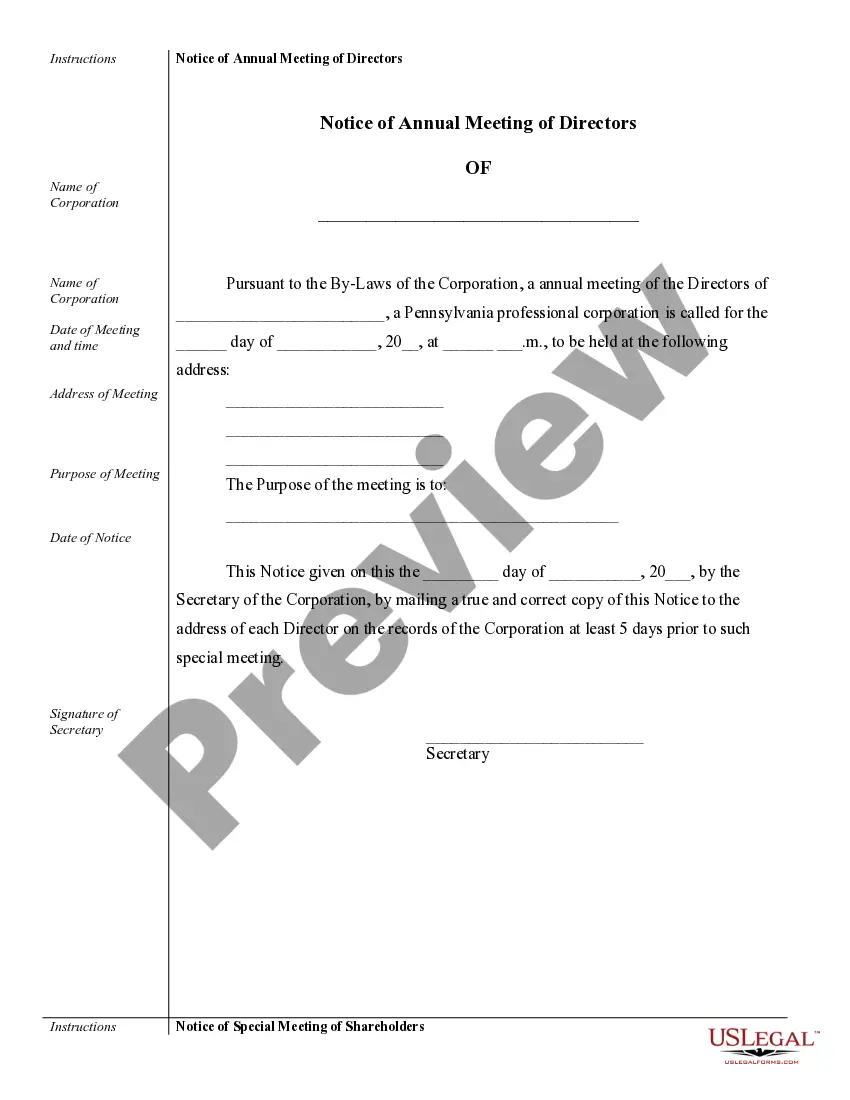
- Notice of Annual Meeting of Directors
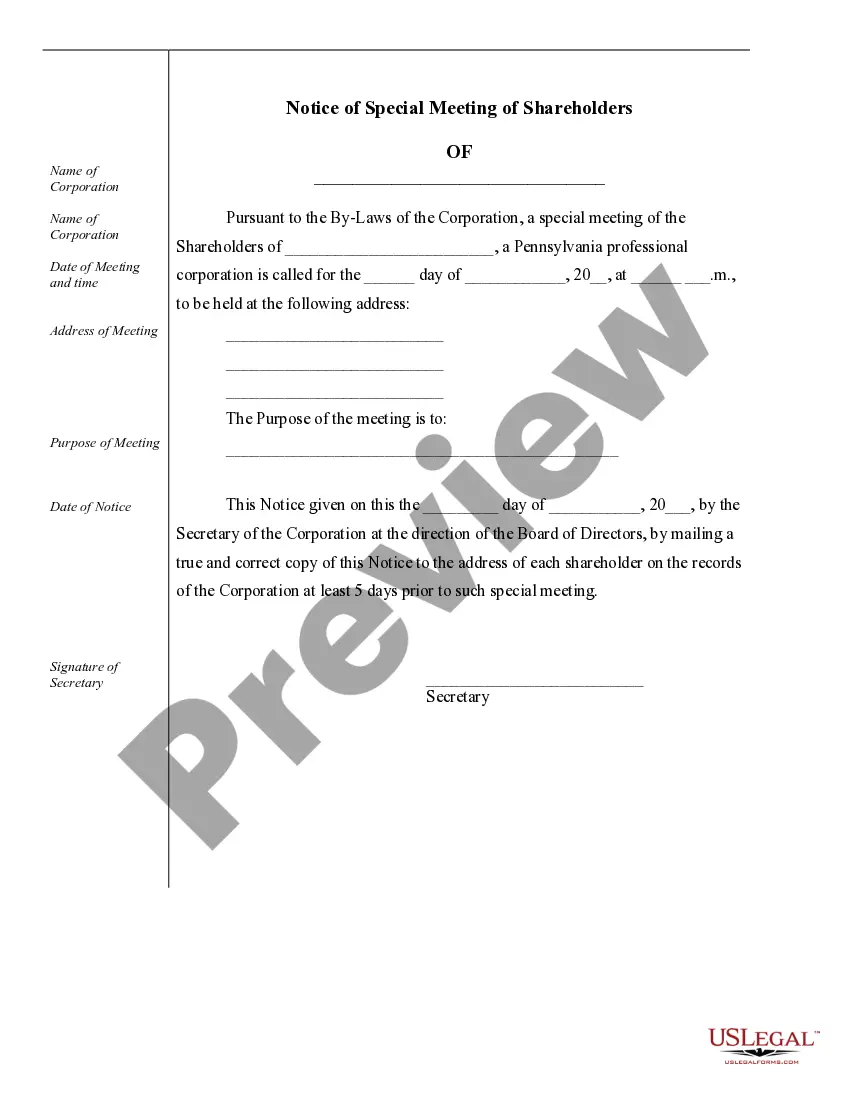
- Notice of Special Meeting of Shareholders
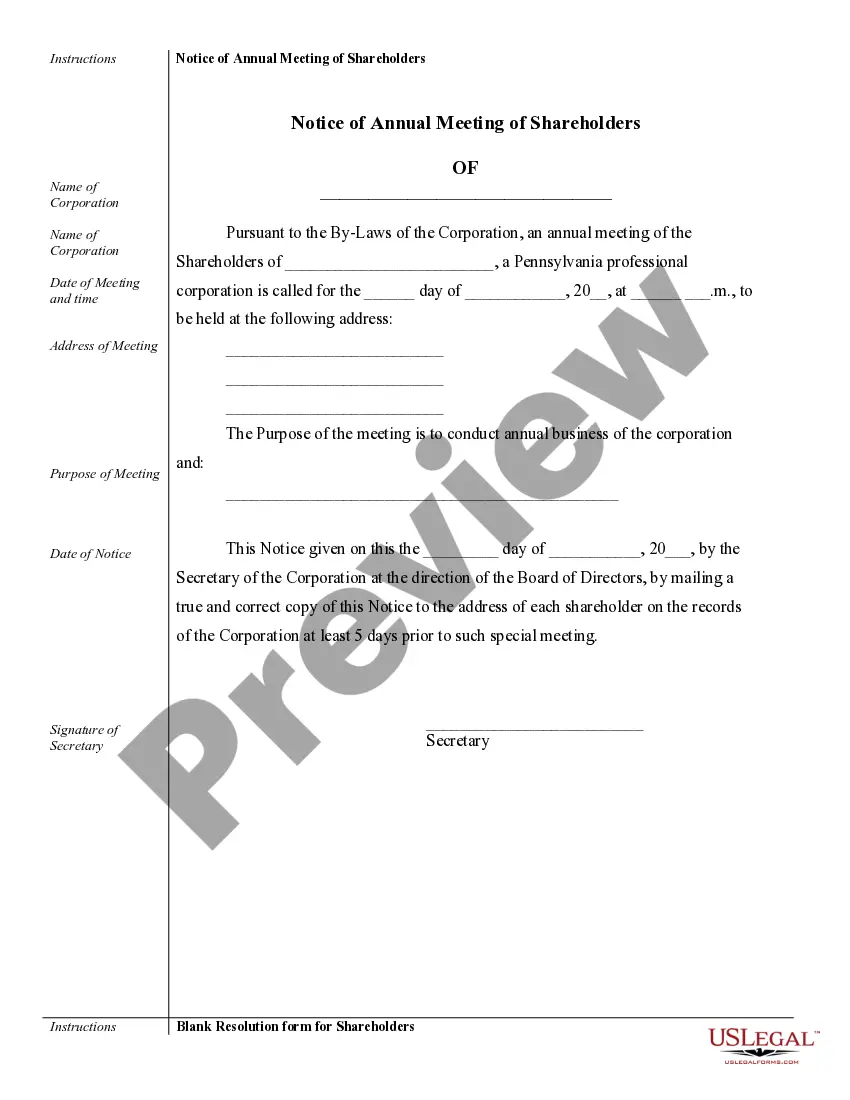
- Notice of Annual Meeting of Shareholders
- Resolution of the Shareholders
- Resolution of the Directors
- Waiver of Notice of Meeting by the Directors
- Waiver of Notice of Meeting by the Shareholders
- Simple Stock Transfer Ledger
- Simple Stock Certificate

When this form is needed
This form is used when a professional corporation in Pennsylvania needs to document official meetings and resolutions. It is essential for maintaining proper corporate governance, providing legal evidence of actions taken by directors and shareholders, and tracking stock ownership. Use it to formalize meetings, record resolutions, and transfer shares of the corporation.
Who this form is for
- Professional corporations in Pennsylvania
- Directors and shareholders of a Pennsylvania professional corporation
- Corporate legal representatives needing official documentation
Steps to complete this form
- Fill in the name of the corporation at the top of each document.
- Specify the date, time, and address for each meeting.
- Clearly state the purpose of the meeting in the appropriate section.
- Gather signatures from the Secretary and other attending officers or shareholders.
- Maintain copies in the corporate records for future reference.
Notarization requirements for this form
Notarization is not commonly needed for this form. However, certain documents or local rules may make it necessary. Our notarization service, powered by Notarize, allows you to finalize it securely online anytime, day or night.
Get your form ready online
Our built-in tools help you complete, sign, share, and store your documents in one place.
Make edits, fill in missing information, and update formatting in US Legal Forms—just like you would in MS Word.
Download a copy, print it, send it by email, or mail it via USPS—whatever works best for your next step.
Sign and collect signatures with our SignNow integration. Send to multiple recipients, set reminders, and more. Go Premium to unlock E-Sign.
If this form requires notarization, complete it online through a secure video call—no need to meet a notary in person or wait for an appointment.
We protect your documents and personal data by following strict security and privacy standards.

Make edits, fill in missing information, and update formatting in US Legal Forms—just like you would in MS Word.

Download a copy, print it, send it by email, or mail it via USPS—whatever works best for your next step.

Sign and collect signatures with our SignNow integration. Send to multiple recipients, set reminders, and more. Go Premium to unlock E-Sign.

If this form requires notarization, complete it online through a secure video call—no need to meet a notary in person or wait for an appointment.

We protect your documents and personal data by following strict security and privacy standards.
Common mistakes
- Failing to provide adequate notice to directors or shareholders.
- Not obtaining all necessary signatures on resolutions.
- Incomplete or inaccurate meeting details, such as date or time.
Advantages of online completion
- Convenience of downloading and filling the forms at your own pace.
- Editability allows for quick adjustments as needed.
- Access to forms drafted by licensed attorneys ensures compliance with legal standards.
Legal use & context
- This form provides a legal framework for conducting corporate governance in Pennsylvania.
- Use of these forms can bolster a corporation's legal standing in disputes or audits.
- Proper maintenance of records as per this form helps mitigate legal risks.
Main things to remember
- This form is essential for managing corporate records in Pennsylvania.
- Proper use of this form ensures legal compliance and effective corporate governance.
- Filling out the forms accurately supports clear documentation of corporate actions.
Looking for another form?

Form popularity
FAQ
In addition to the last will and testament as described above, Pennsylvania also recognizes holographic (handwritten) wills as valid legal documents. In Pennsylvania, a handwritten will must be executed in the same manner as any other will as explained above in order to be valid.
To create a valid will in Pennsylvania, the will creator (testator) must be 18 years of age and must possess a sound mind. Possessing a sound mind means that the testator is mentally competent and fully understands what property they own and who they are conveying their property to.
A handwritten will may be legal in Pennsylvania depending on the individual circumstances. Under Pennsylvania state code, wills must be in writing and signed by the person making the will, known as the testator.The state of Pennsylvania therefore makes no legal distinction between a handwritten and typed will.
For example, California requires that all sections of the will necessary to make the will valid must be written entirely by hand and that the person writing the will must sign it. If these state rules aren't followed, the holographic will won't be valid.
To create a valid will in Pennsylvania, the will creator (testator) must be 18 years of age and must possess a sound mind. Possessing a sound mind means that the testator is mentally competent and fully understands what property they own and who they are conveying their property to.
Self-written wills are typically valid, even when handwritten, as long as they're properly witnessed and notarized, or proven in court. A handwritten will that is not witnessed or notarized is considered a holographic will. Not all states accept holographic wills .
No, in Pennsylvania, you do not need to notarize your will to make it legal. However, you must go to a notary to make your will self-proving, see above.
The information below is subject to limited disclosure. It may be disclosed to governmental agencies without notice to you; but will not be disclosed to other parties or the public unless allowed by law.
A confidentiality agreement (also called a nondisclosure agreement or NDA) is a legally binding contract in which a person or business promises to treat specific information as a trade secret and promises not to disclose the secret to others without proper authorization.