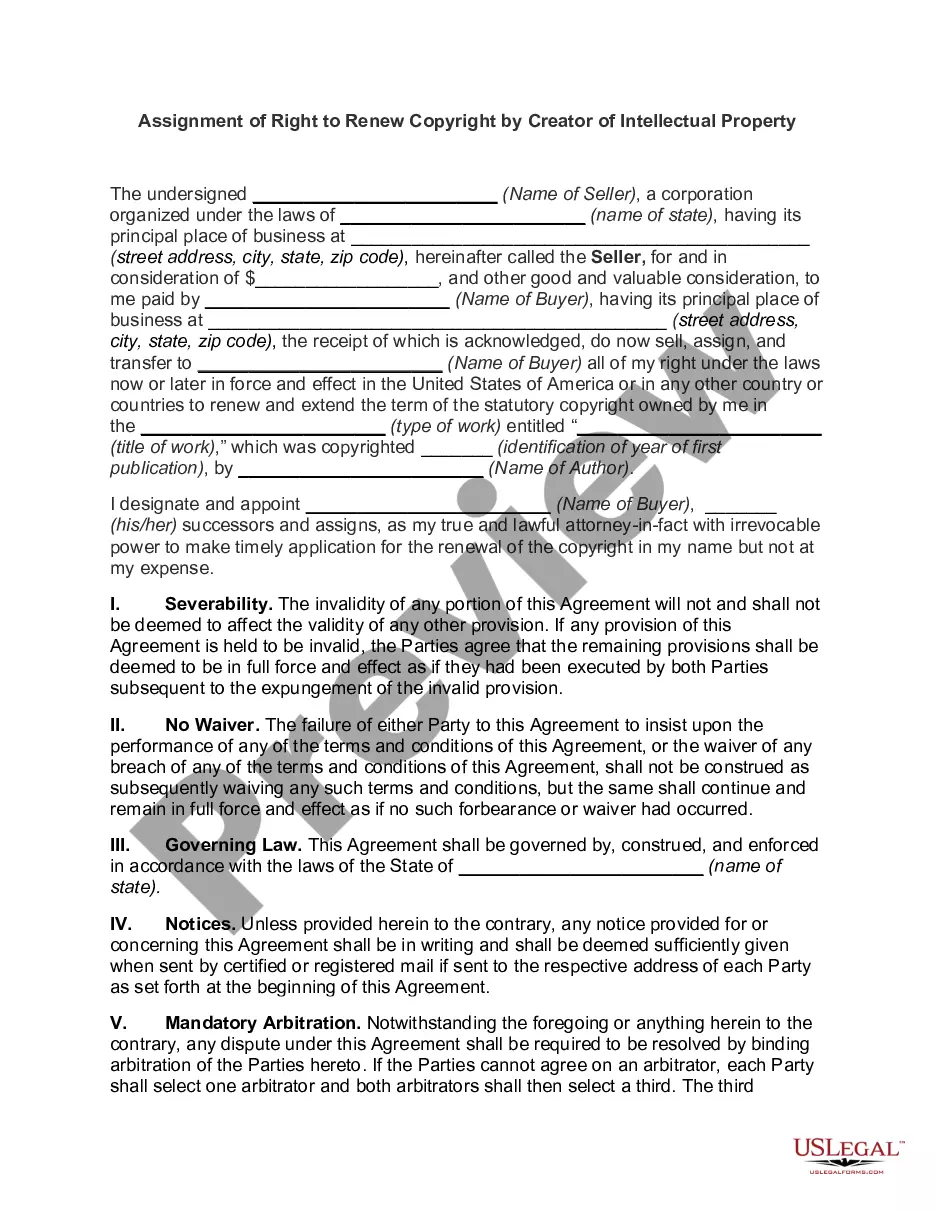
Pennsylvania Sample Letter for Claim Settlement Against Decedent's Estate
Description


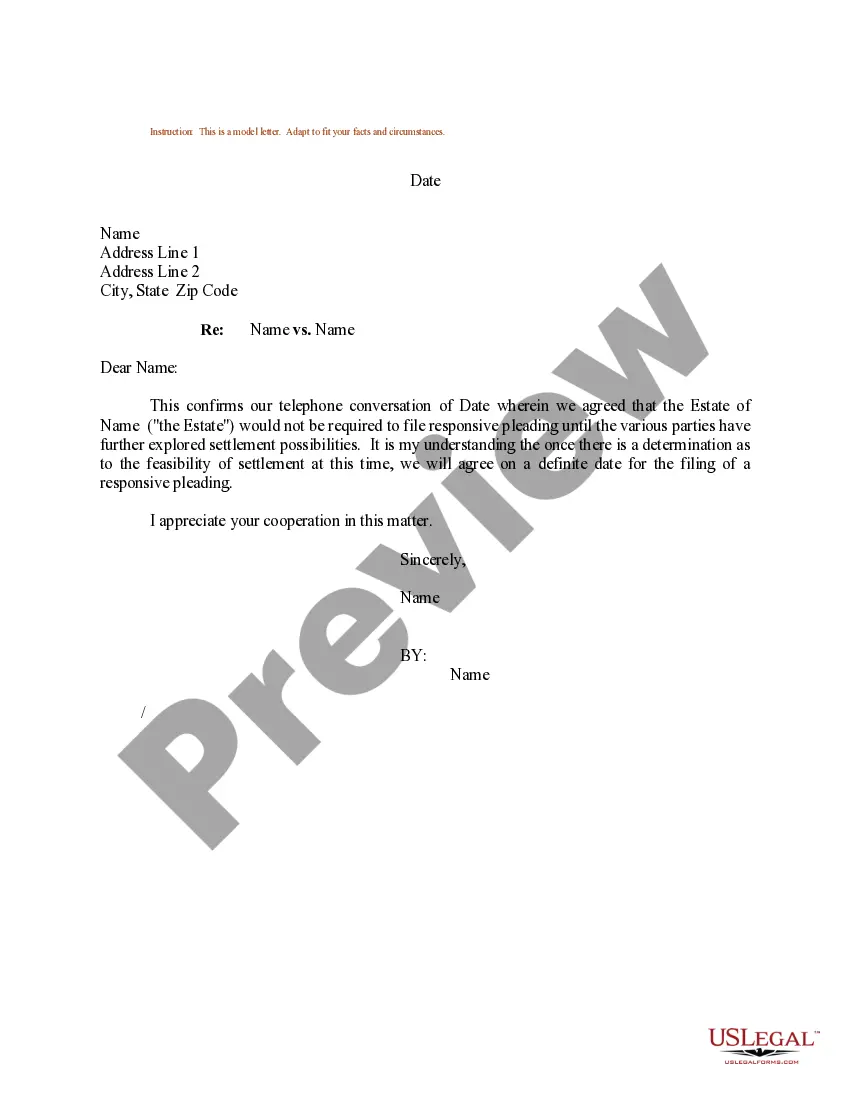
Get your form ready online
Our built-in tools help you complete, sign, share, and store your documents in one place.
Make edits, fill in missing information, and update formatting in US Legal Forms—just like you would in MS Word.
Download a copy, print it, send it by email, or mail it via USPS—whatever works best for your next step.
Sign and collect signatures with our SignNow integration. Send to multiple recipients, set reminders, and more. Go Premium to unlock E-Sign.
If this form requires notarization, complete it online through a secure video call—no need to meet a notary in person or wait for an appointment.
We protect your documents and personal data by following strict security and privacy standards.

Make edits, fill in missing information, and update formatting in US Legal Forms—just like you would in MS Word.

Download a copy, print it, send it by email, or mail it via USPS—whatever works best for your next step.

Sign and collect signatures with our SignNow integration. Send to multiple recipients, set reminders, and more. Go Premium to unlock E-Sign.

If this form requires notarization, complete it online through a secure video call—no need to meet a notary in person or wait for an appointment.

We protect your documents and personal data by following strict security and privacy standards.
Looking for another form?



How to fill out Sample Letter For Claim Settlement Against Decedent's Estate?
Are you presently in a circumstance where you will require paperwork for potentially business or personal purposes nearly every day.
There are numerous authentic document templates accessible online, but finding ones you can trust isn't straightforward.
US Legal Forms offers a vast selection of form templates, such as the Pennsylvania Sample Letter for Claim Settlement Against Decedent's Estate, that are designed to meet federal and state requirements.
Choose a suitable document format and download your copy.
Access all the document templates you have purchased in the My documents section. You can download an additional copy of the Pennsylvania Sample Letter for Claim Settlement Against Decedent's Estate at any time, if required. Just select the desired form to download or print the document template. Utilize US Legal Forms, the most extensive collection of valid forms, to save time and avoid mistakes. The service provides properly crafted legal document templates that can be used for various purposes. Create an account on US Legal Forms and start making your life a bit easier.
- If you are currently familiar with the US Legal Forms website and have an account, simply Log In.
- After that, you can download the Pennsylvania Sample Letter for Claim Settlement Against Decedent's Estate template.
- If you do not have an account and wish to start using US Legal Forms, follow these instructions.
- Obtain the form you need and ensure it is for the correct city/state.
- Utilize the Preview option to review the form.
- Check the description to ensure you have selected the correct form.
- If the form isn't what you are looking for, use the Search field to find the form that meets your requirements.
- Once you find the right form, click Get now.
- Select the pricing plan you prefer, fill out the necessary information to create your account, and pay for the order using your PayPal or credit card.
Form popularity
FAQ
This situation is reached only after the estate is properly inventoried, taxes are paid, all debts and other obligations are satisfied, and the remaining assets have been distributed via probate or other methods. Estate executors in Pennsylvania must take one of two actions to close an estate.
You must have a pecuniary interest ? that is, you stand to inherit some property or assets from the estate ? in order to be eligible to file litigation against the management of the estate. Adults may sue on behalf of minors or legally incompetent heirs.
In Pennsylvania, a person or entity who is owed money by the decedent prior to their death is considered to be a creditor with a claim against the estate. State law requires the personal representative of the estate to put creditors on notice of the estate administration proceedings.
You must file out a form and submit it to the register to make the claim official. If the claim is filed by a creditor with the court, their right to proceed is preserved against what is known as the distributee or who receives assets from the estate only if the real property is considered an estate asset.
Section 3392 states that all creditor claims shall be paid in the following order: (1) the costs of administering the decedent's estate, which includes any probate fees, attorneys' fees, or personal representative commissions; (2) the family exemption, which is $3,500.00 for each family member who resided with the ...
A creditor against an estate files a claim by providing the personal representative of the estate with written notice. This can be done by submitting a completed Notice of Claim form with the court register. The filing of a claim preserves the creditor's right to collect from the estate.
In Pennsylvania, it is only necessary to probate if the decedent owned assets, whether financial or real estate holdings, solely in their name which did not already have a beneficiary designated. Such assets are called probate assets, and in order to convey ownership of them it is necessary to probate.
No claimant shall have any claim against distributed real property unless such claimant has, within one (1) year after the decedent's death, filed a written notice of claim with the Clerk of Court.