Puerto Rico Discovery - Sample Letter to Opposing Counsel regarding Deposition and Subpoena Duces Tecum
Description
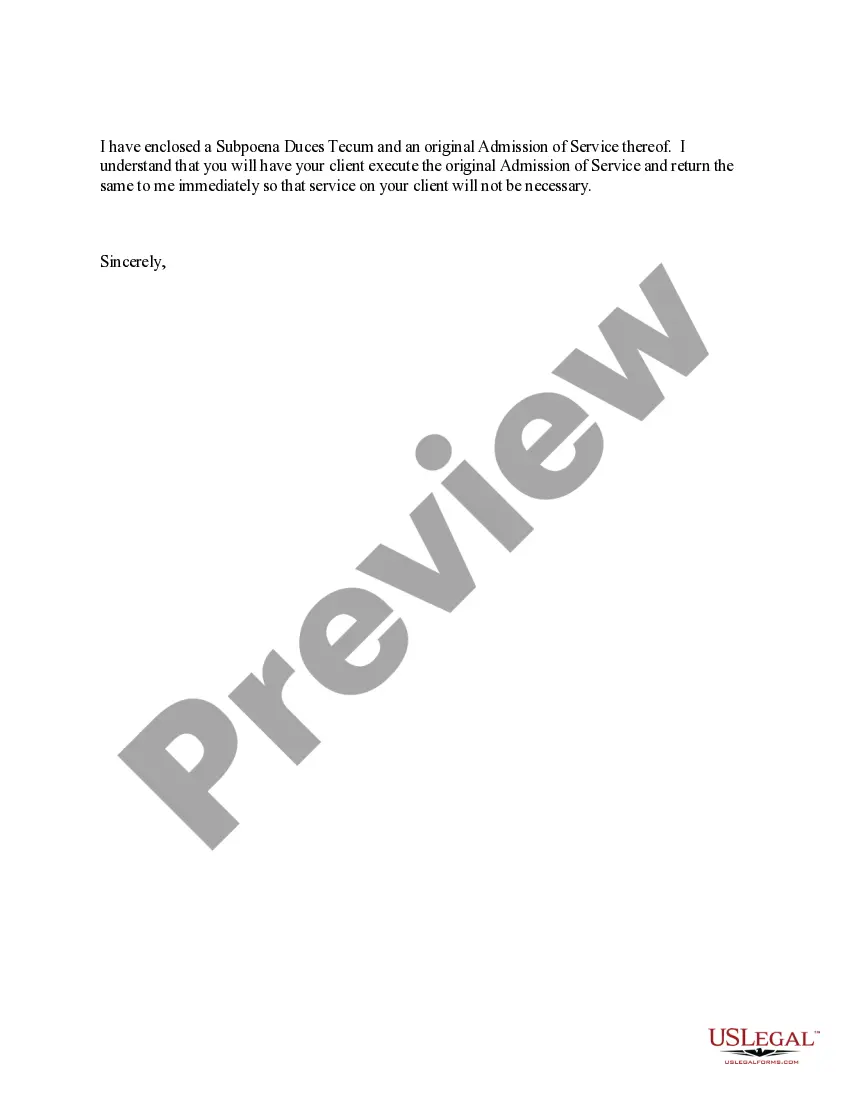
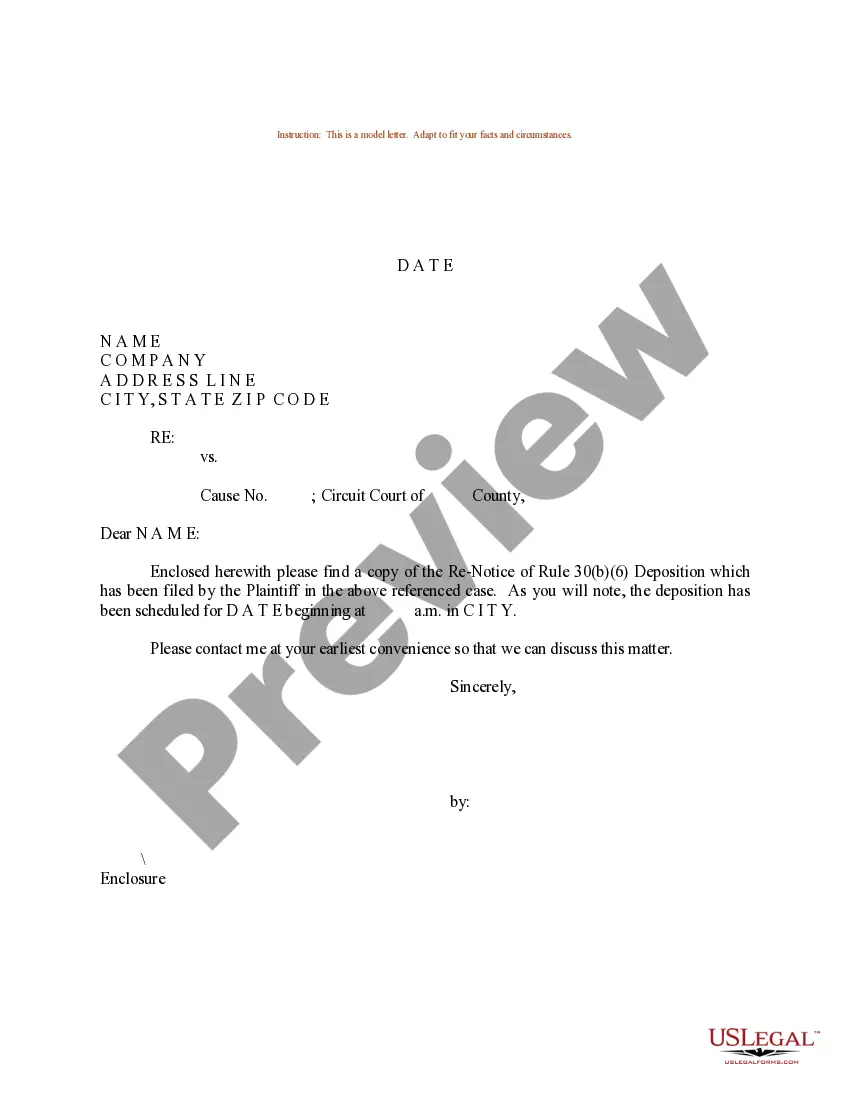
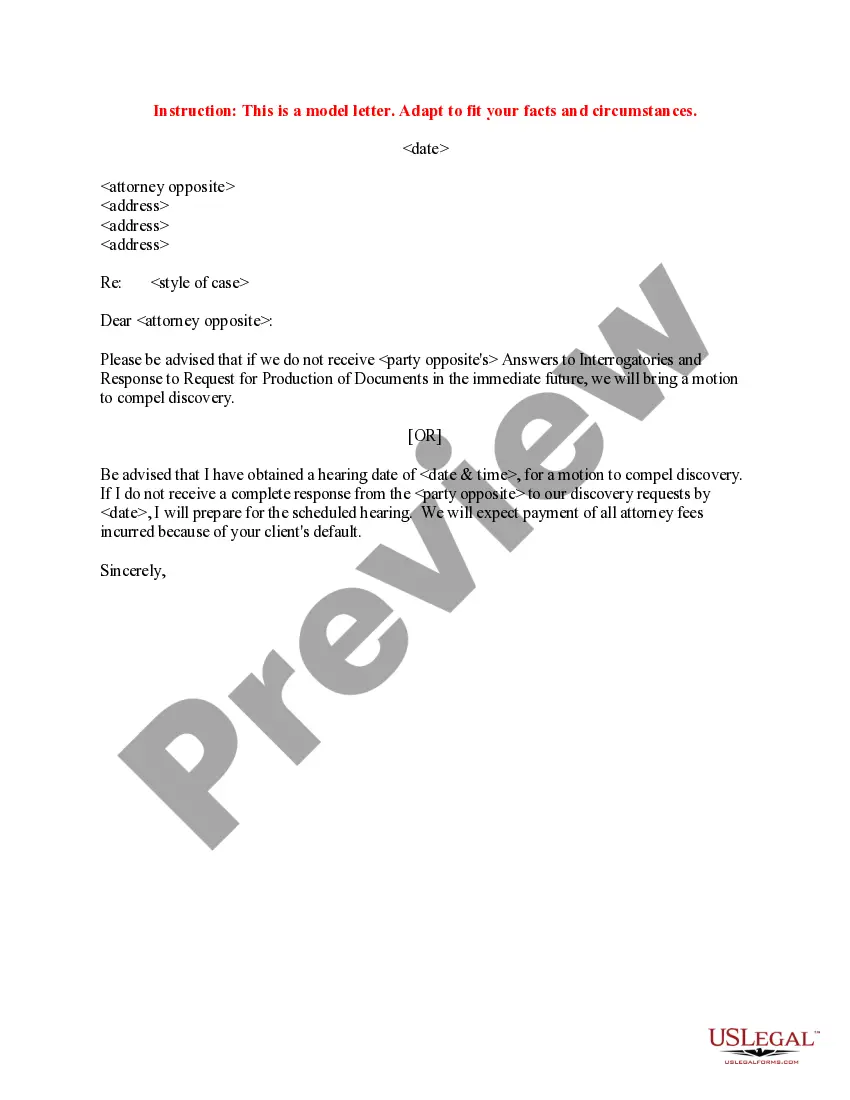
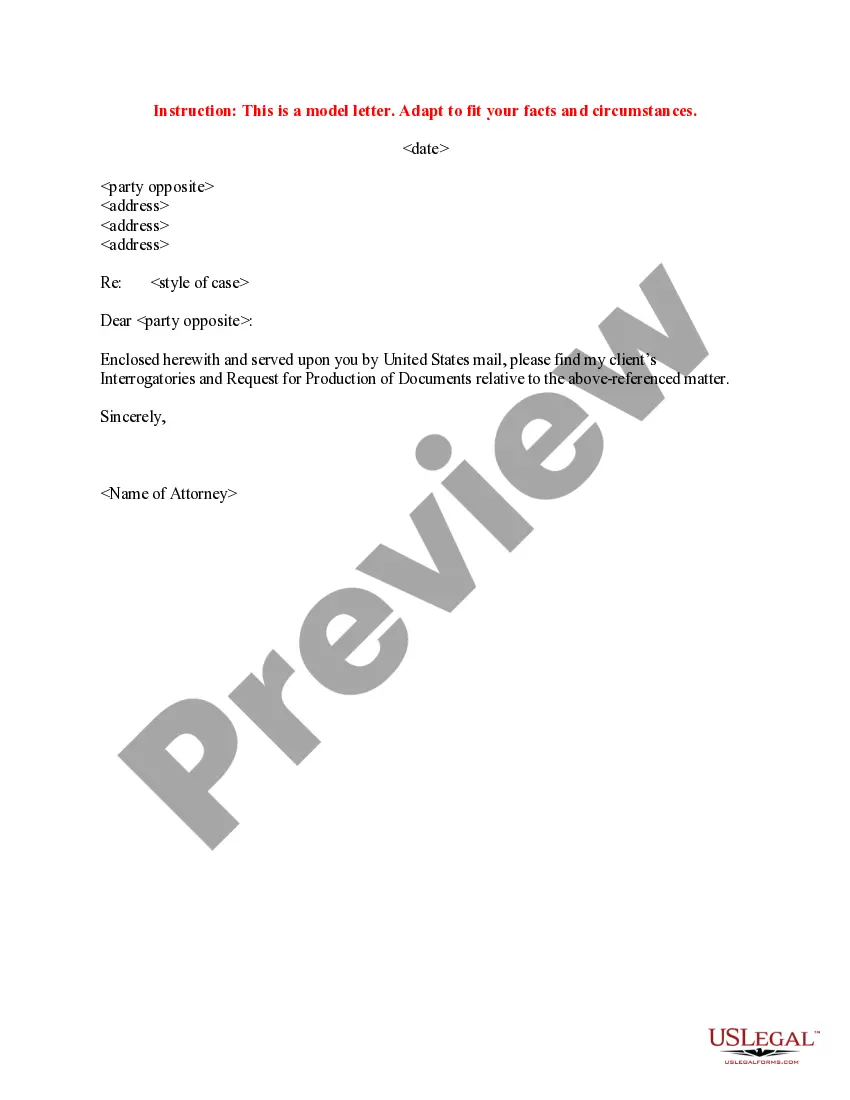
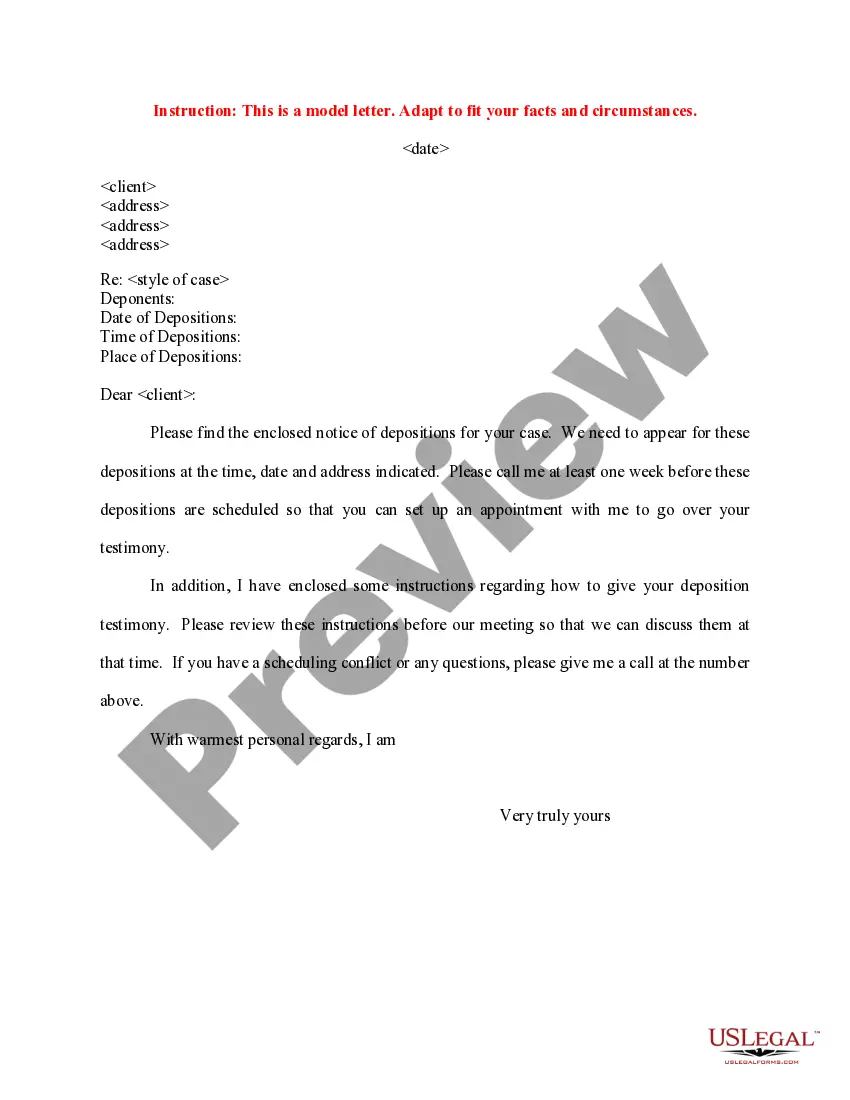
How to fill out Discovery - Sample Letter To Opposing Counsel Regarding Deposition And Subpoena Duces Tecum?
Are you presently in a position that you need to have files for possibly organization or person reasons almost every time? There are plenty of authorized record themes available online, but discovering kinds you can trust isn`t easy. US Legal Forms offers a large number of form themes, just like the Puerto Rico Discovery - Sample Letter to Opposing Counsel regarding Deposition and Subpoena Duces Tecum, that are written to fulfill state and federal needs.
Should you be previously knowledgeable about US Legal Forms internet site and have an account, just log in. Following that, you are able to download the Puerto Rico Discovery - Sample Letter to Opposing Counsel regarding Deposition and Subpoena Duces Tecum design.
Should you not come with an bank account and would like to begin using US Legal Forms, follow these steps:
- Discover the form you require and ensure it is for that right town/area.
- Take advantage of the Preview option to examine the shape.
- Read the description to ensure that you have chosen the appropriate form.
- In the event the form isn`t what you`re looking for, make use of the Search area to obtain the form that fits your needs and needs.
- If you discover the right form, simply click Acquire now.
- Select the prices plan you want, fill in the specified info to produce your money, and pay for your order making use of your PayPal or charge card.
- Choose a convenient file structure and download your copy.
Find every one of the record themes you might have bought in the My Forms food list. You can aquire a additional copy of Puerto Rico Discovery - Sample Letter to Opposing Counsel regarding Deposition and Subpoena Duces Tecum any time, if required. Just select the necessary form to download or print the record design.
Use US Legal Forms, the most substantial selection of authorized forms, to save efforts and avoid mistakes. The support offers professionally manufactured authorized record themes which you can use for a selection of reasons. Generate an account on US Legal Forms and begin creating your life a little easier.
Form popularity
FAQ
Summary. This discovery deficiency letter is a standard form that attorneys can use in a federal court litigation to facilitate a discussion with opposing counsel concerning his or her failure to respond to discovery requests or provision of inadequate, incomplete, or otherwise deficient responses.
When you are emailing the opposing counsel, always be mindful of your tone, words, and spelling. Double-check and then check again before entering an email address in the ?To:? line and hitting ?send.? Make copies of all correspondence and never copy or blind carbon copy your client in emails with the opposing counsel.
Rule 37 authorizes the court to direct that parties or attorneys who fail to participate in good faith in the discovery process pay the expenses, including attorney's fees, incurred by other parties as a result of that failure.
Dear [Opposing Counsel Name], I am writing to follow up on our recent communication regarding [case name]. I have not yet received a response from you regarding [list the specific issue or question]. Please let me know your thoughts as soon as possible so that we can continue to move forward with the case.
As a rule, lawyers should avoid carbon copying or blind carbon copying clients on email, especially those to opposing counsel. And if doing so is necessary, the lawyer should first explain to the client why the lawyer is using CC or BCC, and that the client should not respond to all.
Some are, some are not. The general rule is that all communications between parties is open and unprotected . However an exception applies to communications as part of an effort to settle the case. It is wise to head all such communications with the words ??Without Prejudice".
This letter is often called a good faith letter. And it is needed under many courts' rules before you can file a motion to compel discovery if the other party ignores your requests or provides evasive responses or move for sanctions if your opponent refuses to comply with the court's discovery order.
8 Tips for Dealing with Difficult Opposing Counsel Point out Common Ground. ... Don't be Afraid to Ask Why. ... Separate the Person from the Problem. ... Focus on your Interests. ... Don't Fall for your Assumptions. ... Take a Calculated Approach. ... Control the Conversation by Reframing. ... Pick up the Phone.