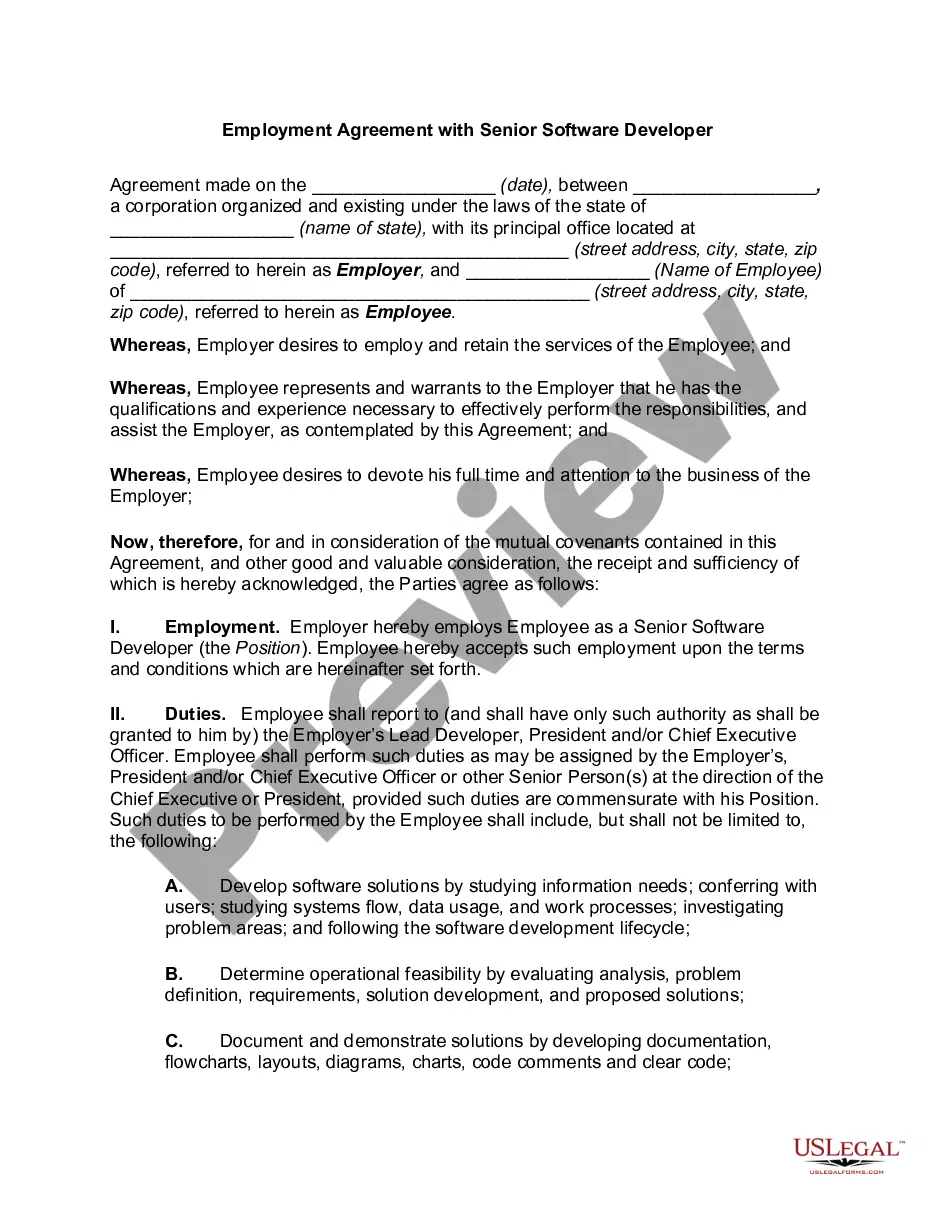
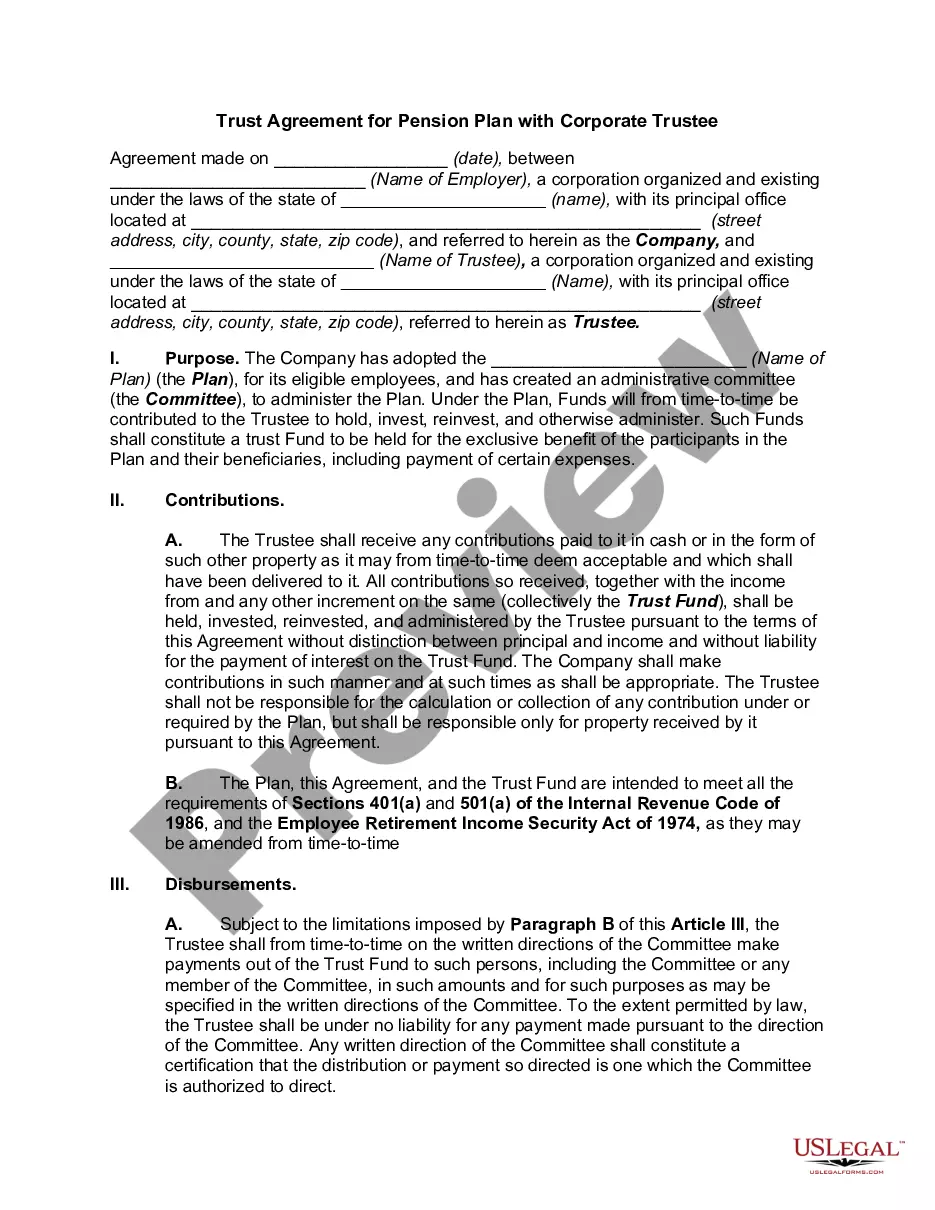
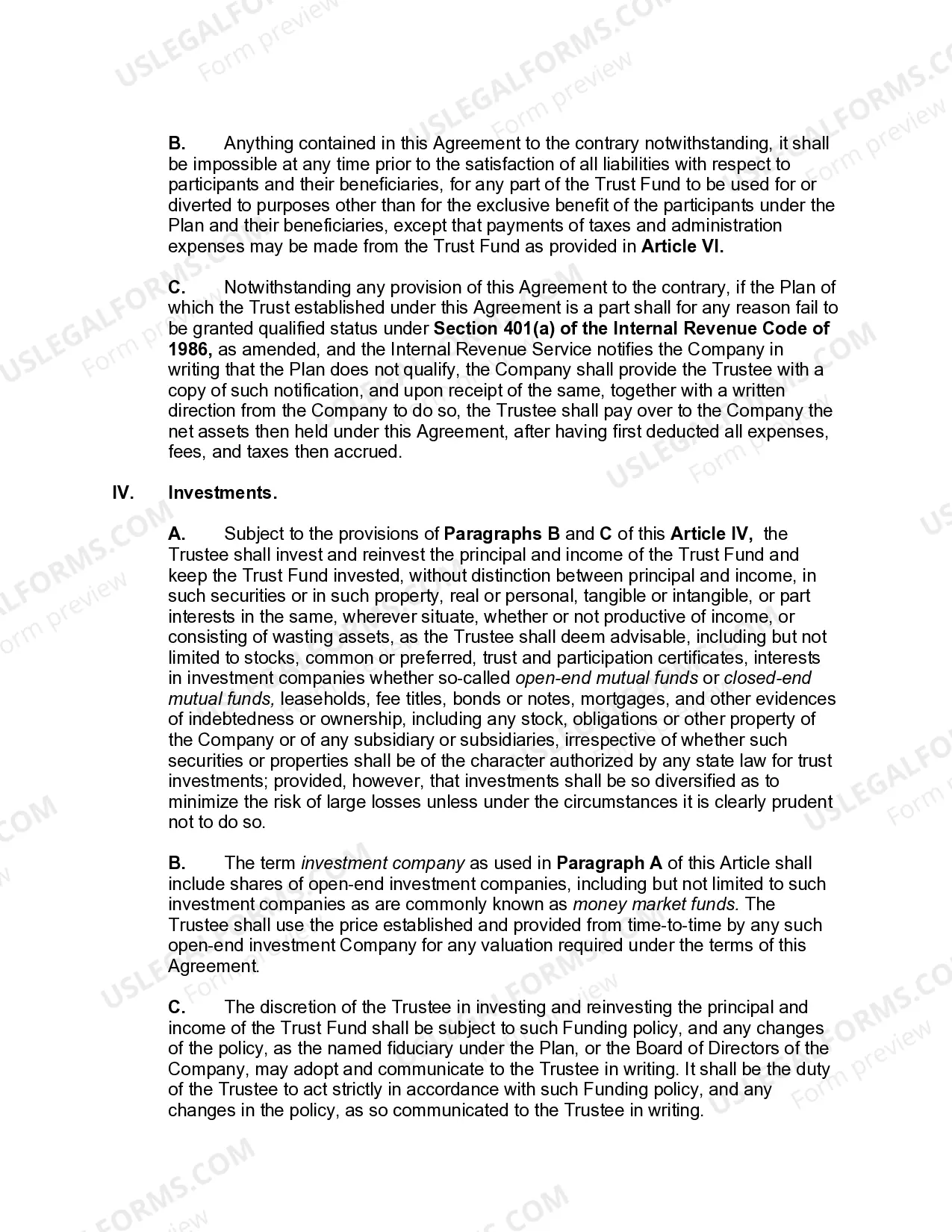
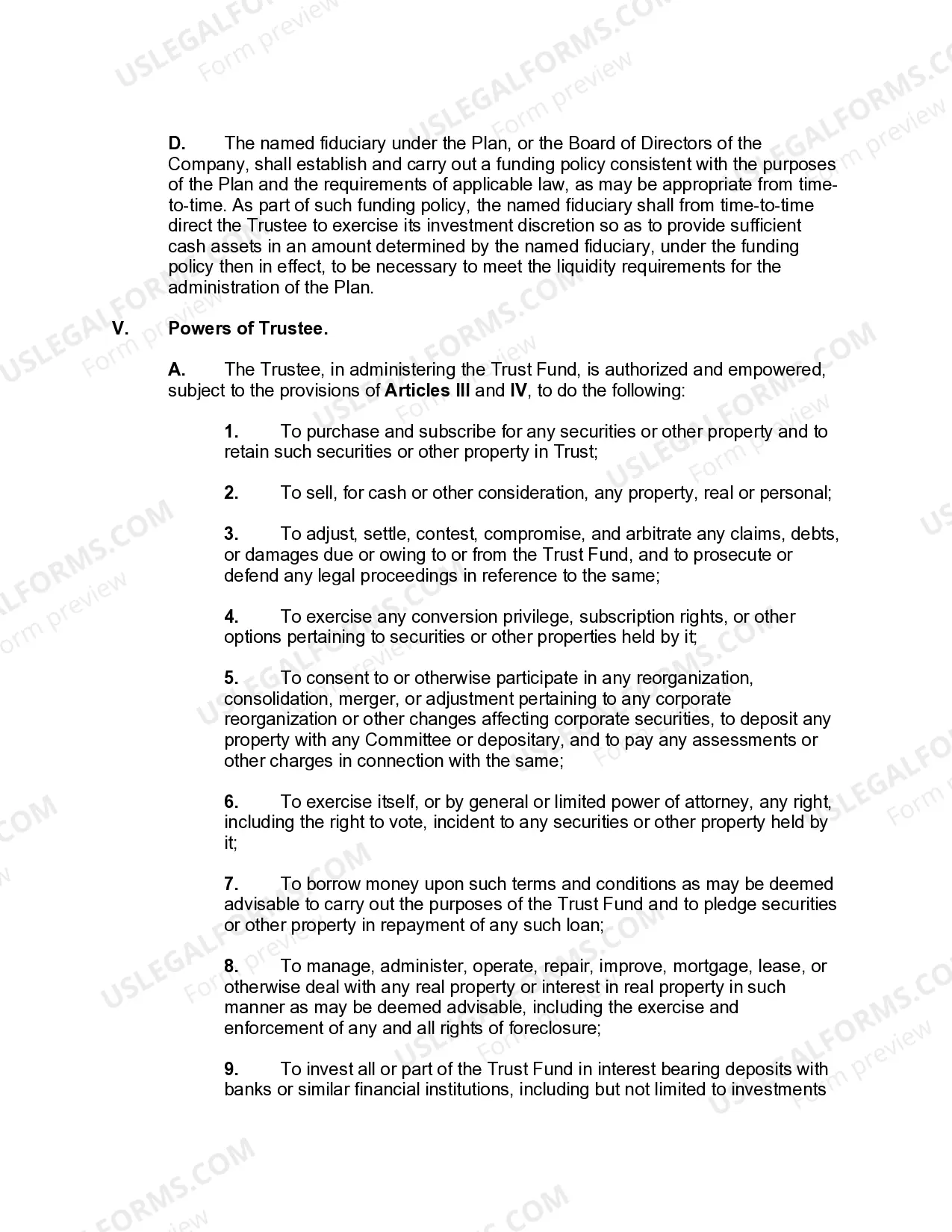
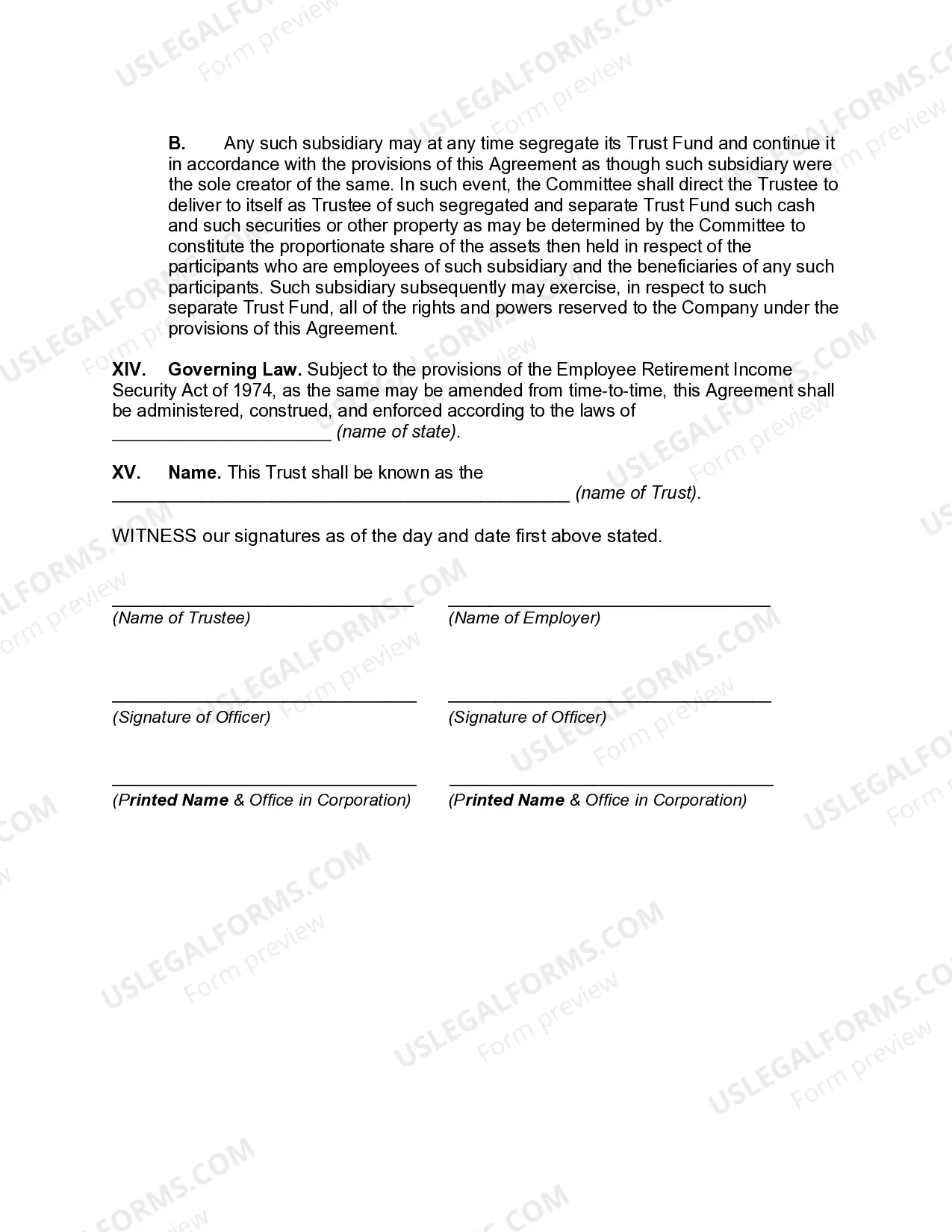
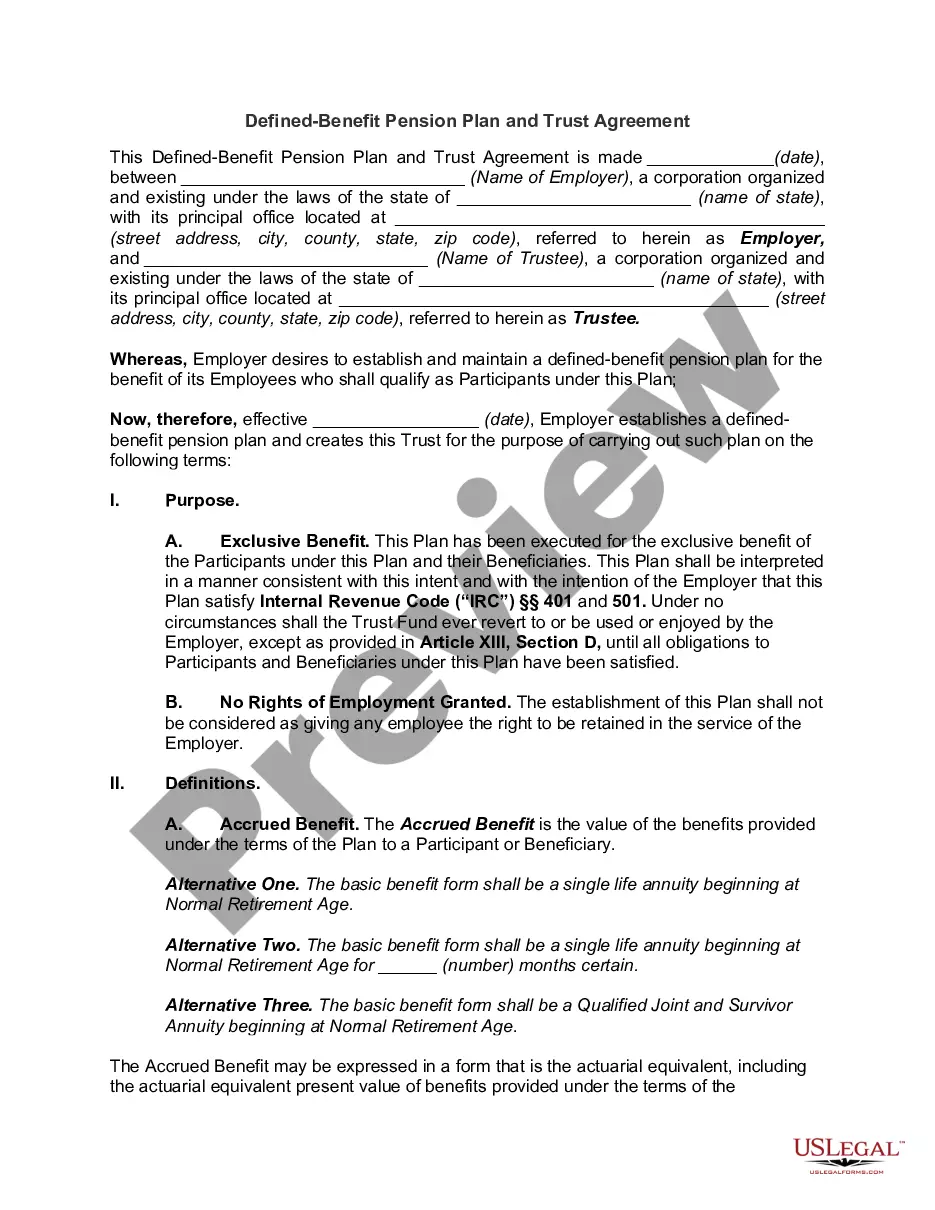
Puerto Rico Trust Agreement for Pension Plan with Corporate Trustee
Description
Get your form ready online
Our built-in tools help you complete, sign, share, and store your documents in one place.
Make edits, fill in missing information, and update formatting in US Legal Forms—just like you would in MS Word.
Download a copy, print it, send it by email, or mail it via USPS—whatever works best for your next step.
Sign and collect signatures with our SignNow integration. Send to multiple recipients, set reminders, and more. Go Premium to unlock E-Sign.
If this form requires notarization, complete it online through a secure video call—no need to meet a notary in person or wait for an appointment.
We protect your documents and personal data by following strict security and privacy standards.

Make edits, fill in missing information, and update formatting in US Legal Forms—just like you would in MS Word.

Download a copy, print it, send it by email, or mail it via USPS—whatever works best for your next step.

Sign and collect signatures with our SignNow integration. Send to multiple recipients, set reminders, and more. Go Premium to unlock E-Sign.

If this form requires notarization, complete it online through a secure video call—no need to meet a notary in person or wait for an appointment.

We protect your documents and personal data by following strict security and privacy standards.
Looking for another form?
How to fill out Trust Agreement For Pension Plan With Corporate Trustee?
US Legal Forms - one of the largest repositories of legal documents in the United States - provides a variety of legal form templates that you can download or create.
By utilizing the website, you can access thousands of forms for business and personal use, organized by categories, states, or keywords.
You can find the latest versions of documents like the Puerto Rico Trust Agreement for Pension Plan with Corporate Trustee within moments.
In case the form does not meet your needs, use the Search bar at the top of the screen to find the one that does.
If you are satisfied with the document, confirm your choice by clicking the Purchase now button.
- If you already possess a subscription, sign in to retrieve the Puerto Rico Trust Agreement for Pension Plan with Corporate Trustee from the US Legal Forms library.
- The Download button will appear on every form you view.
- You can access all previously downloaded documents from the My documents section of your account.
- If you are using US Legal Forms for the first time, here are some simple instructions to get you started.
- Ensure you have selected the correct form for your city/state.
- Click the Review button to check the form's details.
Form popularity
FAQ
A plan sponsor is a designated partyusually a company or employerthat sets up a healthcare or retirement plan, such as a 401(k), for the benefit of the organization's employees.
Retirement plan qualification ERISA Section 1022(i)(2) provides that a sponsor of a Puerto Rican plan can make an irrevocable election for the plan to comply with all of the Internal Revenue Code's qualification provisions except for the trust situs requirement.
A trustee is the person or entity entrusted to make investment decisions in the best interests of plan participants. A trustee is assigned by another fiduciary, such as the employer who sponsors the qualified retirement plan, and should be named in the plan documents. Additional restrictions apply for a trustee.
Yes. The law requires that custodians, trustees and all other persons dealing with plan assets held in trust must act for one purpose only. That purpose is to provide benefits to plan participants and to defray the reasonable expenses of administering the plan.
What Is a 401(k) Trustee? The trustee (or trustees) of a plan is the individual that has the primary fiduciary responsibility to ensure the plan assets are being managed in the best interest of the participants and in line with the plan document. The trustee can be held personally liable for the misuse of plan asset.
A plan sponsor is an employer or organization that offers a group health plan to its employees or members.
Retirement plans themselves cannot be transferred into a trust; those assets must be distributed from the plan first, which triggers income tax on the distribution. If you are older than 72 when you die, money generally must come out of your retirement plan according to the schedule that was required before your death.
In short, YES, you can designate a trust as the future beneficiary of your 401(k) retirement account. Leaving your inheritance in a trust allows you to control where and how your assets are divided after your death. Learn the pros and cons to this type of legacy planning, given IRS rules and limitations.
The trustee's role is to administer and distribute the assets in the trust according to your wishes, as expressed in the trust document. Trustees have the fiduciary duty, legal authority, and responsibility to manage your assets held in trust and handle day-to-day financial matters on your behalf.
Retirement plans themselves cannot be transferred into a trust; those assets must be distributed from the plan first, which triggers income tax on the distribution. If you are older than 72 when you die, money generally must come out of your retirement plan according to the schedule that was required before your death.