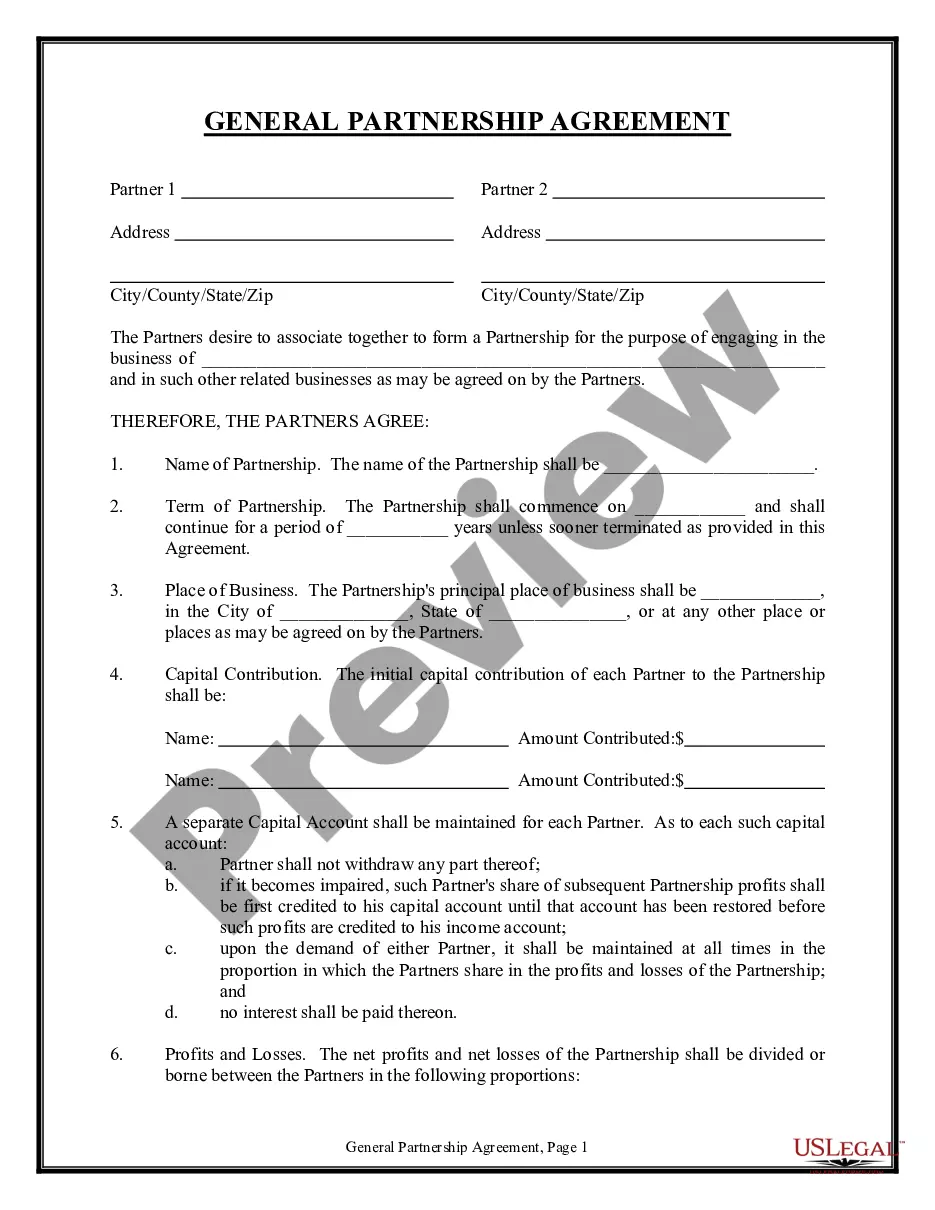
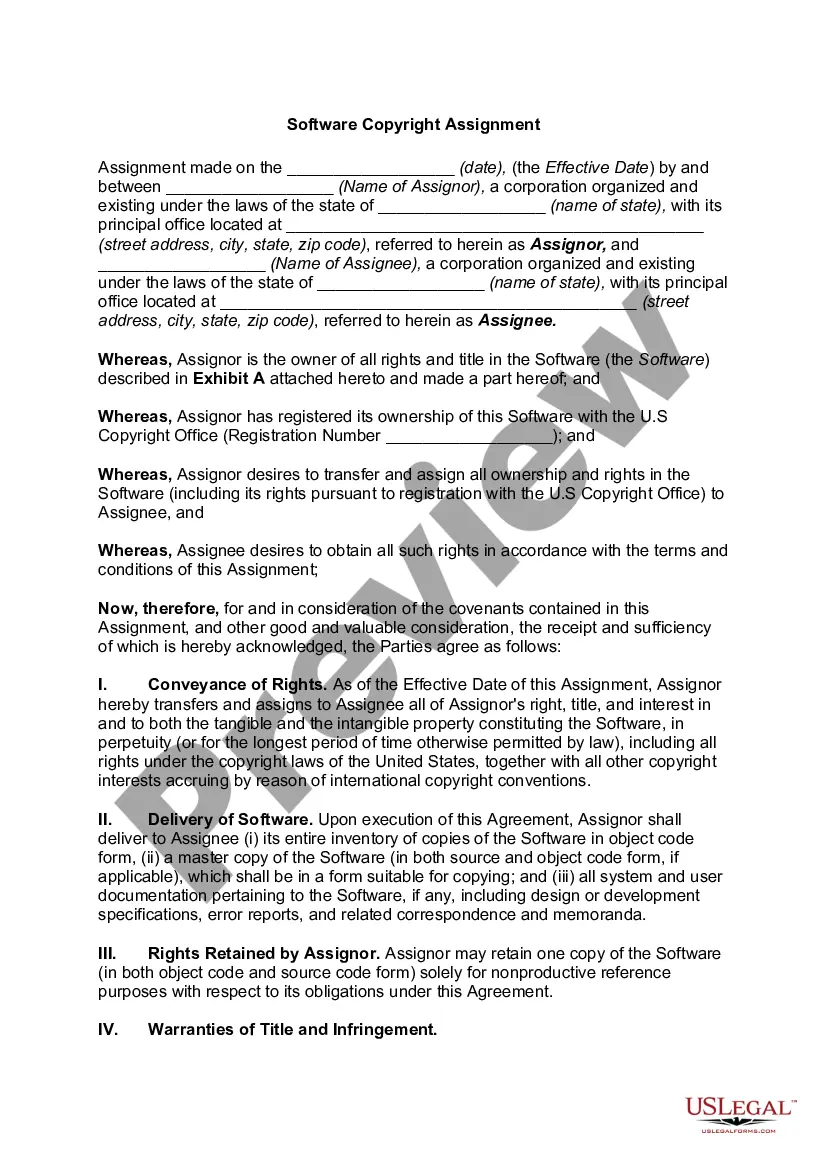
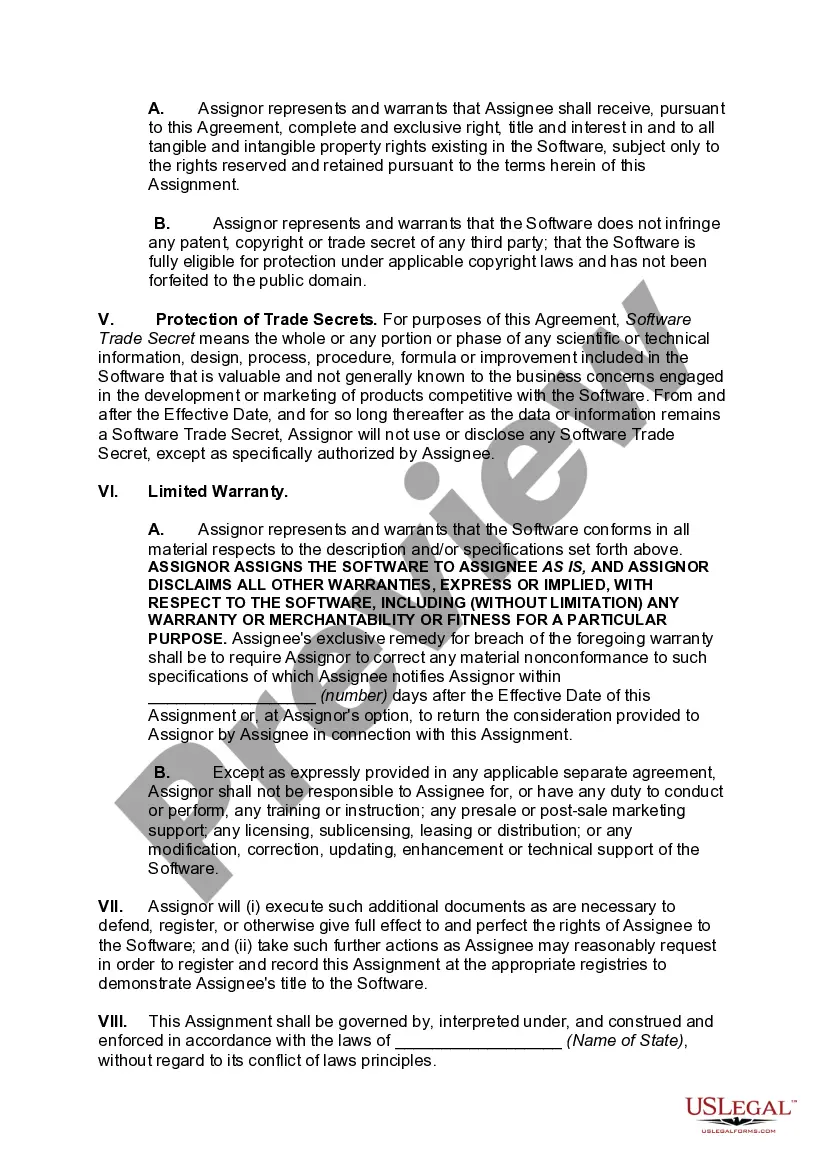
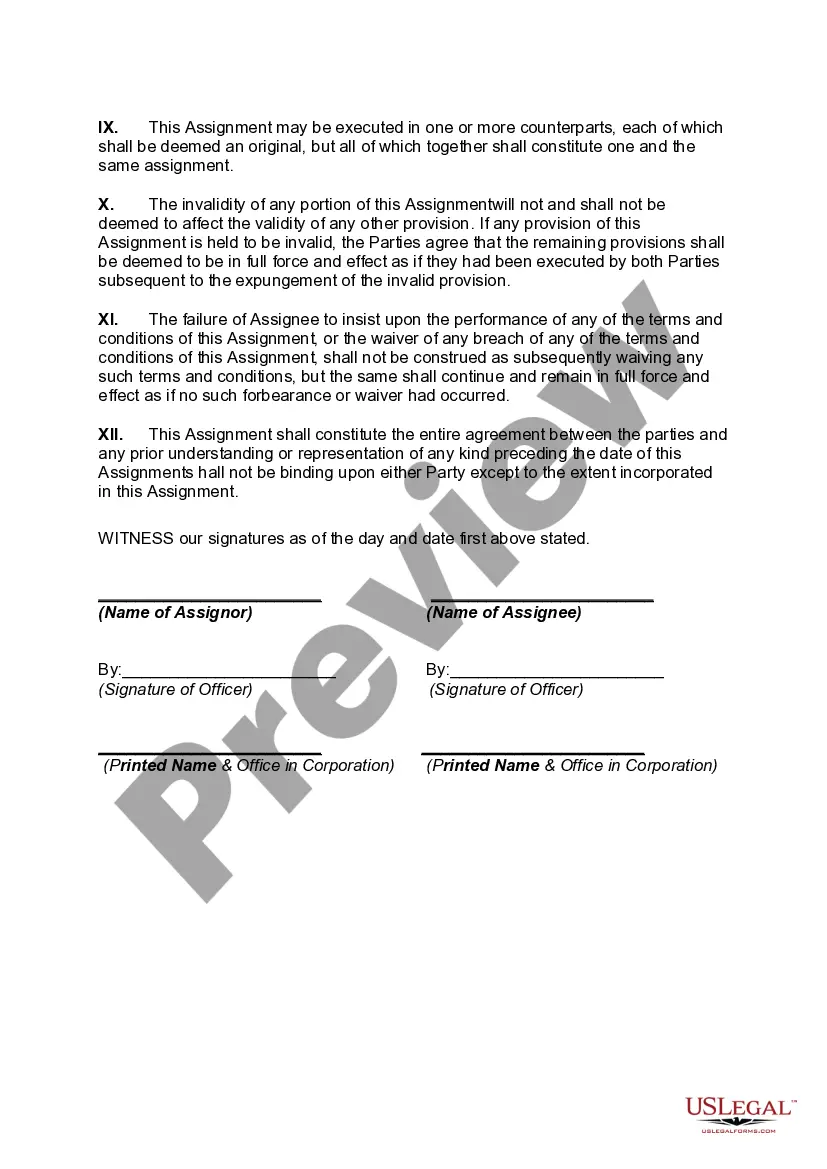
Puerto Rico Software Copyright Assignment
Description

Get your form ready online
Our built-in tools help you complete, sign, share, and store your documents in one place.
Make edits, fill in missing information, and update formatting in US Legal Forms—just like you would in MS Word.
Download a copy, print it, send it by email, or mail it via USPS—whatever works best for your next step.
Sign and collect signatures with our SignNow integration. Send to multiple recipients, set reminders, and more. Go Premium to unlock E-Sign.
If this form requires notarization, complete it online through a secure video call—no need to meet a notary in person or wait for an appointment.
We protect your documents and personal data by following strict security and privacy standards.

Make edits, fill in missing information, and update formatting in US Legal Forms—just like you would in MS Word.

Download a copy, print it, send it by email, or mail it via USPS—whatever works best for your next step.

Sign and collect signatures with our SignNow integration. Send to multiple recipients, set reminders, and more. Go Premium to unlock E-Sign.

If this form requires notarization, complete it online through a secure video call—no need to meet a notary in person or wait for an appointment.

We protect your documents and personal data by following strict security and privacy standards.
Looking for another form?


How to fill out Software Copyright Assignment?
You can spend extensive time online attempting to locate the legal document template that meets the state and federal requirements that you need.
US Legal Forms offers a vast array of legal forms that are evaluated by experts.
You can easily obtain or create the Puerto Rico Software Copyright Assignment through our services.
If available, utilize the Preview button to review the document template as well.
- If you have a US Legal Forms account, you may Log In and click the Download button.
- Subsequently, you can complete, modify, print, or sign the Puerto Rico Software Copyright Assignment.
- Every legal document template you acquire belongs to you indefinitely.
- To get another copy of the purchased form, go to the My documents section and click the corresponding button.
- If this is your first time using the US Legal Forms website, follow the simple instructions below.
- First, ensure that you have selected the correct document template for the area/city of your choice.
- Review the form details to confirm you have selected the right one.
Form popularity
FAQ
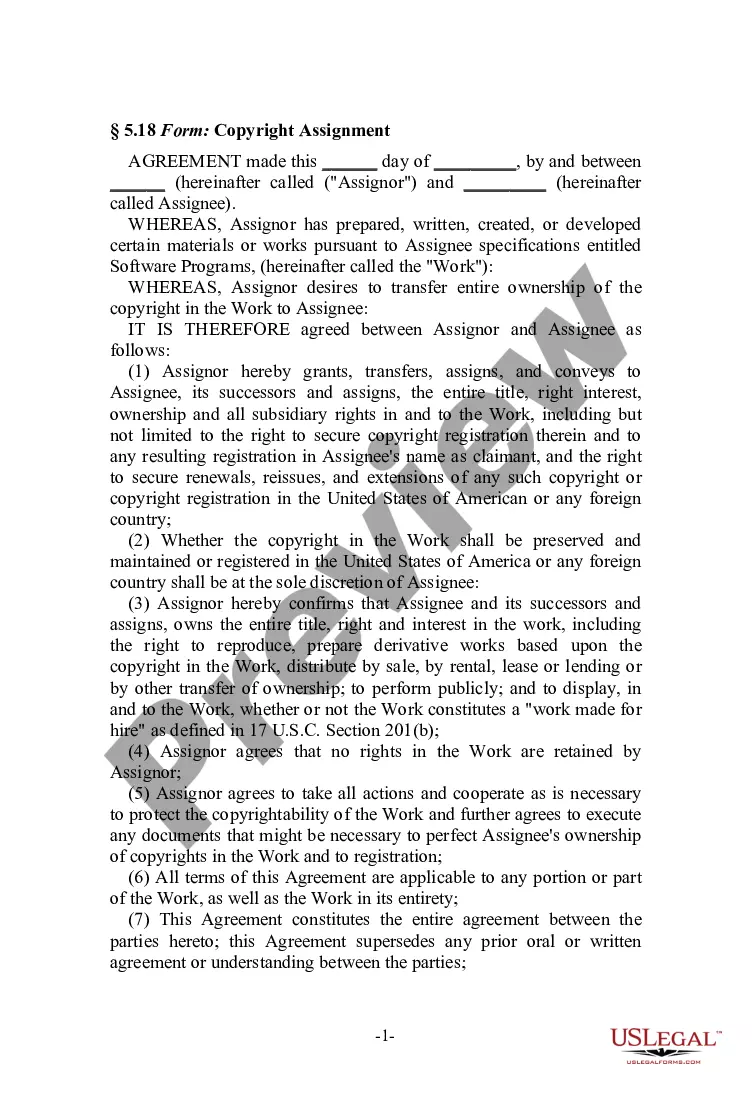
Yes, when you create an app, copyright laws automatically protect your original code and design. However, this protection is enhanced when you formally register your work. To solidify your claims, consider the process of a Puerto Rico Software Copyright Assignment.
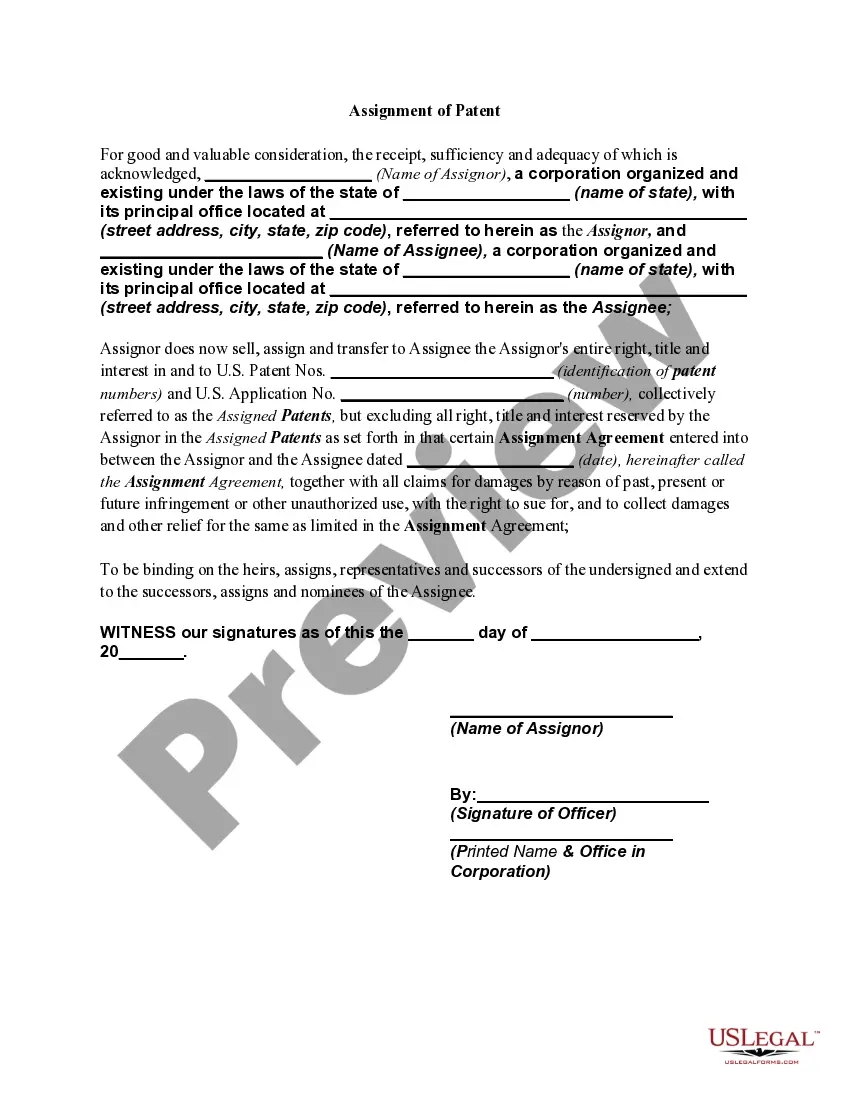
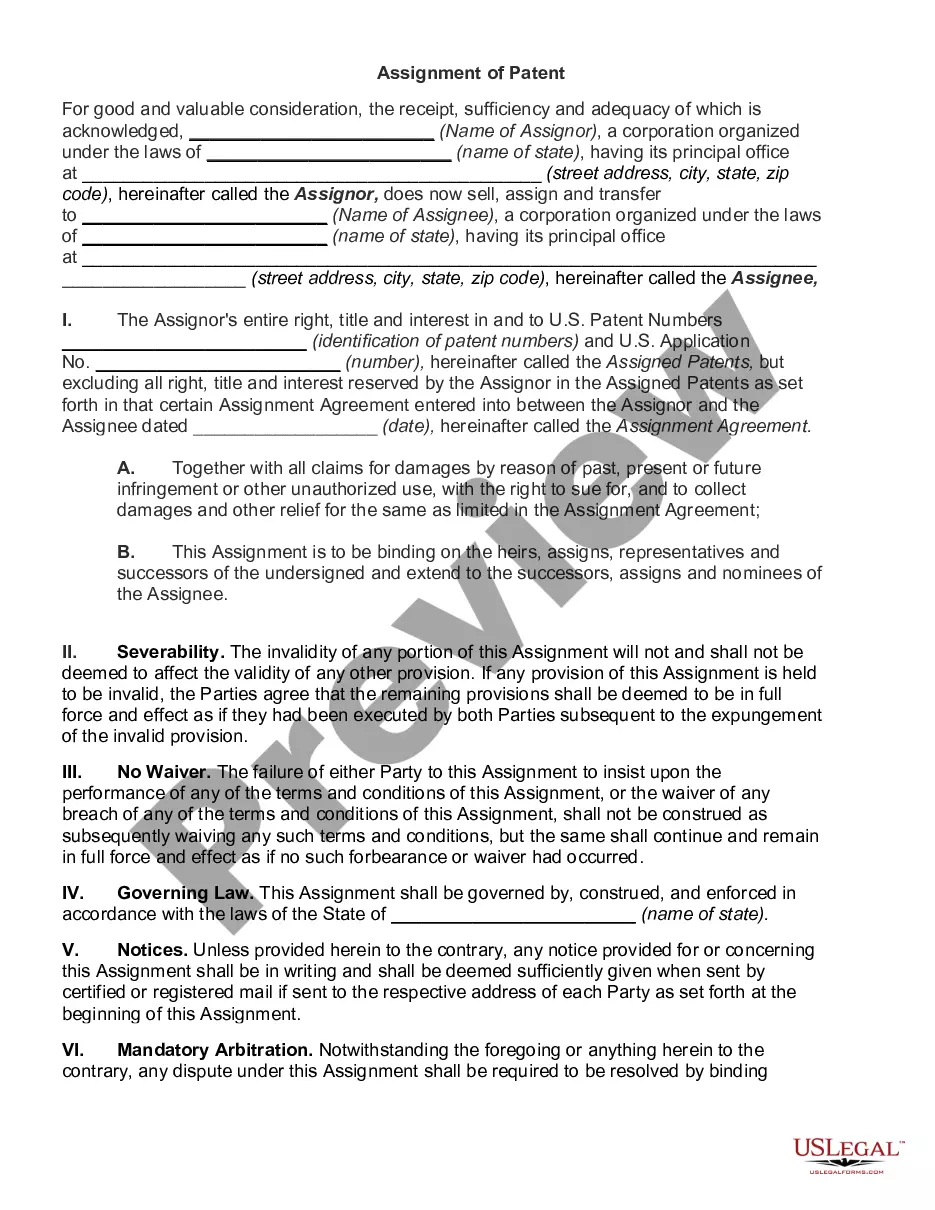
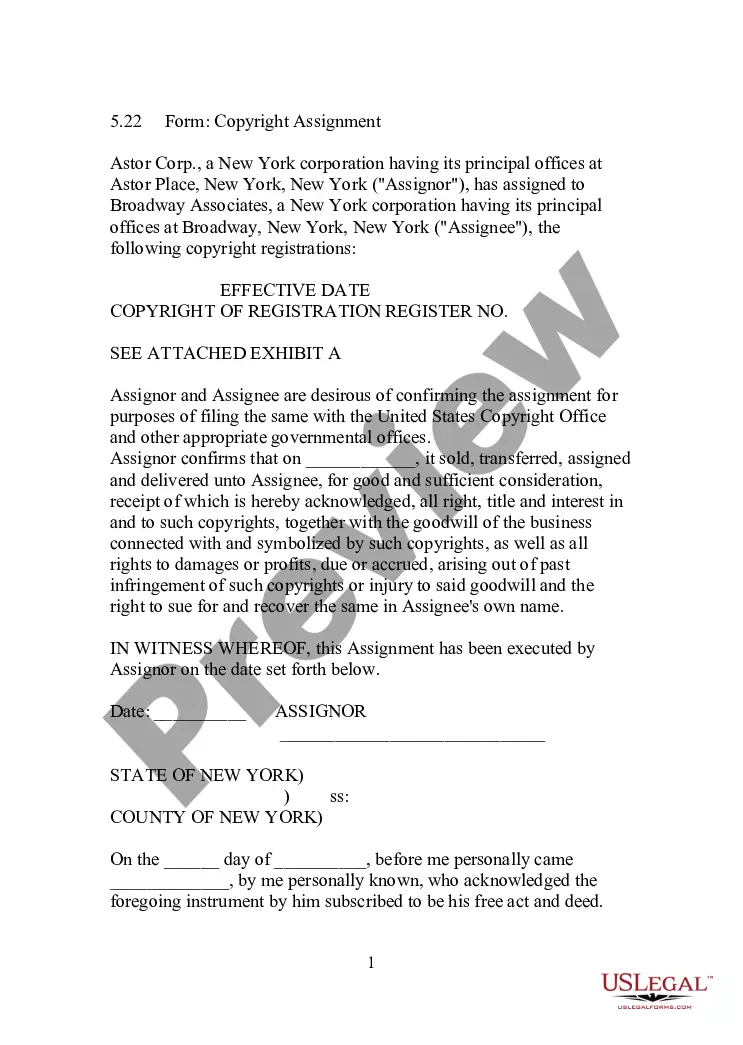
In an assignment of copyright rights, the owner sells his or her ownership rights to another party and has no control over how the third party uses those rights. A copyright assignment is sometimes referred to as a sales agreement for copyright.
Guidelines. Fair use explicitly allows use of copyrighted materials for educational purposes such as criticism, comment, news reporting, teaching, scholarship, and research.
You cannot take someone else's work and obtain a copyright. The following types of works are allowed protection under the copyright law: Literary Works. This can include novels, nonfiction works, poems, articles, essays, directories, advertising, catalogs, speeches, and computer programs.
A copyright license is different from a copyright assignment as, in licensing the licensee gets the certain rights subject to the conditions specified in the license agreement but the ownership of those rights is not vested to him, whereas in case of assignment, the assignee becomes the owner of the interests assigned
In an assignment of copyright rights, the owner sells his or her ownership rights to another party and has no control over how the third party uses those rights. A copyright assignment is sometimes referred to as a sales agreement for copyright.
The main difference between an assignment and a license is who owns the copyright. In an assignment the copyright holder gives up ownership and in a licence, the copyright holder retains it.
When a student creates an original and creative assignment, project, paper, or thesis, the student holds copyright in that work, automatically, without any need to register the work to obtain a copyright.
The Basics of CopyrightWhen students complete assignments and prepare projects or papers using other peoples' works, or when students copy materials in any format, copyright law applies. Students are responsible for making sure that when using copyrighted material, that it doesn't violate the rights of others.
As per section 19, assignment of copyright is valid only if it is in writing and signed by the assignor or his duly authorized agent. The assignment of a copyright in a work should identify the work and specify kind of rights assigned and the duration and territorial extent of such assignment.