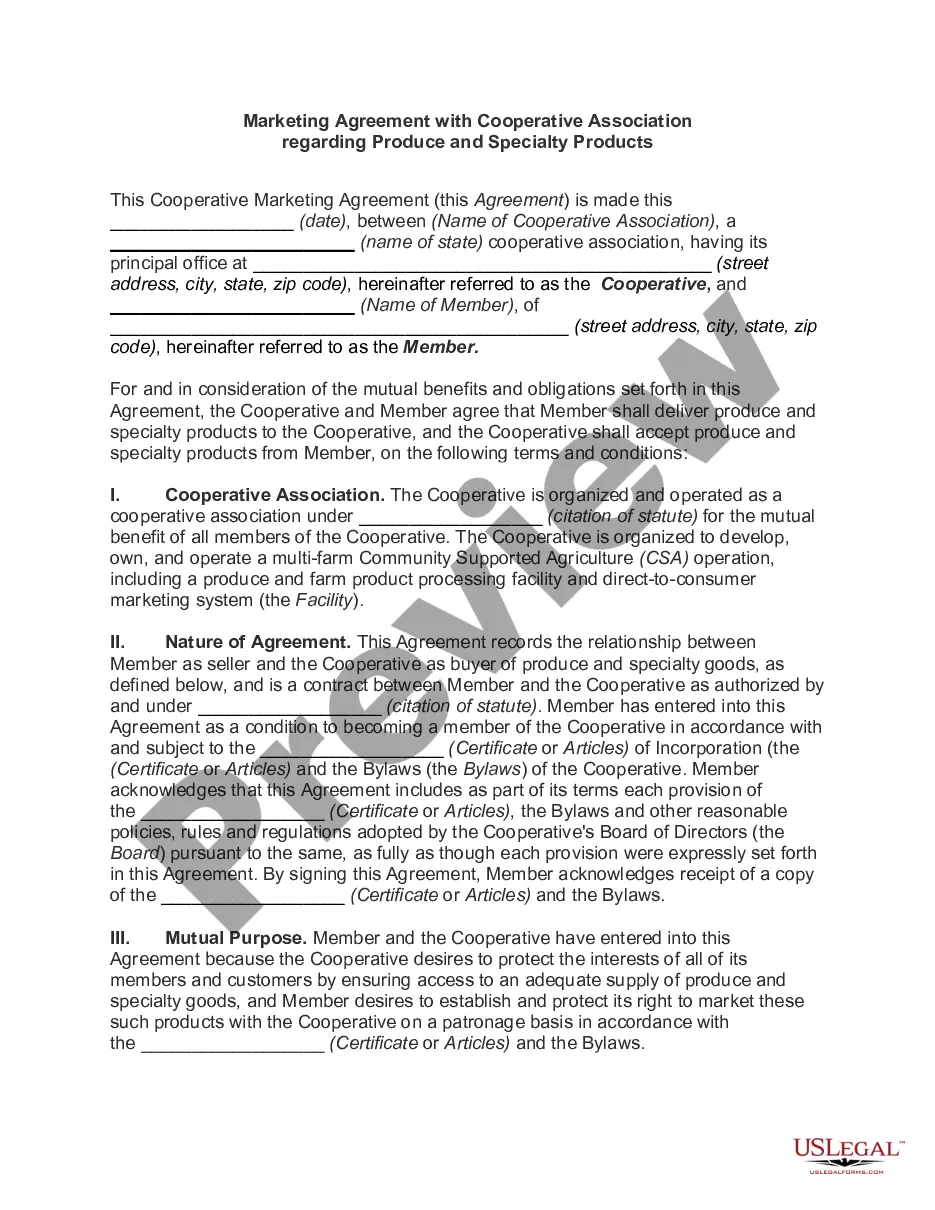
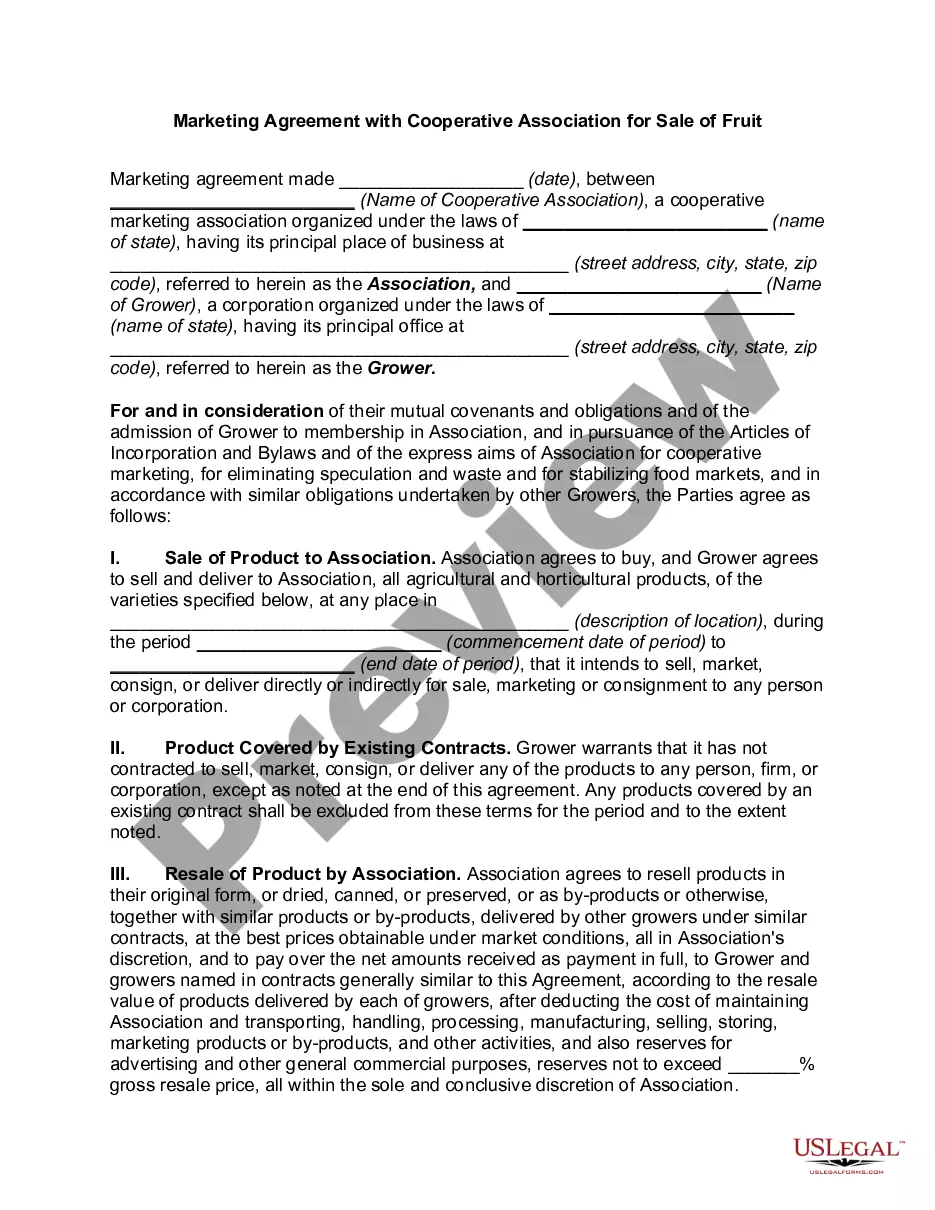
Puerto Rico Marketing Agreement with Cooperative Association regarding Produce and Specialty Products
Description
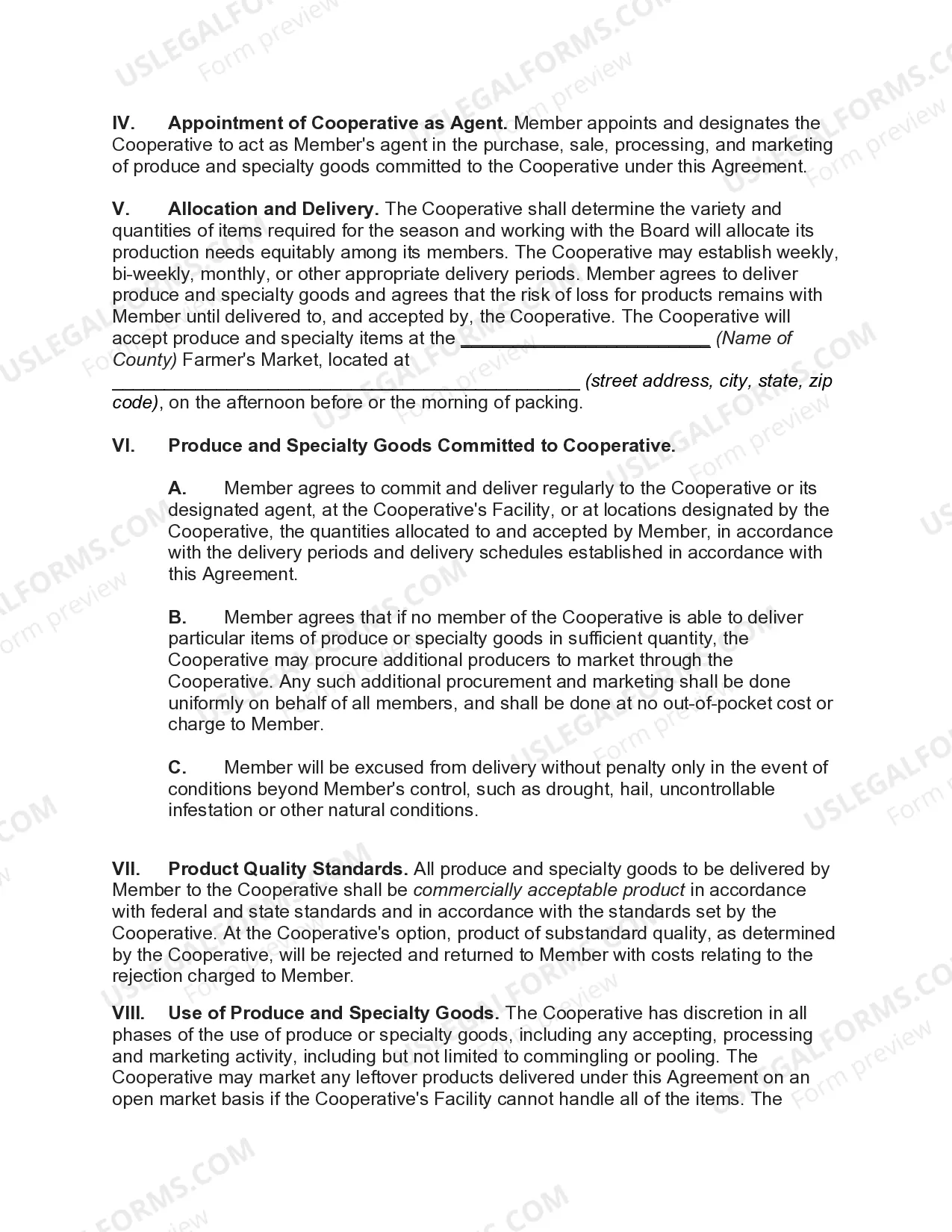
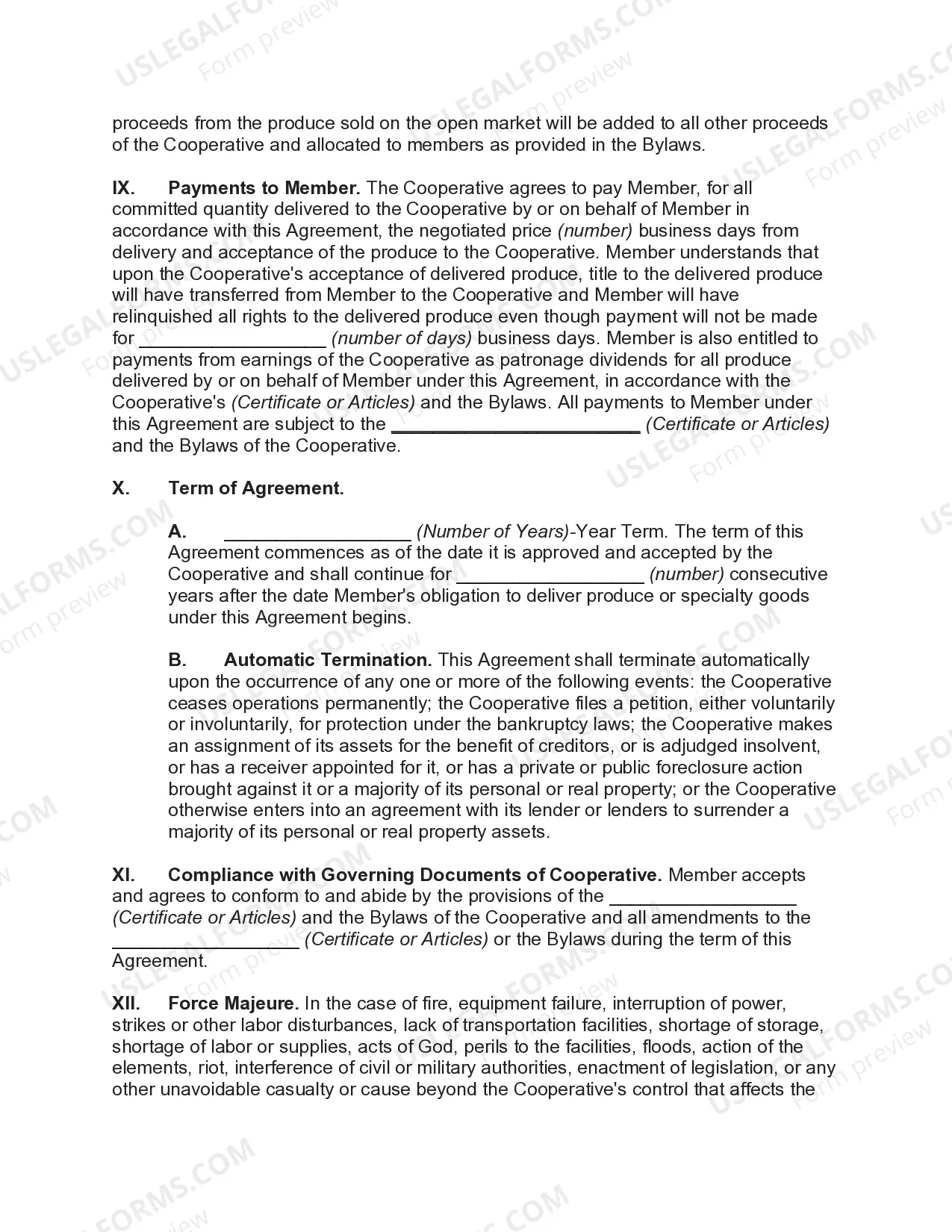

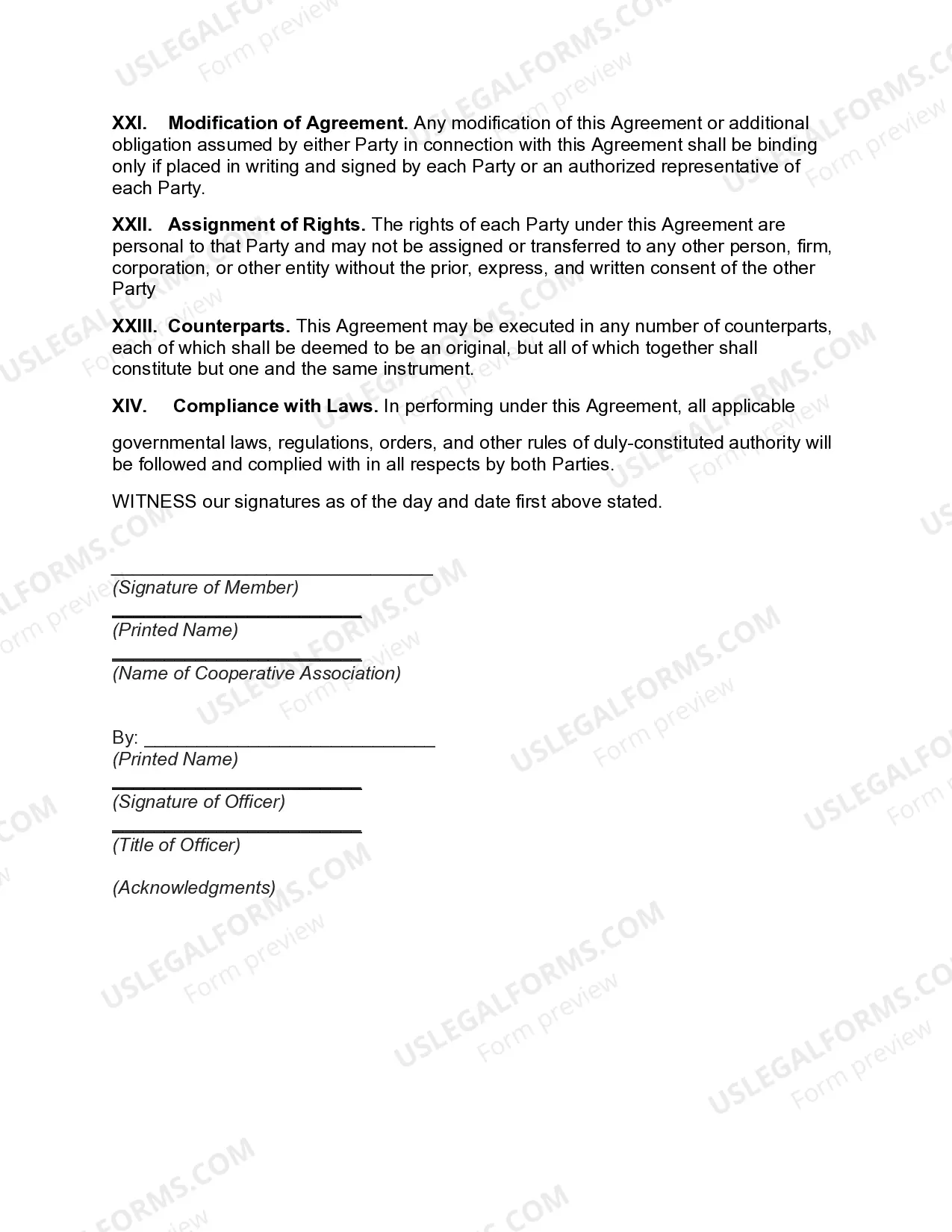
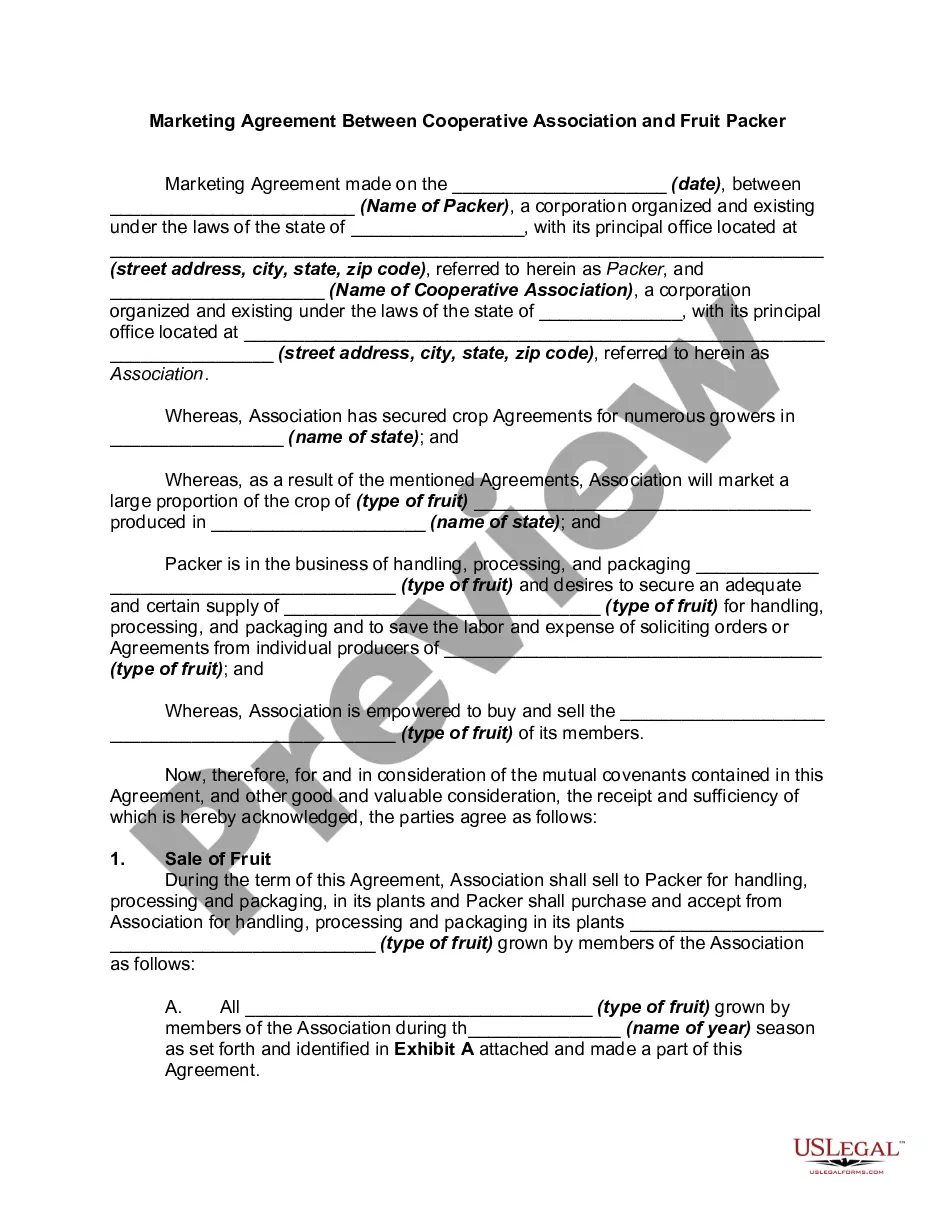
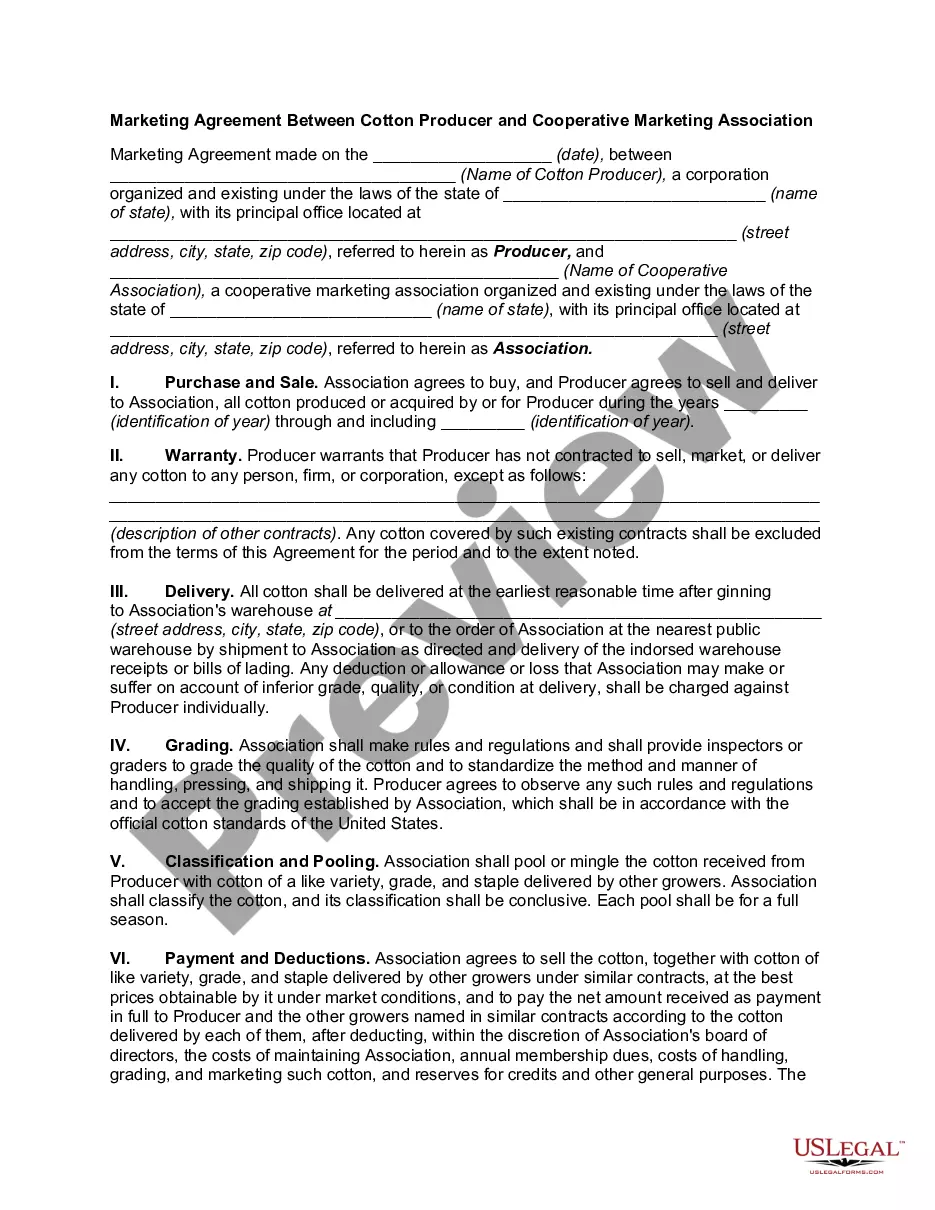
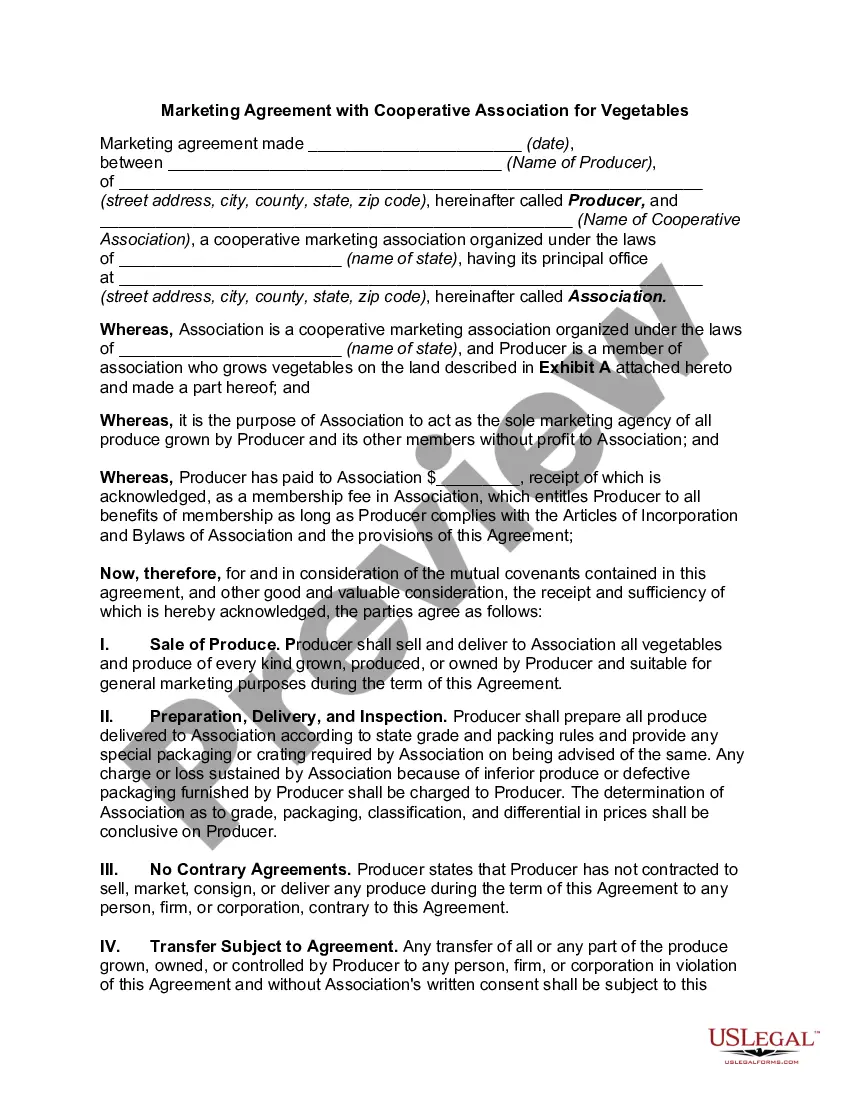


How to fill out Marketing Agreement With Cooperative Association Regarding Produce And Specialty Products?
If you want to compile, obtain, or generate formal document templates, utilize US Legal Forms, the largest collection of formal documents, which are accessible online.
Utilize the site’s straightforward and user-friendly search to find the documents you need.
Numerous templates for business and personal applications are organized by categories and states, or keywords.
Step 3. If you are dissatisfied with the form, utilize the Search field at the top of the screen to find alternatives of the legal document template.
Step 4. Once you have identified the form you need, click the Get now option. Choose your preferred pricing plan and enter your details to register for an account.
- Use US Legal Forms to acquire the Puerto Rico Marketing Agreement with Cooperative Association concerning Produce and Specialty Products with just a few clicks.
- If you are already a US Legal Forms user, sign in to your account and click the Download option to obtain the Puerto Rico Marketing Agreement with Cooperative Association concerning Produce and Specialty Products.
- You can also access forms you previously acquired within the My documents section of your account.
- If you are using US Legal Forms for the first time, follow the instructions below.
- Step 1. Ensure you select the form for the appropriate city/state.
- Step 2. Use the Preview feature to review the form’s details. Don’t forget to read through the summary.
Form popularity
FAQ
This document is designed to address common questions regarding the Office of Management and Budget's (OMB) implementation of the updates to Title 2 of the Code of Federal Regulations (2 CFR), also referred to as the Uniform Guidance.
The Code of Federal Regulations (CFR) is the codification of the general and permanent rules published in the Federal Register by the executive departments and agencies of the Federal Government.
Laws, Regulations and Guidance Uniform Guidance (2 C.F.R. Part 200): 2 C.F.R Part 200 establishes uniform administrative requirements, cost principles, and audit requirements for Federal awards to non-Federal entities.
(c) Subpart D of 2 CFR part 910 contains specific changes to 2 CFR part 200 that apply only to For-Profit Recipients and, unless otherwise specified, subrecipients.
The Puerto Rico Sales and Use Tax (SUT, Spanish: Impuesto a las Ventas y Uso, IVU) is the combined sales and use tax applied to most sales in Puerto Rico. The Sales Tax is the amount that the consumer pays when buying items, services or when attending an entertainment venue, be it sports, recreation or exhibition.
The Puerto Rico Sales and Use Tax, or the "Impuesto a las Ventas y Uso (IVU)" in Spanish, consists of a 10.5% commonwealth-wide sales and use tax and a 1% local-option sales tax that is distributed to the city in which it is collected.
According to the Tax Foundation - a group of experts based in Washington, D.C. and whose purpose is to monitor the tax and expenditure policy of government agencies - the 11.5 percent IVU on the island is the highest in the United States, followed by Tennessee, Arkansas, Alabama, Louisiana, Washington, Oklahoma, New
§ 200.101 Applicability. (a) General applicability to Federal agencies. (1) The requirements established in this part apply to Federal agencies that make Federal awards to non-Federal entities. These requirements are applicable to all costs related to Federal awards.
Is there a CFDA number for Federal Contracts? No. CFDA stands for Catalog of Federal Domestic Assistance. CFDA numbers do not apply to Federal Contracts as they are considered procurement and not assistance.
Uniform Guidance (2 C.F.R. Part 200): 2 C.F.R Part 200 establishes uniform administrative requirements, cost principles, and audit requirements for Federal awards to non-Federal entities.