Rhode Island Assignment of Mechanic's Lien - Individual
Understanding this form
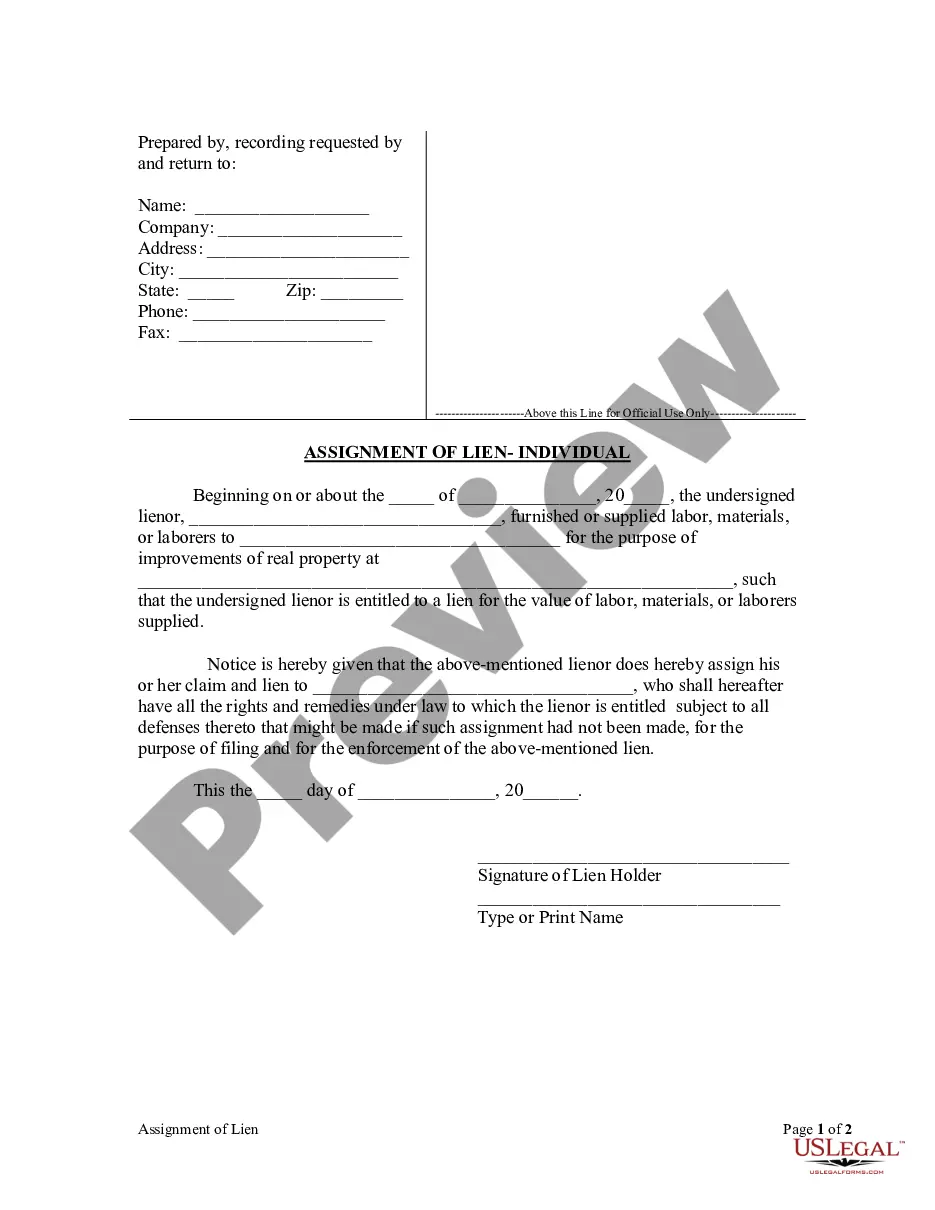
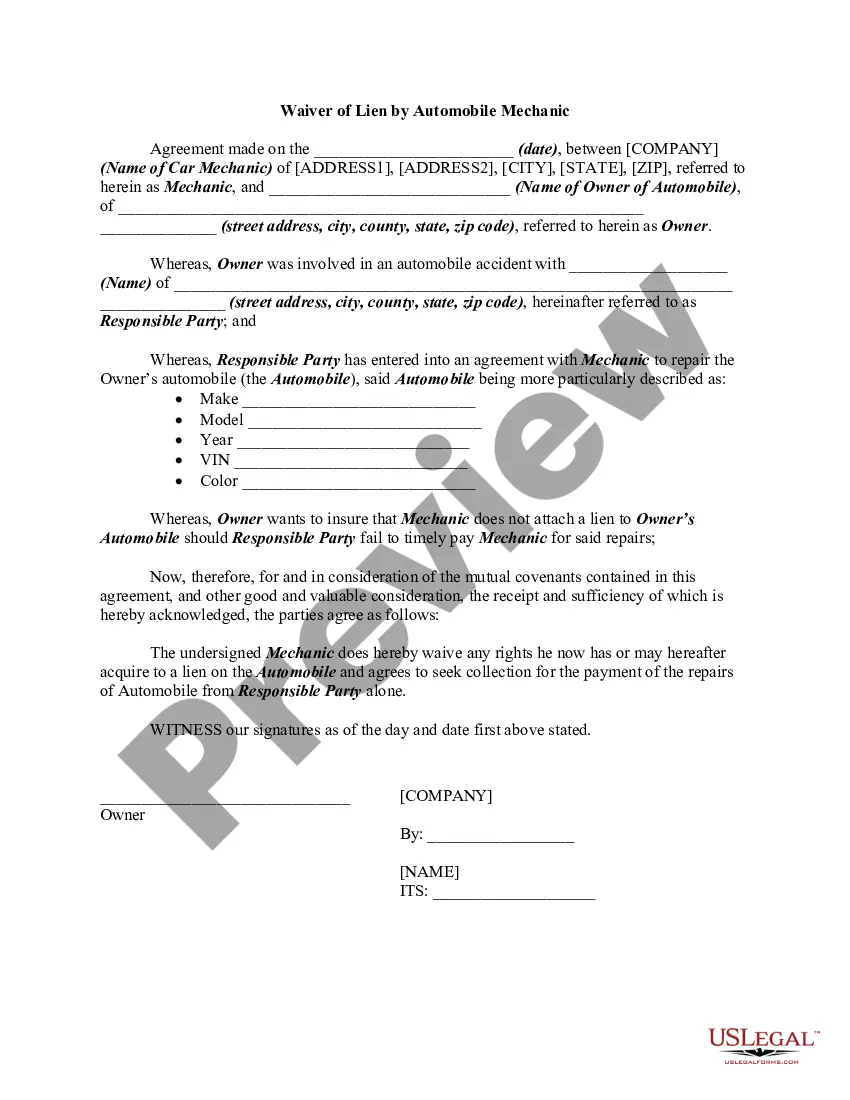
The Assignment of Mechanic's Lien - Individual is a legal document used by an individual who has provided labor, materials, or services for improvements on real property. This form allows the lienor, or person entitled to the lien, to assign their claim and lien rights to another individual or entity. This assignment grants the assignee all associated legal rights to enforce the lien, making it essential for individuals seeking to transfer their lien claims efficiently and legally.
Main sections of this form
- Name and contact details of the lienor and assignee.
- Details of the labor, materials, or services provided.
- Information about the property concerned.
- Statement of assignment of claim and lien rights.
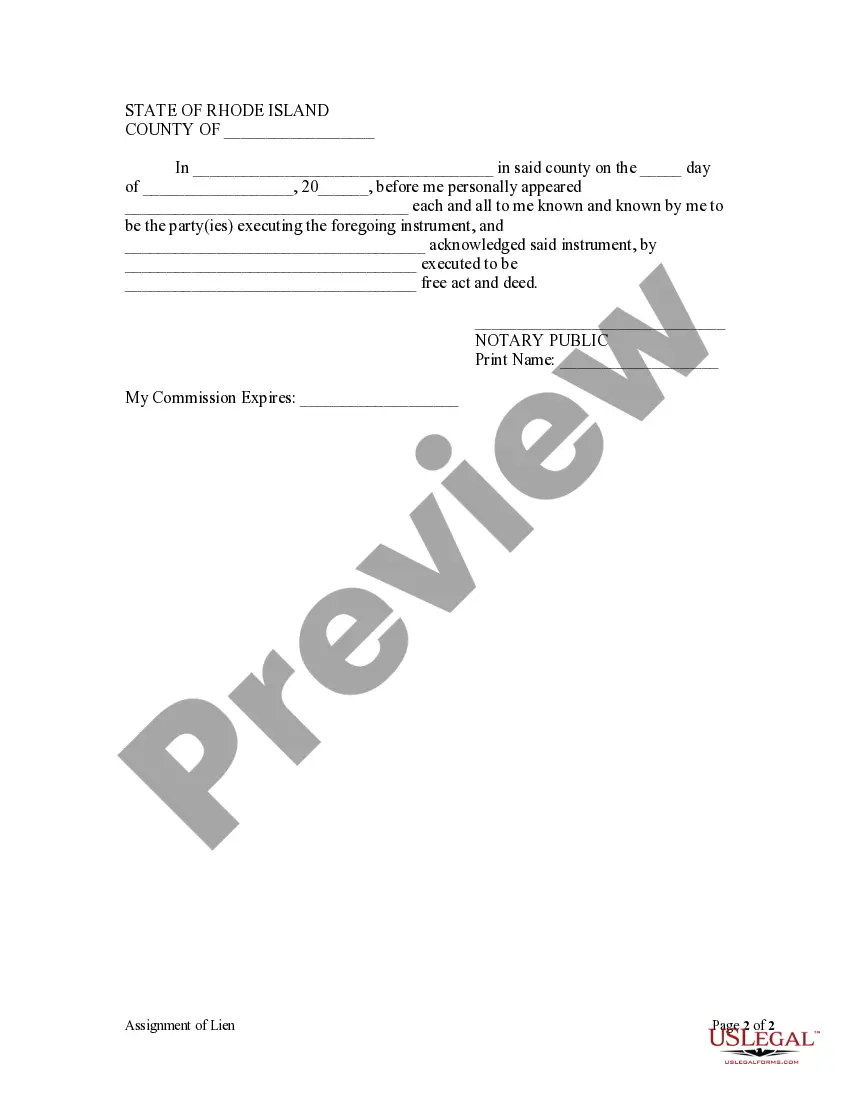
- Signature of the lien holder and notarization section.
Common use cases
This form is commonly used when an individual who has a lien for work done or materials supplied on a property wishes to assign their lien rights to another party. Situations could include transferring claim rights to a general contractor, an investor, or a financial institution involved in the property's financing. It ensures that the new party can pursue the enforcement of the lien if necessary.
Who this form is for
This form is suitable for:
- Individuals who have furnished labor or materials for property improvements.
- Property owners looking to negotiate lien rights with contractors or suppliers.
- General contractors or companies purchasing rights from individual lienors.
How to prepare this document
- Identify the lienor and assignee, including their names and contact information.
- Specify the date and details surrounding the work completed.
- Enter the physical address of the property associated with the lien.
- Have the lienor sign the document, confirming the assignment.
- Arrange for notarization to ensure the document is legally valid.
Does this document require notarization?
Yes, this form must be notarized to be legally valid. Notarization verifies the identities of the parties signing the document, ensuring that the assignment is completed correctly. US Legal Forms offers integrated online notarization options that are available 24/7 via secure video calls, making it easy to get your document notarized without the need to travel.
Get your form ready online
Our built-in tools help you complete, sign, share, and store your documents in one place.
Make edits, fill in missing information, and update formatting in US Legal Forms—just like you would in MS Word.
Download a copy, print it, send it by email, or mail it via USPS—whatever works best for your next step.
Sign and collect signatures with our SignNow integration. Send to multiple recipients, set reminders, and more. Go Premium to unlock E-Sign.
If this form requires notarization, complete it online through a secure video call—no need to meet a notary in person or wait for an appointment.
We protect your documents and personal data by following strict security and privacy standards.

Make edits, fill in missing information, and update formatting in US Legal Forms—just like you would in MS Word.

Download a copy, print it, send it by email, or mail it via USPS—whatever works best for your next step.

Sign and collect signatures with our SignNow integration. Send to multiple recipients, set reminders, and more. Go Premium to unlock E-Sign.

If this form requires notarization, complete it online through a secure video call—no need to meet a notary in person or wait for an appointment.

We protect your documents and personal data by following strict security and privacy standards.
Common mistakes to avoid
- Failing to provide complete contact information for both parties.
- Not including detailed descriptions of the labor or materials supplied.
- Omitting the property's physical address.
- Not having the form notarized when required.
Why complete this form online
- Convenience of downloading and completing the form from anywhere.
- Editability allows users to customize the form easily for their needs.
- Access to reliable templates prepared by licensed attorneys.
- Secure storage options for completed documents.
Key takeaways
- The Assignment of Mechanic's Lien - Individual enables lienors to assign their claims to another party.
- Completing the form accurately is crucial to enforce lien rights.
- Notarization is essential for legal validity of the assignment.
Looking for another form?
Form popularity
FAQ
While it's unlikely that just anyone can put a lien on your home or land, it's not unheard of for a court decision or a settlement to result in a lien being placed against a property.
Can a lien be placed on your property without you knowing? Yes, it happens. Sometimes a court decision or settlement results in a lien being placed on a property, and for some reason the owner doesn't know about it initially.
How does a creditor go about getting a judgment lien in Rhode Island? To attach the lien, the creditor must request execution of attachment within 48 hours after entry of the judgment, then file the execution with the town clerk or recorder of deeds in the Rhode Island town where the debtor's property is located.
Posting a Bond Asselta says to expect to pay 110 percent of the lien amount. Submit the bond to the court. The lien will then transfer to the bond and clear the property's title. Wait for the contractor claimant to foreclose on the lien in the allotted period to dispute the lien in court.
Prepare your Rhode Island Notice of Intention form. Serve the Rhode Island Notice of Intention as a preliminary notice. Record the Rhode Island Notice of Intention as a mechanics lien. File Notice of Lis Pendens and enforce the mechanics lien.
If you're claiming a lien on real property, it must be filed in the recorder's office of the county where the property is located. Expect to pay a filing fee between $25 and $50 depending on the location where you file.
Who you are. The services or materials you provided. The last date you provided the services or materials. How much payment should be. The date on which you will file a lien if you do not receive payment. How the debtor should pay.
Someone who is owed money is generally not able to just put a lien on property without first securing a judgment. Securing a judgment requires the creditor to sue the debtor. This may be through circuit court in many jurisdictions. If under a certain dollar amount, this suit may be through the small claims court.
A Lien Demand Letter or Notice of Intent to Lien is a formal demand for payment.A lien demand letter puts a debtor on notice of your intent to lien the job site property by a specific date deadline. Increase your odds of getting paid with a lien demand letter.