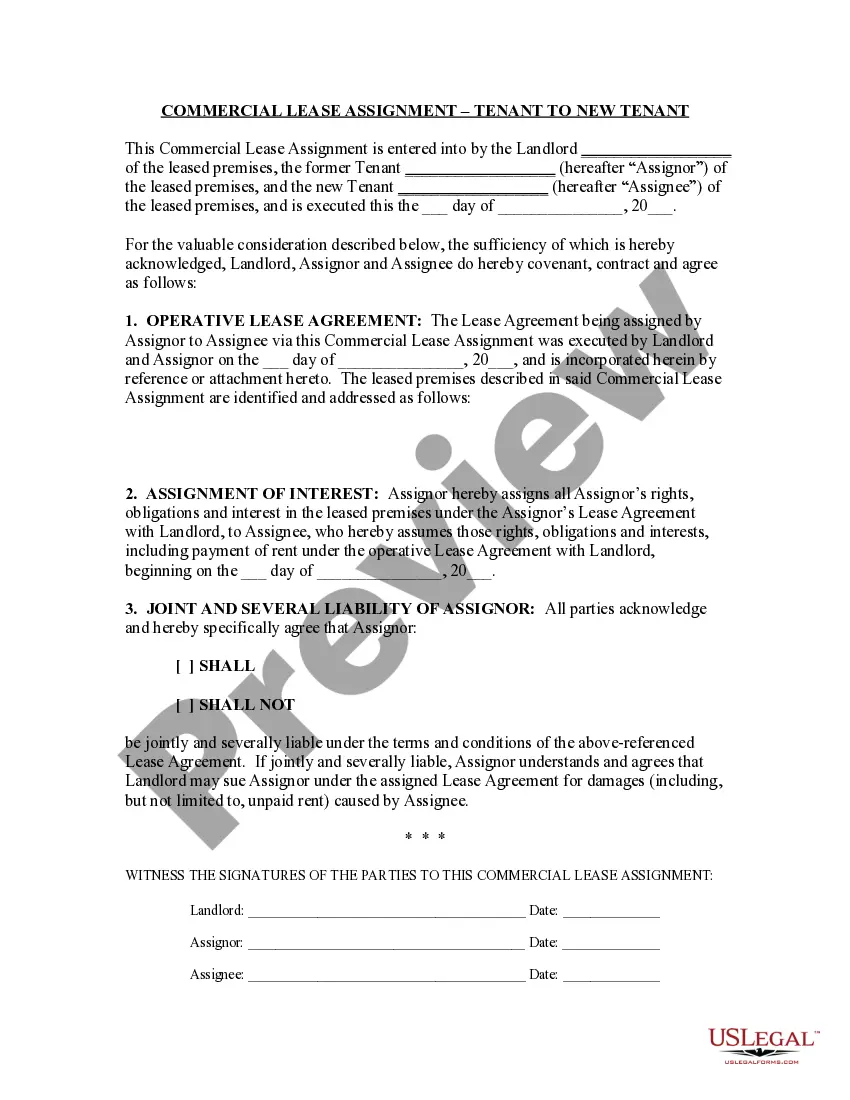
Rhode Island Commercial Lease Assignment from Tenant to New Tenant
Overview of this form
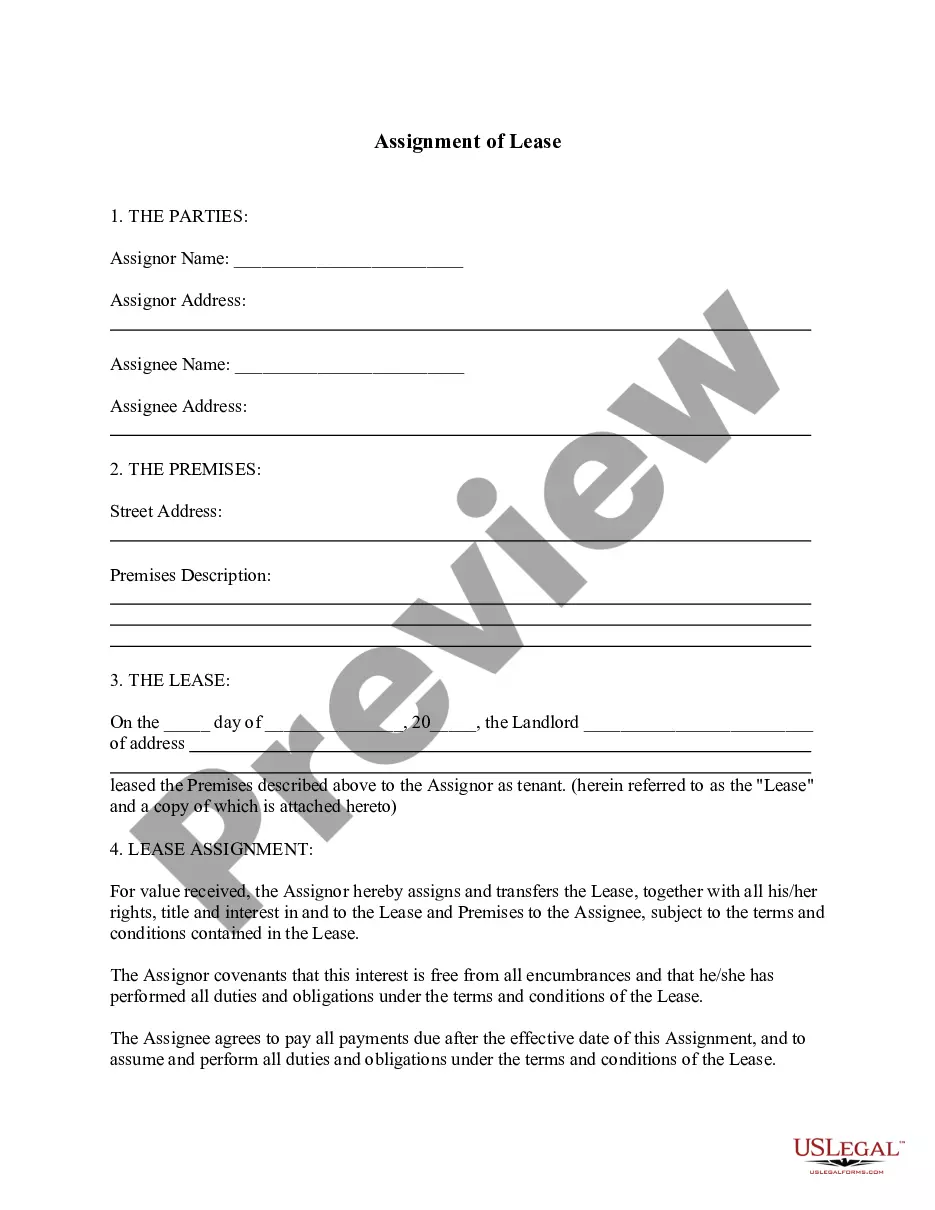
The Commercial Lease Assignment from Tenant to New Tenant is a legal document that facilitates the transfer of lease rights from the original tenant (Assignor) to a new tenant (Assignee), while keeping the landlord unchanged. This form is essential when an original tenant needs to pass on their lease obligations, ensuring that the landlord remains part of the agreement. Unlike a lease termination, this assignment allows the original tenant to either remain liable for lease obligations or transfer full responsibility to the new tenant, depending on the agreed terms. It is important to ensure that this transfer does not violate any existing lease stipulations.
Key components of this form
- Details of the Landlord, Assignor (former Tenant), and Assignee (new Tenant).
- Effective date of the assignment.
- Joint and several liabilities clause clarifying the responsibilities of the Assignor.
- Signatures of all parties involved to validate the agreement.
When this form is needed
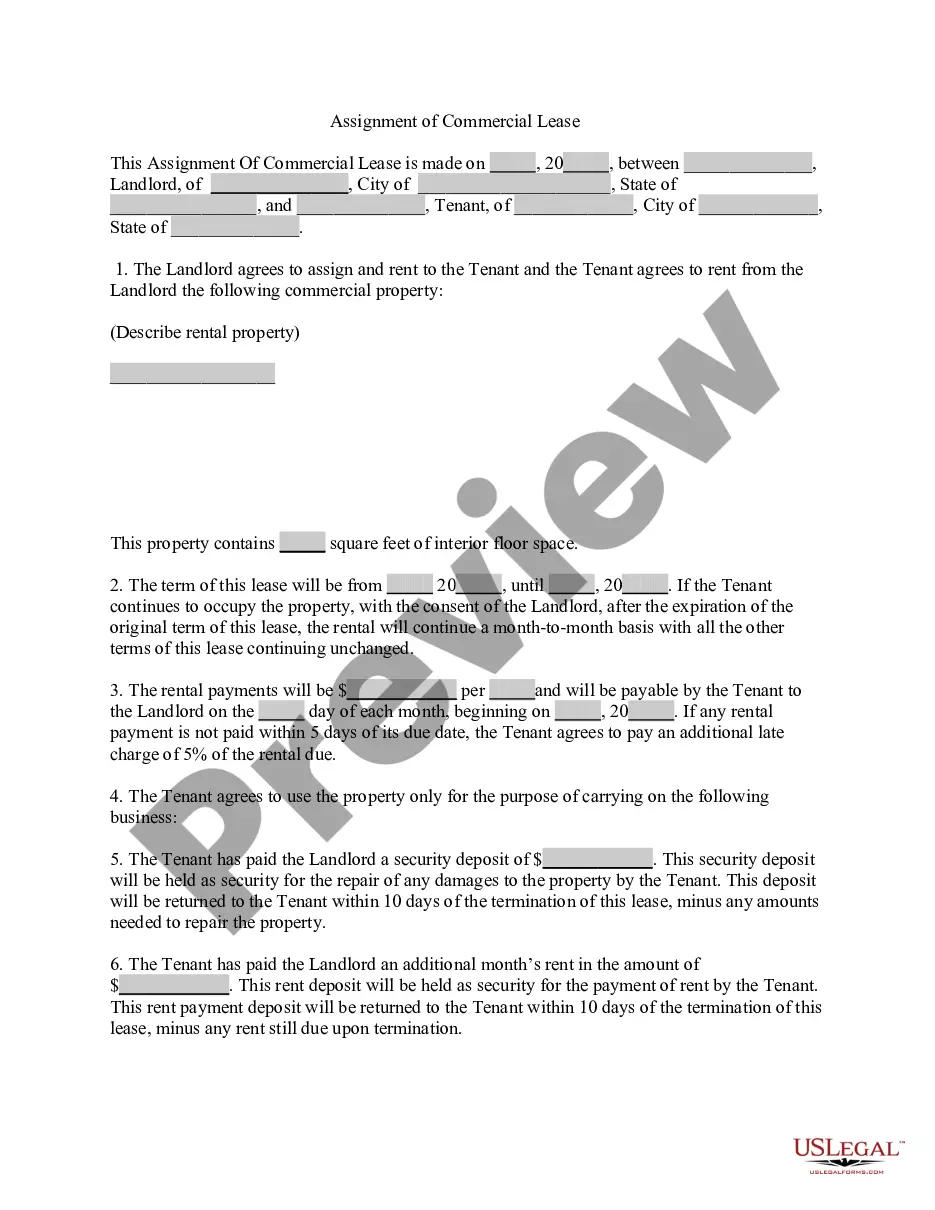
This form is used in situations where a tenant of a commercial property wants to transfer their lease to another party. Common scenarios include business acquisitions where the buyer wishes to take over an existing lease or when a tenant needs to step away from their lease obligations for personal or financial reasons. It is crucial when the landlord remains unchanged, ensuring continuity of the lease agreement and rights.
Who needs this form
- Commercial tenants looking to assign their lease to another party.
- Businesses undergoing change in ownership or operations requiring lease transfer.
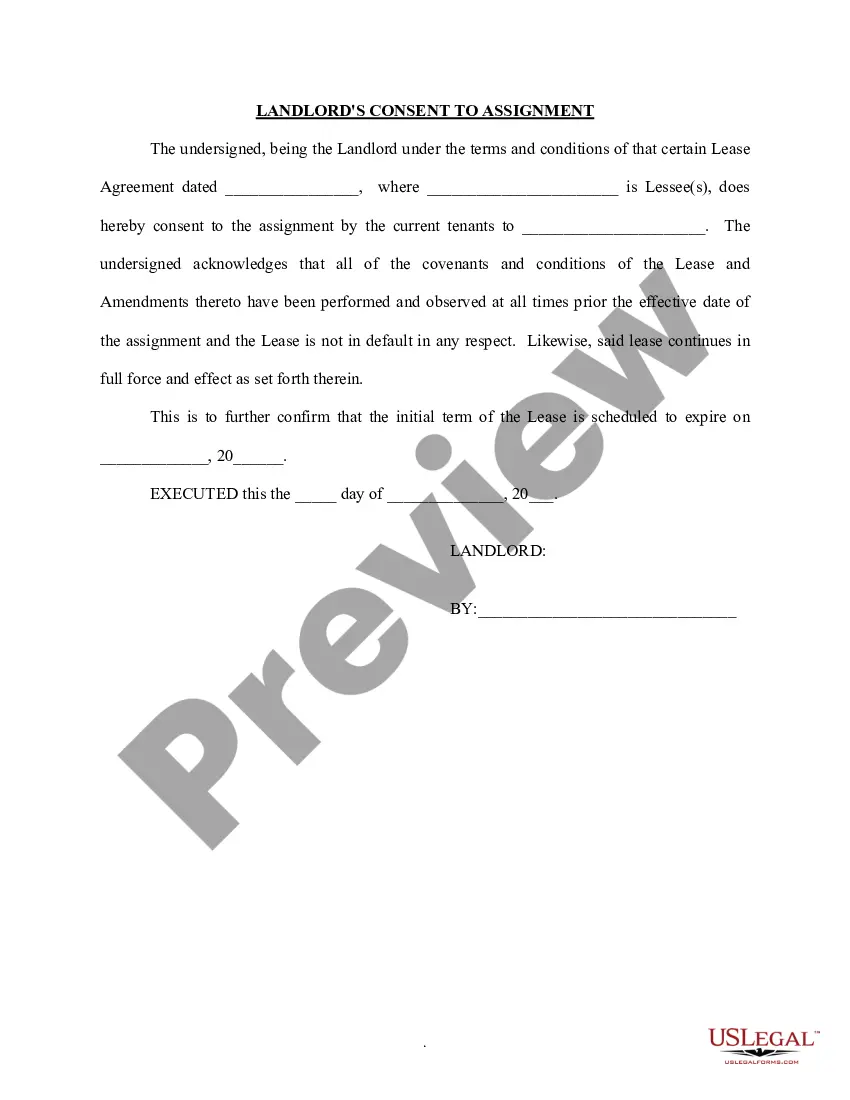
- Property owners (landlords) needing to formalize the consent to the lease transfer.
How to prepare this document
- Identify and fill in the names of all parties: Landlord, Assignor, and Assignee.
- Specify the effective date of the assignment.
- Decide on the joint and several liability terms by checking the appropriate box.
- All parties must sign and date the form in the designated areas.
Notarization requirements for this form
This form usually doesn’t need to be notarized. However, local laws or specific transactions may require it. Our online notarization service, powered by Notarize, lets you complete it remotely through a secure video session, available 24/7.
Get your form ready online
Our built-in tools help you complete, sign, share, and store your documents in one place.
Make edits, fill in missing information, and update formatting in US Legal Forms—just like you would in MS Word.
Download a copy, print it, send it by email, or mail it via USPS—whatever works best for your next step.
Sign and collect signatures with our SignNow integration. Send to multiple recipients, set reminders, and more. Go Premium to unlock E-Sign.
If this form requires notarization, complete it online through a secure video call—no need to meet a notary in person or wait for an appointment.
We protect your documents and personal data by following strict security and privacy standards.
Make edits, fill in missing information, and update formatting in US Legal Forms—just like you would in MS Word.
Download a copy, print it, send it by email, or mail it via USPS—whatever works best for your next step.
Sign and collect signatures with our SignNow integration. Send to multiple recipients, set reminders, and more. Go Premium to unlock E-Sign.

If this form requires notarization, complete it online through a secure video call—no need to meet a notary in person or wait for an appointment.
We protect your documents and personal data by following strict security and privacy standards.
Common mistakes
- Failing to fill in the effective date accurately.
- Not obtaining the landlord's consent to the assignment, if required by the lease.
- Overlooking the joint and several liability clause, which can impact the Assignor's responsibilities.
Why use this form online
- Immediate access to a professionally drafted legal template, ensuring compliance with legal standards.
- Easy to download and edit to suit your specific needs.
- Secure storage of your document, allowing for easy retrieval when needed.
Quick recap
- A Commercial Lease Assignment allows a tenant to transfer their lease obligations to a new tenant.
- Clarifies liability and responsibilities for both the Assignor and Assignee.
- Ensures compliance with lease terms and protects the interests of all parties involved.
Looking for another form?
Form popularity
FAQ
An assignment of a lease is a complete transfer of the right to be the tenant under the lease. The third-party assignee becomes the "tenant" under the lease, taking over all of the leased premises, substituting for the old tenant.
The tenant's agreement is tied to the property, not the owner. That means if the property sells while occupied, the tenant has the right to live there until the lease expires. The buyer has to honor the length of the original lease created between the seller and tenant.
Landlords can try and forfeit a lease if a tenant is in breach of their obligations (this assumes that the lease document includes a right to forfeit).If a commercial lease contains a break clause, either or both parties to the agreement may seek to terminate the lease before its fixed period has ended.
Under a typical lease assignment, you transfer all of your space to someone else for the entire remaining term of the lease, and the new tenant pays rent directly to the landlord.Once your landlord has agreed to allow a full assignment, you'll need to secure what the law so often requires: a piece of paper.
Whatever the reason, tenants can transfer their lease interests to new parties by completing an assignment of the lease. An assignment is the transfer of one party's entire interest in and obligations under a lease to another party.
During the lease period, no landlord old or new may terminate the lease, raise the rent or change any terms without the tenant's consent, unless otherwise specified in the lease. At the end of the lease term, however, the landlord may raise rent and change lease terms dependent upon state and local laws.
What happens if a leased property is sold to another owner during the lease term?The lease will continue to apply to the subsequent owner if so stated in the lease. Or the lease may require that upon transfer, the lease terminates and the existing owner compensates the tenant per the terms in the lease.
Can the landlord refuse consent to an Assignment? Most leases will say that the Landlord cannot unreasonably withhold consent. According to section 19 (1A) of the Landlord and Tenant Act 1927 the landlord can insert conditions in the lease, which need to be met in the case of an assignment.
Who pays for preparing a lease? The Retail Leases Act 1994 (the Act) states that the landlord pays the full cost of preparing the lease, including the mortgagee consent fee.