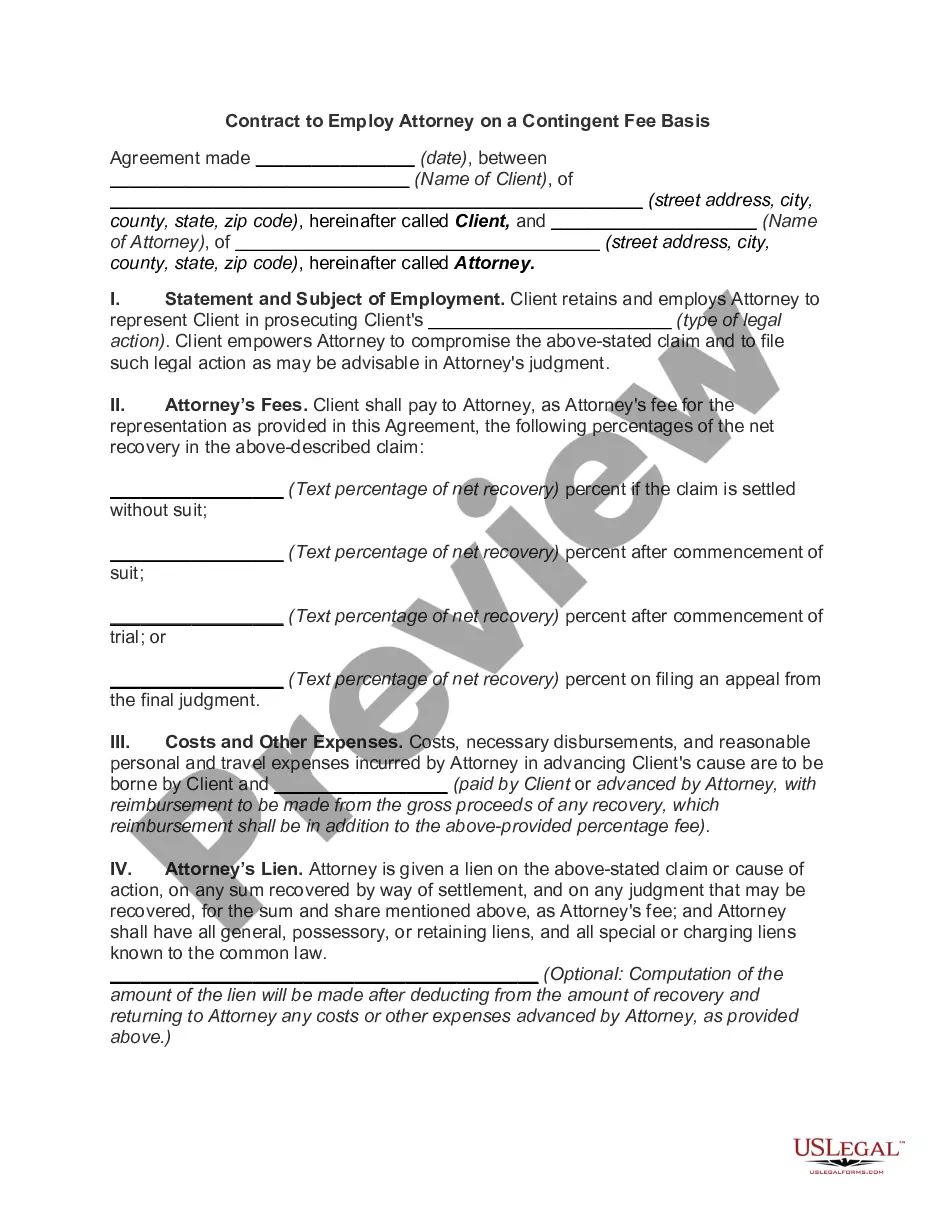
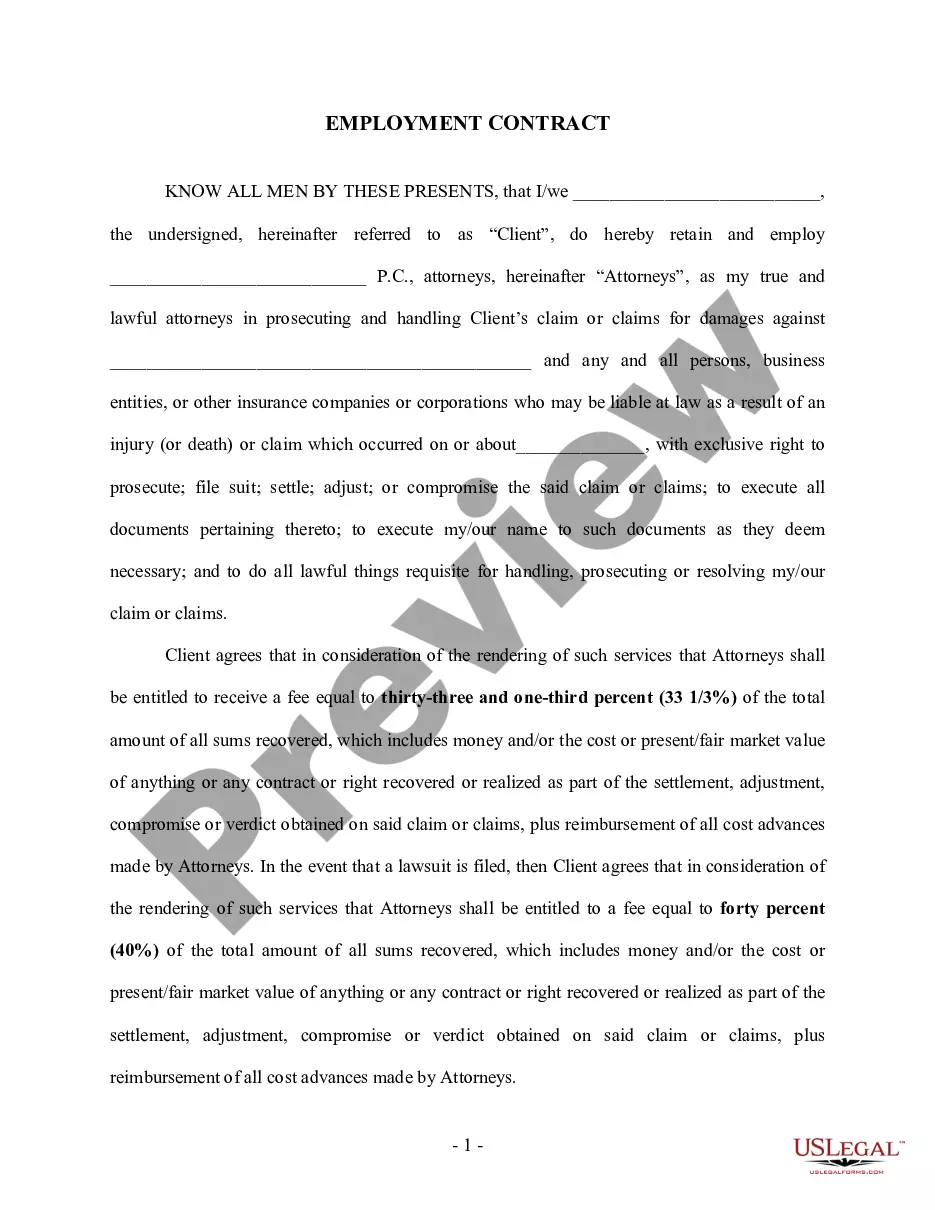
In consideration for legal services to be rendered by a law office, the client agrees to pay the law firm a percentage of all amounts recovered on behalf of the client. The law firm and the client agree that no attorney-client relationship will exist until the law firm has received from client an initial retainer fee.
Rhode Island Legal Services Agreement - Contingent
Instant download
Description
Free preview

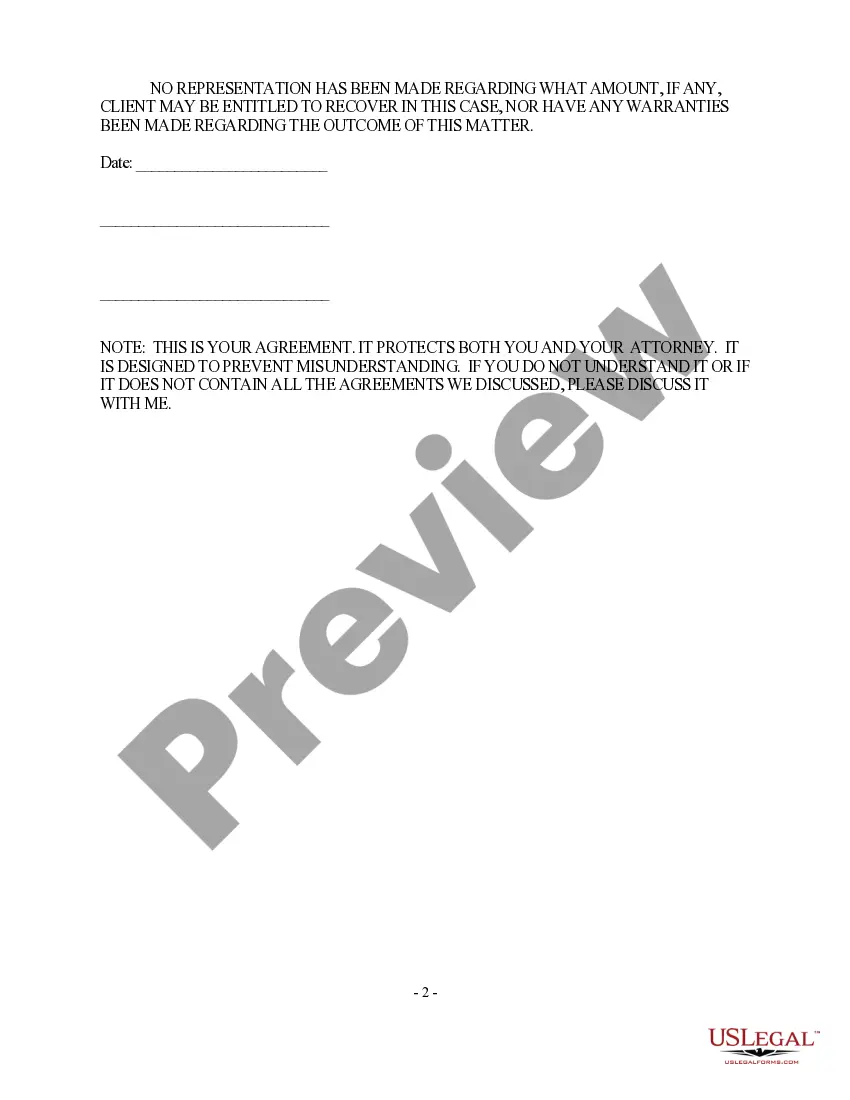

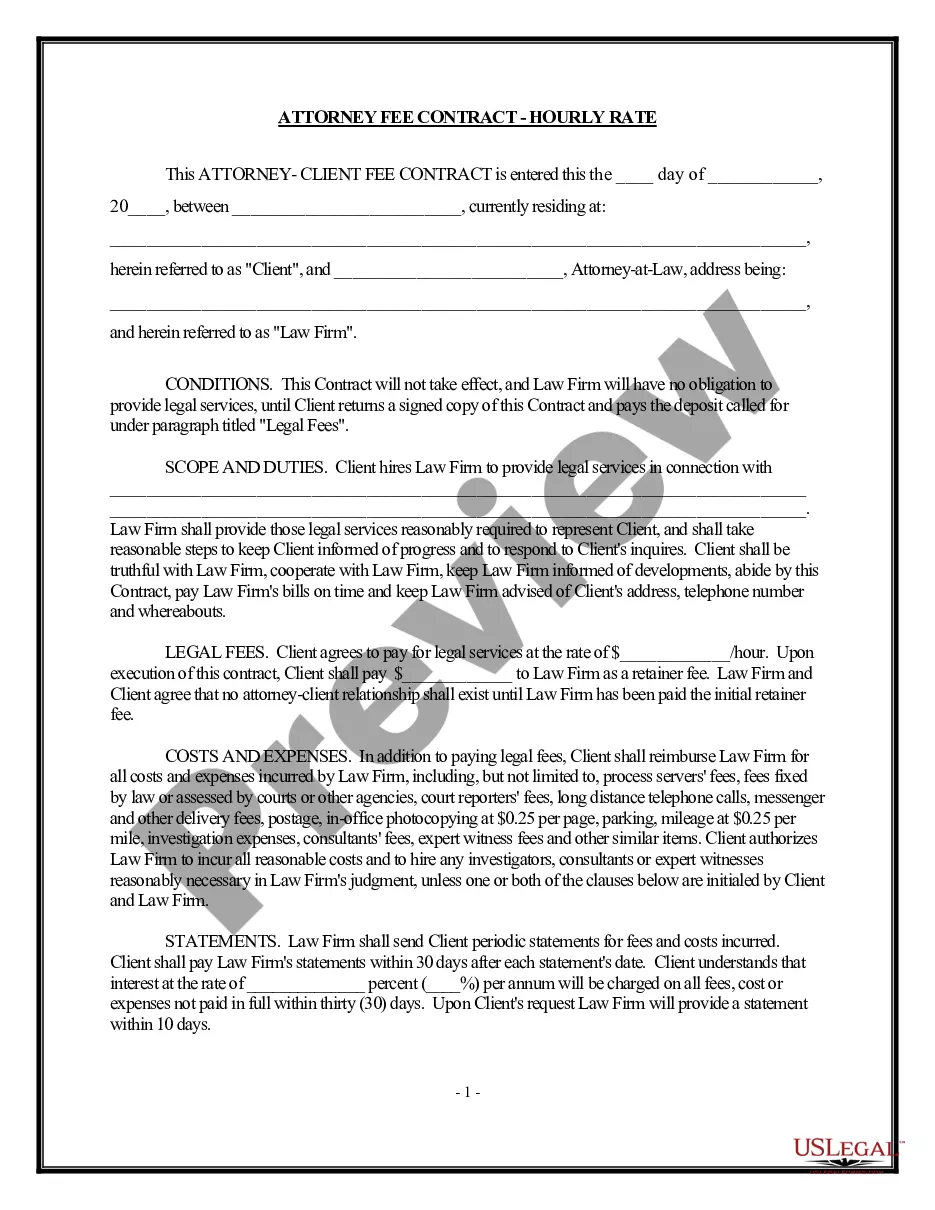
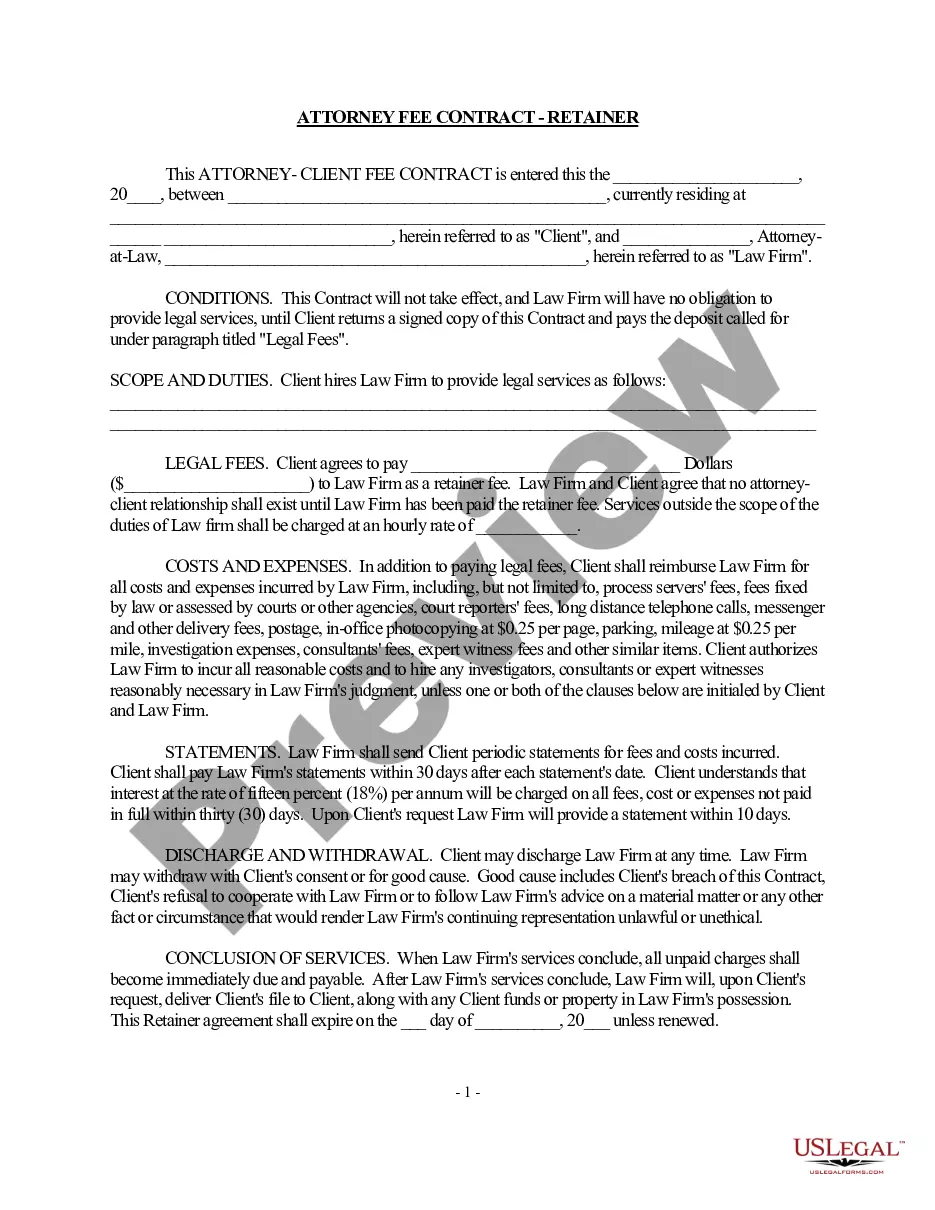

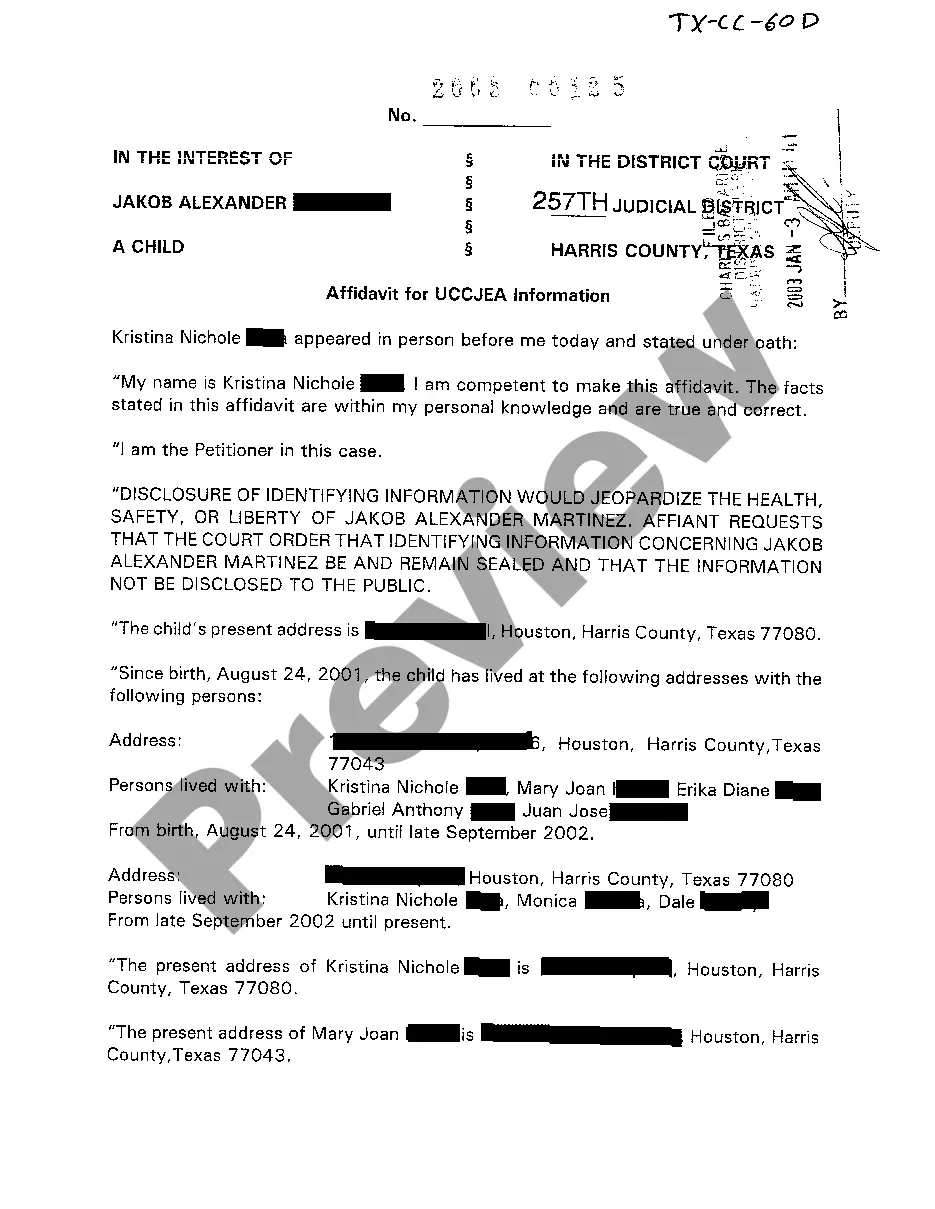

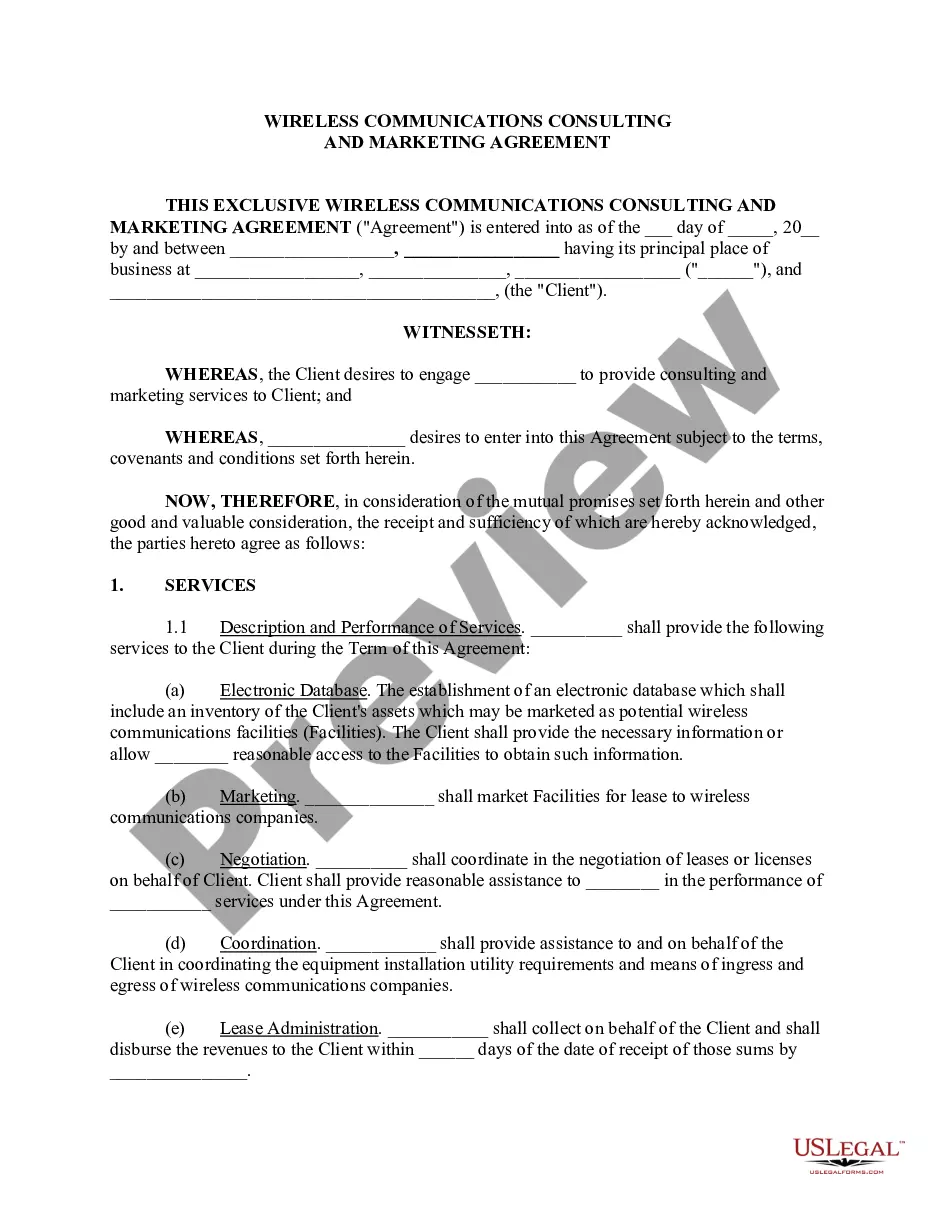
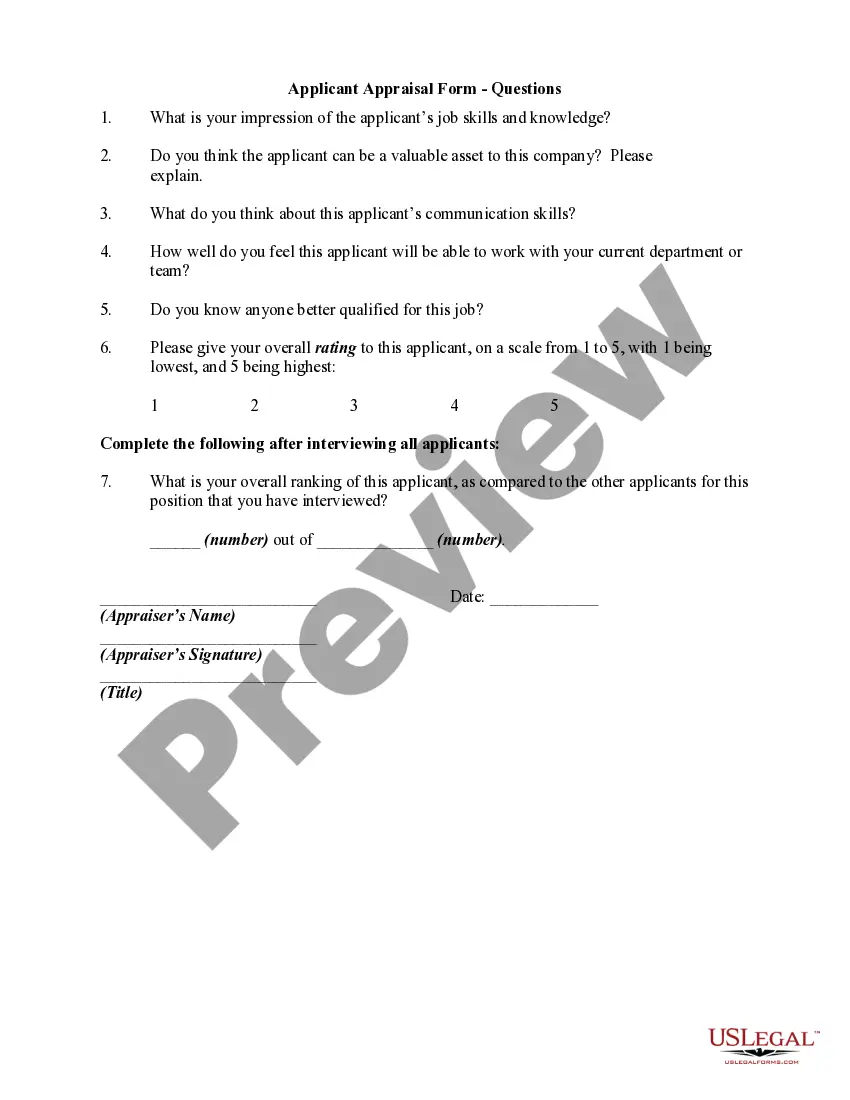
How to fill out Legal Services Agreement - Contingent?
US Legal Forms - one of the largest collections of legal documents in the United States - provides a vast array of legal document templates that you can download or print. By using the website, you can access thousands of forms for business and personal purposes, organized by categories, states, or keywords. You can find the latest templates like the Rhode Island Legal Services Agreement - Contingent within minutes.
If you currently hold a subscription, Log In and download the Rhode Island Legal Services Agreement - Contingent from your US Legal Forms collection. The Download button will appear on every form you view. You have access to all previously acquired templates in the My documents section of your account.
If you are using US Legal Forms for the first time, here are simple instructions to help you get started: Ensure you have selected the correct form for your locality/region. Click the Preview button to review the content of the form. Check the form details to confirm you have chosen the right document. If the form does not meet your requirements, use the Search field at the top of the screen to find the one that does. If you are satisfied with the form, confirm your choice by clicking the Purchase now button. Then, select the pricing plan you prefer and provide your details to register for an account. Process the transaction. Use a credit card or PayPal account to complete the transaction. Choose the format and download the form to your device. Make changes. Fill out, modify, print, and sign the downloaded Rhode Island Legal Services Agreement - Contingent. Each template you added to your account does not have an expiration date and is yours forever. Therefore, to download or print another copy, simply navigate to the My documents section and click on the form you need.
With US Legal Forms, you can efficiently manage all your legal documentation needs.
The platform ensures compliance with legal standards and provides a user-friendly experience.
- Access the Rhode Island Legal Services Agreement - Contingent with US Legal Forms, the most extensive library of legal document templates.
- Utilize thousands of professional and state-specific templates that meet your business or personal requirements.
- The forms are categorized for easier navigation.
- You can review each form before making a purchase.
- All forms are available for download and printing.
- Your account holds all your previously downloaded forms indefinitely.
Form popularity
FAQ
A typical contingency fee percentage is anywhere from 30 to 40% of your recovery. Your contingency fee agreement will set out the exact percentage. These percentages are often staggered so that your lawyer will get a higher percentage if the case goes to trial ? which requires more time and work for their law firm.
A contingency fee is a form of payment that your lawyer receives only when your case reaches a settlement. With a contingency fee you do not have to pay anything up front for the legal services provided by your lawyer. Your lawyer's payment is contingent upon you having received some amount of compensation.
Disadvantages. The main problem with a contingency fee agreement is that it could cost the plaintiff more than standard hourly rates for a lawyer if the case settles quickly. A standard contingency fee can range between 30-40% of the final award.
Contingency fees mean you will pay the lawyer a certain percentage of the money you receive if you win the case or settle the matter out of court.
Contingency fees mean you will pay the lawyer a certain percentage of the money you receive if you win the case or settle the matter out of court. If you lose your case, the lawyer does not receive any payment from you.
In this rule: (1) "Attorney-client privilege" means the protection that applicable law provides for confidential attorney-client communications; (2) "Work-product protection" means the protection that applicable law provides for tangible material (or its intangible equivalent) prepared in anticipation of litigation or ...
However, Model Rule 1.5(d) prohibits contingency fee agreements for domestic relations matters?such as divorce cases?and for the representation of a defendant in a criminal case. Most states, including California and New York, have adopted such prohibitions on contingent fees.
That is, generally in a contingency fee agreement, the lawyer only receives compensation if the lawyer has successfully represented the client. Further, the amount the lawyer receives is contingent upon the result the lawyer obtains and often on the phase of litigation in which the dispute settles.