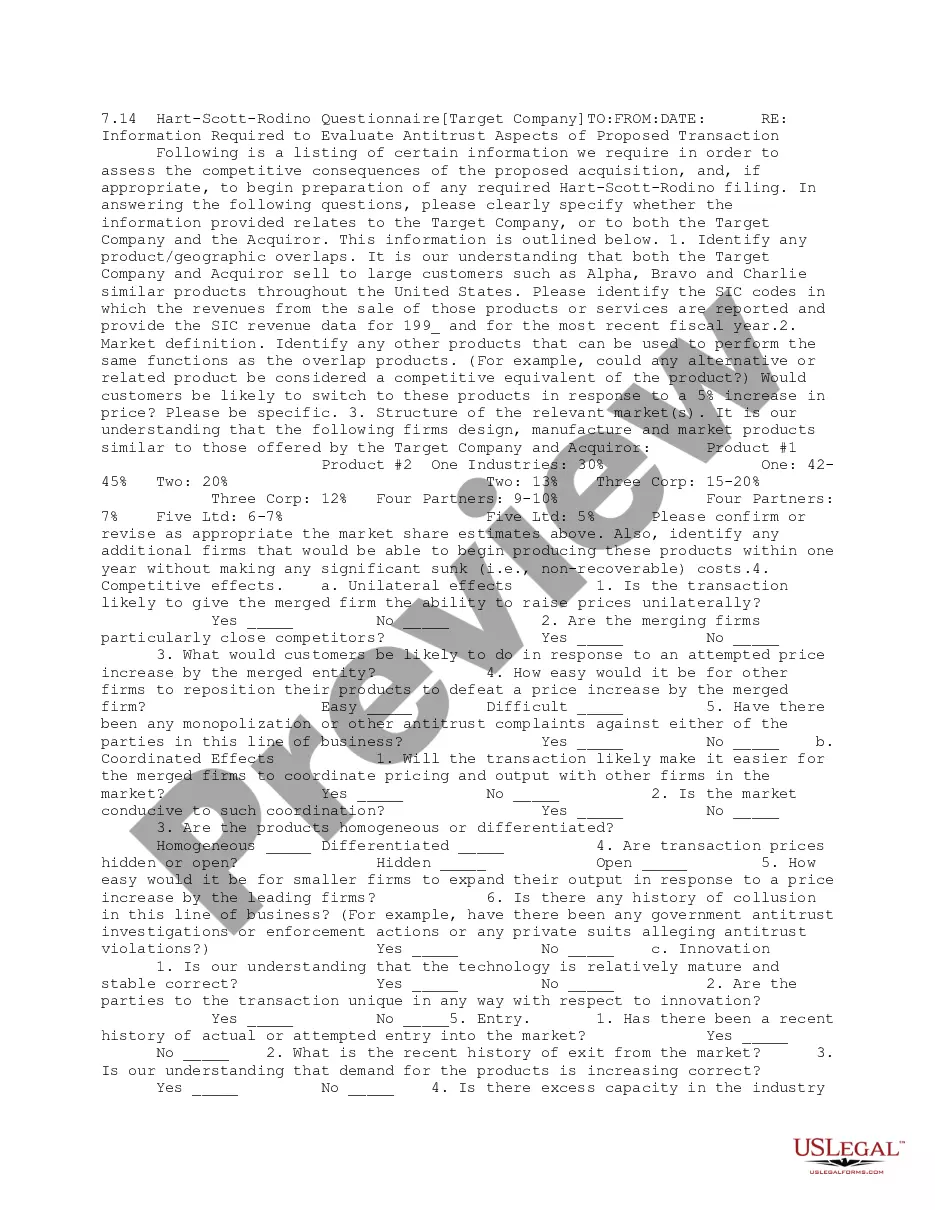
Rhode Island Application for Work or Employment - Clerical, Exempt, Executive, or Nonexempt Position
Description
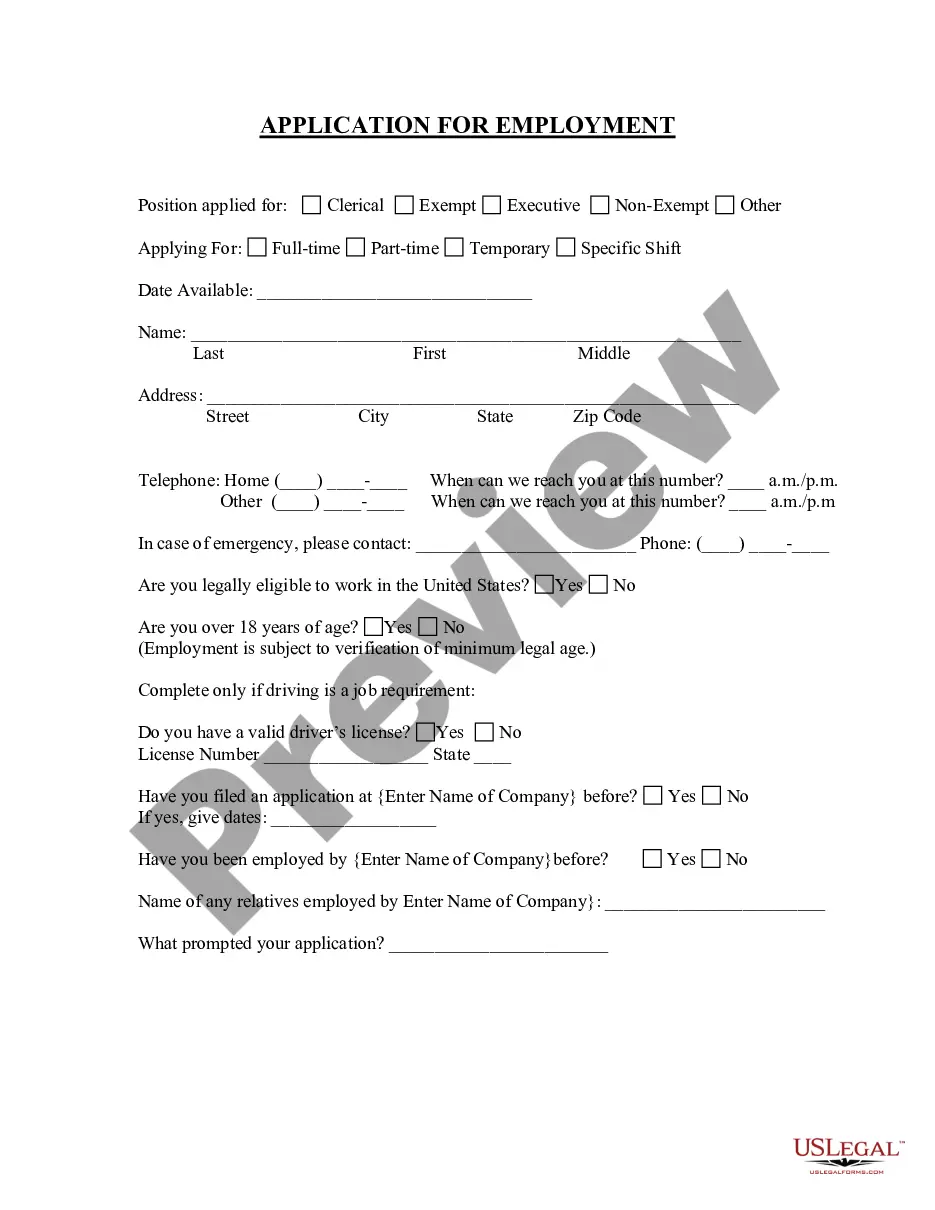
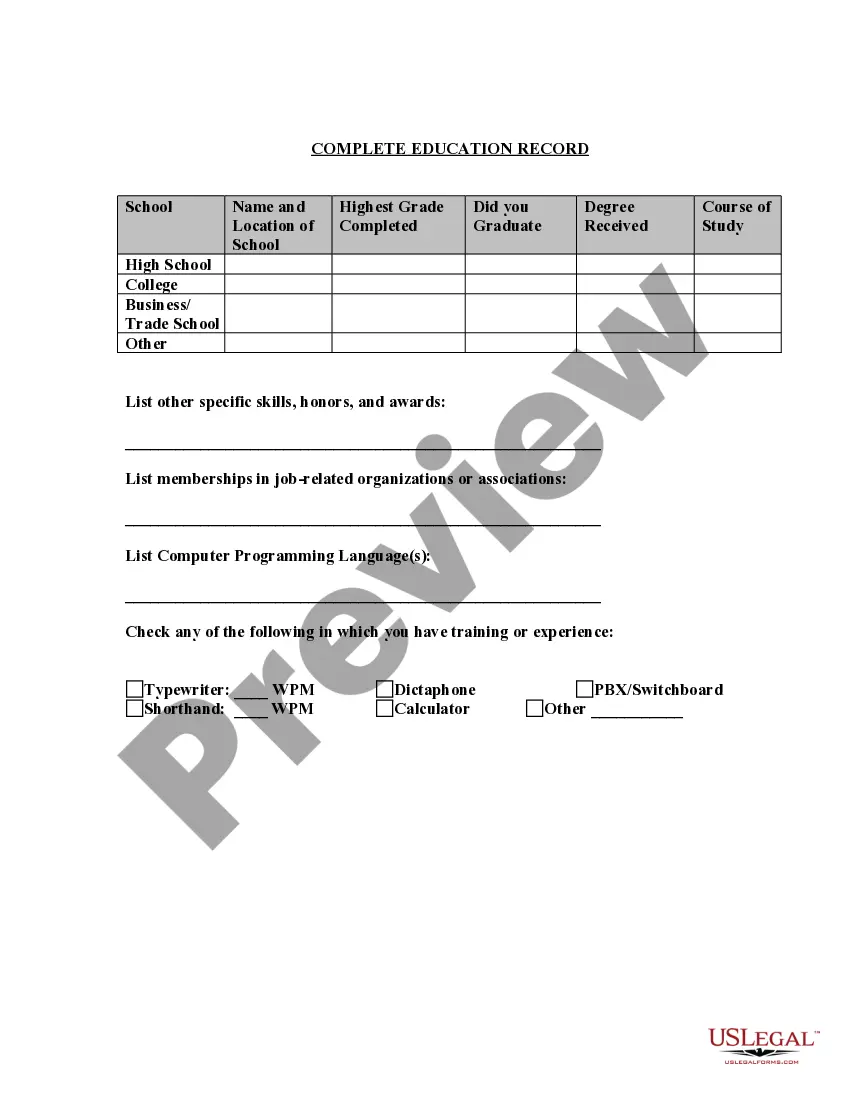
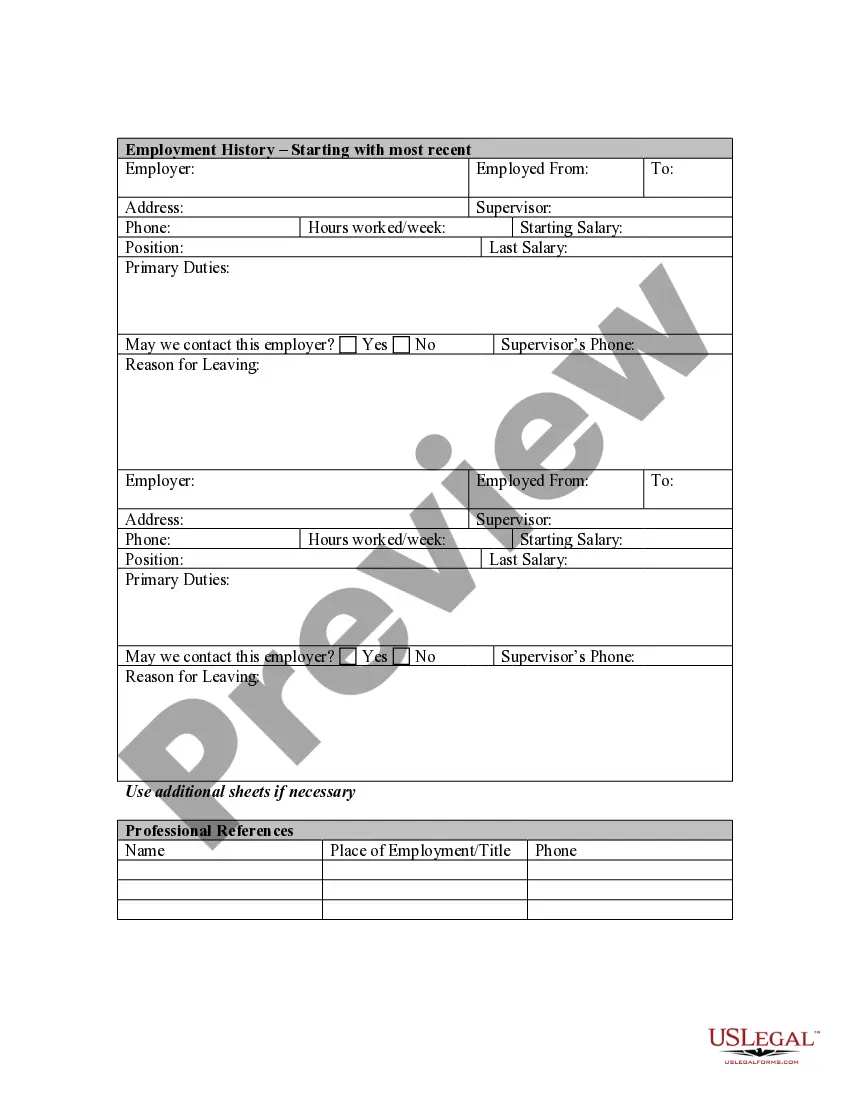
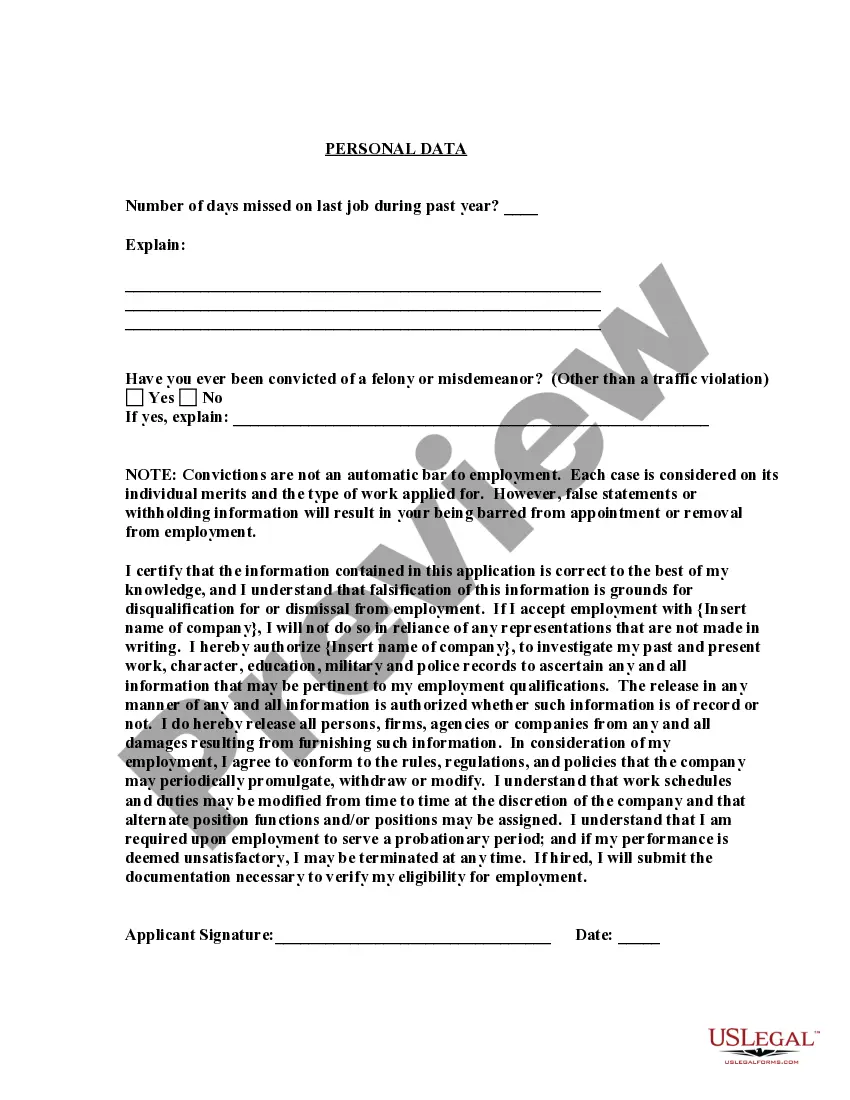

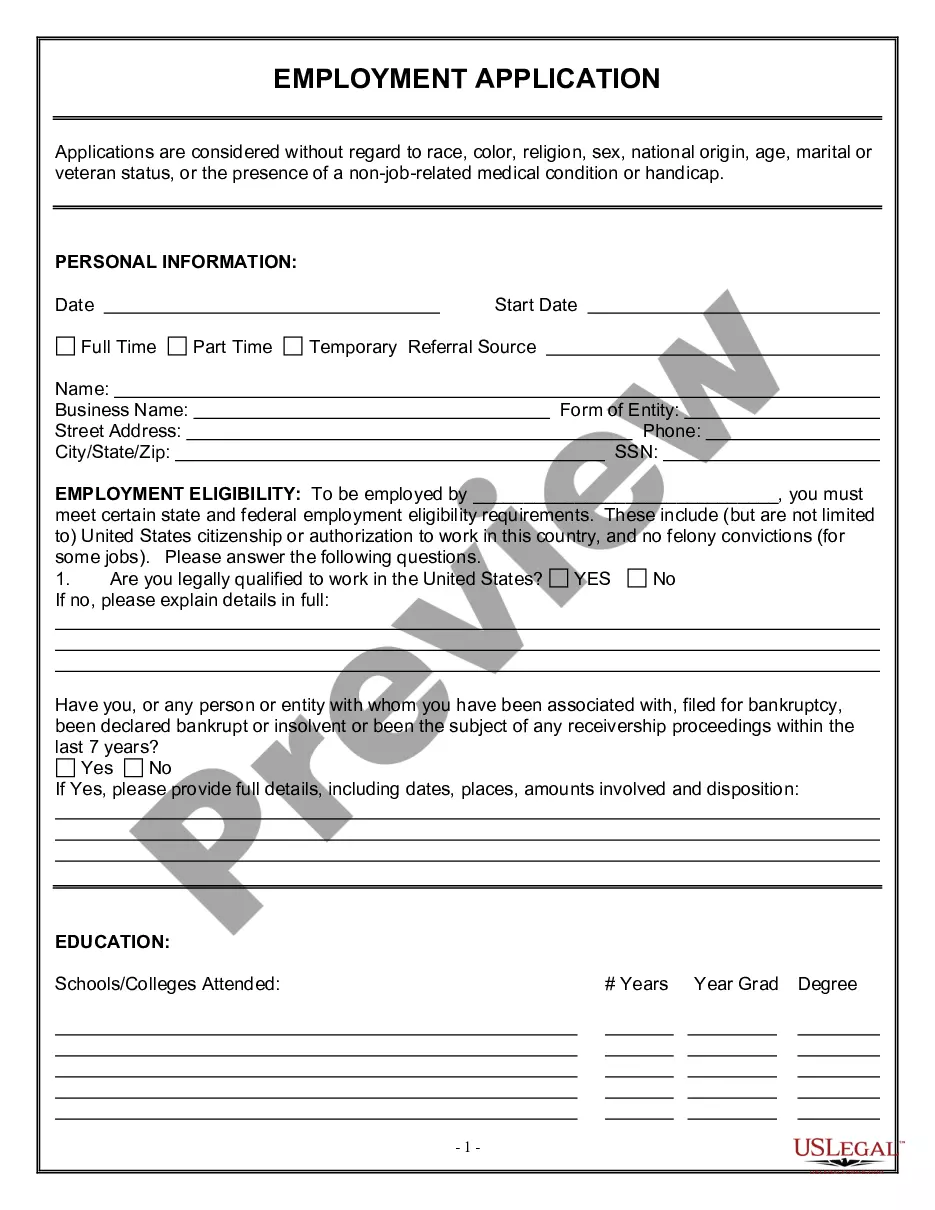
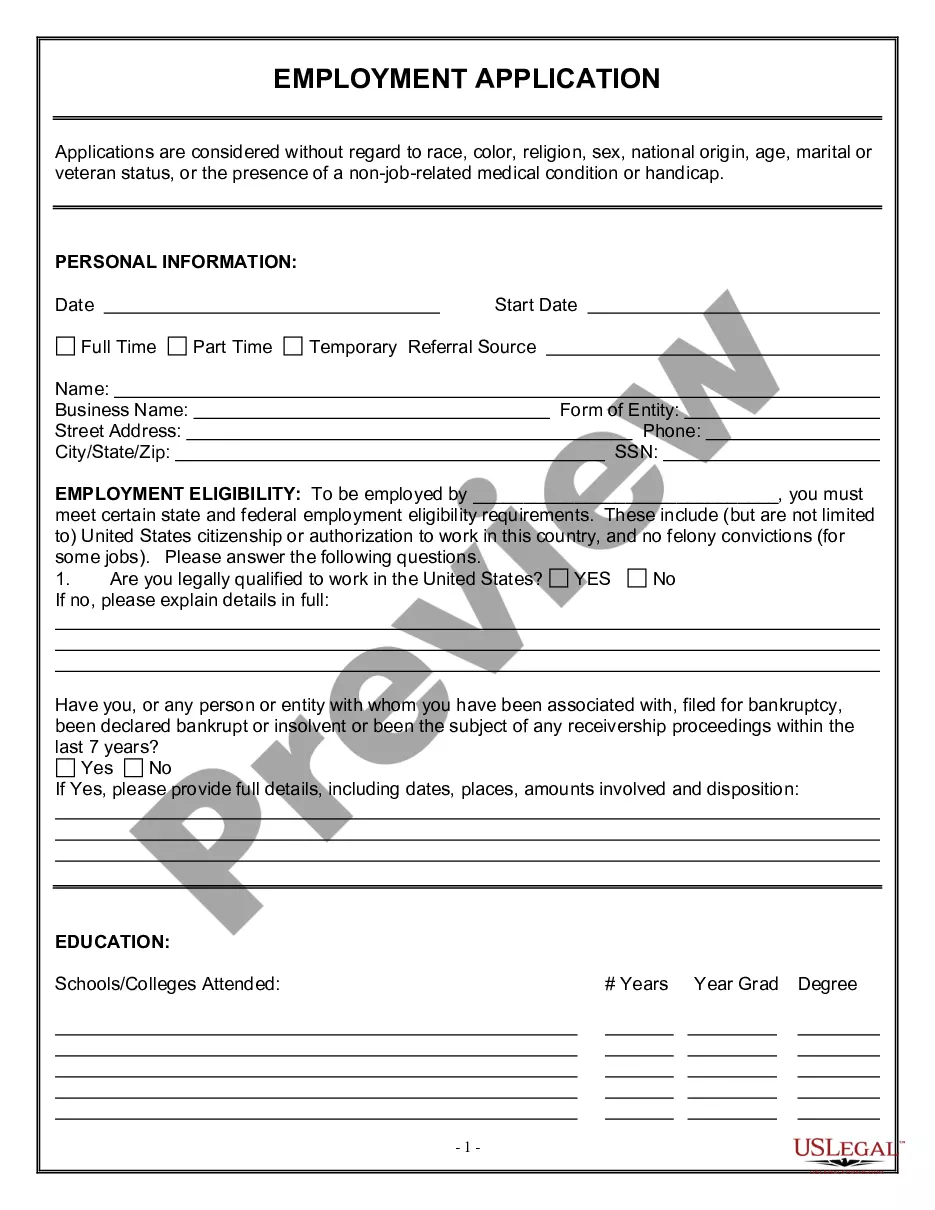
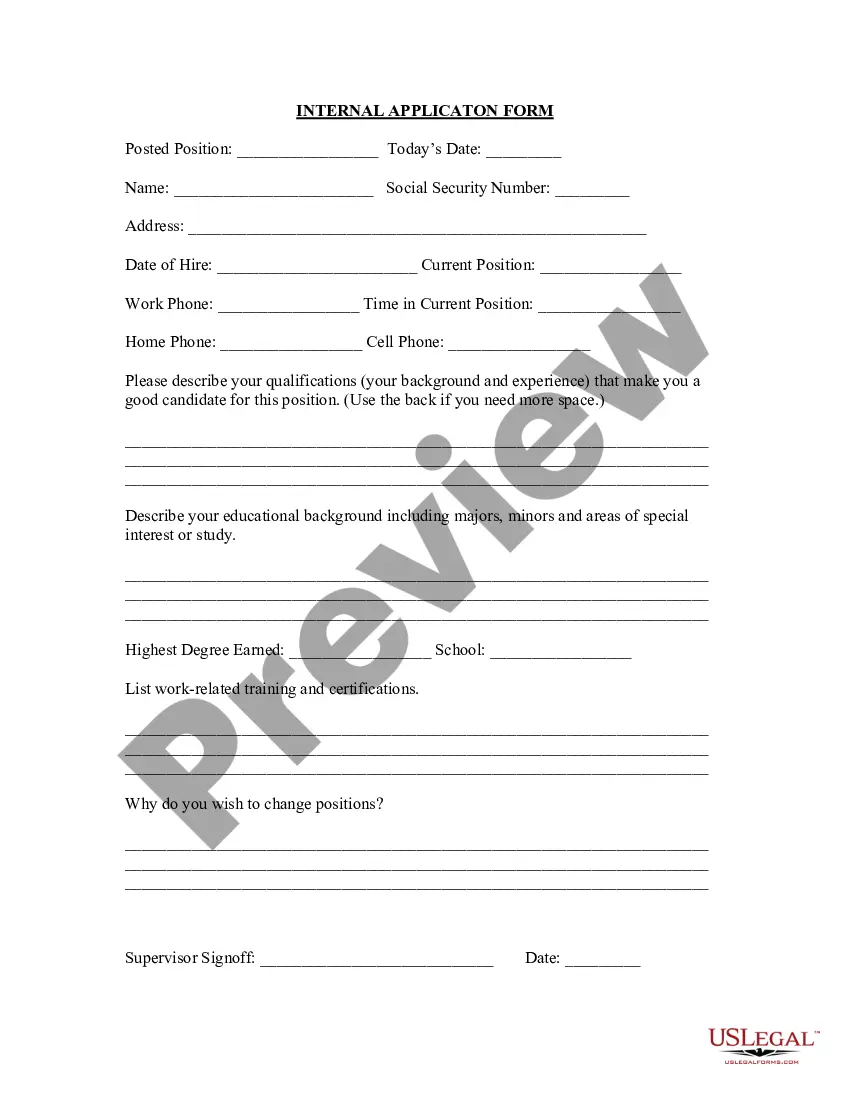
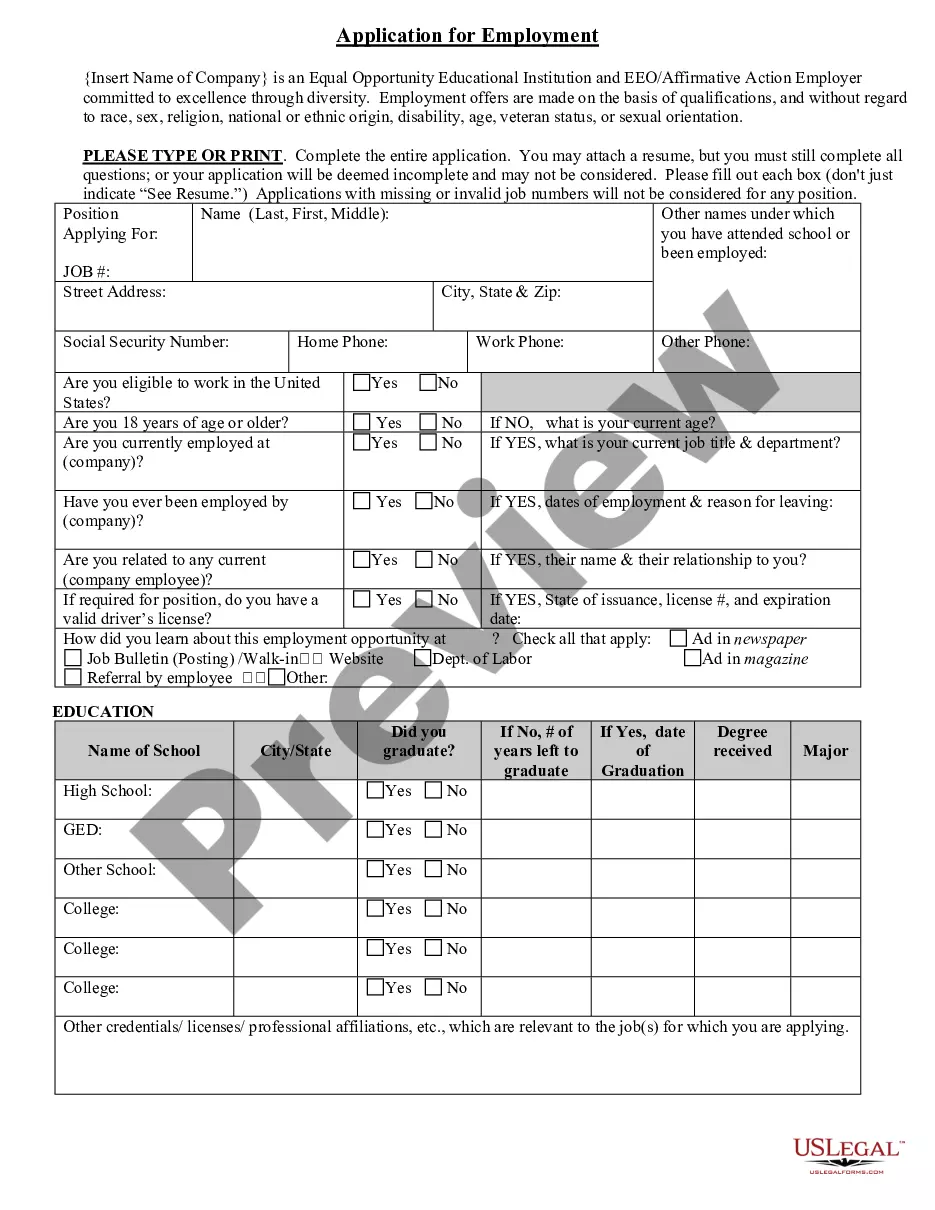


How to fill out Application For Work Or Employment - Clerical, Exempt, Executive, Or Nonexempt Position?
Locating the appropriate legal document template can be quite challenging.
Of course, there are numerous templates accessible online, but how do you identify the legal document you require.
Utilize the US Legal Forms website. This service offers thousands of templates, including the Rhode Island Application for Work or Employment - Clerical, Exempt, Executive, or Nonexempt Position, that you can utilize for both business and personal purposes.
You can review the document using the Preview button and read the form description to confirm it is the right one for you.
- All templates are reviewed by experts and comply with federal and state regulations.
- If you are already registered, Log In to your account and click the Obtain button to download the Rhode Island Application for Work or Employment - Clerical, Exempt, Executive, or Nonexempt Position.
- Use your account to browse the legal documents you may have previously purchased.
- Visit the My documents tab of your account and download another copy of the documents you need.
- If you are a new user of US Legal Forms, here are basic steps you should follow.
- First, ensure you have selected the correct form for your city/state.
Form popularity
FAQ
Yes, Rhode Island is considered an employment at-will state. This means that employers can terminate employees for nearly any reason, as long as it is not illegal, and employees can resign at any time without facing penalties. However, there are certain protections and exceptions to this rule, especially for employees in Clerical, Exempt, Executive, or Nonexempt Positions. When navigating your career path, understanding the employment at-will doctrine is crucial, and using resources like the Rhode Island Application for Work or Employment can help guide you through the nuances of this system.
Key Takeaways. An exempt employee is an employee who does not receive overtime pay or qualify for minimum wage. Exempt employees are paid a salary rather than by the hour, and their work is executive or professional in nature.
When an employee is considered non-exempt, it means they are covered by FLSA standards and regulations. Most commonly, this applies to whether or not that individual can receive overtime pay for working more than 40 hours a week.
Exempt employees refer to workers in the United States who are not entitled to overtime pay. This simply implies that employers of exempt employees are not bound by law to pay them for any extra hours of work. The federal standard for work hours in the United States is 40 hours per workweek.
The primary difference in status between exempt and non-exempt employees is their eligibility for overtime. Under federal law, that status is determined by the Fair Labor Standards Act (FLSA). Exempt employees are not entitled to overtime, while non-exempt employees are.
Exempt employees must be paid on a salary basis, as discussed above. Nonexempt employees may be paid on a salary basis for a fixed number of hours or under the fluctuating workweek method. Salaried nonexempt employees must still receive overtime in accordance with federal and state laws.
An exempt employee is not entitled to overtime pay according to the Fair Labor Standards Act (FLSA). To be exempt, you must earn a minimum of $684 per week in the form of a salary. Non-exempt employees must be paid overtime and are protected by FLSA regulations.
An exempt employee is not entitled overtime pay by the Fair Labor Standards Act (FLSA). These salaried employees receive the same amount of pay per pay period, even if they put in overtime hours. A nonexempt employee is eligible to be paid overtime for work in excess of 40 hours per week, per federal guidelines.
An exempt employee is not entitled overtime pay by the Fair Labor Standards Act (FLSA). These salaried employees receive the same amount of pay per pay period, even if they put in overtime hours. A nonexempt employee is eligible to be paid overtime for work in excess of 40 hours per week, per federal guidelines.
Exempt positions are excluded from minimum wage, overtime regulations, and other rights and protections afforded nonexempt workers. Employers must pay a salary rather than an hourly wage for a position for it to be exempt.