South Carolina Subordination, Non-disturbance and Attornment Agreement
What is this form?
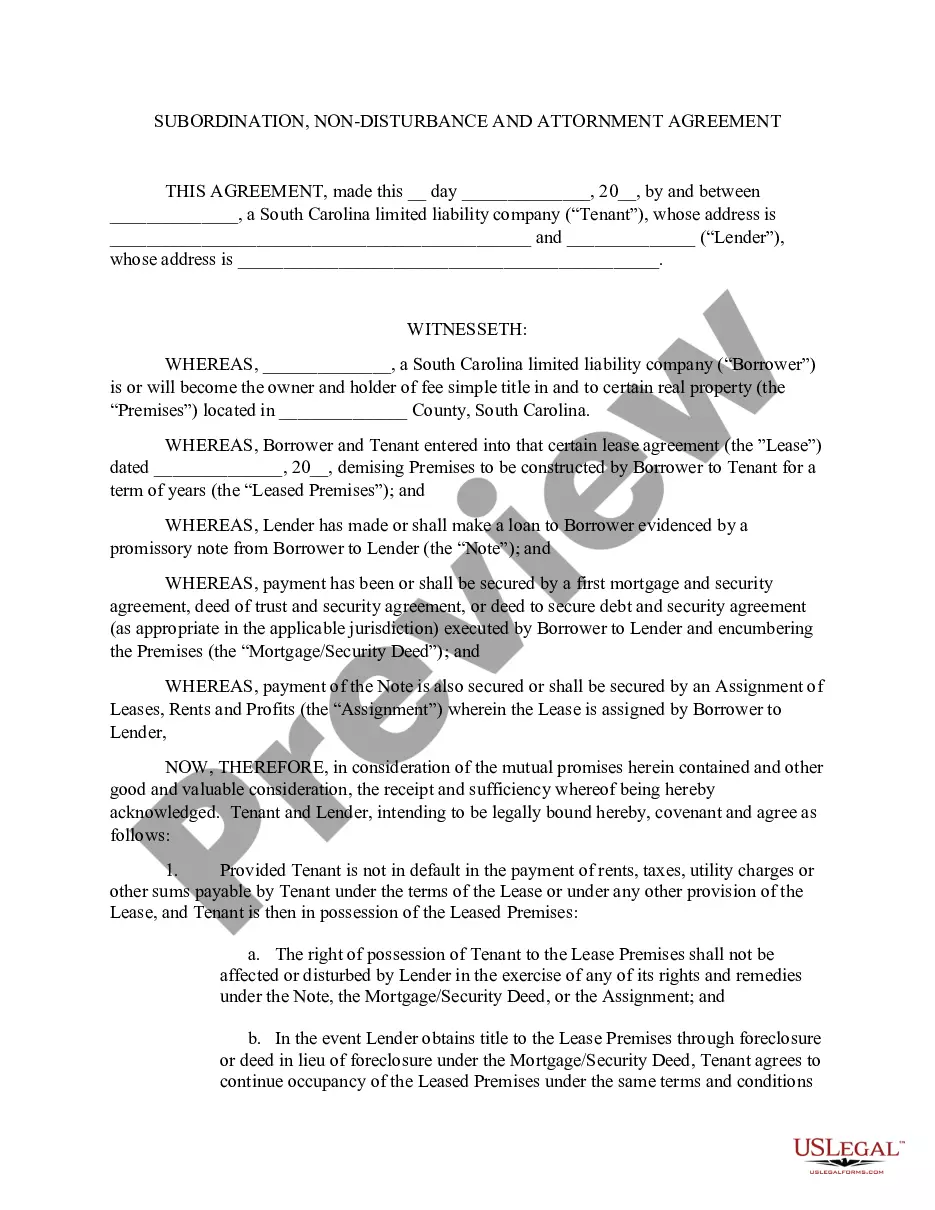
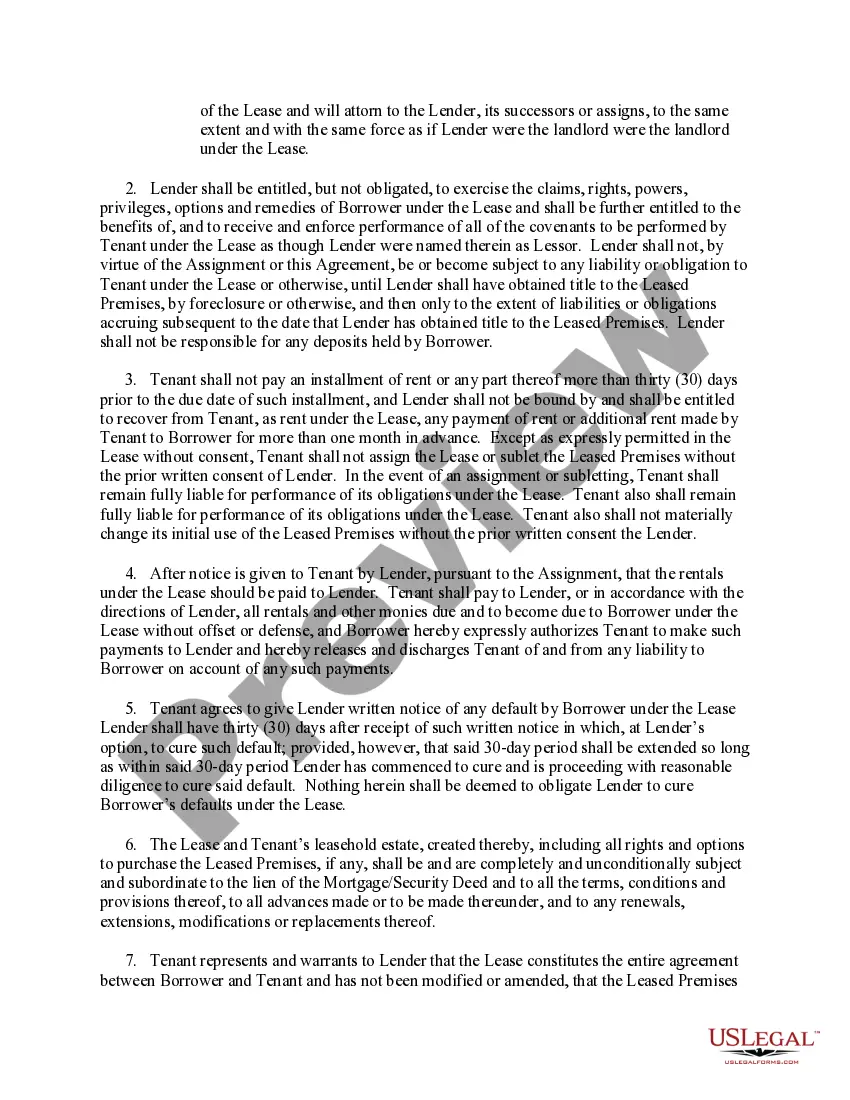
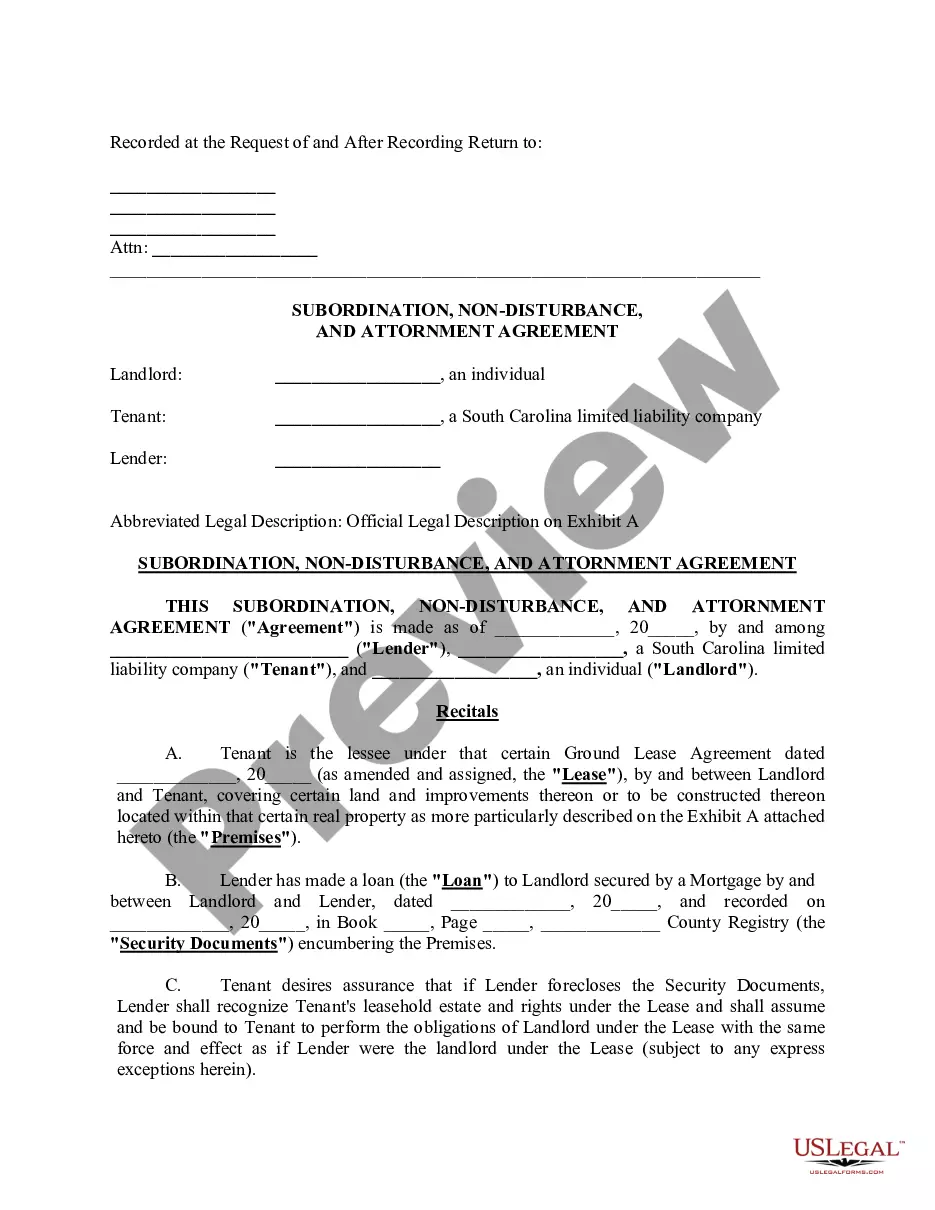
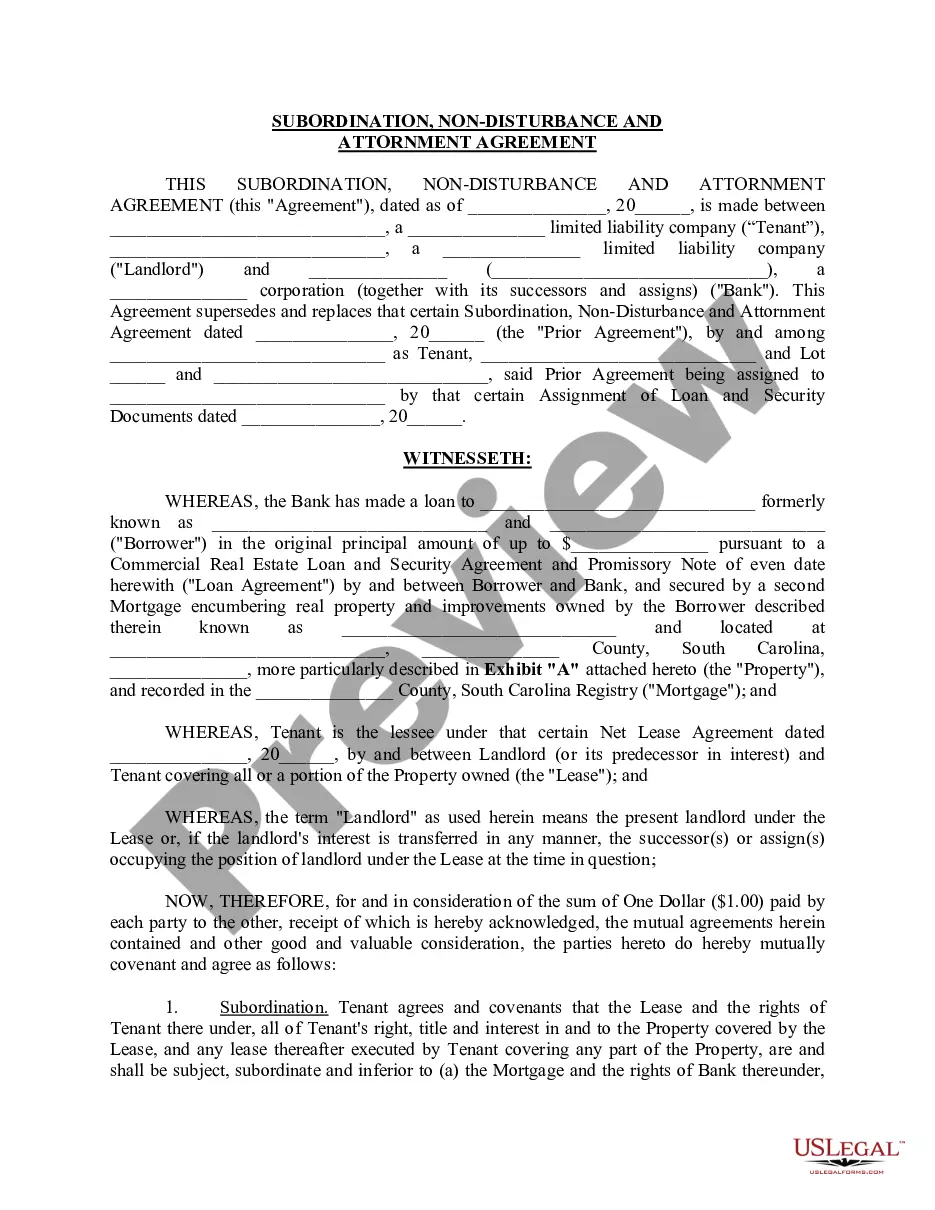
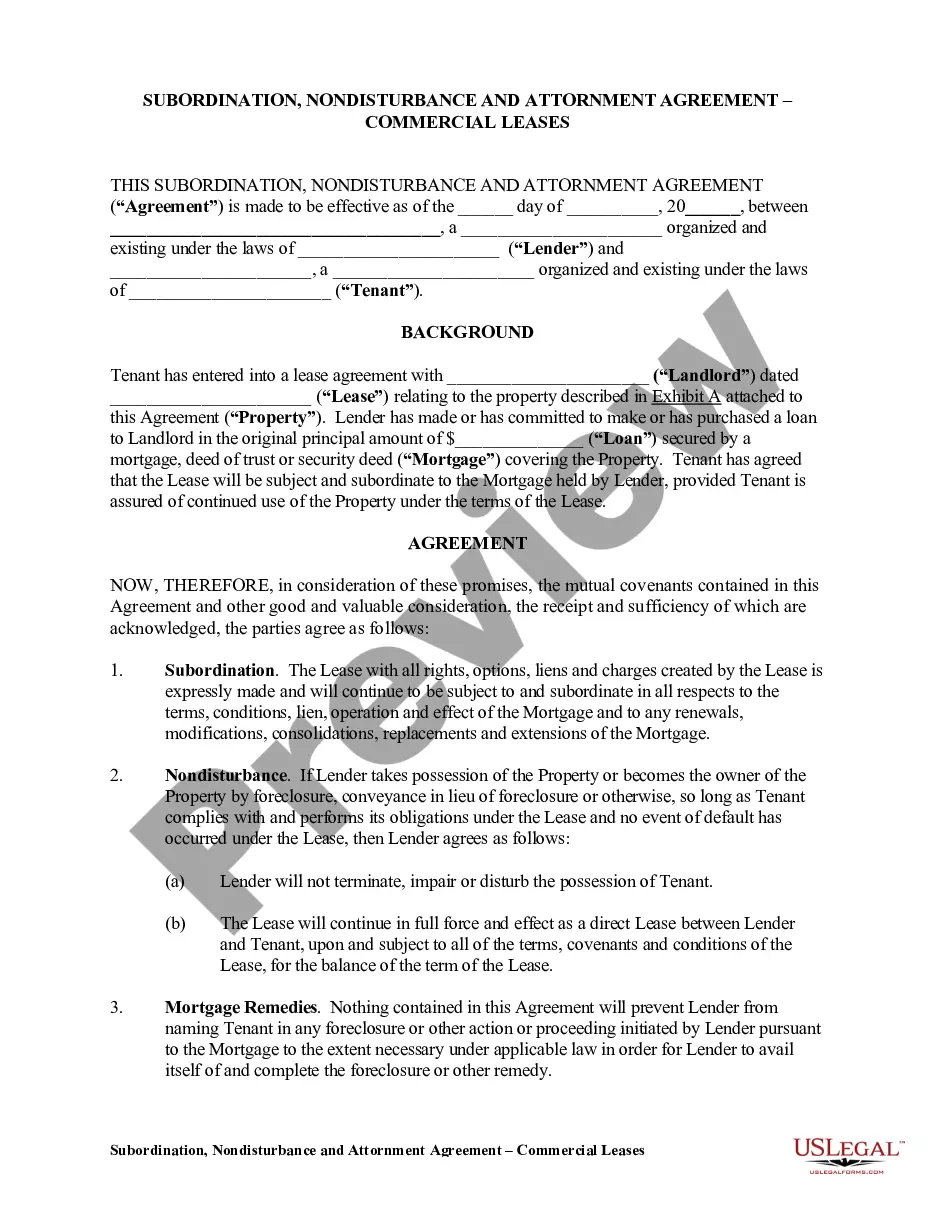
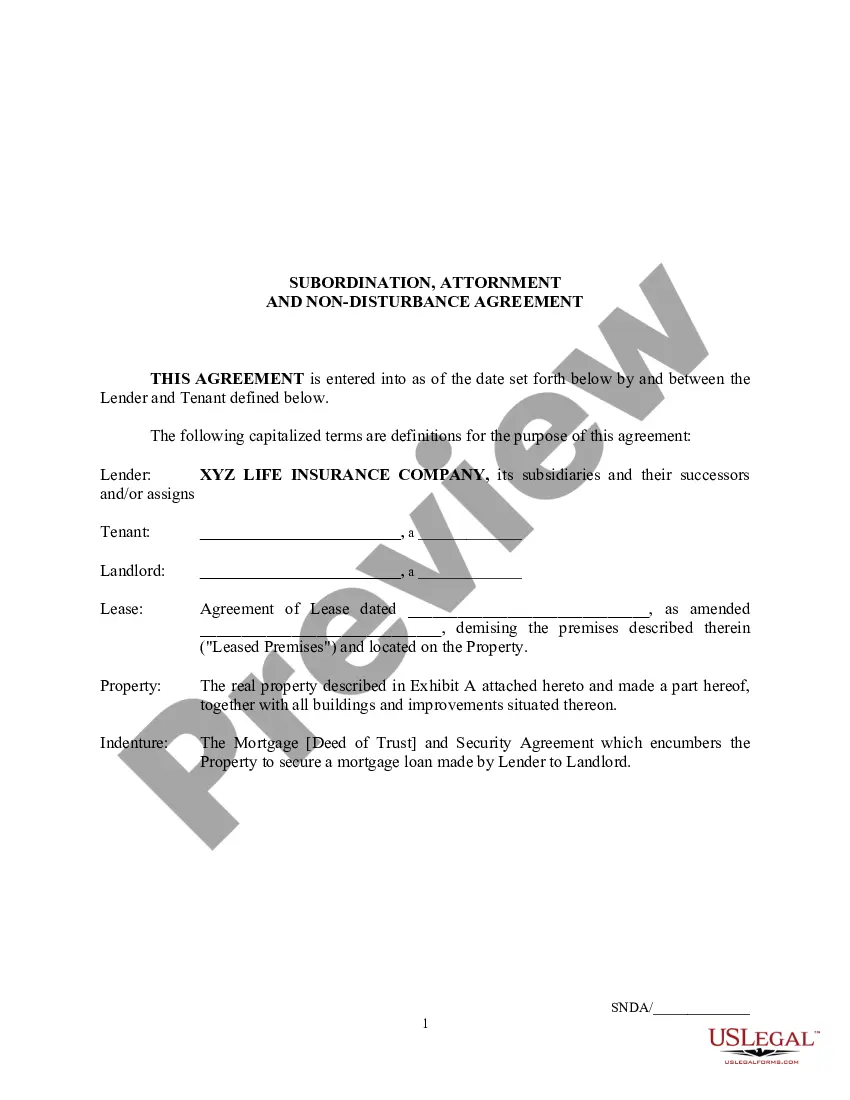
The Subordination, Non-disturbance and Attornment Agreement is a legal document that serves to clarify the relationship between a tenant, a lender, and a borrower in a leasing context. It addresses three crucial aspects: subordination, non-disturbance, and attornment. This agreement ensures that if a lender forecloses on a property, the tenant's rights to continue occupying the leased premises are protected, provided they are not in default. This form is essential for establishing clarity and security in landlord-tenant relationships, especially during financial transitions involving real estate properties.
Key parts of this document
- Subordination clause specifying the lender's security interest takes precedence over the tenantâs lease.
- Non-disturbance clause ensuring the tenant's right to occupy the property after foreclosure, as long as they are not in default.
- Attornment clause where the tenant agrees to recognize the lender or a new buyer as the landlord.
- Conditions for rent payments and obligations of the tenant to notify the lender of any defaults.
- Provisions for the handling of modifications to the lease agreement.
When this form is needed
This agreement is typically used when a borrower is obtaining a loan secured by real property that is currently leased to a tenant. It is essential to use this form in scenarios where there may be a risk of foreclosure, ensuring that the tenant's right to remain in the property is legally protected. Landlords and lenders alike should consider this agreement in any situation where they may face changes in ownership or management of the leased property.
Who can use this document
- Landlords and property owners looking to secure their interests in leased properties.
- Lenders providing financing secured by properties with existing tenants.
- Tenants who want assurance regarding their rights in the event of foreclosure.
- Investors acquiring properties with existing tenant agreements.
How to prepare this document
- Identify the parties involved: the Tenant, the Lender, and the Borrower.
- Specify the property being leased, including its location and legal description.
- Enter the lease date and any relevant details about the mortgage or loan agreement.
- Ensure all parties review and agree to the terms of the agreement before signing.
- Have the document notarized, if required, to confirm the authenticity of the signatures.
Notarization guidance
Yes, this form must be notarized to be legally valid. Notarization helps to verify the authenticity of the signatures and ensures compliance with legal requirements. US Legal Forms offers integrated online notarization services, allowing you to complete this process securely and efficiently, without the need to travel.
Get your form ready online
Our built-in tools help you complete, sign, share, and store your documents in one place.
Make edits, fill in missing information, and update formatting in US Legal Forms—just like you would in MS Word.
Download a copy, print it, send it by email, or mail it via USPS—whatever works best for your next step.
Sign and collect signatures with our SignNow integration. Send to multiple recipients, set reminders, and more. Go Premium to unlock E-Sign.
If this form requires notarization, complete it online through a secure video call—no need to meet a notary in person or wait for an appointment.
We protect your documents and personal data by following strict security and privacy standards.

Make edits, fill in missing information, and update formatting in US Legal Forms—just like you would in MS Word.

Download a copy, print it, send it by email, or mail it via USPS—whatever works best for your next step.

Sign and collect signatures with our SignNow integration. Send to multiple recipients, set reminders, and more. Go Premium to unlock E-Sign.

If this form requires notarization, complete it online through a secure video call—no need to meet a notary in person or wait for an appointment.

We protect your documents and personal data by following strict security and privacy standards.
Mistakes to watch out for
- Failing to ensure all parties sign the agreement, which can lead to enforceability issues.
- Not specifying the details of the lease, which can create confusion later.
- Neglecting to provide notifications of defaults, which can affect the tenantâs rights.
Benefits of completing this form online
- Convenience of downloading and completing the document at any time.
- Editability allows users to customize the form to their specific situation.
- Access to templates drafted by licensed attorneys ensures legal compliance.
Legal use & context
- This agreement helps protect tenants' rights during foreclosure, ensuring their tenancy continues if they remain in good standing.
- It establishes the priorities between the lease and the lenderâs security interests, which is essential in real estate transactions.
- Using this agreement appropriately can prevent legal disputes between tenants, landlords, and lenders.
Main things to remember
- The Subordination, Non-disturbance and Attornment Agreement is crucial for protecting tenants during lender foreclosure actions.
- It clarifies the relationship between the tenant, landlord, and lender, ensuring all parties understand their rights and obligations.
- Proper completion and notarization of the form are important for legal validity in South Carolina.
Glossary of terms
- Subordination: The arrangement where the claims of one party take precedence over another's.
- Non-disturbance: An assurance that a tenant's lease rights will be honored despite a change in property ownership.
- Attornment: The act of a tenant recognizing a new landlord under the existing lease.
Looking for another form?

Form popularity
FAQ
Subordination is the tenant's agreement that its interest under the lease will be subordinate to that of the lender.Attornment is the tenant's agreement to become the tenant of someone other than the original landlord and who has now taken title to the property.
In the case of commercial property changing hands, an attornment clause in a subordination, non-disturbance, and attornment (SNDA) agreement requires the tenant to acknowledge a new owner as their landlord and to continue paying rent regardless of whether the property changes hands through a normal sale or a
A nondisturbance clause is a provision in a mortgage contract that ensures that a rental agreement between the tenant and the landlord will continue under any circumstances.A nondisturbance clause ensures that a tenant will not be evicted in the event that the landlord goes bankrupt.
An SNDA is an agreement entered into between a tenant and the lender of the landlord (and, ideally, the landlord) to establish the relationship between the tenant and lender (who would not otherwise have a direct relationship) and provide relative priorities between them.