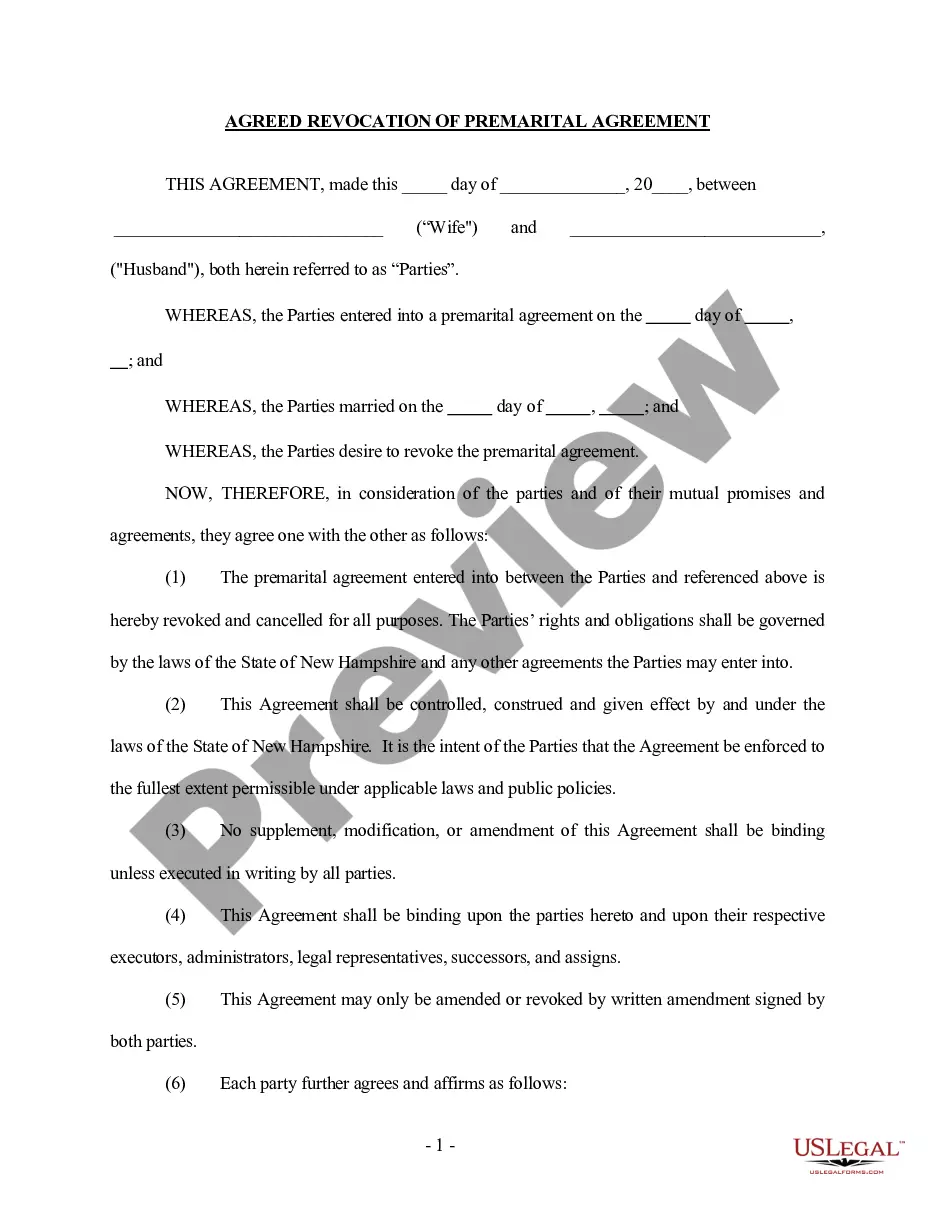
South Carolina Horse Equine Forms Package
Overview of this form
The South Carolina Horse Equine Forms Package is a comprehensive collection of legal documents designed for horse owners and equine businesses in South Carolina. This package includes various forms such as purchase agreements, liability waivers, and service contracts, tailored specifically to address the unique legal needs in the equine industry. Unlike generic forms, these documents are created by licensed attorneys, ensuring compliance with South Carolina law.
Main sections of this form
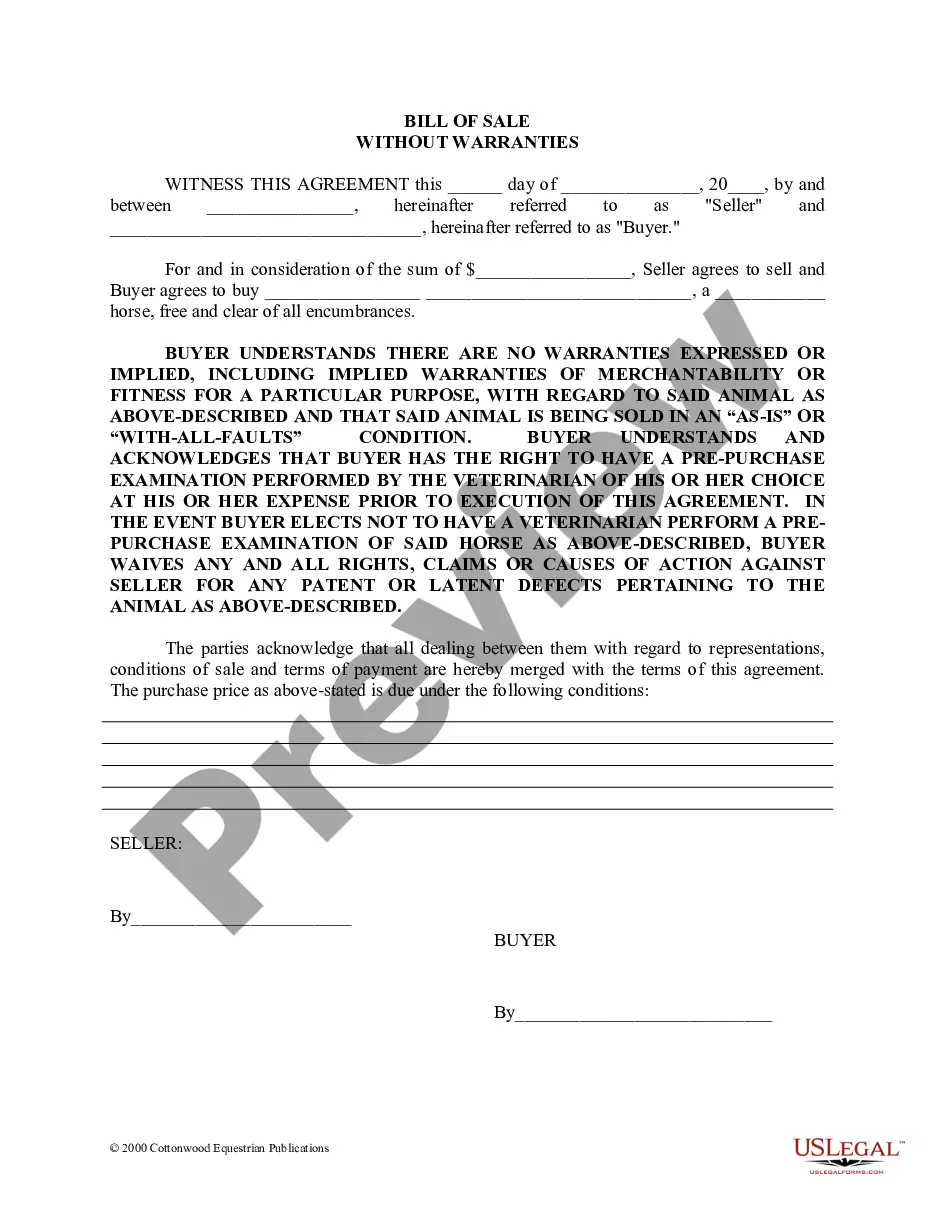
- Bill of Sale Without Warranties
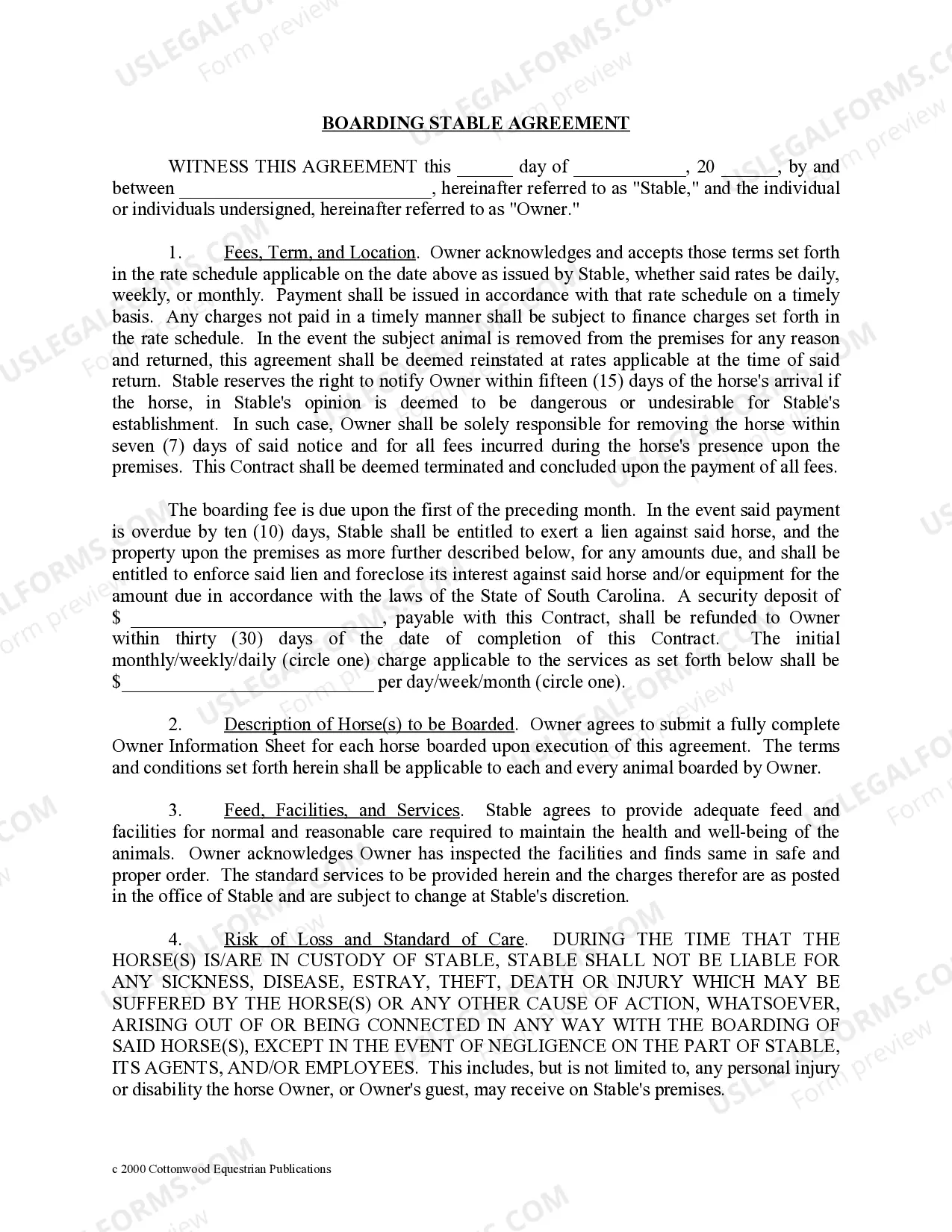
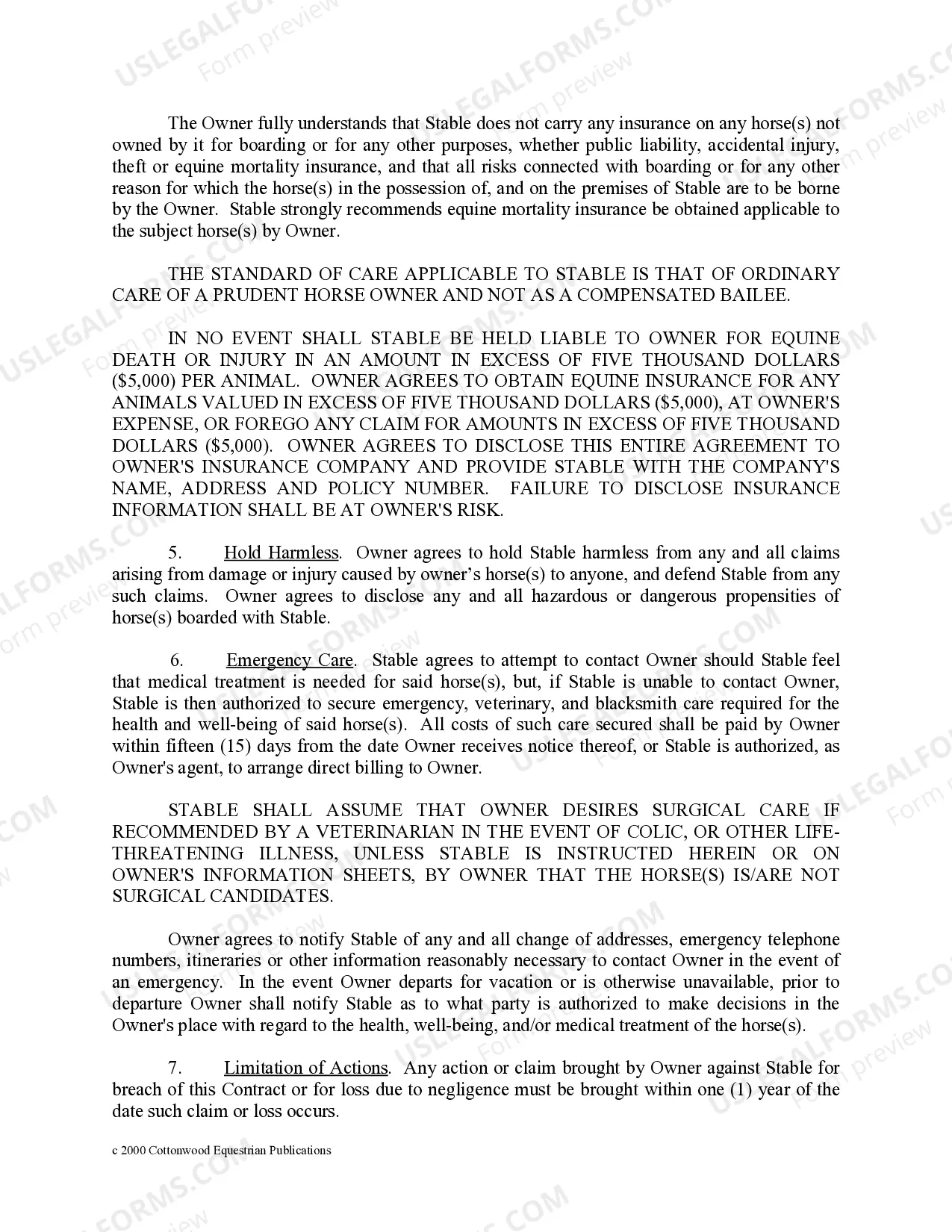
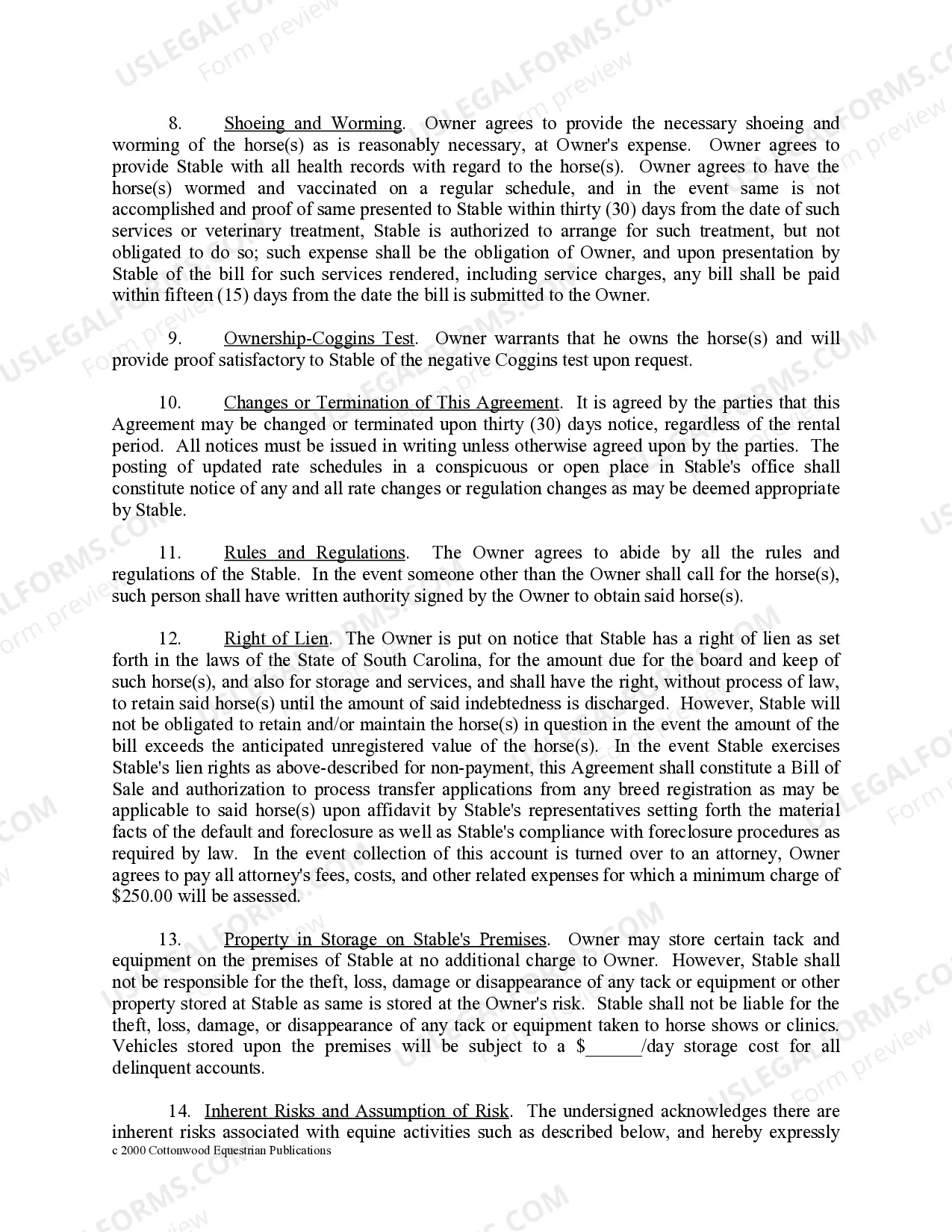
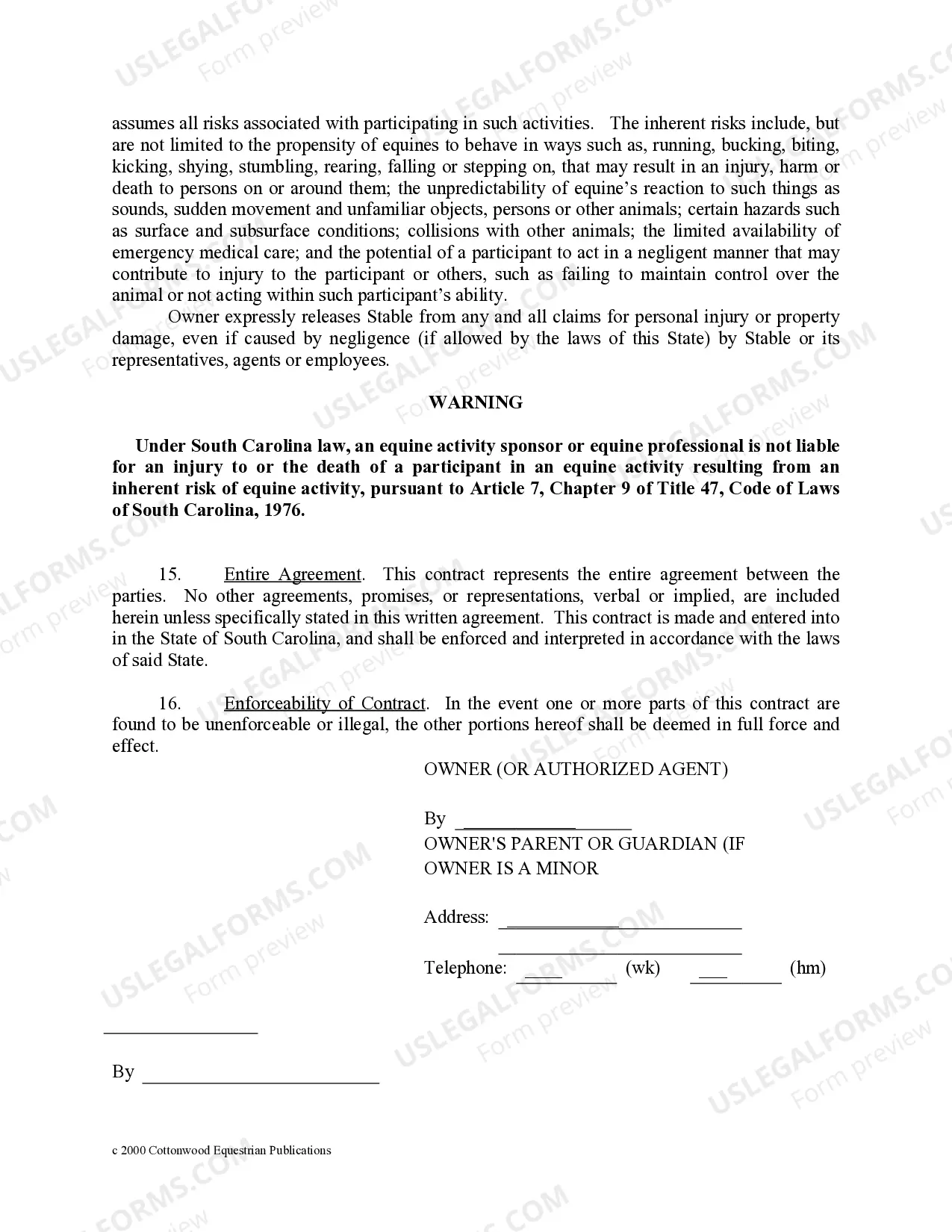
- Boarding Stable Agreement
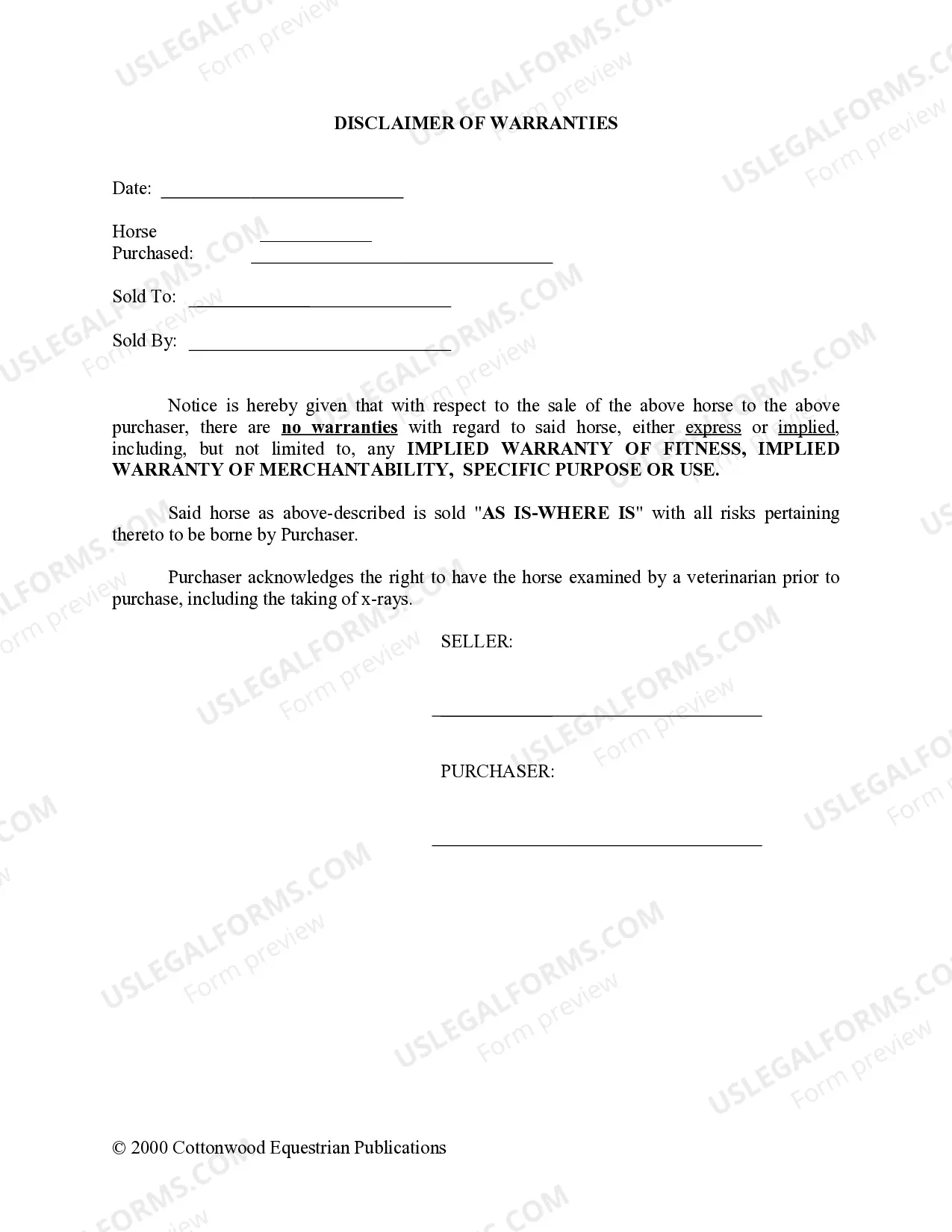
- Disclaimer of Warranties
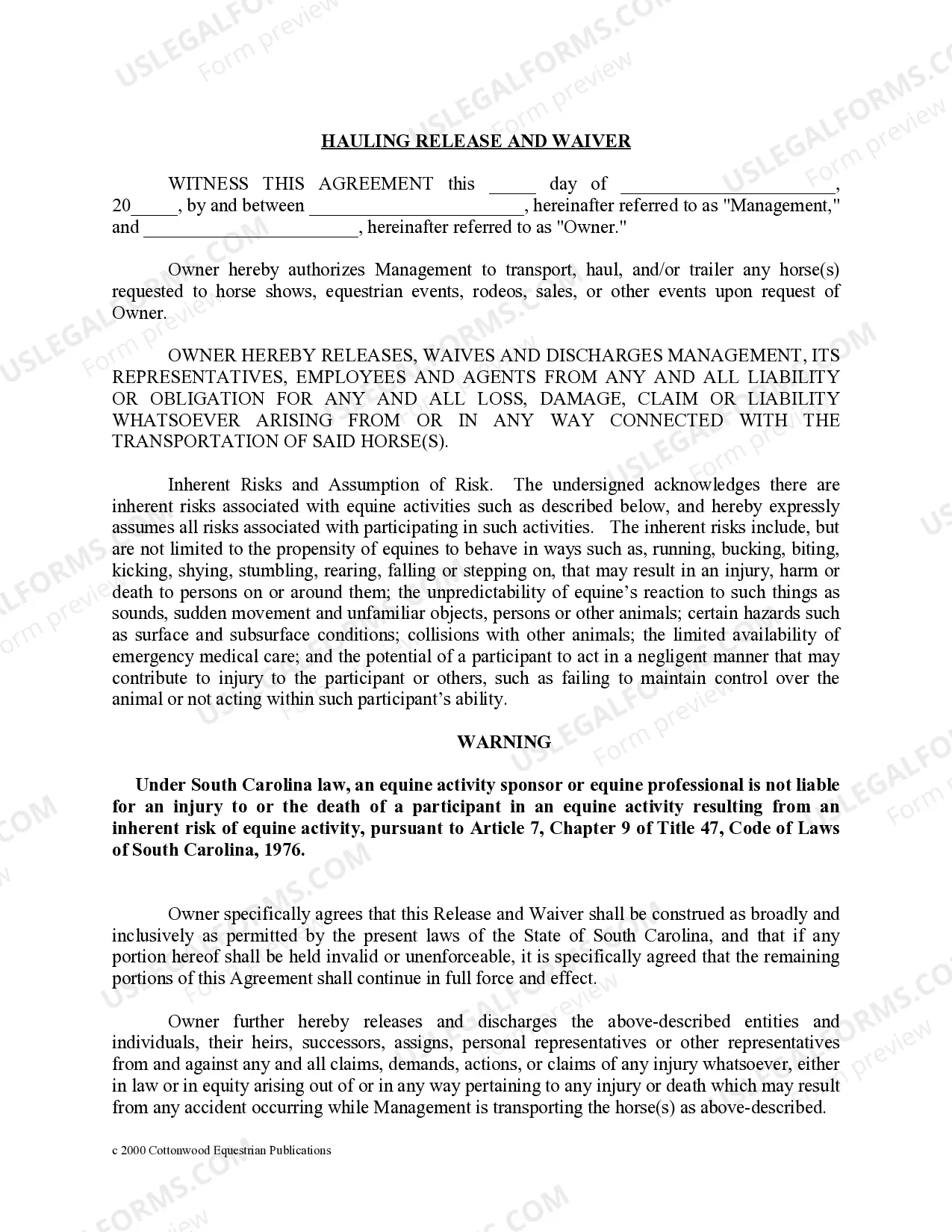
- Hauling Release and Waiver
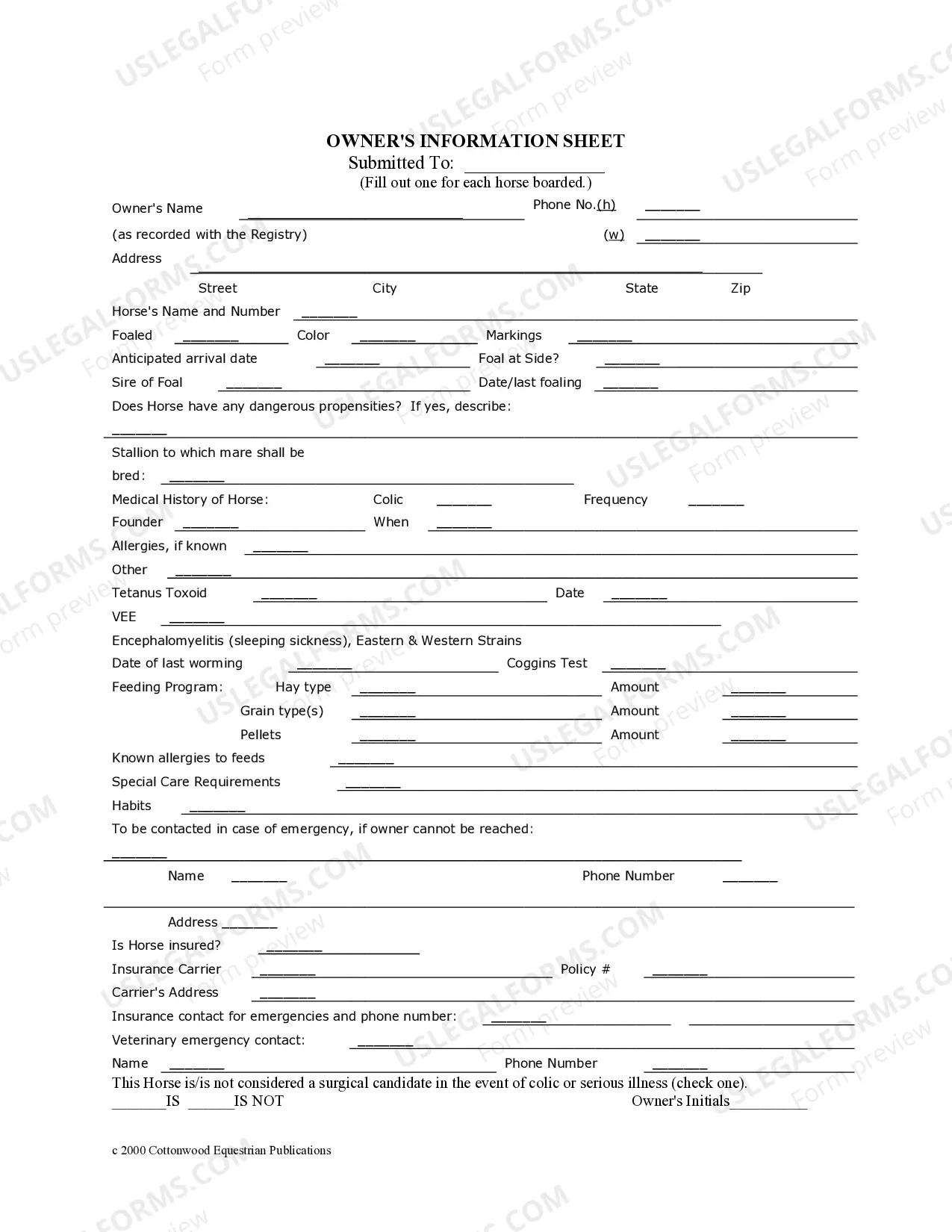
- Owner's Information Sheet
- Lesson, Horse Rental, and Arena Use Release
- Trainer's Facility Use Agreement



Situations where this form applies
This form package is useful for a variety of situations including purchasing a horse, boarding a horse at a stable, renting horses for lessons, and facilitating training or clinics. Each individual form addresses specific transactions or relationships in the equine context, allowing owners and service providers to clarify terms and protect their interests legally.
Who needs this form
- Horse owners looking to buy or sell horses.
- Stable operators and boarding facilities managing horse care.
- Riding instructors offering lessons or rentals.
- Equine trainers working with clients.
- Parents or guardians of minors involved in equine activities.
How to complete this form
- Identify the parties involved, including buyers and sellers or service providers.
- Fill in the required details such as horse identification, service dates, and payment terms.
- Ensure all signatories understand the liability clauses and care responsibilities outlined.
- Review the entire document for accuracy before signing.
- Store a copy of the completed form in a secure location for future reference.
Is notarization required?
This form does not typically require notarization unless specified by local law. It is advisable to check with local authorities if notarization may enhance the document's legal standing in specific situations.
Get your form ready online
Our built-in tools help you complete, sign, share, and store your documents in one place.
Make edits, fill in missing information, and update formatting in US Legal Forms—just like you would in MS Word.
Download a copy, print it, send it by email, or mail it via USPS—whatever works best for your next step.
Sign and collect signatures with our SignNow integration. Send to multiple recipients, set reminders, and more. Go Premium to unlock E-Sign.
If this form requires notarization, complete it online through a secure video call—no need to meet a notary in person or wait for an appointment.
We protect your documents and personal data by following strict security and privacy standards.

Make edits, fill in missing information, and update formatting in US Legal Forms—just like you would in MS Word.

Download a copy, print it, send it by email, or mail it via USPS—whatever works best for your next step.

Sign and collect signatures with our SignNow integration. Send to multiple recipients, set reminders, and more. Go Premium to unlock E-Sign.

If this form requires notarization, complete it online through a secure video call—no need to meet a notary in person or wait for an appointment.

We protect your documents and personal data by following strict security and privacy standards.
Typical mistakes to avoid
- Failing to enter all required information, such as dates and signatures.
- Neglecting to clarify payment terms or care responsibilities.
- Not reviewing the form for local legal compliance, especially if using in a different state.
- Overlooking the importance of having all parties sign the agreements.
Why use this form online
- Convenience of accessing and downloading forms anywhere, anytime.
- Editable templates allow customization to fit specific needs.
- Drafted by legal professionals, ensuring reliability and compliance with state laws.
- Streamlined process for managing equine transactions and relationships.
Legal use & context
- These forms are designed to protect all parties involved in equine transactions by clearly outlining rights and responsibilities.
- Using well-crafted legal documents helps prevent disputes by establishing clear terms upfront.
- Each form complies with current South Carolina equine law, making them enforceable in court.
What to keep in mind
- The South Carolina Horse Equine Forms Package provides essential legal documents for equine transactions.
- Forms are tailored to meet specific legal requirements in South Carolina.
- Proper completion of these forms is critical to avoid common legal pitfalls.
Looking for another form?
Form popularity
FAQ
Date of the Sale. Seller's Name & Address. Buyer's Name & Address. Description of Livestock. Number. Color. Kind. Brand. Weight. Health. Vaccinations. Condition. Any other relevant information.
Step 1 Date and Parties. Enter the date in which the document is being created. Step 2 Horse Description. Horse's Name (if named) Step 3 Purchase Price Information. Step 4 Security Deposit. Step 5 Signatures. Step 6 Acknowledgement of Notary Public.
Boarders may want to take out equine liability insurance in case of accidents, such as a horse getting loose and getting hit by a car, or otherwise injuring someone. The average price for $500,000 worth of coverage is $250 annually, and covers up to four horses.
As a stable owner, you should insist that the horse owners provide proof that their horses are insured for liability, but the horse owner's policy will not extend to the stable owner's liabilities. When boarding horses on your property, you should have the proper equine liability insurance for your business.
(You may not need as much grazing land if they'll be eating hay every day.) In general, professionals recommend two acres for the first horse and an additional acre for each additional horse (e.g., five acres for four horses).
Housing. If you don't own enough land to support a horse, boarding at a barn or stable is the next best option. A horse is assigned a stall and you're given access to trails, a pasture or arena. The cost of boarding averages $400 to $500 per month but can go as high as $1,200 to $2,500 in metropolitan areas.
Self-care stall board usually costs between $200 and $1,000 monthly depending on the factors described above and self-care pasture board can cost between $100 and $600 monthly.
Scope out legalities. Consider zoning, business permits and your state's lien laws. Evaluate your facilities. Investigate the cost of liability insurance. Research your market. Crunch the numbers. Draw up a legal boarding contract.
Scope out legalities. Consider zoning, business permits and your state's lien laws. Evaluate your facilities. Investigate the cost of liability insurance. Research your market. Crunch the numbers. Draw up a legal boarding contract.