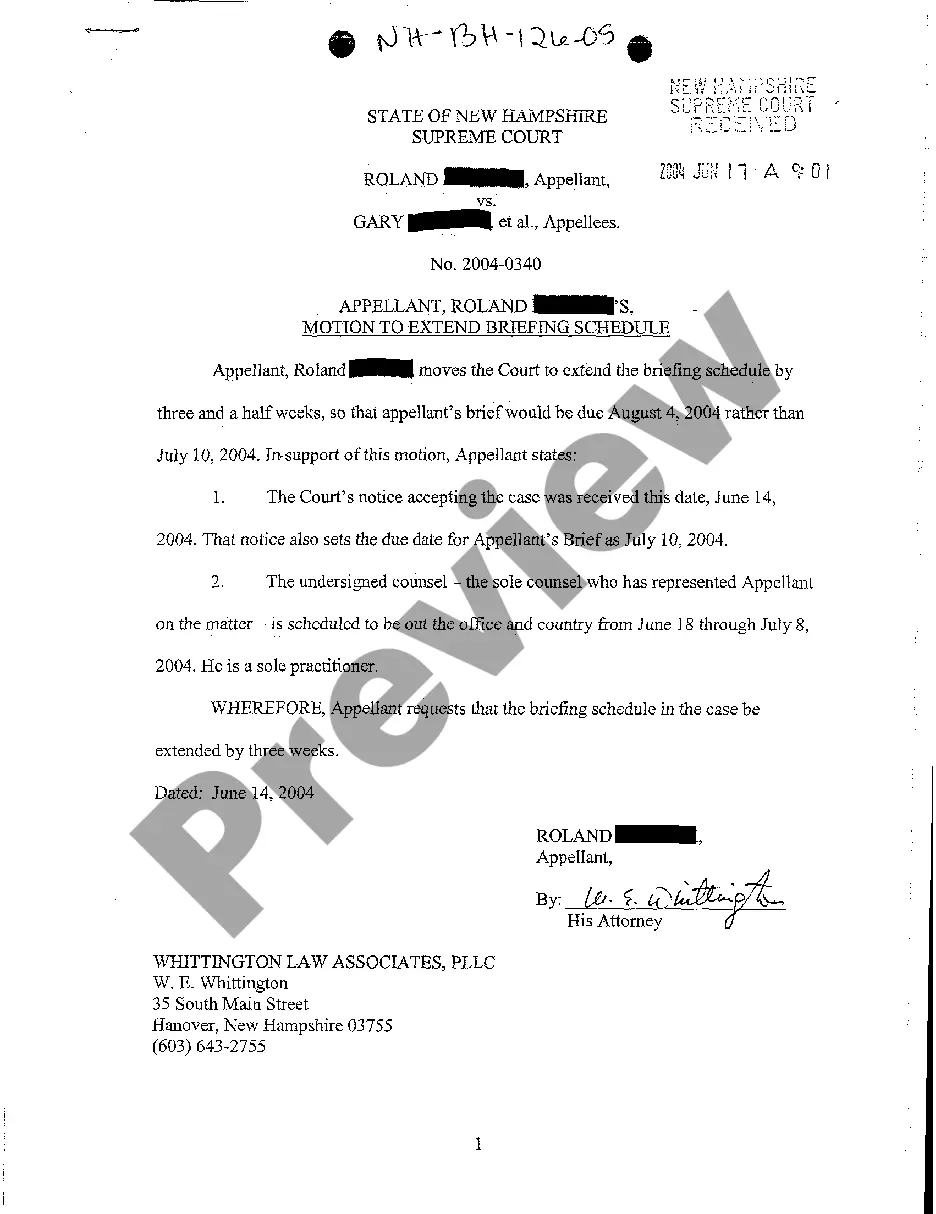
South Carolina Complaint and Motion for Restraining Order
About this form
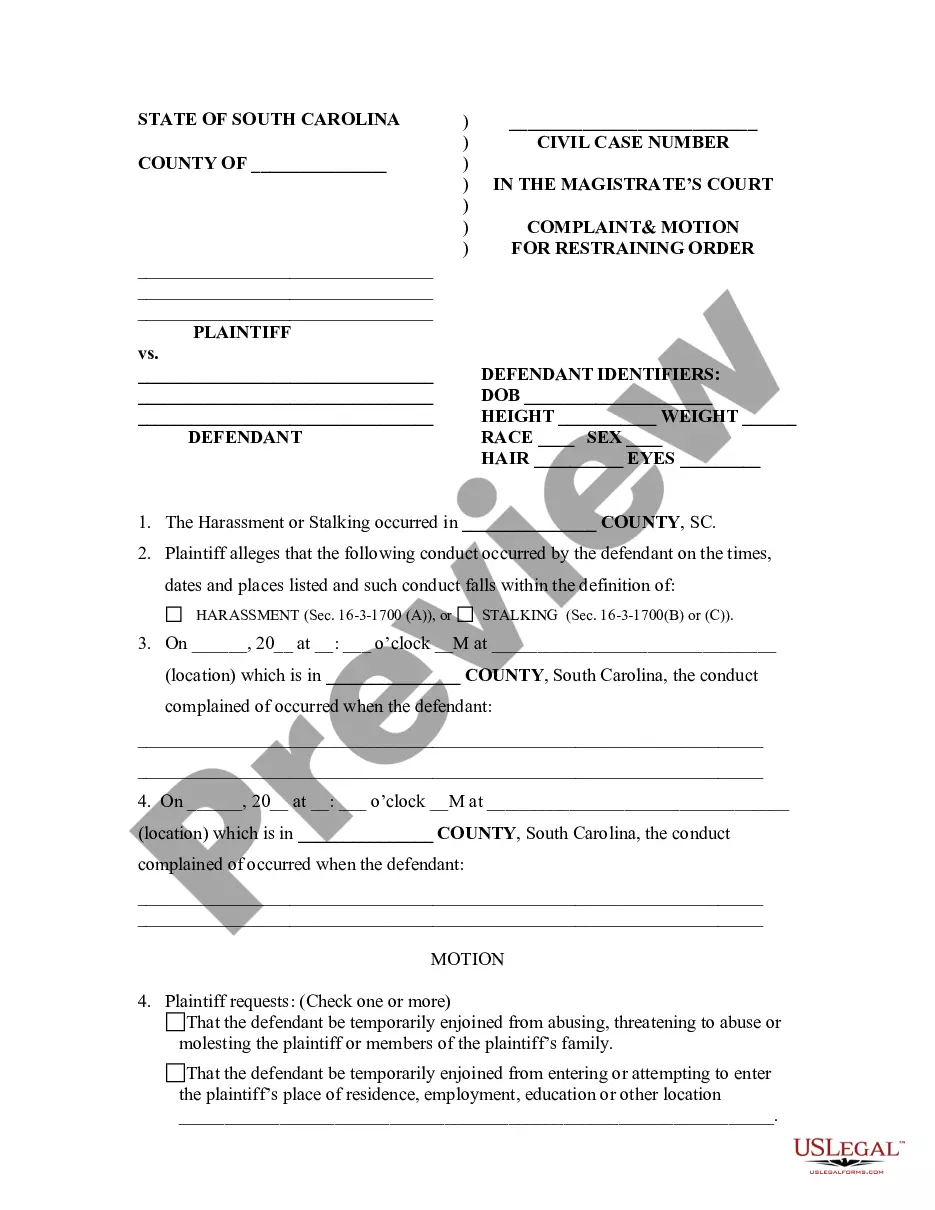
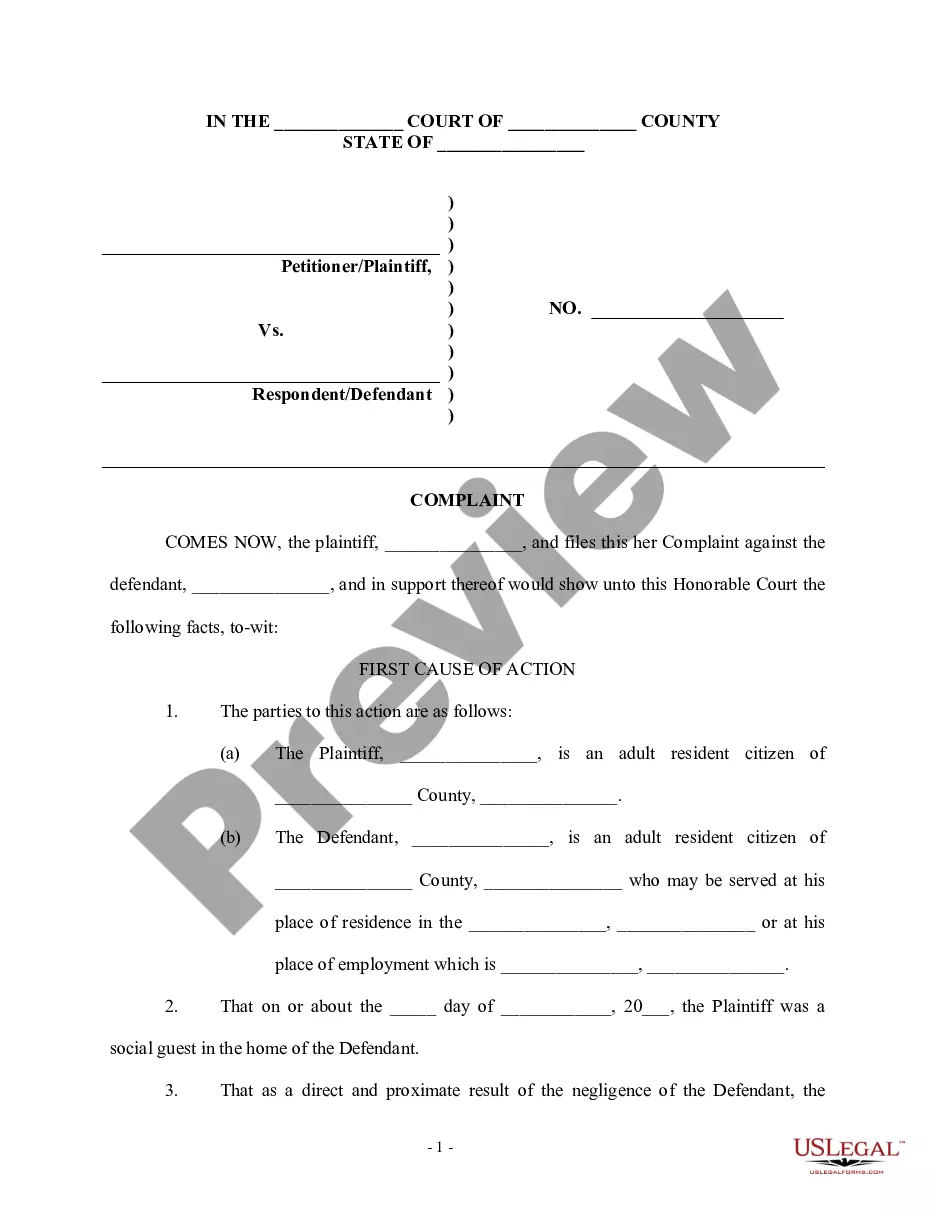
The Complaint and Motion for Restraining Order is a legal document used by a plaintiff to seek protection against harassment or stalking behavior from a defendant. This form is designed to request a temporary restraining order that prohibits the defendant from engaging in further harmful actions towards the plaintiff. It stands out from other forms as it not only outlines the complaint but also includes specific motions for immediate legal intervention to ensure the plaintiff's safety.
What’s included in this form
- Identification of the plaintiff and defendant, including necessary personal details.
- Description of the harassment or stalking incidents, including dates, times, and locations.
- Specific requests for court-ordered protection against identified behaviors.
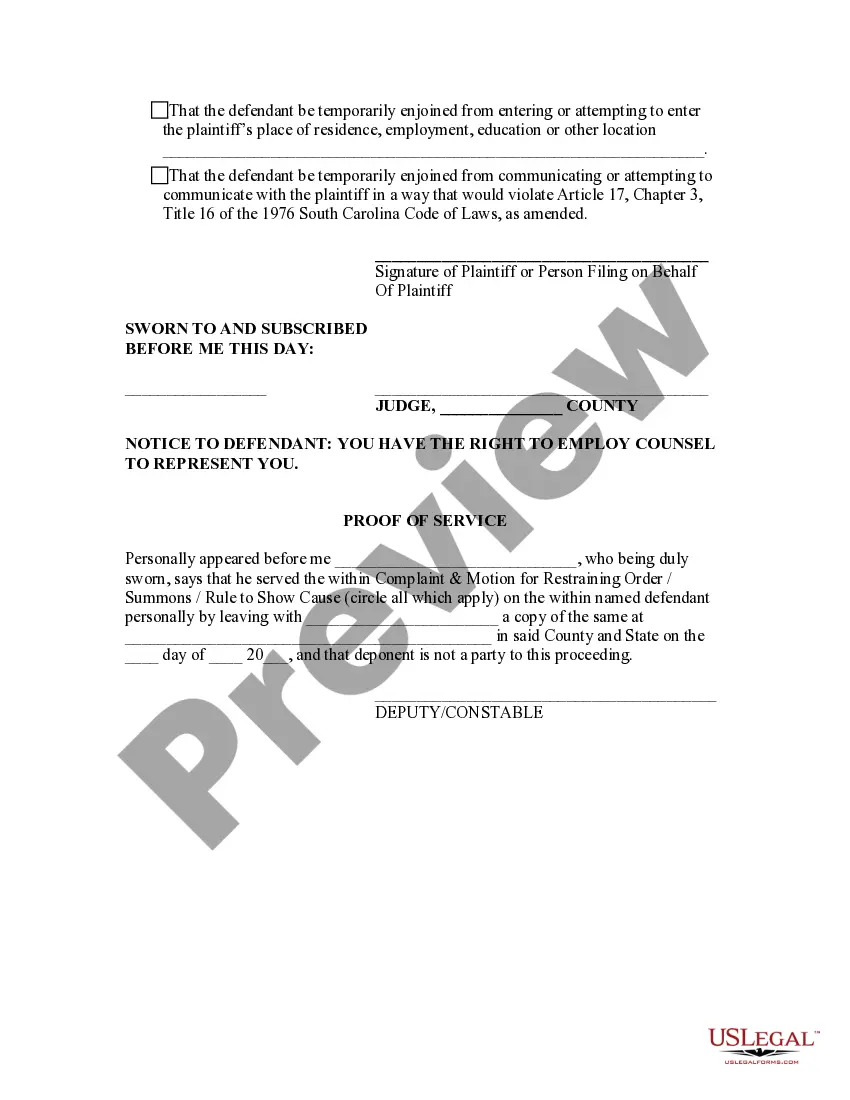
- Signature of the plaintiff to affirm the truthfulness of the complaint.
- Notice to the defendant regarding their legal rights, including the right to seek counsel.
- Proof of service confirming the defendant has been informed of the proceedings.


Common use cases
This form should be used when an individual (the plaintiff) feels threatened or has experienced unwanted behaviors from another person (the defendant) that may constitute harassment or stalking. It is appropriate to file this complaint when the plaintiff wishes to legally prevent further contact or actions by the defendant that could cause emotional or physical harm.
Intended users of this form
This form is suitable for:
- Individuals who have experienced harassment or stalking.
- People seeking immediate legal protection from a potentially dangerous individual.
- Victims looking to document and formally address abusive behaviors with the court system.
How to prepare this document
- Identify the plaintiff and defendant by filling in their names and personal information.
- Detail specific incidents of harassment or stalking, including dates, times, and locations.
- Select the motions for protection you wish to request from the court.
- Sign the document to confirm its accuracy and completeness.
- File the form with the appropriate court and ensure the defendant is properly served.
Notarization requirements for this form
This form does not typically require notarization unless specified by local law. However, users should verify with their local court to confirm any specific requirements related to their situation.
Get your form ready online
Our built-in tools help you complete, sign, share, and store your documents in one place.
Make edits, fill in missing information, and update formatting in US Legal Forms—just like you would in MS Word.
Download a copy, print it, send it by email, or mail it via USPS—whatever works best for your next step.
Sign and collect signatures with our SignNow integration. Send to multiple recipients, set reminders, and more. Go Premium to unlock E-Sign.
If this form requires notarization, complete it online through a secure video call—no need to meet a notary in person or wait for an appointment.
We protect your documents and personal data by following strict security and privacy standards.

Make edits, fill in missing information, and update formatting in US Legal Forms—just like you would in MS Word.

Download a copy, print it, send it by email, or mail it via USPS—whatever works best for your next step.

Sign and collect signatures with our SignNow integration. Send to multiple recipients, set reminders, and more. Go Premium to unlock E-Sign.

If this form requires notarization, complete it online through a secure video call—no need to meet a notary in person or wait for an appointment.

We protect your documents and personal data by following strict security and privacy standards.
Common mistakes to avoid
- Failing to include all incidents of harassment or stalking in the description.
- Not providing sufficient details about each incident, such as time and location.
- Overlooking the requirement for signature attestations or proof of service.
Why use this form online
- Convenient access to legal forms without the need to visit a law office.
- Editable templates allow users to customize their information easily.
- Reliable legal language drafted by licensed attorneys ensures compliance with state laws.
Looking for another form?
Form popularity
FAQ
How to File for an Order Step One: Fill out the forms. Get the forms from the courthouse. You can get help from the clerk of court, an attorney or a domestic violence advocate. Step Two: File for the order. Give your completed forms to the clerk. There should be no filing fees.
Otherwise, call Victim Services at 803-777-6472 or the non-emergency police line at 803-777-4215. You can also email victimhelp@sc.edu. 3.
SECTION 16-13-170. Entering house or vessel without breaking with intent to steal; attempt to enter. (2) conceal himself in a house or vessel, with intent to commit a crime.
§ 16-3-1750(B) provides that an action for a restraining order must be filed in the county in which (1) the defendant resides when the action commences; (2) the harassment in the first or second degree or stalking occurred; or (3) the plaintiff resides if the defendant is a non-resident of the State or cannot be found.
For you to file a restraining order, the perpetrator must have committed at least two acts of stalking, harassment or other threatening behavior. While it can be helpful to have two police reports, it is not necessary by state law.
CHAPTER 3 - OFFENSES AGAINST THE PERSON. SECTION 16-3-1770. Form and content of temporary restraining order. (A) A temporary restraining order granted without notice must be endorsed with the date and hour of issuance and entered of record with the magistrates court.
(A) A person who engages in stalking is guilty of a felony and, upon conviction, must be fined not more than five thousand dollars, imprisoned not more than five years, or both.
For the full legal definition of Harassment (First Degree) see the attached statute (§16-3-1700(A)) on page 6. Harassment, Second Degree means causing someone mental or emotional distress by doing things such as contacting the Plaintiff repeatedly through verbal, written, or electronic means.