South Carolina FALSE STATEMENT TO A BANK
What is this form?
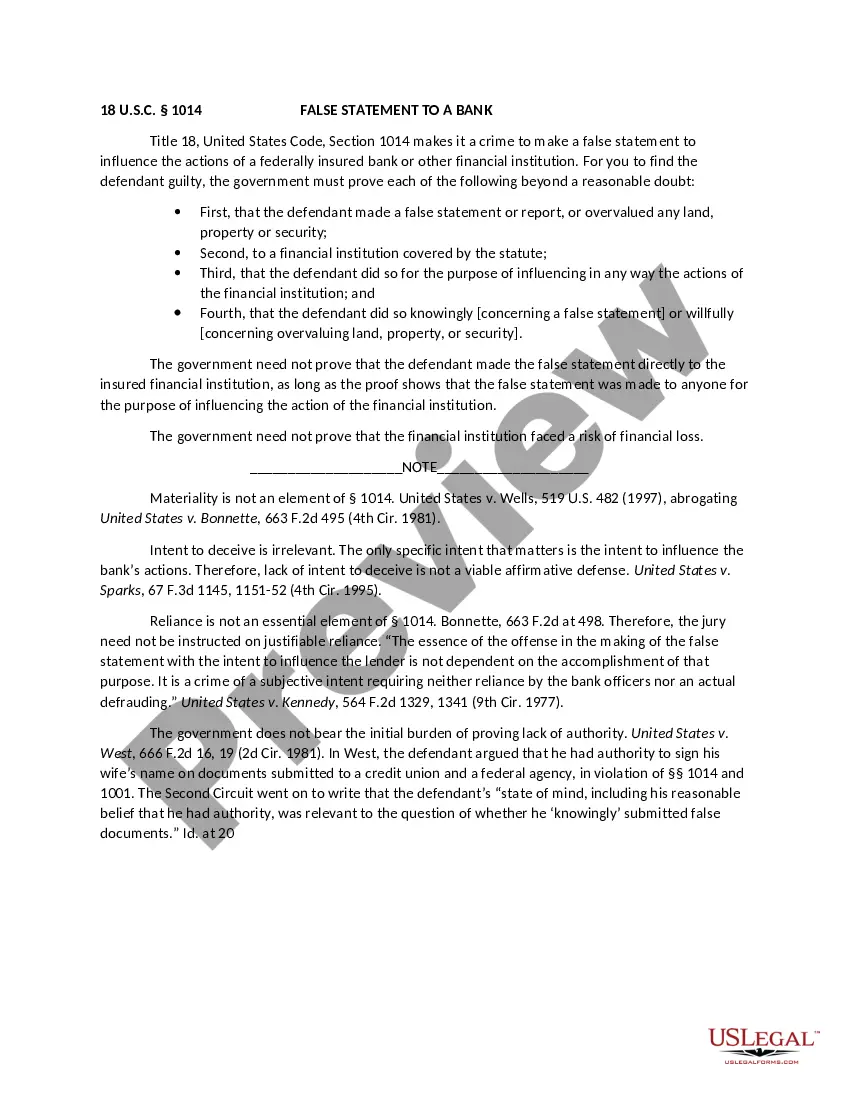
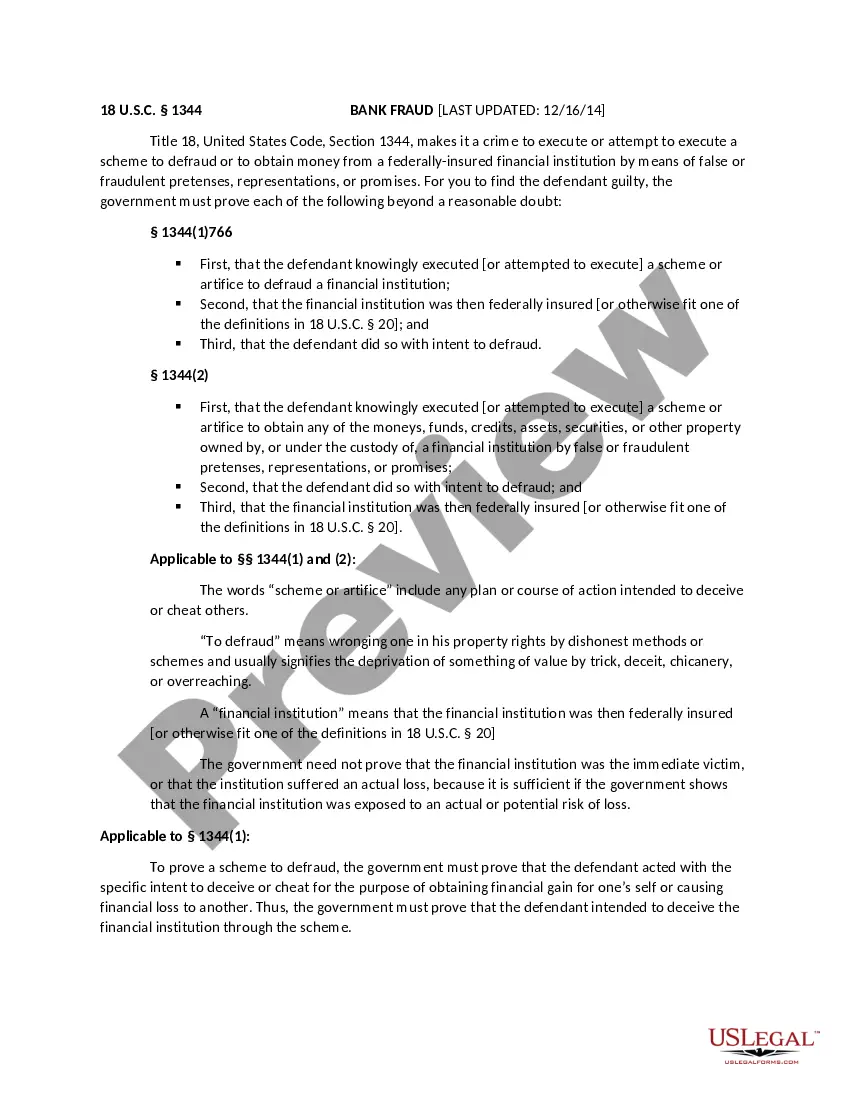
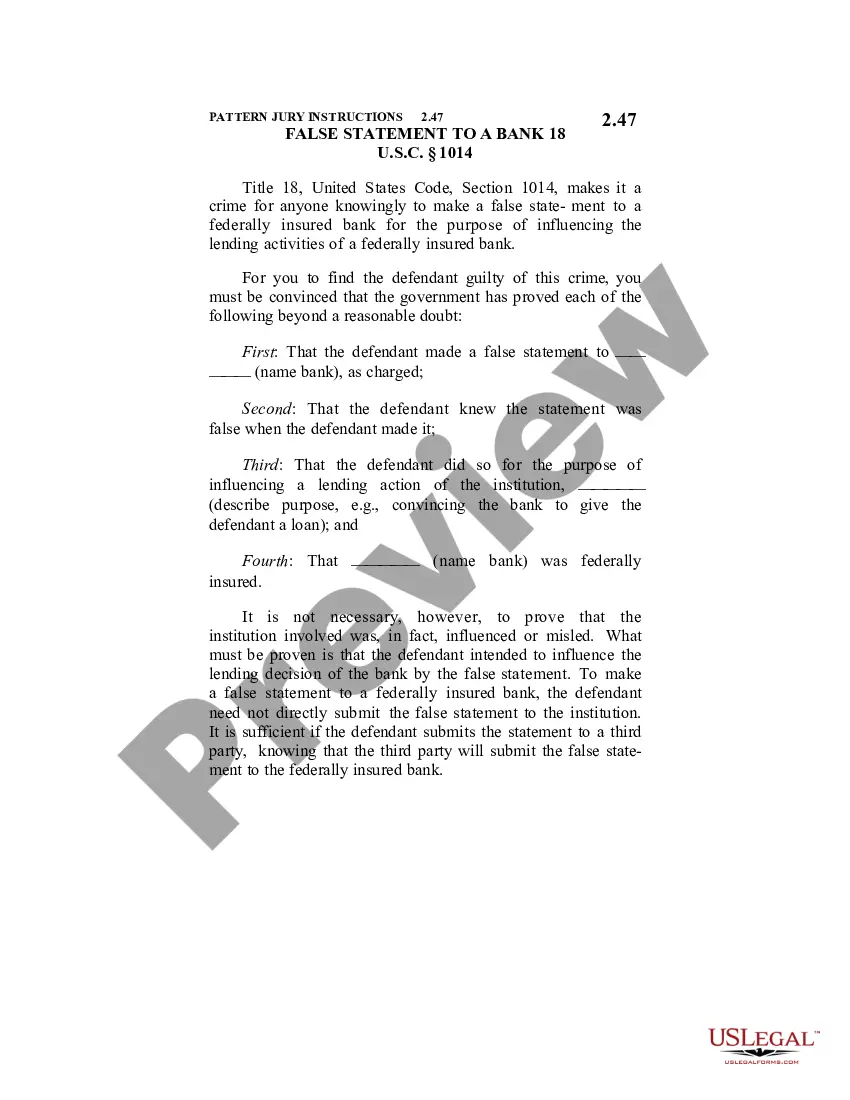
The False Statement to a Bank form is a legal document crafted to address violations of Title 18, United States Code, Section 1014. This statute makes it illegal to knowingly provide false statements to influence actions of federally insured banks or financial institutions. This form outlines the legal implications and requirements for this offense, setting it apart from other financial documents due to its focus on criminal liability rather than civil matters.
What’s included in this form
- Definition of false statements related to financial transactions.
- Elements the government must prove for a conviction.
- Clarification of intent to influence the actions of financial institutions.
- Details on what constitutes overvaluation of property or securities.
- Reference to relevant legal precedents and the importance of subjective intent.
When to use this document
This form is used in criminal cases where an individual is accused of making false statements to a bank or financial institution to influence a decision. Situations may include loan applications where inaccurate information is provided, or when an individual overvalues assets to gain a financial benefit from a lender. It is essential for legal defense within the context of allegations under federal law.
Who can use this document
This form is intended for:
- Legal professionals representing defendants in criminal cases involving false statements to a bank.
- Individuals facing charges related to violations of Title 18, United States Code, Section 1014.
- Law enforcement or financial institutions involved in investigations of potential fraud.
Instructions for completing this form
- Identify the defendant involved in the false statement case.
- Specify the financial institution affected by the alleged false statements.
- Document the false statement made and its intended purpose.
- Include details on the property or securities that were overvalued.
- Finalize the form with appropriate signatures and dates.
Is notarization required?
In most cases, this form does not require notarization. However, some jurisdictions or signing circumstances might. US Legal Forms offers online notarization powered by Notarize, accessible 24/7 for a quick, remote process.
Get your form ready online
Our built-in tools help you complete, sign, share, and store your documents in one place.
Make edits, fill in missing information, and update formatting in US Legal Forms—just like you would in MS Word.
Download a copy, print it, send it by email, or mail it via USPS—whatever works best for your next step.
Sign and collect signatures with our SignNow integration. Send to multiple recipients, set reminders, and more. Go Premium to unlock E-Sign.
If this form requires notarization, complete it online through a secure video call—no need to meet a notary in person or wait for an appointment.
We protect your documents and personal data by following strict security and privacy standards.

Make edits, fill in missing information, and update formatting in US Legal Forms—just like you would in MS Word.

Download a copy, print it, send it by email, or mail it via USPS—whatever works best for your next step.

Sign and collect signatures with our SignNow integration. Send to multiple recipients, set reminders, and more. Go Premium to unlock E-Sign.

If this form requires notarization, complete it online through a secure video call—no need to meet a notary in person or wait for an appointment.

We protect your documents and personal data by following strict security and privacy standards.
Common mistakes
- Failing to accurately describe the false statement or its context.
- Neglecting to include necessary details about the bank or financial institution.
- Missing signatures or dates, which can invalidate the form.
- Assuming intent to deceive is necessary for the charge when only intent to influence is required.
Advantages of online completion
- Convenient access to a template that is easy to download and fill out.
- Editability allows for quick updates or changes to specific case details.
- The reliability of a form drafted by licensed attorneys ensures legal compliance.
Looking for another form?
Form popularity
FAQ
The crime of False Pretenses requires: a false representation. of a material fact (past or present) with the intent to defraud. that causes the victim to pass possession and title of his or her property.
(B) A person who violates the provisions of this section is guilty of the misdemeanor offense of false imprisonment and, upon conviction, must be fined not more than one thousand dollars and imprisoned for not more than three years.
Penal Code 532 PC prohibits theft by false pretenses ? which is defined as defrauding someone of money or property by way of false promises or representations. The offense may be prosecuted as a misdemeanor or a felony and carries a penalty of up to 3 years in jail or prison.
The charge of providing false information to law enforcement is a serious public corruption crime in South Carolina. The offense is detailed in South Carolina Code of Laws §16-17-725 (2011), which makes it a misdemeanor criminal offense with a maximum penalty of up to 30 days in jail.
False pretenses involves an intent to obtain property or money by means of fraud or misrepresentation. For example: False pretenses occur in situations when a salesperson/contractor promises to provide specified goods or services, receives payment, but intentionally fails to deliver on the promise.
(A)(1) It is unlawful for a person to wilfully give false, misleading, or incomplete testimony under oath in any court of record, judicial, administrative, or regulatory proceeding in this State.
As laid out in South Carolina General Code Section 16-13-240, it is a crime to obtain a signature, money, or property from someone under false pretenses or misrepresentation of a fact with ?intent to cheat and defraud a person of that property.? Simply put, if you obtain money, property, or the title to property from
What are False Pretenses? Under California Penal Code §532, anyone who provides false statements, withholds important information, or makes promises they don't intend to keep to another person in order to obtain property is guilty of theft by false pretense.