South Carolina FRAUD IN CONNECTION WITH IDENTIFICATION DOCUMENTS
What this document covers
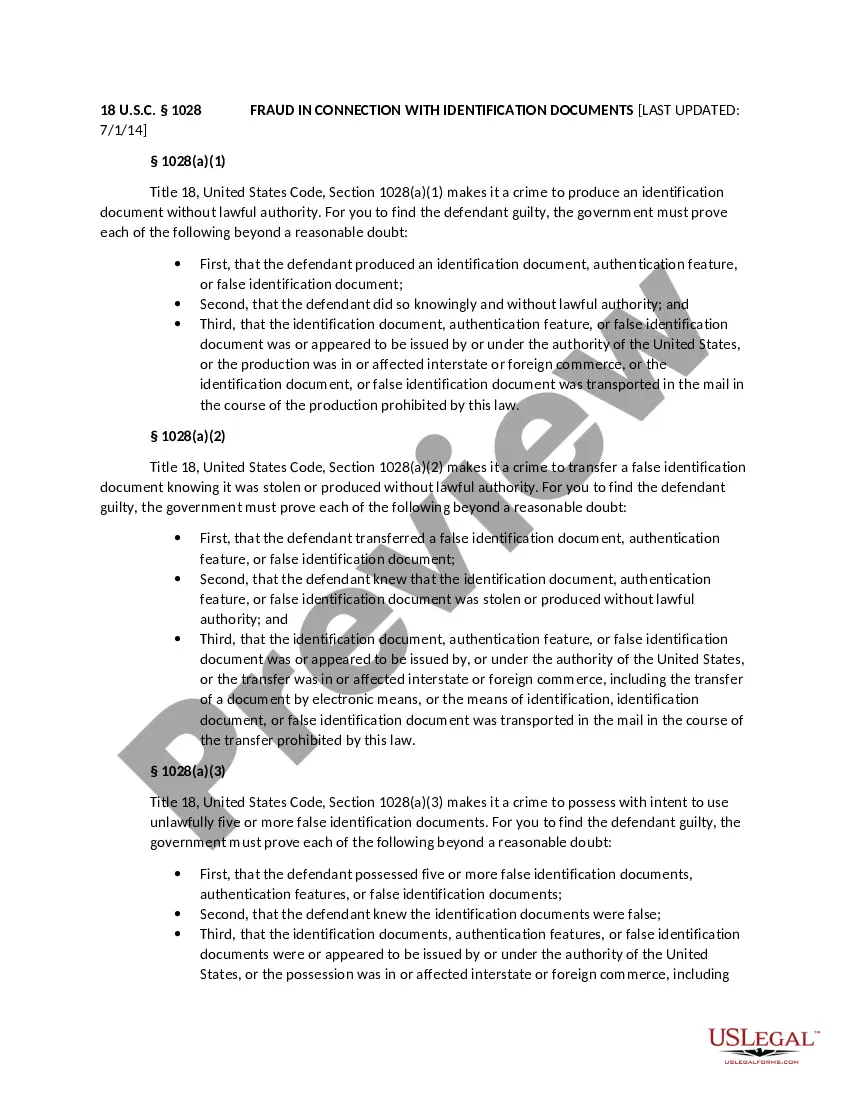
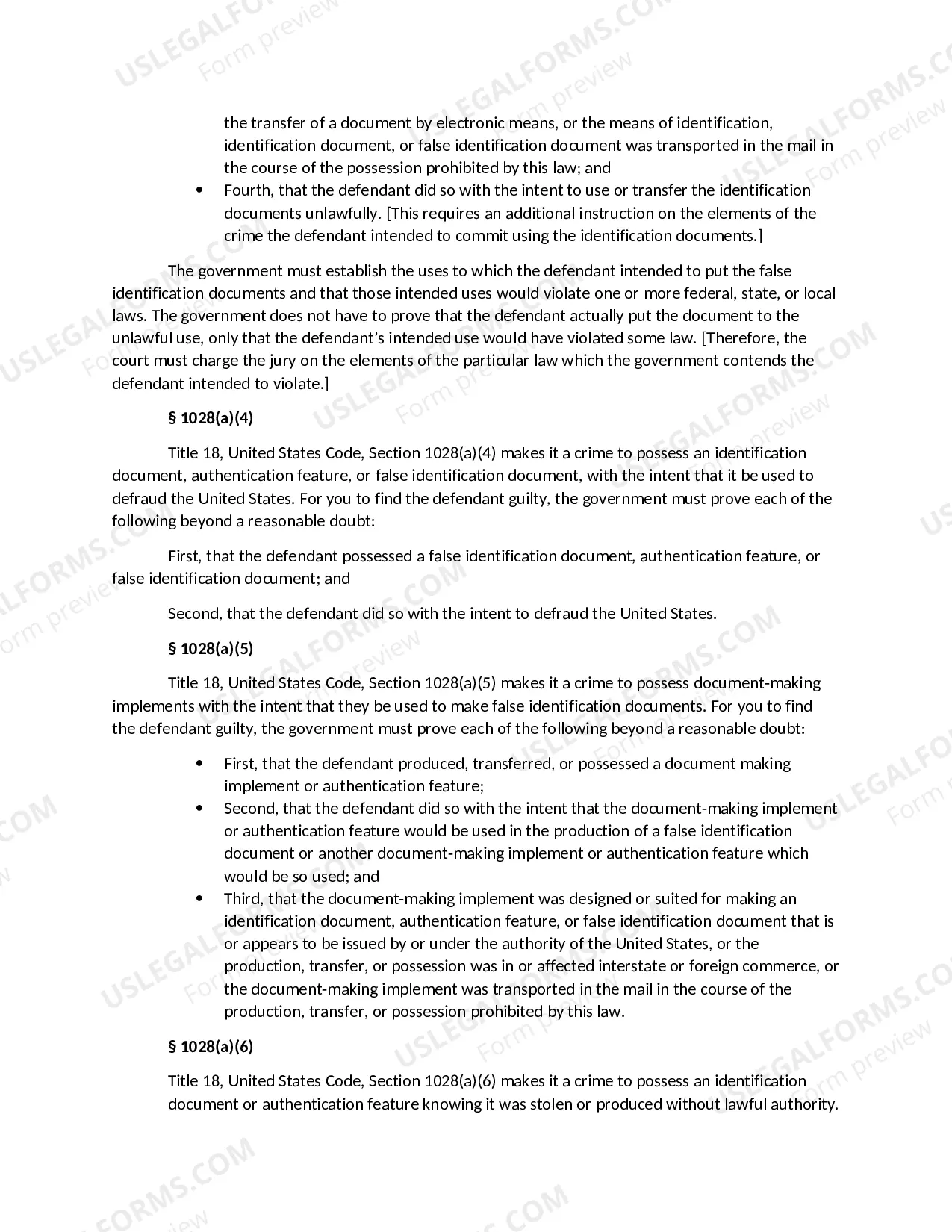
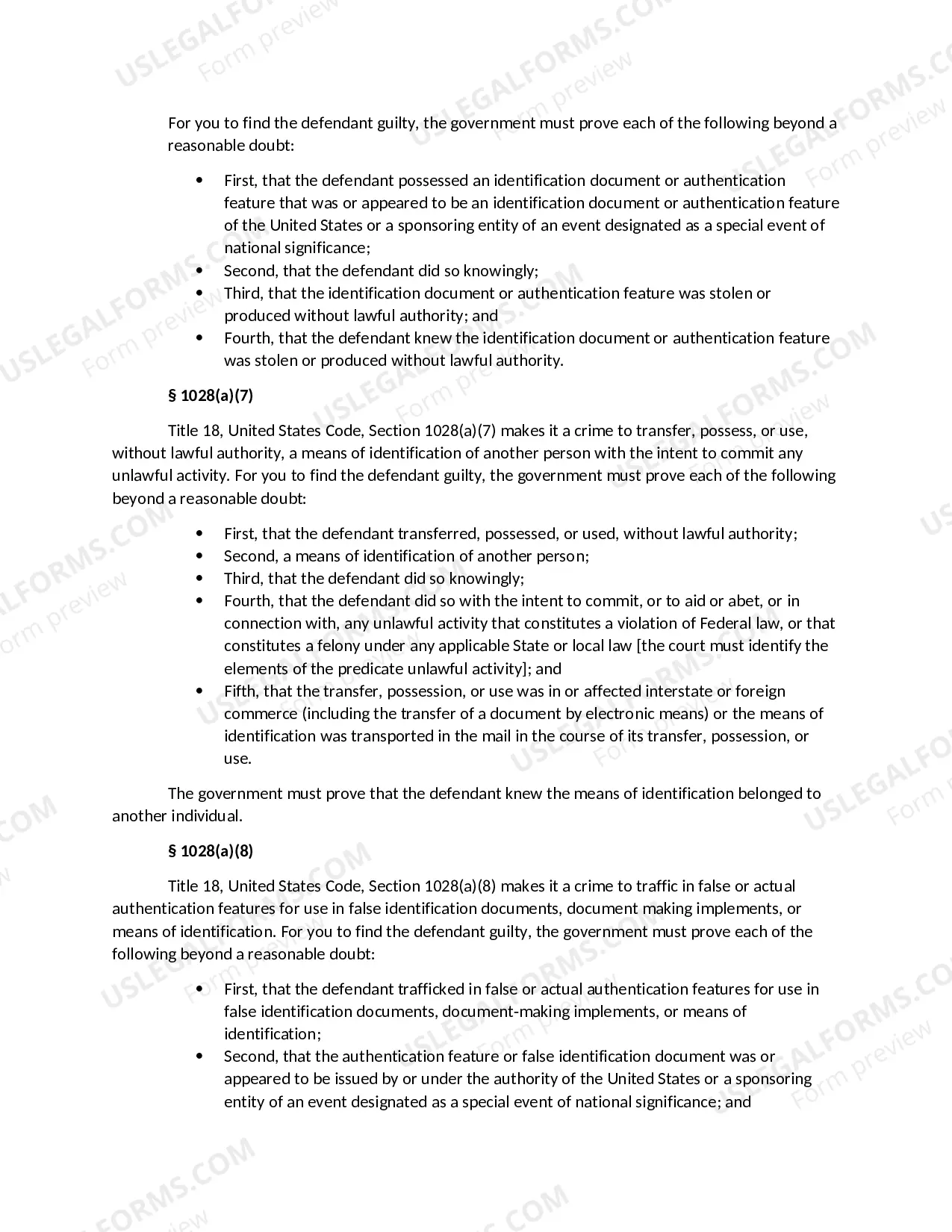
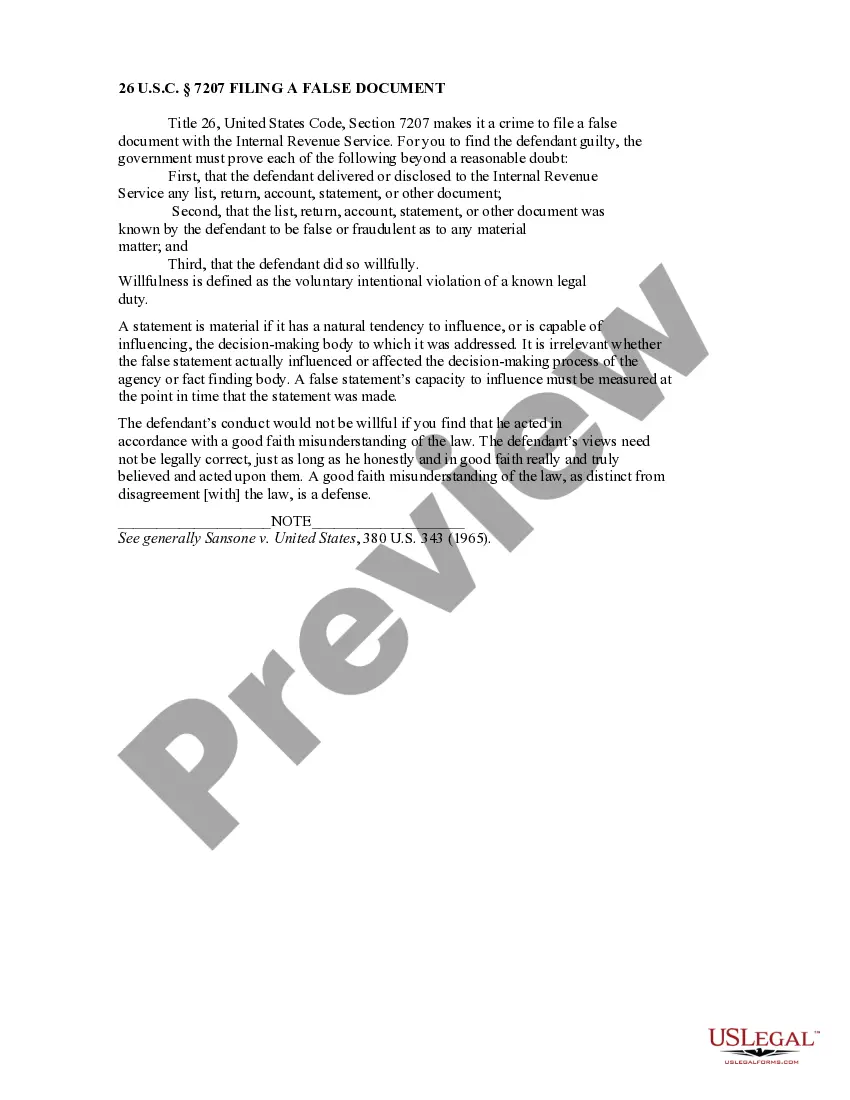
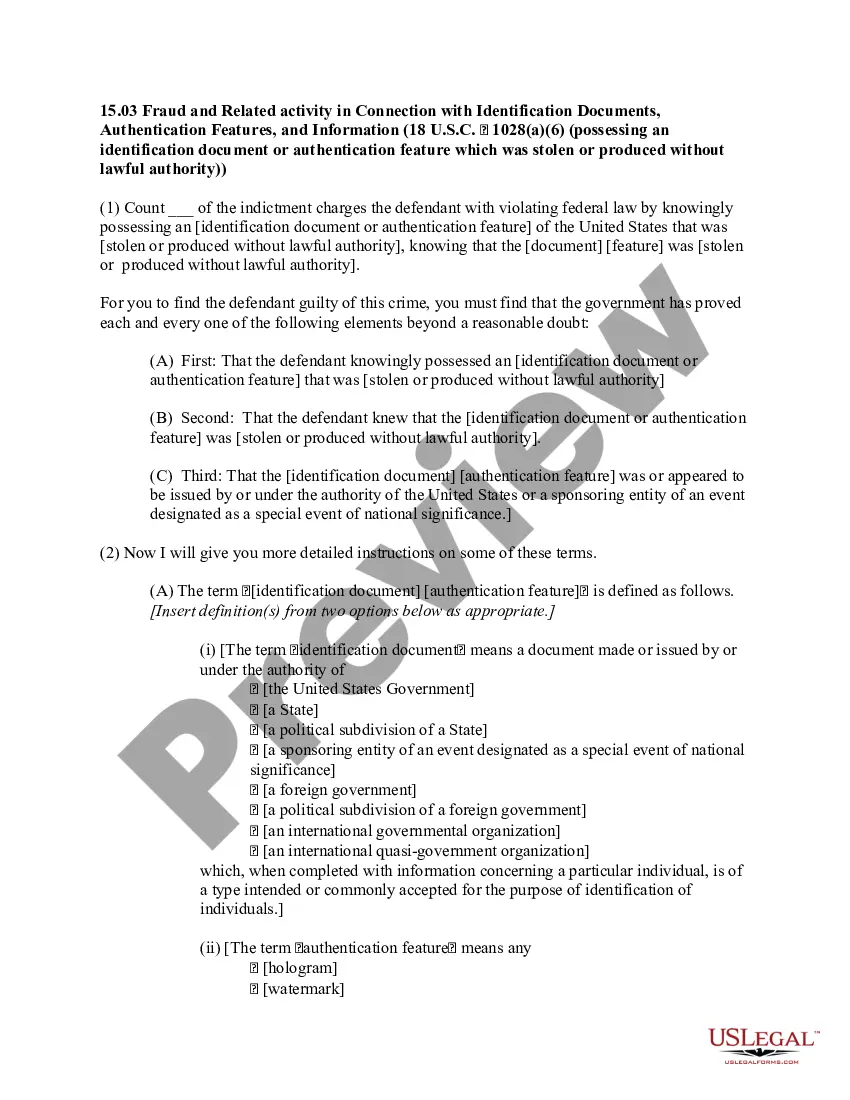
The Fraud in Connection with Identification Documents form provides essential jury instructions related to crimes involving the production, transfer, possession, and usage of false identification documents. It is specifically tailored for federal criminal cases in South Carolina and outlines various offenses under Title 18, United States Code, including charges for knowingly producing, transferring, or possessing false identification with illicit intent. Understanding this form is crucial for legal practitioners as it distinguishes different types of fraudulent activities involving identification documents.
Key parts of this document
- Definition of key terms, such as identification document and false authentication feature.
- Elements required for proving each type of fraud charge, including production, transfer, and possession of false documents.
- Instructions for establishing the defendant's knowledge and intent regarding the false identification documents.
- Clarification on lawful authority and what constitutes lawful possession.
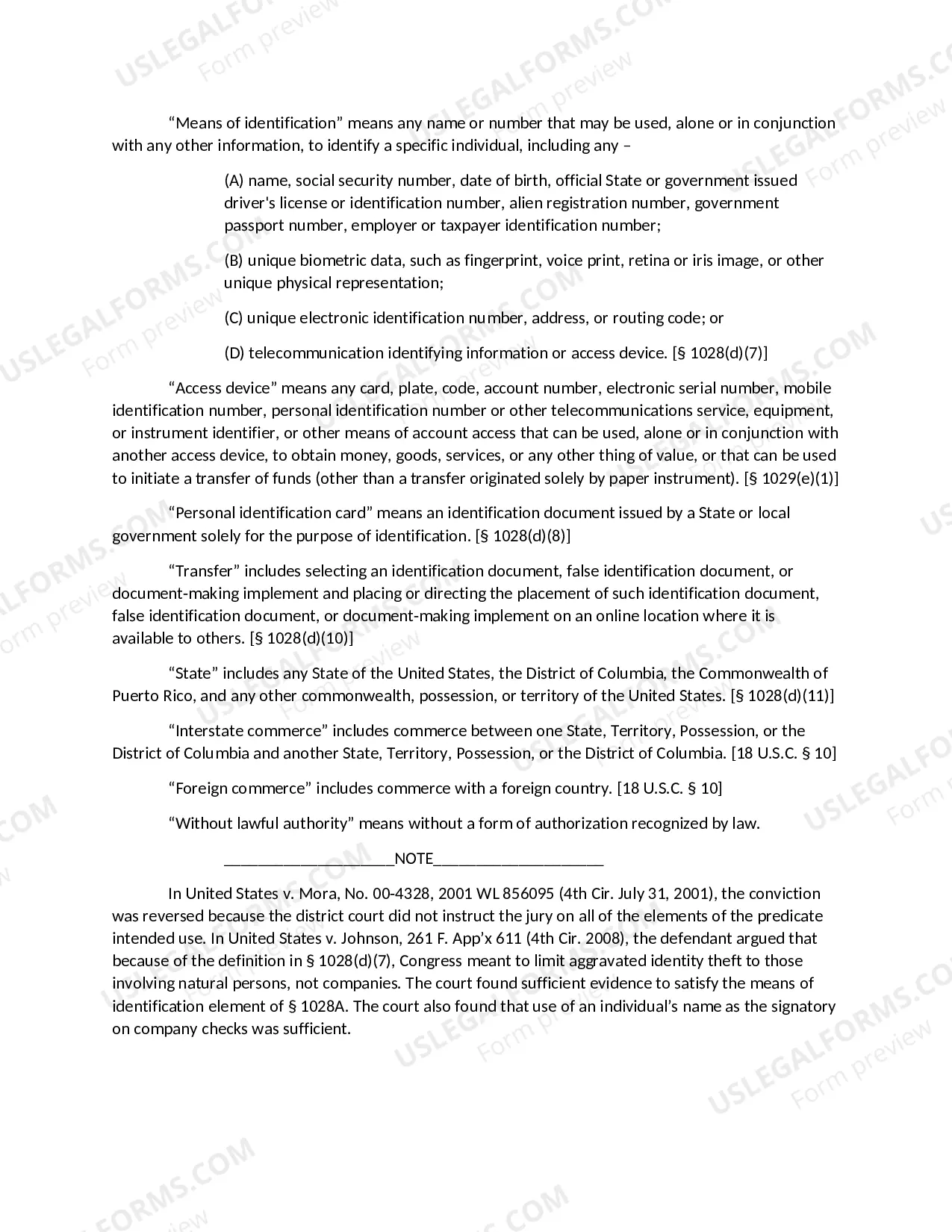
- Descriptive examples of what is considered an identification document under federal law.
- Details on potential penalties associated with each offense outlined.
Situations where this form applies
This form is applicable in scenarios where an individual is accused of engaging in fraudulent activities involving identification documents. It can be used in cases of identity theft, falsification of IDs for illegal purposes, or the production and distribution of false identification. Legal professionals may utilize this form when preparing cases related to such offenses in federal court.
Who can use this document
- Defense attorneys representing clients accused of fraud involving identification documents.
- Prosecutors preparing cases related to federal charges of identity fraud.
- Legal scholars or students studying criminal law and identification fraud laws.
- Government lawyers working on cases involving violations of Title 18 related to identification documents.
How to complete this form
- Identify the defendant and the nature of the charge being brought against them.
- Review the specific elements of each charge included in the instructions for clarity in court proceedings.
- Ensure that all terms related to identification documents and fraudulent activities are clearly defined for the jury.
- Include instructions for the jury on the required standard of proof necessary to establish guilt.
- Provide context and examples to assist the jury in understanding the implications of the evidence presented.
Notarization requirements for this form
In most cases, this form does not require notarization. However, some jurisdictions or signing circumstances might. US Legal Forms offers online notarization powered by Notarize, accessible 24/7 for a quick, remote process.
Get your form ready online
Our built-in tools help you complete, sign, share, and store your documents in one place.
Make edits, fill in missing information, and update formatting in US Legal Forms—just like you would in MS Word.
Download a copy, print it, send it by email, or mail it via USPS—whatever works best for your next step.
Sign and collect signatures with our SignNow integration. Send to multiple recipients, set reminders, and more. Go Premium to unlock E-Sign.
If this form requires notarization, complete it online through a secure video call—no need to meet a notary in person or wait for an appointment.
We protect your documents and personal data by following strict security and privacy standards.

Make edits, fill in missing information, and update formatting in US Legal Forms—just like you would in MS Word.

Download a copy, print it, send it by email, or mail it via USPS—whatever works best for your next step.

Sign and collect signatures with our SignNow integration. Send to multiple recipients, set reminders, and more. Go Premium to unlock E-Sign.

If this form requires notarization, complete it online through a secure video call—no need to meet a notary in person or wait for an appointment.

We protect your documents and personal data by following strict security and privacy standards.
Common mistakes
- Failing to adequately define key legal terms like "false identification document" or "authentication feature."
- Neglecting to explain the required burden of proof for the jury, leading to confusion.
- Not providing sufficient examples that align with the legal language, which can hinder jury comprehension.
- Overlooking the specific elements required for each charge that must be separately proven beyond reasonable doubt.
Why complete this form online
- Immediate access to professionally drafted jury instructions tailored for federal cases.
- Convenient download in Word format, allowing easy editing and customization.
- Reliability ensured by licensed attorneys who specialize in drafting legal documents.
- Ability to review and follow the structure of actual legal proceedings in federal courts.
Looking for another form?
Form popularity
FAQ
False applications for loans and credit cards, Fraudulent withdrawals from bank accounts, Fraudulent use of telephone calling cards or online accounts, or. Obtaining other goods or privileges which the criminal might be denied if he were to use his real name.
The elements of an action for fraud based on a representation include: (1) a representation; (2) falsity; (3) its materiality; (4) knowledge of the falsity or a reckless disregard of its truth or falsity; (5) intent that the representation be acted upon; (6) the hearer's ignorance of its falsity; (7) the hearer's
Criminal charges for fraud in South Carolina cover a wide range of unlawful conduct involving the taking of money or property from others using deception or trickery.
Identity theft is the act of stealing someone's personal information and identity fraud is the use of an individual's identifying information to commit crimes.
There are five elements to a fraud claim: ?(1) a material misrepresentation of a fact, (2) knowledge of its falsity, (3) an intent to induce reliance, (4) justifiable reliance by the plaintiff, and (5) damages.? Eurycleia Partners, LP v. Seward & Kissel, LLP, 12 N.Y.
Primary tabs A representation was made. The representation was false. That when made, the defendant knew that the representation was false or that the defendant made the statement recklessly without knowledge of its truth. That the fraudulent misrepresentation was made with the intention that the plaintiff rely on it.
?The elements of fraud that will give rise to a tort action for deceit are: ? '(a) misrepresentation (false representation, concealment, or nondisclosure); (b) knowledge of falsity (or 'scienter'); (c) intent to defraud, i.e., to induce reliance; (d) justifiable reliance; and (e) resulting damage.
For example, identity fraud can result in someone using another individual's identity to open a bank account, get a credit card, apply for a passport or conduct illegal activity. Your identity can be stolen if a thief accesses your personal information, including from any document that contains information about you.