South Carolina ASSIMILATIVE CRIMES ACT
About this form
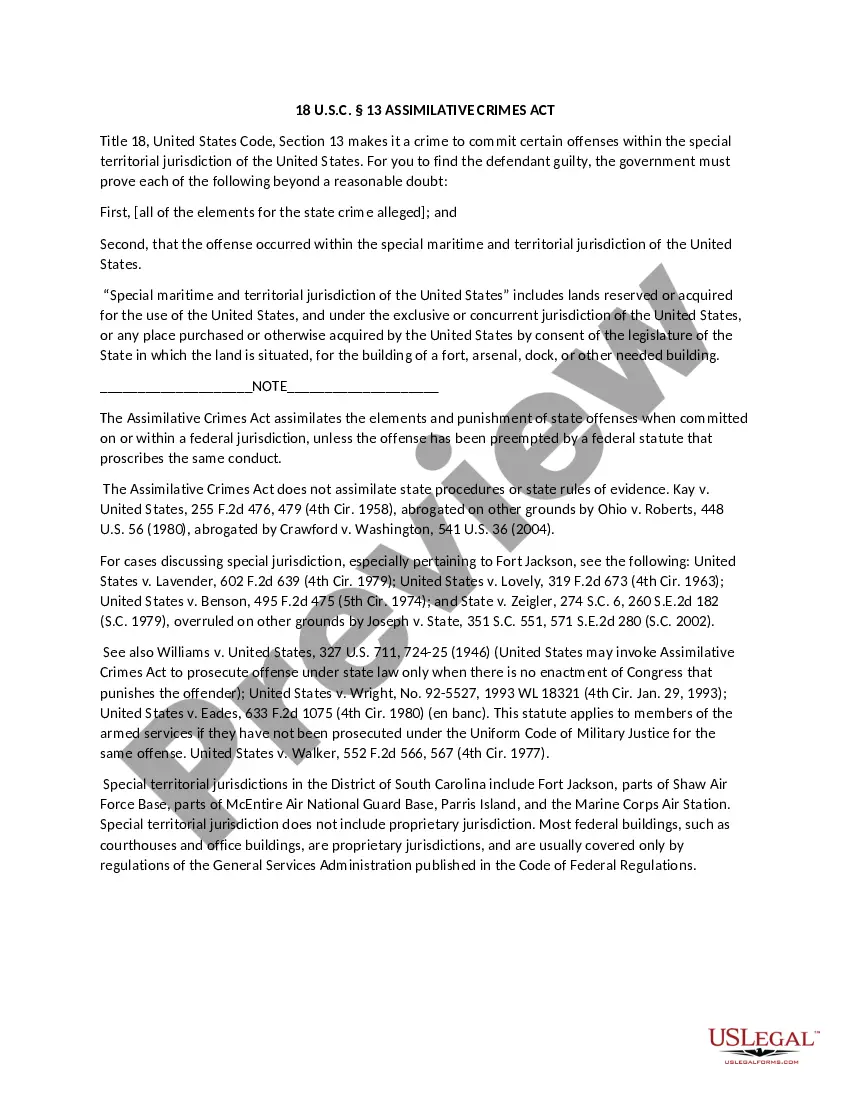
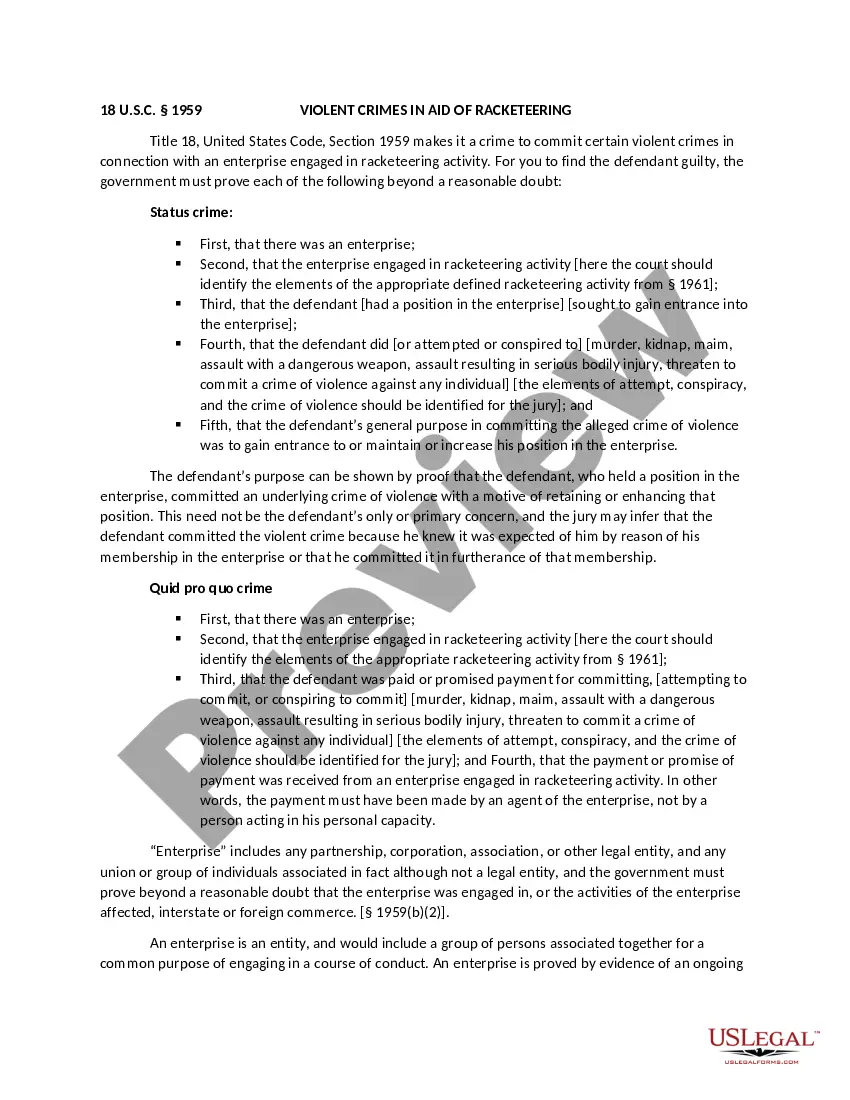
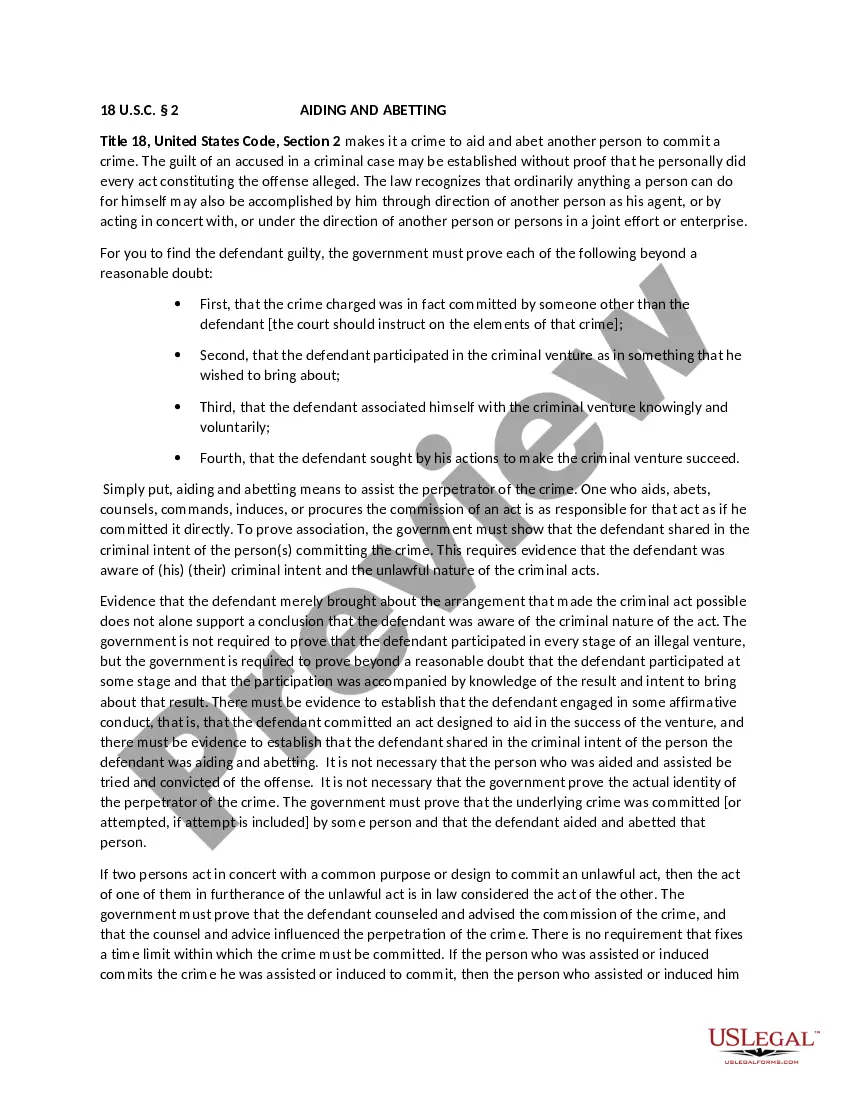
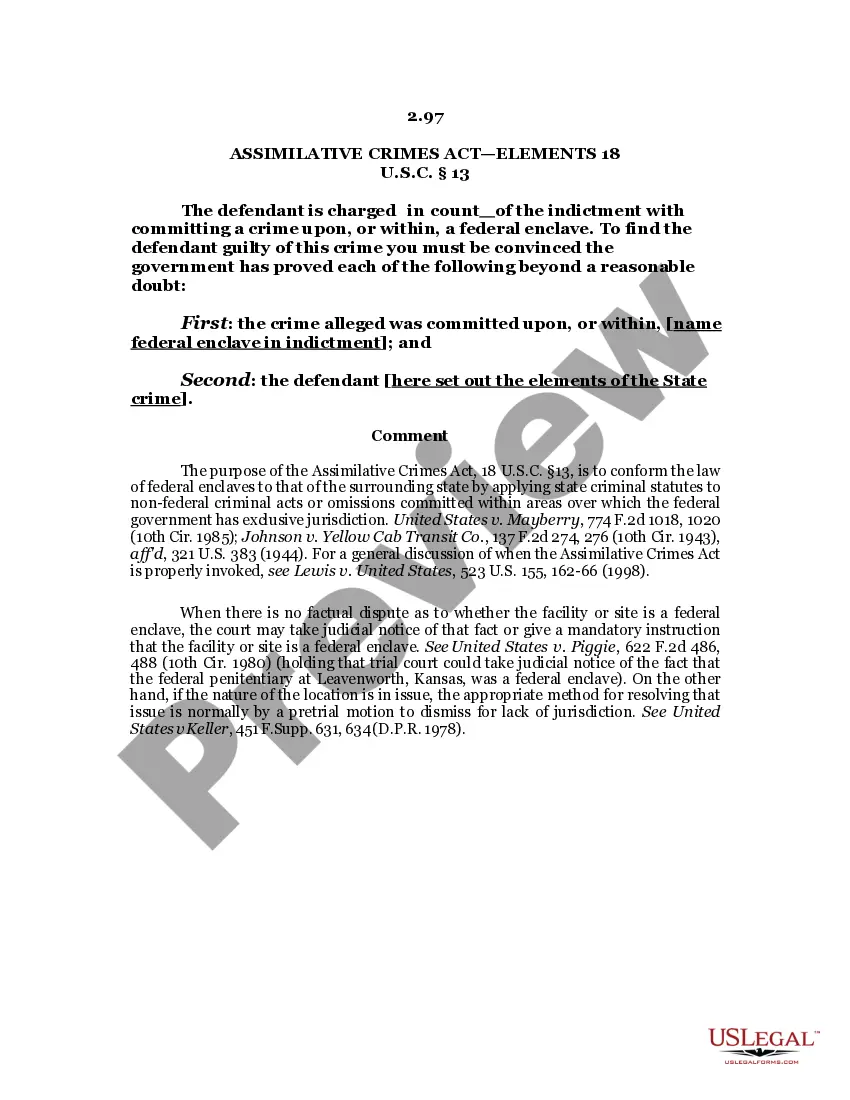
The Assimilative Crimes Act form comprises official jury instructions for criminal cases handled in federal district courts in South Carolina. This form outlines the legal framework that allows federal authorities to adopt state criminal laws when offenses are committed within federal territorial jurisdictions. By understanding this form, you will see how it differs from other criminal laws and its specific application to crimes within areas like military bases and federal land.
Form components explained
- Definition of special territorial jurisdiction of the United States.
- List of elements required for the state crime alleged.
- Requirement for the offense to occur within designated federal areas.
- Clarifications on the applicability of state laws when federal law does not address the offense.
Situations where this form applies
This form is used when a crime is committed within federally controlled areas, such as military bases or federal properties. If an individual is accused of violating a state law while in these jurisdictions, this form helps determine the applicability of state law under the Assimilative Crimes Act. It becomes essential when federal authorities seek to charge someone with a state offense that occurs within their jurisdiction.
Who should use this form
- Legal professionals representing clients accused of crimes in federal areas.
- Individuals facing charges related to state laws under federal jurisdiction.
- Members of the armed services who may be prosecuted for civilian offenses under the Act.
How to prepare this document
- Identify the specific state crime the defendant is accused of committing.
- Verify that the alleged offense occurred within the federal jurisdiction, such as military bases.
- Ensure all elements of the state crime are documented according to local law.
- Prepare the necessary evidence to establish jurisdiction and the crime's elements.
Notarization requirements for this form
This form does not typically require notarization unless specified by local law. Ensure to review specific jurisdictional requirements before proceeding.
Get your form ready online
Our built-in tools help you complete, sign, share, and store your documents in one place.
Make edits, fill in missing information, and update formatting in US Legal Forms—just like you would in MS Word.
Download a copy, print it, send it by email, or mail it via USPS—whatever works best for your next step.
Sign and collect signatures with our SignNow integration. Send to multiple recipients, set reminders, and more. Go Premium to unlock E-Sign.
If this form requires notarization, complete it online through a secure video call—no need to meet a notary in person or wait for an appointment.
We protect your documents and personal data by following strict security and privacy standards.

Make edits, fill in missing information, and update formatting in US Legal Forms—just like you would in MS Word.

Download a copy, print it, send it by email, or mail it via USPS—whatever works best for your next step.

Sign and collect signatures with our SignNow integration. Send to multiple recipients, set reminders, and more. Go Premium to unlock E-Sign.

If this form requires notarization, complete it online through a secure video call—no need to meet a notary in person or wait for an appointment.

We protect your documents and personal data by following strict security and privacy standards.
Mistakes to watch out for
- Failing to establish that the crime occurred within the boundaries of federal jurisdiction.
- Overlooking to provide clear evidence of the state law being assimilated.
- Not understanding the distinctions between federal and state prosecutions.
Why complete this form online
- Convenient access to officially drafted legal templates from licensed attorneys.
- Editable format allows customization to fit specific legal needs.
- Reliable resource ensuring compliance with current laws and regulations.
Legal use & context
- The Assimilative Crimes Act applies in situations where federal authorities seek to charge individuals based on state laws.
- It ensures consistency in prosecuting offenses that occur in federally controlled areas.
- Members of the armed forces can be prosecuted under this Act if not tried under military laws.
Looking for another form?
Form popularity
FAQ
The Assimilative Crimes Act, 18 U.S.C. § 13, makes state law applicable to conduct occurring on lands reserved or acquired by the Federal government as provided in 18 U.S.C. § 7(3), when the act or omission is not made punishable by an enactment of Congress.
The Assimilative Crimes Act of 1948 (19 U.S.C. § 13) makes punishable in federal court criminal acts or omissions not specifically made punishable by enactments of Congress if committed within the special maritime and territorial jurisdiction of the United States (18 U.S.C.
The Crimes Act of 1825 (also known as the Federal Criminal Code of 1825), formally titled An Act more effectually to provide for the punishment of certain crimes against the United States, and for other purposes, was the first piece of omnibus federal criminal legislation since the Crimes Act of 1790.
Federal Employees Authorized by Federal Law The Assimilative Crimes Act (?ACA?) makes certain state criminal laws applicable on areas within federal jurisdiction known as federal enclaves.
The Assimilative Crimes Act could also possibly provide for the prosecution of sexual assault, burglary, and theft cases on federal property, to name a few examples.
The General Crimes Act, 18 U.S.C. § 1152, was passed by Congress in 1817. It extended federal criminal jurisdiction over crimes committed in Indian Country. It applies to cases where the offender is non-Indian but the victim is Indian.