South Carolina USING A FALSE NAME IN A MAIL FRAUD
What this document covers
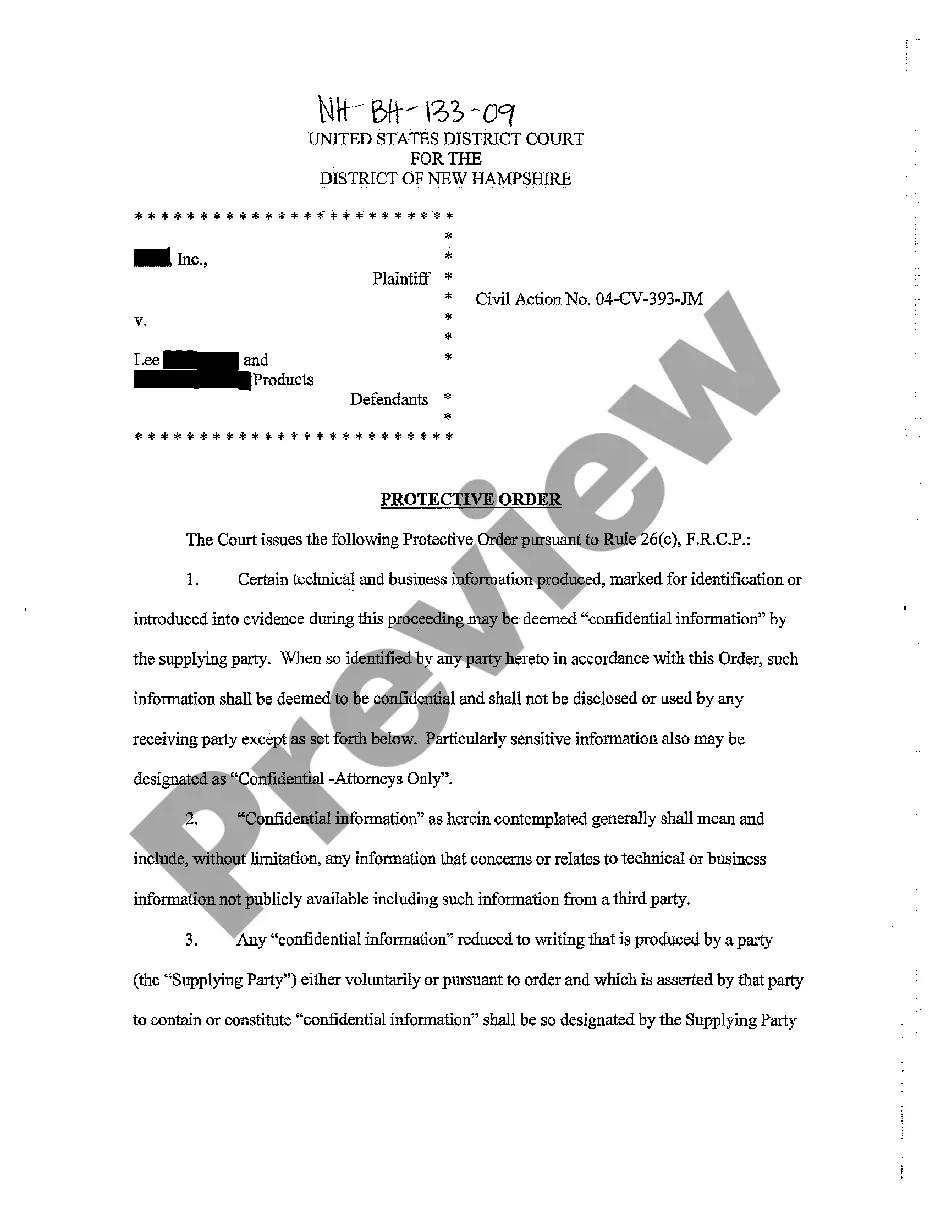
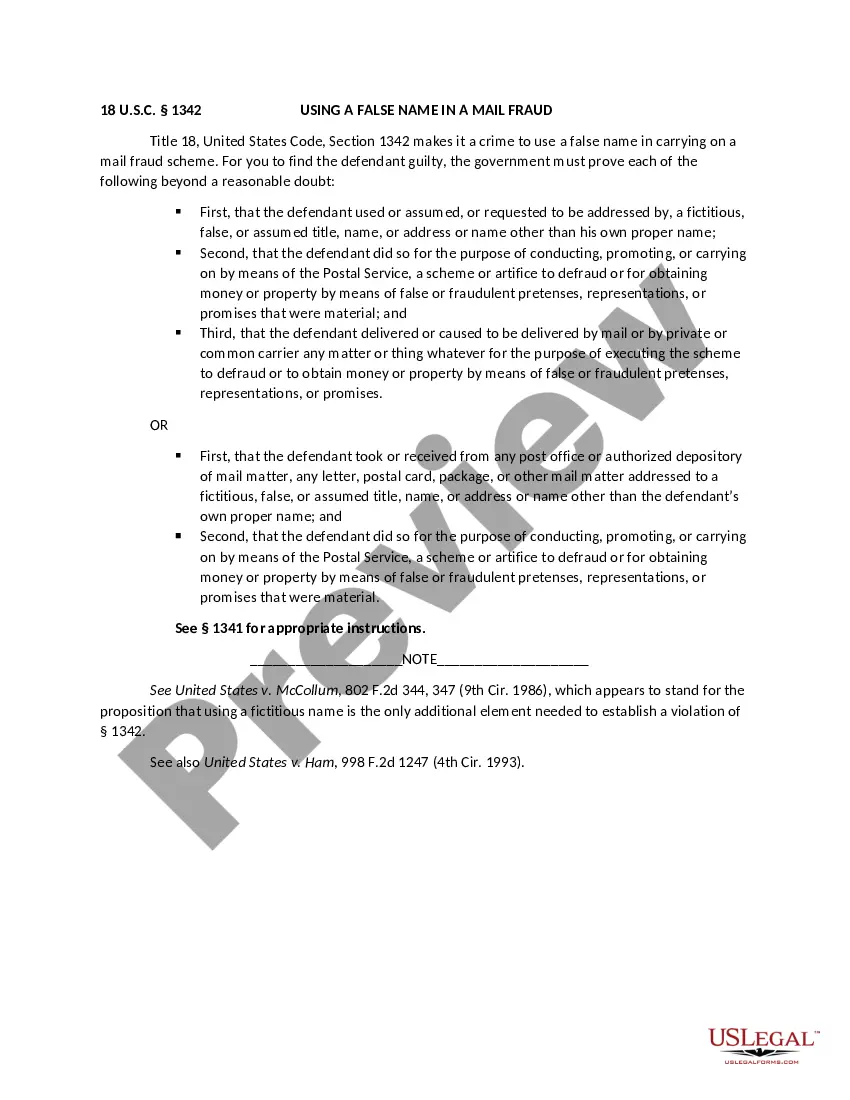
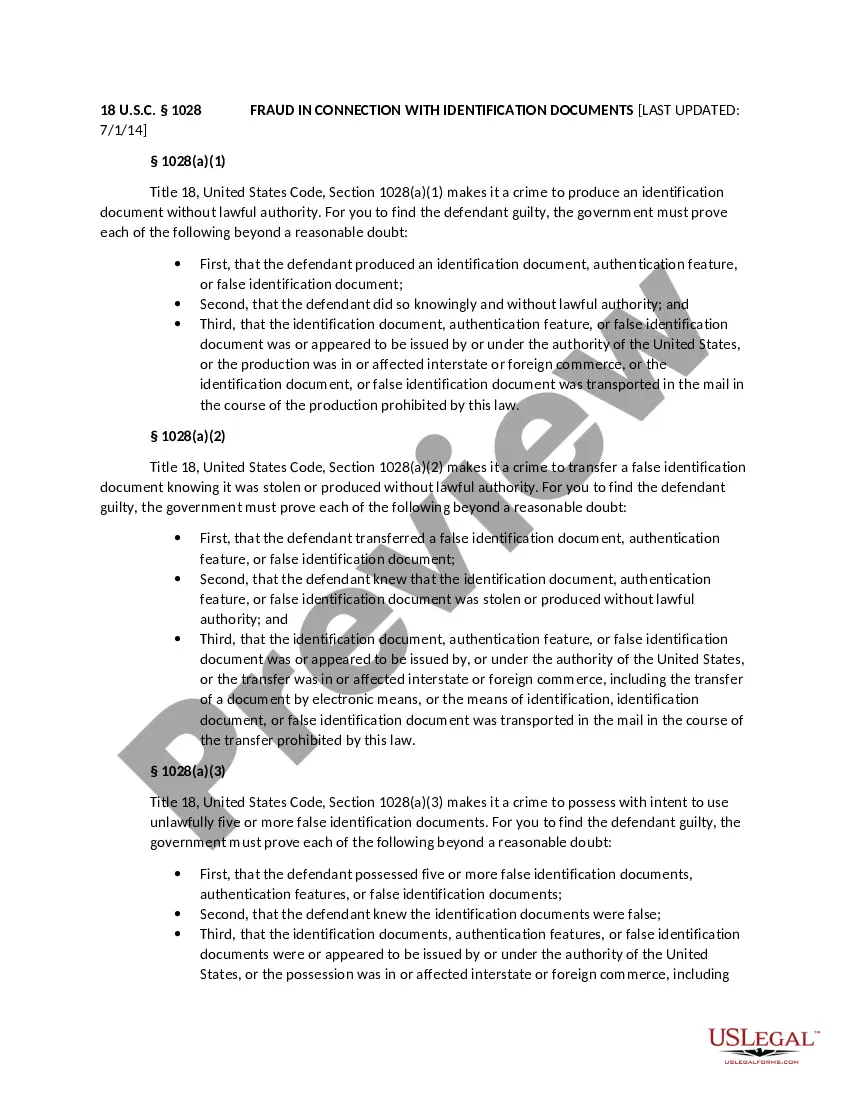
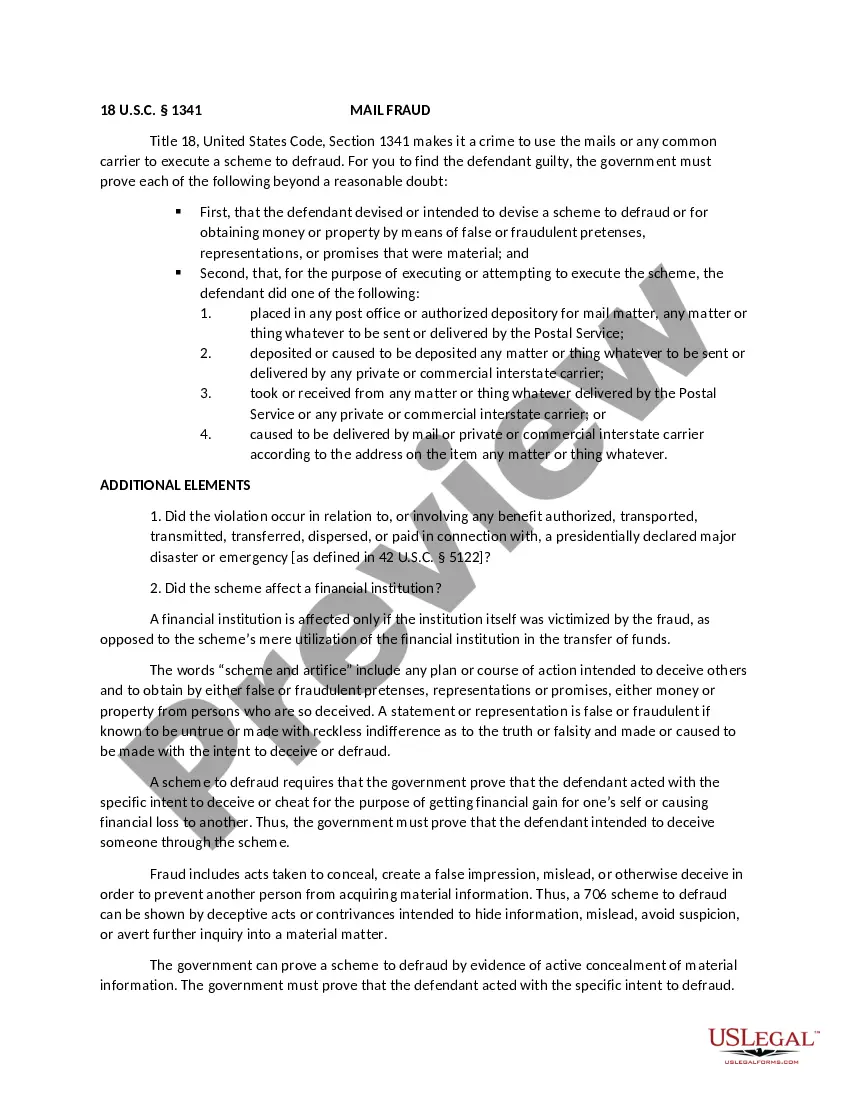
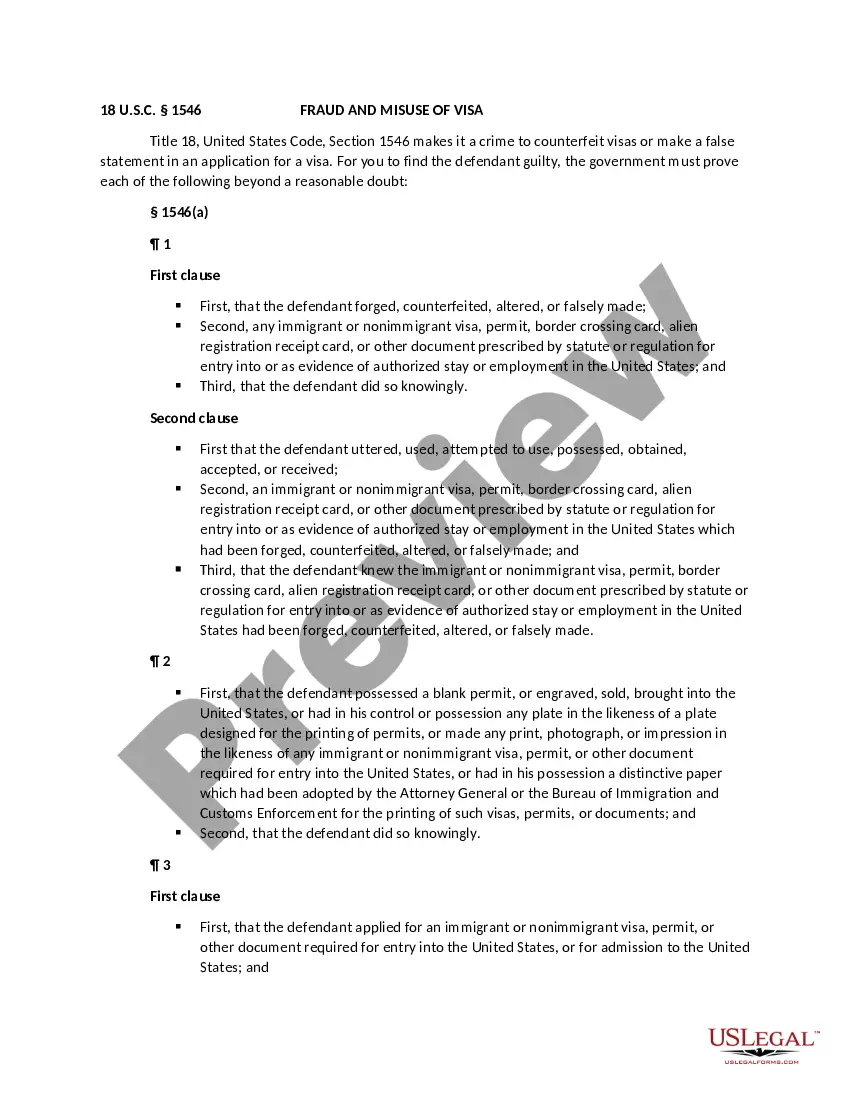
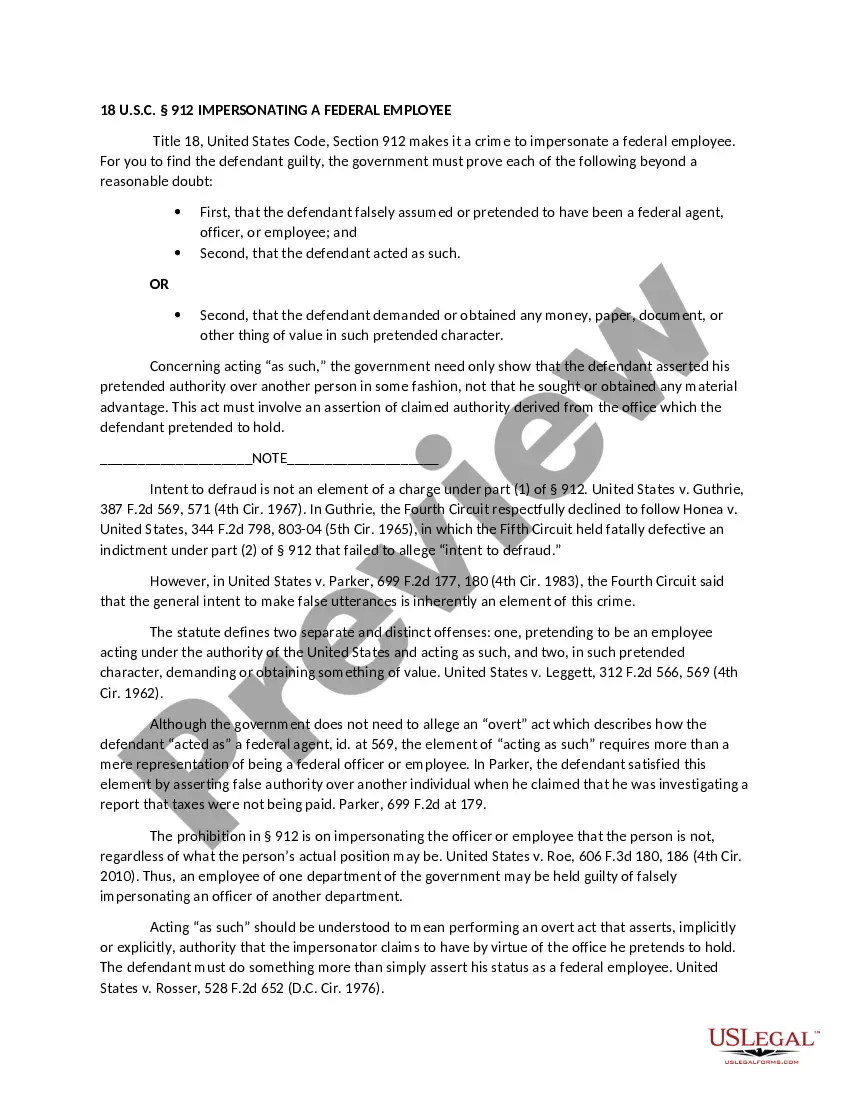
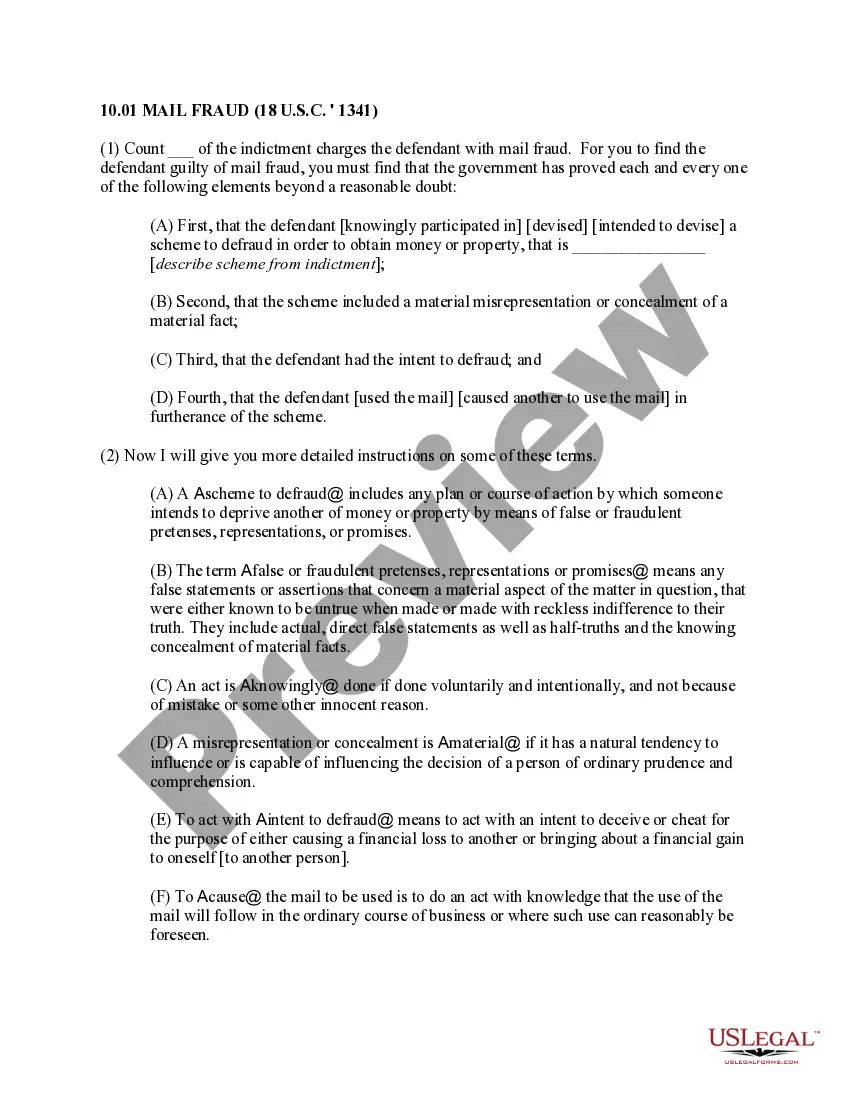
The "Using a False Name in a Mail Fraud" form provides the official jury instructions related to the criminal offense defined in Title 18, United States Code, Section 1342. This form is used in federal district court cases in South Carolina to guide jurors on the elements required to establish guilt in cases involving the use of fictitious names in mail fraud schemes. It serves a specific legal purpose distinct from other legal forms by focusing on the nuances of mail fraud laws and the criteria necessary for conviction.
Form components explained
- Definition of the crime under Title 18, United States Code, Section 1342.
- Elements required for the government to prove beyond a reasonable doubt.
- Detailed descriptions of actions constituting the use of a false name.
- Criteria for the fraudulent scheme conducted via the Postal Service.
- References to relevant case law that provide additional legal context.
Common use cases
This form is used during criminal trials involving allegations of mail fraud where the defendant is accused of using a false name. It is applicable when jurors need clear guidance on the legal standards required to ascertain whether the defendant's actions meet the necessary legal threshold to be found guilty of mail fraud as defined by federal law.
Intended users of this form
- Federal prosecutors aiming to educate jurors on mail fraud offenses.
- Defense attorneys seeking to understand the legal framework involved in such cases.
- Judges presiding over federal fraud trials that require precise jury instructions.
- Legal scholars examining case law related to fraud and false identities in mail communications.
How to complete this form
- Review the specific allegations against the defendant.
- Determine if the necessary elements of proof can be established.
- Use the form to provide clear jury instructions regarding the legal definition of fraud under federal statutes.
- Incorporate case law references that may guide juror understanding.
- Ensure all parts of the jury instructions correspond to the facts of the case being deliberated.
Notarization guidance
This form does not typically require notarization unless specified by local law. It is meant for use in court proceedings and does not involve notarized signatures.
Get your form ready online
Our built-in tools help you complete, sign, share, and store your documents in one place.
Make edits, fill in missing information, and update formatting in US Legal Forms—just like you would in MS Word.
Download a copy, print it, send it by email, or mail it via USPS—whatever works best for your next step.
Sign and collect signatures with our SignNow integration. Send to multiple recipients, set reminders, and more. Go Premium to unlock E-Sign.
If this form requires notarization, complete it online through a secure video call—no need to meet a notary in person or wait for an appointment.
We protect your documents and personal data by following strict security and privacy standards.

Make edits, fill in missing information, and update formatting in US Legal Forms—just like you would in MS Word.

Download a copy, print it, send it by email, or mail it via USPS—whatever works best for your next step.

Sign and collect signatures with our SignNow integration. Send to multiple recipients, set reminders, and more. Go Premium to unlock E-Sign.

If this form requires notarization, complete it online through a secure video call—no need to meet a notary in person or wait for an appointment.

We protect your documents and personal data by following strict security and privacy standards.
Common mistakes to avoid
- Failing to clearly explain each element required for proving mail fraud.
- Using ambiguous language that can confuse jurors about the legal requirements.
- Not providing adequate context from referenced case law.
Why complete this form online
- Accessibility: Downloadable format allows for easy use in cases without delays.
- Editability: Customize the jury instructions to fit specific case needs.
- Reliability: Drafted by licensed attorneys, ensuring legal compliance and accuracy.
Legal use & context
- The form serves as essential guidance for federal jury trials involving mail fraud.
- Understanding the precise legal definitions and requirements is critical for fair trials.
- Ensures that jurors have a clear framework within which to evaluate the defendant's actions.
Summary of main points
- Using a False Name in a Mail Fraud is essential for defining the crime of mail fraud under federal law.
- Accurate jury instructions are vital for ensuring a fair trial.
- Clear presentation of the law helps jurors fulfill their role in the judicial process.
Looking for another form?
Form popularity
FAQ
Section 16-21-60 - Use of vehicle without permission (A) It is unlawful for a person not entitled to possession of a vehicle to take, use, or drive a vehicle, without the consent of the owner and with intent to deprive him, temporarily or otherwise, of the vehicle or its possession.
Financial identity fraud or identity fraud; penalty. (A) It is unlawful for a person to commit the offense of financial identity fraud or identity fraud.
Knowingly make a false statement or misrepresentation about an insurance claim, or. Assist, solicit from, or conspire with someone else with an ?intent to injure, defraud, or deceive,? to make a false statement or misrepresentation about an insurance claim.
Unlike many states, South Carolina has no statute of limitations on criminal cases, meaning prosecutors can file criminal charges at any time after a crime has been committed.
SECTION 16-21-80. Receiving, possessing, concealing, selling, or disposing of stolen vehicle.
As laid out in South Carolina General Code Section 16-13-240, it is a crime to obtain a signature, money, or property from someone under false pretenses or misrepresentation of a fact with ?intent to cheat and defraud a person of that property.? Simply put, if you obtain money, property, or the title to property from
SECTION 16-25-20. Acts prohibited; penalties. (2) offer or attempt to cause physical harm or injury to a person's own household member with apparent present ability under circumstances reasonably creating fear of imminent peril.
Current through 2023 Act No. 14. A person who, with intent and without right to do so, damages a vehicle or damages or removes any of its parts or components is guilty of a misdemeanor.